
The Very Large Telescope Interferometer Neon School Garching
- Slides: 25
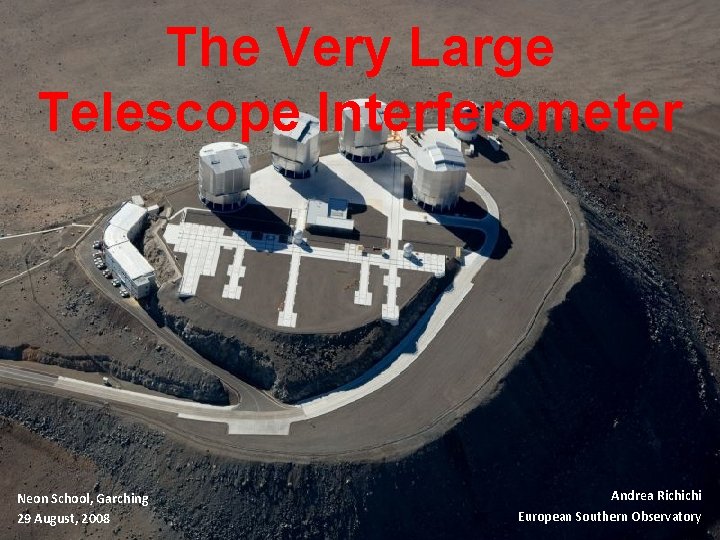
The Very Large Telescope Interferometer Neon School, Garching 29 August, 2008 Andrea Richichi European Southern Observatory
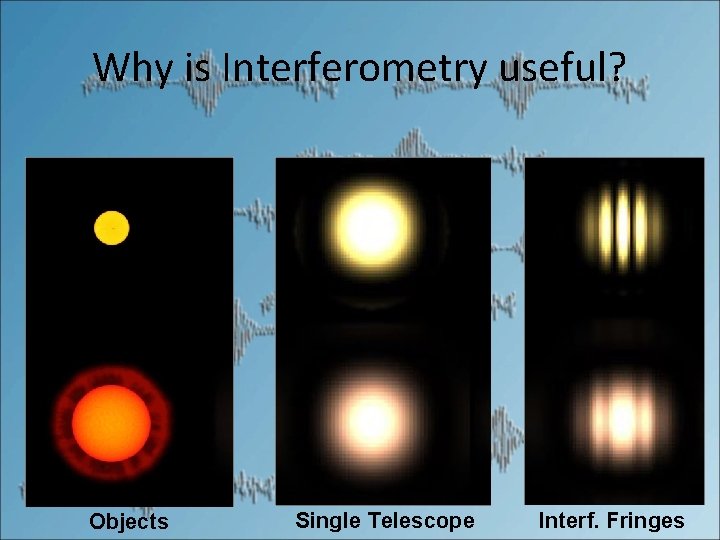
Why is Interferometry useful? Objects Single Telescope Interf. Fringes
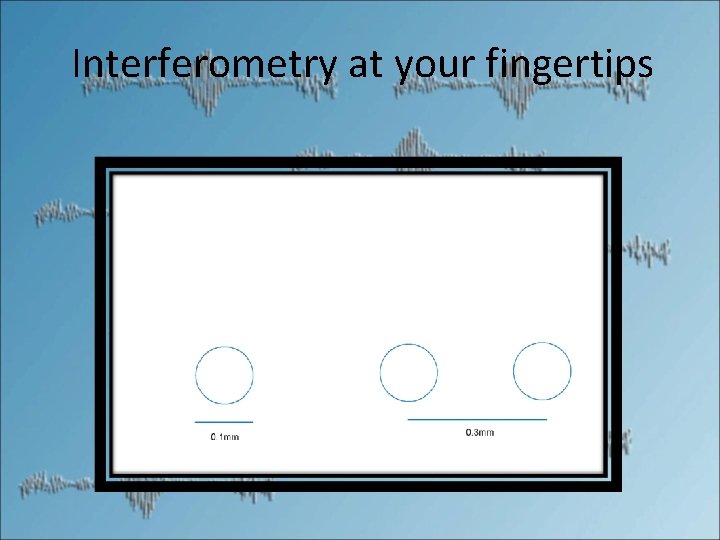
Interferometry at your fingertips
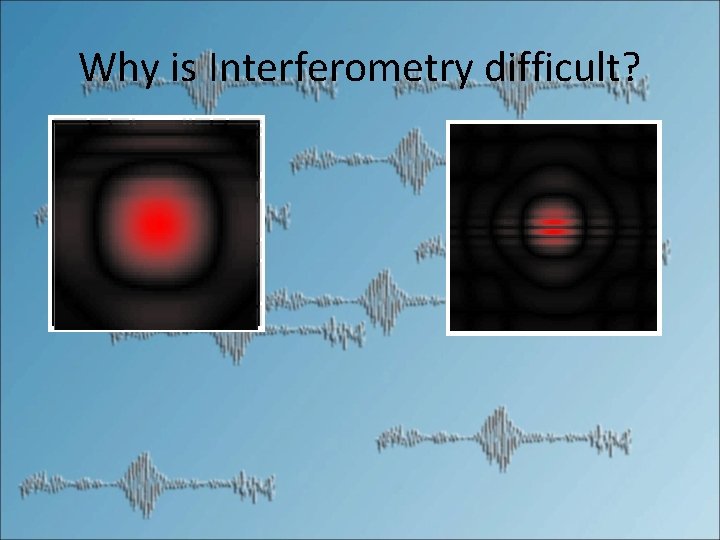
Why is Interferometry difficult?
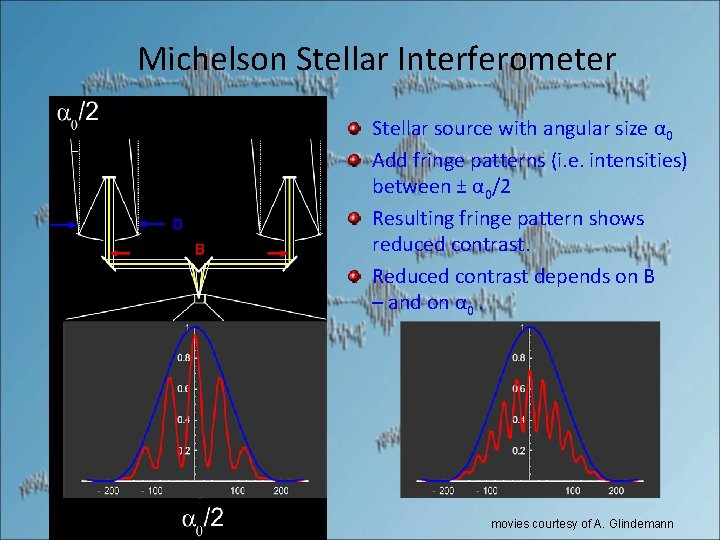
Michelson Stellar Interferometer Stellar source with angular size α 0 Add fringe patterns (i. e. intensities) between ± α 0/2 Resulting fringe pattern shows reduced contrast. Reduced contrast depends on B – and on α 0. movies courtesy of A. Glindemann
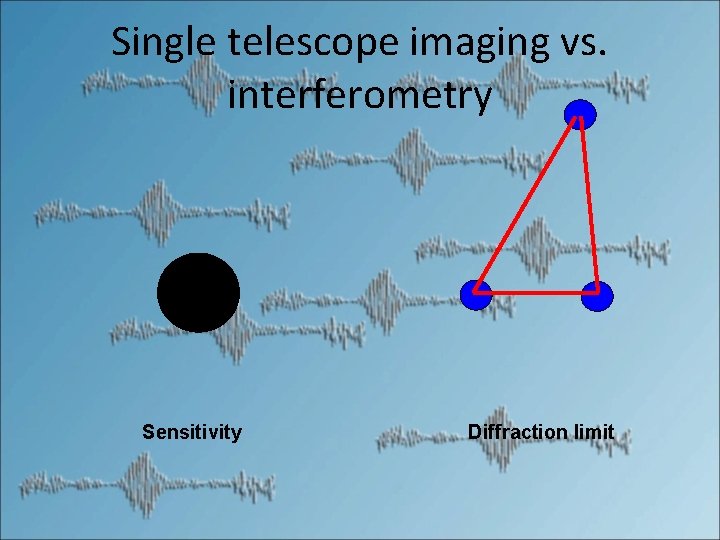
Single telescope imaging vs. interferometry Sensitivity Diffraction limit
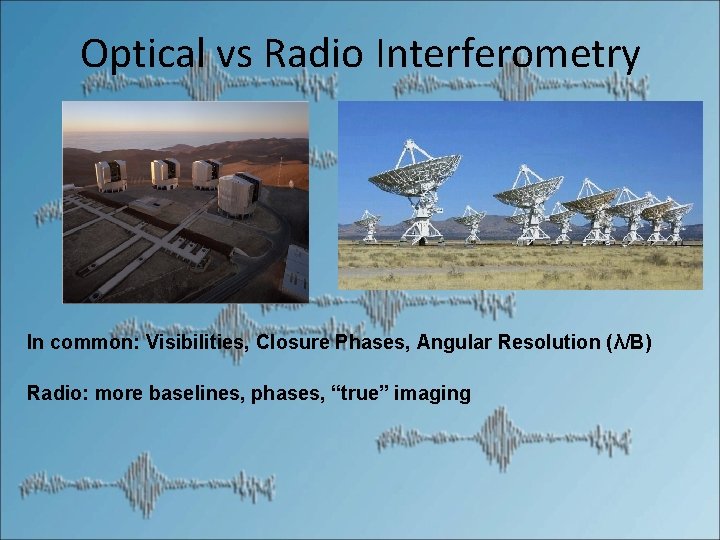
Optical vs Radio Interferometry In common: Visibilities, Closure Phases, Angular Resolution (λ/B) Radio: more baselines, phases, “true” imaging
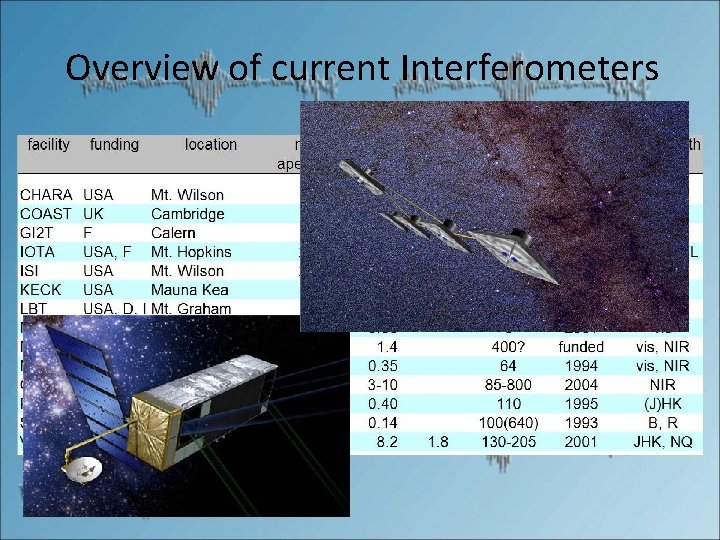
Overview of current Interferometers
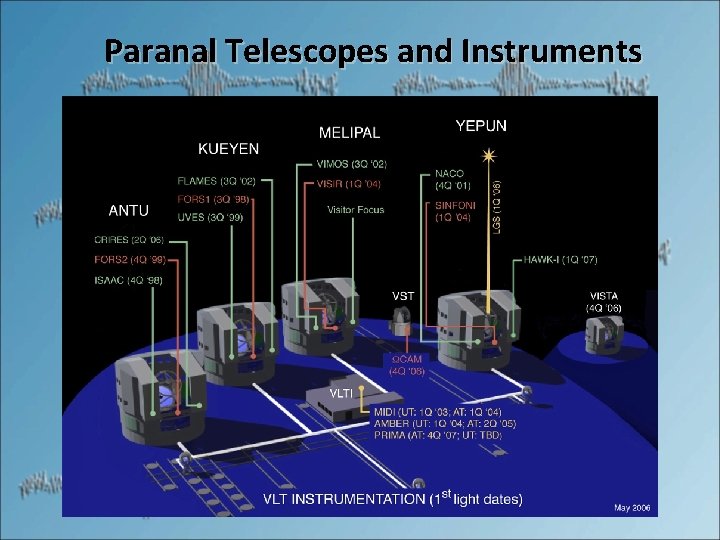
Paranal Telescopes and Instruments
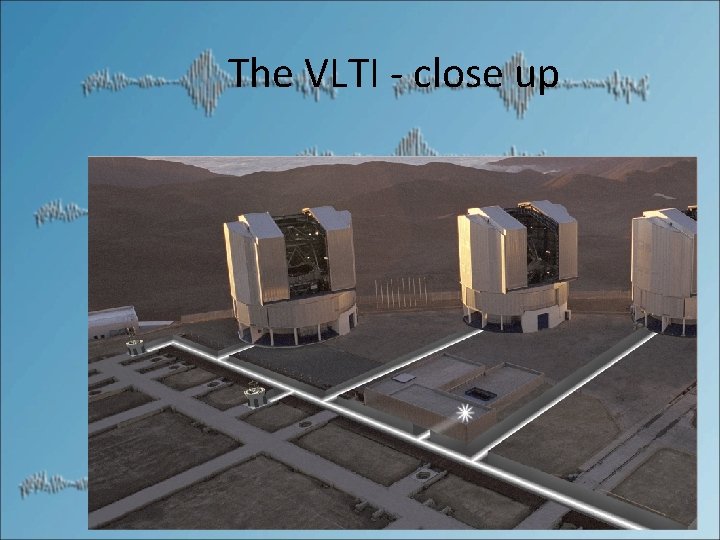
The VLTI - close up
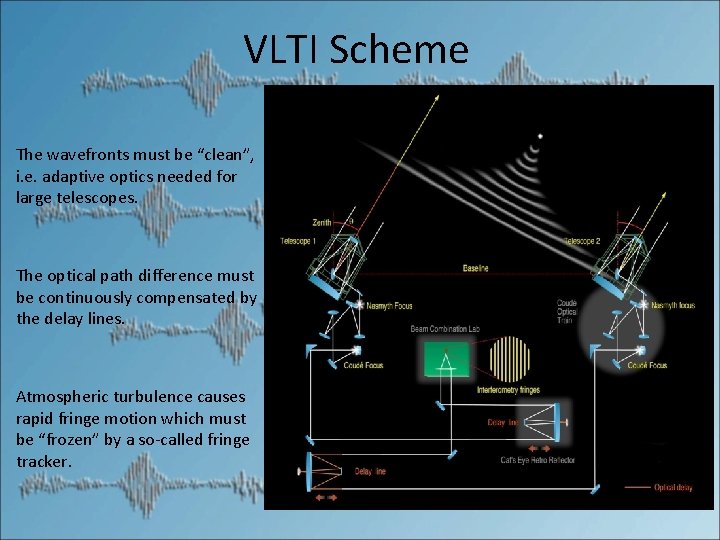
VLTI Scheme The wavefronts must be “clean”, i. e. adaptive optics needed for large telescopes. The optical path difference must be continuously compensated by the delay lines. Atmospheric turbulence causes rapid fringe motion which must be “frozen” by a so-called fringe tracker.
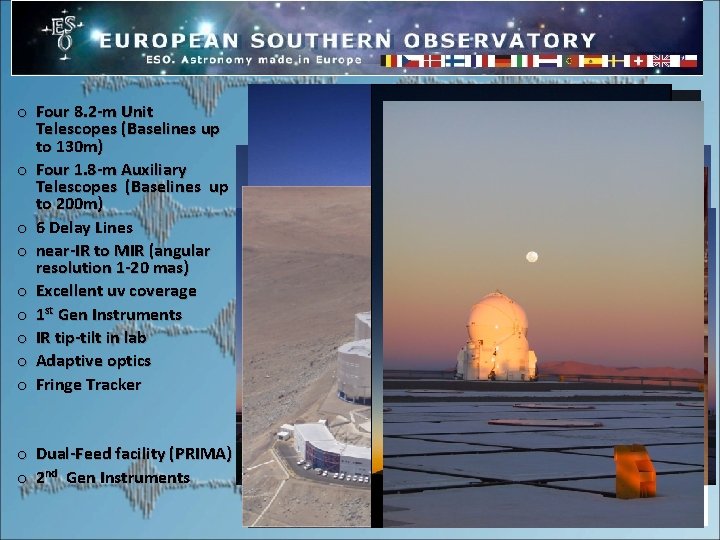
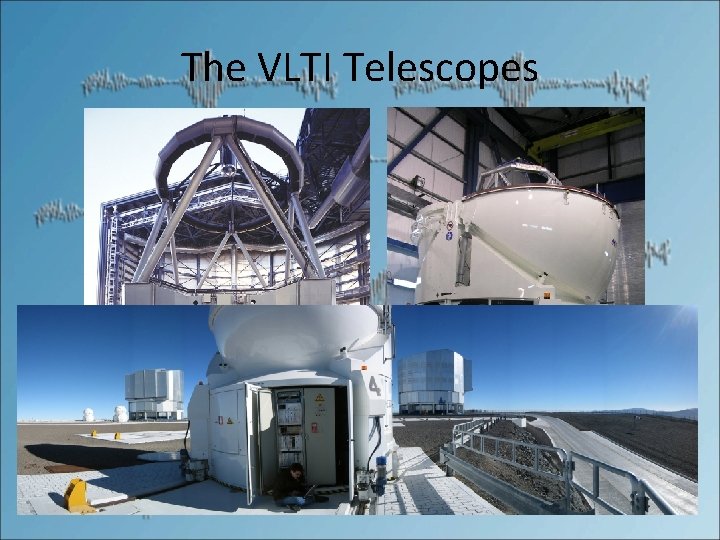
o Four 8. 2 -m Unit Telescopes (Baselines up to 130 m) o Four 1. 8 -m Auxiliary Telescopes (Baselines up to 200 m) o 6 Delay Lines o near-IR to MIR (angular resolution 1 -20 mas) o Excellent uv coverage o 1 st Gen Instruments o IR tip-tilt in lab o Adaptive optics o Fringe Tracker o Dual-Feed facility (PRIMA) o 2 nd Gen Instruments
The VLTI Telescopes
The “Paranal Express” • correct sidereal path difference • six delay lines • combine all UT baselines • combine almost all AT baselines • laser metrology
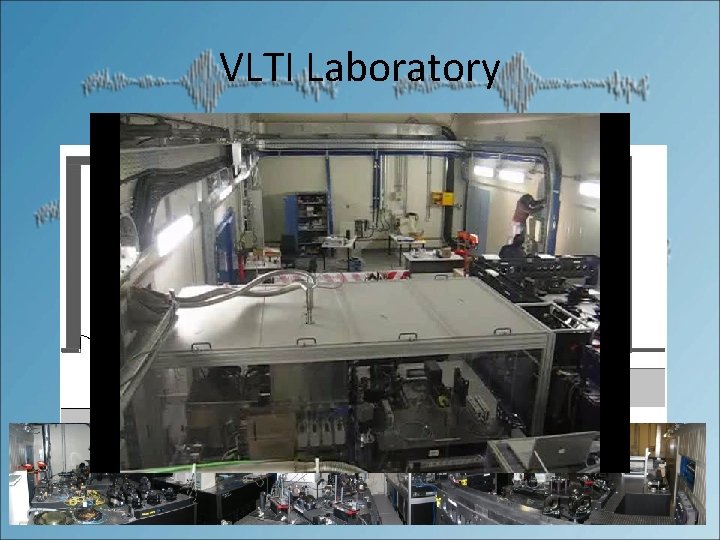
VLTI Laboratory
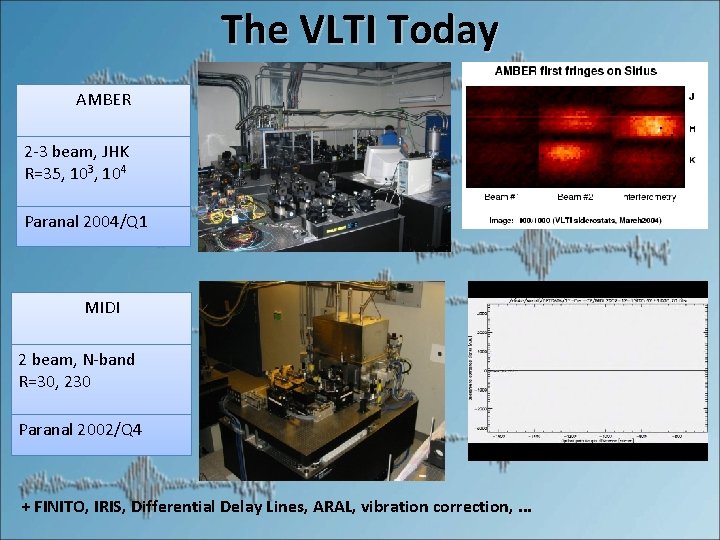
The VLTI Today AMBER 2 -3 beam, JHK R=35, 103, 104 Paranal 2004/Q 1 MIDI 2 beam, N-band R=30, 230 Paranal 2002/Q 4 + FINITO, IRIS, Differential Delay Lines, ARAL, vibration correction, . . .
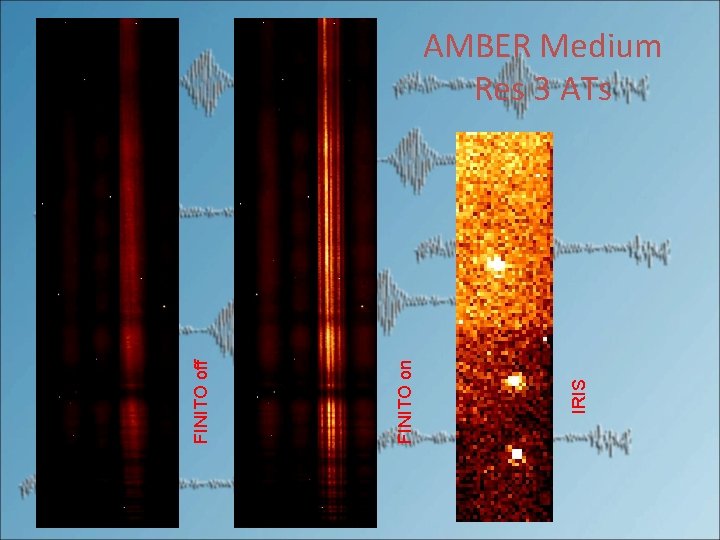
IRIS FINITO on FINITO off AMBER Medium Res 3 ATs
How to obtain and use VLTI data Public Archive (VINCI~20000 OBs, SDT, MIDI, AMBER): register as an Archive user §VINCI: pipeline §MIDI: MIA/EWS software (IDL) §AMBER: Ammyorick, Reflex Write your own proposal
Interferometric Science Highlights AGNs (dust tori) Hot stars; massive stars; star formation Evolved stars; dust in giants; AGBs Stellar pulsation Binary stars MS stars and fundamental parameters Search for exoplanets (direct detection) Solar system (asteroids) Black holes and relativity
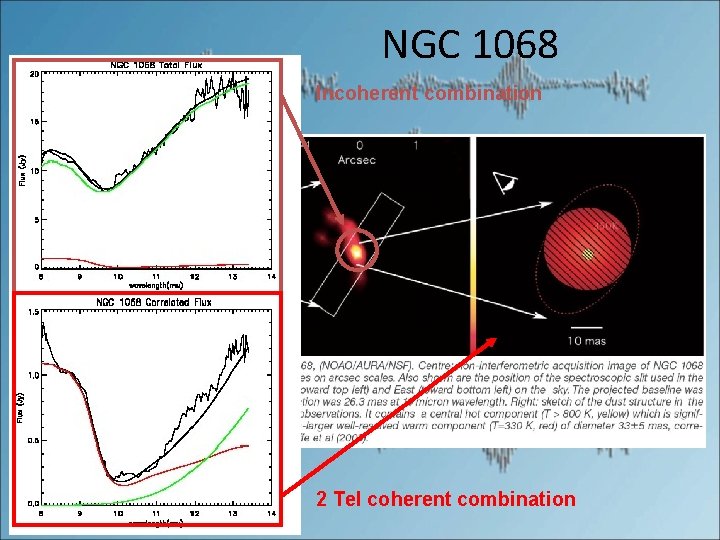
NGC 1068 Incoherent combination 2 Tel coherent combination
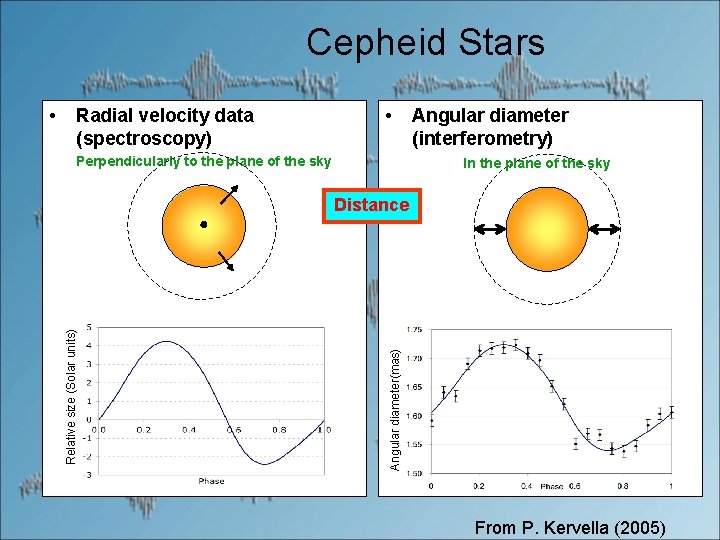
Cepheid Stars Radial velocity data (spectroscopy) • Perpendicularly to the plane of the sky Angular diameter (interferometry) In the plane of the sky Angular diameter(mas) Distance Relative size (Solar units) • From P. Kervella (2005)
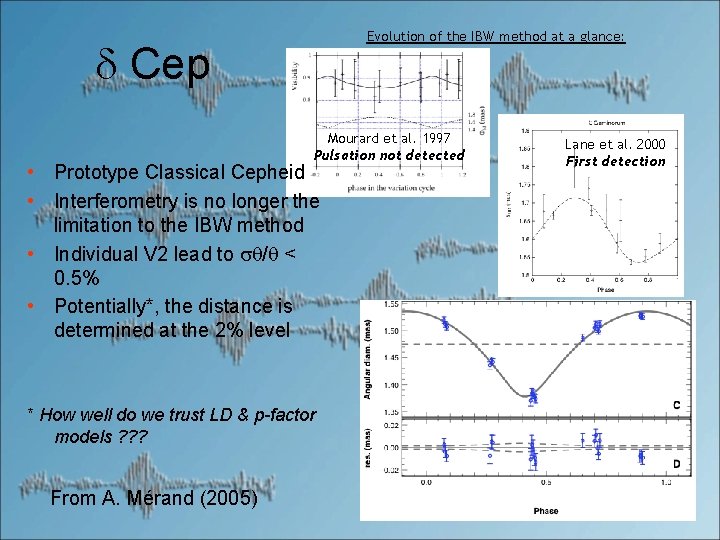
Evolution of the IBW method at a glance: Cep Mourard et al. 1997 Pulsation not detected • Prototype Classical Cepheid • Interferometry is no longer the limitation to the IBW method • Individual V 2 lead to / < 0. 5% • Potentially*, the distance is determined at the 2% level Lane et al. 2000 First detection B=313 m Cep FLUOR/CHARA * How well do we trust LD & p-factor models ? ? ? From A. Mérand (2005)
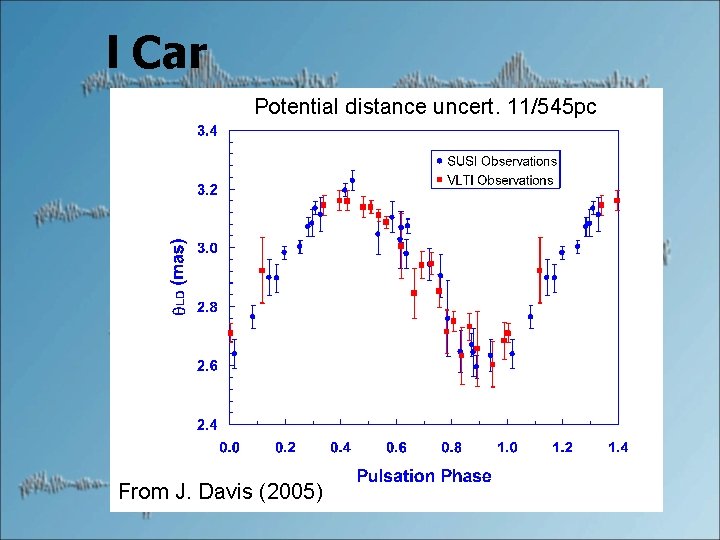
l Car Potential distance uncert. 11/545 pc From J. Davis (2005)
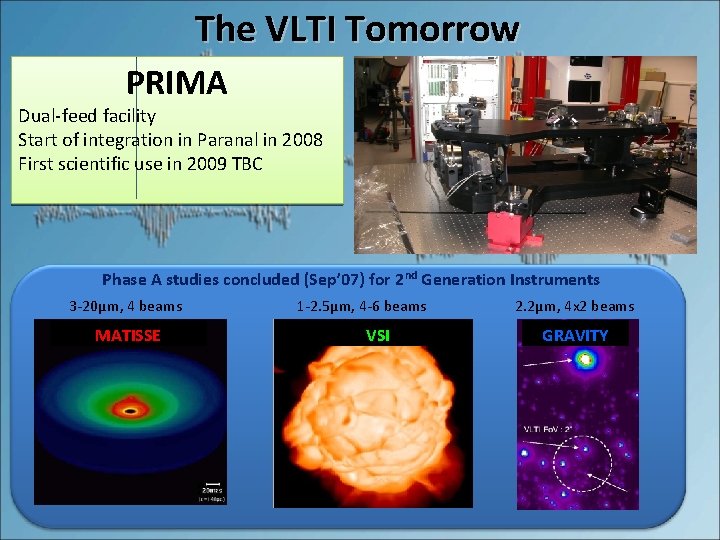
The VLTI Tomorrow PRIMA Dual-feed facility Start of integration in Paranal in 2008 First scientific use in 2009 TBC Phase A studies concluded (Sep’ 07) for 2 nd Generation Instruments 3 -20µm, 4 beams MATISSE 1 -2. 5µm, 4 -6 beams VSI 2. 2µm, 4 x 2 beams GRAVITY
Conclusions • VLTI is well-developed, open, user-friendly facility • Flexible baseline system gives wide uv coverage • Most powerful combination of long baselines and large telescopes • Standard system of observation, data quality and data analysis • Diverse scientific issues at 0. 001” resolution • Lively future