
The Vertical Structure of Tangential Winds in Tropical


- Slides: 77
The Vertical Structure of Tangential Winds in Tropical Cyclones: Observations, Theory, and Numerical Simulations Daniel P. Stern 1
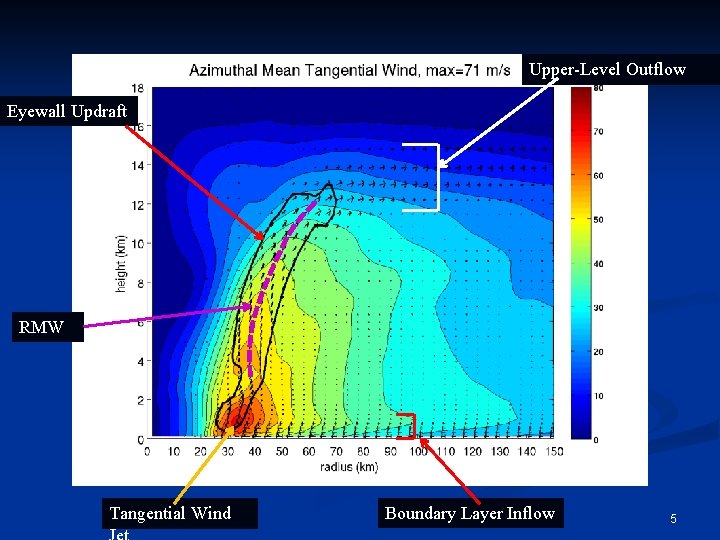
Motivating Questions n How does the wind field change with height in a tropical cyclone, and why? n How much does the vertical structure vary between storms? What governs this variability? n Is there a theory which can predict the manner in which the winds change with height? n Do numerical simulations reproduce 2
But Why Should We Care? The efficiency with which convective heating can be converted to kinetic energy depends critically on the strength of the winds aloft. n Idealized linear models must specify a basic state vortex. Currently, the vertical structure used in such studies is arbitrary. n The accuracy of real-data simulations depend on the initial conditions. n 3
4
Upper-Level Outflow Eyewall Updraft RMW Tangential Wind Boundary Layer Inflow 5
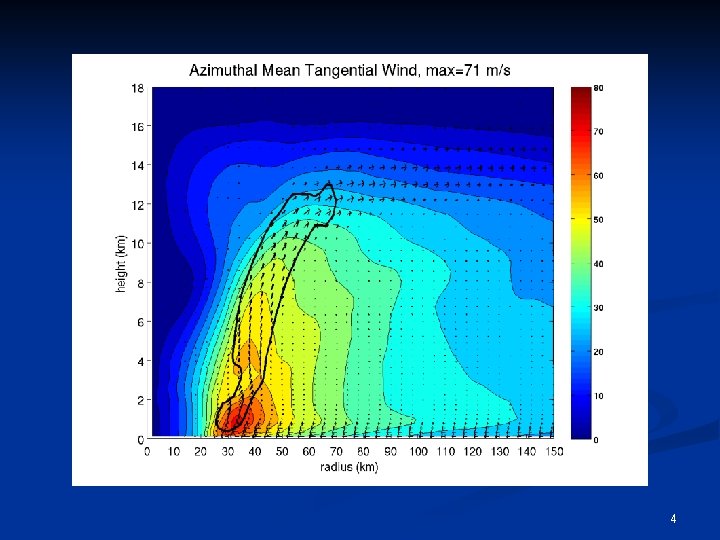
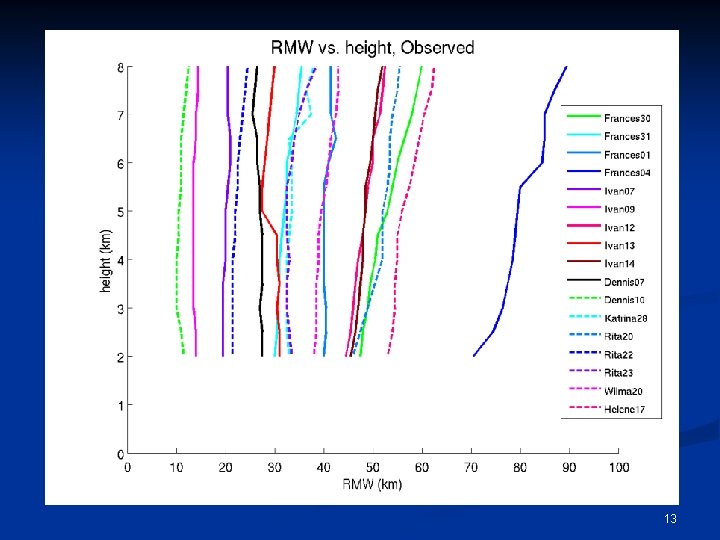
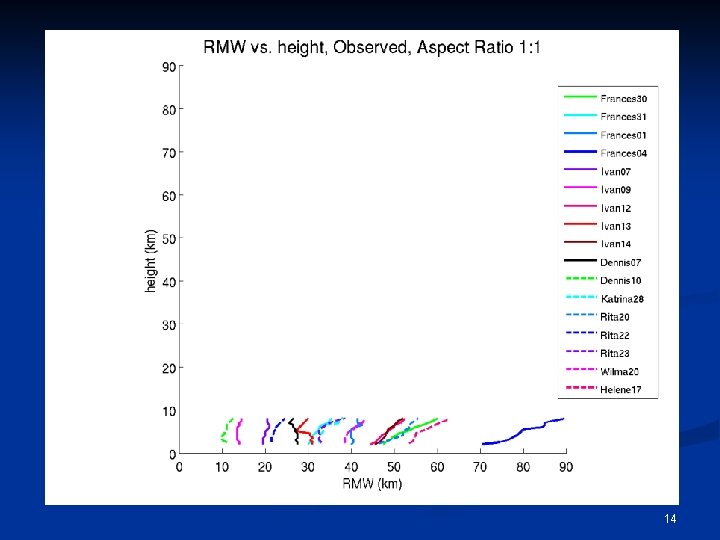
Some More Specific Questions n How rapidly do the maximum tangential winds in tropical cyclones decay with height? What determines the rate of decay, and how variable is it? n By how much does the Radius of Maximum Winds (RMW) change with height? n Why does the Radius of Maximum Winds (RMW) slope outwards with increasing 6
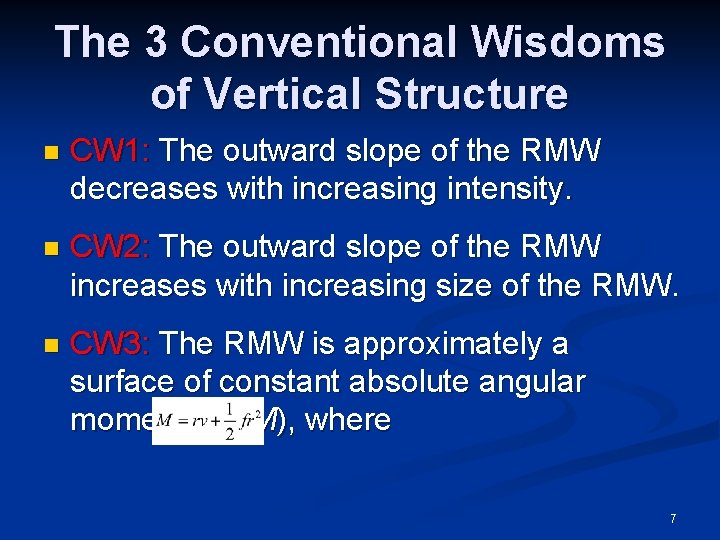
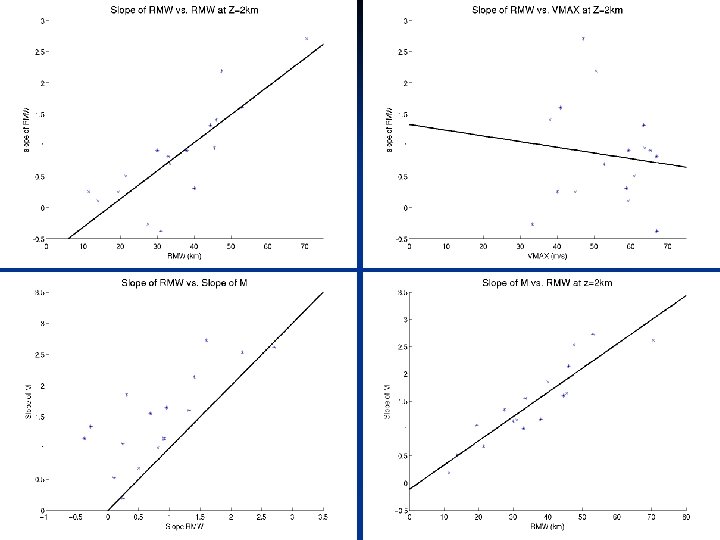
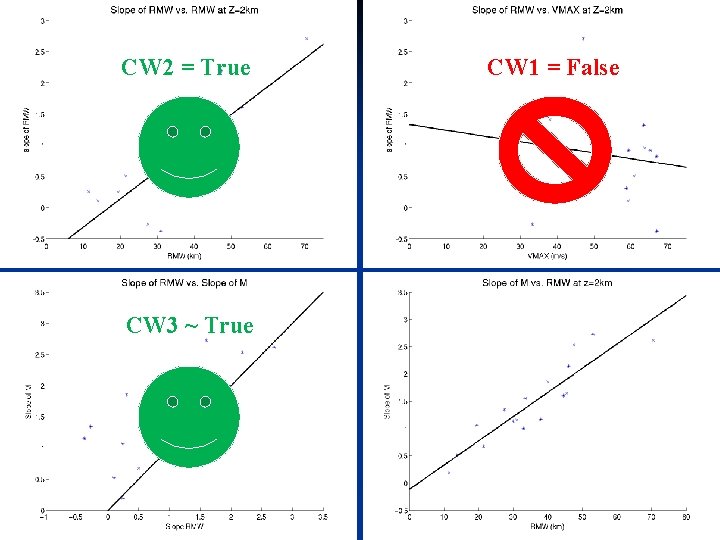
The 3 Conventional Wisdoms of Vertical Structure n CW 1: The outward slope of the RMW decreases with increasing intensity. n CW 2: The outward slope of the RMW increases with increasing size of the RMW. n CW 3: The RMW is approximately a surface of constant absolute angular momentum (M), where 7
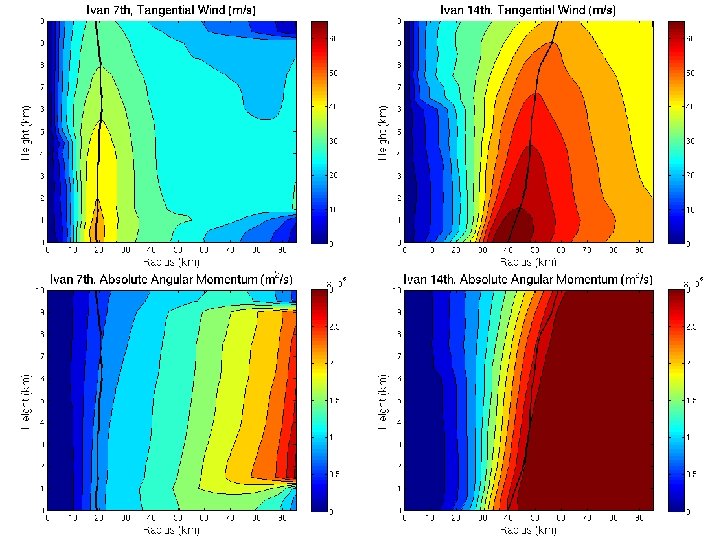
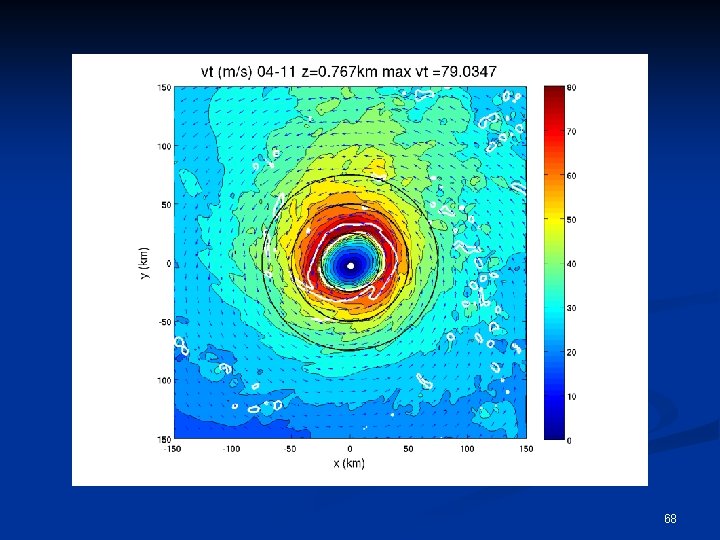
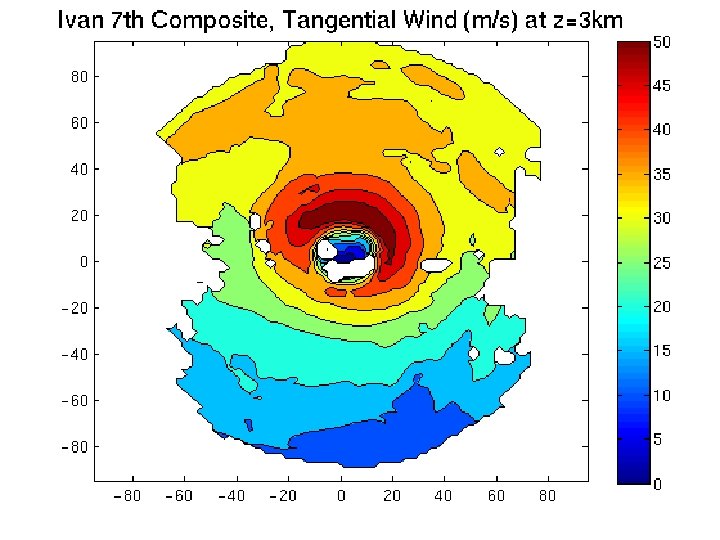
Observations n 3 D Doppler wind swaths acquired from the NOAA Hurricane Research Division. Horizontal and vertical resolutions of 2 km and 500 m respectively. n Composited multiple legs. n For finding relatively smooth RMW, interpolated cubically to finer grid (Δx=Δy=500 m). n Placed Cartesian data in 500 m radial bins and azimuthally averaged. 8
9
10
11
12
13
14
15
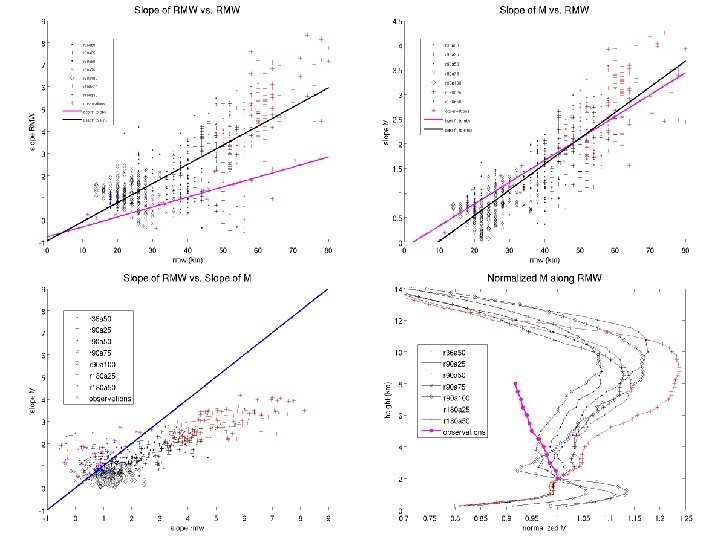
CW 2 = True CW 1 = False CW 3 ~ True 16
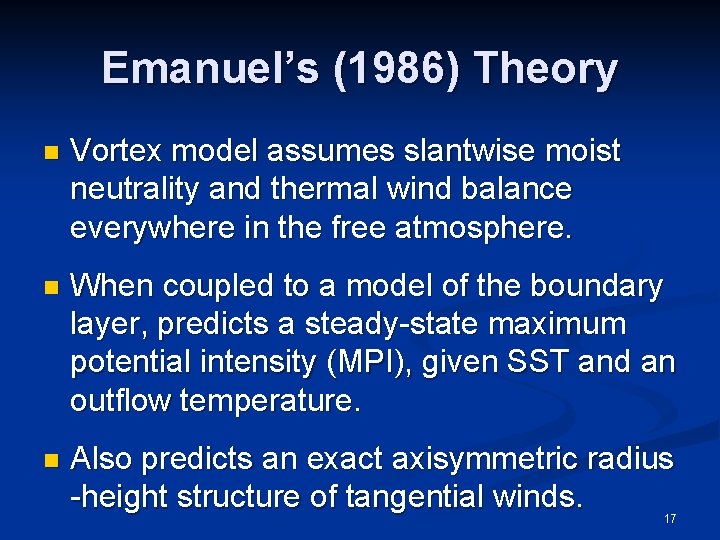
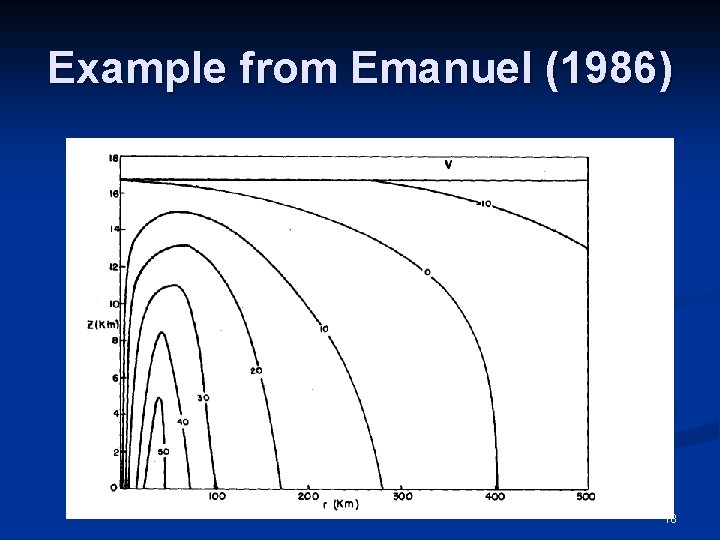
Emanuel’s (1986) Theory n Vortex model assumes slantwise moist neutrality and thermal wind balance everywhere in the free atmosphere. n When coupled to a model of the boundary layer, predicts a steady-state maximum potential intensity (MPI), given SST and an outflow temperature. n Also predicts an exact axisymmetric radius -height structure of tangential winds. 17
Example from Emanuel (1986) 18
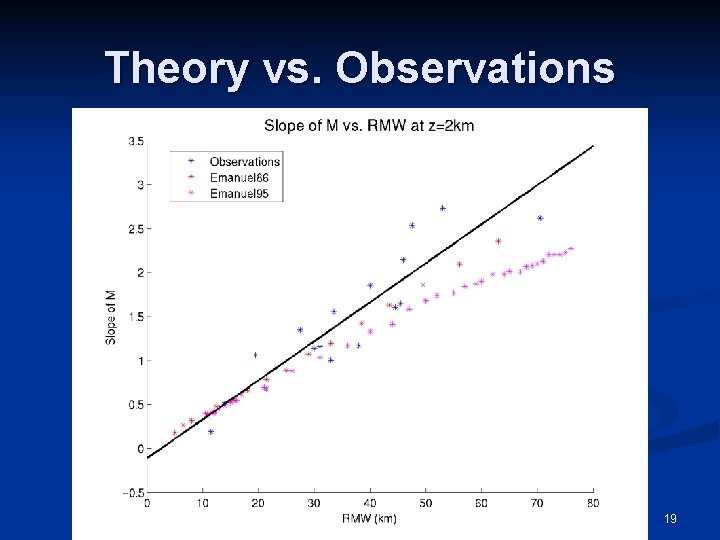
Theory vs. Observations 19
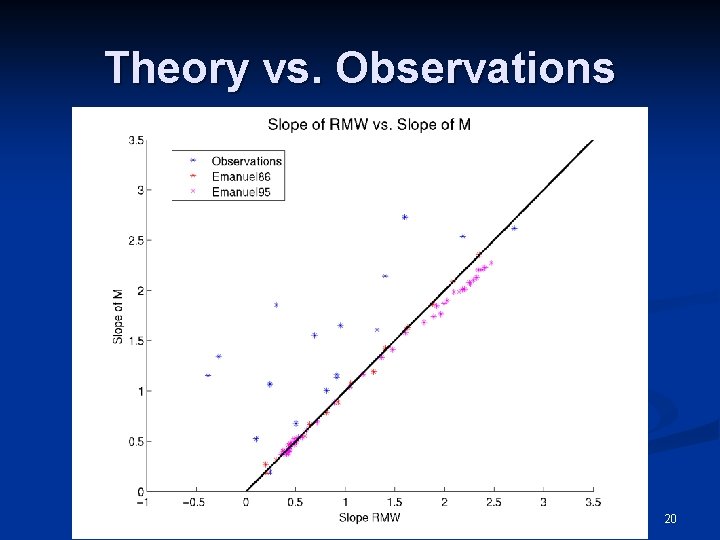
Theory vs. Observations 20
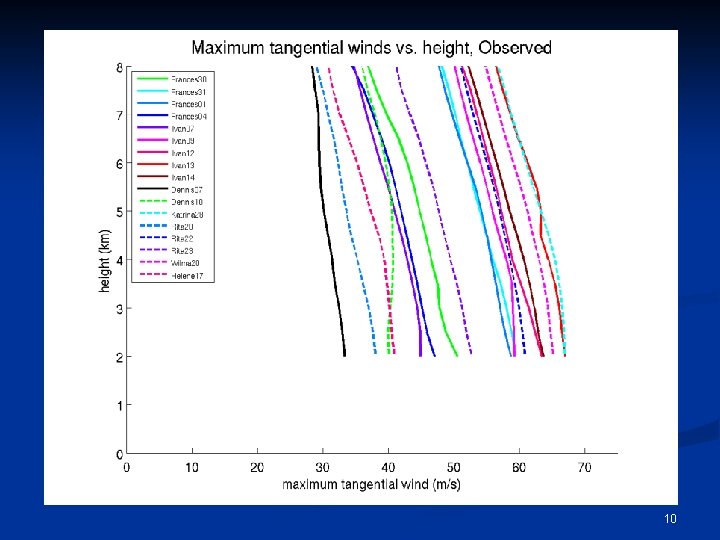
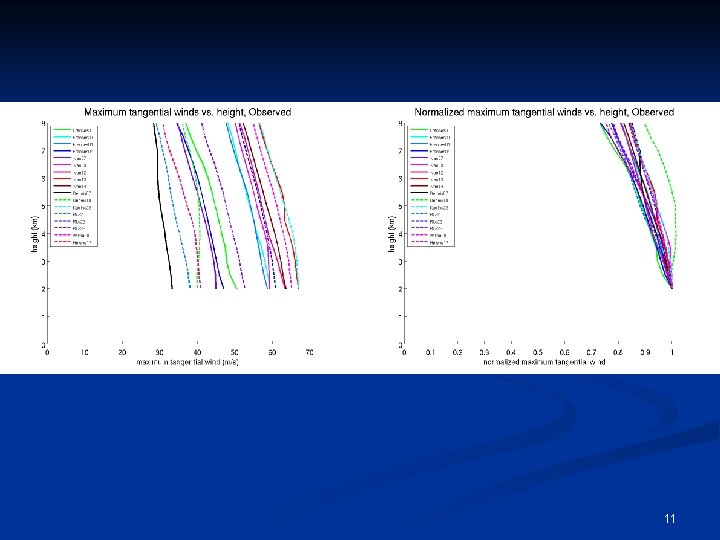
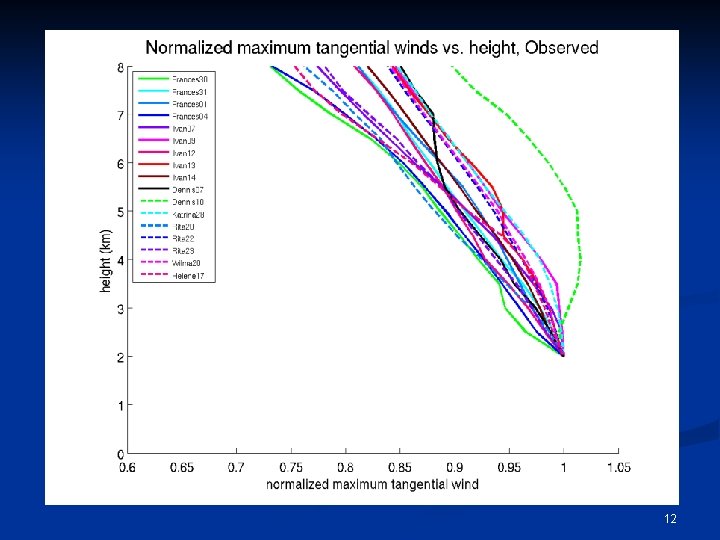
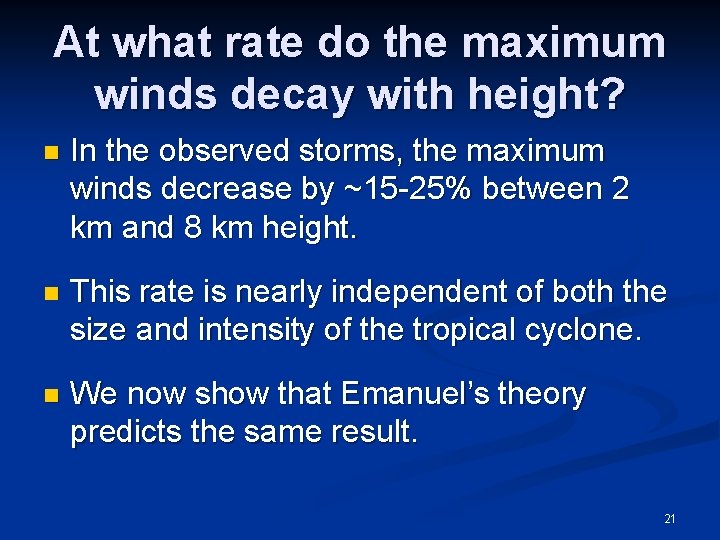
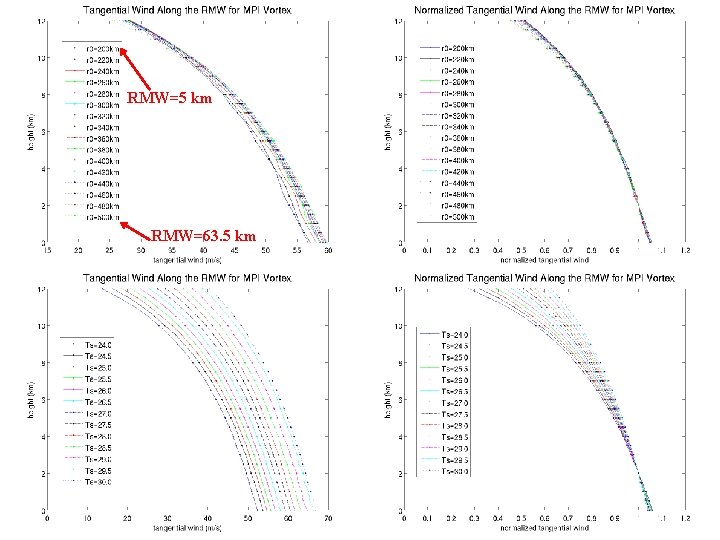
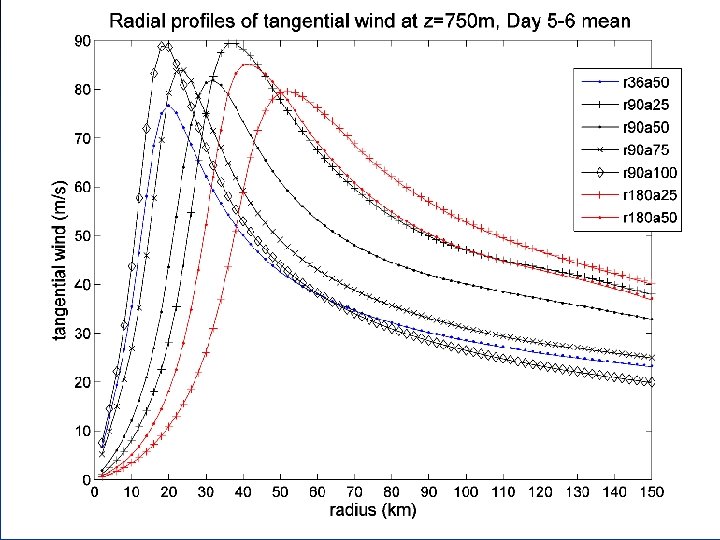
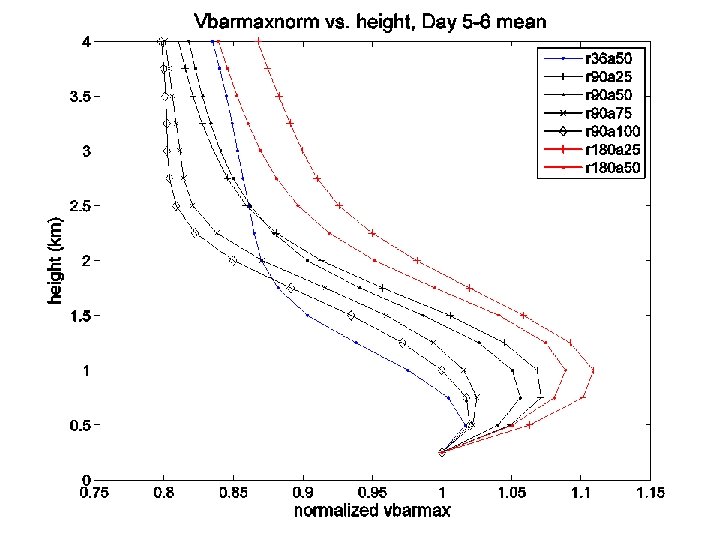
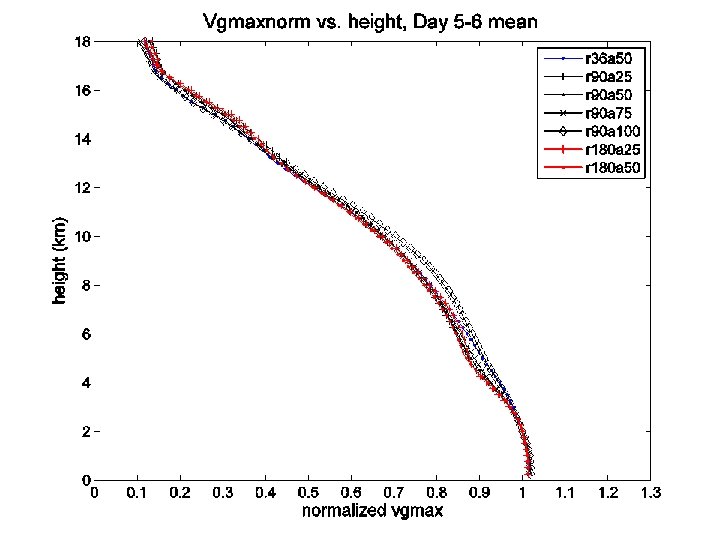
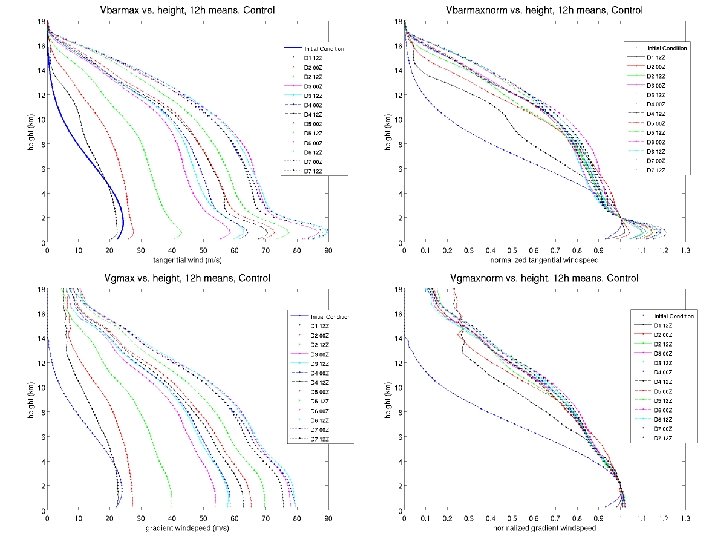
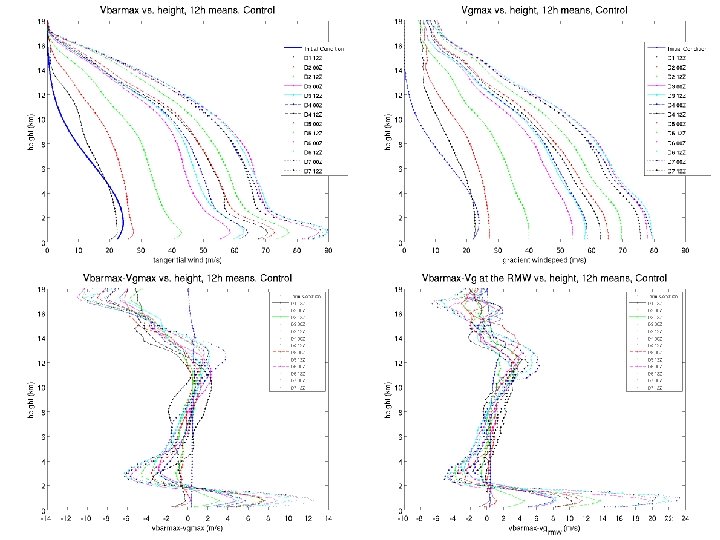
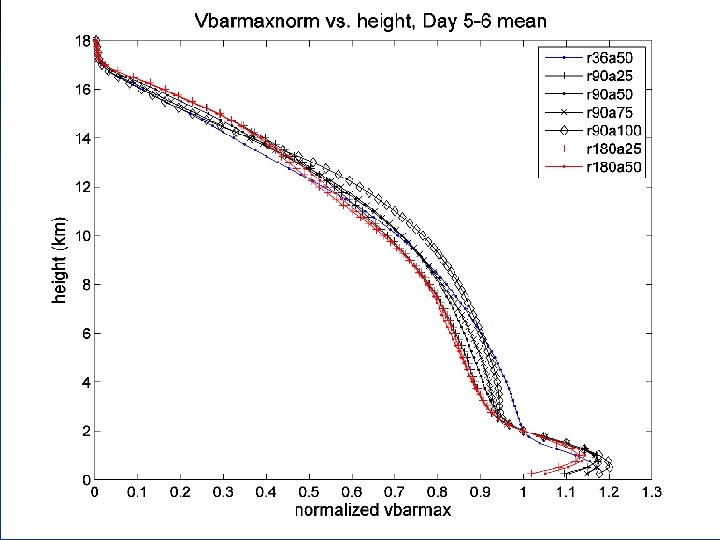
At what rate do the maximum winds decay with height? n In the observed storms, the maximum winds decrease by ~15 -25% between 2 km and 8 km height. n This rate is nearly independent of both the size and intensity of the tropical cyclone. n We now show that Emanuel’s theory predicts the same result. 21
RMW=5 km RMW=63. 5 km 22
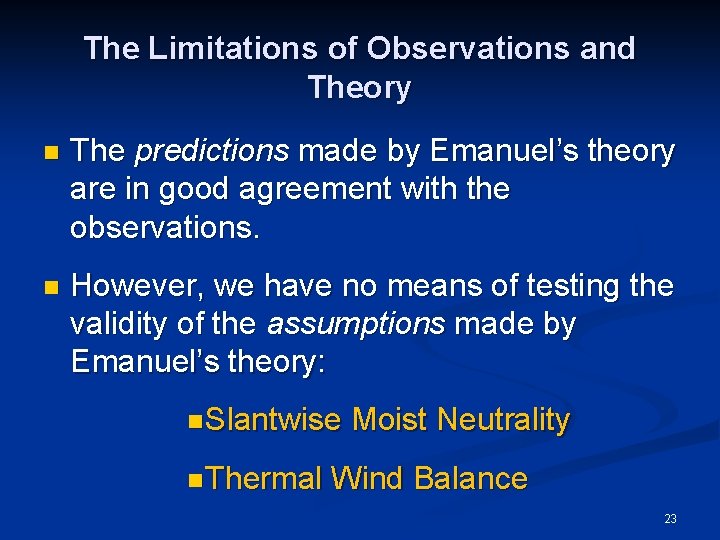
The Limitations of Observations and Theory n The predictions made by Emanuel’s theory are in good agreement with the observations. n However, we have no means of testing the validity of the assumptions made by Emanuel’s theory: n Slantwise n Thermal Moist Neutrality Wind Balance 23
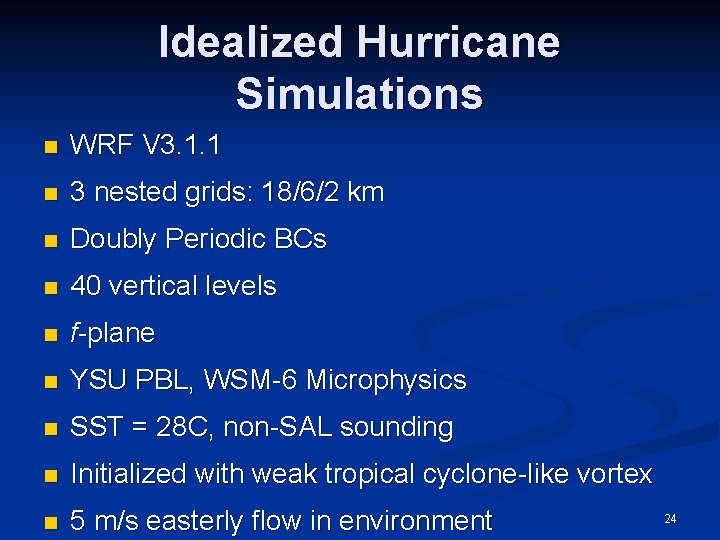
Idealized Hurricane Simulations n WRF V 3. 1. 1 n 3 nested grids: 18/6/2 km n Doubly Periodic BCs n 40 vertical levels n f-plane n YSU PBL, WSM-6 Microphysics n SST = 28 C, non-SAL sounding n Initialized with weak tropical cyclone-like vortex n 5 m/s easterly flow in environment 24
25
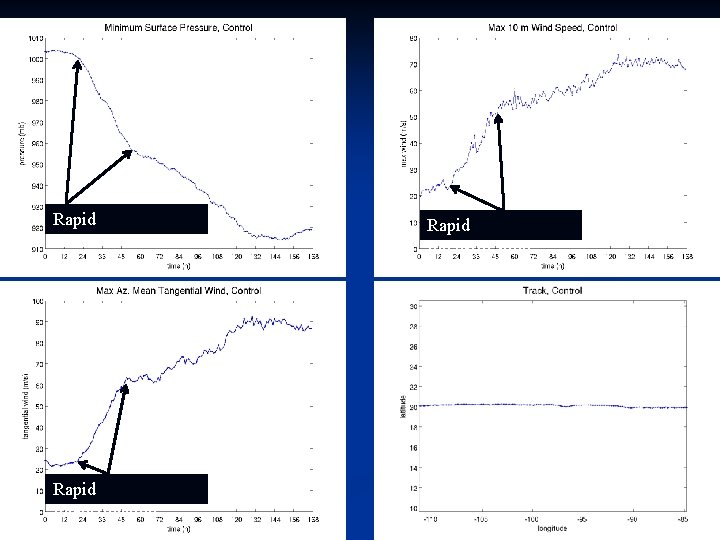
Rapid Intensification 26
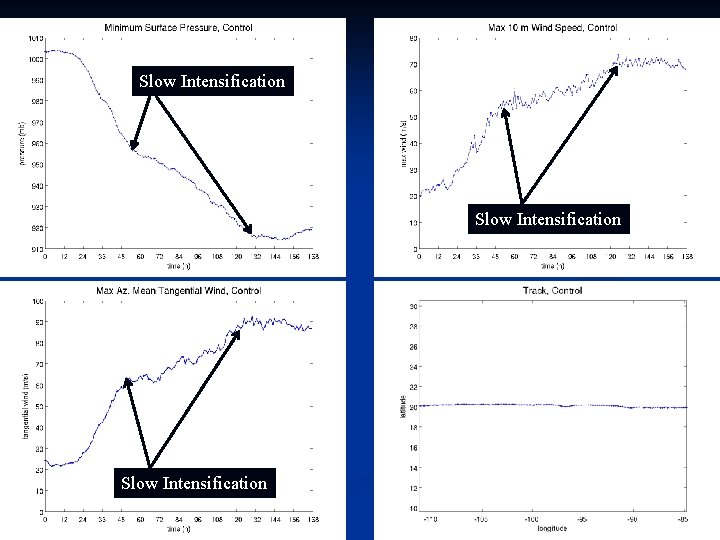
Slow Intensification 27
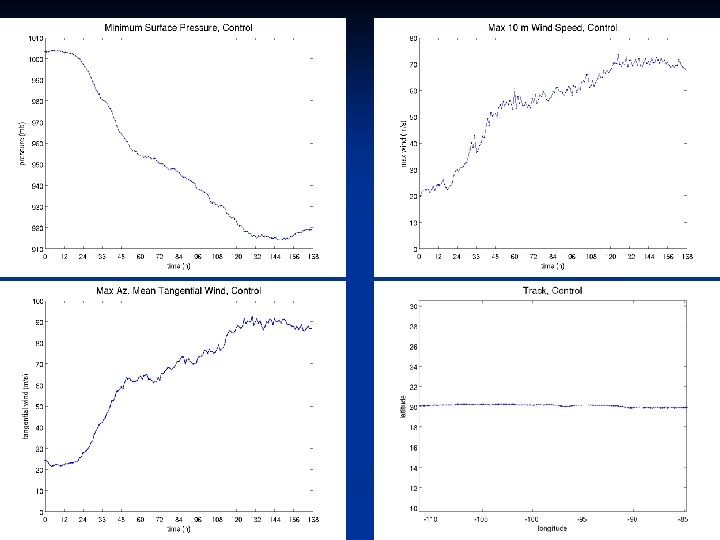
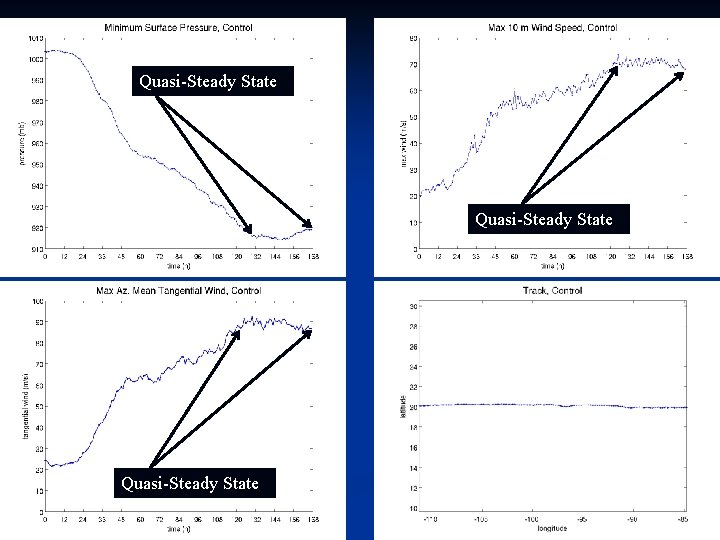
Quasi-Steady State 28
29
30
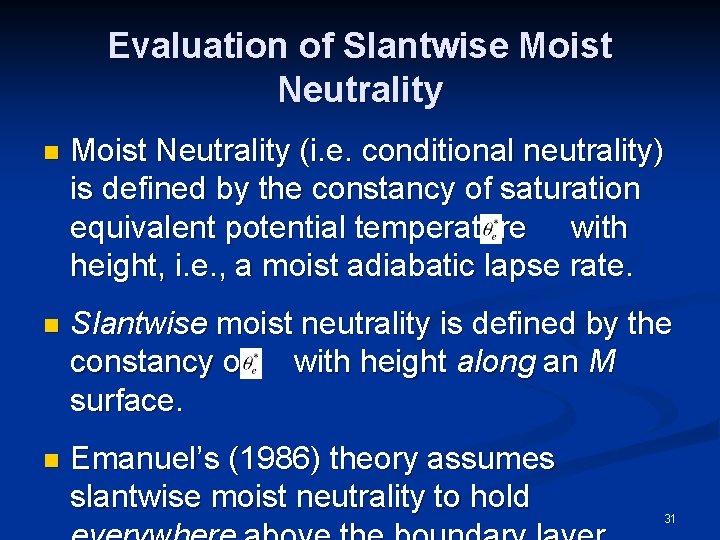
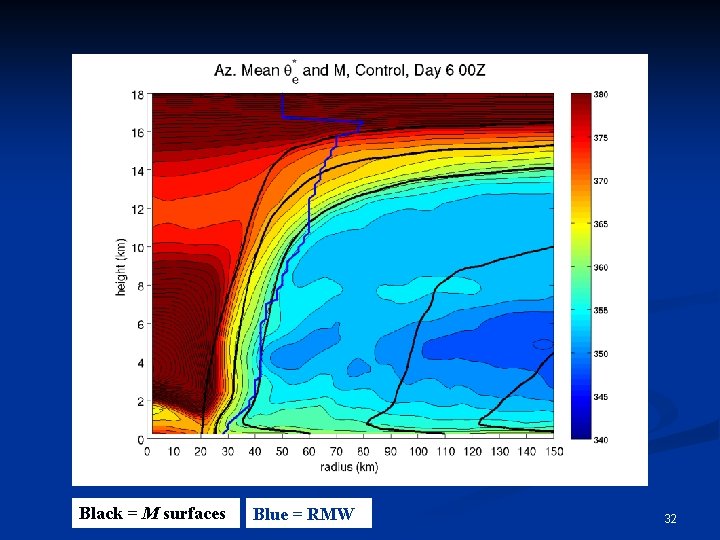
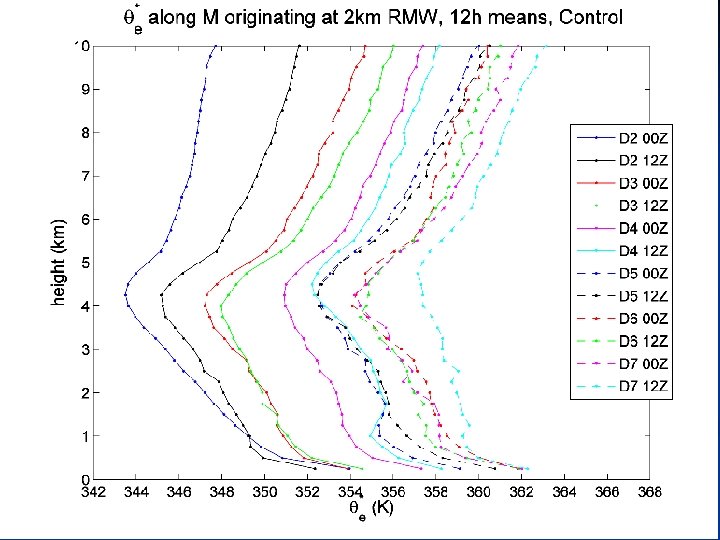
Evaluation of Slantwise Moist Neutrality n Moist Neutrality (i. e. conditional neutrality) is defined by the constancy of saturation equivalent potential temperature with height, i. e. , a moist adiabatic lapse rate. n Slantwise moist neutrality is defined by the constancy of with height along an M surface. n Emanuel’s (1986) theory assumes slantwise moist neutrality to hold 31
Black = M surfaces Blue = RMW 32
33
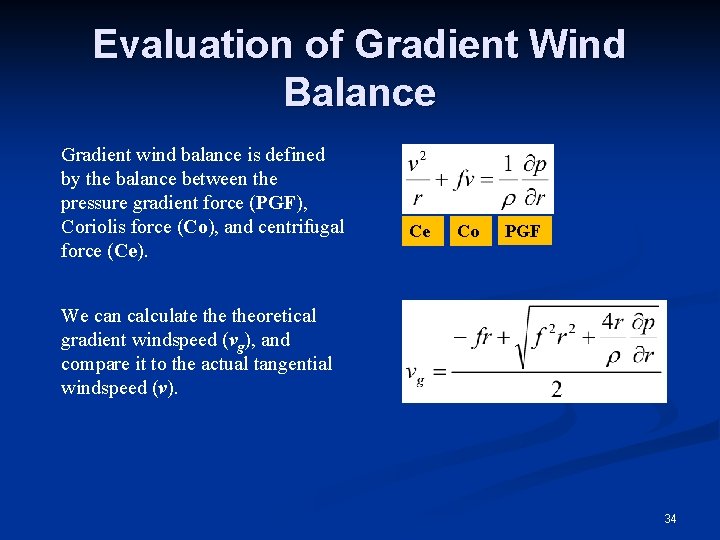
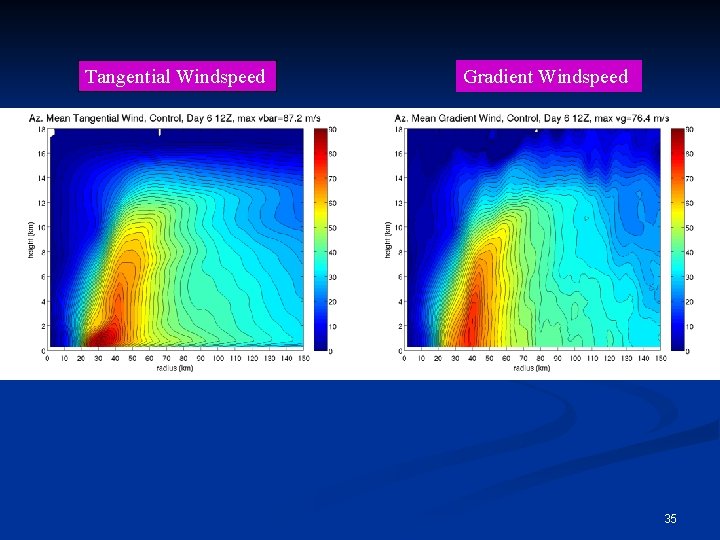
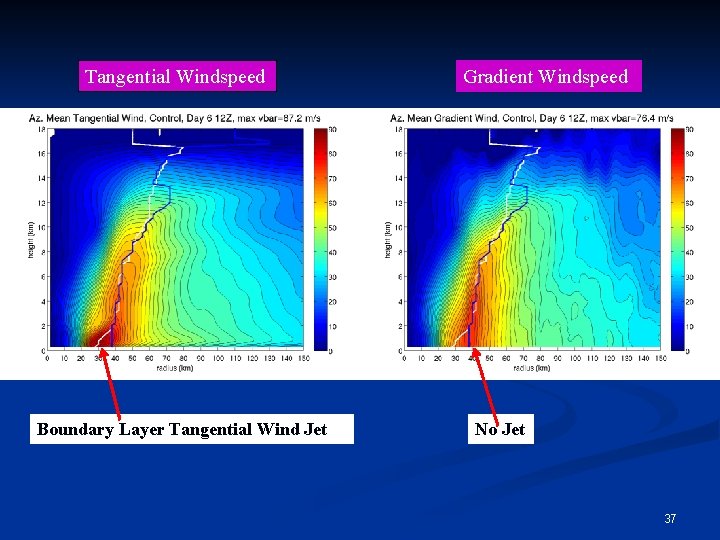
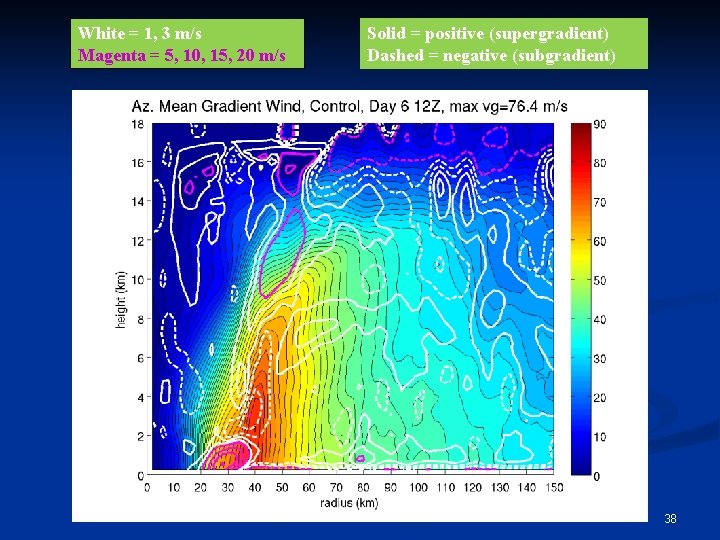
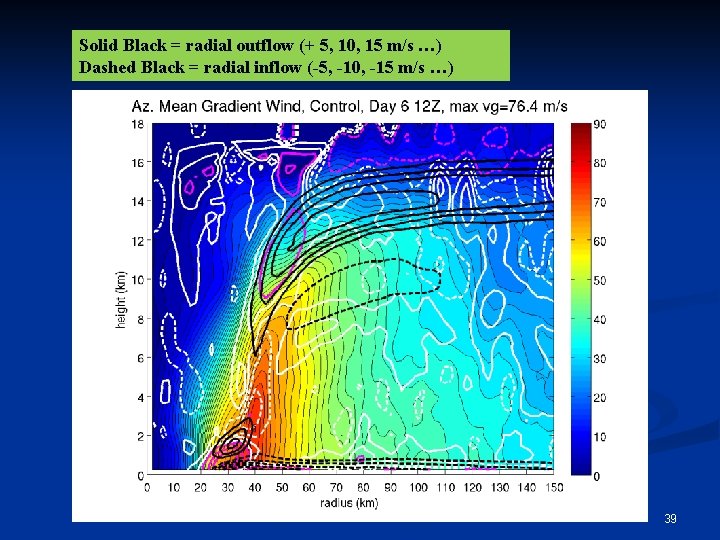
Evaluation of Gradient Wind Balance Gradient wind balance is defined by the balance between the pressure gradient force (PGF), Coriolis force (Co), and centrifugal force (Ce). Ce Co PGF We can calculate theoretical gradient windspeed (vg), and compare it to the actual tangential windspeed (v). 34
Tangential Windspeed Gradient Windspeed 35
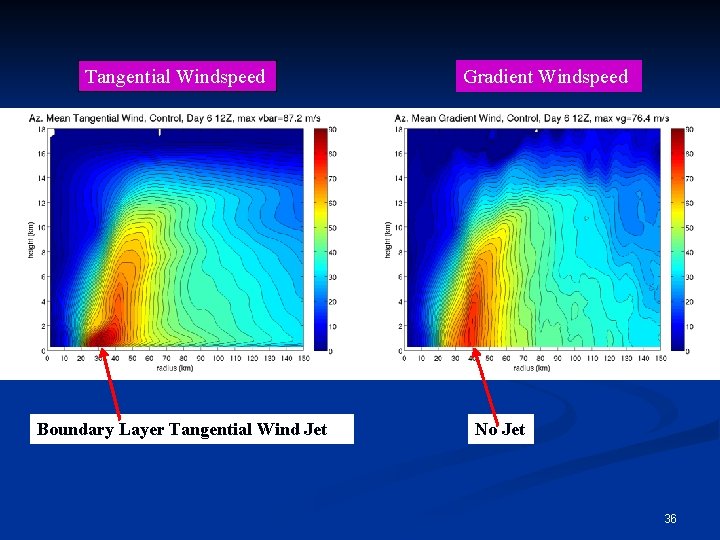
Tangential Windspeed Boundary Layer Tangential Wind Jet Gradient Windspeed No Jet 36
Tangential Windspeed Boundary Layer Tangential Wind Jet Gradient Windspeed No Jet 37
White = 1, 3 m/s Magenta = 5, 10, 15, 20 m/s Solid = positive (supergradient) Dashed = negative (subgradient) 38
Solid Black = radial outflow (+ 5, 10, 15 m/s …) Dashed Black = radial inflow (-5, -10, -15 m/s …) 39
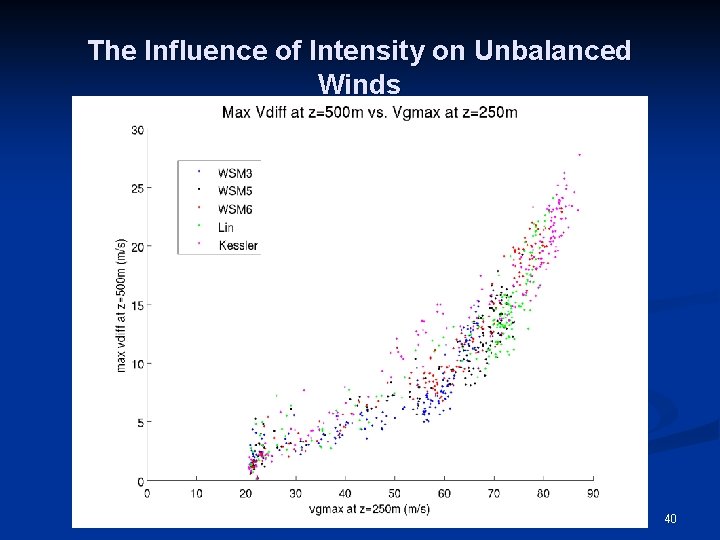
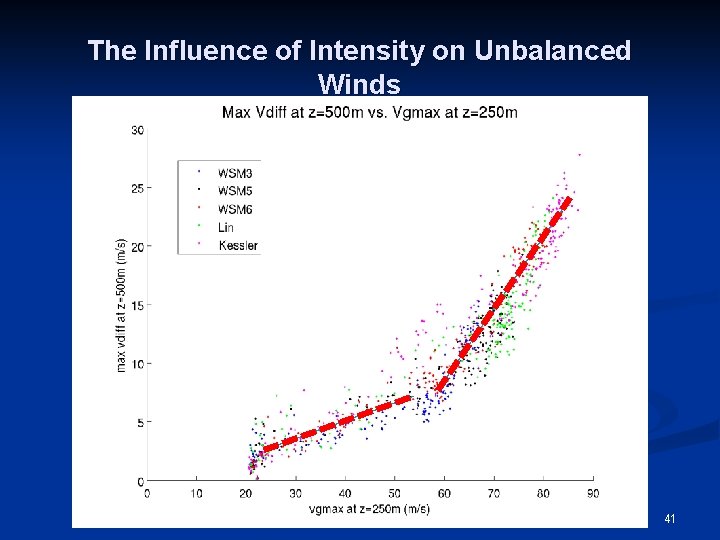
The Influence of Intensity on Unbalanced Winds 40
The Influence of Intensity on Unbalanced Winds 41
42
43
44
45
46
A Different Topic: The Warm Core 47
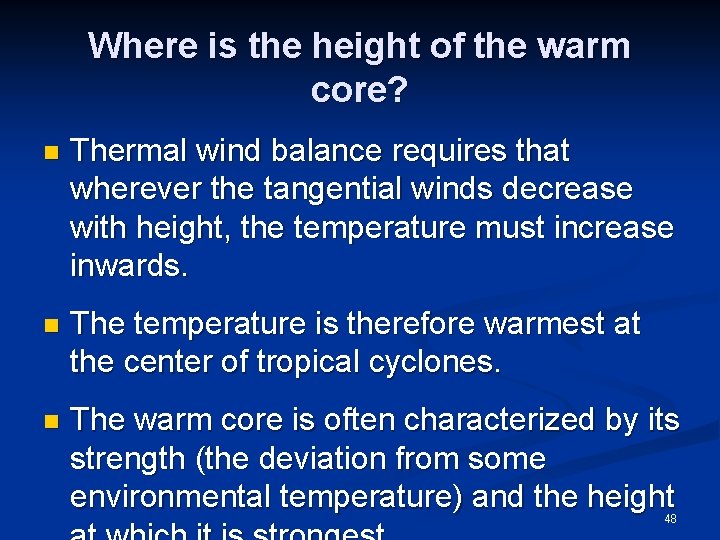
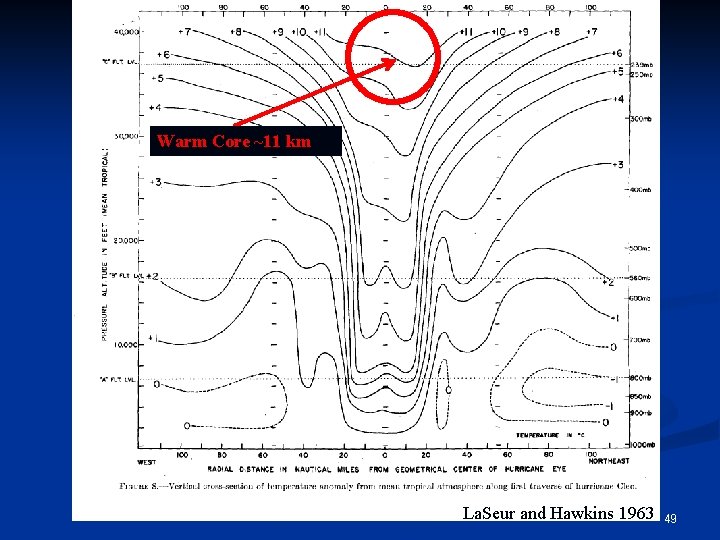
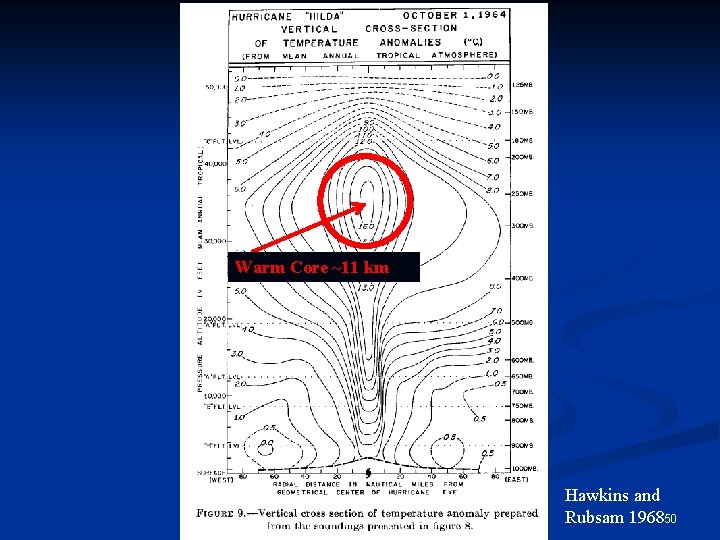
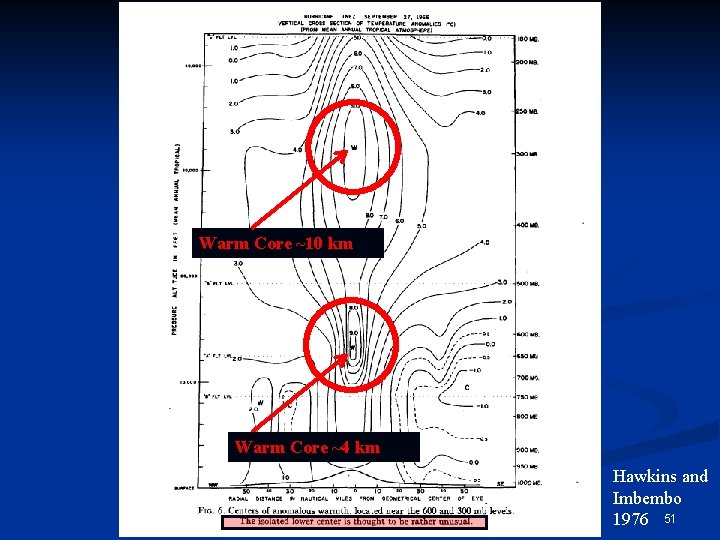
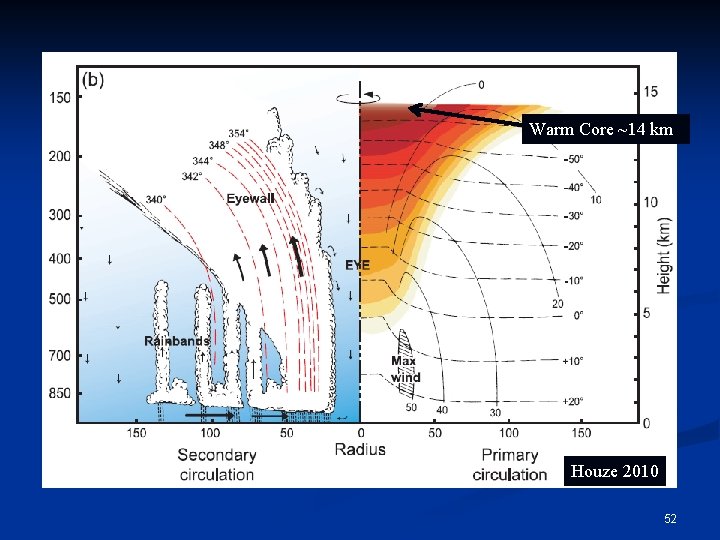
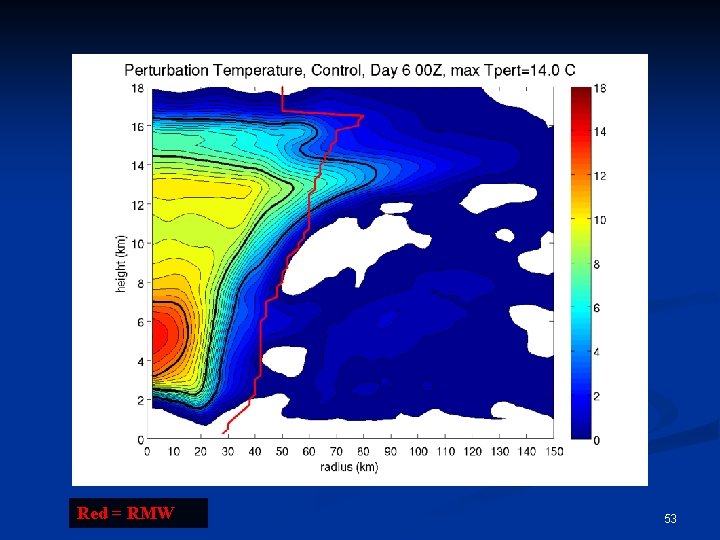
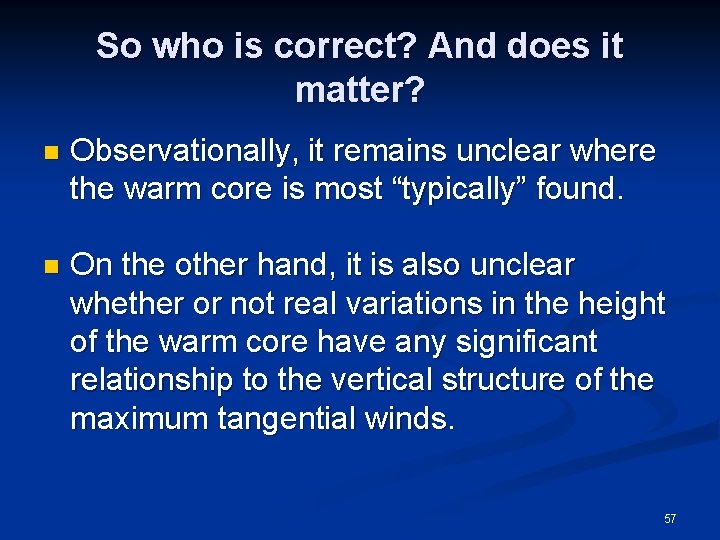
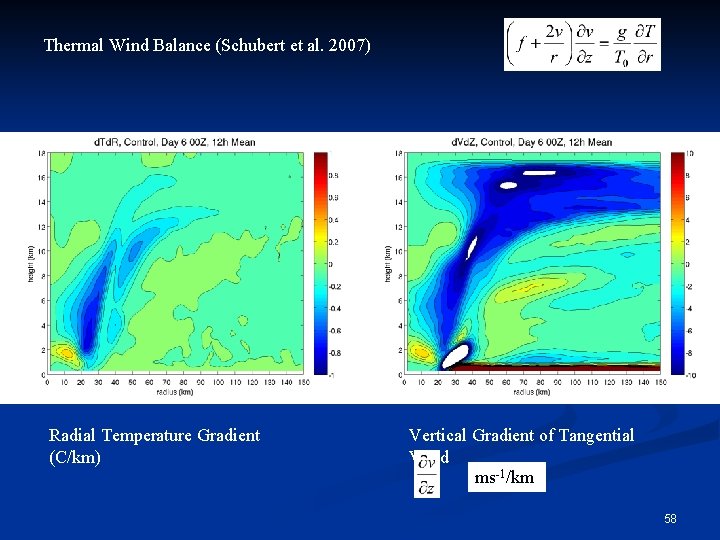
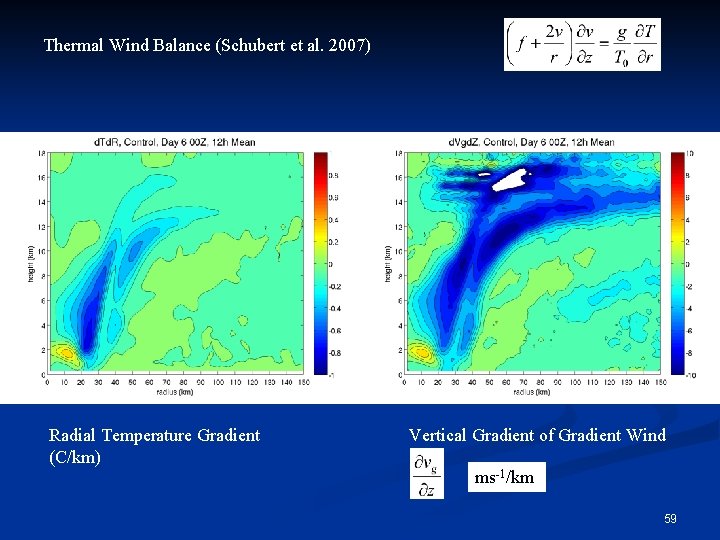
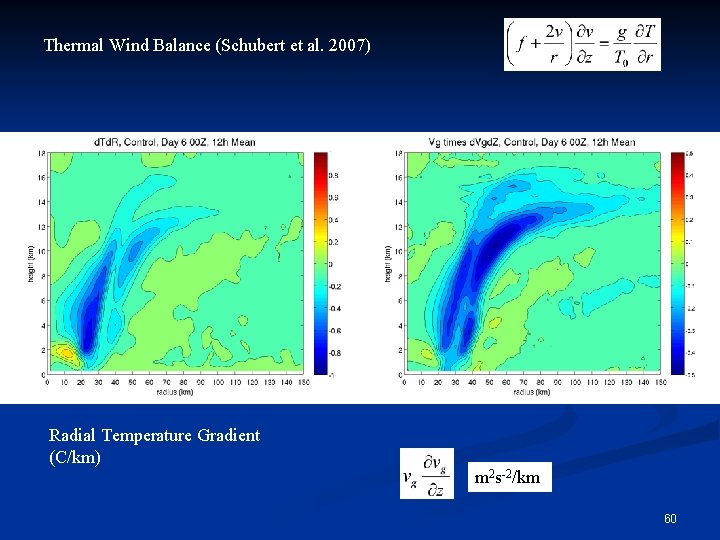
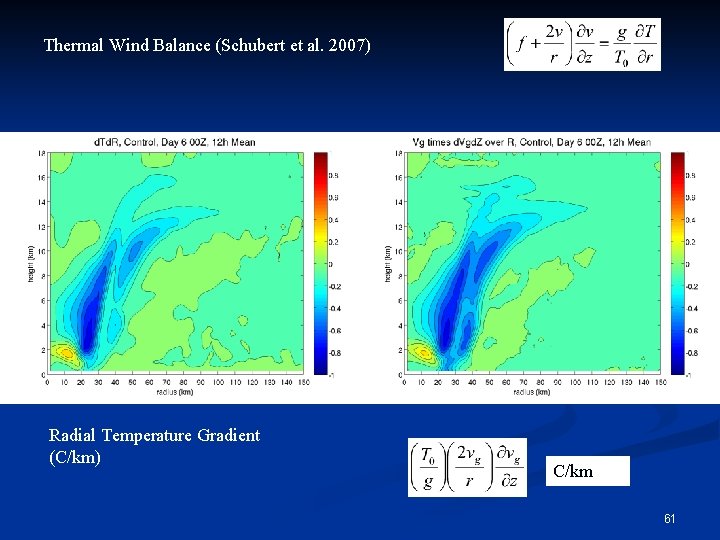
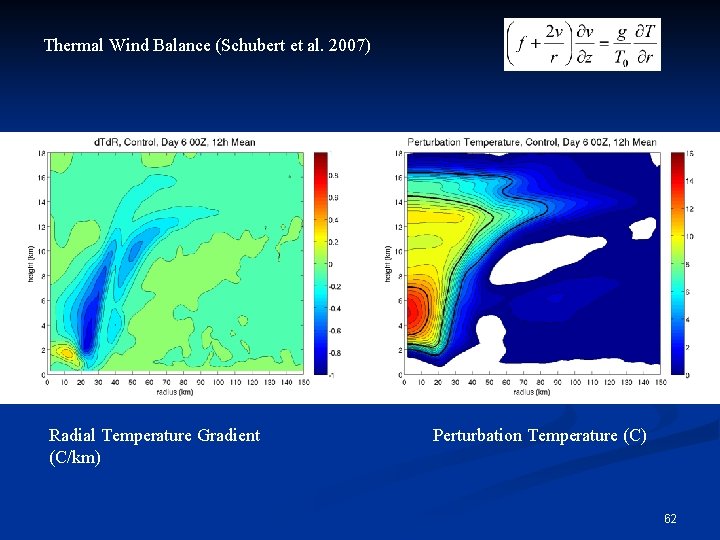
Where is the height of the warm core? n Thermal wind balance requires that wherever the tangential winds decrease with height, the temperature must increase inwards. n The temperature is therefore warmest at the center of tropical cyclones. n The warm core is often characterized by its strength (the deviation from some environmental temperature) and the height 48
Warm Core ~11 km La. Seur and Hawkins 1963 49
Warm Core ~11 km Hawkins and Rubsam 196850
Warm Core ~10 km Warm Core ~4 km Hawkins and Imbembo 1976 51
Warm Core ~14 km Houze 2010 52
Red = RMW 53
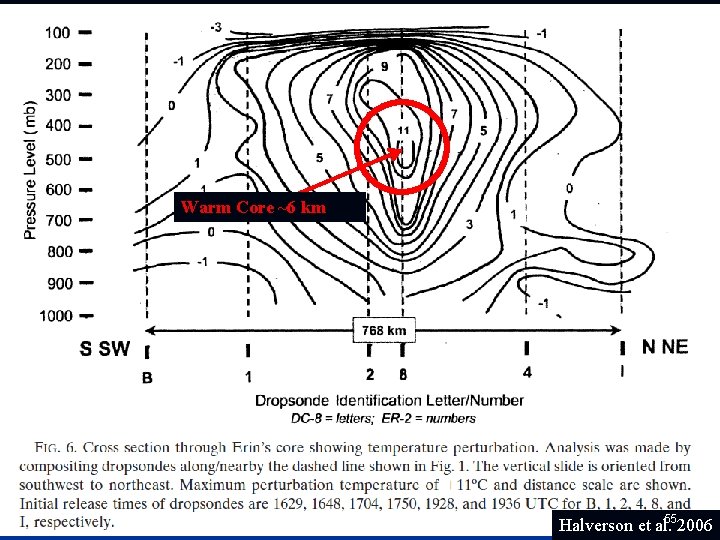
So who is correct? And does it matter? The direct evidence of a preferred uppertropospheric warm core is weak, as it is based on only a few 40 year old case studies with flights at 3 -5 levels. n Because of this belief about where the warm core should be, some recent studies that show evidence for a lower warm core try to explain it as an anomaly that is caused by wind shear. n The height of the warm core is also n 54
Warm Core ~6 km Halverson et al. 552006
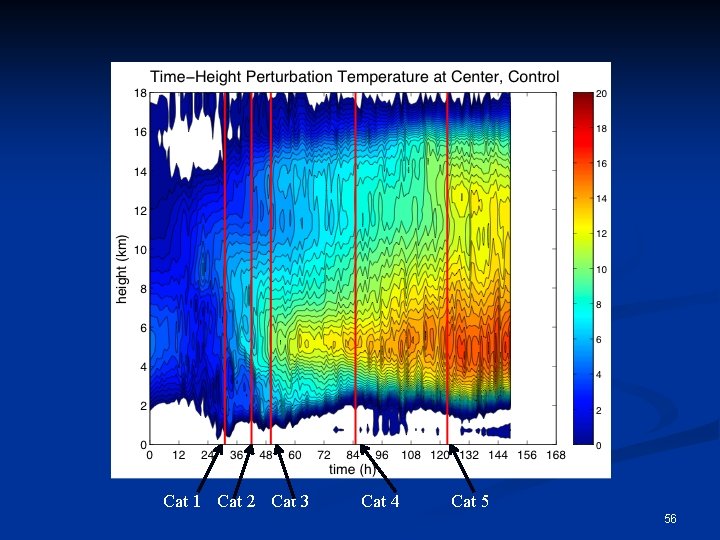
Cat 1 Cat 2 Cat 3 Cat 4 Cat 5 56
So who is correct? And does it matter? n Observationally, it remains unclear where the warm core is most “typically” found. n On the other hand, it is also unclear whether or not real variations in the height of the warm core have any significant relationship to the vertical structure of the maximum tangential winds. 57
Thermal Wind Balance (Schubert et al. 2007) Radial Temperature Gradient (C/km) Vertical Gradient of Tangential Wind ms-1/km 58
Thermal Wind Balance (Schubert et al. 2007) Radial Temperature Gradient (C/km) Vertical Gradient of Gradient Wind ms-1/km 59
Thermal Wind Balance (Schubert et al. 2007) Radial Temperature Gradient (C/km) m 2 s-2/km 60
Thermal Wind Balance (Schubert et al. 2007) Radial Temperature Gradient (C/km) C/km 61
Thermal Wind Balance (Schubert et al. 2007) Radial Temperature Gradient (C/km) Perturbation Temperature (C) 62
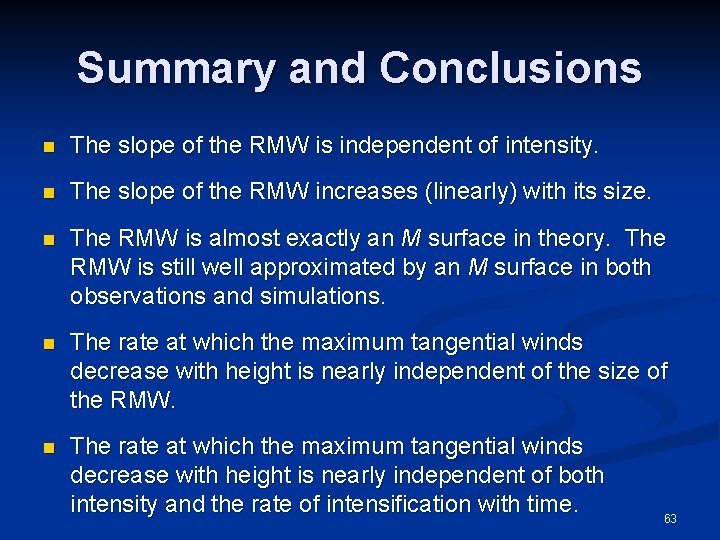
Summary and Conclusions n The slope of the RMW is independent of intensity. n The slope of the RMW increases (linearly) with its size. n The RMW is almost exactly an M surface in theory. The RMW is still well approximated by an M surface in both observations and simulations. n The rate at which the maximum tangential winds decrease with height is nearly independent of the size of the RMW. n The rate at which the maximum tangential winds decrease with height is nearly independent of both intensity and the rate of intensification with time. 63
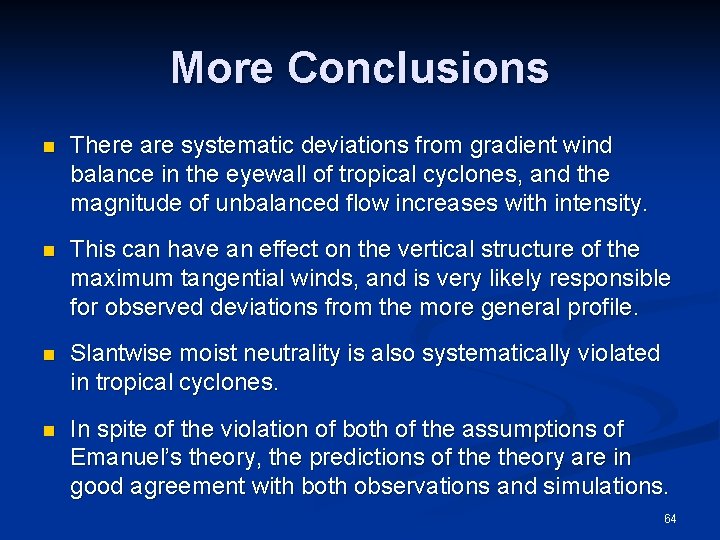
More Conclusions n There are systematic deviations from gradient wind balance in the eyewall of tropical cyclones, and the magnitude of unbalanced flow increases with intensity. n This can have an effect on the vertical structure of the maximum tangential winds, and is very likely responsible for observed deviations from the more general profile. n Slantwise moist neutrality is also systematically violated in tropical cyclones. n In spite of the violation of both of the assumptions of Emanuel’s theory, the predictions of theory are in good agreement with both observations and simulations. 64
Even More Conclusions n The height of the warm core in the simulations is much lower than what conventional wisdom would suggest. n There are insufficient observational studies to characterize where the warm core is most “typically” found. n Studies which suggest that the height of the warm core is well related to either intensity or shear may be incorrect. n The relationship between the temperature and wind fields is more subtle than is often assumed, and so the structure of the warm core may not be that well related to the vertical structure of the maximum tangential winds. 65
66
Extra Slides 67
68
69
Why Does the RMW Slope Outwards with Height? 70
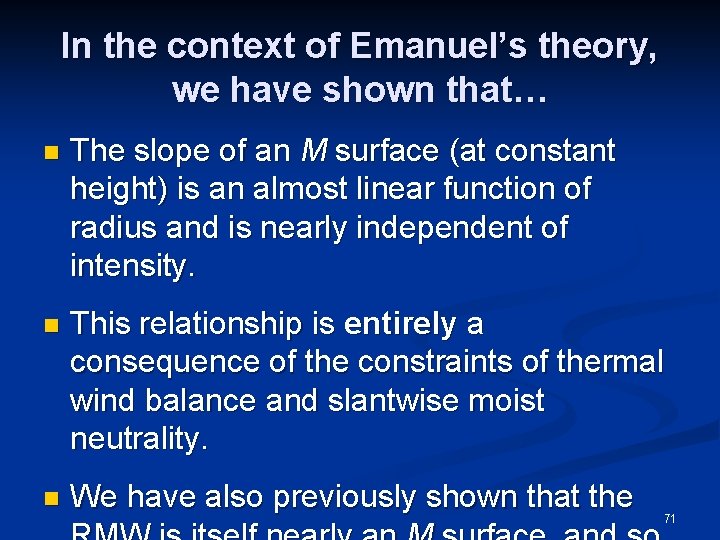
In the context of Emanuel’s theory, we have shown that… n The slope of an M surface (at constant height) is an almost linear function of radius and is nearly independent of intensity. n This relationship is entirely a consequence of the constraints of thermal wind balance and slantwise moist neutrality. n We have also previously shown that the 71
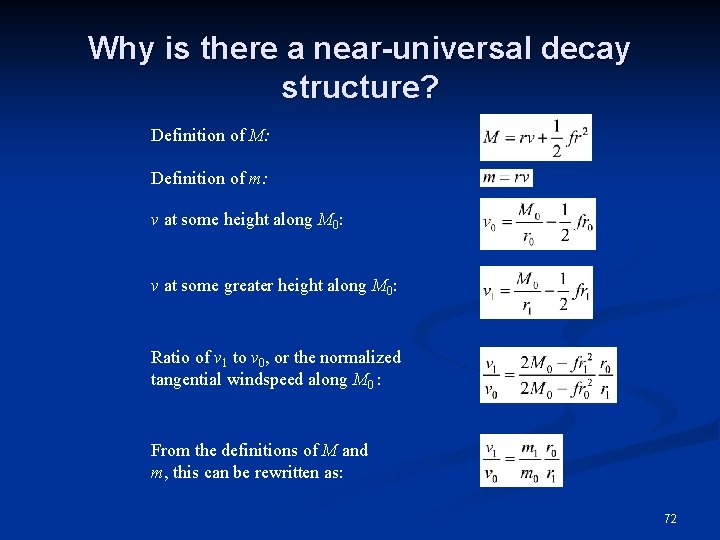
Why is there a near-universal decay structure? Definition of M: Definition of m: v at some height along M 0: v at some greater height along M 0: Ratio of v 1 to v 0, or the normalized tangential windspeed along M 0 : From the definitions of M and m, this can be rewritten as: 72
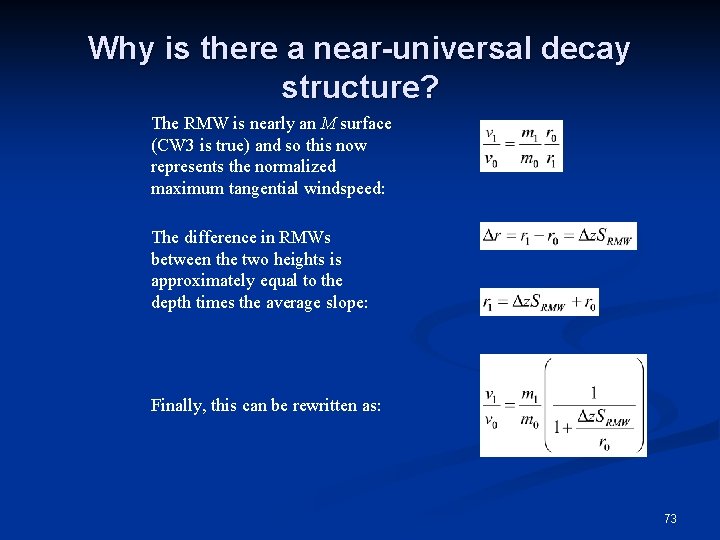
Why is there a near-universal decay structure? The RMW is nearly an M surface (CW 3 is true) and so this now represents the normalized maximum tangential windspeed: The difference in RMWs between the two heights is approximately equal to the depth times the average slope: Finally, this can be rewritten as: 73
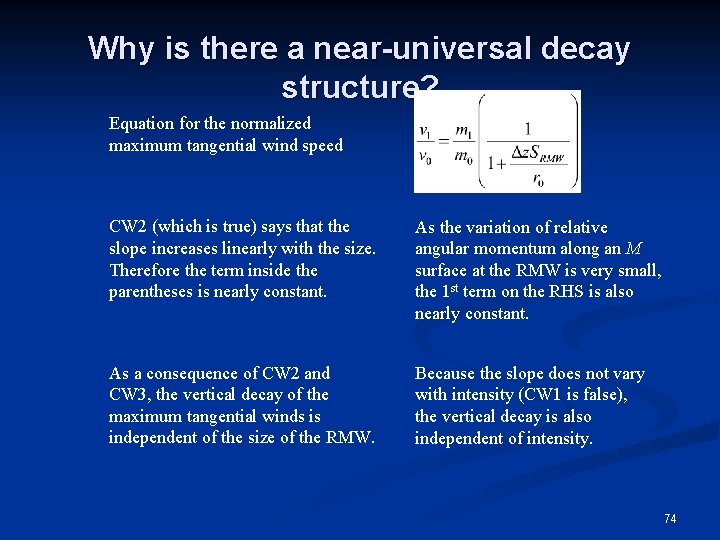
Why is there a near-universal decay structure? Equation for the normalized maximum tangential wind speed CW 2 (which is true) says that the slope increases linearly with the size. Therefore the term inside the parentheses is nearly constant. As the variation of relative angular momentum along an M surface at the RMW is very small, the 1 st term on the RHS is also nearly constant. As a consequence of CW 2 and CW 3, the vertical decay of the maximum tangential winds is independent of the size of the RMW. Because the slope does not vary with intensity (CW 1 is false), the vertical decay is also independent of intensity. 74
Why is Neutrality Violated? n n n Numerous additional simulations have revealed that the stability structure shown above is very robust. This remains true for simulations which are initialized in an (unrealistic) moist neutral environment. is not conserved in real convection, even in the absence of entrainment, due to microphysical processes. Tropical cyclones will inevitably evolve towards a nonneutral structure for the same reasons that the mean tropical sounding is non-neutral: n The melting and evaporation of precipitation falling into subsaturated air. n The finite terminal fall speed of precipitation. 75
76
77