
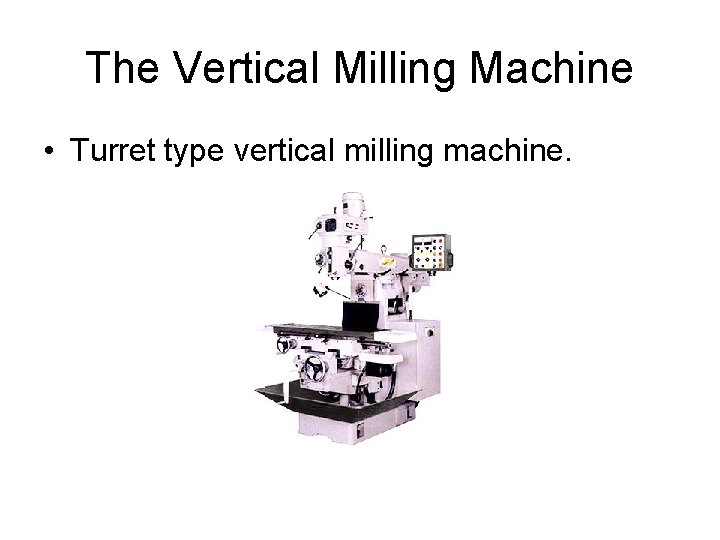
The Vertical Milling Machine Turret type vertical milling

- Slides: 46
The Vertical Milling Machine • Turret type vertical milling machine.
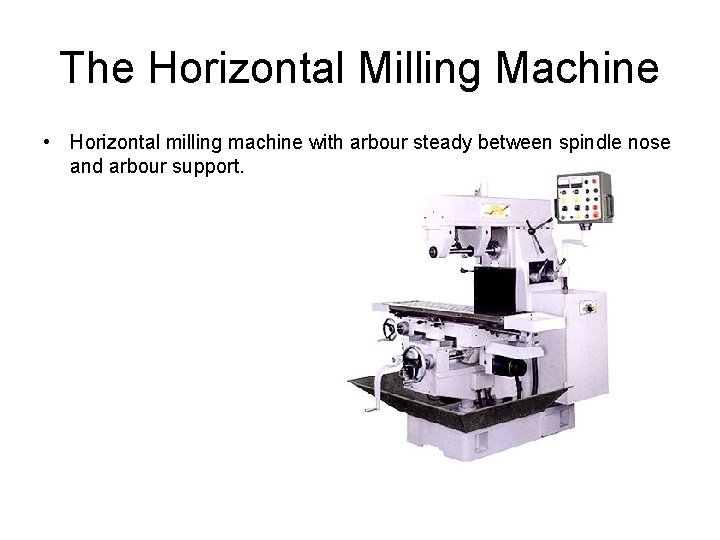
The Horizontal Milling Machine • Horizontal milling machine with arbour steady between spindle nose and arbour support.
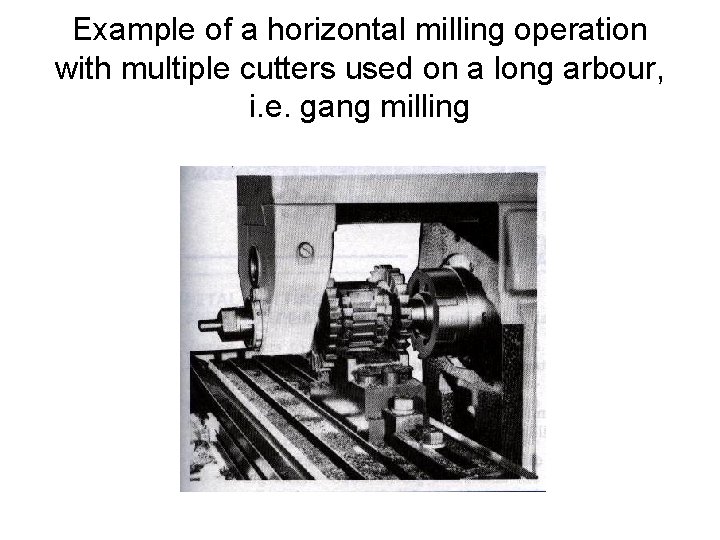
Example of a horizontal milling operation with multiple cutters used on a long arbour, i. e. gang milling
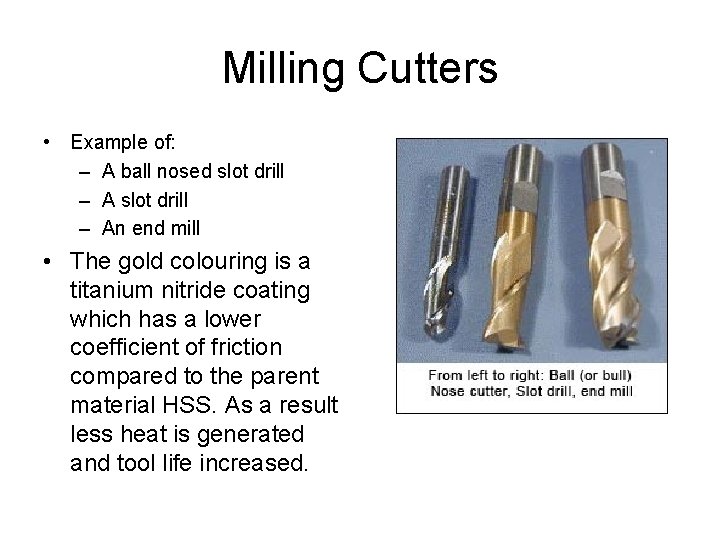
Milling Cutters • Example of: – A ball nosed slot drill – An end mill • The gold colouring is a titanium nitride coating which has a lower coefficient of friction compared to the parent material HSS. As a result less heat is generated and tool life increased.
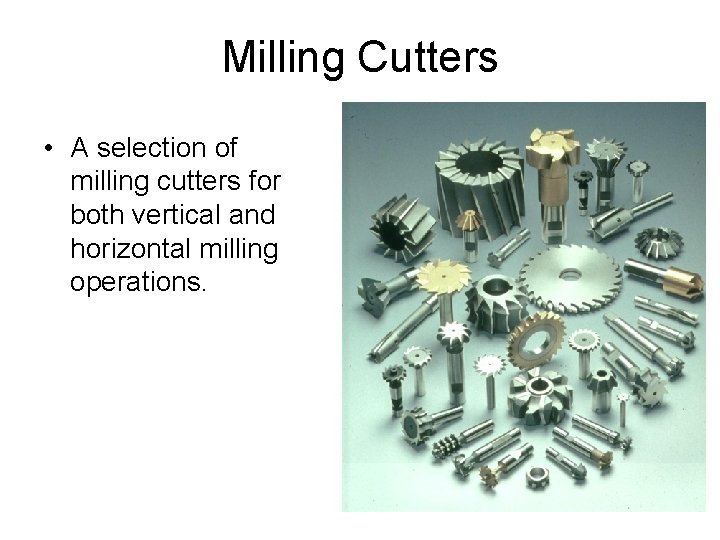
Milling Cutters • A selection of milling cutters for both vertical and horizontal milling operations.
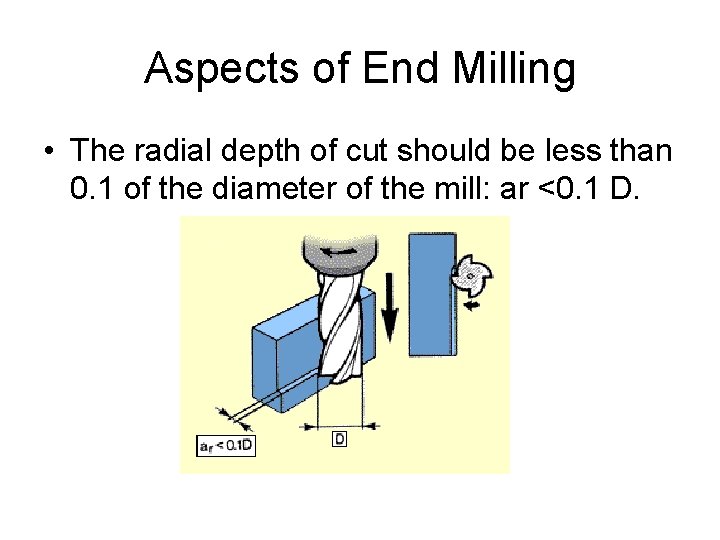
Aspects of End Milling • The radial depth of cut should be less than 0. 1 of the diameter of the mill: ar <0. 1 D.
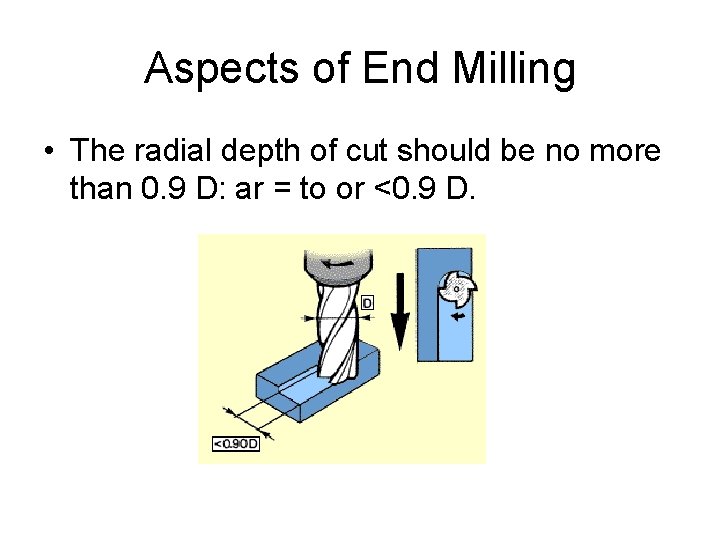
Aspects of End Milling • The radial depth of cut should be no more than 0. 9 D: ar = to or <0. 9 D.
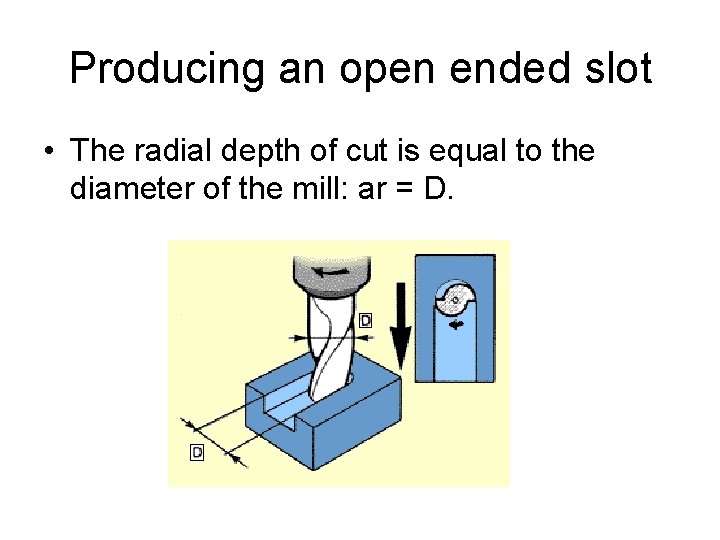
Producing an open ended slot • The radial depth of cut is equal to the diameter of the mill: ar = D.
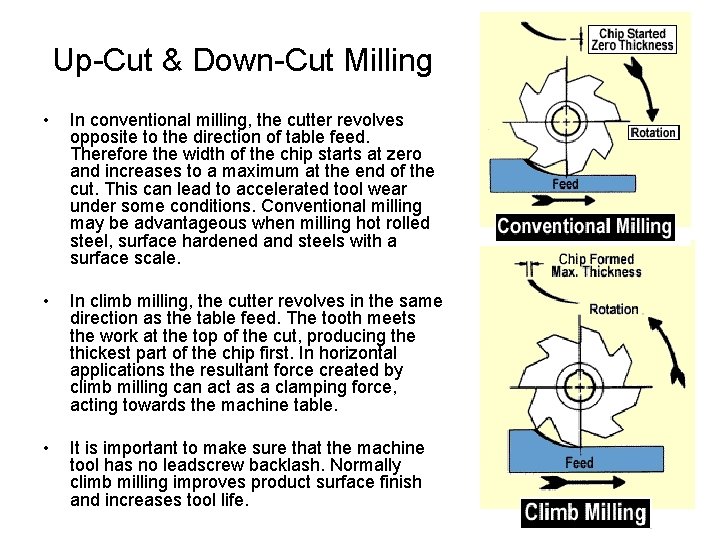
Up-Cut & Down-Cut Milling • In conventional milling, the cutter revolves opposite to the direction of table feed. Therefore the width of the chip starts at zero and increases to a maximum at the end of the cut. This can lead to accelerated tool wear under some conditions. Conventional milling may be advantageous when milling hot rolled steel, surface hardened and steels with a surface scale. • In climb milling, the cutter revolves in the same direction as the table feed. The tooth meets the work at the top of the cut, producing the thickest part of the chip first. In horizontal applications the resultant force created by climb milling can act as a clamping force, acting towards the machine table. • It is important to make sure that the machine tool has no leadscrew backlash. Normally climb milling improves product surface finish and increases tool life.
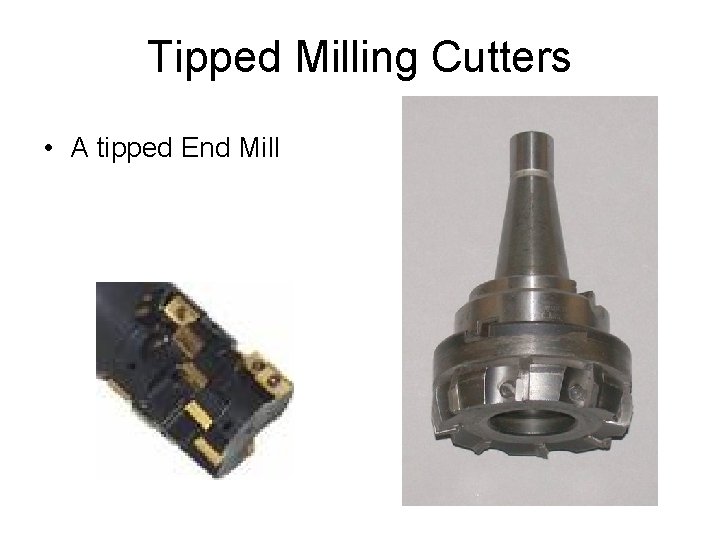
Tipped Milling Cutters • A tipped End Mill
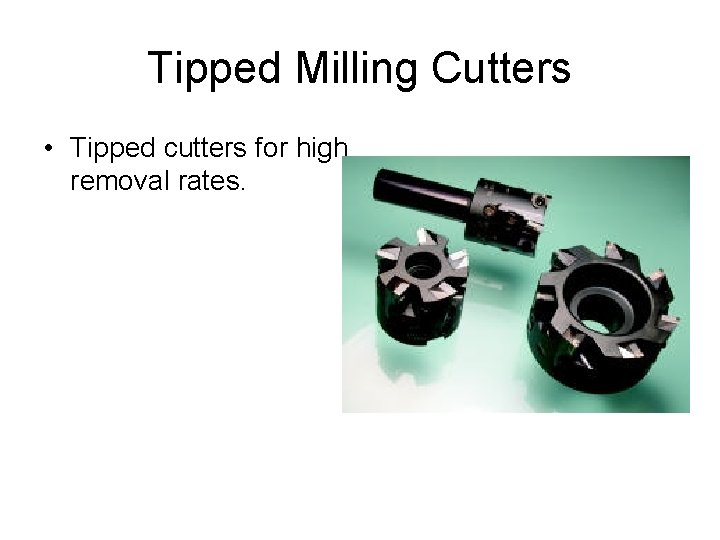
Tipped Milling Cutters • Tipped cutters for high removal rates.
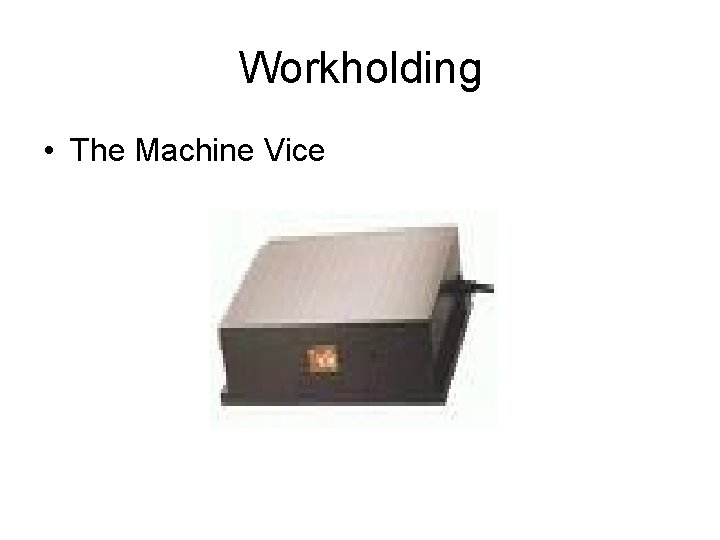
Workholding • The Machine Vice
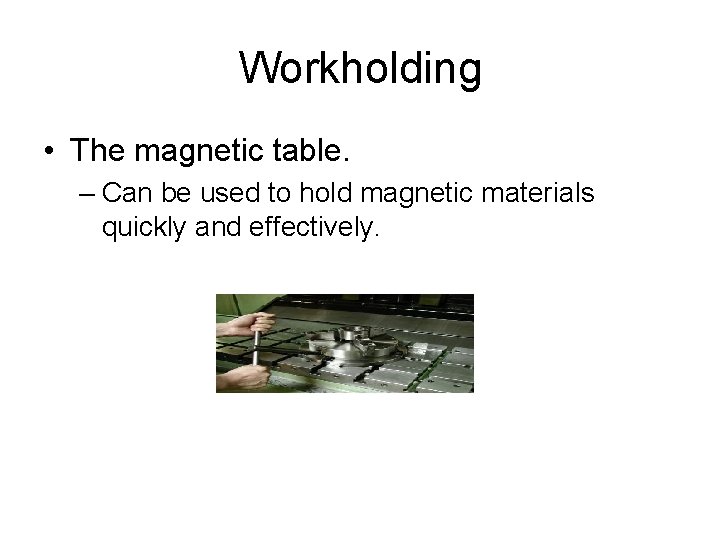
Workholding • The magnetic table. – Can be used to hold magnetic materials quickly and effectively.
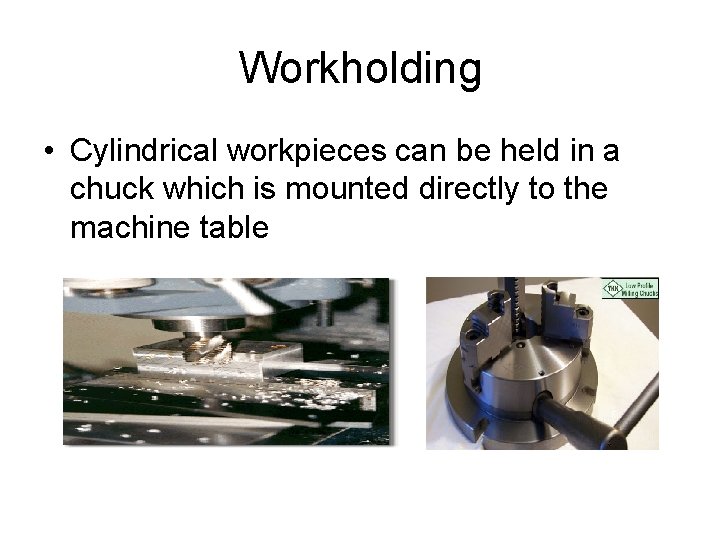
Workholding • Cylindrical workpieces can be held in a chuck which is mounted directly to the machine table
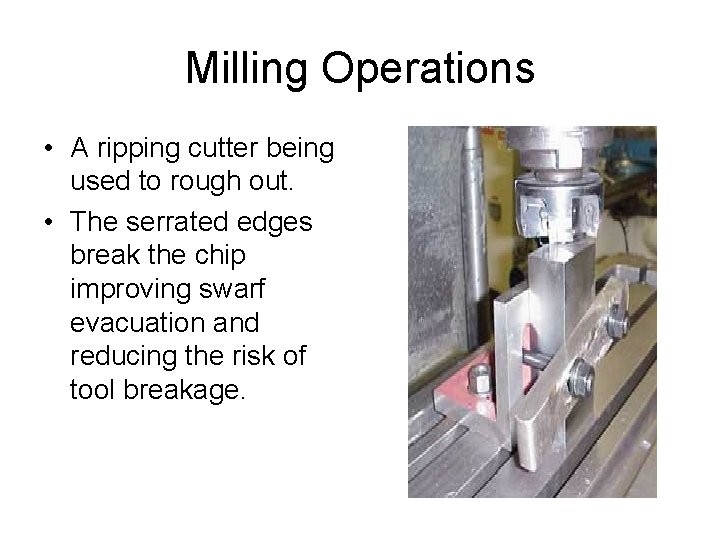
Milling Operations • A ripping cutter being used to rough out. • The serrated edges break the chip improving swarf evacuation and reducing the risk of tool breakage.
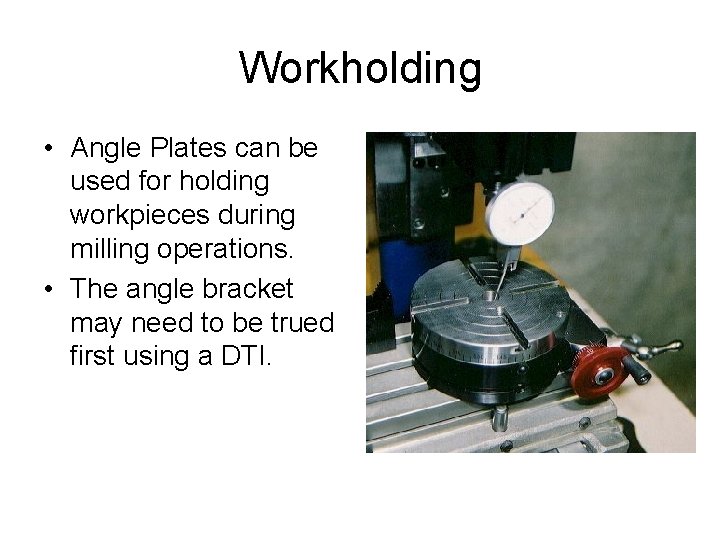
Workholding • Angle Plates can be used for holding workpieces during milling operations. • The angle bracket may need to be trued first using a DTI.
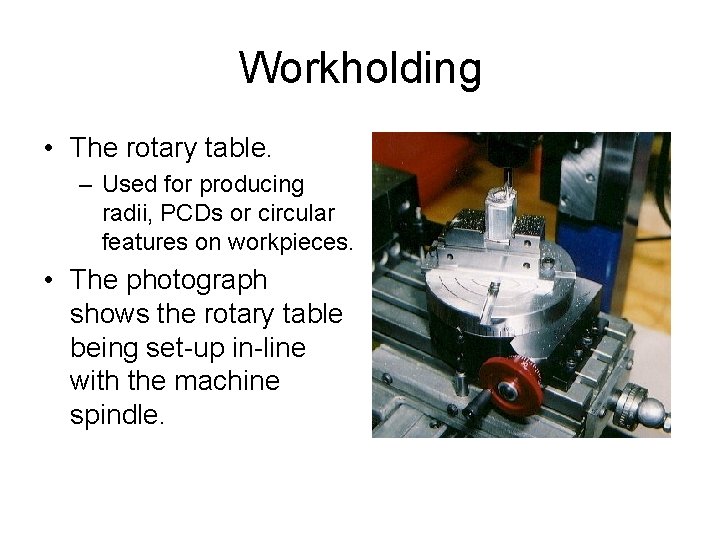
Workholding • The rotary table. – Used for producing radii, PCDs or circular features on workpieces. • The photograph shows the rotary table being set-up in-line with the machine spindle.
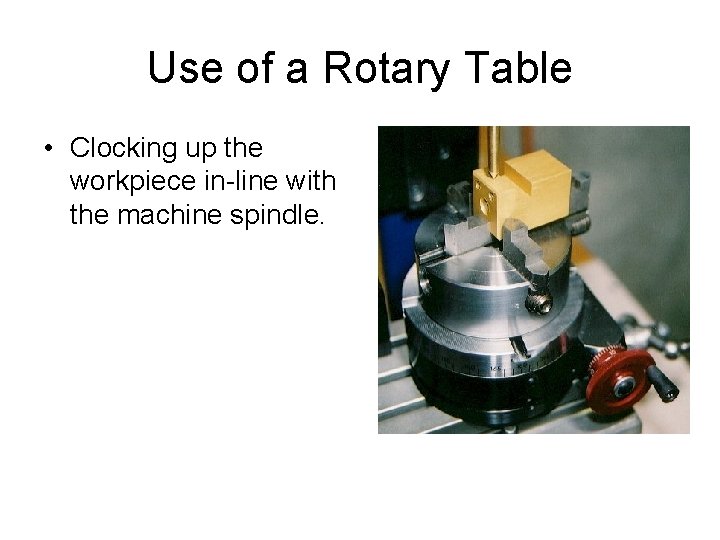
Use of a Rotary Table • Clocking up the workpiece in-line with the machine spindle.
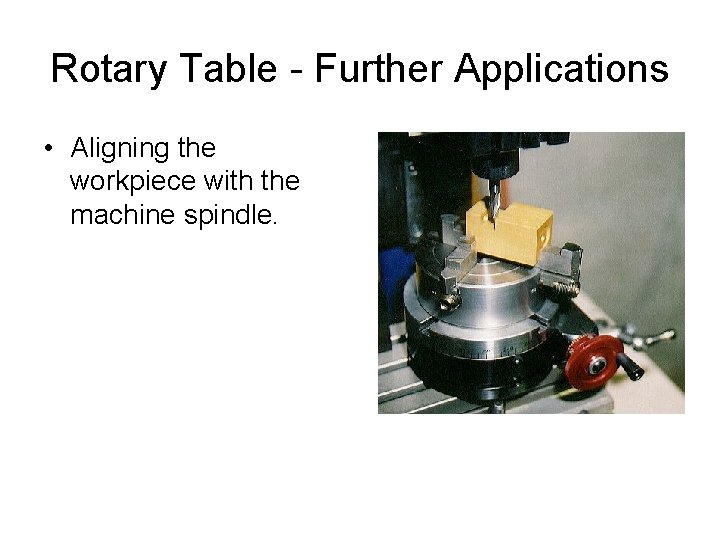
Rotary Table - Further Applications • Aligning the workpiece with the machine spindle.
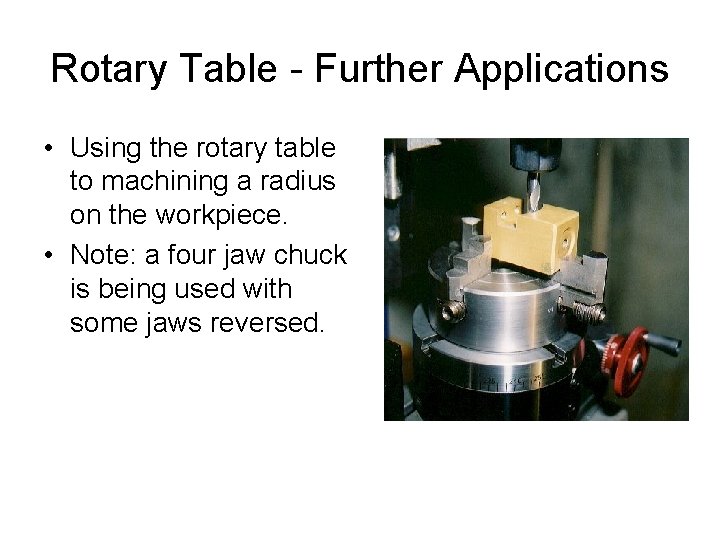
Rotary Table - Further Applications • Using the rotary table to machining a radius on the workpiece. • Note: a four jaw chuck is being used with some jaws reversed.
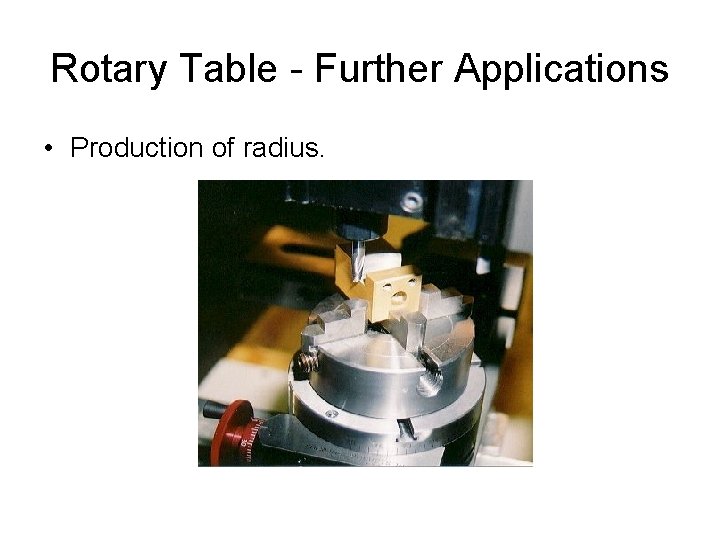
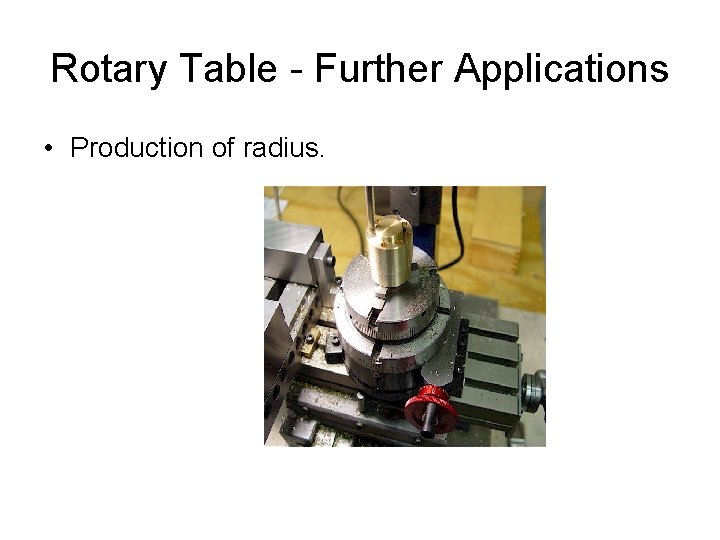
Rotary Table - Further Applications • Production of radius.
Rotary Table - Further Applications • Production of radius.
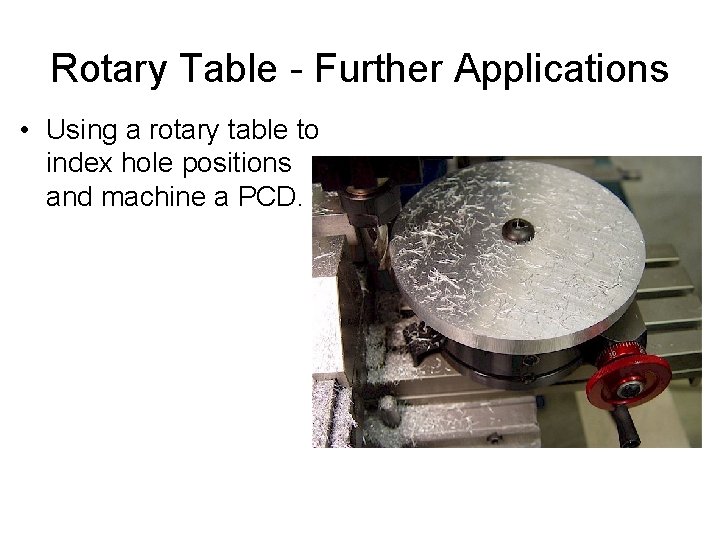
Rotary Table - Further Applications • Using a rotary table to index hole positions and machine a PCD.
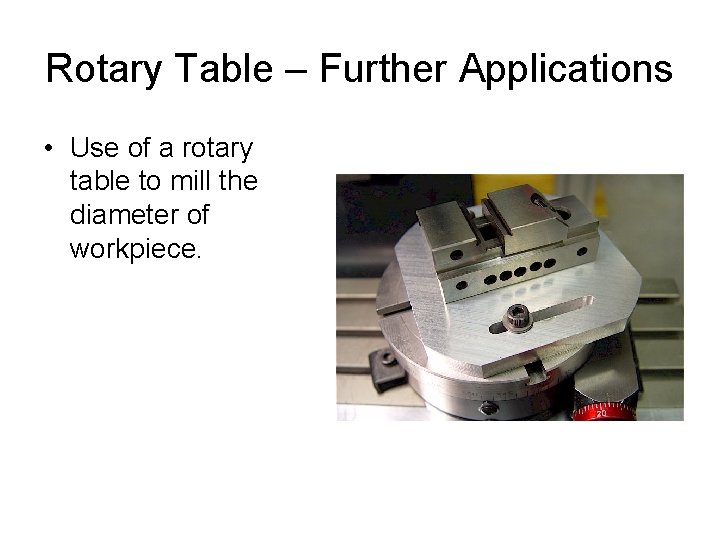
Rotary Table – Further Applications • Use of a rotary table to mill the diameter of workpiece.
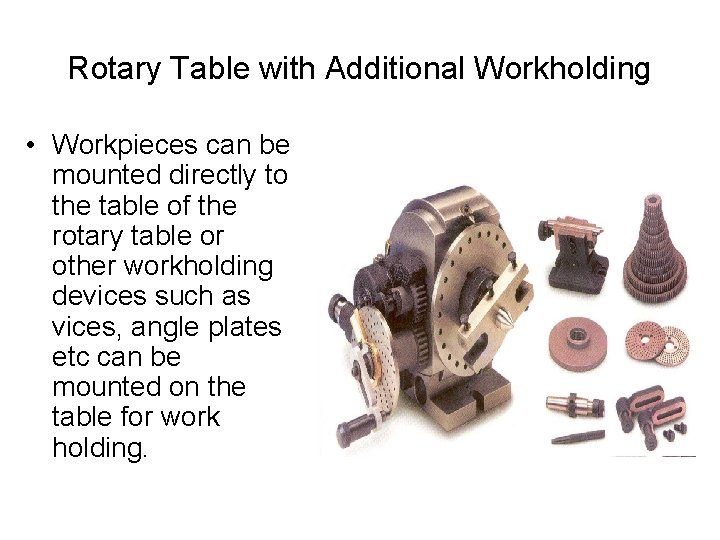
Rotary Table with Additional Workholding • Workpieces can be mounted directly to the table of the rotary table or other workholding devices such as vices, angle plates etc can be mounted on the table for work holding.
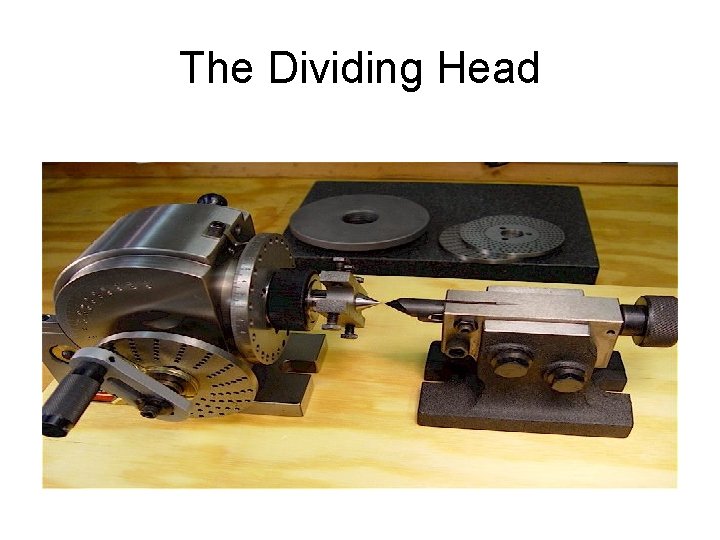
The Dividing Head
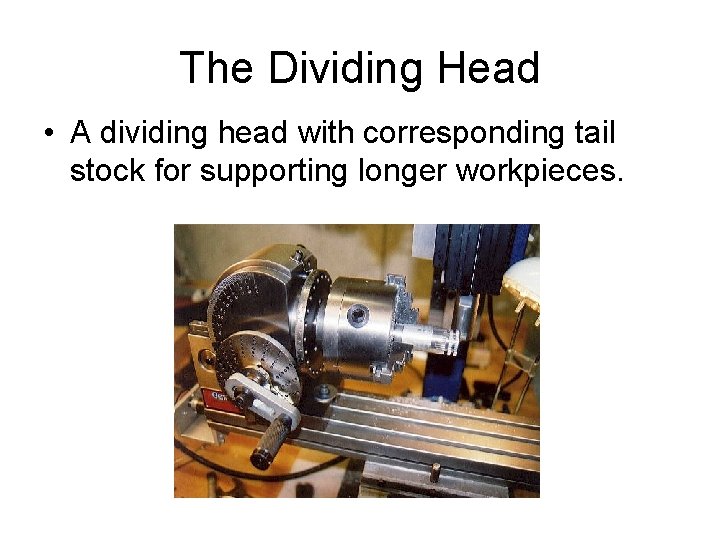
The Dividing Head • A dividing head with corresponding tail stock for supporting longer workpieces.
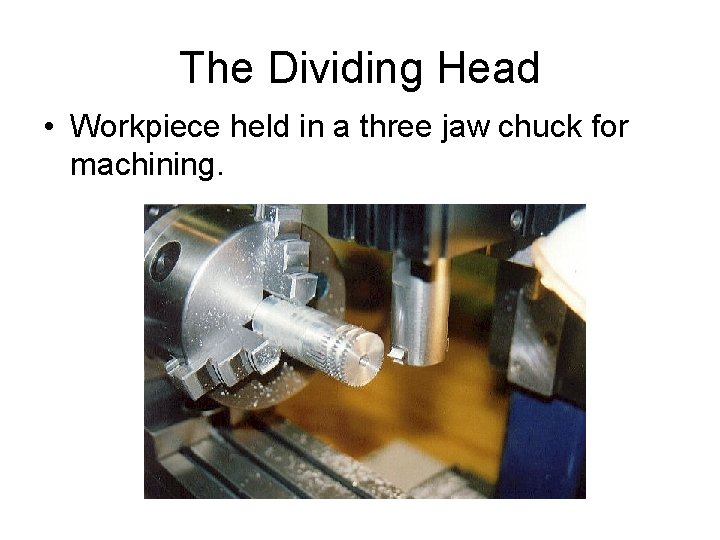
The Dividing Head • Workpiece held in a three jaw chuck for machining.
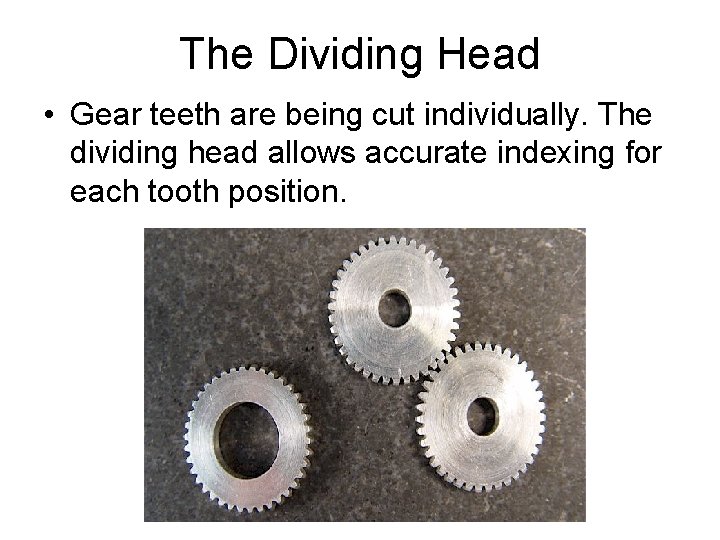
The Dividing Head • Gear teeth are being cut individually. The dividing head allows accurate indexing for each tooth position.
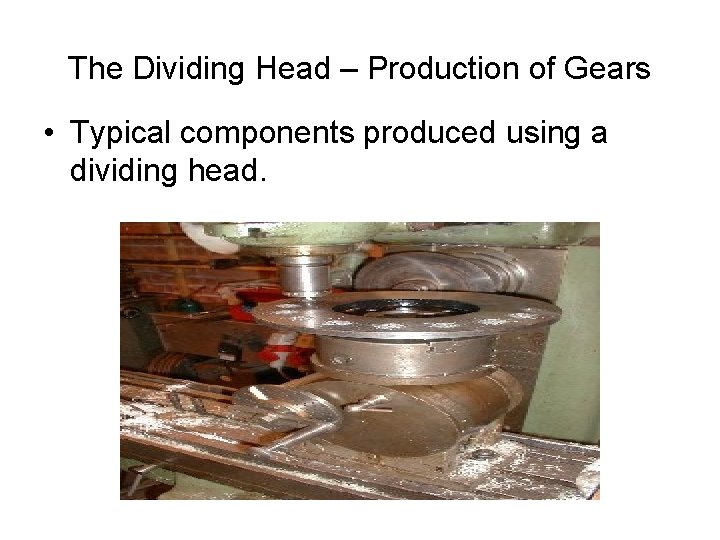
The Dividing Head – Production of Gears • Typical components produced using a dividing head.
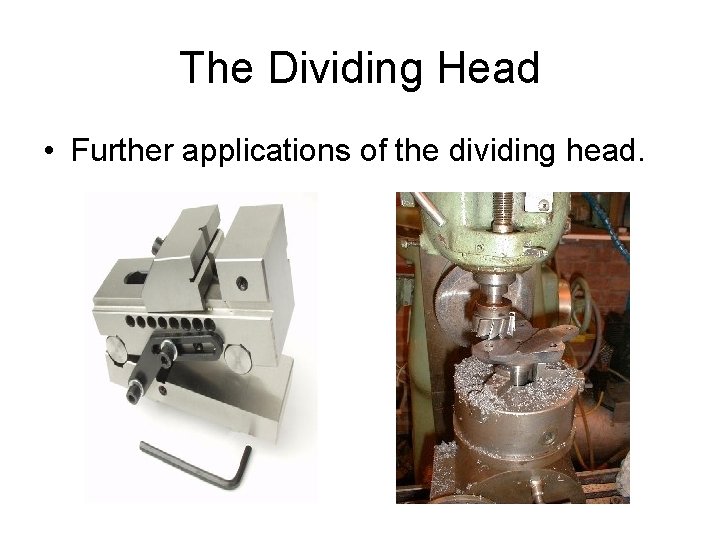
The Dividing Head • Further applications of the dividing head.
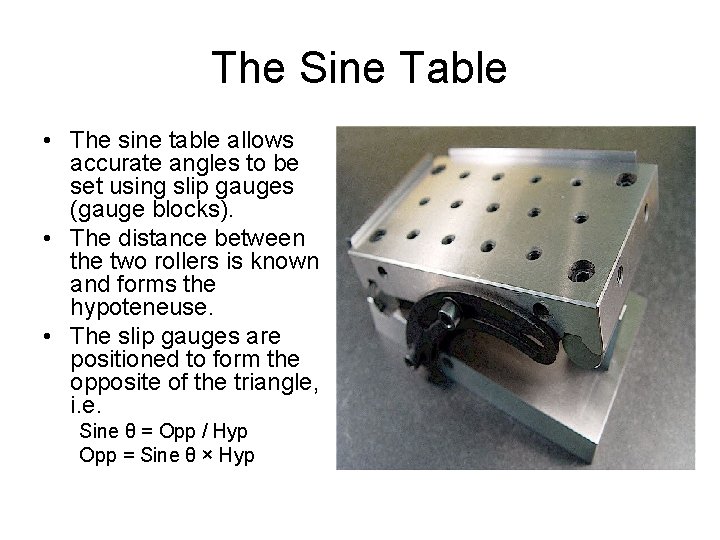
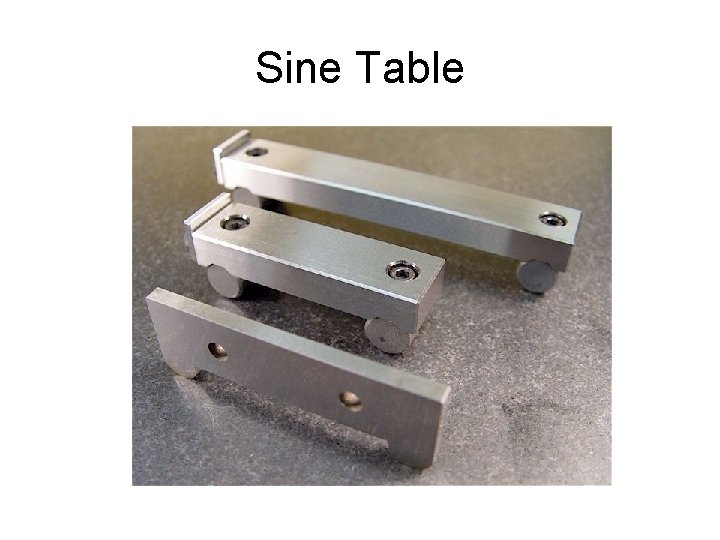
The Sine Table • The sine table allows accurate angles to be set using slip gauges (gauge blocks). • The distance between the two rollers is known and forms the hypoteneuse. • The slip gauges are positioned to form the opposite of the triangle, i. e. Sine θ = Opp / Hyp Opp = Sine θ × Hyp
Sine Table
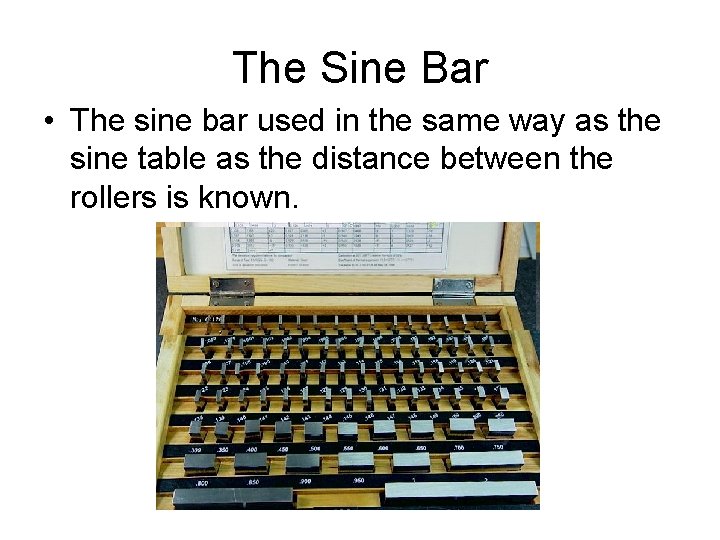
The Sine Bar • The sine bar used in the same way as the sine table as the distance between the rollers is known.
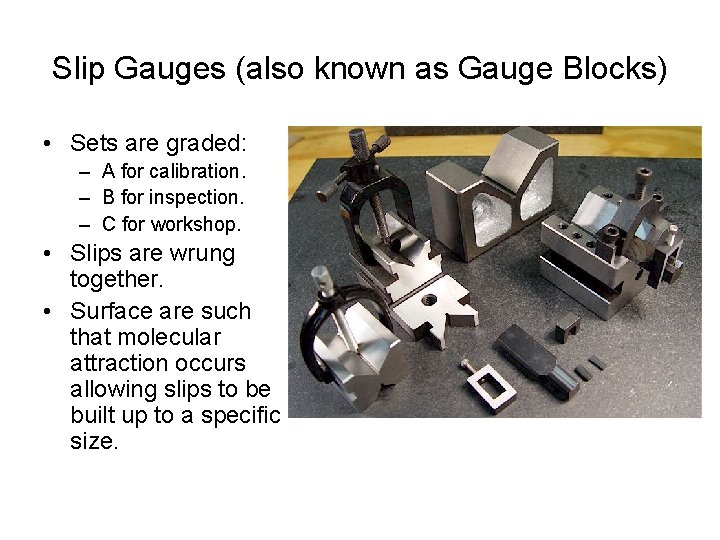
Slip Gauges (also known as Gauge Blocks) • Sets are graded: – A for calibration. – B for inspection. – C for workshop. • Slips are wrung together. • Surface are such that molecular attraction occurs allowing slips to be built up to a specific size.
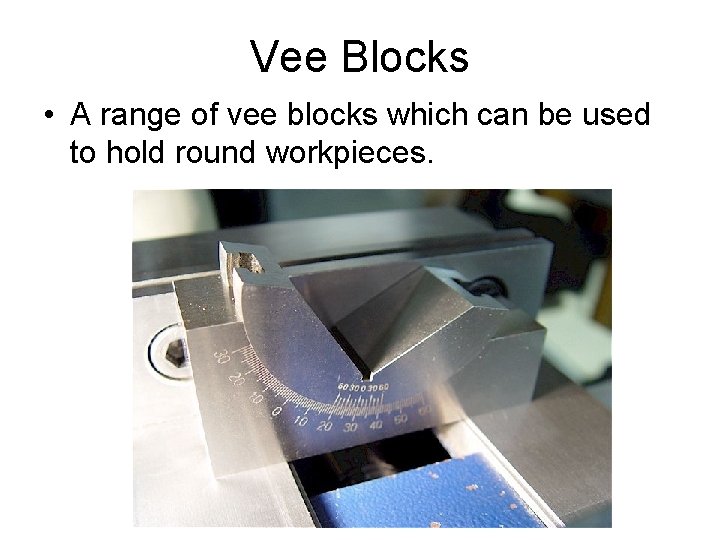
Vee Blocks • A range of vee blocks which can be used to hold round workpieces.
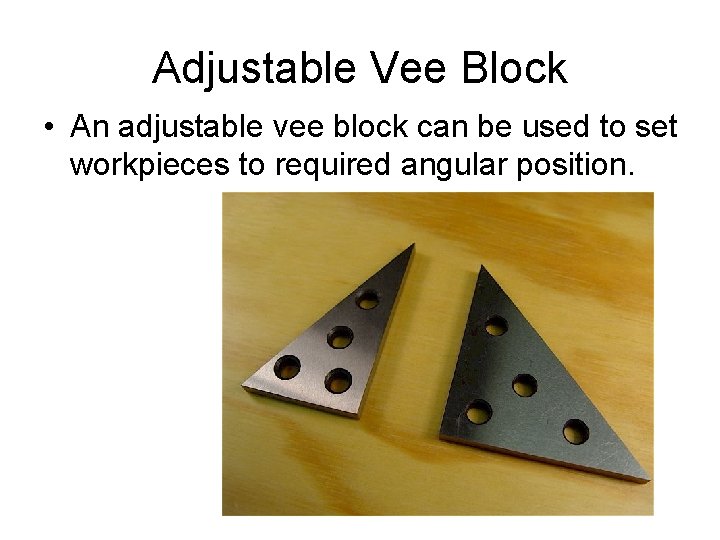
Adjustable Vee Block • An adjustable vee block can be used to set workpieces to required angular position.
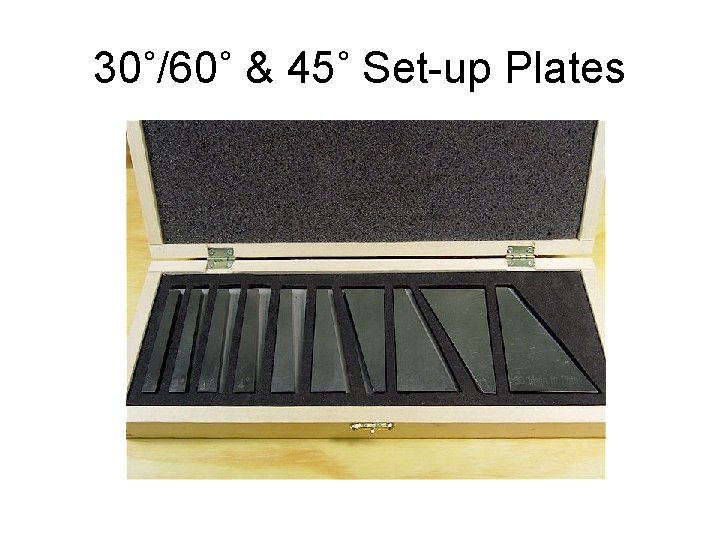
30˚/60˚ & 45˚ Set-up Plates
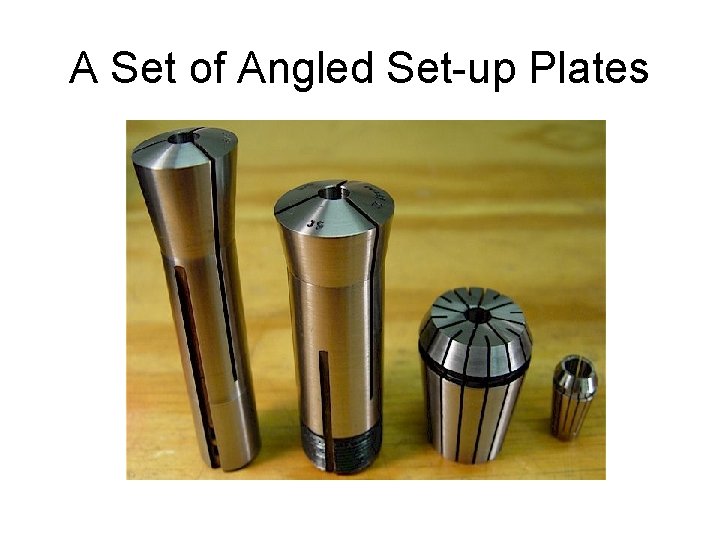
A Set of Angled Set-up Plates
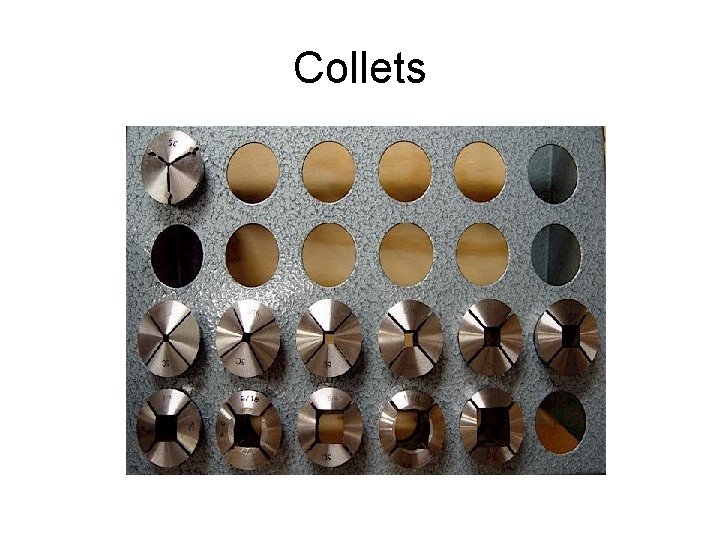
Collets
Collets
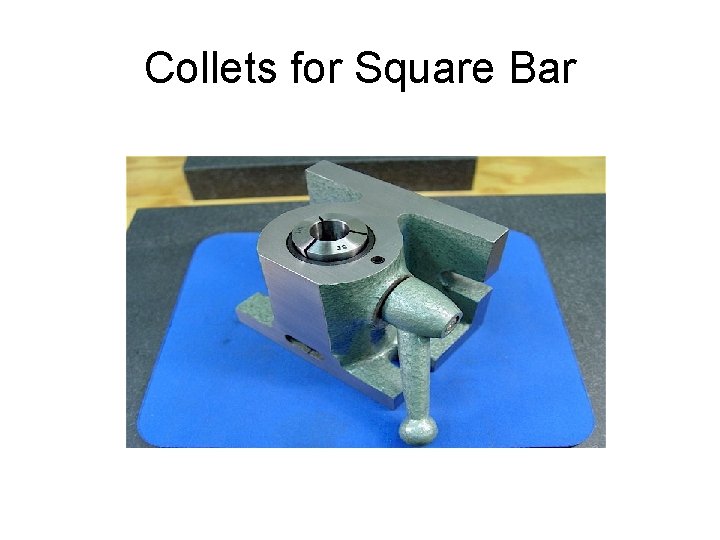
Collets for Square Bar
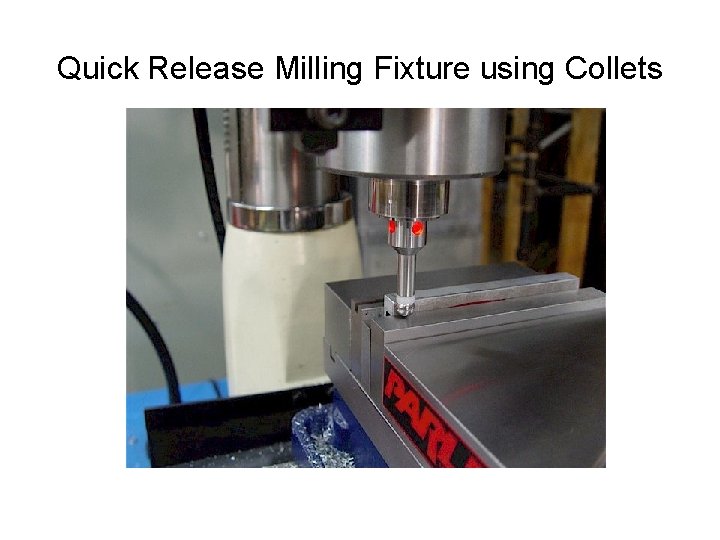
Quick Release Milling Fixture using Collets
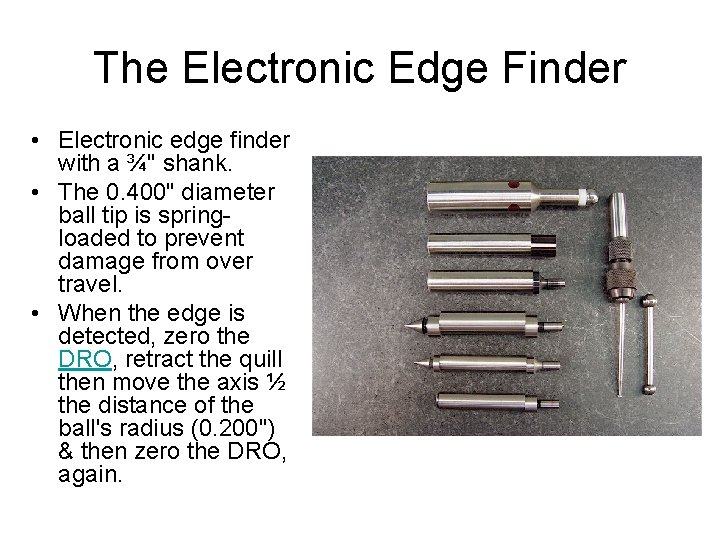
The Electronic Edge Finder • Electronic edge finder with a ¾" shank. • The 0. 400" diameter ball tip is springloaded to prevent damage from over travel. • When the edge is detected, zero the DRO, retract the quill then move the axis ½ the distance of the ball's radius (0. 200") & then zero the DRO, again.
Edge/Centre Finders • A variety of edge detectors & center finders with ¾". ½", & ⅜" shanks. • The wiggle-type (right) works best at about 1000 RPM.