
The Vertebrates Phylum Chordata www onacd ca Major
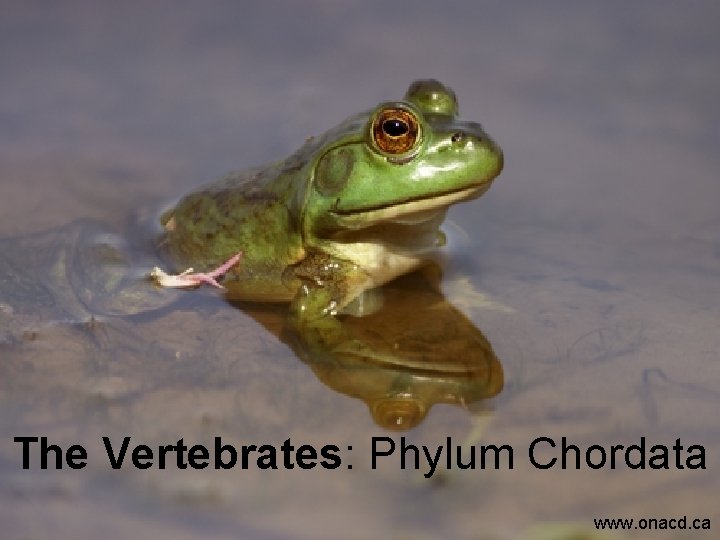
The Vertebrates: Phylum Chordata www. onacd. ca
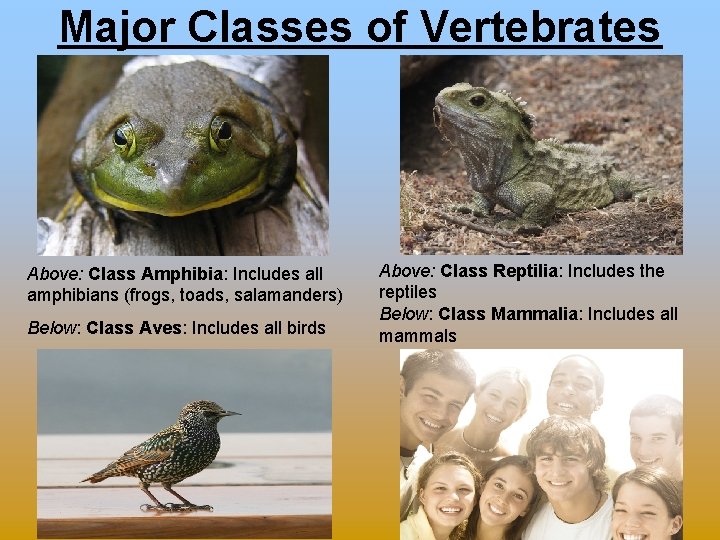
Major Classes of Vertebrates Above: Class Amphibia: Includes all amphibians (frogs, toads, salamanders) Below: Class Aves: Includes all birds Above: Class Reptilia: Includes the reptiles Below: Class Mammalia: Includes all mammals
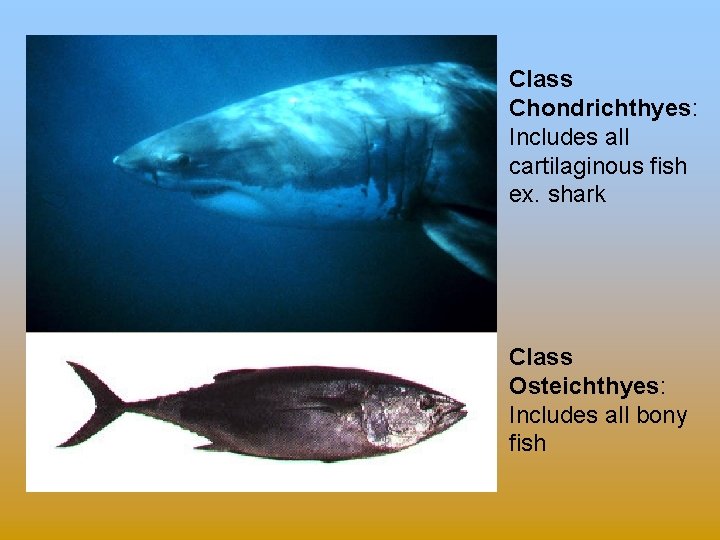
Class Chondrichthyes: Includes all cartilaginous fish ex. shark Class Osteichthyes: Includes all bony fish
Characteristics of All Vertebrates • Coelomate and bilaterally symmetrical which allows for complex body systems. • Have backbones with a protected spinal column, and an endoskeleton. • Advanced central nervous system with a large brain with skull. • Have an unequivocal head, eyes and sensory organs. • Complex heart and circulatory system. • Muscular system consists of mostly paired muscles. • Possess a special outer covering. • Have 1 or 2 pairs of appendages. • Are found on land water.

Adaptations of Vertebrates Class Amphibia • Have gills and very primitive lungs to exchange gasses as they live half of their life in water and half on land • Can also take in gasses through their moist skin (diffusion) • Lay eggs in the water after sexual reproduction which develop into tadpoles
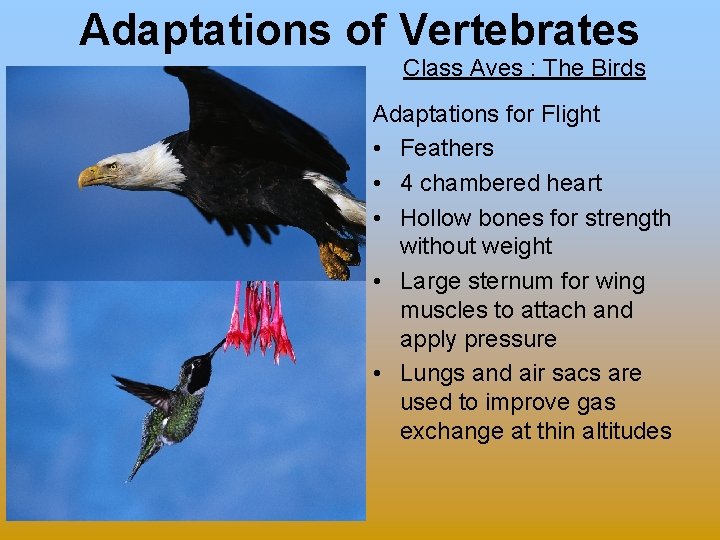
Adaptations of Vertebrates Class Aves : The Birds Adaptations for Flight • Feathers • 4 chambered heart • Hollow bones for strength without weight • Large sternum for wing muscles to attach and apply pressure • Lungs and air sacs are used to improve gas exchange at thin altitudes
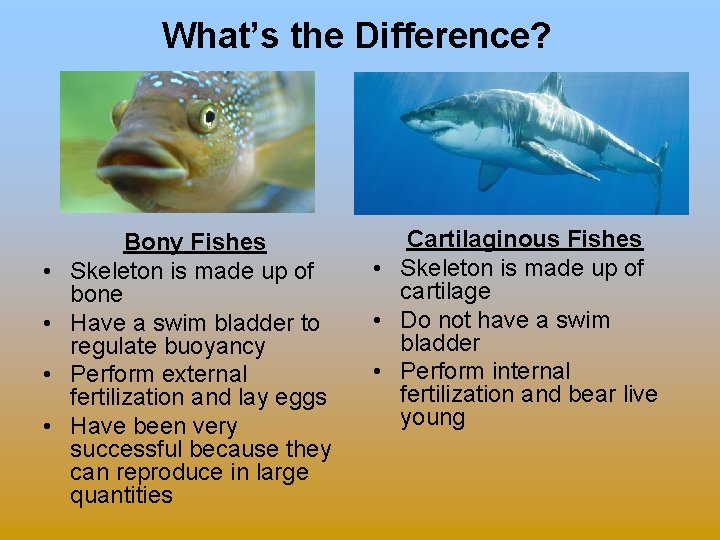
What’s the Difference? • • Bony Fishes Skeleton is made up of bone Have a swim bladder to regulate buoyancy Perform external fertilization and lay eggs Have been very successful because they can reproduce in large quantities Cartilaginous Fishes • Skeleton is made up of cartilage • Do not have a swim bladder • Perform internal fertilization and bear live young
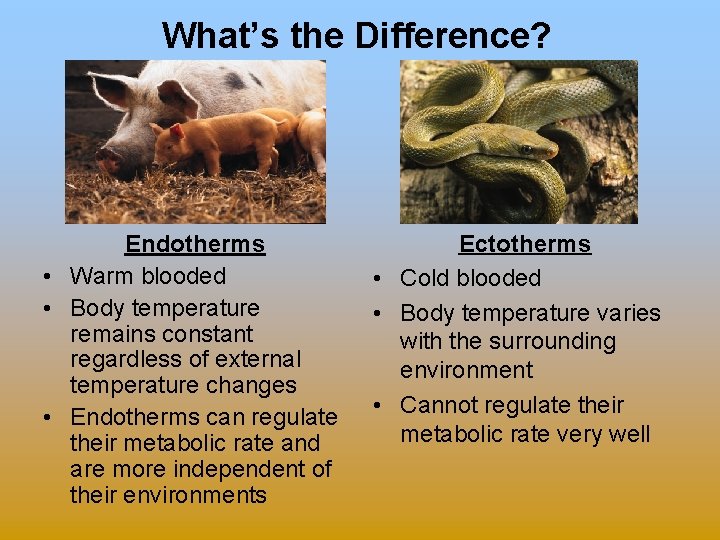
What’s the Difference? Endotherms • Warm blooded • Body temperature remains constant regardless of external temperature changes • Endotherms can regulate their metabolic rate and are more independent of their environments Ectotherms • Cold blooded • Body temperature varies with the surrounding environment • Cannot regulate their metabolic rate very well
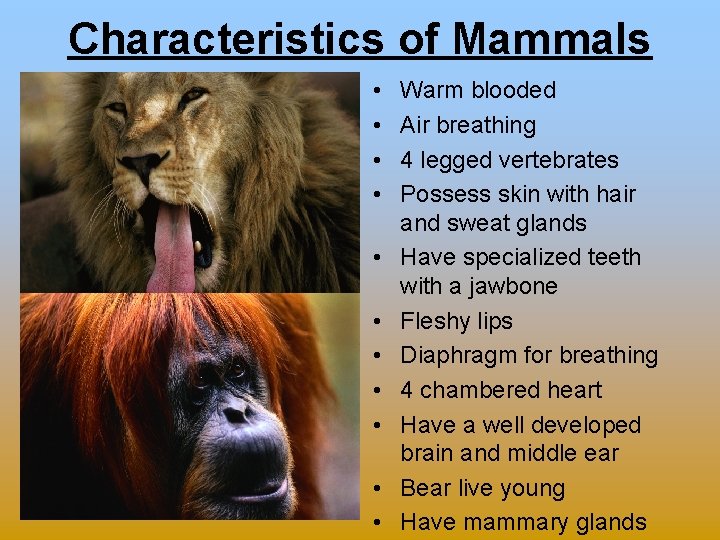
Characteristics of Mammals • • • Warm blooded Air breathing 4 legged vertebrates Possess skin with hair and sweat glands Have specialized teeth with a jawbone Fleshy lips Diaphragm for breathing 4 chambered heart Have a well developed brain and middle ear Bear live young Have mammary glands
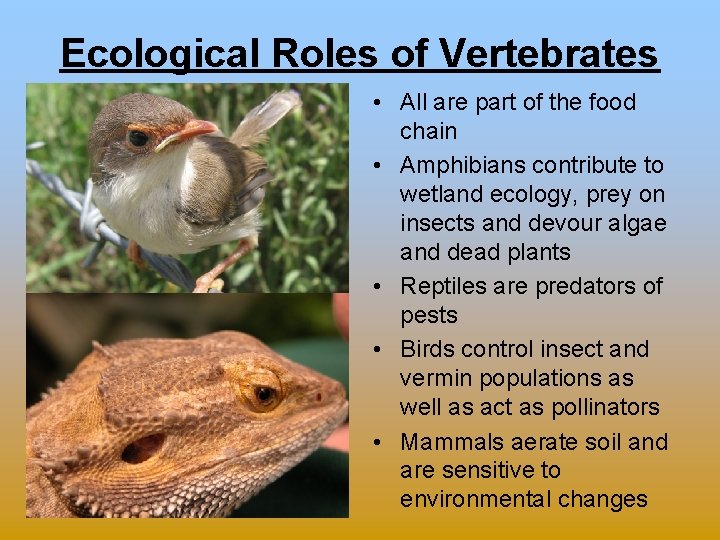
Ecological Roles of Vertebrates • All are part of the food chain • Amphibians contribute to wetland ecology, prey on insects and devour algae and dead plants • Reptiles are predators of pests • Birds control insect and vermin populations as well as act as pollinators • Mammals aerate soil and are sensitive to environmental changes
- Slides: 10