
The Vertebral The spine is composed of a
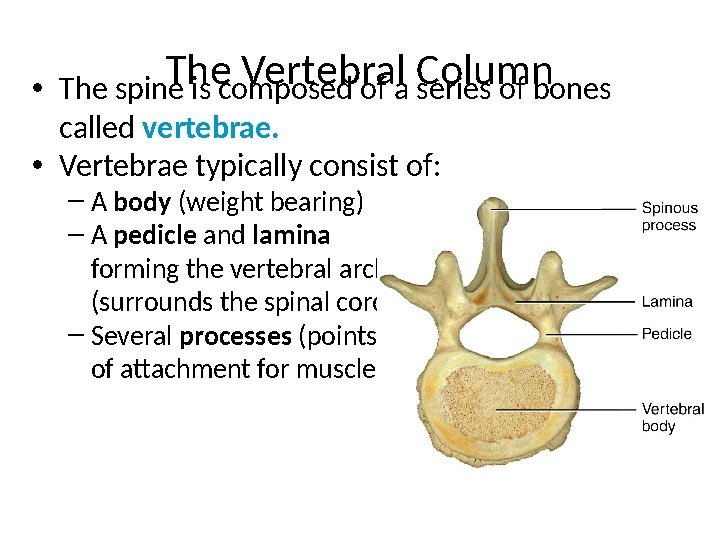
The Vertebral • The spine is composed of a Column series of bones called vertebrae. • Vertebrae typically consist of: – A body (weight bearing) – A pedicle and lamina forming the vertebral arch (surrounds the spinal cord) – Several processes (points of attachment for muscles)
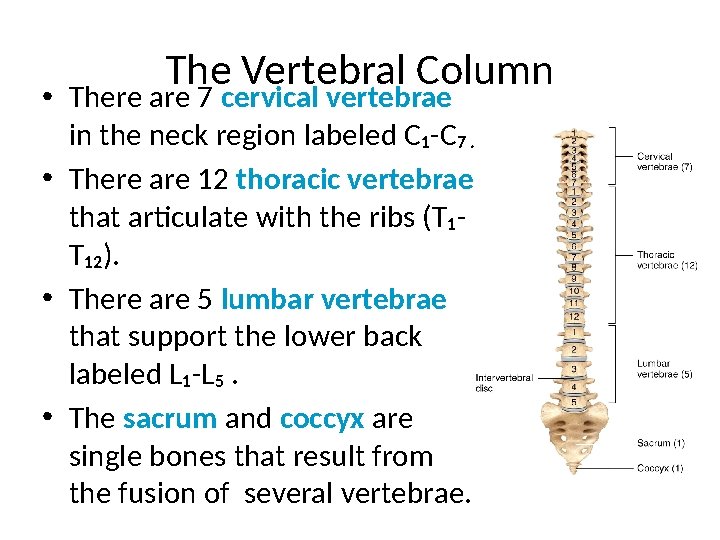
The Vertebral Column • There are 7 cervical vertebrae in the neck region labeled C 1 -C 7. • There are 12 thoracic vertebrae that articulate with the ribs (T 1 T 12). • There are 5 lumbar vertebrae that support the lower back labeled L 1 -L 5. • The sacrum and coccyx are single bones that result from the fusion of several vertebrae.
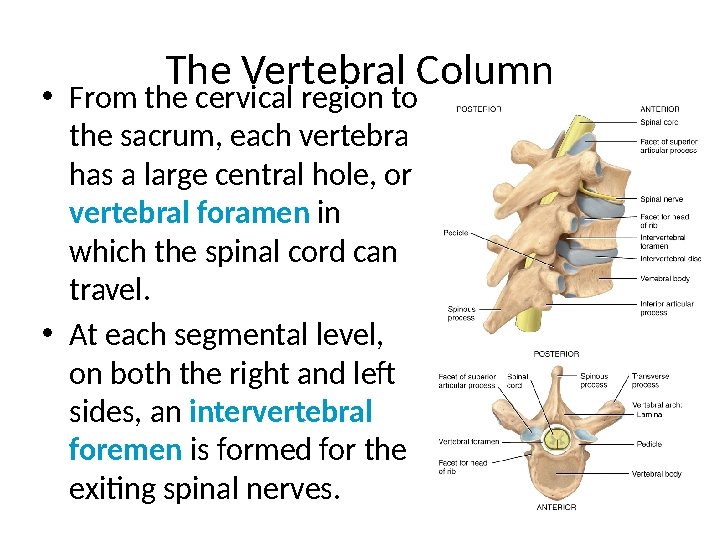
The Vertebral Column • From the cervical region to the sacrum, each vertebra has a large central hole, or vertebral foramen in which the spinal cord can travel. • At each segmental level, on both the right and left sides, an intervertebral foremen is formed for the exiting spinal nerves.
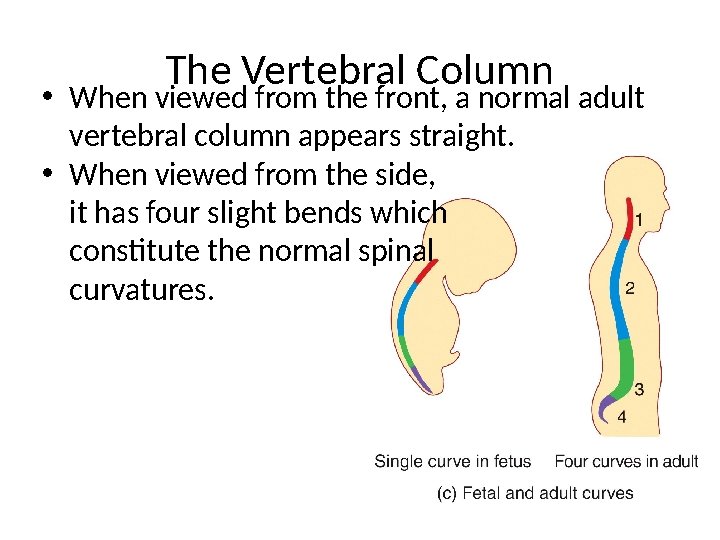
The Vertebral Column • When viewed from the front, a normal adult vertebral column appears straight. • When viewed from the side, it has four slight bends which constitute the normal spinal curvatures.
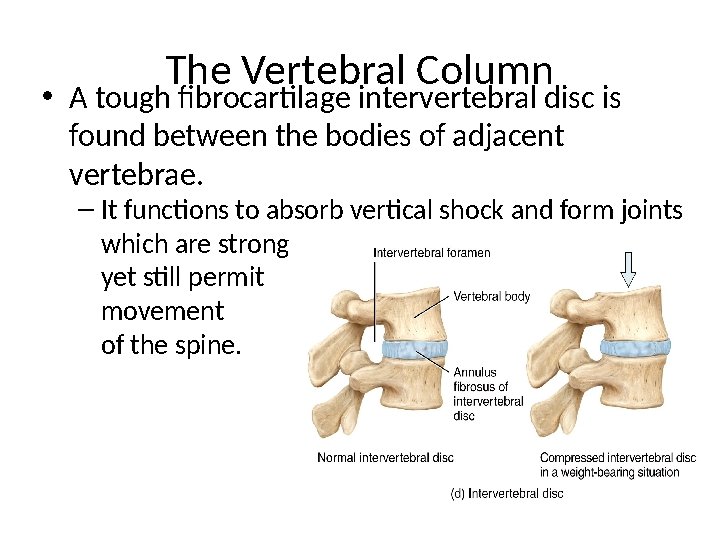
The Vertebral Column • A tough fibrocartilage intervertebral disc is found between the bodies of adjacent vertebrae. – It functions to absorb vertical shock and form joints which are strong yet still permit movement of the spine.
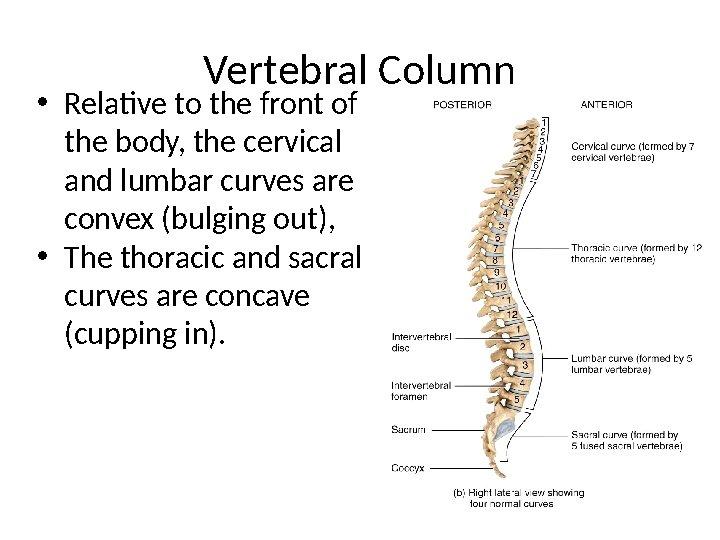
Vertebral Column • Relative to the front of the body, the cervical and lumbar curves are convex (bulging out), • The thoracic and sacral curves are concave (cupping in).
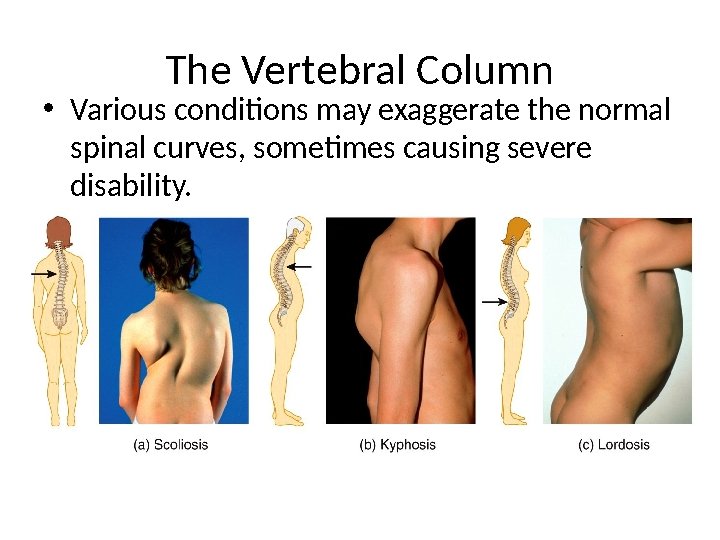
The Vertebral Column • Various conditions may exaggerate the normal spinal curves, sometimes causing severe disability.
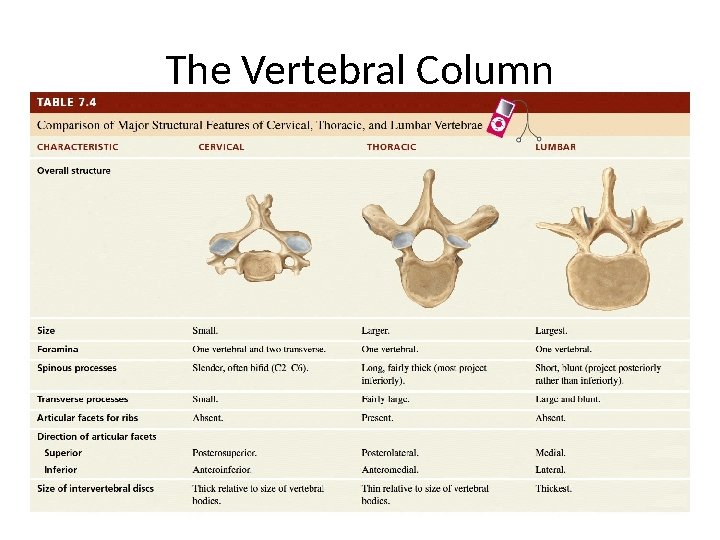
The Vertebral Column
The Vertebral Column • The cervical vertebrae comprise the bony spine in the neck: – C 1 is called the Atlas because it holds up the head the way the Titan of Greek mythology supported the world. – C 2 is called the Axis because it provides a pivot, allowing the head to turn on the neck.
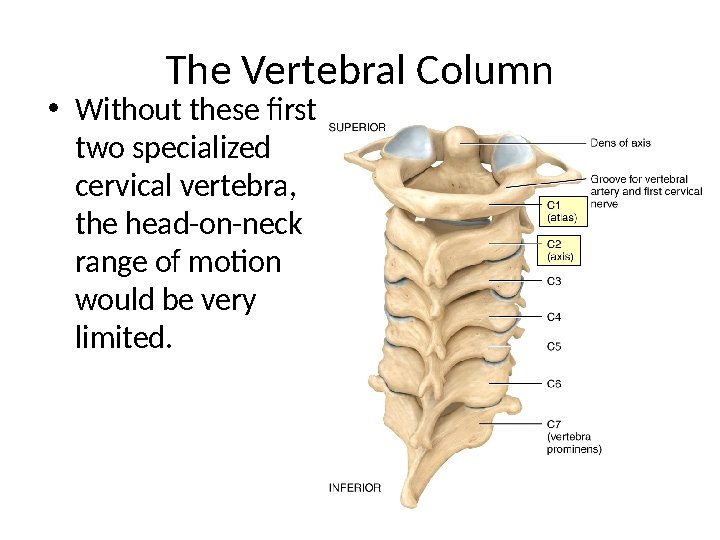
The Vertebral Column • Without these first two specialized cervical vertebra, the head-on-neck range of motion would be very limited.
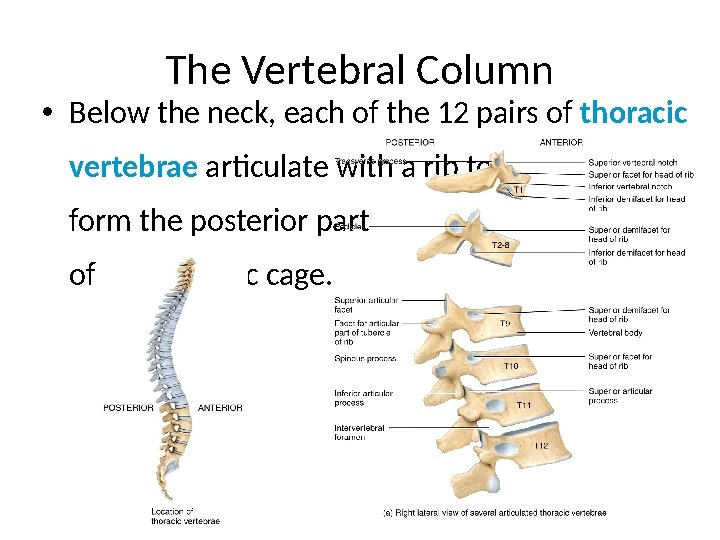
The Vertebral Column • Below the neck, each of the 12 pairs of thoracic vertebrae articulate with a rib to form the posterior part of the thoracic cage.
- Slides: 11