
The Value of ValueAdded Data How valueadded assessment


- Slides: 22
The Value of Value-Added Data How value-added assessment can drive school performance and improve community engagement Contact: Brett Pawlowski 704 -940 -3201 brett@dehavillandassociates. com
Today’s Agenda • What is value-added assessment? – Annual assessments: dominant but flawed – Value-added assessment: the missing piece • How can value-added data drive school performance? – What ECF has done in Tennessee
The Core Issue • We all say we want great schools – but how do we define “great”? • Two assessment models – two different answers – Annual Assessment: TCAP – Value-Added Assessment: TVAAS
The Annual Assessment: TCAP • TCAP: a measure of grade-level proficiency – Important information to have – Best-known, most widely reported – Considered the most important measure of school quality by the public
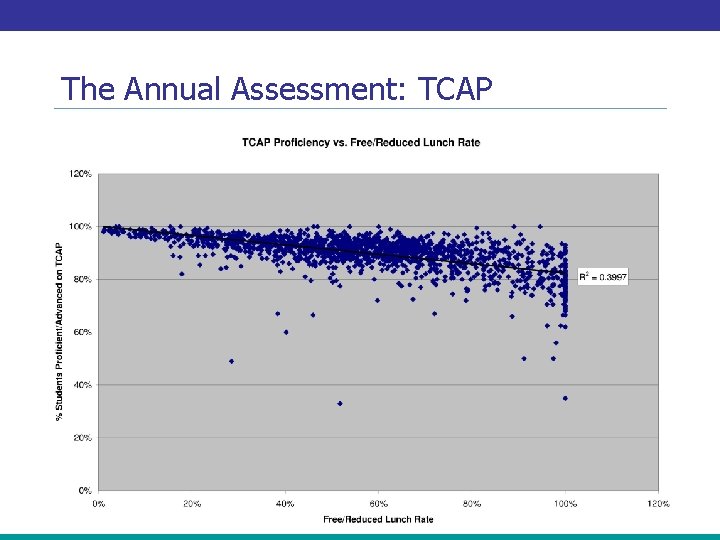
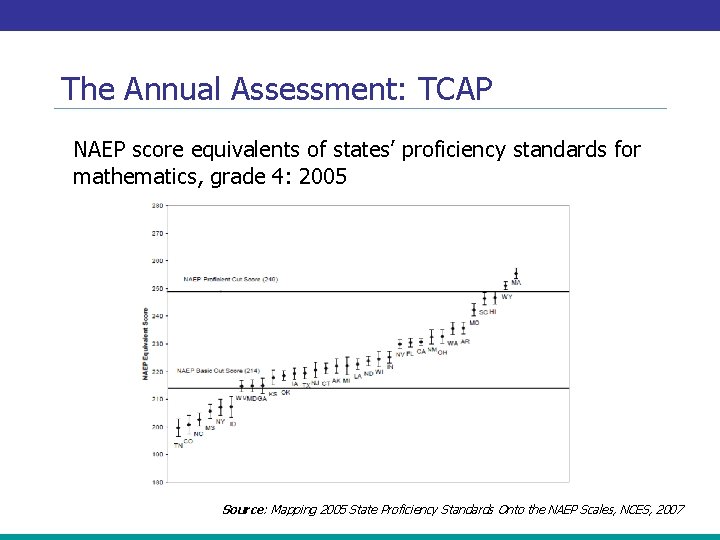
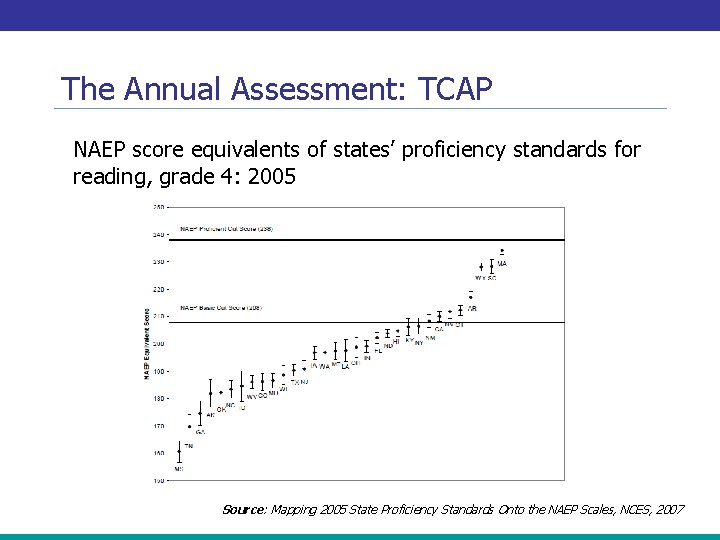
The Annual Assessment: TCAP • Issues with annual assessments – Correlation with poverty – 6 year span of preparedness entering kindergarten (Kennewick) – Cut scores – Do not account for rate of growth • Below grade level • Above grade level • Annual assessments measure what the child brings to the school, not what the school brings to the child
The Annual Assessment: TCAP
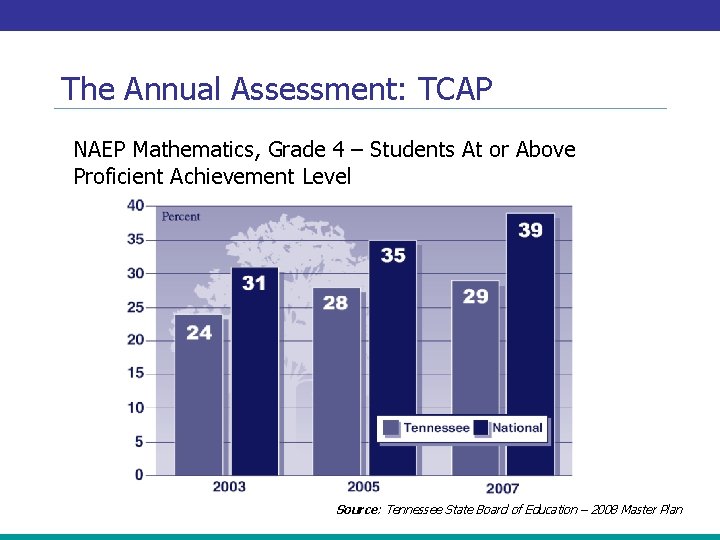
The Annual Assessment: TCAP NAEP Mathematics, Grade 4 – Students At or Above Proficient Achievement Level Source: Tennessee State Board of Education – 2008 Master Plan
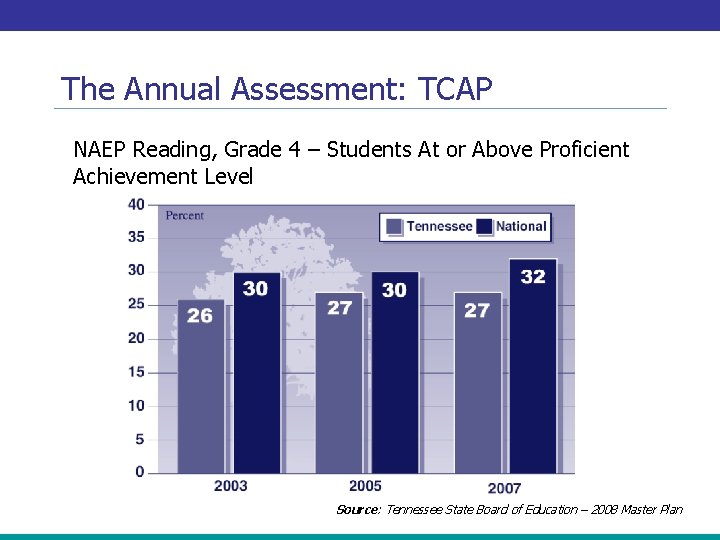
The Annual Assessment: TCAP NAEP Reading, Grade 4 – Students At or Above Proficient Achievement Level Source: Tennessee State Board of Education – 2008 Master Plan
The Annual Assessment: TCAP NAEP score equivalents of states’ proficiency standards for mathematics, grade 4: 2005 Source: Mapping 2005 State Proficiency Standards Onto the NAEP Scales, NCES, 2007
The Annual Assessment: TCAP NAEP score equivalents of states’ proficiency standards for reading, grade 4: 2005 Source: Mapping 2005 State Proficiency Standards Onto the NAEP Scales, NCES, 2007
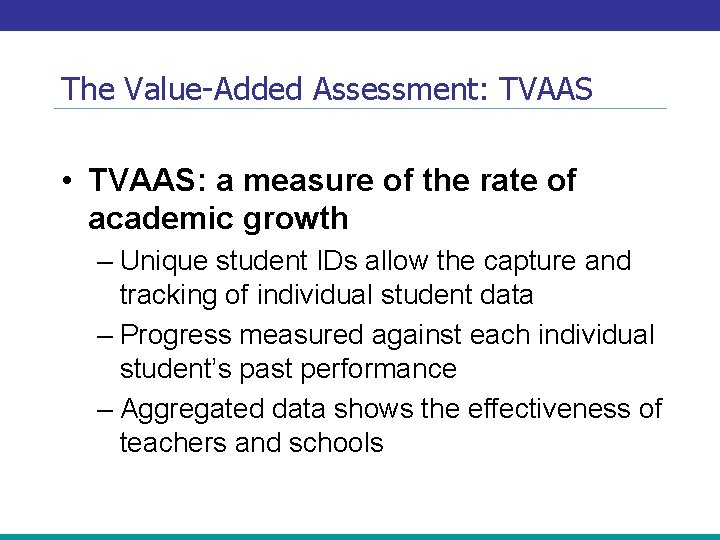
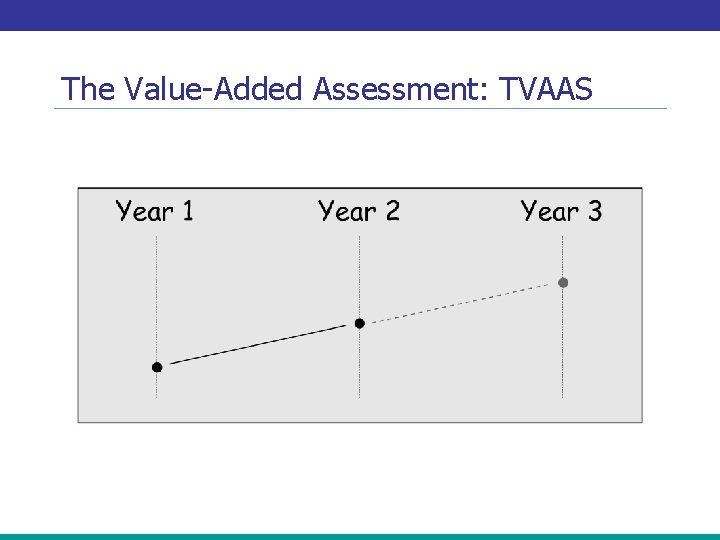
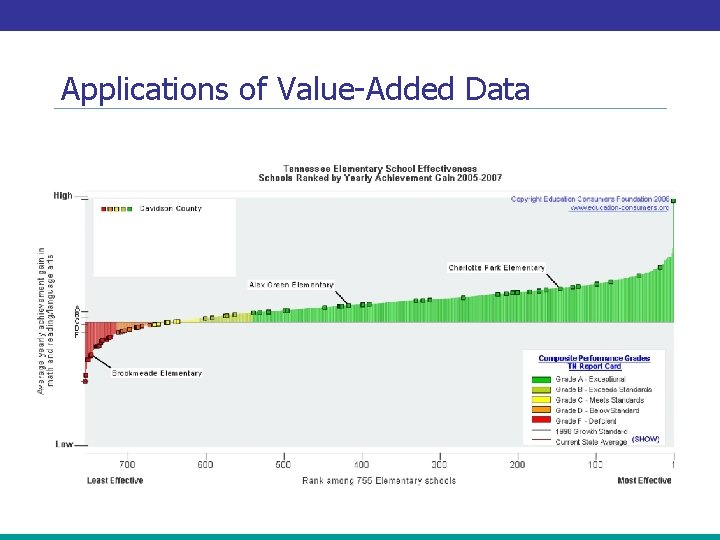
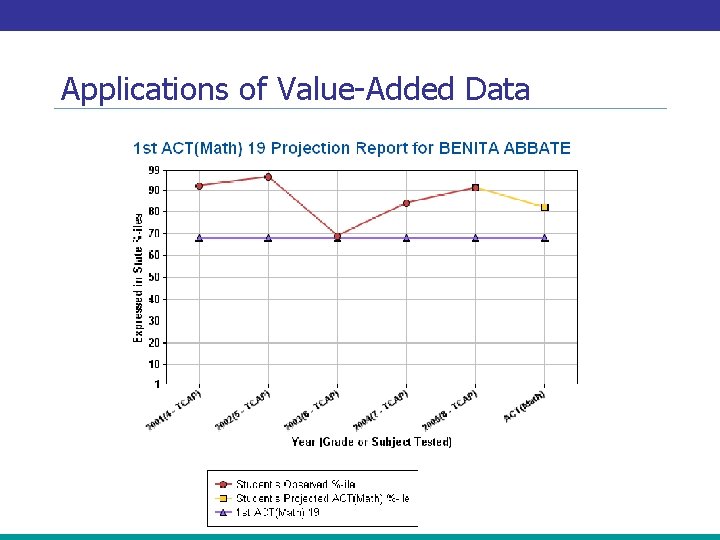
The Value-Added Assessment: TVAAS • TVAAS: a measure of the rate of academic growth – Unique student IDs allow the capture and tracking of individual student data – Progress measured against each individual student’s past performance – Aggregated data shows the effectiveness of teachers and schools
The Value-Added Assessment: TVAAS
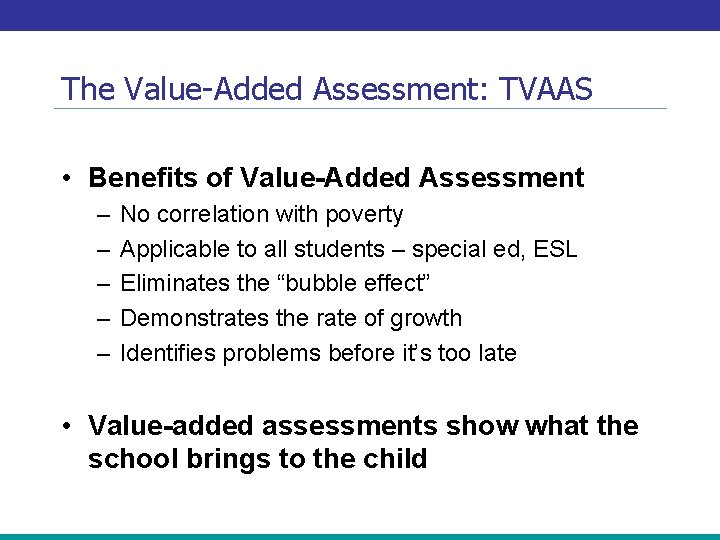
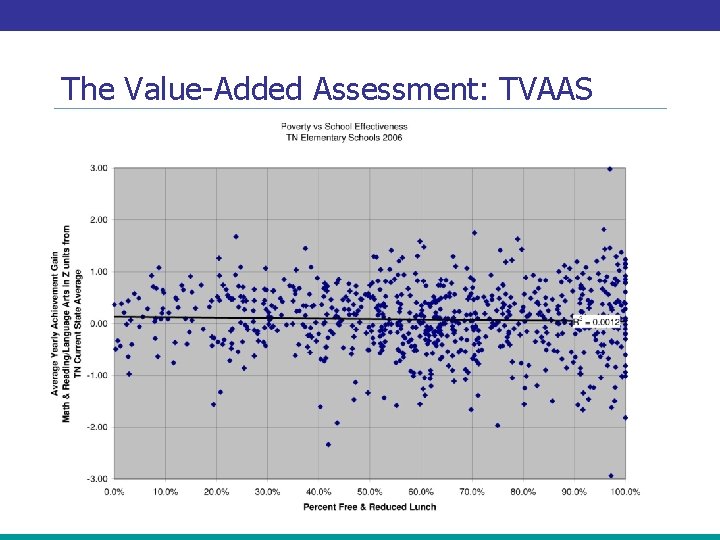
The Value-Added Assessment: TVAAS • Benefits of Value-Added Assessment – – – No correlation with poverty Applicable to all students – special ed, ESL Eliminates the “bubble effect” Demonstrates the rate of growth Identifies problems before it’s too late • Value-added assessments show what the school brings to the child
The Value-Added Assessment: TVAAS
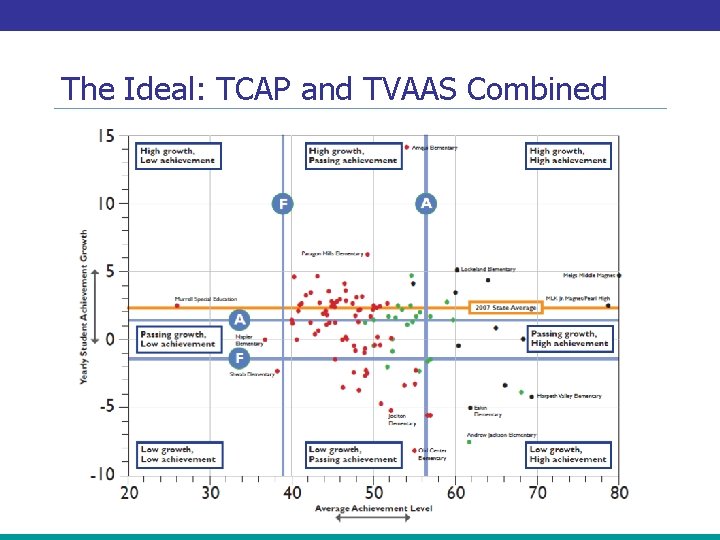
The Ideal: TCAP and TVAAS Combined
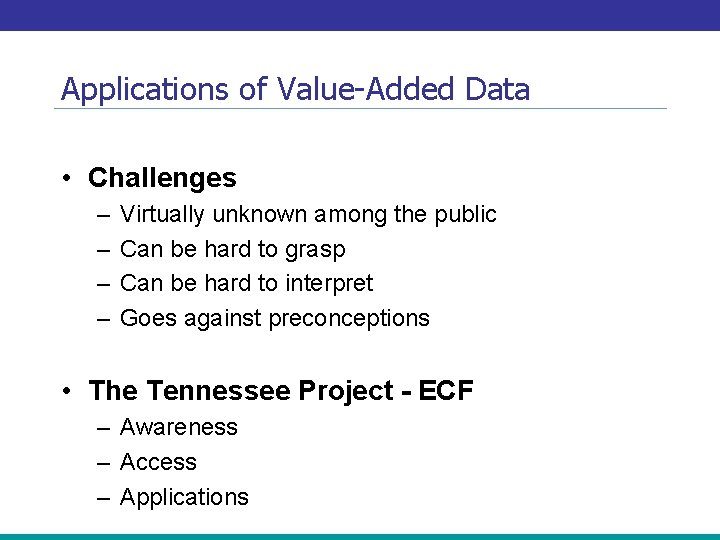
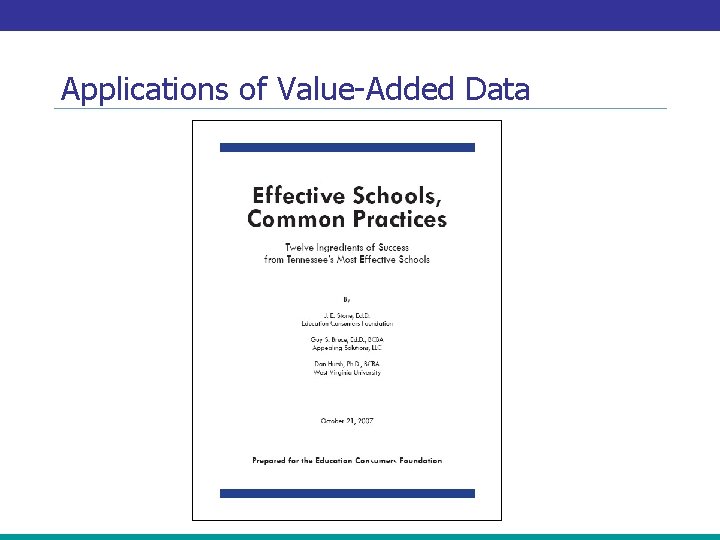
Applications of Value-Added Data • Challenges – – Virtually unknown among the public Can be hard to grasp Can be hard to interpret Goes against preconceptions • The Tennessee Project - ECF – Awareness – Access – Applications
Applications of Value-Added Data
Applications of Value-Added Data Value-Added Achievement Awards
Applications of Value-Added Data
Applications of Value-Added Data
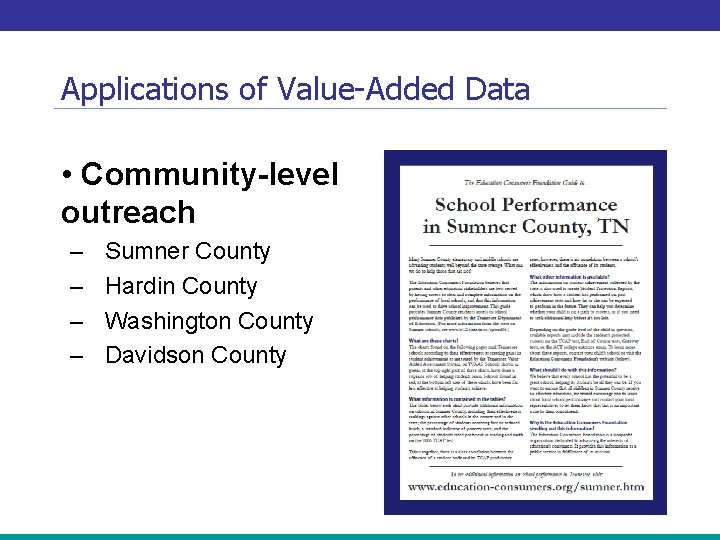
Applications of Value-Added Data • Community-level outreach – – Sumner County Hardin County Washington County Davidson County
For More Information: Brett Pawlowski De. Havilland Associates 704. 940. 3201 brett@dehavillandassociates. com www. education-consumers. org