
THE VALUE OF VALUE A LESSON IN RIGHT
- Slides: 23
THE VALUE OF VALUE A LESSON IN RIGHT AND LEFT BRAIN THINKING
CHALLENGE ■ Create multiple artworks that engage right and left brain thinking, and demonstrate your understanding of value and form.
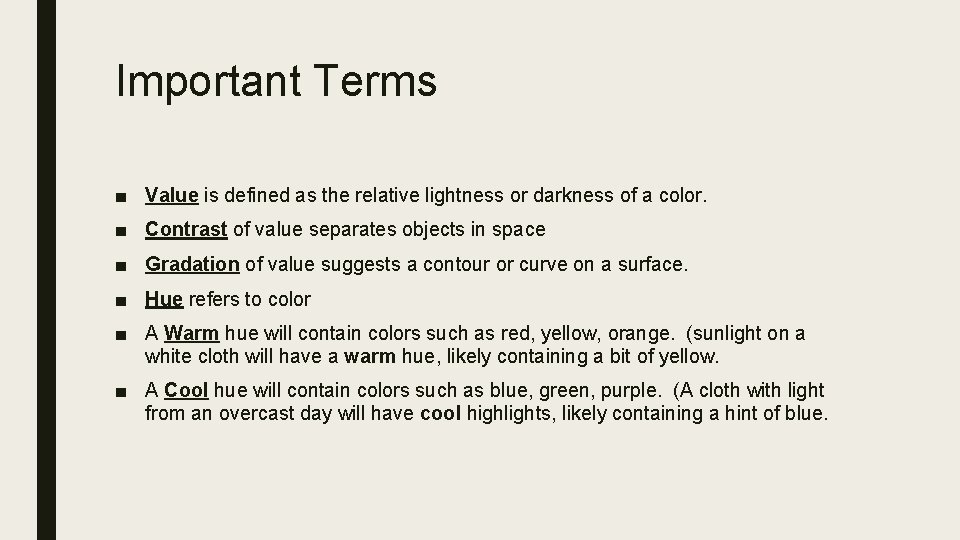
Important Terms ■ Value is defined as the relative lightness or darkness of a color. ■ Contrast of value separates objects in space ■ Gradation of value suggests a contour or curve on a surface. ■ Hue refers to color ■ A Warm hue will contain colors such as red, yellow, orange. (sunlight on a white cloth will have a warm hue, likely containing a bit of yellow. ■ A Cool hue will contain colors such as blue, green, purple. (A cloth with light from an overcast day will have cool highlights, likely containing a hint of blue.
What are some examples of Left and Right Brain traits? ■ Class Discussion
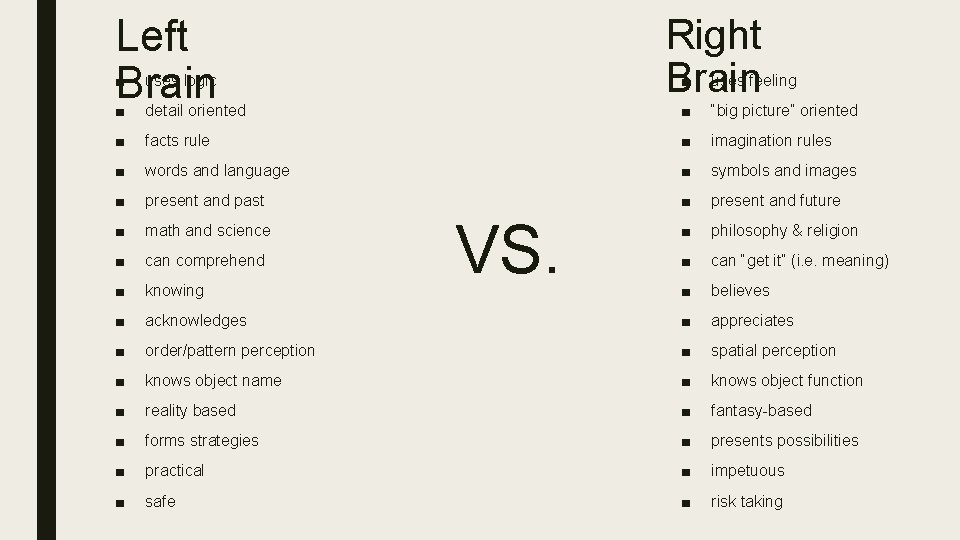
Left Brain Right ■ Brain ■ uses logic ■ detail oriented ■ “big picture” oriented ■ facts rule ■ imagination rules ■ words and language ■ symbols and images ■ present and past ■ present and future ■ math and science ■ philosophy & religion ■ can comprehend ■ can “get it” (i. e. meaning) ■ knowing ■ believes ■ acknowledges ■ appreciates ■ order/pattern perception ■ spatial perception ■ knows object name ■ knows object function ■ reality based ■ fantasy-based ■ forms strategies ■ presents possibilities ■ practical ■ impetuous ■ safe ■ risk taking uses feeling VS.
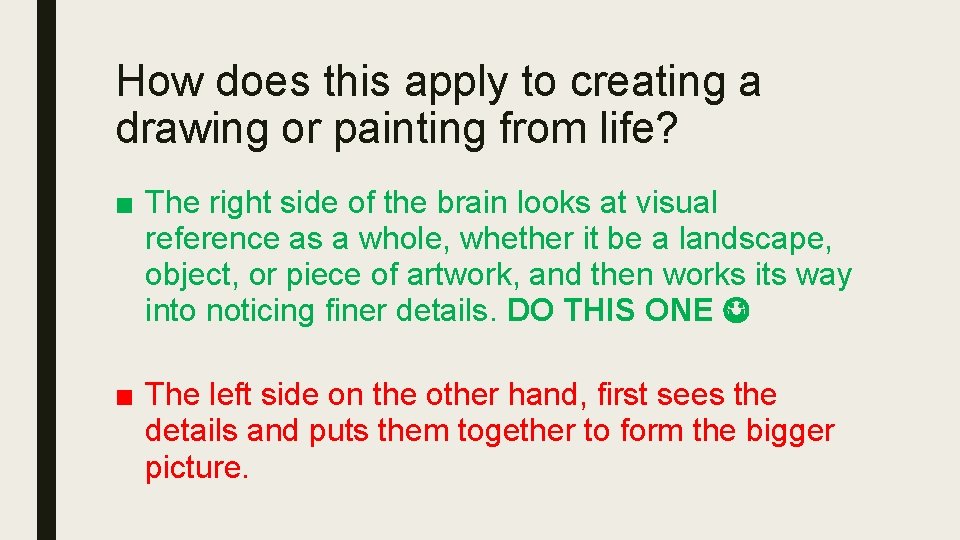
How does this apply to creating a drawing or painting from life? ■ The right side of the brain looks at visual reference as a whole, whether it be a landscape, object, or piece of artwork, and then works its way into noticing finer details. DO THIS ONE ■ The left side on the other hand, first sees the details and puts them together to form the bigger picture.
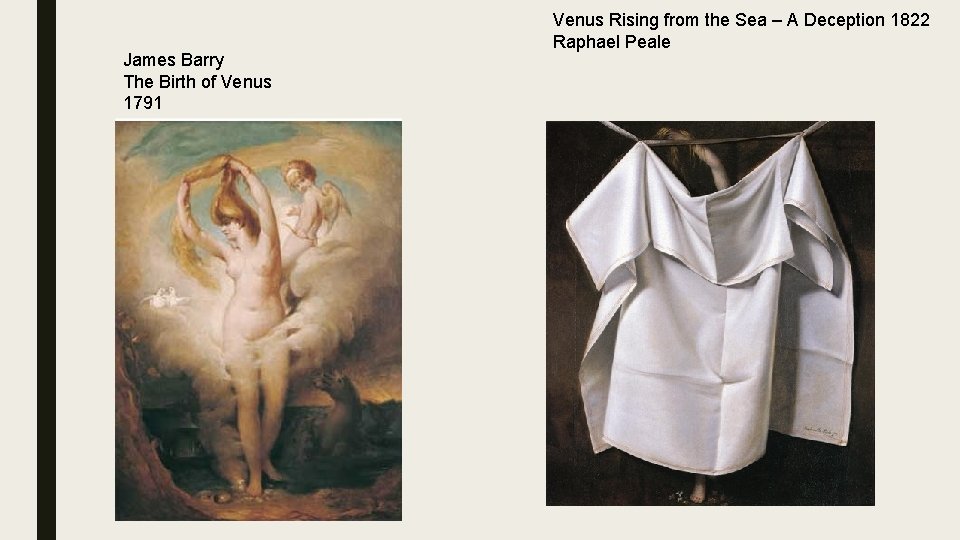
James Barry The Birth of Venus 1791 Venus Rising from the Sea – A Deception 1822 Raphael Peale
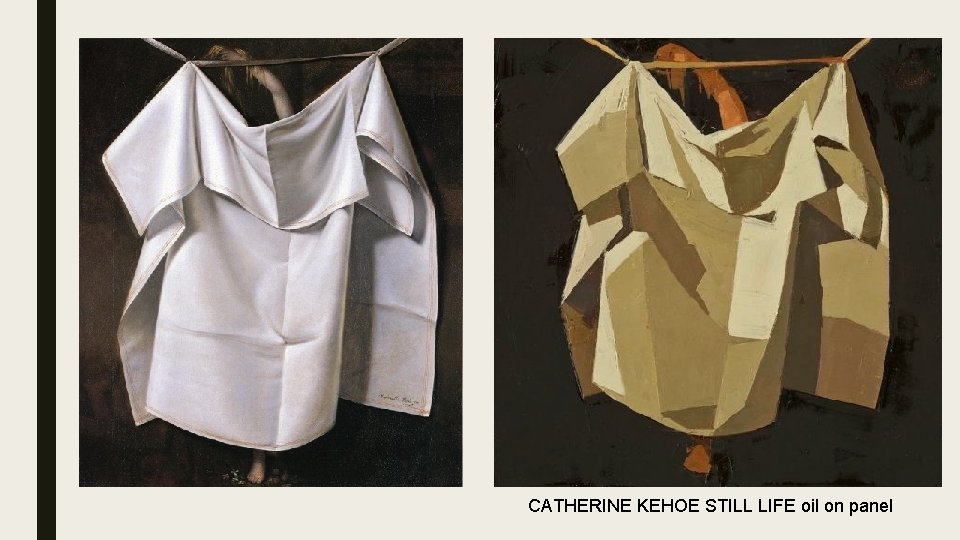
CATHERINE KEHOE STILL LIFE oil on panel
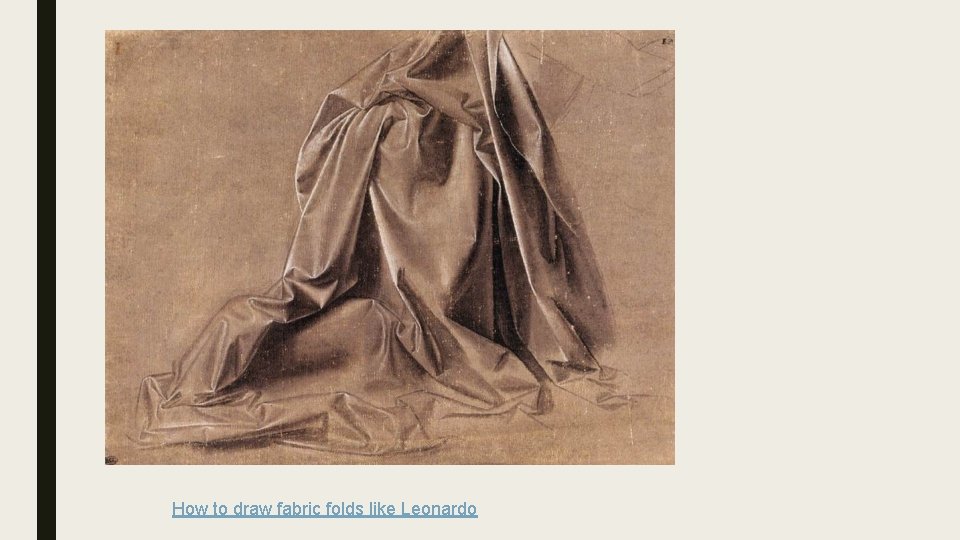
How to draw fabric folds like Leonardo
Brain Connection Warm Up! RIGHT BRAIN LEFT BRAIN WARM UP
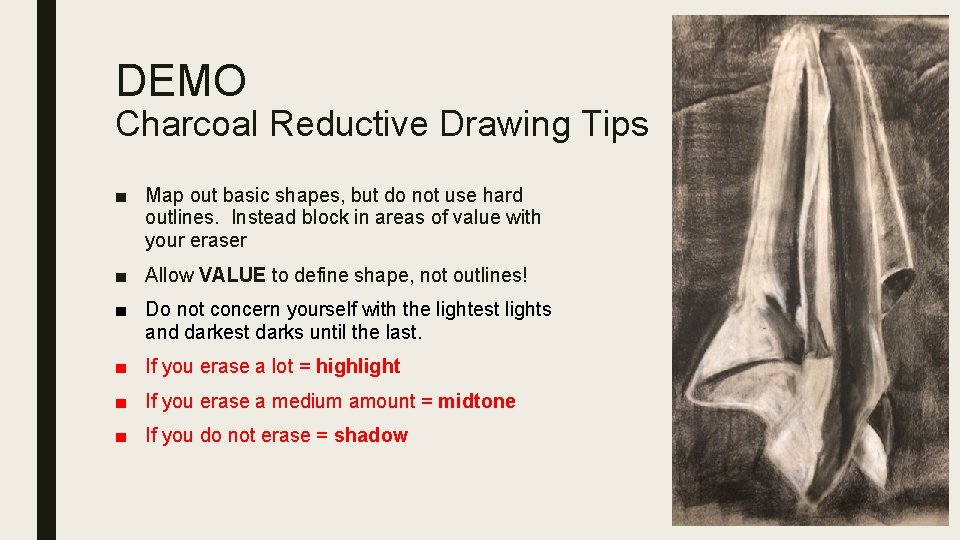
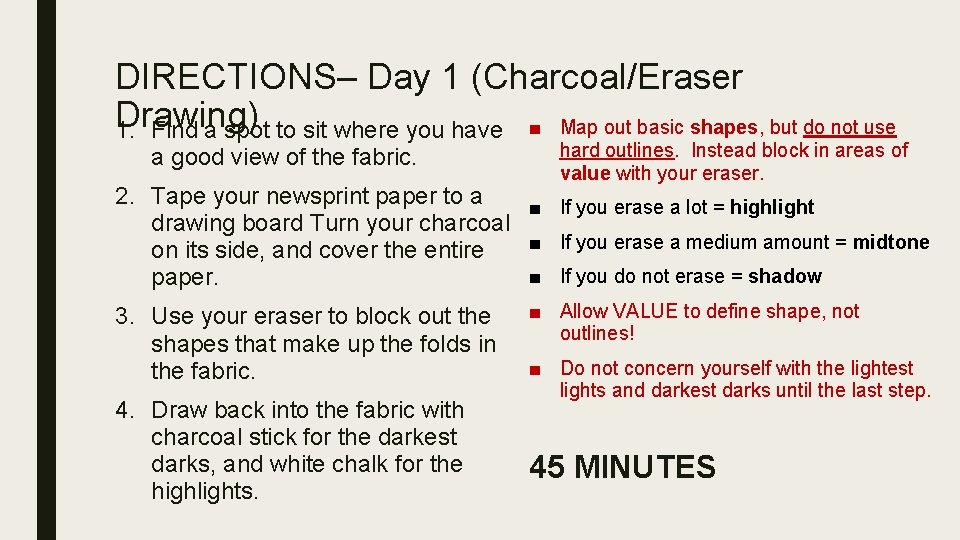
DEMO Charcoal Reductive Drawing Tips ■ Map out basic shapes, but do not use hard outlines. Instead block in areas of value with your eraser ■ Allow VALUE to define shape, not outlines! ■ Do not concern yourself with the lightest lights and darkest darks until the last. ■ If you erase a lot = highlight ■ If you erase a medium amount = midtone ■ If you do not erase = shadow
Class Reflection ■ Why is value important when representing an object? ■ Did you use any visual/mental techniques to help you see value and recreate it in your drawing? (Eye squinting/blurring, brain game) ■ What were your challenges?
DIRECTIONS– Day 1 (Charcoal/Eraser Drawing) 1. Find a spot to sit where you have ■ Map out basic shapes, but do not use a good view of the fabric. hard outlines. Instead block in areas of value with your eraser. 2. Tape your newsprint paper to a ■ If you erase a lot = highlight drawing board Turn your charcoal ■ If you erase a medium amount = midtone on its side, and cover the entire ■ If you do not erase = shadow paper. 3. Use your eraser to block out the shapes that make up the folds in the fabric. 4. Draw back into the fabric with charcoal stick for the darkest darks, and white chalk for the highlights. ■ Allow VALUE to define shape, not outlines! ■ Do not concern yourself with the lightest lights and darkest darks until the last step. 45 MINUTES
CHALLENGE (Day 2) ■ Create multiple artworks that engage right and left brain thinking and demonstrate your understanding of value and form.
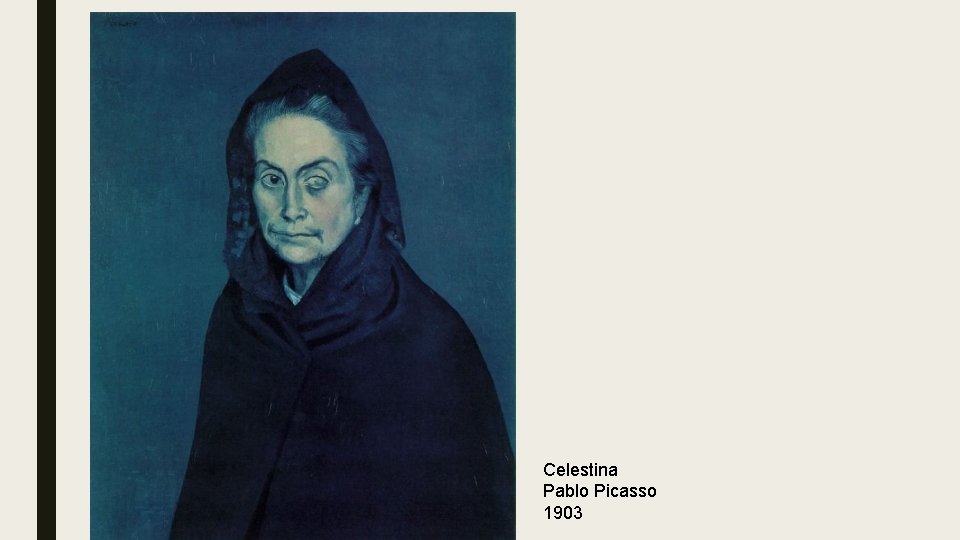
Celestina Pablo Picasso 1903
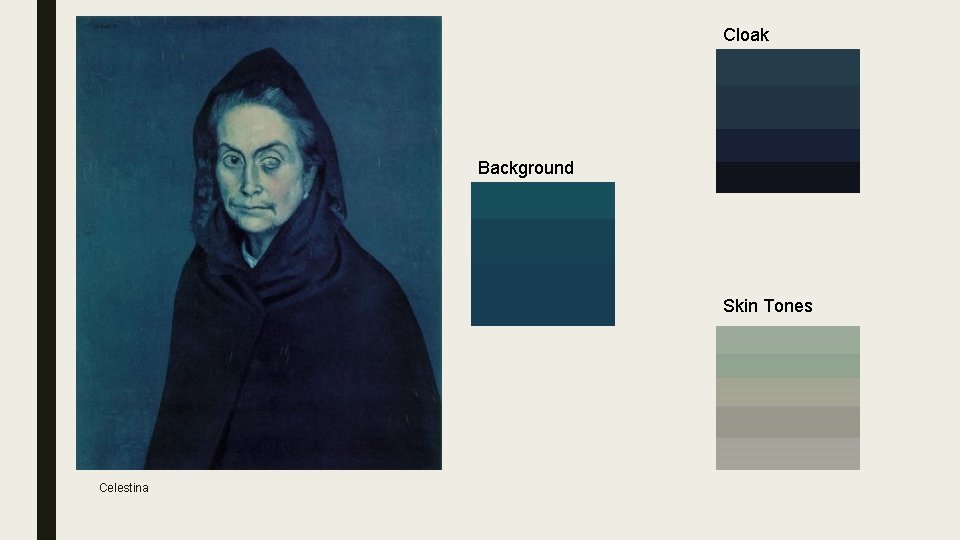
Cloak Background Skin Tones Celestina
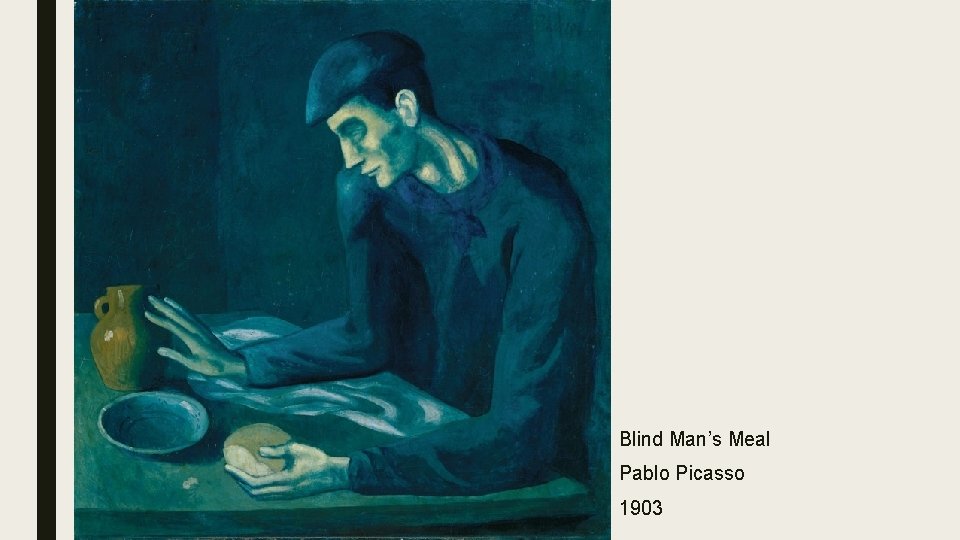
Blind Man’s Meal Pablo Picasso 1903
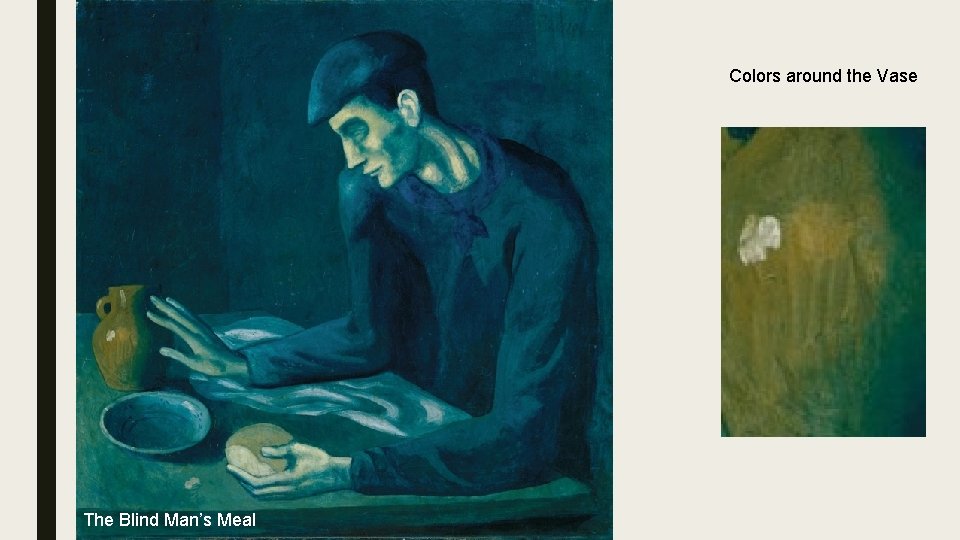
Colors around the Vase The Blind Man’s Meal
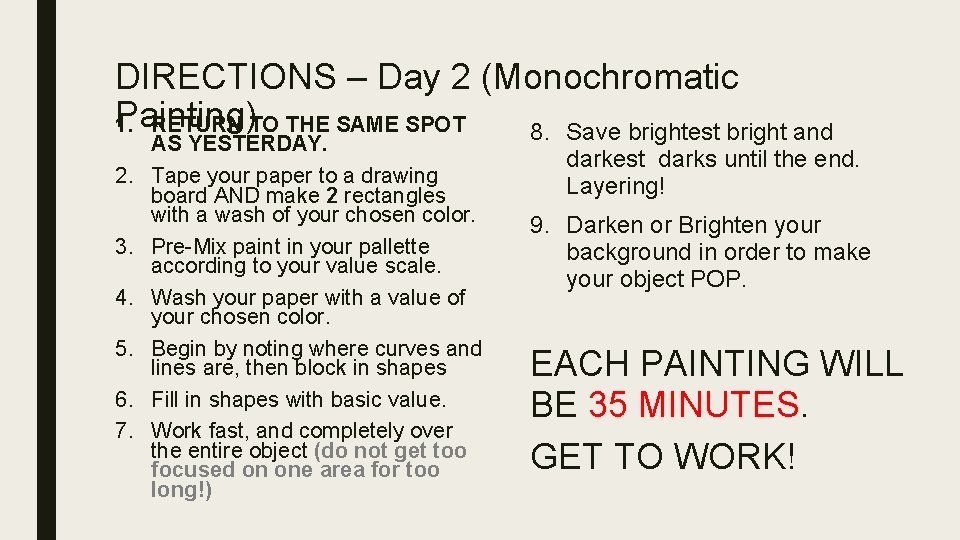
DIRECTIONS – Day 2 (Monochromatic Painting) 1. RETURN TO THE SAME SPOT 8. Save brightest bright and 2. 3. 4. 5. 6. 7. AS YESTERDAY. Tape your paper to a drawing board AND make 2 rectangles with a wash of your chosen color. Pre-Mix paint in your pallette according to your value scale. Wash your paper with a value of your chosen color. Begin by noting where curves and lines are, then block in shapes Fill in shapes with basic value. Work fast, and completely over the entire object (do not get too focused on one area for too long!) darkest darks until the end. Layering! 9. Darken or Brighten your background in order to make your object POP. EACH PAINTING WILL BE 35 MINUTES. GET TO WORK!
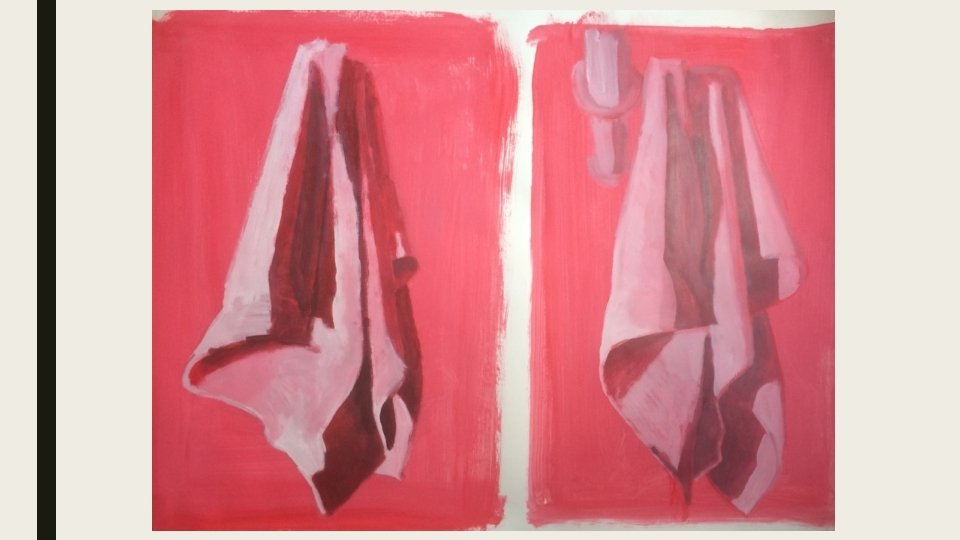
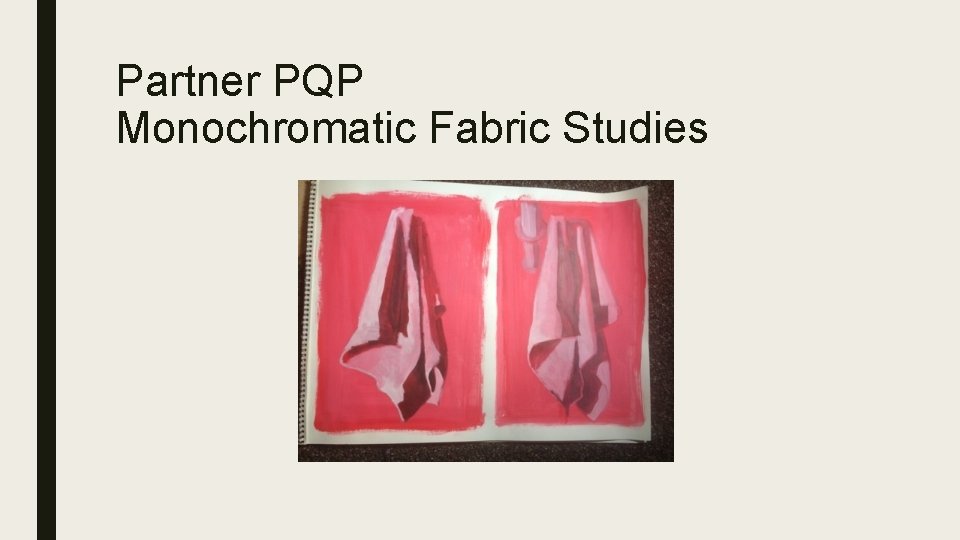
Partner PQP Monochromatic Fabric Studies
DIRECTIONS– Day 3 (Monochromatic Painting) 1. MOVE TO A NEW POSITION 8. Save brightest bright and darkest darks until the end. 2. Tape your paper to a drawing Layering! board AND make 2 rectangles with a wash of your chosen color. 9. Darken or Brighten your background in order to make 3. Pre-Mix paint in your palette your object POP. according to your value scale. 4. Begin with a general outline of the shapes. 5. 6. EACH PAINTING WILL Fill in shapes with correct hue. BE 35 MINUTES. Work fast, and completely over the entire object (do not get too GET TO WORK! focused on one area for too long!)
CLASS Reflection ■ 1. How can working in 1 color (Monochromatic) help you once we move on to more colors at once? ■ 2. Why is it important to be a WHOLE brain thinker?