
The value of research Prof Else Guthrie Me






- Slides: 52
The value of research Prof Else Guthrie
Me • Liaison Psychiatrist • Academic and clinician • Research interests– Psychological treatment: several large RCTs – Medically unexplained symptoms: novel treatment approaches – Self harm: psychological understanding and treatment – Liaison services: organization, outcome measure
Plan • • Introduction Barriers to research Value Examples of projects
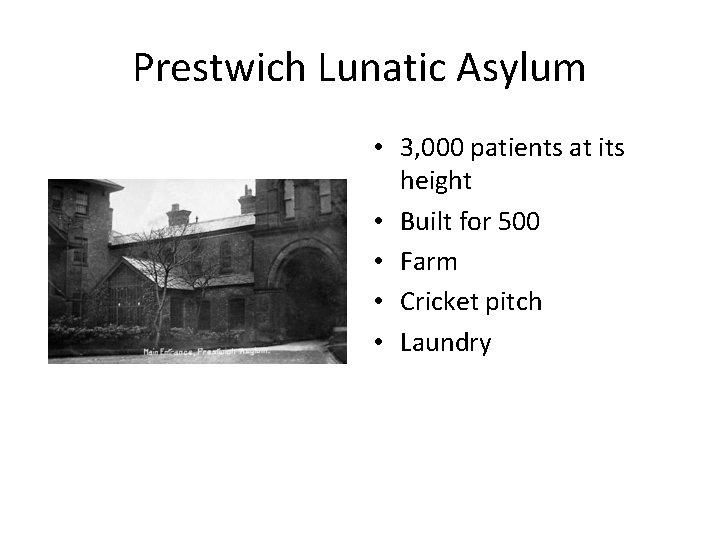
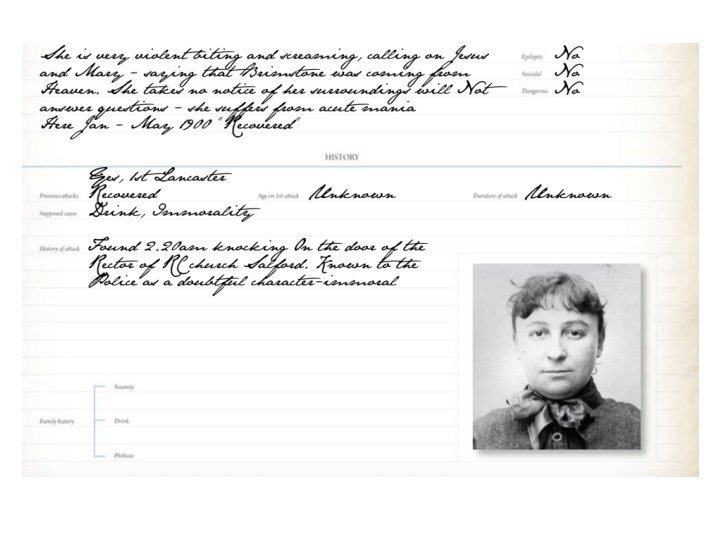
Prestwich Lunatic Asylum • 3, 000 patients at its height • Built for 500 • Farm • Cricket pitch • Laundry
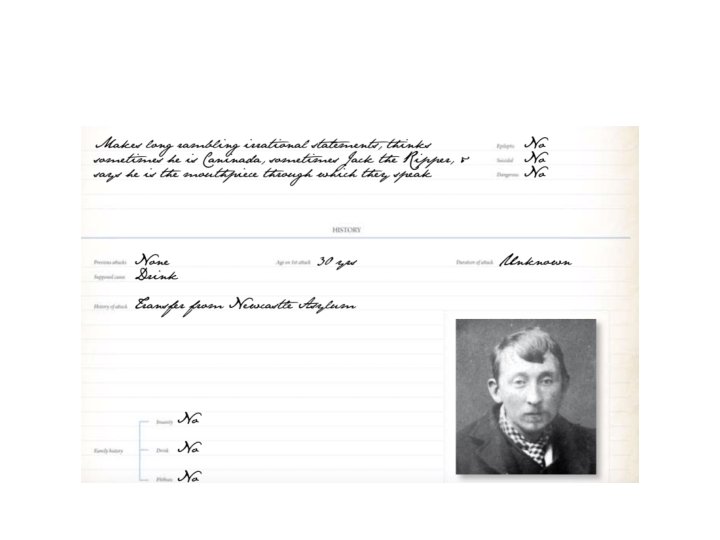
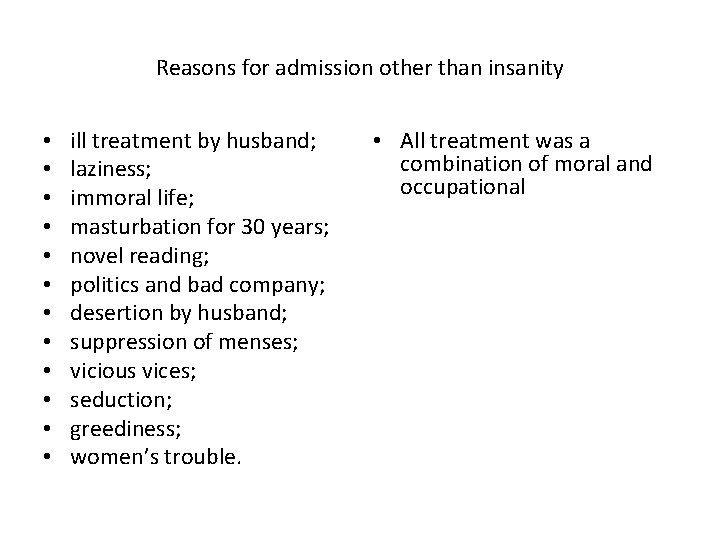
Reasons for admission other than insanity • • • ill treatment by husband; laziness; immoral life; masturbation for 30 years; novel reading; politics and bad company; desertion by husband; suppression of menses; vicious vices; seduction; greediness; women’s trouble. • All treatment was a combination of moral and occupational
Treatments available when I started psychiatry • • • Chlorpromazine Haloperidol Modecate depot Depixol Psychoanalysis Behavioural treatment – Operant conditioning
Advances in research over last 30 years • • • Major advances in: Pharmacology Psychological treatment Brain mechanisms-imaging Genetics
Current state of research
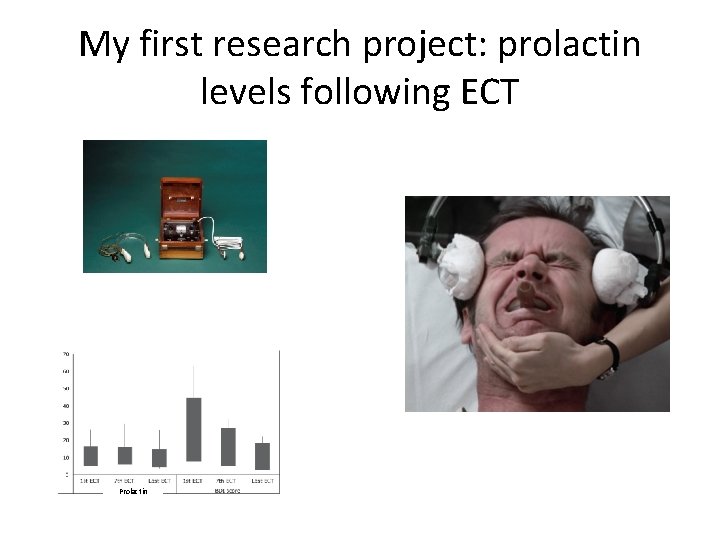
My first research project: prolactin levels following ECT Prolactin
What did I learn? • • • Literature review Formulate a question Design a study and write a protocol Ethics Engage and consent patients Tenacity in recruiting patients Simple statistical analysis Interpretation Write up Acceptance of robust criticism Background knowledge of ECT Self-motivation
Research is an apprenticeship • Can’t learn to do it from a course
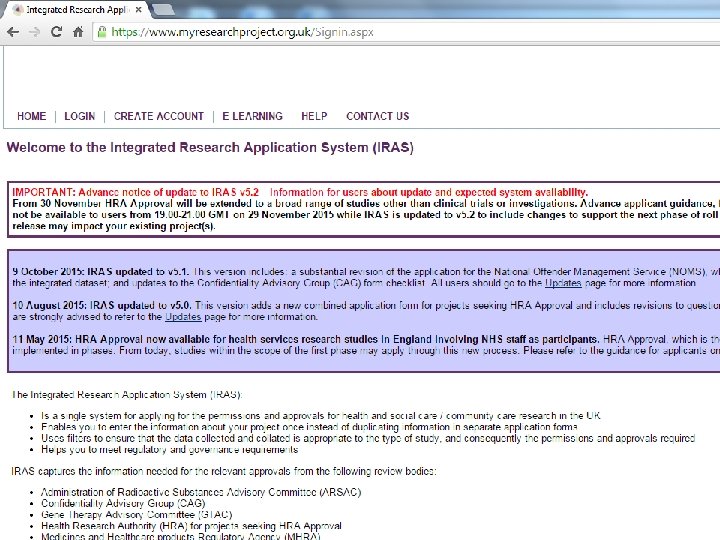
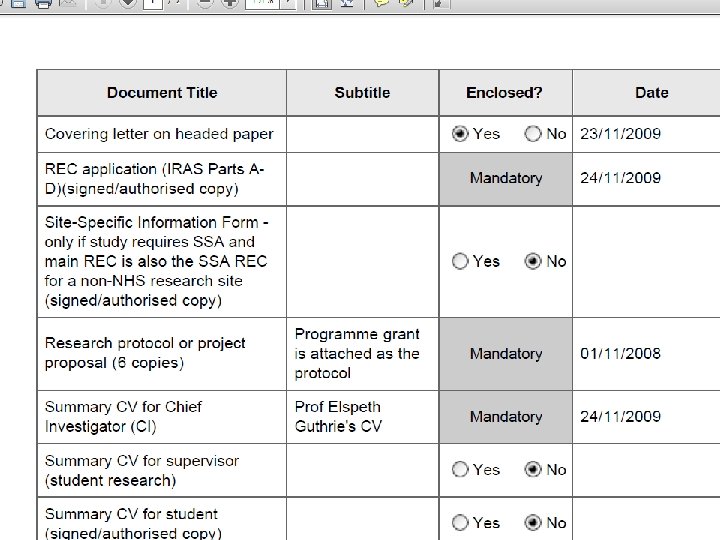
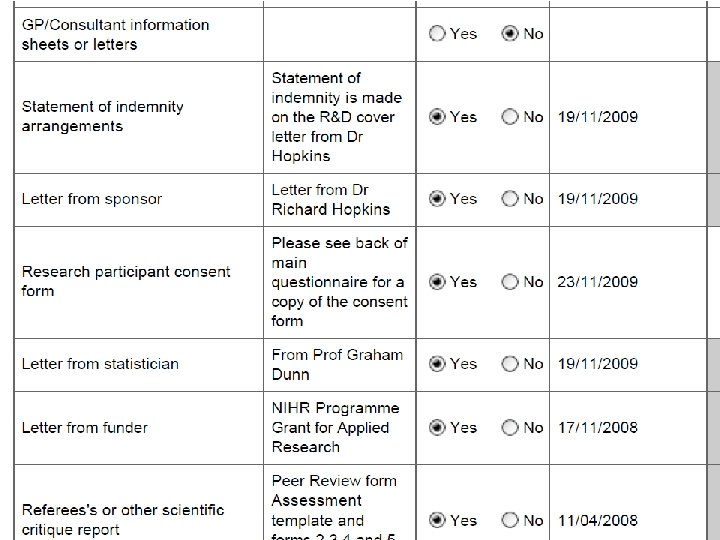
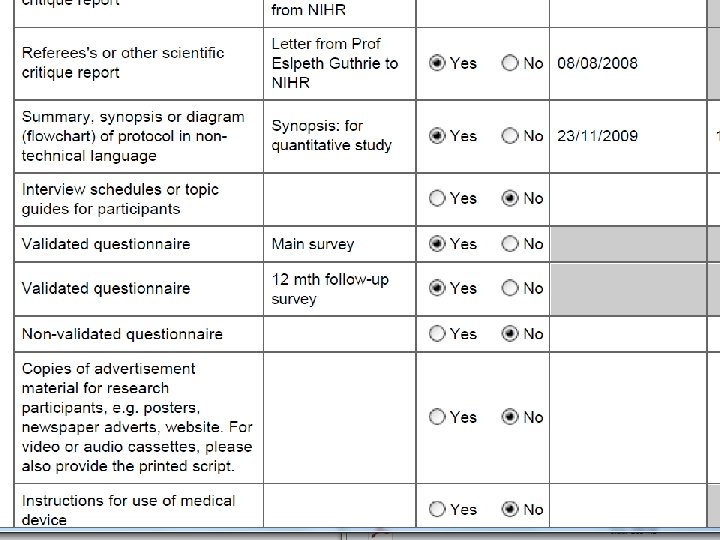
Starting from scratch • • • • Supervisor Systematic review Protocol Scientifically sound Feasible Funding? R&D Ethics approval Data collection/recruitment/consent Data governance Analysis Write up Publication
The Golden Days • Research an integral part of higher training • One full day per week for 4 years. • Lecturer and research posts more accessible • Full time research posts for six months as part of training • MSc and higher degrees expected • Many consultants in teaching hospitals had Ph. D or the equivalent • Large pool of supervisors and more time within the clinical work to devote to research and supervision
The Golden Days • Virtually no research governance • Ethics approval required for major projects but process relatively straightforward • Medical student projects exempt from ethics approval • NB: No computers so time constraints re data entry/writing up work/literature searches etc
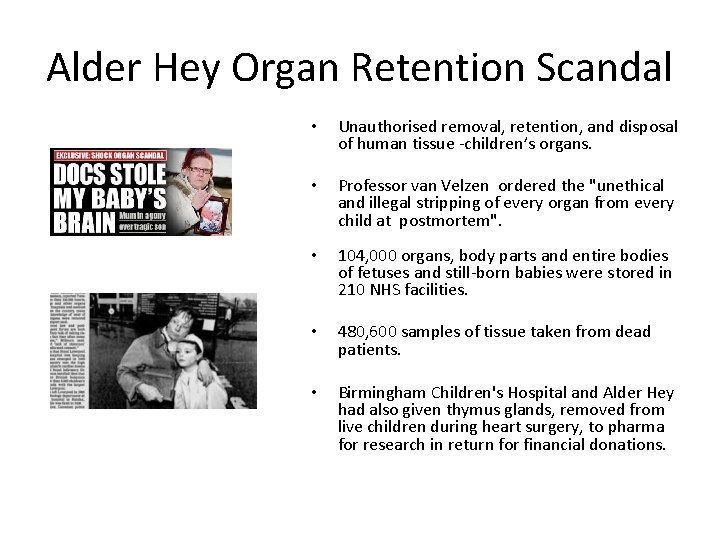
Alder Hey Organ Retention Scandal • Unauthorised removal, retention, and disposal of human tissue -children’s organs. • Professor van Velzen ordered the "unethical and illegal stripping of every organ from every child at postmortem". • 104, 000 organs, body parts and entire bodies of fetuses and still-born babies were stored in 210 NHS facilities. • 480, 600 samples of tissue taken from dead patients. • Birmingham Children's Hospital and Alder Hey had also given thymus glands, removed from live children during heart surgery, to pharma for research in return for financial donations.
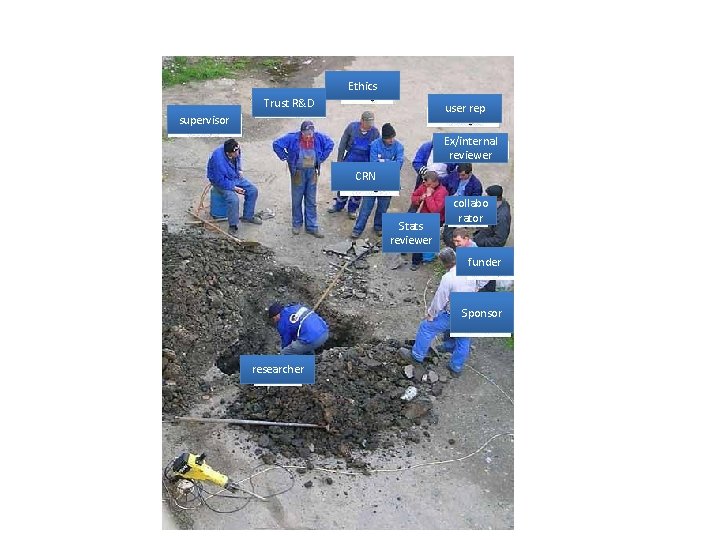
Research Governance
Ethics Trust R&D user rep supervisor Ex/internal reviewer CRN Stats reviewer collabo rator funder Sponsor researcher
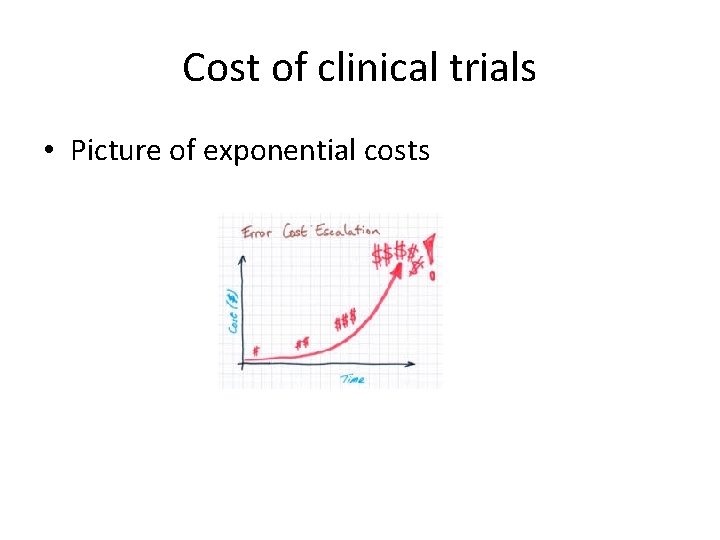
Cost of clinical trials • Picture of exponential costs
Present Day • Dramatic erosion in time available for research for trainees • Governance and ethics more demanding • Few consultants have research training • Reduction in university staff • Consultant job contracts allow little time for research activities • Research methodologies more highly developed and stringent • Less flexibility –trainees have to decide earlier
Academic attachments: Foundation Training • 4 months full time • A taster of research • Example – Systematic review of grey literature/internet re help for self-harm – Currently writing up for publication
Academic Clinical Fellowships-Basic Training • 3 year posts • 75% clinical 25% research • Aim- to prepare for a Ph. D application – e. g. The role of inflammation in depression – Piggy back onto a trial of anti-inflammatory agents in rheumatoid arthritis
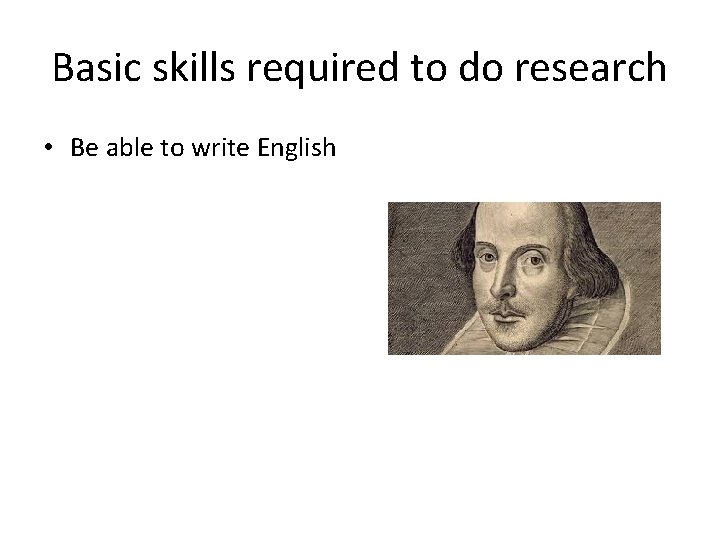
Basic skills required to do research • Be able to write English
Desire to think creatively
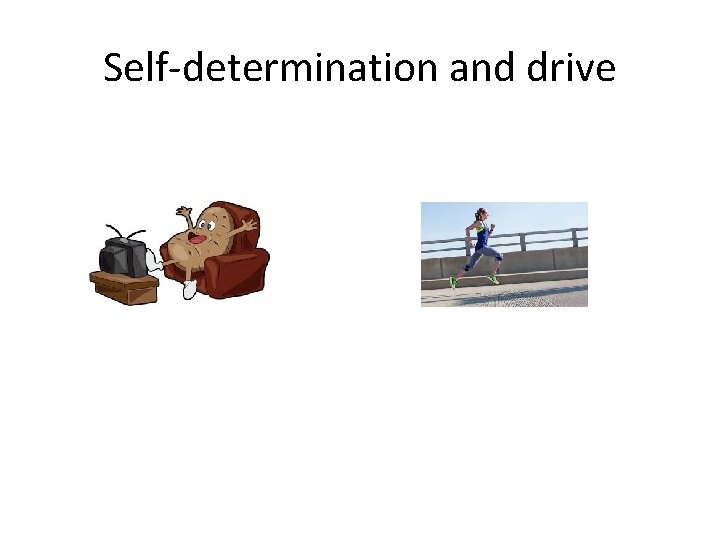
Self-determination and drive
Value • Expertise in a small area • Can gain great experience from clinical • Break from day to day practice work • But need to read the • Different kind of literature working • Most doctors are • Benefits patients to incapable of evaluating have consultants with research papers areas of expertise • Better outcomes for patients in studies
NHS Culture • Evidence base • Rudimentary evaluations
Treatment for insomnia
Ethics application
Biggest problem with trainee’ projects is a failure to complete
Solutions • Tack onto a bigger study with a recognised researcher • Ownership of a specific part of the study • Experience in carrying out research • Authorship of paper • Supervisor more important than actual project: research is an apprenticeship so need good role model
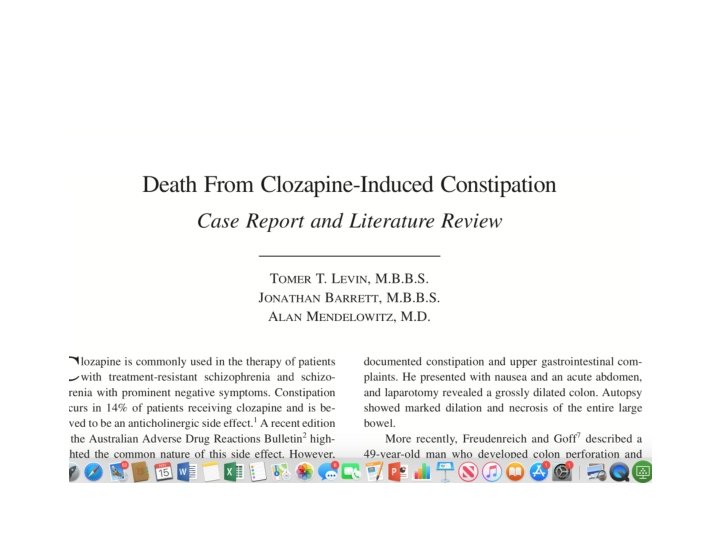
Summary • Many barriers to conducting research • Requires flexibility and opportunistic attitude • Starting a stand alone project from scratch and bringing it to fruition with acceptable methodology is a challenge • Tack onto to larger project • Work in a team • Supplement experience with research methods course • Case reports with a high quality discussion and reviews may be more clinically relevant, more feasible and more worthwhile. • Psychosomatics publishes really excellent case reports of a very high standard.
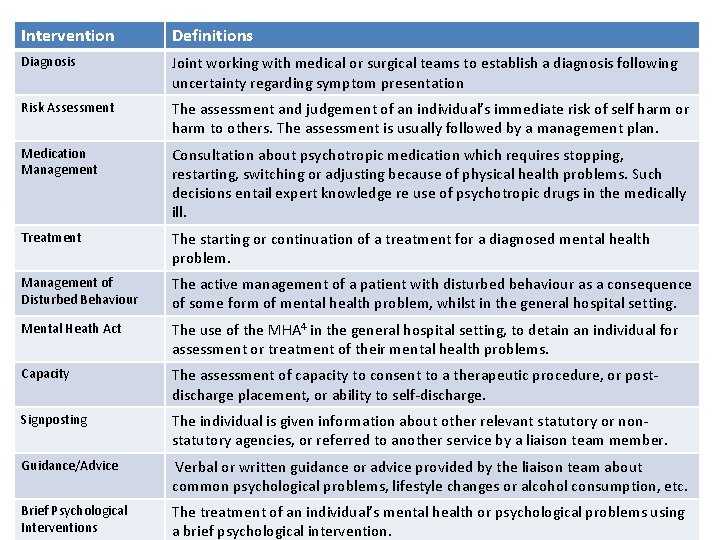
Intervention Definitions Diagnosis Joint working with medical or surgical teams to establish a diagnosis following uncertainty regarding symptom presentation Risk Assessment The assessment and judgement of an individual’s immediate risk of self harm or harm to others. The assessment is usually followed by a management plan. Medication Management Consultation about psychotropic medication which requires stopping, restarting, switching or adjusting because of physical health problems. Such decisions entail expert knowledge re use of psychotropic drugs in the medically ill. Treatment The starting or continuation of a treatment for a diagnosed mental health problem. Management of Disturbed Behaviour The active management of a patient with disturbed behaviour as a consequence of some form of mental health problem, whilst in the general hospital setting. Mental Heath Act The use of the MHA 4 in the general hospital setting, to detain an individual for assessment or treatment of their mental health problems. Capacity The assessment of capacity to consent to a therapeutic procedure, or postdischarge placement, or ability to self-discharge. Signposting The individual is given information about other relevant statutory or nonstatutory agencies, or referred to another service by a liaison team member. Guidance/Advice Verbal or written guidance or advice provided by the liaison team about common psychological problems, lifestyle changes or alcohol consumption, etc. Brief Psychological Interventions The treatment of an individual’s mental health or psychological problems using a brief psychological intervention.
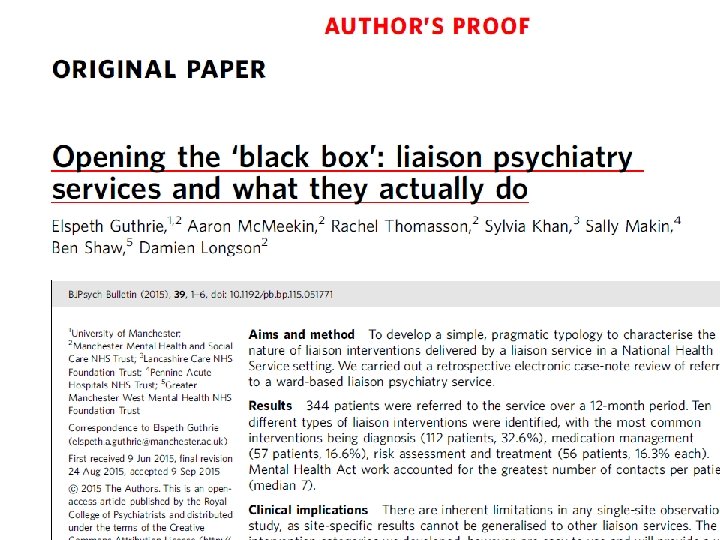
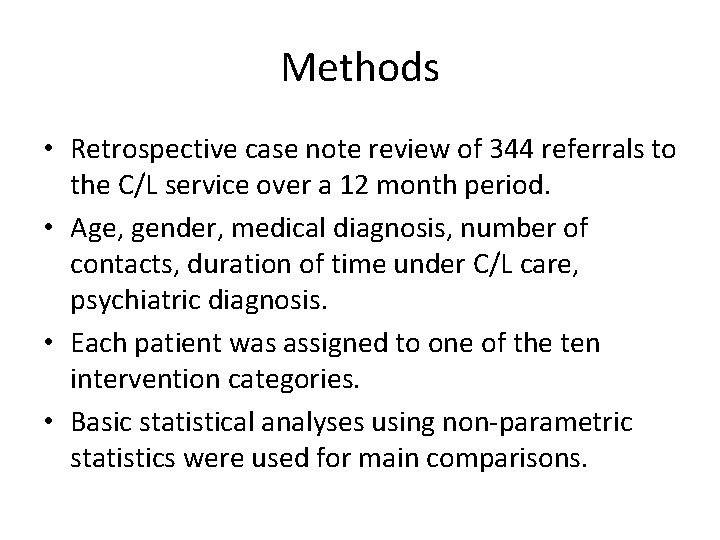
Methods • Retrospective case note review of 344 referrals to the C/L service over a 12 month period. • Age, gender, medical diagnosis, number of contacts, duration of time under C/L care, psychiatric diagnosis. • Each patient was assigned to one of the ten intervention categories. • Basic statistical analyses using non-parametric statistics were used for main comparisons.
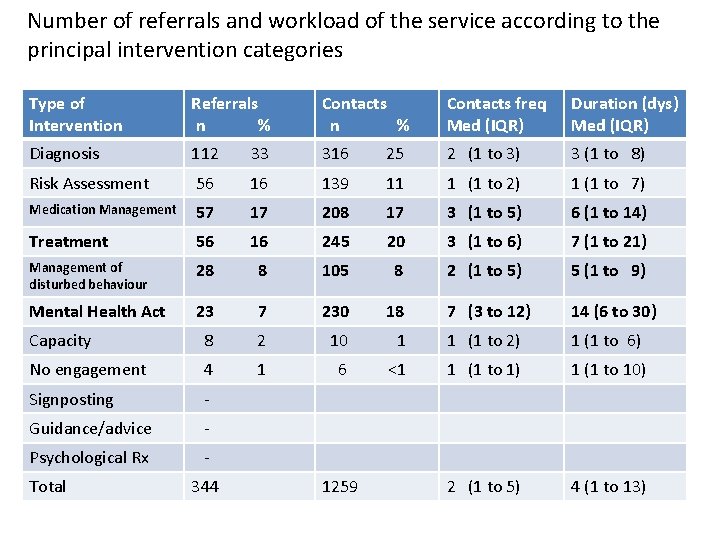
Number of referrals and workload of the service according to the principal intervention categories Type of Intervention Referrals n % Contacts freq Med (IQR) Duration (dys) Med (IQR) Diagnosis 112 33 316 25 2 (1 to 3) 3 (1 to 8) Risk Assessment 56 16 139 11 1 (1 to 2) 1 (1 to 7) Medication Management 57 17 208 17 3 (1 to 5) 6 (1 to 14) Treatment 56 16 245 20 3 (1 to 6) 7 (1 to 21) Management of disturbed behaviour 28 8 105 8 2 (1 to 5) 5 (1 to 9) Mental Health Act 23 7 230 18 7 (3 to 12) 14 (6 to 30) Capacity 8 2 10 1 1 (1 to 2) 1 (1 to 6) No engagement 4 1 6 <1 1 (1 to 1) 1 (1 to 10) Signposting - Guidance/advice - Psychological Rx 2 (1 to 5) 4 (1 to 13) Total 344 1259
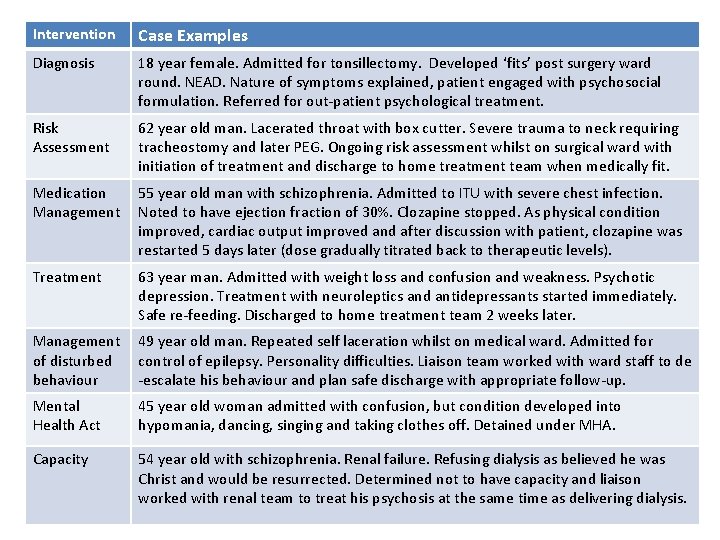
Intervention Case Examples Diagnosis 18 year female. Admitted for tonsillectomy. Developed ‘fits’ post surgery ward round. NEAD. Nature of symptoms explained, patient engaged with psychosocial formulation. Referred for out-patient psychological treatment. Risk Assessment 62 year old man. Lacerated throat with box cutter. Severe trauma to neck requiring tracheostomy and later PEG. Ongoing risk assessment whilst on surgical ward with initiation of treatment and discharge to home treatment team when medically fit. Medication Management 55 year old man with schizophrenia. Admitted to ITU with severe chest infection. Noted to have ejection fraction of 30%. Clozapine stopped. As physical condition improved, cardiac output improved and after discussion with patient, clozapine was restarted 5 days later (dose gradually titrated back to therapeutic levels). Treatment 63 year man. Admitted with weight loss and confusion and weakness. Psychotic depression. Treatment with neuroleptics and antidepressants started immediately. Safe re-feeding. Discharged to home treatment team 2 weeks later. Management of disturbed behaviour 49 year old man. Repeated self laceration whilst on medical ward. Admitted for control of epilepsy. Personality difficulties. Liaison team worked with ward staff to de -escalate his behaviour and plan safe discharge with appropriate follow-up. Mental Health Act 45 year old woman admitted with confusion, but condition developed into hypomania, dancing, singing and taking clothes off. Detained under MHA. Capacity 54 year old with schizophrenia. Renal failure. Refusing dialysis as believed he was Christ and would be resurrected. Determined not to have capacity and liaison worked with renal team to treat his psychosis at the same time as delivering dialysis.
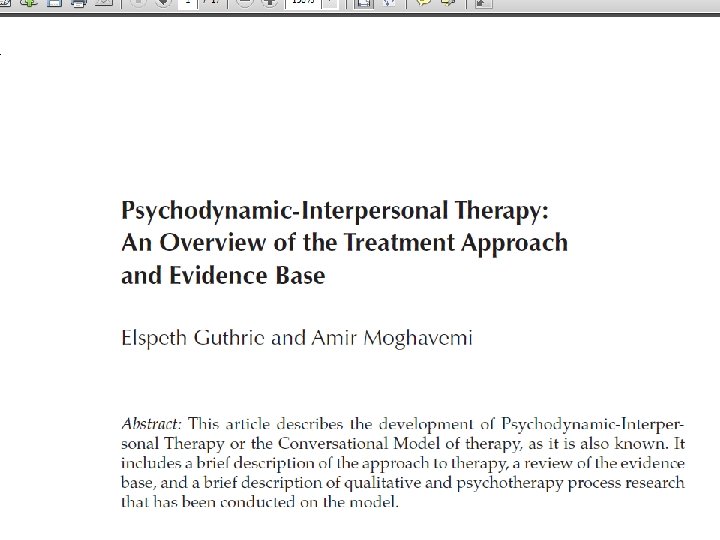
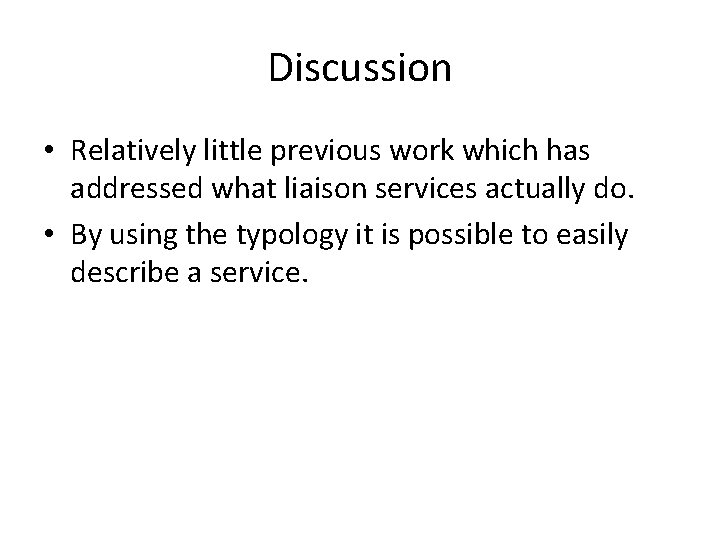
Discussion • Relatively little previous work which has addressed what liaison services actually do. • By using the typology it is possible to easily describe a service.
What proportion of patients referred to a liaison service need to be seen by a psychiatrist, as opposed to any other member of the liaison team? Dr Aaron Mc. Meekin Dr Sylvia Khan Dr Sally Makin Dr Ben Shaw Professor Damien Longson Professor Else Guthrie
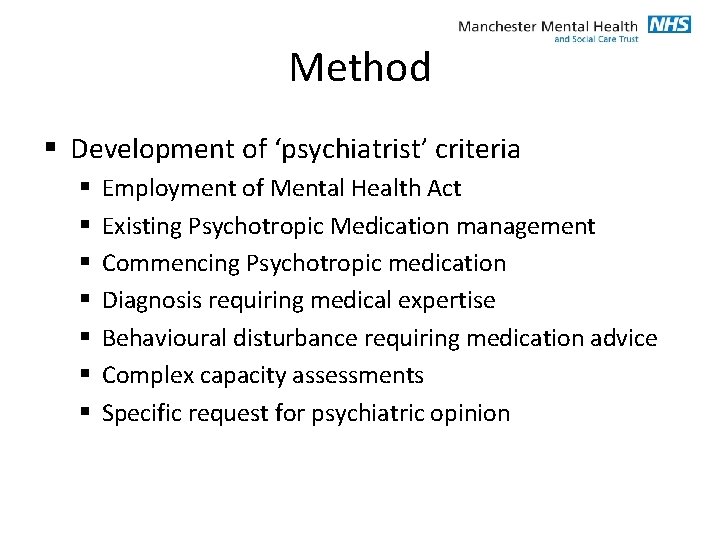
Method § Development of ‘psychiatrist’ criteria § § § § Employment of Mental Health Act Existing Psychotropic Medication management Commencing Psychotropic medication Diagnosis requiring medical expertise Behavioural disturbance requiring medication advice Complex capacity assessments Specific request for psychiatric opinion
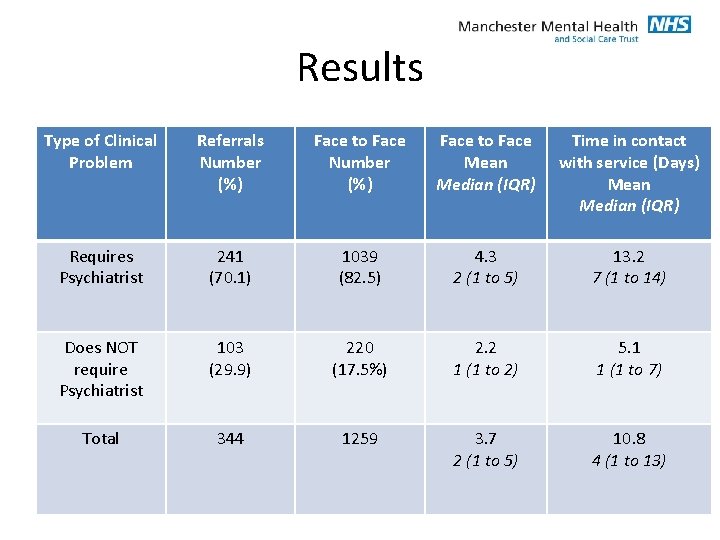
Results Type of Clinical Problem Referrals Number (%) Face to Face Mean Median (IQR) Time in contact with service (Days) Mean Median (IQR) Requires Psychiatrist 241 (70. 1) 1039 (82. 5) 4. 3 2 (1 to 5) 13. 2 7 (1 to 14) Does NOT require Psychiatrist 103 (29. 9) 220 (17. 5%) 2. 2 1 (1 to 2) 5. 1 1 (1 to 7) Total 344 1259 3. 7 2 (1 to 5) 10. 8 4 (1 to 13)
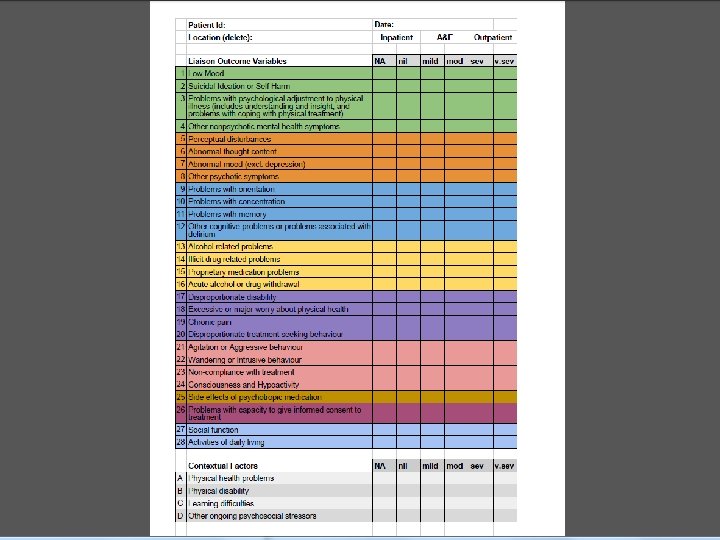
Development of a generic outcome measure for liaison psychiatry • • Mathew Harrison Shazada Nawaz Seri Abraham Peter Kelsall
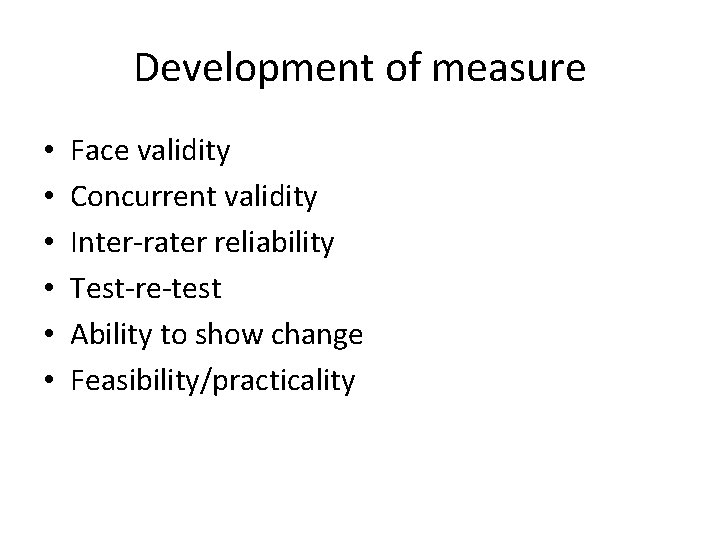
Development of measure • • • Face validity Concurrent validity Inter-rater reliability Test-re-test Ability to show change Feasibility/practicality
Summary • Rate limiting steps are probably: – supervision – Time available – Governance demands – e. a. guthrie@leeds. ac. uk