
The value of Human Capital and intangible assets
The value of Human Capital and intangible assets Prof. Mario Spatafora Sofia, May 19 -20 2004 “Knowledge Economy Conference” Property of Effebi – finance & banking All rights reserved 1
finance & banking Association for the Organization and HR Development Its PRIMARY OBJECTIVES are: • To research and promote effective business; • To improve professional development, giving priority to training and communication issues; EBTN – European Bank Training Network: It’s a non-profit organisation made up of 34 European Institutes of Bankers, whose aim is to promote and coordinate training activities in the banking and financial sector. Property of Effebi – finance & banking All rights reserved 2
ROMA TRE UNIVERSITY The most recently established University in Rome (founded in 1992) and the second one for dimension (30. 000 students, scientific, linguistic, informatics laboratories, 11 libraries) Roma Tre is now included in International Networks and programs promoted by EU. Property of Effebi – finance & banking All rights reserved 3
Summary The Economic Models Evolution The Importance of the Intangible Assets The value of a Company The measurement of the Intangible Assets How People create Value Some possible indicators of : the Human Capital the Structural Capital the Relational Capital Training for the Intellectual Capital Property of Effebi – finance & banking All rights reserved 4
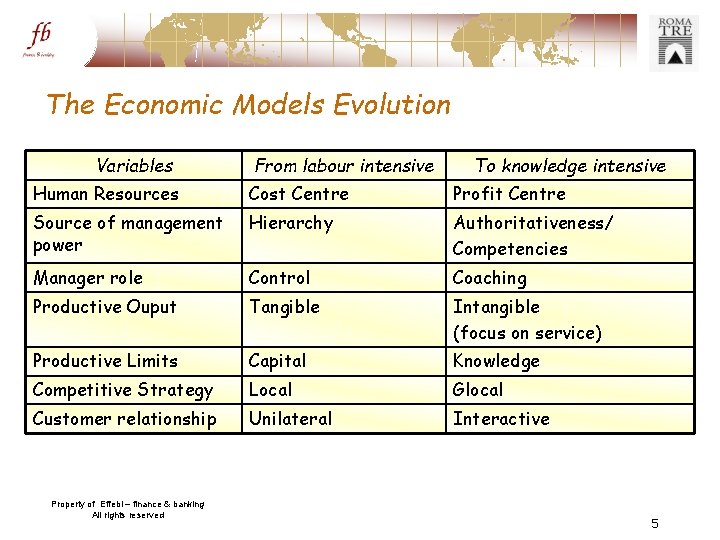
The Economic Models Evolution Variables From labour intensive To knowledge intensive Human Resources Cost Centre Profit Centre Source of management power Hierarchy Authoritativeness/ Competencies Manager role Control Coaching Productive Ouput Tangible Intangible (focus on service) Productive Limits Capital Knowledge Competitive Strategy Local Glocal Customer relationship Unilateral Interactive Property of Effebi – finance & banking All rights reserved 5
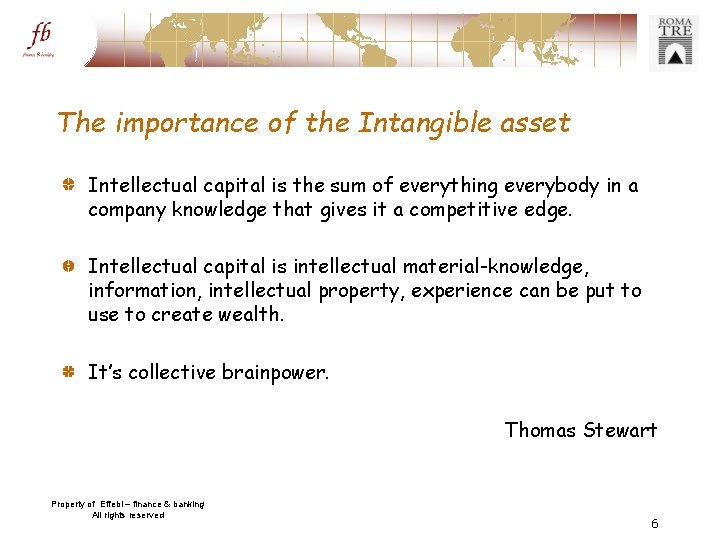
The importance of the Intangible asset Intellectual capital is the sum of everything everybody in a company knowledge that gives it a competitive edge. Intellectual capital is intellectual material-knowledge, information, intellectual property, experience can be put to use to create wealth. It’s collective brainpower. Thomas Stewart Property of Effebi – finance & banking All rights reserved 6
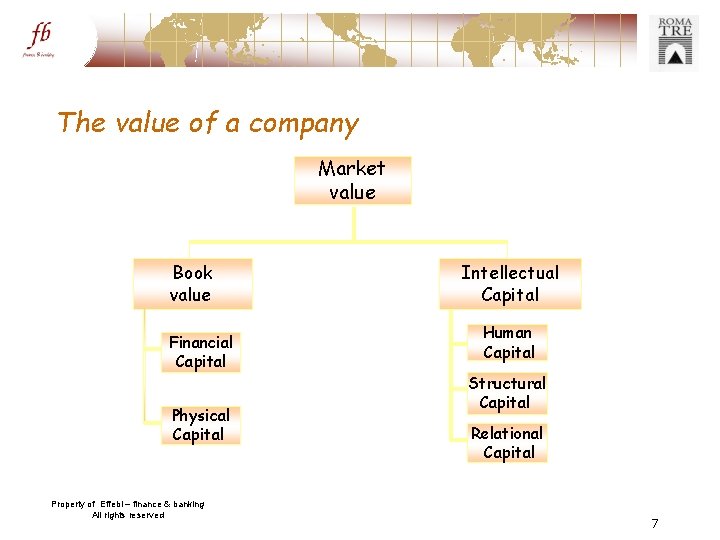
The value of a company Market value Book value Financial Capital Physical Capital Property of Effebi – finance & banking All rights reserved Intellectual Capital Human Capital Structural Capital Relational Capital 7
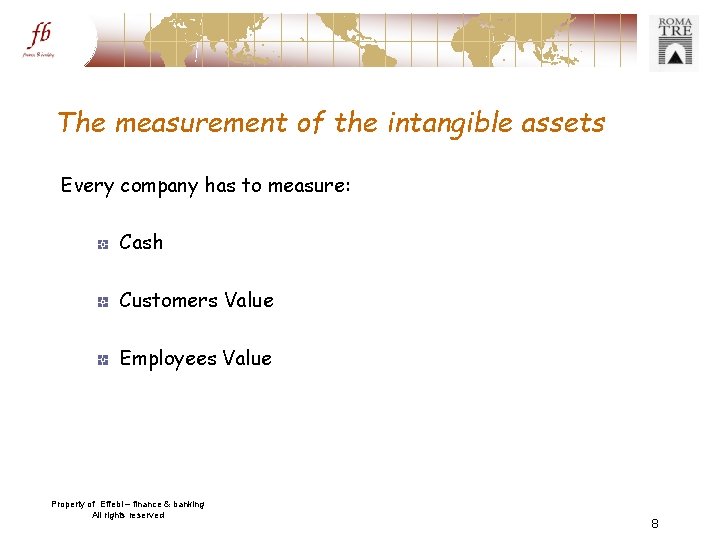
The measurement of the intangible assets Every company has to measure: Cash Customers Value Employees Value Property of Effebi – finance & banking All rights reserved 8
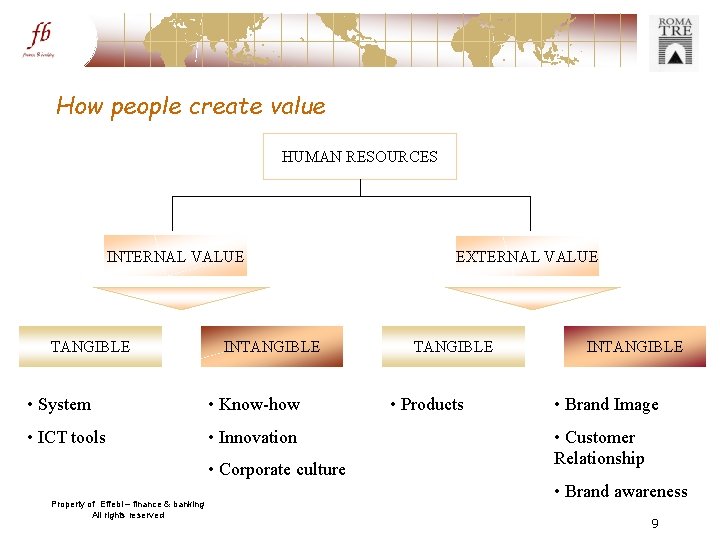
How people create value HUMAN RESOURCES INTERNAL VALUE TANGIBLE INTANGIBLE • System • Know-how • ICT tools • Innovation • Corporate culture Property of Effebi – finance & banking All rights reserved EXTERNAL VALUE TANGIBLE • Products INTANGIBLE • Brand Image • Customer Relationship • Brand awareness 9
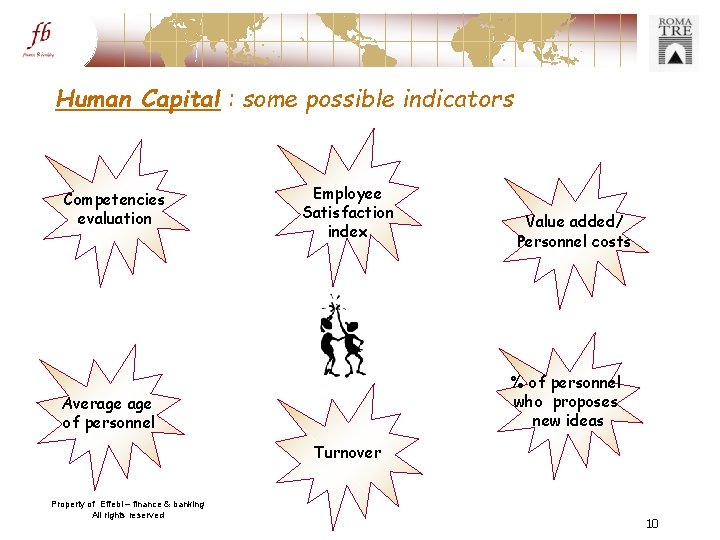
Human Capital : some possible indicators Competencies evaluation Employee Satisfaction index Value added/ Personnel costs % of personnel who proposes new ideas Average of personnel Turnover Property of Effebi – finance & banking All rights reserved 10
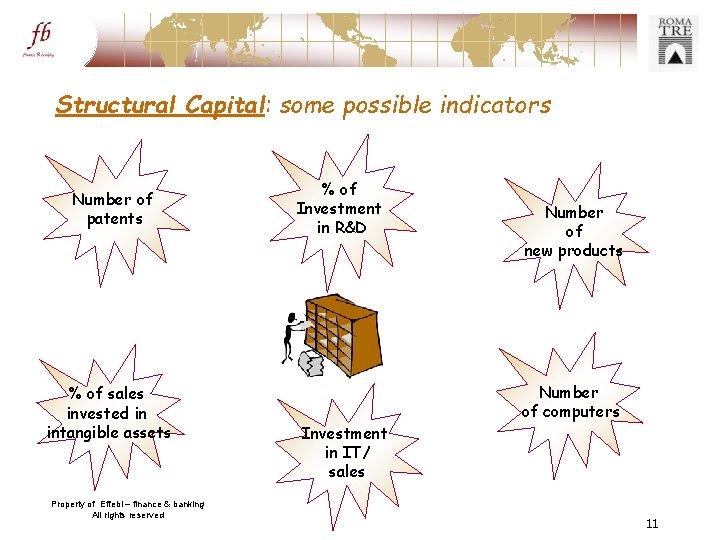
Structural Capital: some possible indicators Number of patents % of sales invested in intangible assets Property of Effebi – finance & banking All rights reserved % of Investment in R&D Investment in IT/ sales Number of new products Number of computers 11
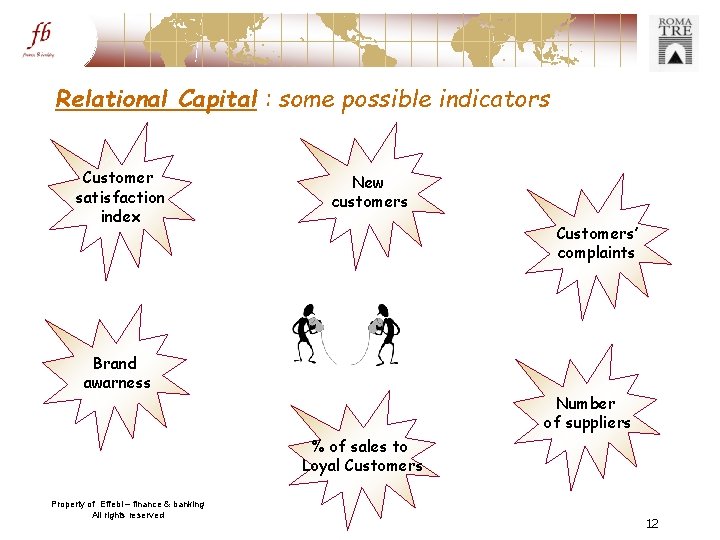
Relational Capital : some possible indicators Customer satisfaction index New customers Customers’ complaints Brand awarness Number of suppliers % of sales to Loyal Customers Property of Effebi – finance & banking All rights reserved 12
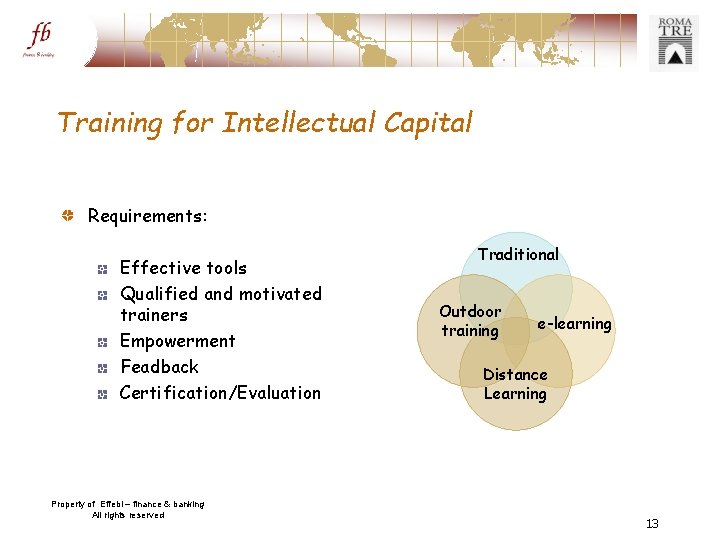
Training for Intellectual Capital Requirements: Effective tools Qualified and motivated trainers Empowerment Feadback Certification/Evaluation Property of Effebi – finance & banking All rights reserved Traditional Outdoor training e-learning Distance Learning 13
Training is the driving force behind the Intellectual Capital: it works on the Human Capital and it allows the increase of both the Structural Capital (BPR) and the Relational one (CRM, customer care, …) Thank You Property of Effebi – finance & banking All rights reserved 14
How to develop Intellectual Capital Property of Effebi – finance & banking All rights reserved 15
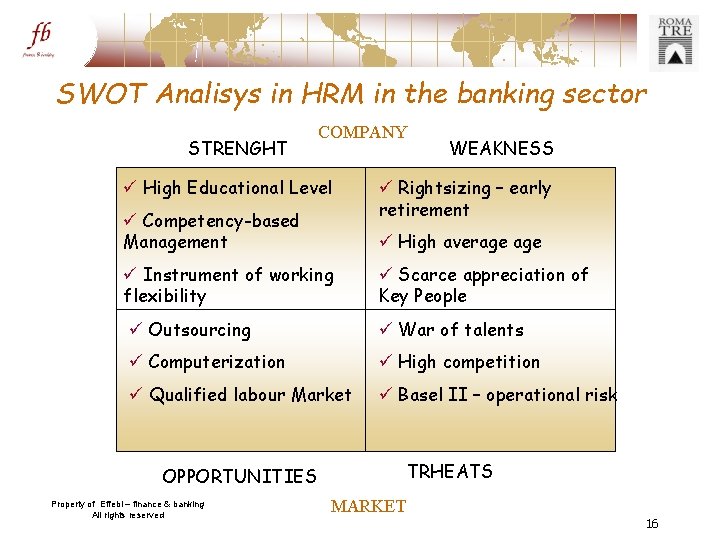
SWOT Analisys in HRM in the banking sector STRENGHT COMPANY ü High Educational Level ü Competency-based Management WEAKNESS ü Rightsizing – early retirement ü High average ü Instrument of working flexibility ü Scarce appreciation of Key People ü Outsourcing ü War of talents ü Computerization ü High competition ü Qualified labour Market ü Basel II – operational risk TRHEATS OPPORTUNITIES Property of Effebi – finance & banking All rights reserved MARKET 16
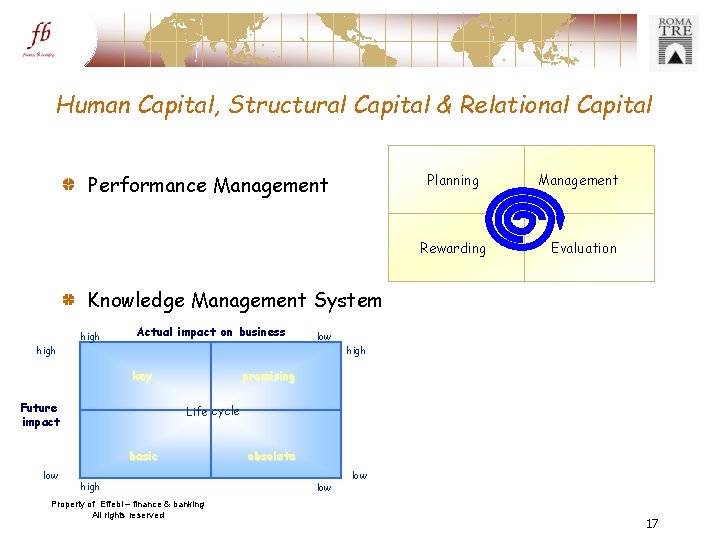
Human Capital, Structural Capital & Relational Capital Performance Management Planning Rewarding Management Evaluation Knowledge Management System high Actual impact on business low high key Future impact promising Life cycle basic low high Property of Effebi – finance & banking All rights reserved obsolete low 17
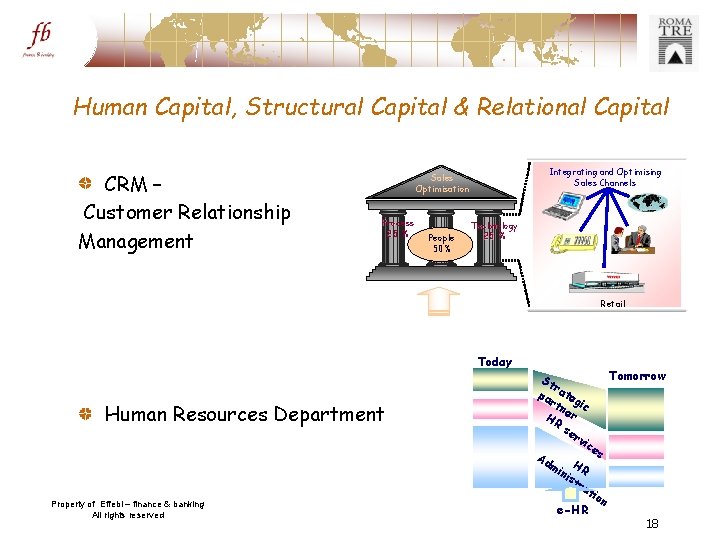
Human Capital, Structural Capital & Relational Capital CRM – Customer Relationship Management Integrating and Optimising Sales Channels Sales Optimisation Process 25 % People 50% Technology 25 % Retail Today Human Resources Department Property of Effebi – finance & banking All rights reserved Tomorrow St ra pa teg rt n ic HR er se rv ice s Ad H mi nis R tr at ion e-HR 18
Intellectual Capital measurement: an example – a Spanish Bank Property of Effebi – finance & banking All rights reserved 19
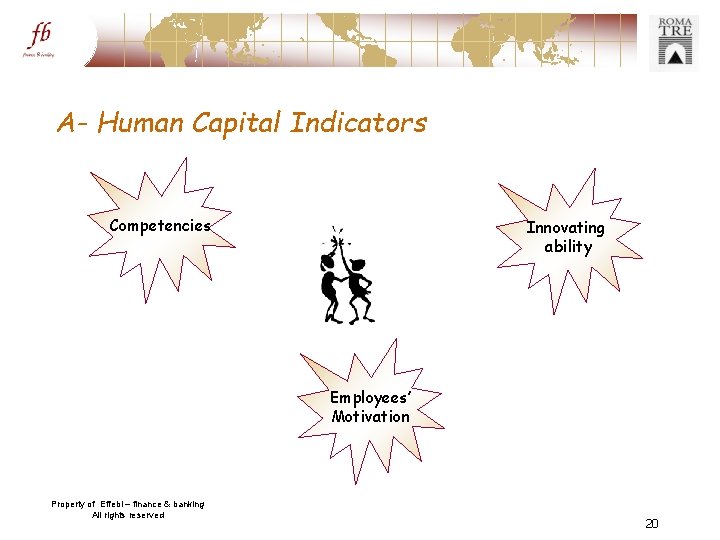
A- Human Capital Indicators Competencies Innovating ability Employees’ Motivation Property of Effebi – finance & banking All rights reserved 20
B- Structural Capital Indicators: Employee care Technology and process quality Product Tecnology Property of Effebi – finance & banking All rights reserved 21
C- Relational Capital Indicators Customer Loyalty Relationship Intensity Property of Effebi – finance & banking All rights reserved 22
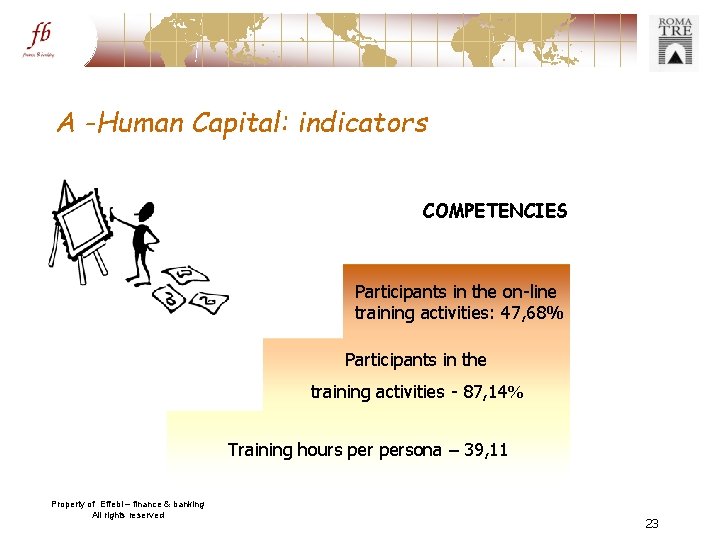
A -Human Capital: indicators COMPETENCIES Participants in the on-line training activities: 47, 68% Participants in the training activities - 87, 14% Training hours persona – 39, 11 Property of Effebi – finance & banking All rights reserved 23
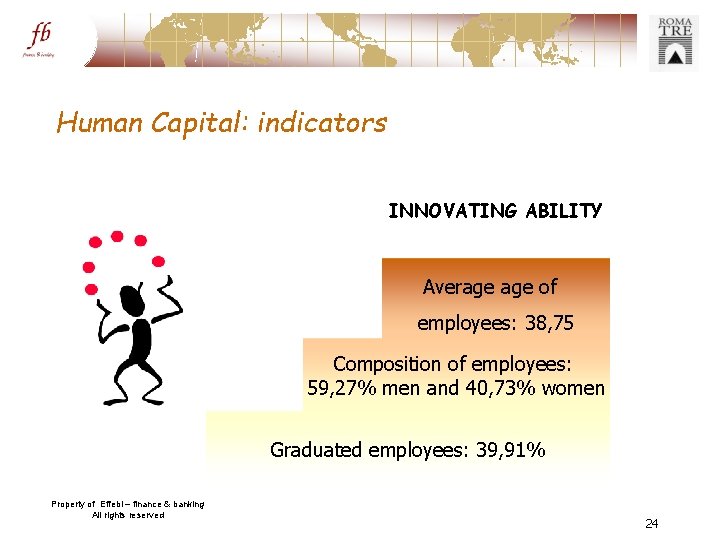
Human Capital: indicators INNOVATING ABILITY Average of employees: 38, 75 Composition of employees: 59, 27% men and 40, 73% women Graduated employees: 39, 91% Property of Effebi – finance & banking All rights reserved 24
Human Capital: indicators EMPLOYEES’ MOTIVATION Seniority: 13, 18 years People with flexible salary: 73, 88% Career Advancement: 12, 51% Property of Effebi – finance & banking All rights reserved 25
B - Structural capital: indicators EMPLOYEE CARE N° of internet portals: 108 N° of intranet forum: 47 N° of information transaction per month: 628, 41 mln. Property of Effebi – finance & banking All rights reserved 26
Structural Capital: indicators TECHNOLOGY AND PROCESS QUALITY N° computers persona: 1, 07 N° of intranet pages visited per month: 21. 798. 777 N° of internet pages visited per month: 56. 880. 675 Property of Effebi – finance & banking All rights reserved 27
Structural Capital: indicators PRODUCT TECHNOLOGY N° of products and services: 4. 199 New product release: 325 Property of Effebi – finance & banking All rights reserved 28
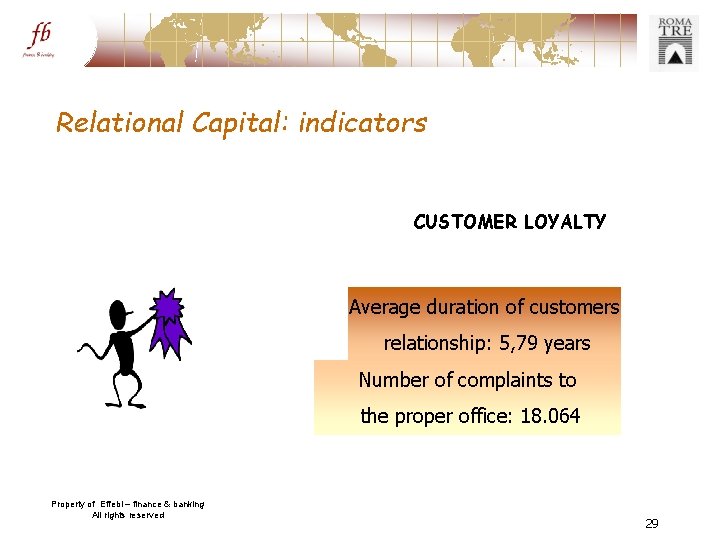
Relational Capital: indicators CUSTOMER LOYALTY Average duration of customers relationship: 5, 79 years Number of complaints to the proper office: 18. 064 Property of Effebi – finance & banking All rights reserved 29
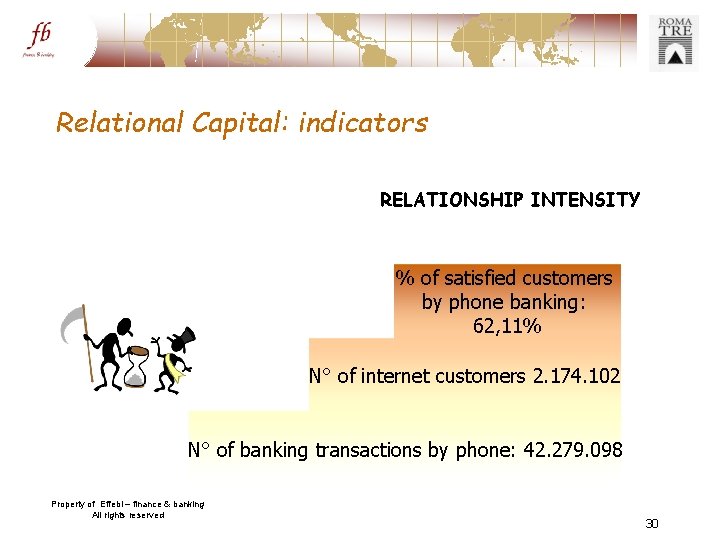
Relational Capital: indicators RELATIONSHIP INTENSITY % of satisfied customers by phone banking: 62, 11% N° of internet customers 2. 174. 102 N° of banking transactions by phone: 42. 279. 098 Property of Effebi – finance & banking All rights reserved 30

Thank You Property of Effebi – finance & banking All rights reserved 31
- Slides: 31