
The Value of Early Caries Detection in Enabling
The Value of Early Caries Detection in Enabling Preventive Therapies in Dentistry —— —— Dr Nigel Pitts
Overview • Introduction • Value of Early Caries Detection in Enabling Preventive Therapies • International Evidence Based Framework for Individualized Caries Management – “New” techniques & devices for identifying lesions – New & existing therapies for lesion remineralization • An Example of a Government funded Dental Programme for High-Caries Risk Children
Introduction • What exactly is “Caries” > • What is “early” detection and how “new” is it? > • Public Health Strategies: – High Risk Strategy versus – Population Strategy versus – Mixed/Combined Strategy • Children as a focus (but the concepts are similar for adults too!)
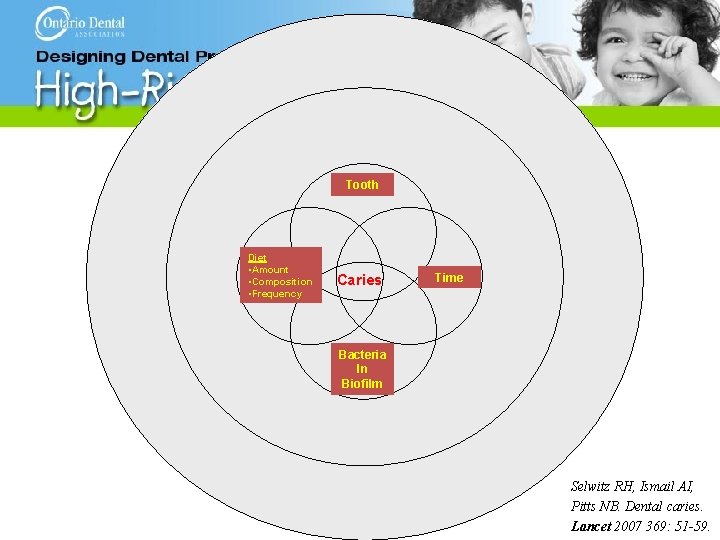
Tooth Diet • Amount • Composition • Frequency Caries Time Bacteria In Biofilm Selwitz RH, Ismail AI, Pitts NB. Dental caries. Lancet 2007 369: 51 -59.
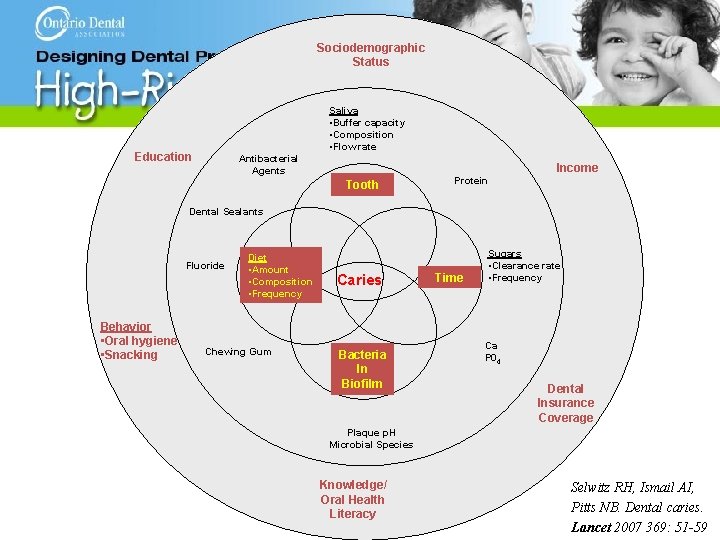
Sociodemographic Status Saliva • Buffer capacity • Composition • Flow rate Education Antibacterial Agents Income Tooth Protein Dental Sealants Fluoride Behavior • Oral hygiene • Snacking Diet • Amount • Composition • Frequency Chewing Gum Caries Bacteria In Biofilm Time Sugars • Clearance rate • Frequency Ca P 04 Dental Insurance Coverage Plaque p. H Microbial Species Knowledge/ Oral Health Literacy Selwitz RH, Ismail AI, Pitts NB. Dental caries. Lancet 2007 369: 51 -59
Overview • Introduction • Value of Early Caries Detection in Enabling Preventive Therapies • International Evidence Based Framework for Individualized Caries Management – “New” techniques & devices for identifying lesions – New & existing therapies for lesion remineralization • An Example of a Government funded Dental Programme for High-Caries Risk Children
Value of Early Caries Detection in Enabling Preventive Therapies • The Value of early detection: – is the ability to then control the disease process in order – to contain, arrest, or remineralize lesions in order – to avoid or delay the burdens and costs associated with a spiral of restoration and re-restoration • If the lesion is left to extend until a filling is needed, the clinical opportunity for effective prevention is lost
The Evidence Base in Caries Detection and Assessment clinical visual assessment of BOTH enamel & dentin lesions is feasible • Backer Dirks 1951 > • Marthaler 1966 > ICDAS 2002 -8> • WHO 1979 • Pitts & Fyffe 1988 • Ismail 1992 • Ekstrand, Ricketts & Kidd ‘ 98 • Fyffe et al 2000 • Nyvad 2001 • And many, many more (see Systematic Reviews NIH CDC 2001 and ICW-CCT 2004)
Pitts. Berg
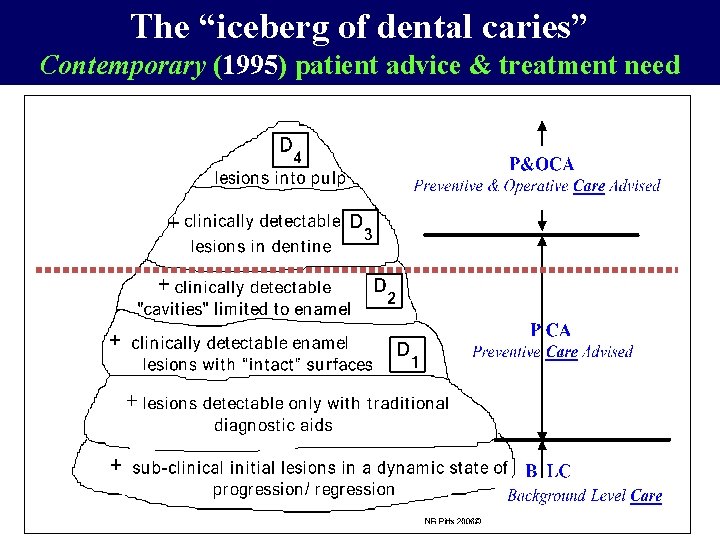
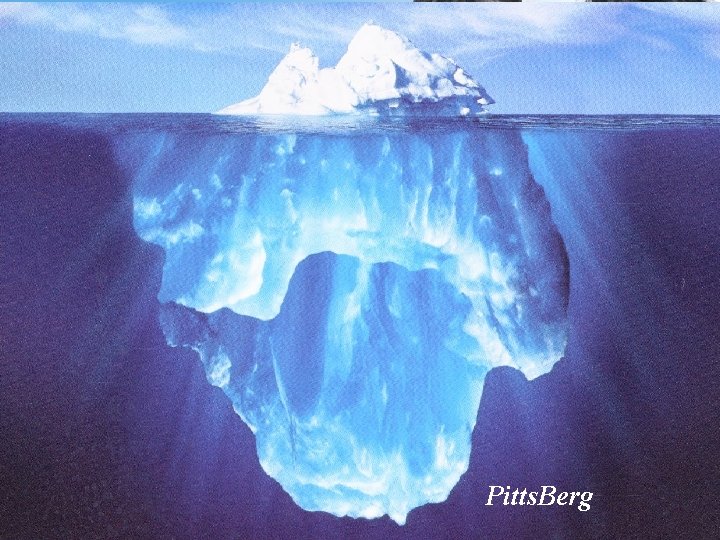
The “iceberg of dental caries” Contemporary (1995) patient advice & treatment need
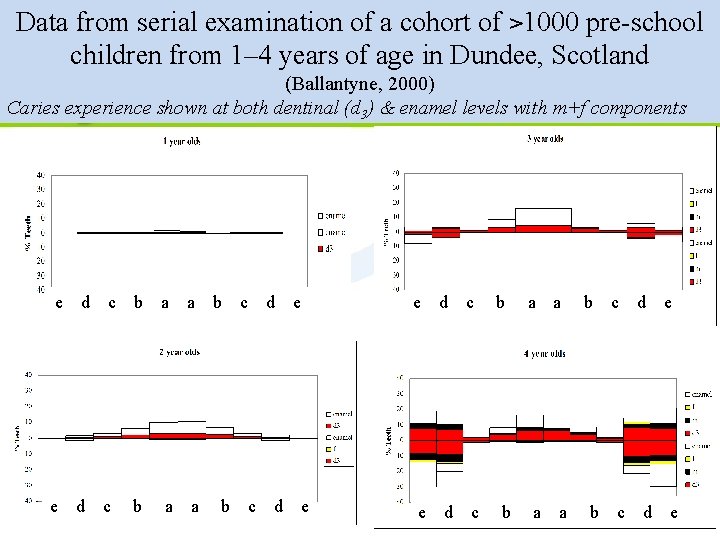
Data from serial examination of a cohort of >1000 pre-school children from 1– 4 years of age in Dundee, Scotland (Ballantyne, 2000) Caries experience shown at both dentinal (d 3) & enamel levels with m+f components e e d d c c b a a b b c c d d e e d d c c b b a a b b c d e e
Value of Early Caries Detection in Enabling Preventive Therapies • Value from the perspectives of: » The Child » The Parents » The Dental Team » The Government / Insurers • Preventive Therapies - understand both the high quality evidence we have (eg Fluorides) as well as the evidence gaps we still need to fill. .

Overview • Introduction • Value of Early Caries Detection in Enabling Preventive Therapies • International Evidence Based Framework for Individualized Caries Management – “New” techniques & devices for identifying lesions – New & existing therapies for lesion remineralization • An Example of a Government funded Dental Programme for High-Caries Risk Children
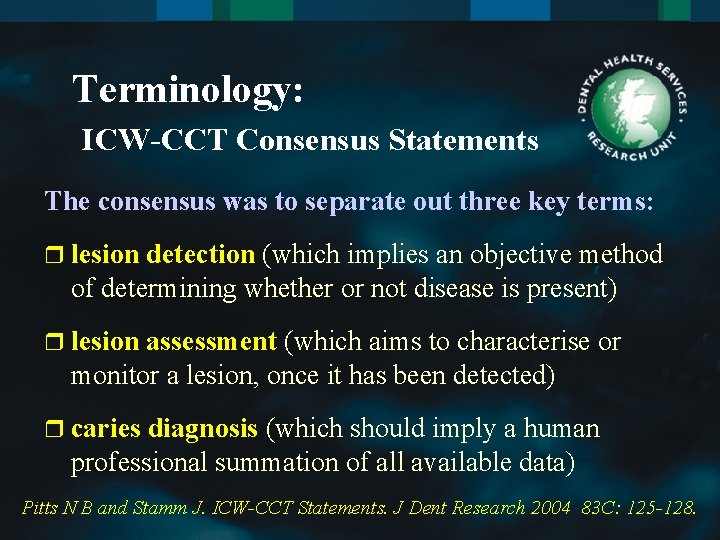
Terminology: ICW-CCT Consensus Statements The consensus was to separate out three key terms: r lesion detection (which implies an objective method of determining whether or not disease is present) r lesion assessment (which aims to characterise or monitor a lesion, once it has been detected) r caries diagnosis (which should imply a human professional summation of all available data) Pitts N B and Stamm J. ICW-CCT Statements. J Dent Research 2004 83 C: 125 -128.
Registered Charity in Scotland www. icdas. org
ICDAS – what is it ? r It is an International convention for “staging” Caries, after Detection, and then being able to Assess lesion activity and monitor with a System r It has been developed in response to the lack of a modern, evidence-based, preventive-oriented System that can be employed across: Practice, Research, Epidemiology & Education r It has come from a broadly based International Group with academic, FDI, ADA and NIH input
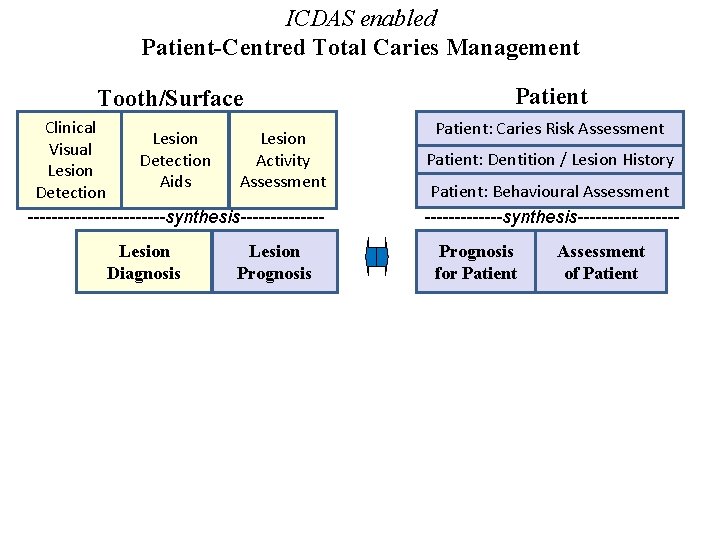
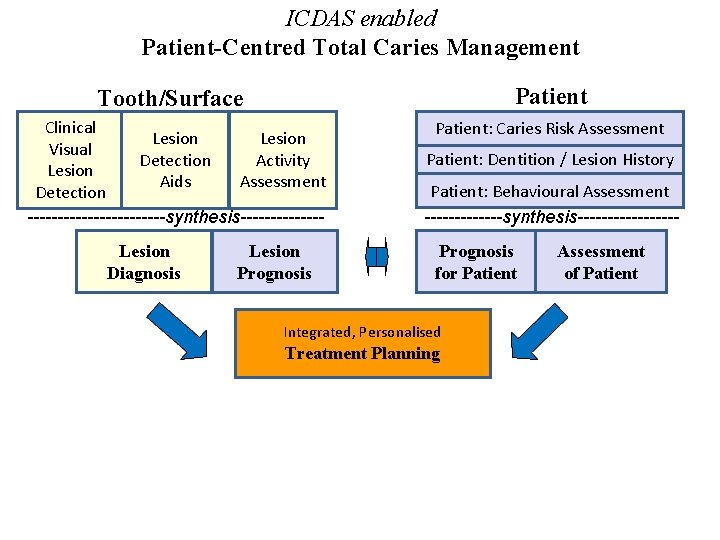
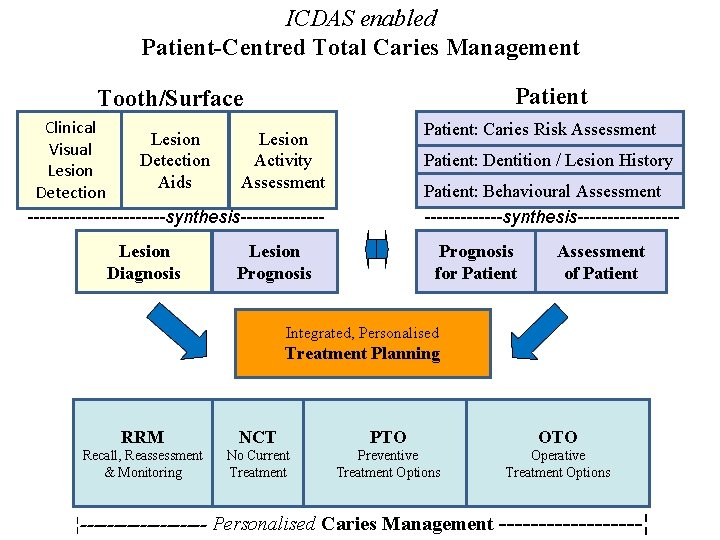
ICDAS enabled Patient-Centred Total Caries Management Tooth/Surface Clinical Lesion Visual Detection Activity Lesion Aids Assessment Detection ------------synthesis-------Lesion Diagnosis Lesion Prognosis Patient: Caries Risk Assessment Patient: Dentition / Lesion History Patient: Behavioural Assessment -------synthesis--------Prognosis for Patient Assessment of Patient
Overview • Introduction • Value of Early Caries Detection in Enabling Preventive Therapies • International Evidence Based Framework for Individualized Caries Management – “New” techniques & devices for identifying lesions – New & existing therapies for lesion remineralization • An Example of a Government funded Dental Programme for High-Caries Risk Children
“New” techniques & devices for identifying lesions • Clinical Visual with drying and ICDAS criteria • Other “old” & newer methods - currently available
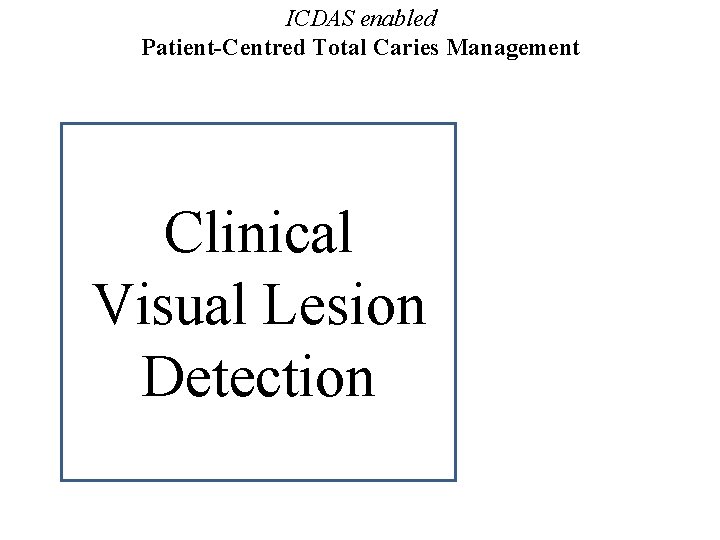
ICDAS enabled Patient-Centred Total Caries Management Clinical Visual Lesion Detection
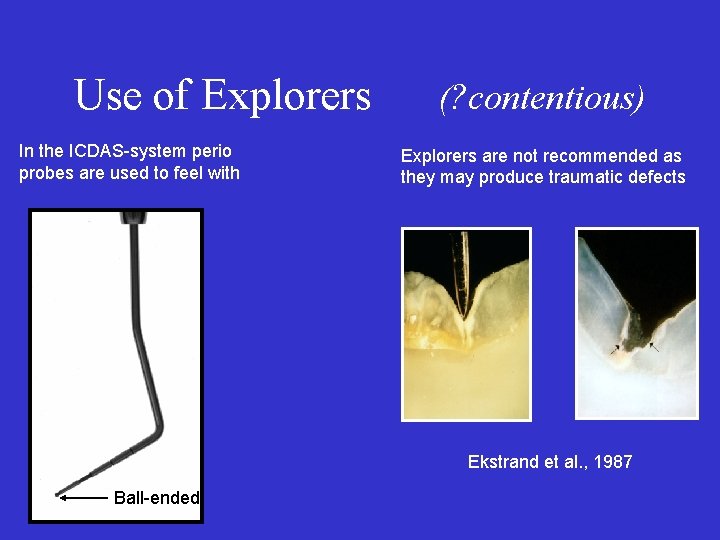
Use of Explorers In the ICDAS-system perio probes are used to feel with (? contentious) Explorers are not recommended as they may produce traumatic defects Ekstrand et al. , 1987 Ball-ended
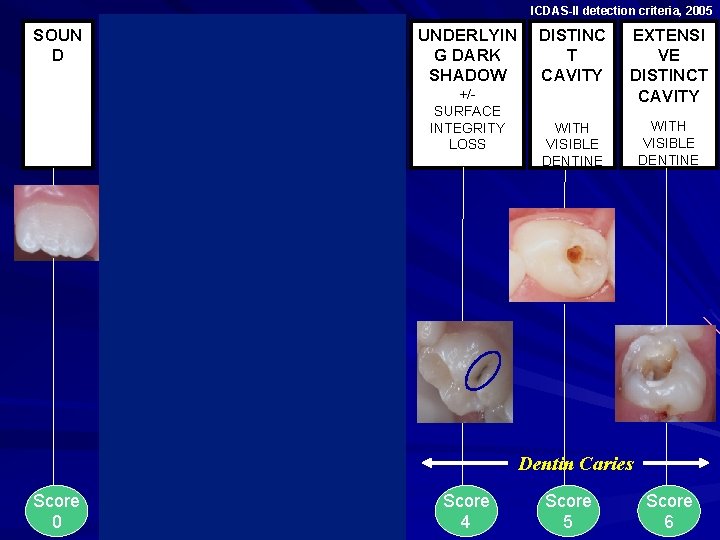
ICDAS-II detection criteria, 2005 SOUN D OPACIT Y First Visible Change Distinct Visible Change only after airdrying: without air-drying: WHITE, BROWN LOCALISED ENAMEL BREAKDO WN SURFACE INTEGRITY LOSS UNDERLYIN G DARK SHADOW +/SURFACE INTEGRITY LOSS Enamel Caries Score 0 Score 1 Score 2 DISTINC T CAVITY EXTENSI VE DISTINCT CAVITY WITH VISIBLE DENTINE Dentin Caries Score 3 Score 4 Score 5 Score 6
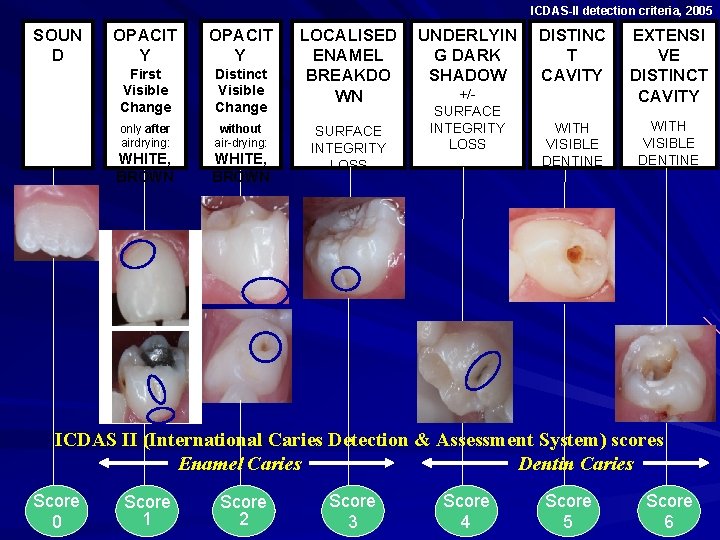
ICDAS-II detection criteria, 2005 SOUN D OPACIT Y First Visible Change Distinct Visible Change only after airdrying: without air-drying: WHITE, BROWN LOCALISED ENAMEL BREAKDO WN SURFACE INTEGRITY LOSS UNDERLYIN G DARK SHADOW +/SURFACE INTEGRITY LOSS DISTINC T CAVITY EXTENSI VE DISTINCT CAVITY WITH VISIBLE DENTINE ICDAS II (International Caries Detection & Assessment System) scores Enamel Caries Dentin Caries Score 0 Score 1 Score 2 Score 3 Score 4 Score 5 Score 6
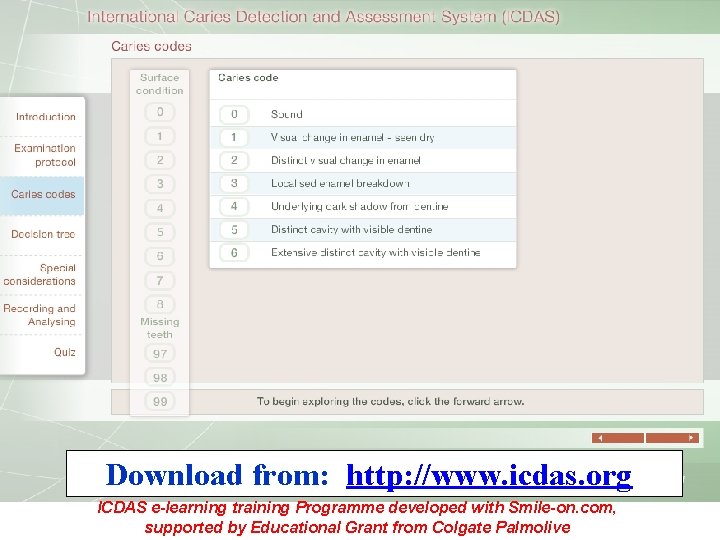
Download from: http: //www. icdas. org ICDAS e-learning training Programme developed with Smile-on. com, supported by Educational Grant from Colgate Palmolive

Successful initial use of International Caries Detection & Assessment System: ICDAS The ICDAS caries detection criteria have been successfully used in: – Dundee – Detroit – Indiana – Copenhagen – Columbia – Mexico – Iceland – Austria – Germany – EGOHID II ICDAS II introduced after wide peer review in Baltimore 2005 with ADA support There are studies being conducted, teaching and requests to use ICDAS from: – Portugal – Italy – EGOHID (EU) – Thailand – Vietnam – Japan – Korea – Australia
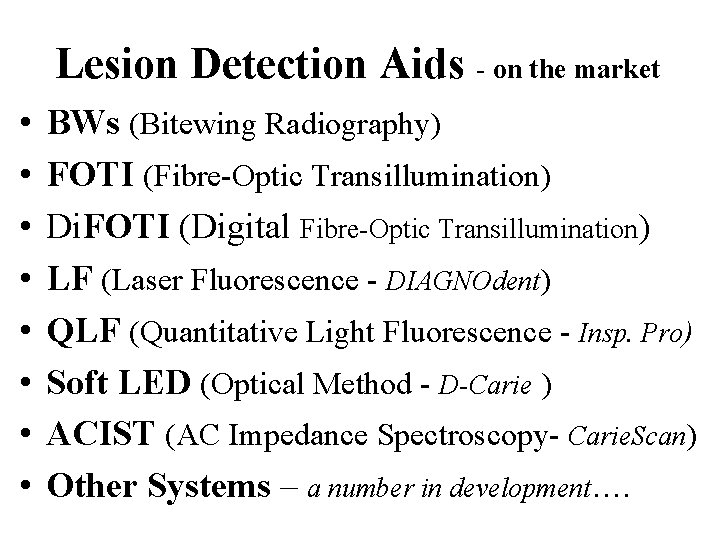
Lesion Detection Aids - on the market • • BWs (Bitewing Radiography) FOTI (Fibre-Optic Transillumination) Di. FOTI (Digital Fibre-Optic Transillumination) LF (Laser Fluorescence - DIAGNOdent) QLF (Quantitative Light Fluorescence - Insp. Pro) Soft LED (Optical Method - D-Carie ) ACIST (AC Impedance Spectroscopy- Carie. Scan) Other Systems – a number in development….
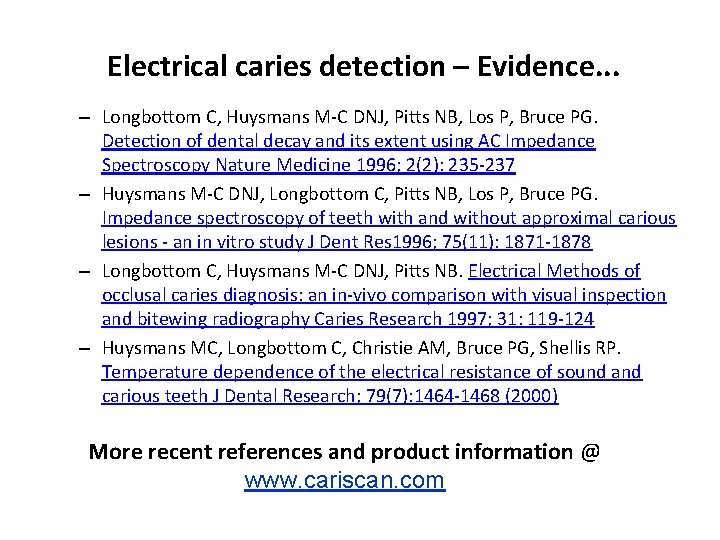
Electrical caries detection – Evidence. . . – Longbottom C, Huysmans M-C DNJ, Pitts NB, Los P, Bruce PG. Detection of dental decay and its extent using AC Impedance Spectroscopy Nature Medicine 1996; 2(2): 235 -237 – Huysmans M-C DNJ, Longbottom C, Pitts NB, Los P, Bruce PG. Impedance spectroscopy of teeth with and without approximal carious lesions - an in vitro study J Dent Res 1996; 75(11): 1871 -1878 – Longbottom C, Huysmans M-C DNJ, Pitts NB. Electrical Methods of occlusal caries diagnosis: an in-vivo comparison with visual inspection and bitewing radiography Caries Research 1997; 31: 119 -124 – Huysmans MC, Longbottom C, Christie AM, Bruce PG, Shellis RP. Temperature dependence of the electrical resistance of sound and carious teeth J Dental Research; 79(7): 1464 -1468 (2000) More recent references and product information @ www. cariscan. com
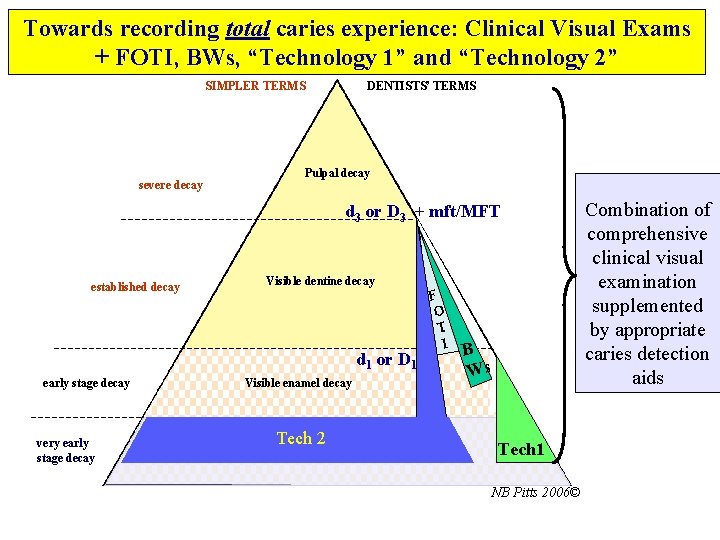
Towards recording total caries experience: Clinical Visual Exams + FOTI, BWs, “Technology 1” and “Technology 2” SIMPLER TERMS severe decay DENTISTS’ TERMS Pulpal decay d 3 or D 3 + mft/MFT established decay Visible dentine decay d 1 or D 1 early stage decay very early stage decay Visible enamel decay Tech 2 Sub-clinical decay F O T I B Ws Tech 1 NB Pitts 2006© Combination of comprehensive clinical visual examination supplemented by appropriate caries detection aids
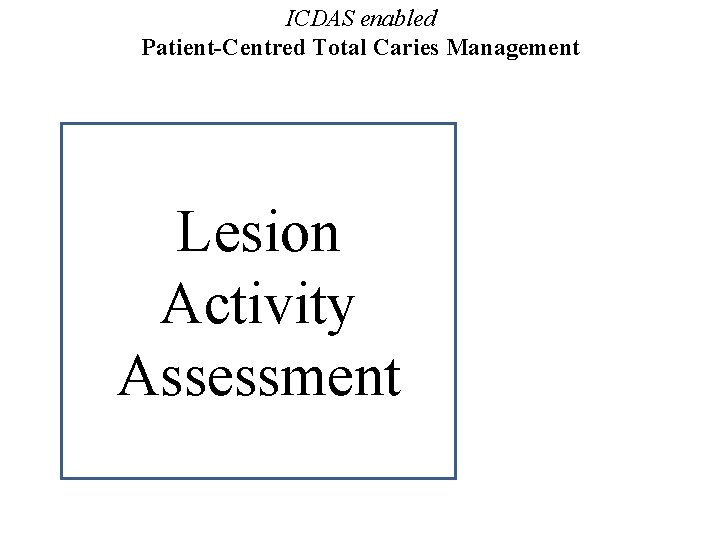
ICDAS enabled Patient-Centred Total Caries Management Lesion Detection Activity Assessment Aids
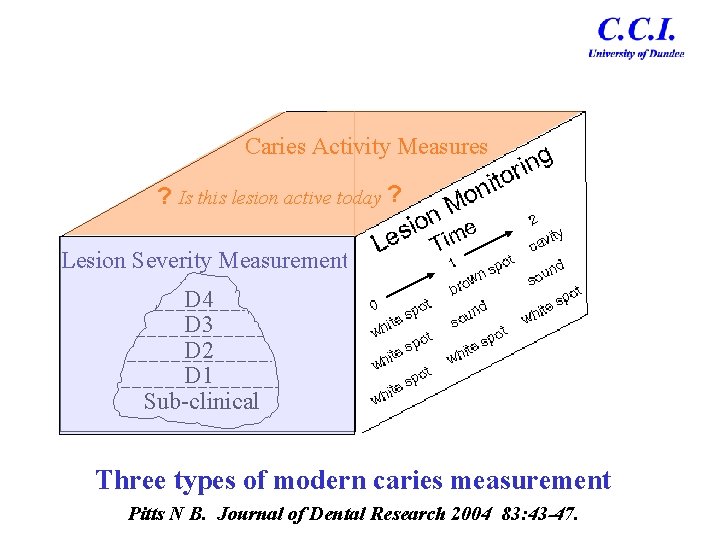
Caries Activity Measures ? Is this lesion active today ? Lesion Severity Measurement D 4 D 3 D 2 D 1 Sub-clinical Three types of modern caries measurement Pitts N B. Journal of Dental Research 2004 83: 43 -47.
New / existing therapies for lesion remineralization • Fluorides - will be covered by the next speaker • Xylitol - has been in use in Scandinavia for years (see “ICNARA” below) • “CPP- ACP” – Casein Phospho. Peptide - Amorphous Calcium Phosphate (see Morgan et al. , 2008 Caries Research 42: 171 -184) • Other agents and potential agents see “ICNARA” Report (as a Special Issue in Advances in Dental Research, in press)
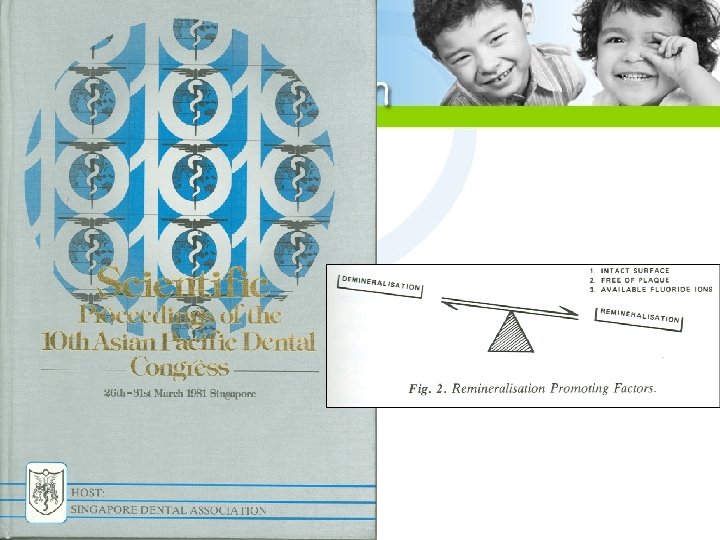
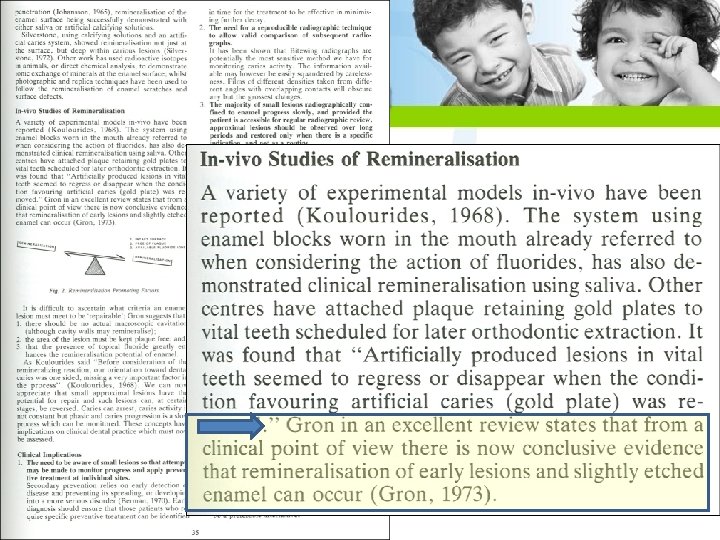
FDI World Dental Federation Science Committee Forum Int Dent J 2000; 50: 1 -12
ICDAS enabled Patient-Centred Total Caries Management Patient Tooth/Surface Clinical Lesion Visual Detection Activity Lesion Aids Assessment Detection ------------synthesis-------Lesion Diagnosis Lesion Prognosis Patient: Caries Risk Assessment Patient: Dentition / Lesion History Patient: Behavioural Assessment -------synthesis--------Prognosis for Patient Integrated, Personalised Treatment Planning Assessment of Patient
ICDAS enabled Patient-Centred Total Caries Management Patient Tooth/Surface Clinical Lesion Visual Detection Activity Lesion Aids Assessment Detection ------------synthesis-------Lesion Diagnosis Patient: Caries Risk Assessment Patient: Dentition / Lesion History Patient: Behavioural Assessment -------synthesis--------- Lesion Prognosis for Patient Assessment of Patient Integrated, Personalised Treatment Planning RRM NCT PTO OTO Recall, Reassessment & Monitoring No Current Treatment Preventive Treatment Options Operative Treatment Options ¦---------- Personalised Caries Management ---------¦
Overview • Introduction • Value of Early Caries Detection in Enabling Preventive Therapies • International Evidence Based Framework for Individualized Caries Management – “New” techniques & devices for identifying lesions – New & existing therapies for lesion remineralization • An Example of a Government funded Dental Programme for High-Caries Risk Children
Data Needs for Dental Programs for Children • Need for valid data: repeated cross-Sectional samples • D 3 (caries into dentin) is the traditional measure – quantifies RESTORATIVE Need (have had in Scotland since 1987) • International moves towards using some version of ICDAS – gather the information we need to have if we are to understand children’s PREVENTIVE Needs (eg. Childsmile Trials - EGOHID Europe - Iceland National Child Dental Survey)
A Scottish Government funded National Demonstration Programme with full acknowledgements to: Chief Dental Officer, Professor Lorna Macpherson, Mr Graham Ball and all the Childsmile Team 40
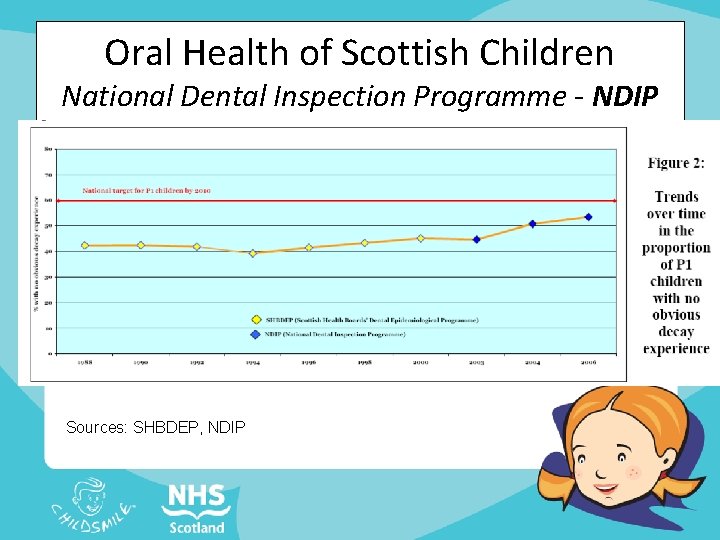
Oral Health of Scottish Children National Dental Inspection Programme - NDIP Sources: SHBDEP, NDIP
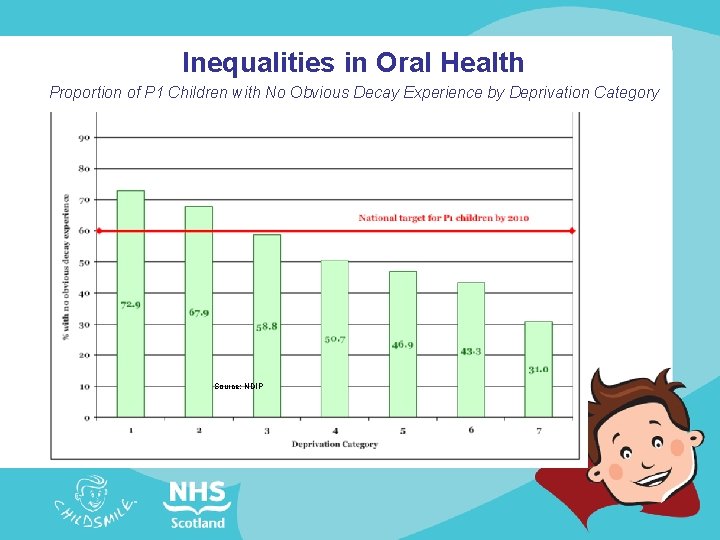
Inequalities in Oral Health Proportion of P 1 Children with No Obvious Decay Experience by Deprivation Category Source: NDIP
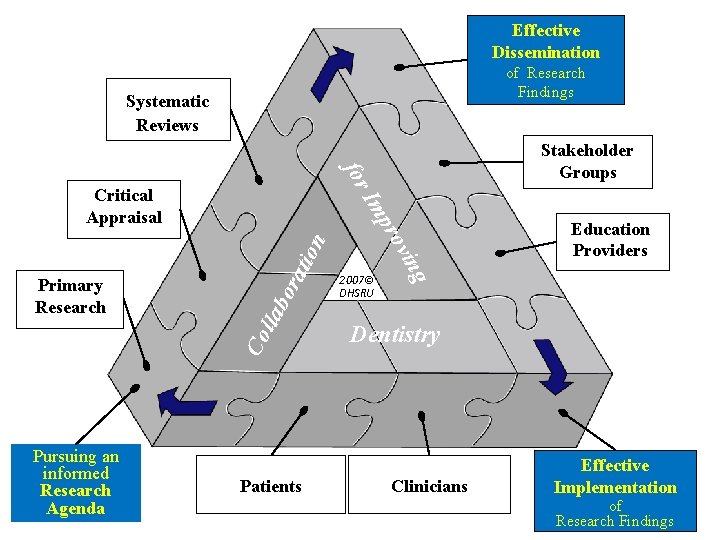
Effective Dissemination of Research Findings Systematic Reviews for bo rat ion lla Co Patients 2007© DHSRU ing Pursuing an informed Research Agenda v pro Im Critical Appraisal Primary Research Stakeholder Groups Education Providers Dentistry Clinicians Effective Implementation of Research Findings
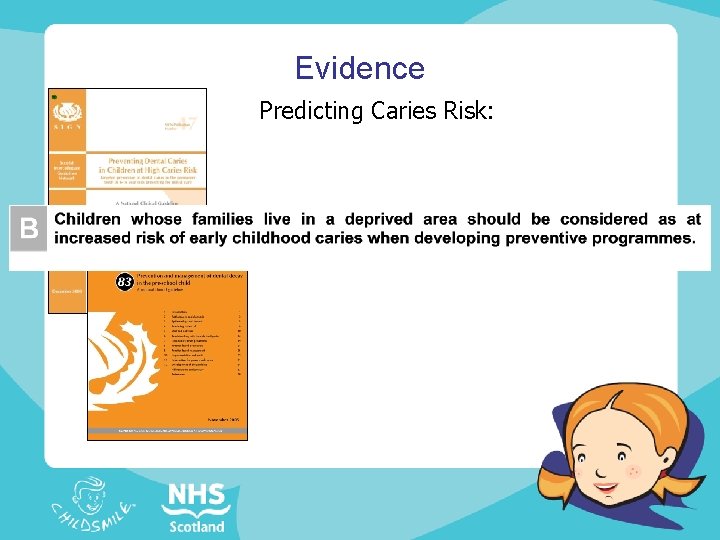
Evidence Predicting Caries Risk:
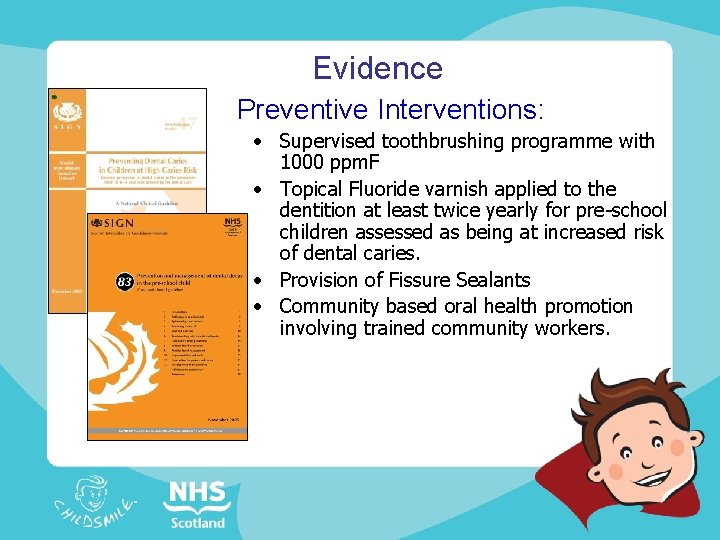
Evidence Preventive Interventions: • Supervised toothbrushing programme with 1000 ppm. F • Topical Fluoride varnish applied to the dentition at least twice yearly for pre-school children assessed as being at increased risk of dental caries. • Provision of Fissure Sealants • Community based oral health promotion involving trained community workers.
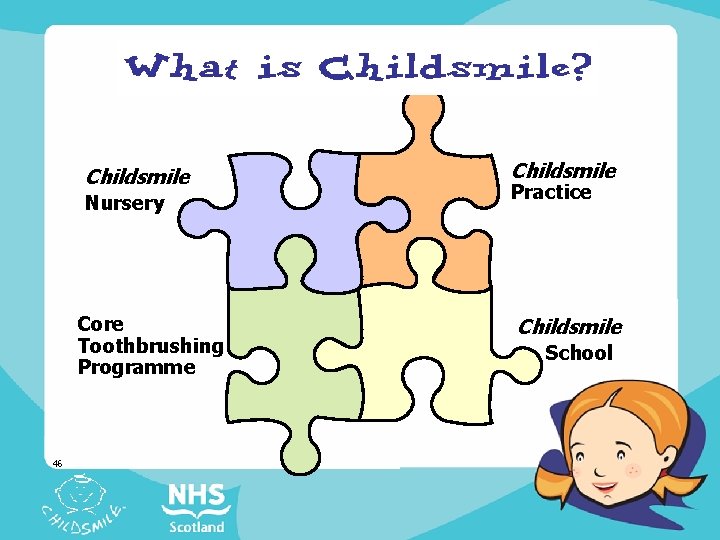
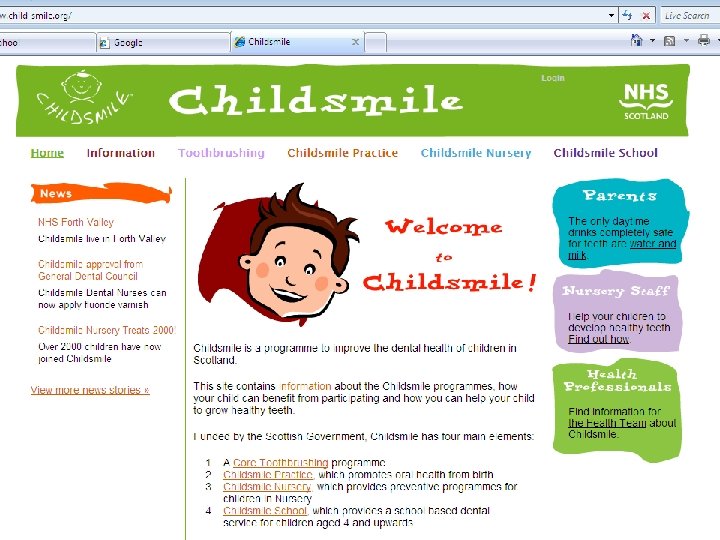
Childsmile Nursery Core Toothbrushing Programme 46 Childsmile Practice Childsmile School
IT Support for the Programme e. Health Solutions: • Bespoke laptop-based solution and database for delivering, monitoring, refining and evaluating of the programme. • Data collection takes place in Nurseries & Schools • Web access for authorised users to interrogate database • Anonymised links to other health databases

Evaluation of Childsmile Outcomes: Short term • Implementation of programme • Competent and content dental workforce Longer term • Improved oral health • Reduction in inequalities • Cost effectiveness Spin offs • Dental Nurses as Clinicians
Web Based Resources relating to Dr Pitts’ presentation • ICDAS(International Caries Detection & Assessment System) is at: www. icdas. org • EGOHID (European Global Oral Health Indicator Development Project) is at: http: //www. egohid. eu • Childsmile (Scottish Government National Health Service Programme) is at: www. child-smile. org • NDIP (Scottish National Dental Inspection Programme) is at: www. scottishdental. org/dentalinspection • SDCEP (Scottish Dental Clinical Effectiveness Programme) is at: www. scottishdental. org/cep
Summary • Introduction • Value of Early Caries Detection in Enabling Preventive Therapies • International Evidence Based Framework for Individualized Caries Management – “New” techniques & devices for identifying lesions – New & existing therapies for lesion remineralization • An Example of a Government funded Dental Programme for High-Caries Risk Children
Disclaimer & Acknowledgements • The views, as presented, are entirely personal to Dr Pitts. I work with a wide range of stakeholders in this area and wish to make clear that my views do not necessarily represent the opinions of any Government Agency, Research Funding Body, Association or Company. • Much of the work and concepts included in this presentation has been the result of collaborations, with the core ICDAS Committee, and with other academic, clinical and commercial colleagues in Dundee and worldwide. • I would like to acknowledge the significant contributions that collaborators have made to the material presented.
Thank you for your kind attention
Discussion Slides 53
For Pre-nursery children… ‘We will introduce a new programme targeted on areas of greatest need… encouraging through support from public health nurses early engagement and registration with dental services for those in most need. ’ [2005] 54
For Pre-school children… ‘We will: Develop a new nursery school based preventive dental service, initially in areas of most need. This service will be complemented by treatment services which provide local community based treatment or care from mobile units. ’ [2005] 55
![For School entrants will be a new schoolbased preventive dental service [2007] 56](http://slidetodoc.com/presentation_image_h/1717ab33bdb0791ee72b03e8d830fdfc/image-56.jpg "For School entrants will be a new schoolbased preventive dental service [2007] 56")
For School entrants will be a new schoolbased preventive dental service [2007] 56
• SIMD defines small area concentrations of multiple deprivation. 37 indicators in 7 domains • Presented by 6505 datazones • Measure of relative deprivation. 58
Childsmile Core Toothbrushing Programme • Oral health packs supplied to every child aged 1 year, 3 years, 4 years and 5 years • Every child: daily supervised nursery toothbrushing - F Toothpaste • 20% children (local SIMD 5) at Primary School (P 1 & P 2) to be part of daily supervised toothbrushing Childsmile Practice • Introduction of Childsmile to families of newborns via the Public Health Nurse following caries risk assessment • Oral health advice and support to families of 0 -1 year old children at increased risk of caries via dental health support workers • Link families to community health improvement activity via DHSWs • Oral health advice and clinical prevention (F varnish and fissure sealants) via Primary Care Dental Services 59
Childsmile Nursery • Fluoride varnish applied 6 monthly to 20% children (local SIMD 5) at nursery Childsmile School • Fluoride varnish applied 6 monthly to 20% children (local SIMD 5) from P 1 onwards • Fissure sealants applied age 6/7 to 20% children (local SIMD 5) 60
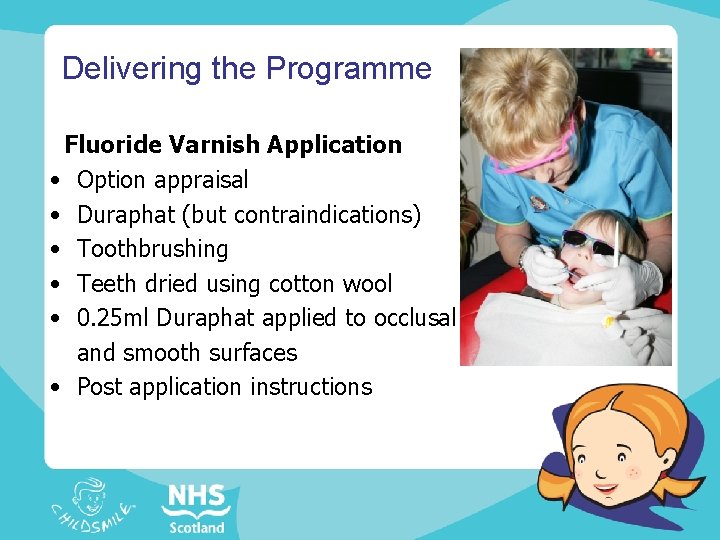
Delivering the Programme Fluoride Varnish Application • Option appraisal • Duraphat (but contraindications) • Toothbrushing • Teeth dried using cotton wool • 0. 25 ml Duraphat applied to occlusal and smooth surfaces • Post application instructions
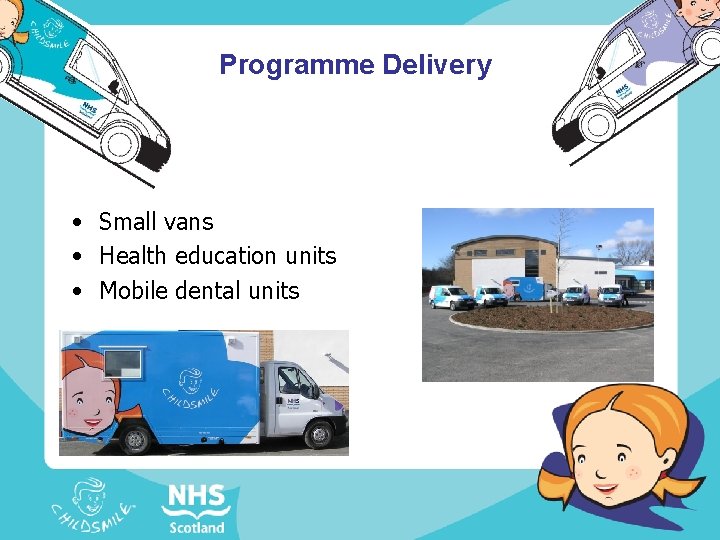
Programme Delivery • Small vans • Health education units • Mobile dental units
- Slides: 62