
The Value Chain in TC Industries in Domestic
- Slides: 31
The Value Chain in T&C Industries in Domestic and International Markets The Role of SMEs in the T&C Industries; The Economics and Business of Fashion Presentation by Mr. Matthias KNAPPE Caserta, Italy 30 November 2005
Technical cooperation arm of WTO and UNCTAD for operational enterprise-oriented capacity building for trade promotion and export development. …for developing countries
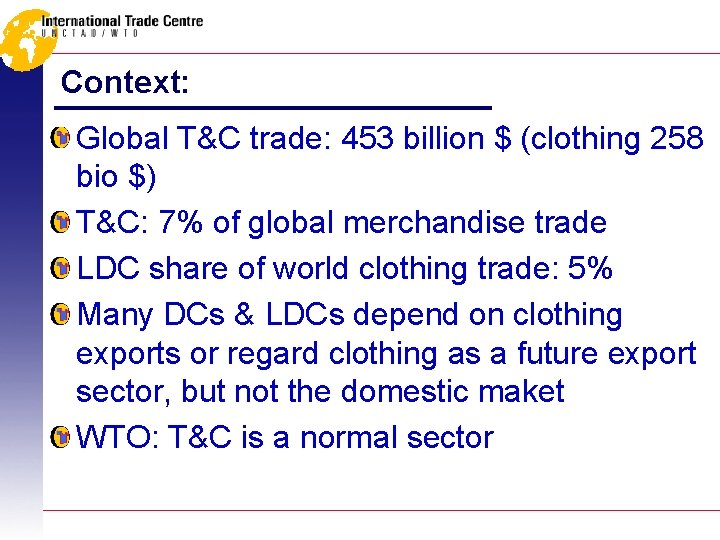
Context: Global T&C trade: 453 billion $ (clothing 258 bio $) T&C: 7% of global merchandise trade LDC share of world clothing trade: 5% Many DCs & LDCs depend on clothing exports or regard clothing as a future export sector, but not the domestic maket WTO: T&C is a normal sector
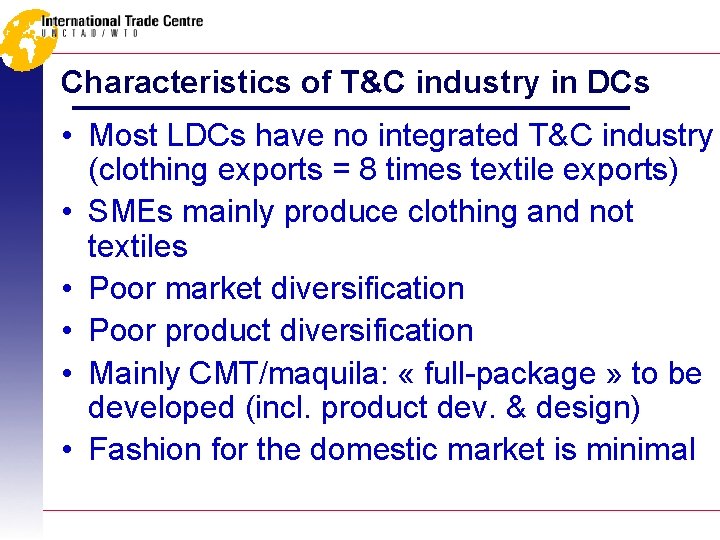
Characteristics of T&C industry in DCs • Most LDCs have no integrated T&C industry (clothing exports = 8 times textile exports) • SMEs mainly produce clothing and not textiles • Poor market diversification • Poor product diversification • Mainly CMT/maquila: « full-package » to be developed (incl. product dev. & design) • Fashion for the domestic market is minimal
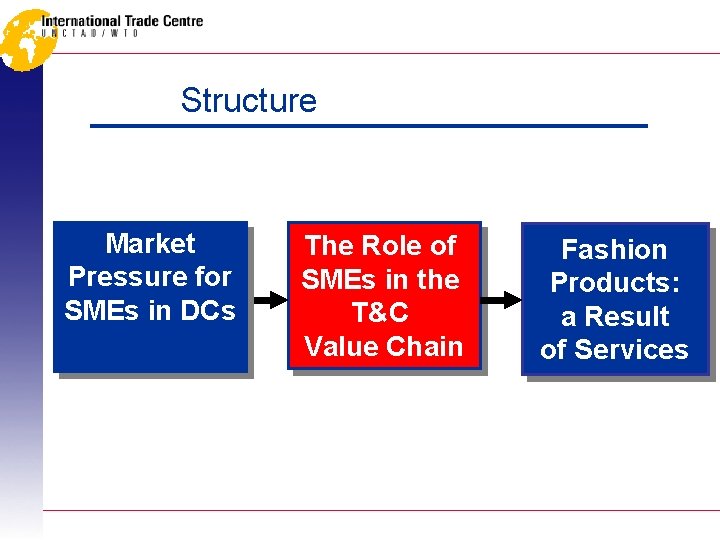
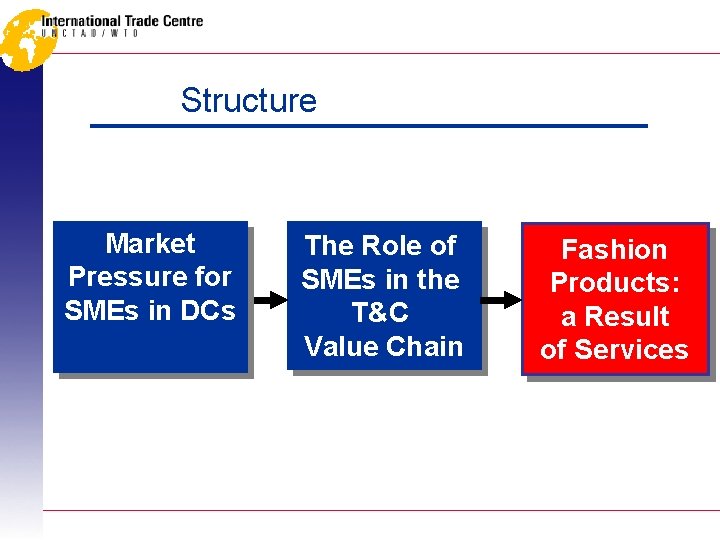
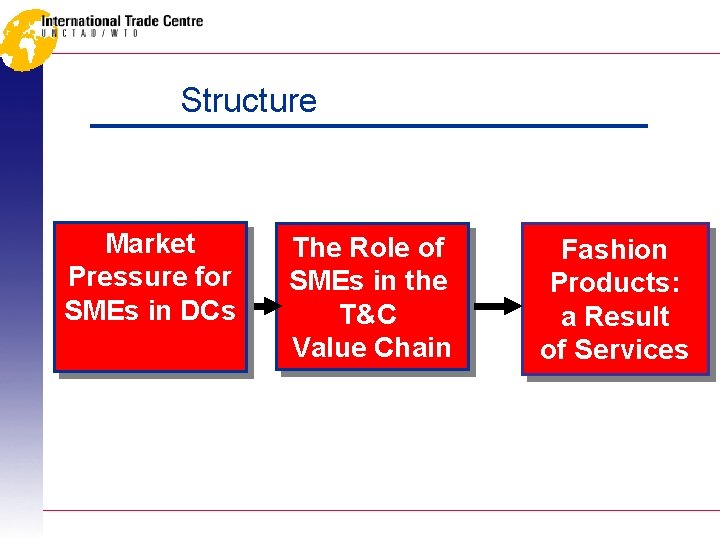
Structure Market Pressure for SMEs in DCs The Role of SMEs in the T&C Value Chain Fashion Products: a Result of Services
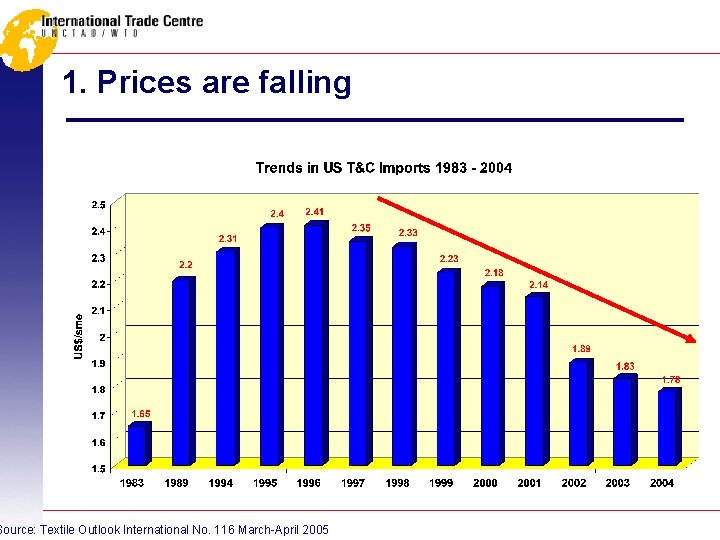
1. Prices are falling Source: Textile Outlook International No. 116 March-April 2005
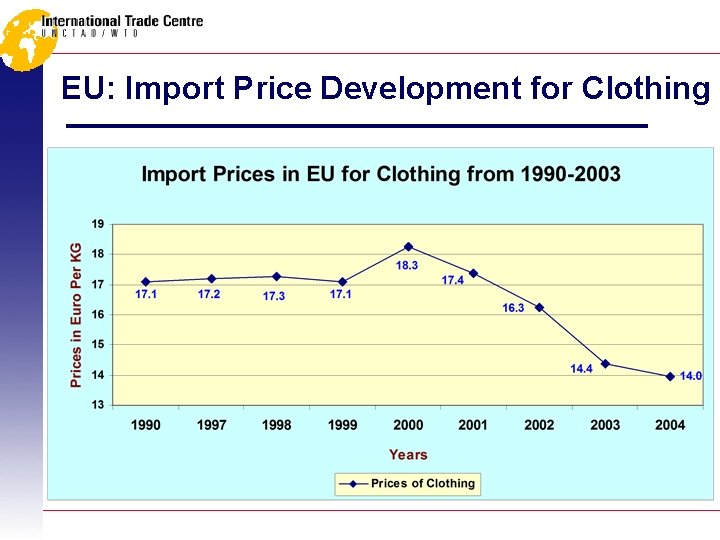
EU: Import Price Development for Clothing
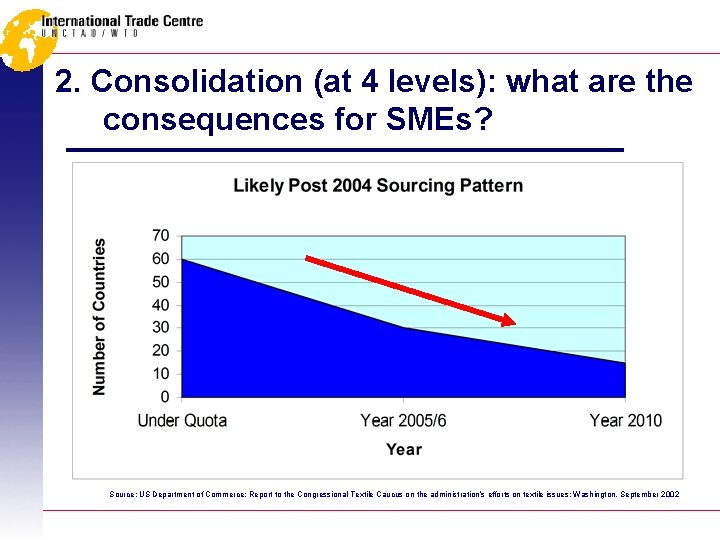
2. Consolidation (at 4 levels): what are the consequences for SMEs? Source: US Department of Commerce: Report to the Congressional Textile Caucus on the administration’s efforts on textile issues; Washington, September 2002
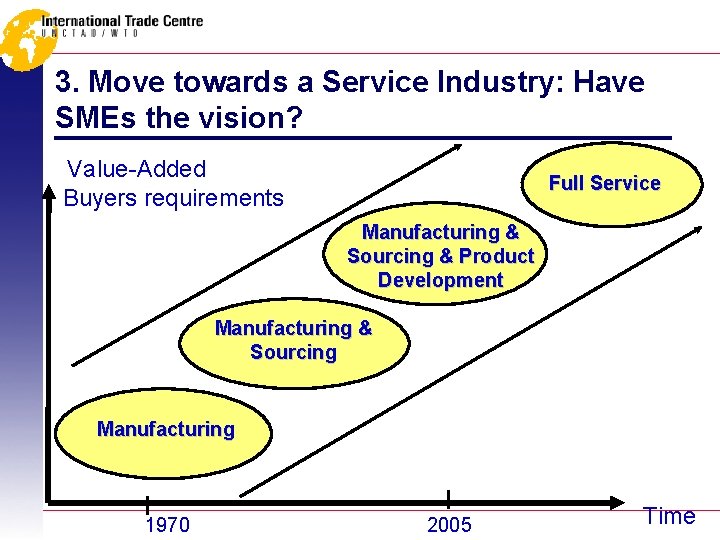
3. Move towards a Service Industry: Have SMEs the vision? Value-Added Buyers requirements Full Service Manufacturing & Sourcing & Product Development Manufacturing & Sourcing Manufacturing 1970 2005 Time
4. Pressure from Frequent Fashion Changes Demands Quick Response • From 2 to multiple selling seasons • More fashion products with short product life cycles vs. basic products with regular replenishments • Quick response: a « puzzle » of many variables along the value chain • This « puzzle » needs to be solved first • Difficult with practices establised over decades • Stop « firefighting » : new business strategies, processes & procedures
5. Pressure to Form Strategic Alliances • Quota system forced retailers to take over value chain responsibilities • These responsibilities be given to suppliers • To do so trustworthy partners are needed • Virtual vertical operations: integrated system between manufacturer and retailer
Summary: Market Pressure • • • Prices are falling Consolidation Move towards a service industry Frequent fashion changes Strategic alliances
Structure Market Pressure for SMEs in DCs The Role of SMEs in the T&C Value Chain Fashion Products: a Result of Services
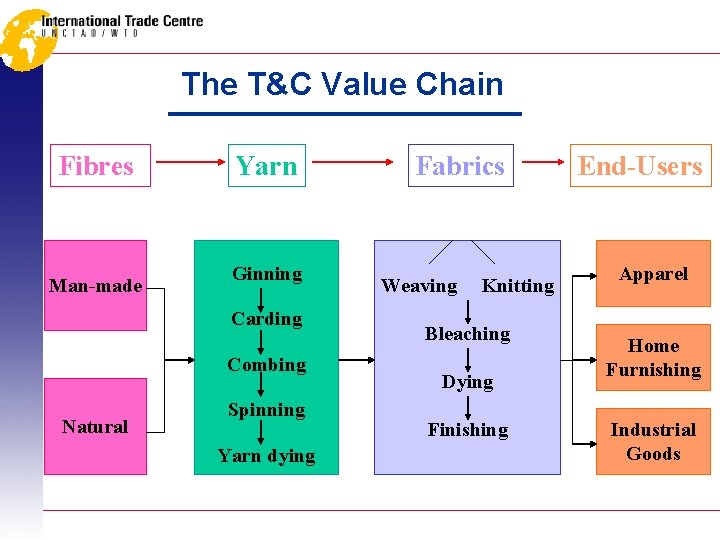
The T&C Value Chain Fibres Man-made Yarn Ginning Carding Combing Natural Spinning Yarn dying Fabrics Weaving Knitting Bleaching Dying Finishing End-Users Apparel Home Furnishing Industrial Goods
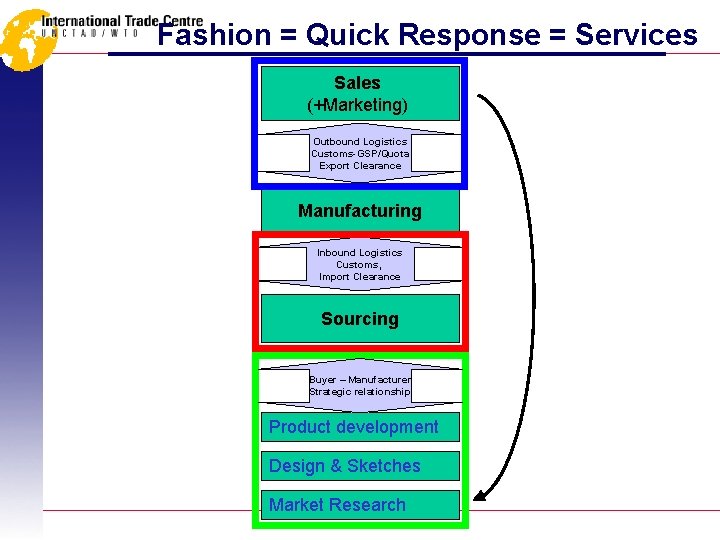
Fashion = Quick Response = Services Sales (+Marketing) Outbound Logistics Customs-GSP/Quota Export Clearance Manufacturing Inbound Logistics Customs, Import Clearance Sourcing Buyer – Manufacturer Strategic relationship Product development Design & Sketches Market Research
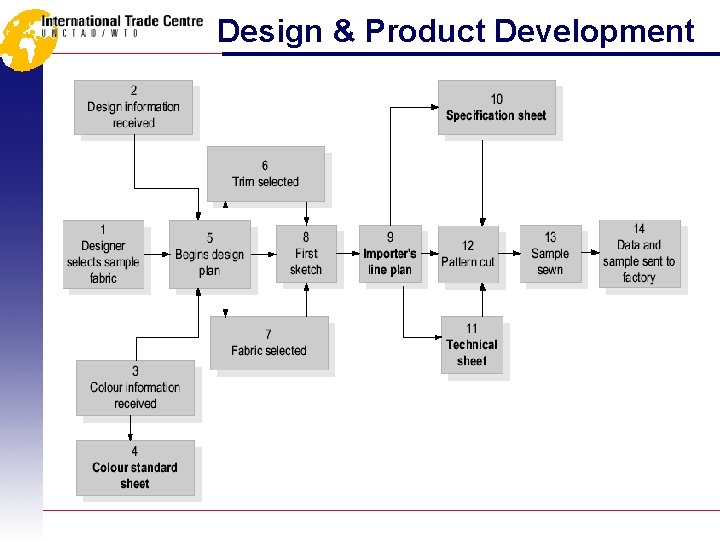
Design & Product Development
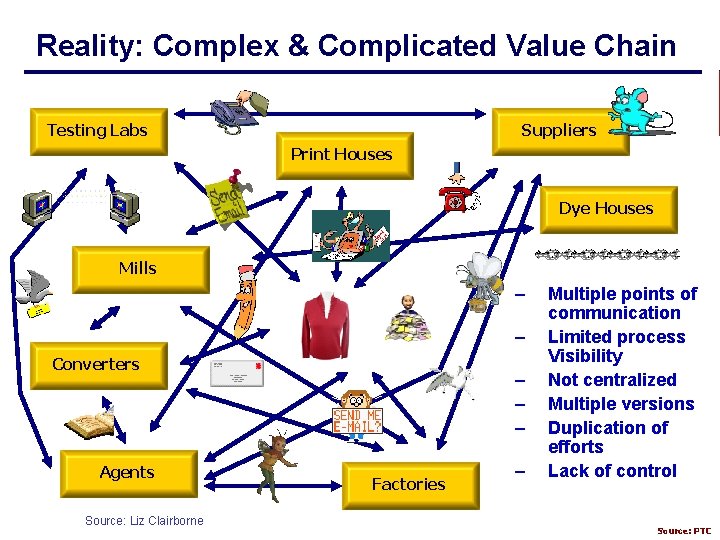
Reality: Complex & Complicated Value Chain Testing Labs Suppliers Print Houses Dye Houses Mills – – Converters Agents Source: Liz Clairborne – – – Factories – Multiple points of communication Limited process Visibility Not centralized Multiple versions Duplication of efforts Lack of control Source: PTC
Structure Market Pressure for SMEs in DCs The Role of SMEs in the T&C Value Chain Fashion Products: a Result of Services
To sell Fashion: SMEs need to take over VC Responsibilities i. e. Provide Services • SMEs need to diversify: marketing • Everybody offers: good quality, competitive prices & on-time delivery • Therefore, provide services buyers want: 1) make and send the garment quickly to my store (participate in the fashion VC) 2) Organize everything and I’ll pay you (service)
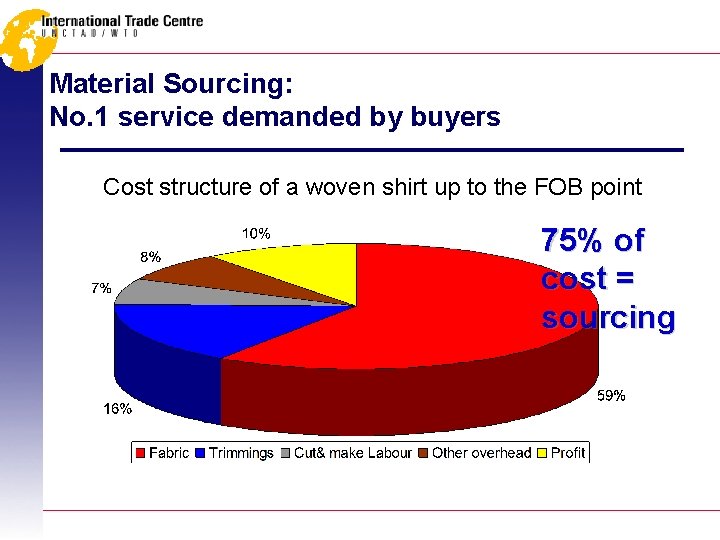
Material Sourcing: No. 1 service demanded by buyers Cost structure of a woven shirt up to the FOB point 75% of cost = sourcing
Number 2 service: Use of e- technology • The new trading environment forces the adoption of « e » solutions along the VC • Trend is led by US buyers and HKG trading houses, followed by EU buyers • E-applications are used throughout the value chain; trend: full VC « e » integration • Quick responds demands « e » : design and logistics
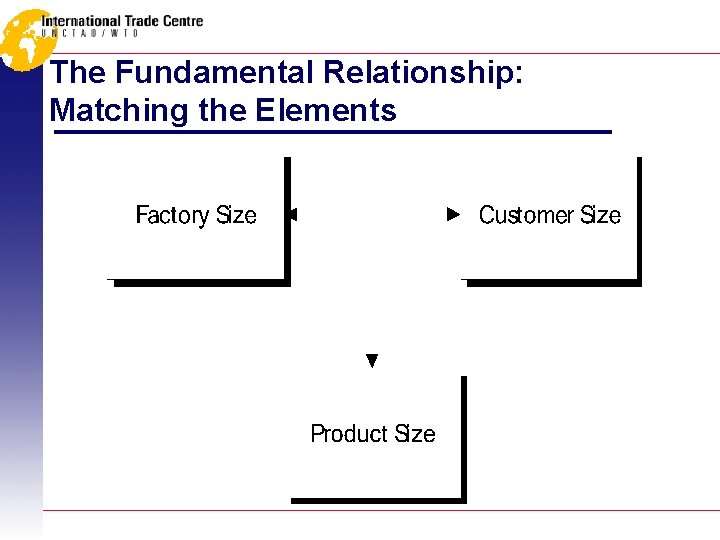
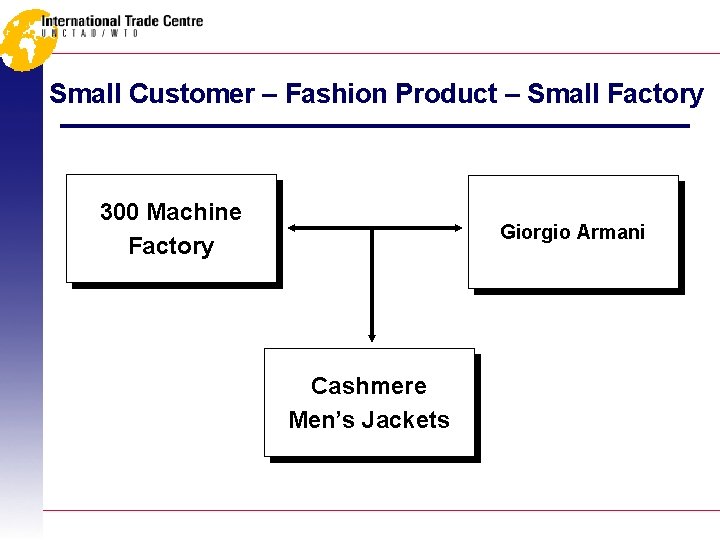
3. Assist buyers in selling fashion • The need to understand: – markets, – buyer requirements, – buyer’s customer requirements, and – competitors • Need to diversify product range, possibly markets • Need to match factory size, customer size and product
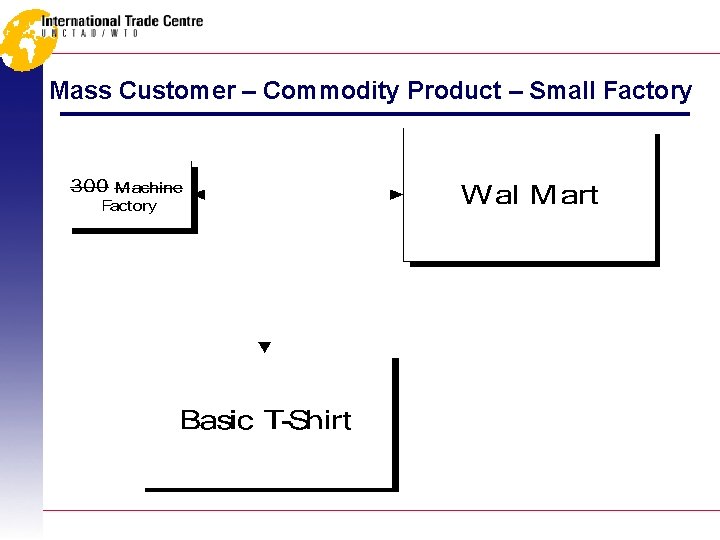
The Fundamental Relationship: Matching the Elements
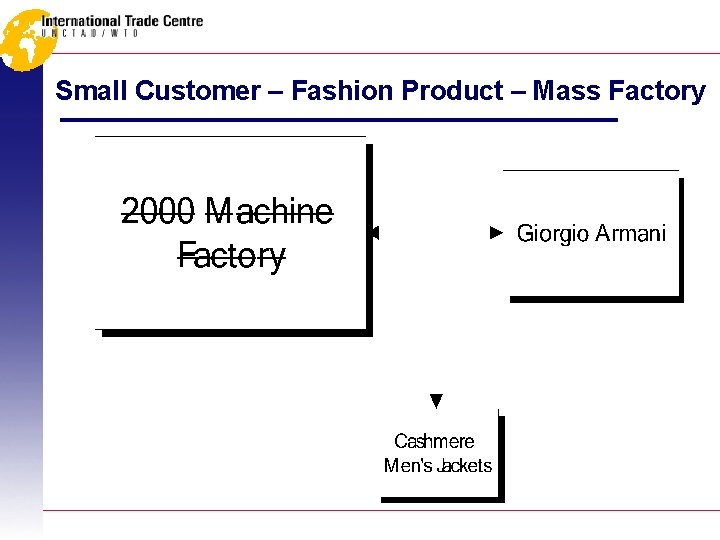
Small Customer – Fashion Product – Mass Factory
Mass Customer – Commodity Product – Small Factory
Small Customer – Fashion Product – Small Factory 300 Machine Factory Giorgio Armani Cashmere Men’s Jackets
Result of Services: Ability to Produce Fashion Products & Quick Response • Understanding of: the market, customer & customer’s customer • Material sourcing: prerequesit to understand & engage in fashion production • E-business: prerequisite for fast delivery • Partnership: prerequisite for engaging in fashion products • Matching the elements of a partnership
Structure Market Pressure for SMEs in DCs The Role of SMEs in the T&C Value Chain Fashion Products: a Result of Services
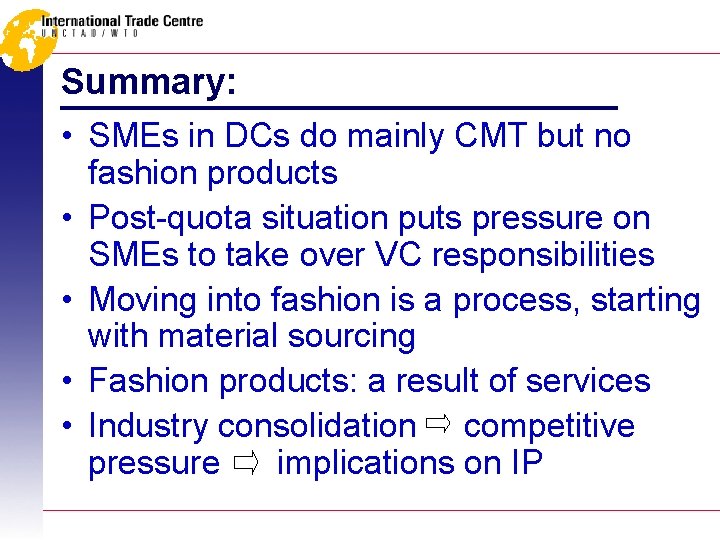
Summary: • SMEs in DCs do mainly CMT but no • • fashion products Post-quota situation puts pressure on SMEs to take over VC responsibilities Moving into fashion is a process, starting with material sourcing Fashion products: a result of services Industry consolidation competitive pressure implications on IP
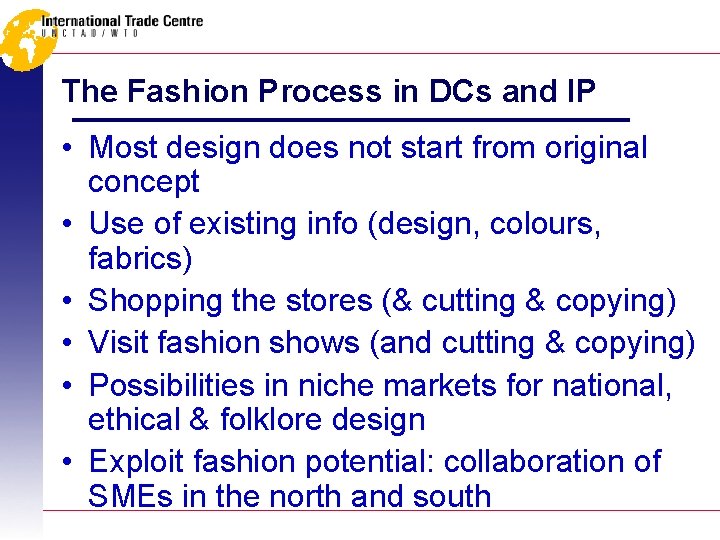
The Fashion Process in DCs and IP • Most design does not start from original concept • Use of existing info (design, colours, fabrics) • Shopping the stores (& cutting & copying) • Visit fashion shows (and cutting & copying) • Possibilities in niche markets for national, ethical & folklore design • Exploit fashion potential: collaboration of SMEs in the north and south
THANK YOU ! For more information http: //www. intracen. org/textilesandclothing Contact: Matthias Knappe, Knappe Senior Market Development Officer Knappe@intracen. org