
The Vaginal Microbiome Lactobacillus iners MendesSoares et al
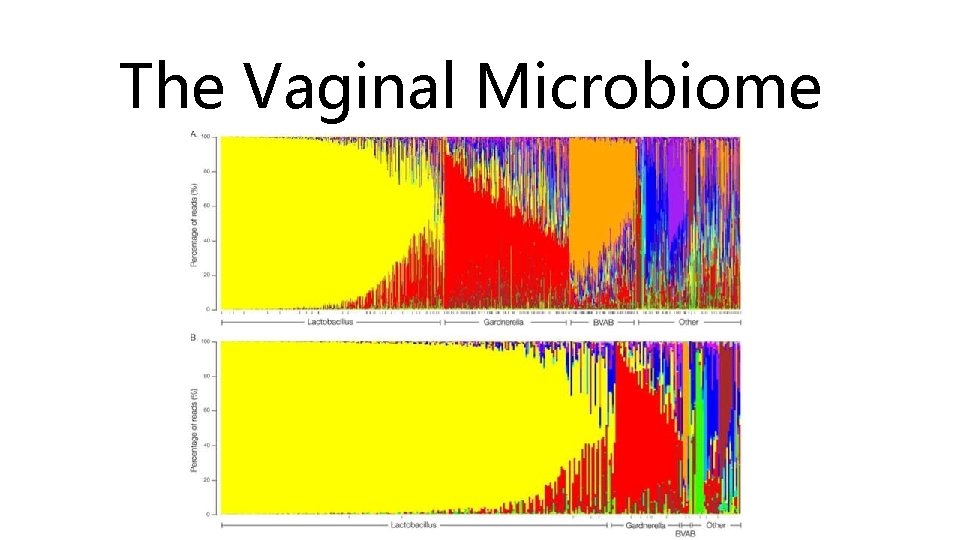
The Vaginal Microbiome
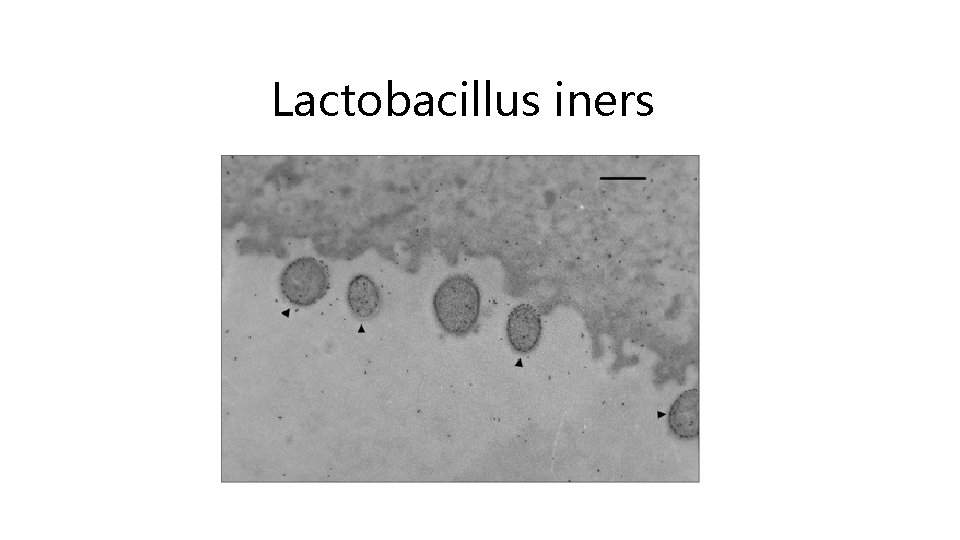
Lactobacillus iners
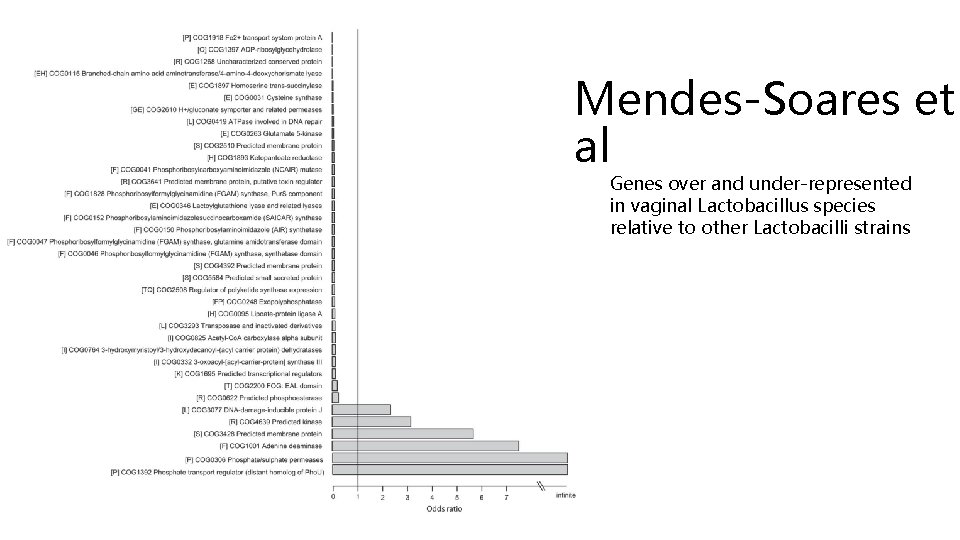
Mendes-Soares et al Genes over and under-represented in vaginal Lactobacillus species relative to other Lactobacilli strains
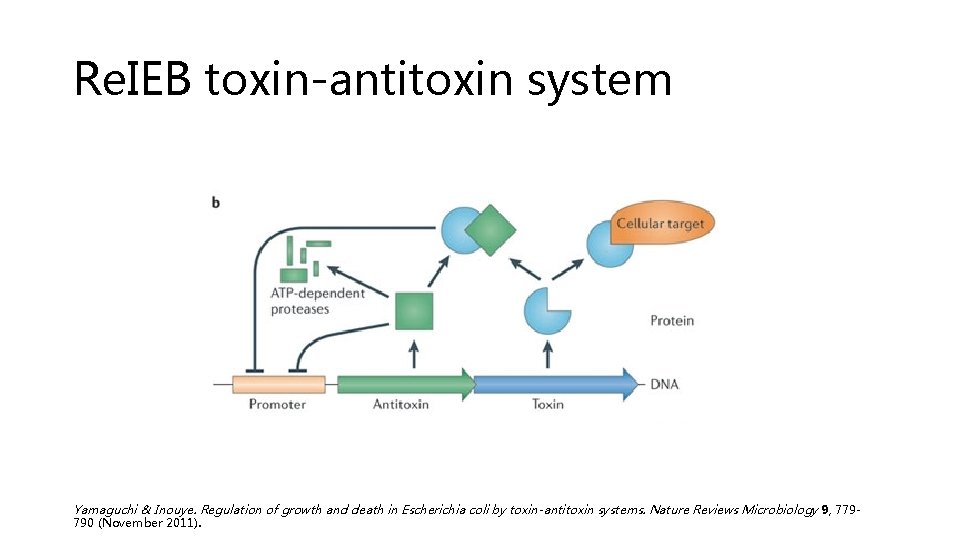
Re. IEB toxin-antitoxin system Yamaguchi & Inouye. Regulation of growth and death in Escherichia coli by toxin-antitoxin systems. Nature Reviews Microbiology 9, 779790 (November 2011).
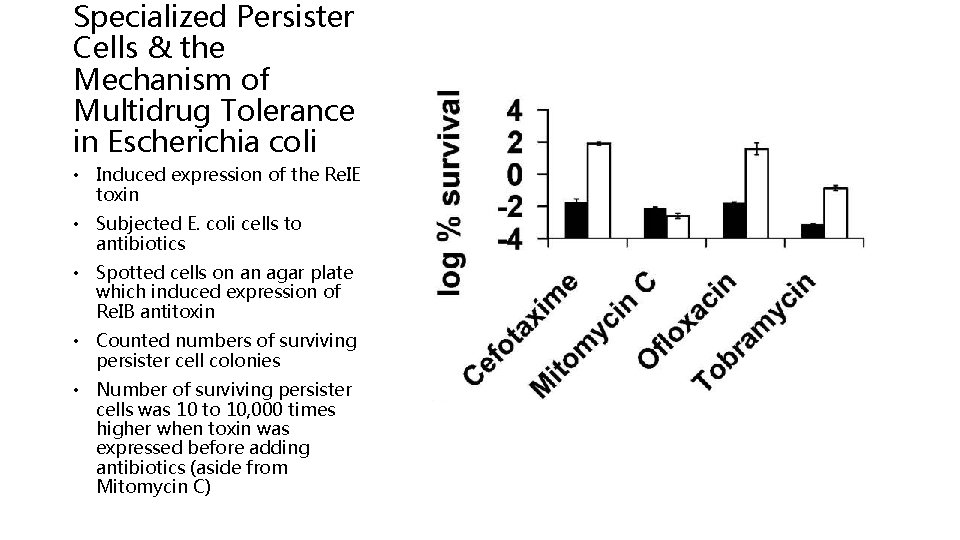
Specialized Persister Cells & the Mechanism of Multidrug Tolerance in Escherichia coli • Induced expression of the Re. IE toxin • Subjected E. coli cells to antibiotics • Spotted cells on an agar plate which induced expression of Re. IB antitoxin • Counted numbers of surviving persister cell colonies • Number of surviving persister cells was 10 to 10, 000 times higher when toxin was expressed before adding antibiotics (aside from Mitomycin C)
Does the toxin-antitoxin protein family present in Lactobacillus iners play a part in its ability to survive the conditions associated with bacterial vaginosis?
The Experiment • Create an artificial microbiome • Knock out the toxin and antitoxin genes • Use an expression vector to insert toxin gene into the genome where it can be forcibly expressed using a promotor • Add Lactobacillus iners to microbiome and induce expression of toxin • Use 16 s r. RNA analysis to analyze relative abundance of bacteria in microbiome comparing wild-type, absence of antitoxin strain, absence of toxin-antitoxin strain
Possible Outcomes: • The toxin gene in Lactobacillus iners allows for increased survivability of the bacteria when in conditions associated with bacterial vaginosis • The toxin-antitoxin protein family has a detrimental effect on the survivability • There is no difference
Possible treatment for bacterial vaginosis?
- Slides: 9