
The USGS National Climate Change Viewer a model
- Slides: 10
The USGS National Climate Change Viewer: a model visualization web application Jay Alder & Steve Hostetler Corvallis, Oregon USGS, National Research Program, CLU R&D College of Earth, Ocean and Atmospheric Science, Oregon State University U. S. Department of the Interior U. S. Geological Survey
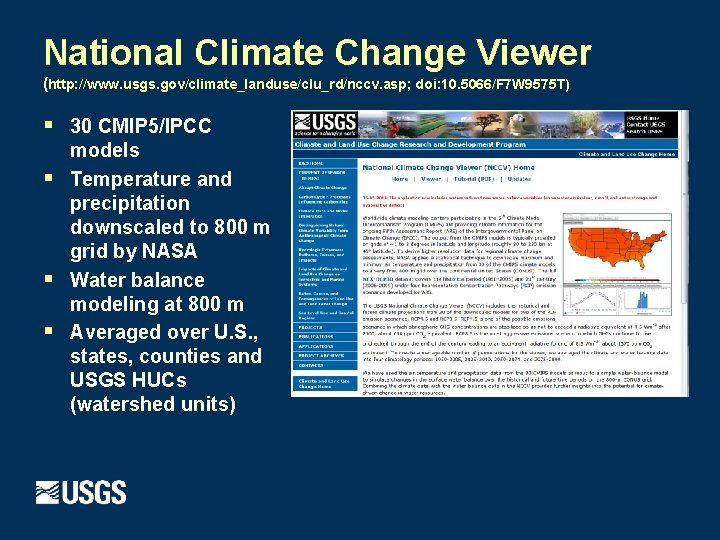
National Climate Change Viewer (http: //www. usgs. gov/climate_landuse/clu_rd/nccv. asp; doi: 10. 5066/F 7 W 9575 T) § § 30 CMIP 5/IPCC models Temperature and precipitation downscaled to 800 m grid by NASA Water balance modeling at 800 m Averaged over U. S. , states, counties and USGS HUCs (watershed units)
Why is this information important? § § § Synthesizes and translates huge volumes of IPCC climate model results into an understandable, informative, and accessible format Models water balance through the 21 st century for the continental U. S. Provides data in geographic units: states, counties, USGS hydrologic units Provides managers and policy makers with web applications to access and view data and to get information about water-resource questions Data is valuable for further climate-related research
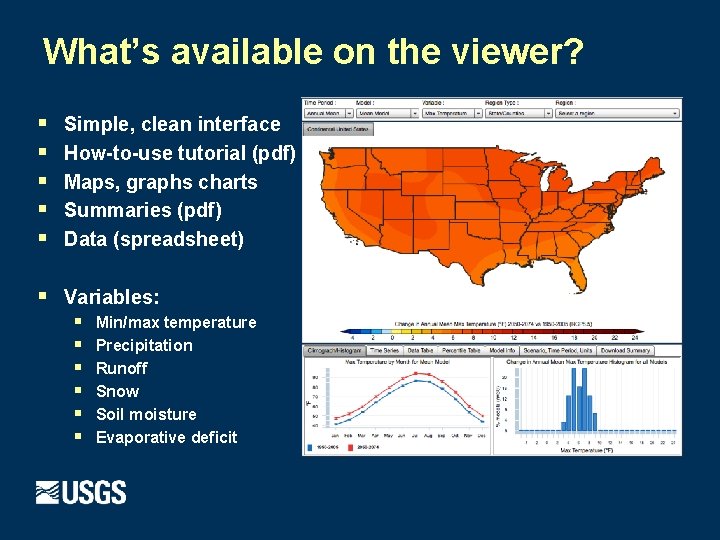
What’s available on the viewer? § § § Simple, clean interface How-to-use tutorial (pdf) Maps, graphs charts Summaries (pdf) Data (spreadsheet) § Variables: § Min/max temperature § Precipitation § Runoff § Snow § Soil moisture § Evaporative deficit
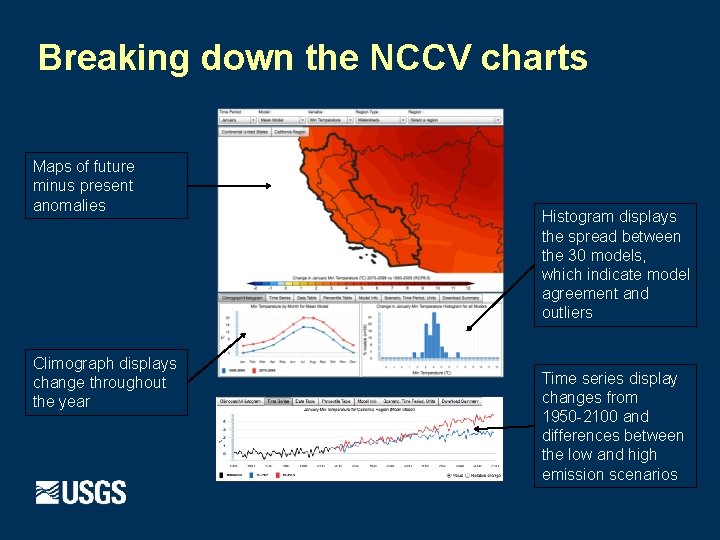
Breaking down the NCCV charts Maps of future minus present anomalies Climograph displays change throughout the year Histogram displays the spread between the 30 models, which indicate model agreement and outliers Time series display changes from 1950 -2100 and differences between the low and high emission scenarios
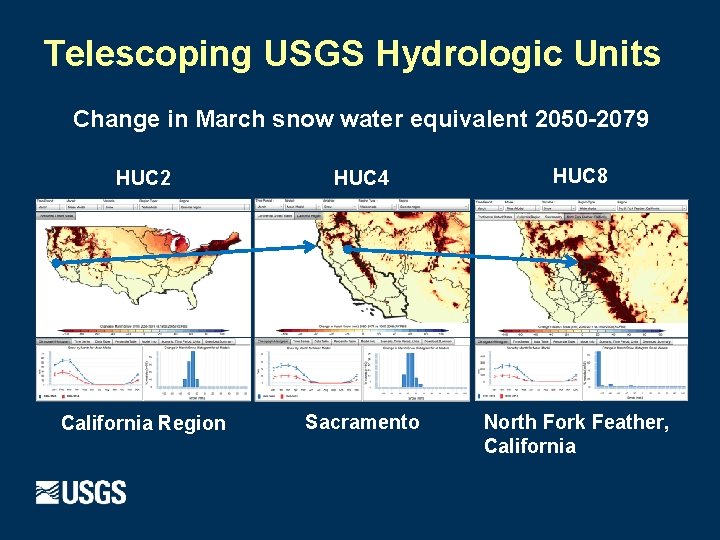
Telescoping USGS Hydrologic Units Change in March snow water equivalent 2050 -2079 HUC 2 HUC 4 HUC 8 California Region Sacramento North Fork Feather, California
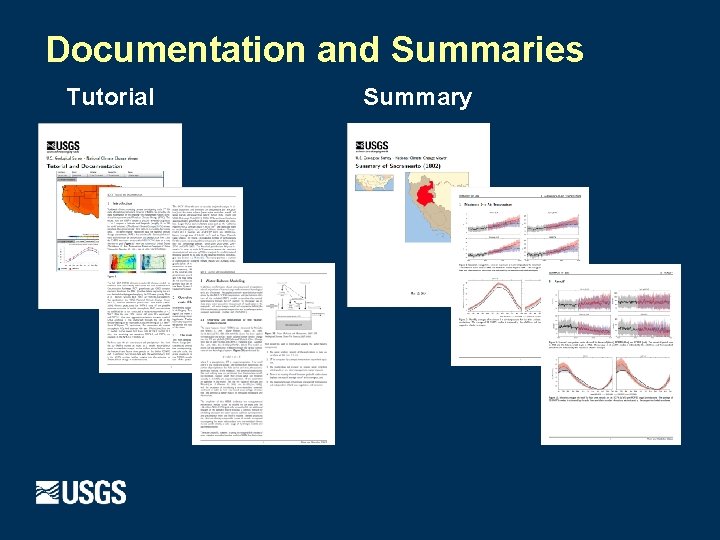
Documentation and Summaries Tutorial Summary
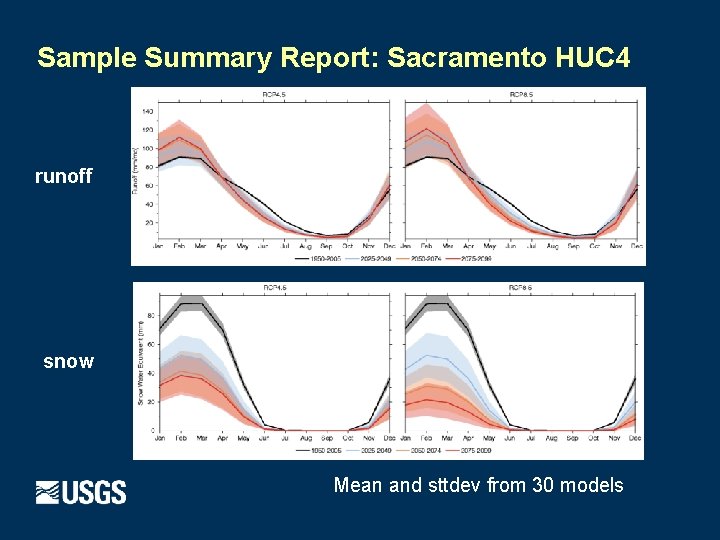
Sample Summary Report: Sacramento HUC 4 runoff snow Mean and sttdev from 30 models
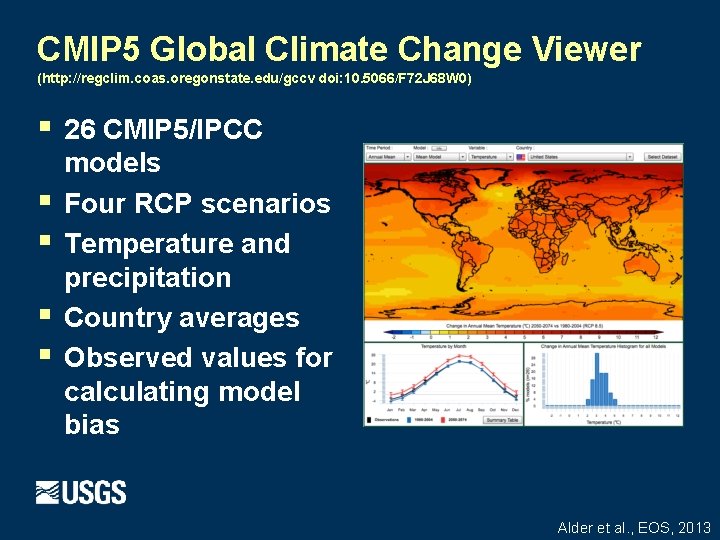
CMIP 5 Global Climate Change Viewer (http: //regclim. coas. oregonstate. edu/gccv doi: 10. 5066/F 72 J 68 W 0) § § § 26 CMIP 5/IPCC models Four RCP scenarios Temperature and precipitation Country averages Observed values for calculating model bias Alder et al. , EOS, 2013
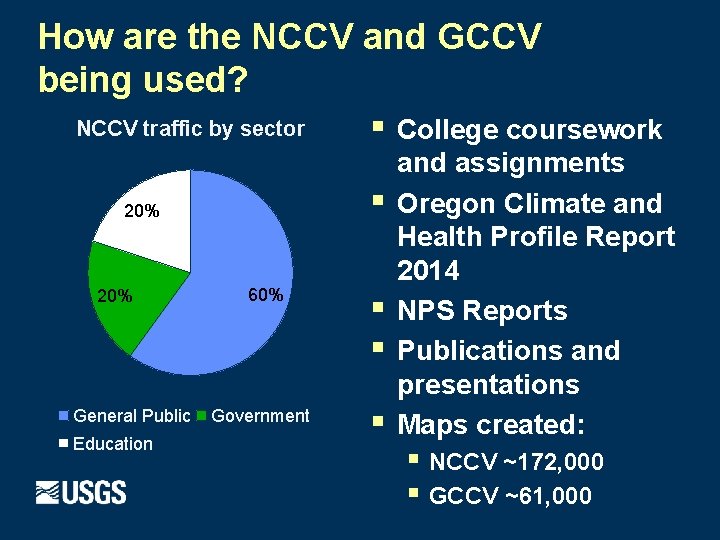
How are the NCCV and GCCV being used? NCCV traffic by sector § College coursework § 20% General Public Education 60% § § Government § and assignments Oregon Climate and Health Profile Report 2014 NPS Reports Publications and presentations Maps created: § NCCV ~172, 000 § GCCV ~61, 000