
THE USER INTERFACE UI DESIGN PROCESS KNOW YOUR
- Slides: 11
THE USER INTERFACE (UI) DESIGN PROCESS KNOW YOUR USERS & CLIENTS -RVIFakultas Informatika IT Telkom
Content • Understand how people interact with computers. • Understand the human characteristics important in design. • Identify the user’s level of knowledge and experience. • Identify the characteristics of the user’s needs, tasks, and jobs. • Identify the user’s psychological characteristics. • Identify the user’s physical characteristics. • Employ recommended methods for gaining understanding of users. Fakultas Informatika IT Telkom
Understand how people interact with computers. • 1. 2. 3. The Human Action Cycle A goal is formed. An execution plan is devised and implemented. The results of the actions taken are evaluated • 1. 2. 3. 4. 5. Why People Have Trouble with Computers Too much flexibility Use of jargon Non-obvious design. Fine distinctions. Disparity in problem-solving strategies. Fakultas Informatika IT Telkom
Understand how people interact with computers. Responses to Poor Design Typical psychological responses to poor design are : Confusion, Annoyance, Frustration, Panic / stress, Boredom. the following physical reactions : Abandonment of the system. Partial use of the system. Indirect use of the system. Modification of the task. Compensatory activity. Misuse of the system. Direct programming. Fakultas Informatika IT Telkom
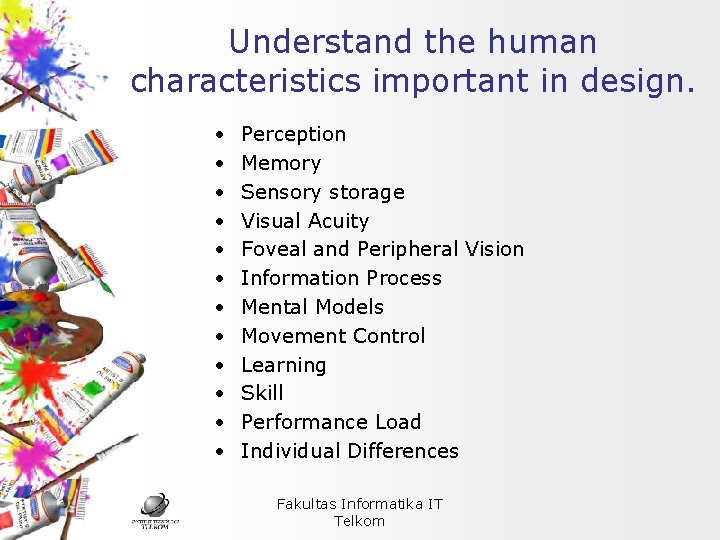
Understand the human characteristics important in design. • • • Perception Memory Sensory storage Visual Acuity Foveal and Peripheral Vision Information Process Mental Models Movement Control Learning Skill Performance Load Individual Differences Fakultas Informatika IT Telkom
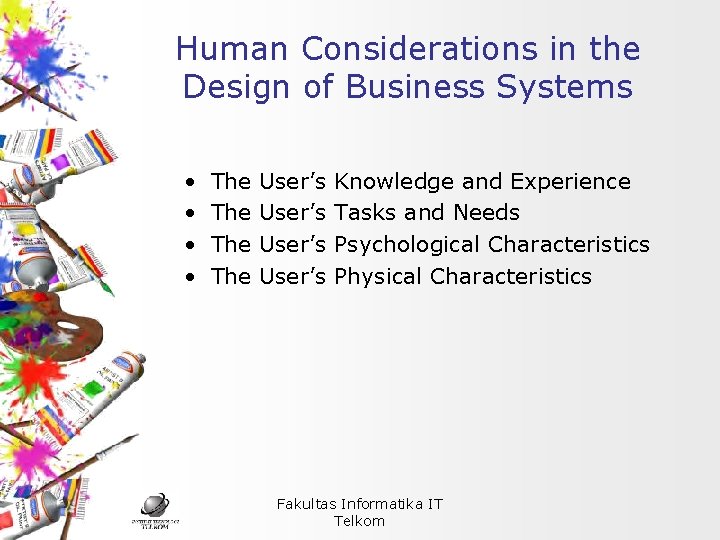
Human Considerations in the Design of Business Systems • • The The User’s Knowledge and Experience Tasks and Needs Psychological Characteristics Physical Characteristics Fakultas Informatika IT Telkom
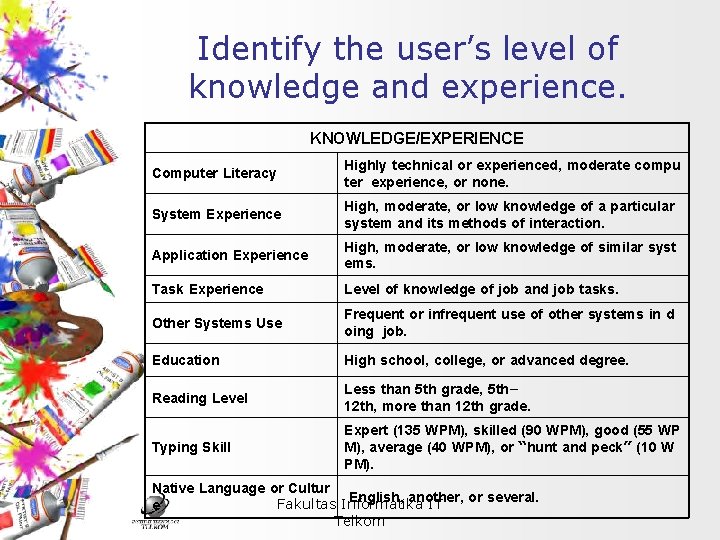
Identify the user’s level of knowledge and experience. KNOWLEDGE/EXPERIENCE Computer Literacy Highly technical or experienced, moderate compu ter experience, or none. System Experience High, moderate, or low knowledge of a particular system and its methods of interaction. Application Experience High, moderate, or low knowledge of similar syst ems. Task Experience Level of knowledge of job and job tasks. Other Systems Use Frequent or infrequent use of other systems in d oing job. Education High school, college, or advanced degree. Reading Level Less than 5 th grade, 5 th– 12 th, more than 12 th grade. Typing Skill Expert (135 WPM), skilled (90 WPM), good (55 WP M), average (40 WPM), or “hunt and peck” (10 W PM). Native Language or Cultur English, another, or several. Fakultas Informatika IT e Telkom
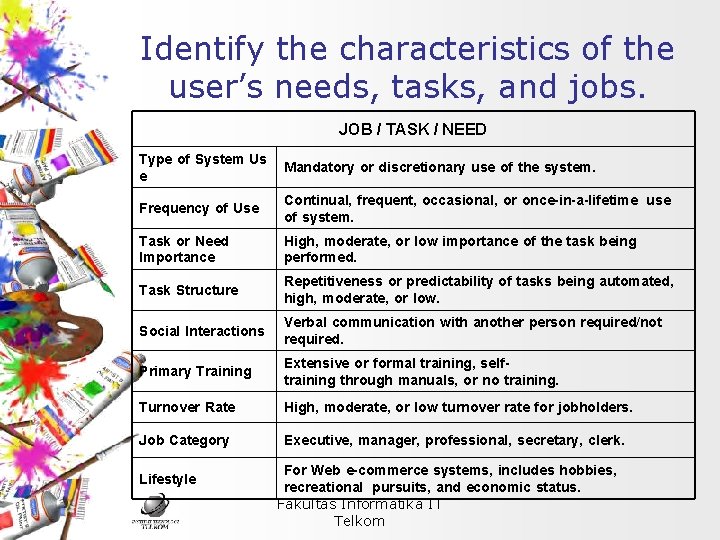
Identify the characteristics of the user’s needs, tasks, and jobs. JOB / TASK / NEED Type of System Us e Mandatory or discretionary use of the system. Frequency of Use Continual, frequent, occasional, or once-in-a-lifetime use of system. Task or Need Importance High, moderate, or low importance of the task being performed. Task Structure Repetitiveness or predictability of tasks being automated, high, moderate, or low. Social Interactions Verbal communication with another person required/not required. Primary Training Extensive or formal training, selftraining through manuals, or no training. Turnover Rate High, moderate, or low turnover rate for jobholders. Job Category Executive, manager, professional, secretary, clerk. Lifestyle For Web e-commerce systems, includes hobbies, recreational pursuits, and economic status. Fakultas Informatika IT Telkom
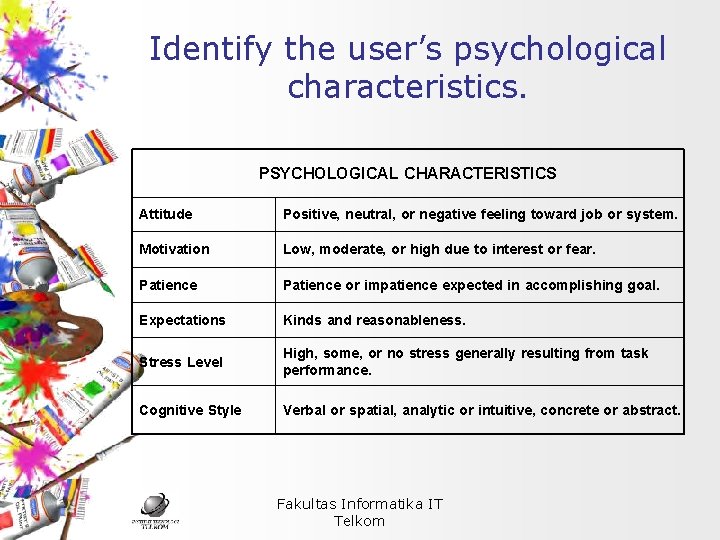
Identify the user’s psychological characteristics. PSYCHOLOGICAL CHARACTERISTICS Attitude Positive, neutral, or negative feeling toward job or system. Motivation Low, moderate, or high due to interest or fear. Patience or impatience expected in accomplishing goal. Expectations Kinds and reasonableness. Stress Level High, some, or no stress generally resulting from task performance. Cognitive Style Verbal or spatial, analytic or intuitive, concrete or abstract. Fakultas Informatika IT Telkom
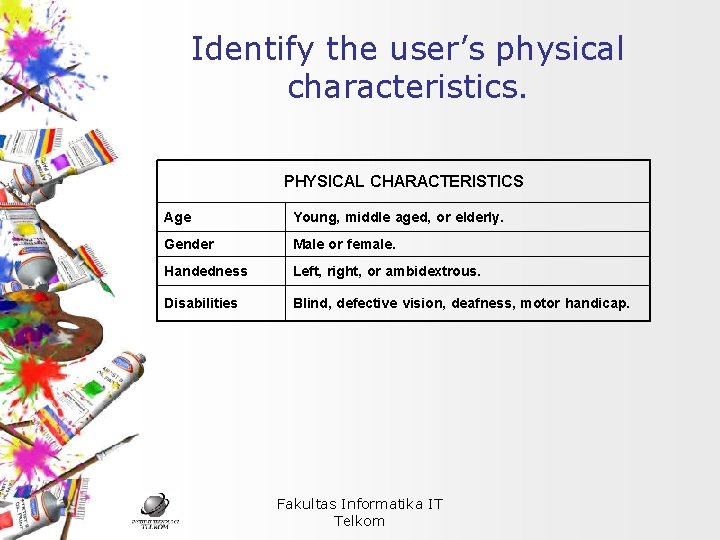
Identify the user’s physical characteristics. PHYSICAL CHARACTERISTICS Age Young, middle aged, or elderly. Gender Male or female. Handedness Left, right, or ambidextrous. Disabilities Blind, defective vision, deafness, motor handicap. Fakultas Informatika IT Telkom
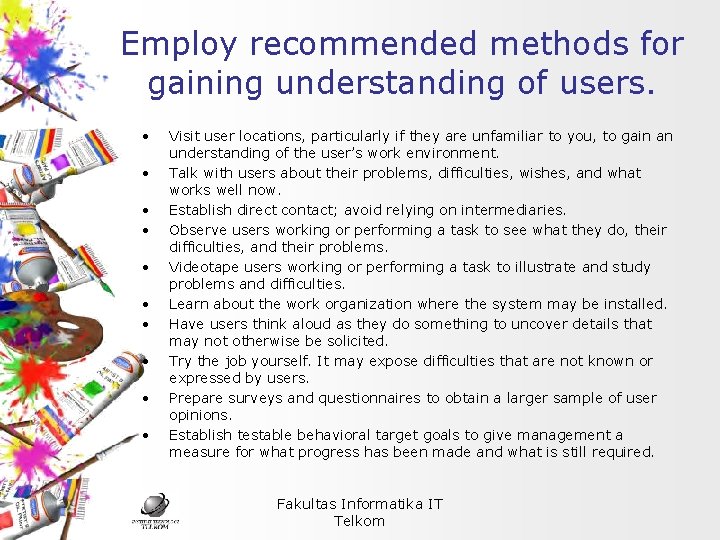
Employ recommended methods for gaining understanding of users. • • • Visit user locations, particularly if they are unfamiliar to you, to gain an understanding of the user’s work environment. Talk with users about their problems, difficulties, wishes, and what works well now. Establish direct contact; avoid relying on intermediaries. Observe users working or performing a task to see what they do, their difficulties, and their problems. Videotape users working or performing a task to illustrate and study problems and difficulties. Learn about the work organization where the system may be installed. Have users think aloud as they do something to uncover details that may not otherwise be solicited. Try the job yourself. It may expose difficulties that are not known or expressed by users. Prepare surveys and questionnaires to obtain a larger sample of user opinions. Establish testable behavioral target goals to give management a measure for what progress has been made and what is still required. Fakultas Informatika IT Telkom