
THE USE OF YIELD LINE ANALYSIS AND PANEL
- Slides: 26
THE USE OF YIELD LINE ANALYSIS AND PANEL TESTS FOR THE DESIGN OF SHOTCRETE by WC JOUGHIN* and GC HOWELL** SRK Consulting, Johannesburg * Principal Mining Engineer * Principal Geotechnical Civil Engineer
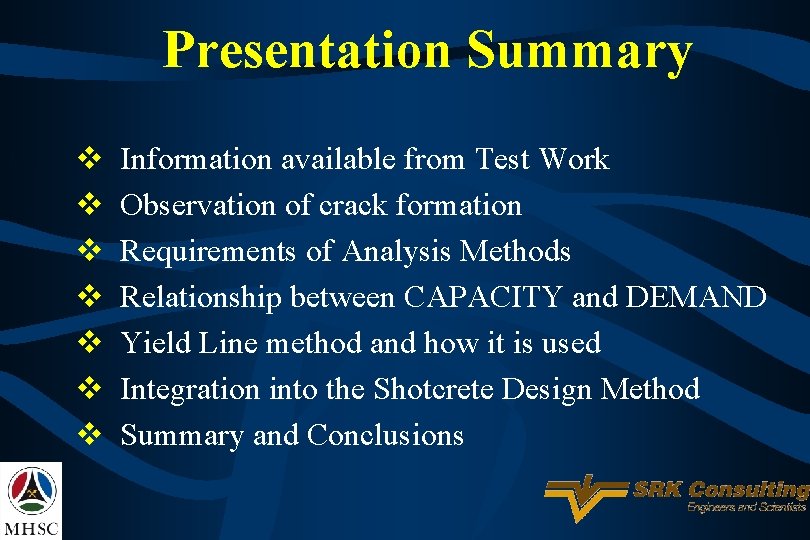
Presentation Summary v v v v Information available from Test Work Observation of crack formation Requirements of Analysis Methods Relationship between CAPACITY and DEMAND Yield Line method and how it is used Integration into the Shotcrete Design Method Summary and Conclusions
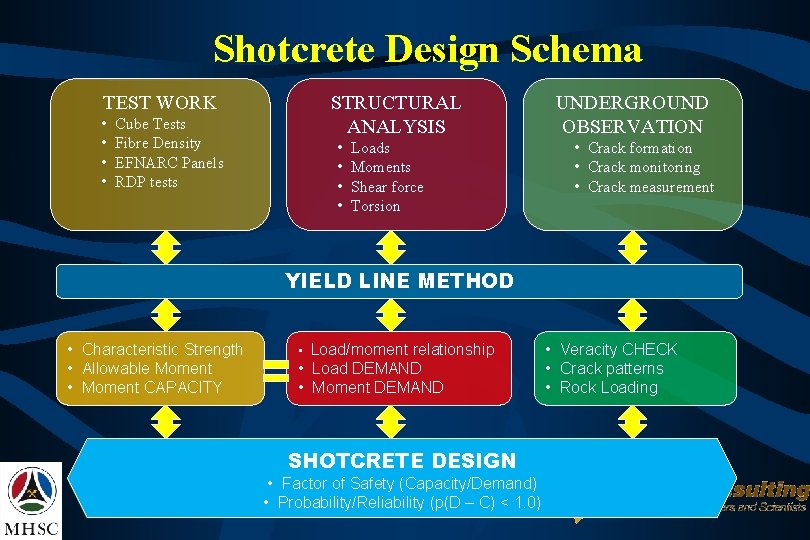
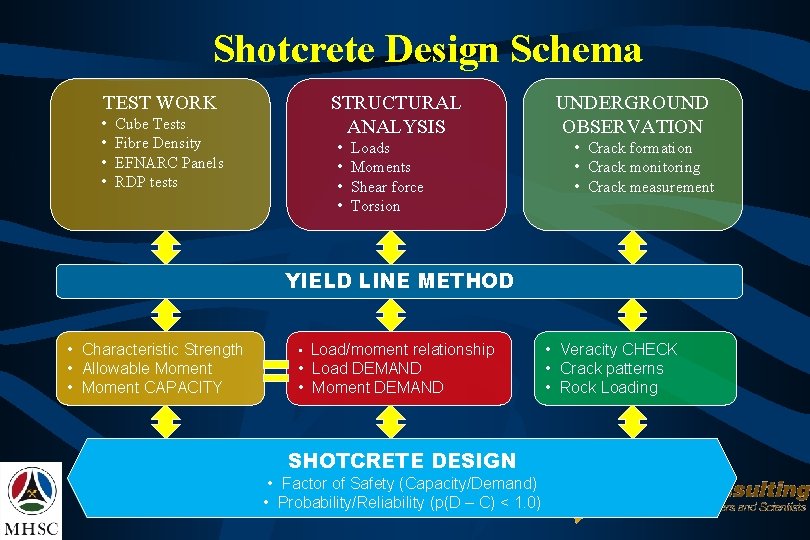
Shotcrete Design Schema TEST WORK • • Cube Tests Fibre Density EFNARC Panels RDP tests STRUCTURAL ANALYSIS • • Loads Moments Shear force Torsion UNDERGROUND OBSERVATION • Crack formation • Crack monitoring • Crack measurement YIELD LINE METHOD • Characteristic Strength • Allowable Moment • Moment CAPACITY • Load/moment relationship • Load DEMAND • Moment DEMAND SHOTCRETE DESIGN • Factor of Safety (Capacity/Demand) • Probability/Reliability (p(D – C) < 1. 0) • Veracity CHECK • Crack patterns • Rock Loading
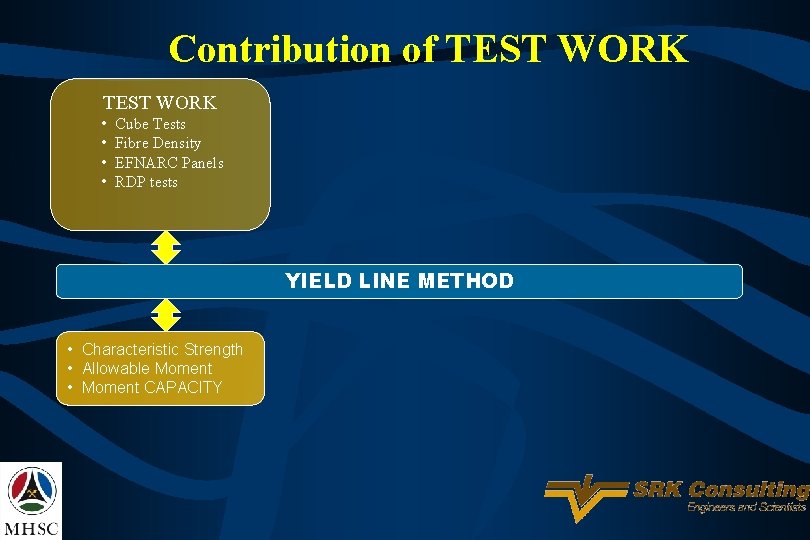
Contribution of TEST WORK • • Cube Tests Fibre Density EFNARC Panels RDP tests YIELD LINE METHOD • Characteristic Strength • Allowable Moment • Moment CAPACITY
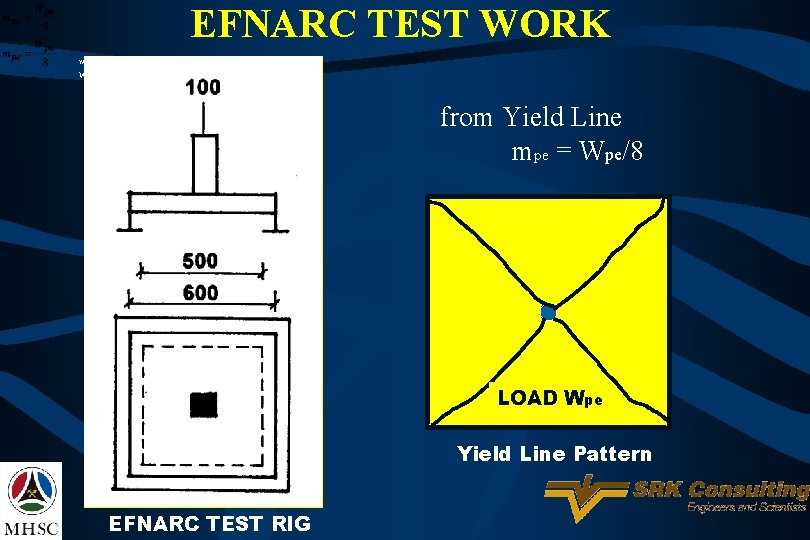
EFNARC TEST WORK where: Wpe is the peak load (k. N) from Yield Line mpe = Wpe/8 LOAD Wpe Yield Line Pattern EFNARC TEST RIG
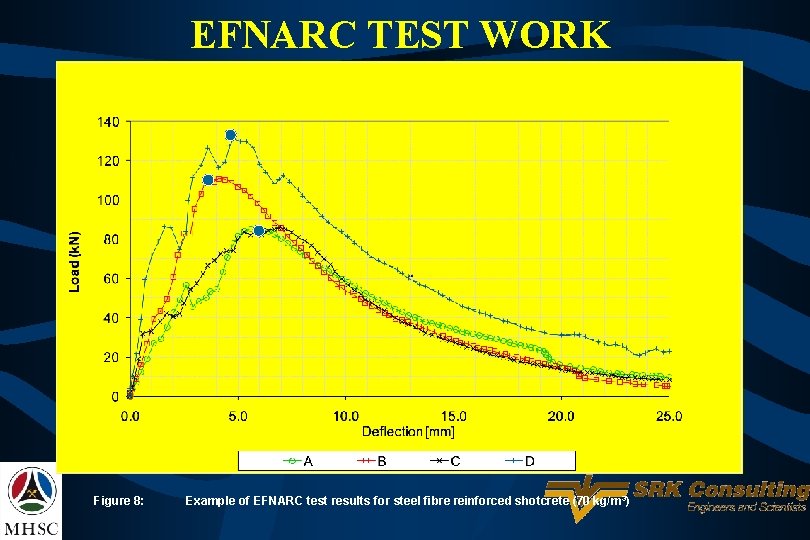
EFNARC TEST WORK Figure 8: Example of EFNARC test results for steel fibre reinforced shotcrete (70 kg/m 3)
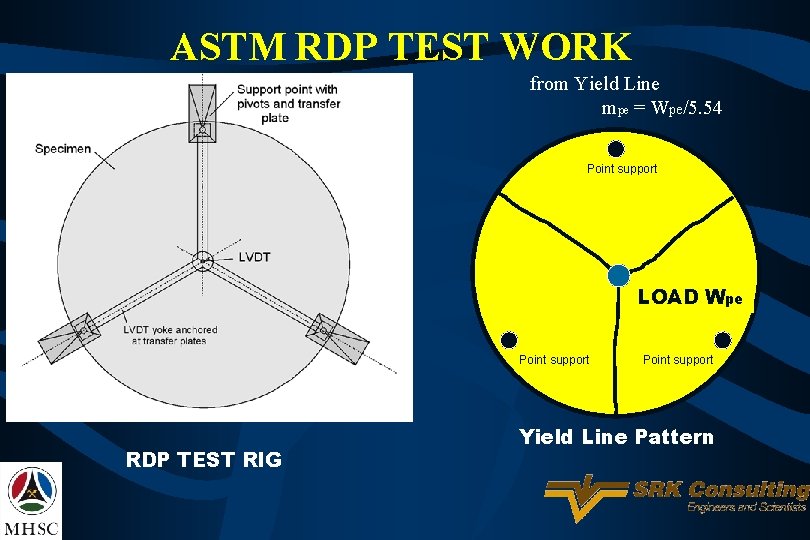
ASTM RDP TEST WORK from Yield Line mpe = Wpe/5. 54 Point support LOAD Wpe Point support RDP TEST RIG Point support Yield Line Pattern
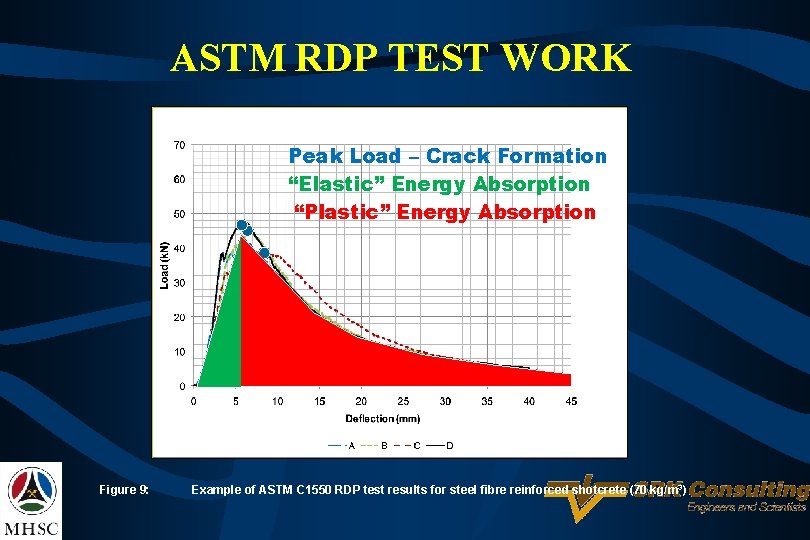
ASTM RDP TEST WORK Peak Load – Crack Formation “Elastic” Energy Absorption “Plastic” Energy Absorption Figure 9: Example of ASTM C 1550 RDP test results for steel fibre reinforced shotcrete (70 kg/m 3)
TEST WORK Summary v Moment Capacity development using Yield Line for a standard test panel v Ratio of thickness of test panel to design thickness (on the wall) give the Design Moment Capacity v Method allows a Characteristic Moment Capacity to be specified (cf Cube Strength)
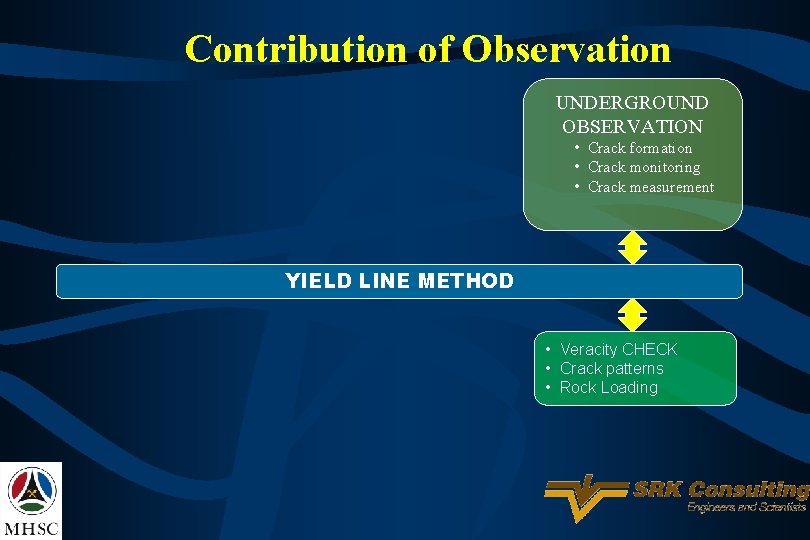
Contribution of Observation UNDERGROUND OBSERVATION • Crack formation • Crack monitoring • Crack measurement YIELD LINE METHOD • Veracity CHECK • Crack patterns • Rock Loading
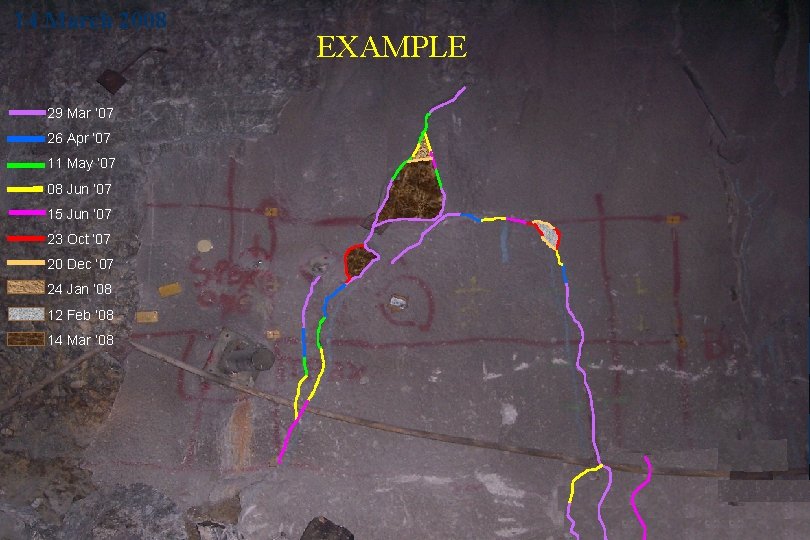
Observation v Cracking in shotcrete is due to different mechanisms v. Flexure or Bending (moment) v. Punching shear v. Adhesion loss v. Direct shear v. Axial force (tension) v Sometimes difficult to categorize on the wall v Long term monitoring required
Observation 2 v Look for patterns which resemble expected yield lines v Take into account the in-plane axial (tensile) force component v Locate areas of shear dislocation v Ultimately v. Looking for yield line patterns
14 March 2008 29 Mar ‘ 07 26 Apr ’ 07 11 May ‘ 07 08 Jun ‘ 07 15 Jun ‘ 07 23 Oct ‘ 07 20 Dec ’ 07 24 Jan ‘ 08 12 Feb ‘ 08 14 Mar ‘ 08 EXAMPLE
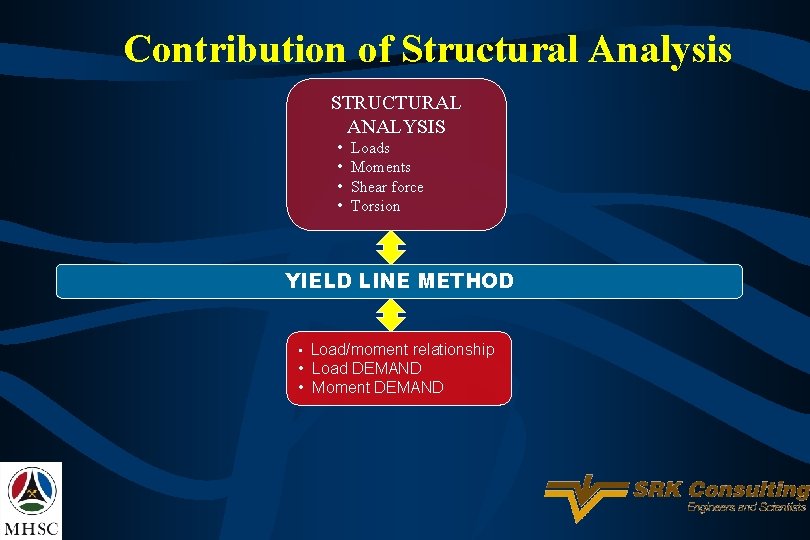
Contribution of Structural Analysis STRUCTURAL ANALYSIS • • Loads Moments Shear force Torsion YIELD LINE METHOD • Load/moment relationship • Load DEMAND • Moment DEMAND
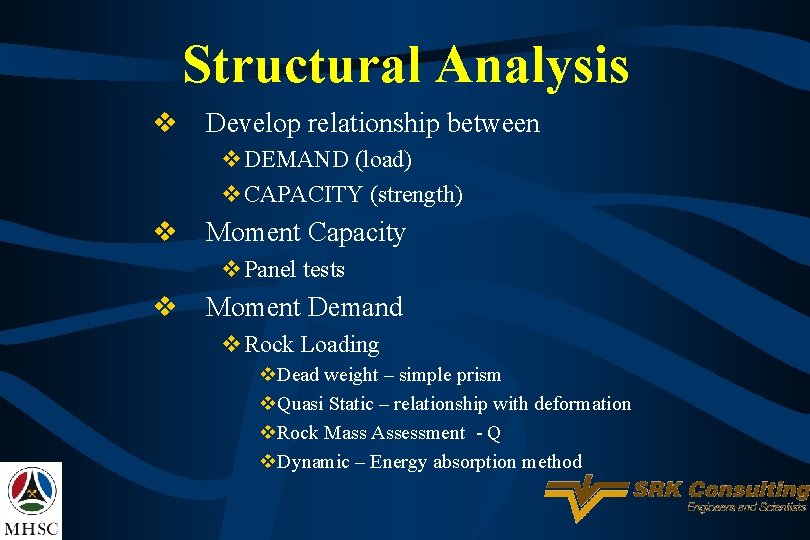
Structural Analysis v Develop relationship between v. DEMAND (load) v. CAPACITY (strength) v Moment Capacity v. Panel tests v Moment Demand v. Rock Loading v. Dead weight – simple prism v. Quasi Static – relationship with deformation v. Rock Mass Assessment - Q v. Dynamic – Energy absorption method
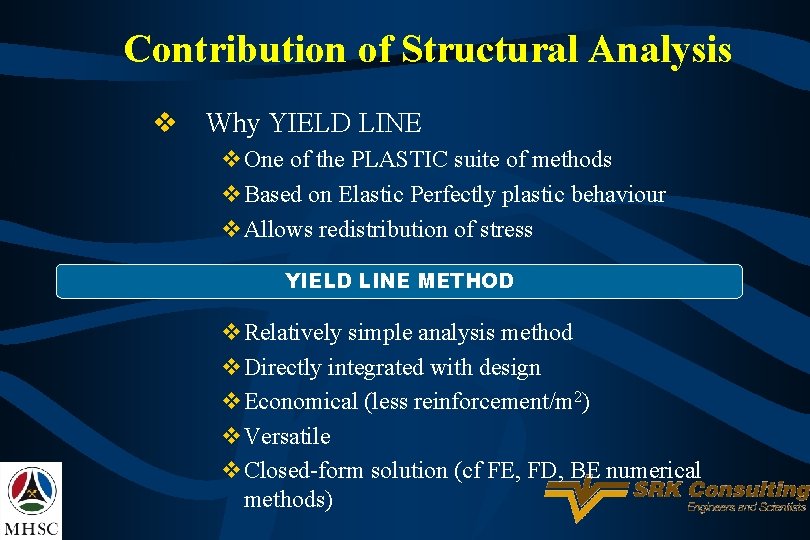
Contribution of Structural Analysis v Why YIELD LINE v. One of the PLASTIC suite of methods v. Based on Elastic Perfectly plastic behaviour v. Allows redistribution of stress YIELD LINE METHOD v. Relatively simple analysis method v. Directly integrated with design v. Economical (less reinforcement/m 2) v. Versatile v. Closed-form solution (cf FE, FD, BE numerical methods)
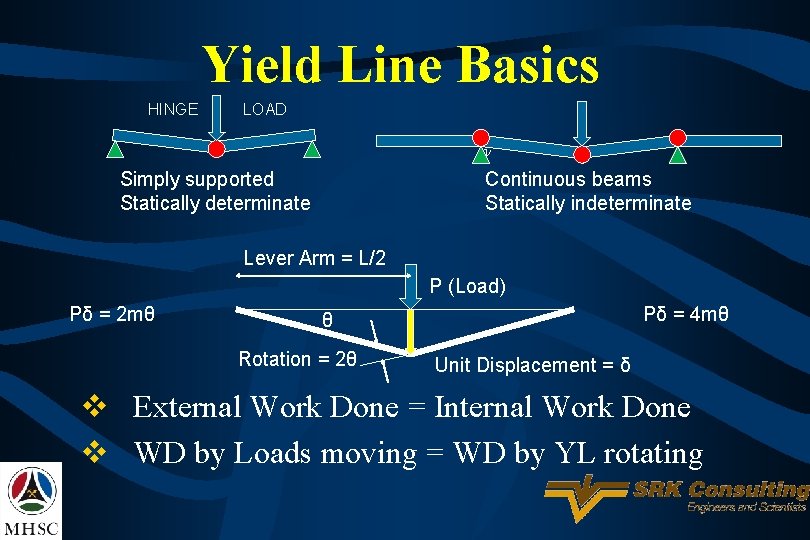
Yield Line Basics HINGE LOAD v Simply supported Statically determinate Continuous beams Statically indeterminate Lever Arm = L/2 P (Load) Pδ = 2 mθ Pδ = 4 mθ θ Rotation = 2θ Unit Displacement = δ v External Work Done = Internal Work Done v WD by Loads moving = WD by YL rotating
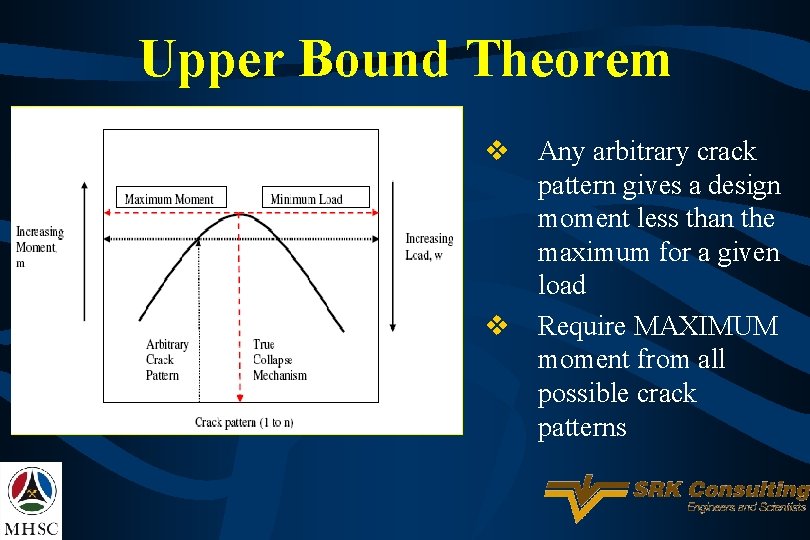
Upper Bound Theorem v Any arbitrary crack pattern gives a design moment less than the maximum for a given load v Require MAXIMUM moment from all possible crack patterns
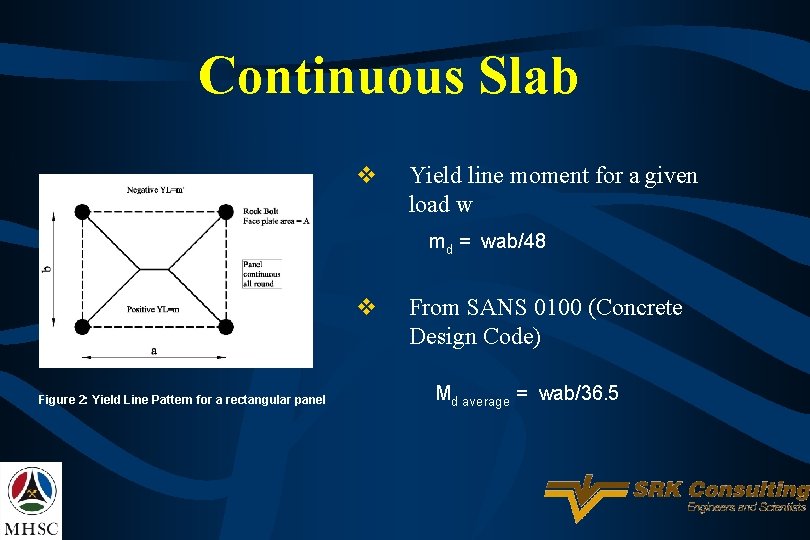
Continuous Slab v Yield line moment for a given load w md = wab/48 v Figure 2: Yield Line Pattern for a rectangular panel From SANS 0100 (Concrete Design Code) Md average = wab/36. 5
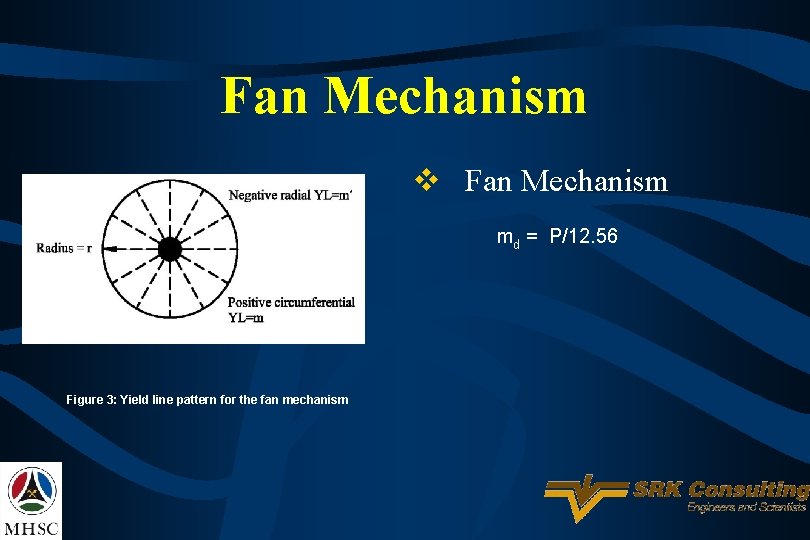
Fan Mechanism v Fan Mechanism md = P/12. 56 Figure 3: Yield line pattern for the fan mechanism
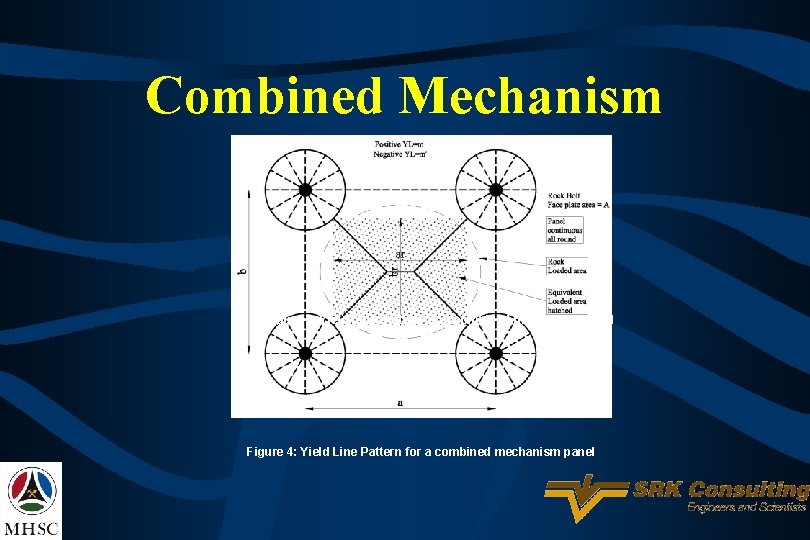
Combined Mechanism Figure 4: Yield Line Pattern for a combined mechanism panel
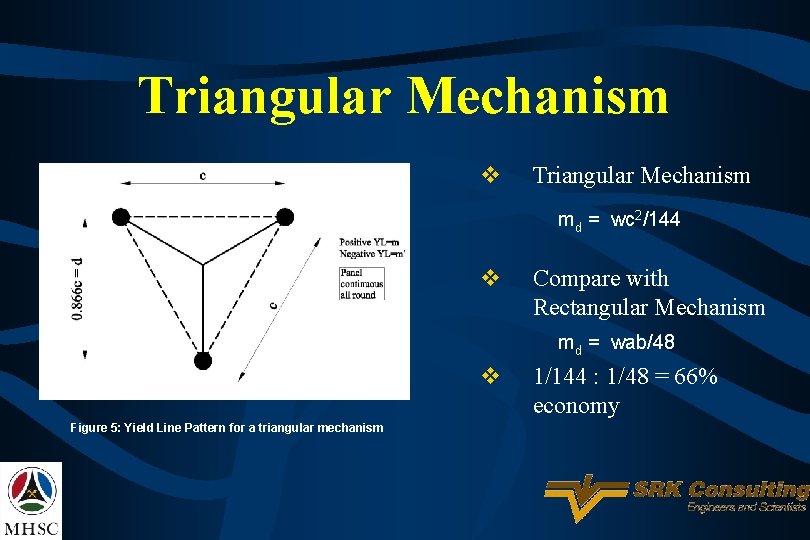
Triangular Mechanism v Triangular Mechanism md = wc 2/144 v Compare with Rectangular Mechanism md = wab/48 v Figure 5: Yield Line Pattern for a triangular mechanism 1/144 : 1/48 = 66% economy
Shotcrete Design Schema TEST WORK • • Cube Tests Fibre Density EFNARC Panels RDP tests STRUCTURAL ANALYSIS • • Loads Moments Shear force Torsion UNDERGROUND OBSERVATION • Crack formation • Crack monitoring • Crack measurement YIELD LINE METHOD • Characteristic Strength • Allowable Moment • Moment CAPACITY • Load/moment relationship • Load DEMAND • Moment DEMAND SHOTCRETE DESIGN • Factor of Safety (Capacity/Demand) • Probability/Reliability (p(D – C) < 1. 0) • Veracity CHECK • Crack patterns • Rock Loading
Conclusions 1 v Shotcrete Moment Capacity v. Peak Moment Capacity reliably estimated for RDP Panels v. Steel fibre in particular v. Unreinforced panels give highly variable results v. Moment capacity reliably increases with fibre density/mesh area v. Residual Moment capacities can be estimated using the same method (see following paper) v. Actual underground capacities are variable v. Dependant of local rock geometry and shotcrete application
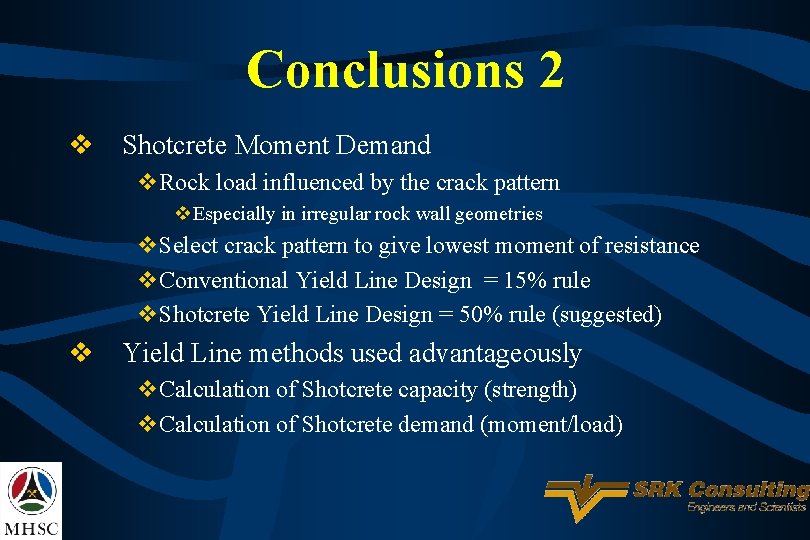
Conclusions 2 v Shotcrete Moment Demand v. Rock load influenced by the crack pattern v. Especially in irregular rock wall geometries v. Select crack pattern to give lowest moment of resistance v. Conventional Yield Line Design = 15% rule v. Shotcrete Yield Line Design = 50% rule (suggested) v Yield Line methods used advantageously v. Calculation of Shotcrete capacity (strength) v. Calculation of Shotcrete demand (moment/load)
Thank You from William and Graham