
The Use of Propaganda in PreCivil War America
- Slides: 16
The Use of Propaganda in Pre-Civil War America The Art of Persuasion. . .
What is Propaganda? 1) The spreading of ideas, information, or rumor for the purpose of helping or injuring an institution, a cause, or a person. 2) Ideas, facts, or allegations spread deliberately to further one's cause or to damage an opposing cause. © Merriam-Webster Dictionary
Types of Propaganda Testimonial- to associate a respected person or someone with experience. Glittering Generalities- to employ vague, sweeping statements (often slogans or simple catchphrases). Plain Folks- to convince the audience that the spokesperson is from humble origins, someone they can trust Bandwagon-to persuade the audience to follow the crowd. This device creates the impression of widespread support. Card Stacking- to make the best case possible for his side and the worst for the opposing viewpoint by carefully using only those facts that support his or her side Name Calling- to create fear and arouse prejudice by using negative words. Transfer- to carry over the authority and approval of something we respect and revere.
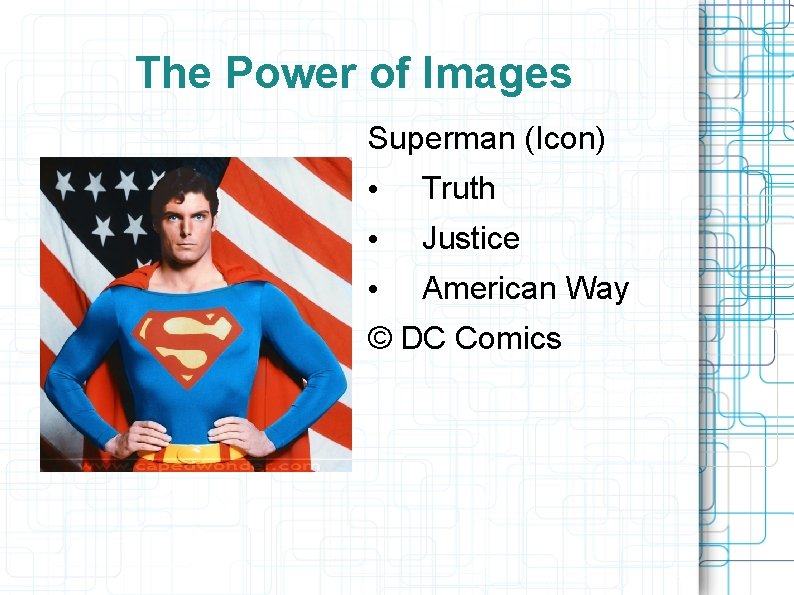
The Power of Images Superman (Icon) • Truth • Justice • American Way © DC Comics
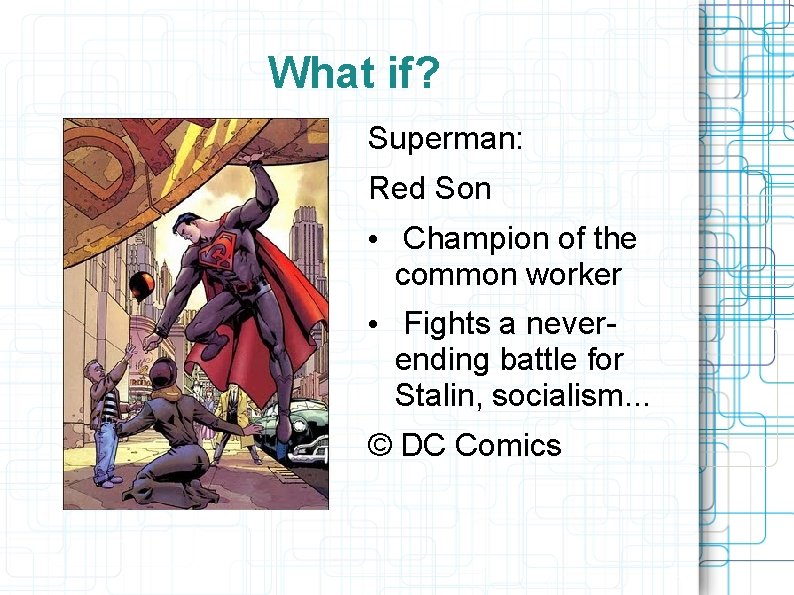
What if? Superman: Red Son • Champion of the common worker • Fights a neverending battle for Stalin, socialism. . . © DC Comics
Flashback to 1830’s-1850’s Next Slides: Propaganda from the 1850 s
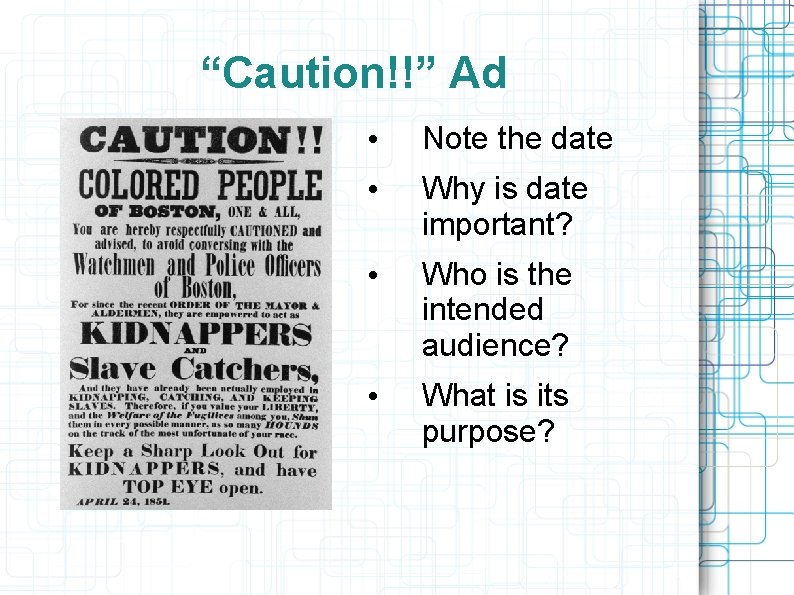
“Caution!!” Ad • Note the date • Why is date important? • Who is the intended audience? • What is its purpose?
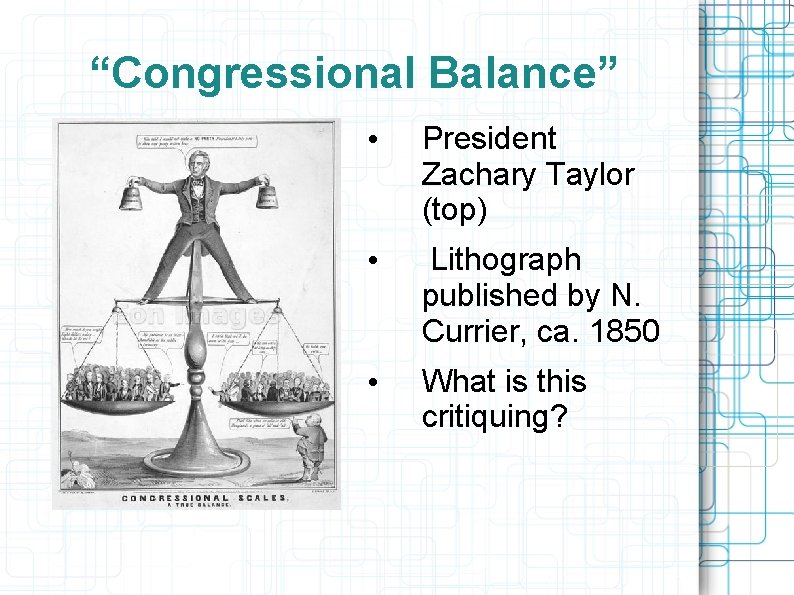
“Congressional Balance” • President Zachary Taylor (top) • Lithograph published by N. Currier, ca. 1850 • What is this critiquing?
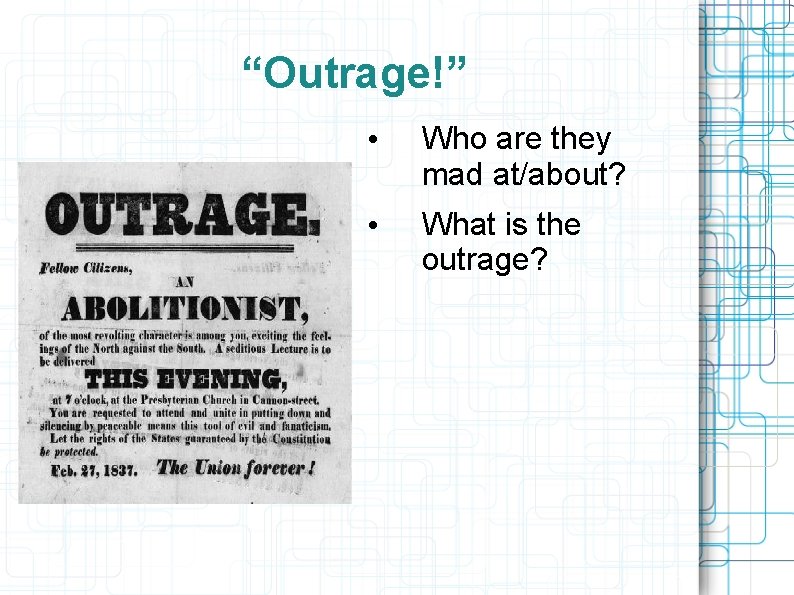
“Outrage!” • Who are they mad at/about? • What is the outrage?
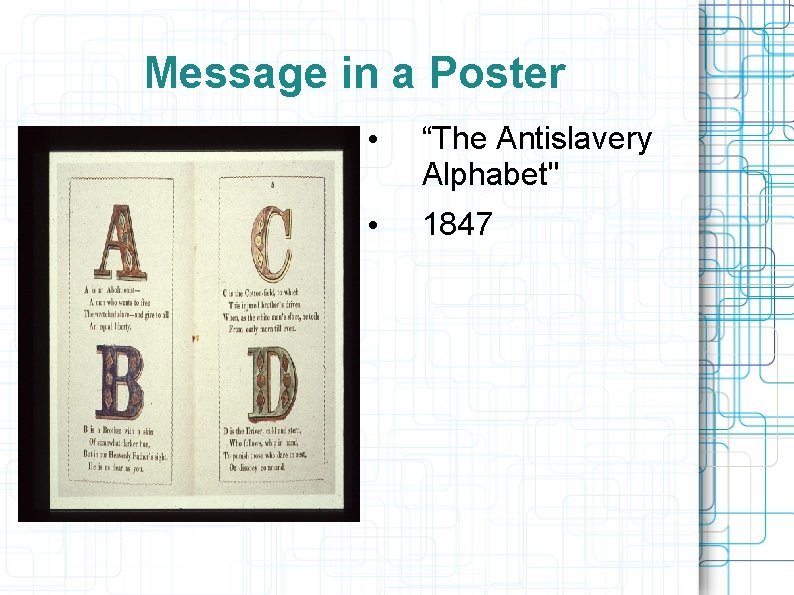
Message in a Poster • “The Antislavery Alphabet" • 1847
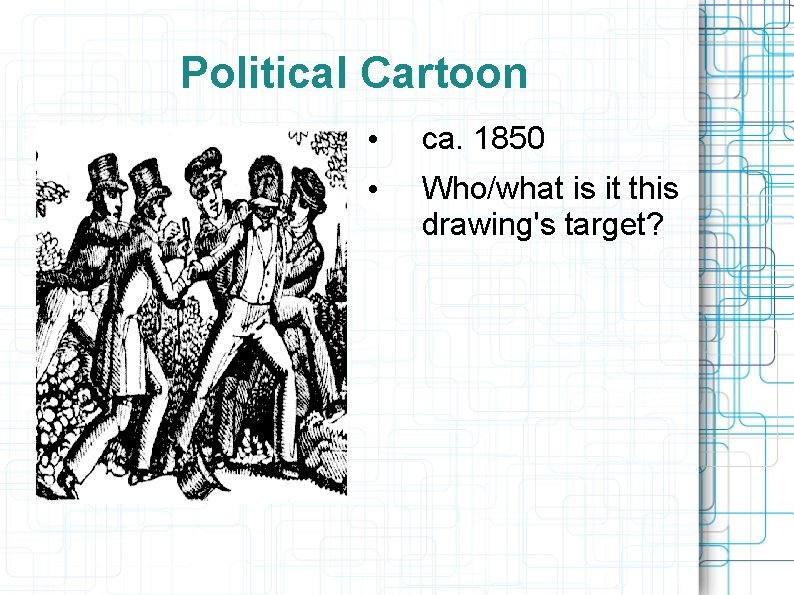
Political Cartoon • ca. 1850 • Who/what is it this drawing's target?
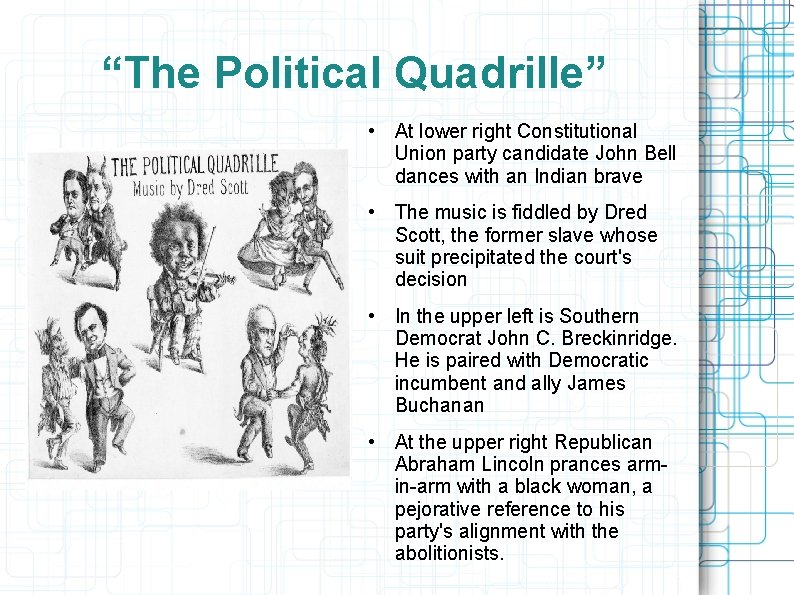
“The Political Quadrille” • At lower right Constitutional Union party candidate John Bell dances with an Indian brave • The music is fiddled by Dred Scott, the former slave whose suit precipitated the court's decision • In the upper left is Southern Democrat John C. Breckinridge. He is paired with Democratic incumbent and ally James Buchanan • At the upper right Republican Abraham Lincoln prances armin-arm with a black woman, a pejorative reference to his party's alignment with the abolitionists.
Final Thoughts What is the purpose of propaganda? Is propaganda an effective way to persuade people? How is propaganda used today?
References Critique of the Fugitive Slave Act, 1850 - “Effects of the Fugitive-Slave-Law” © http: //www. loc. gov/pictures/item/2008661523/ Kansas-Nebraska Act Map, 1854: “Shifting Political Landscape” © http: //www. pbs. org/wgbh/americanexperience/features/general -article/lincolns-political-landscape/ Antislavery Poster: “The Anti Slavery Alphabet” © http: //historyproject. ucdavis. edu/ic/index. php? bestof=449 Antislavery Political Cartoon: “Forcing Slavery Down the Throat of a Free-Soiler. ” © http: //www. loc. gov/pictures/item/2008661578/
References Continued Ad in Response to Fugitive Slave Act: “Caution” © http: //historyproject. ucdavis. edu/ic/image_details. php? id=1138 3 Proslavery political cartoon: “What's sauce for the goose is sauce for the gander” © http: //www. loc. gov/pictures/resource/cph. 3 b 36093/? co=app Kansas-Nebraska Act/Anti Democrat Cartoon: "Bleeding Kansas” © http: //highered. mcgrawhill. com/sites/0072900423/student_view 0/chapter 13/image_qu iz. html Pro Compromise, 1850 Cartoon- “Congressional Scales- A True Balance” © http: //www. eonimages. com/media/ddc 9048 c-3 e 16 -11 e 0 b 521 -c 3 d 6 d 6 c 7484 a-compromise-of-1850 -political-cartoon
References Continued Pro Slavery vs. Anti Slavery Tension: “The Caning of Senator Charles Sumner” © http: //www. senate. gov/artandhistory/common/image/Su mner. Caning. htm Anti Abolitionist Ad- “Warning Against Abolitionist Meeting” © http: //www. loc. gov/exhibits/african/images/outrage. jpg Dred Scott/Presidential Race Cartoon- “The Dred Scott Quadrille” © http: //elections. harpweek. com/1860/cartoon-1860 large. asp? Unique. ID=39&Year