
The use of plates in fracture fixation AO


- Slides: 22
The use of plates in fracture fixation AO Trauma Basic Principles Course
Learning objectives • Comprehend the different functions of plates in fracture fixation • Demonstrate plate features that enable these functions • Discuss how to use plates for absolute and relative stability • State the indications for locking plates
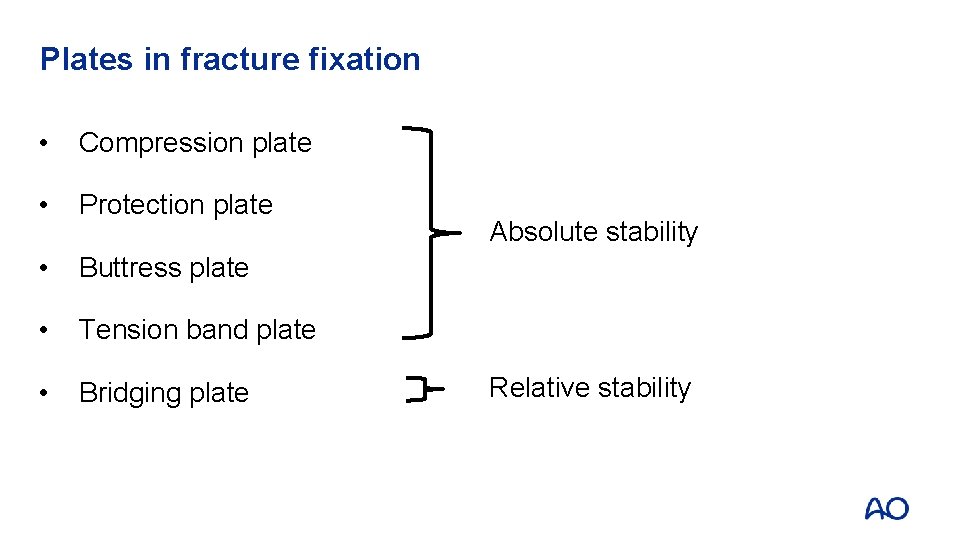
Plates in fracture fixation • Compression plate • Protection plate • Buttress plate • Tension band plate • Bridging plate Absolute stability Relative stability
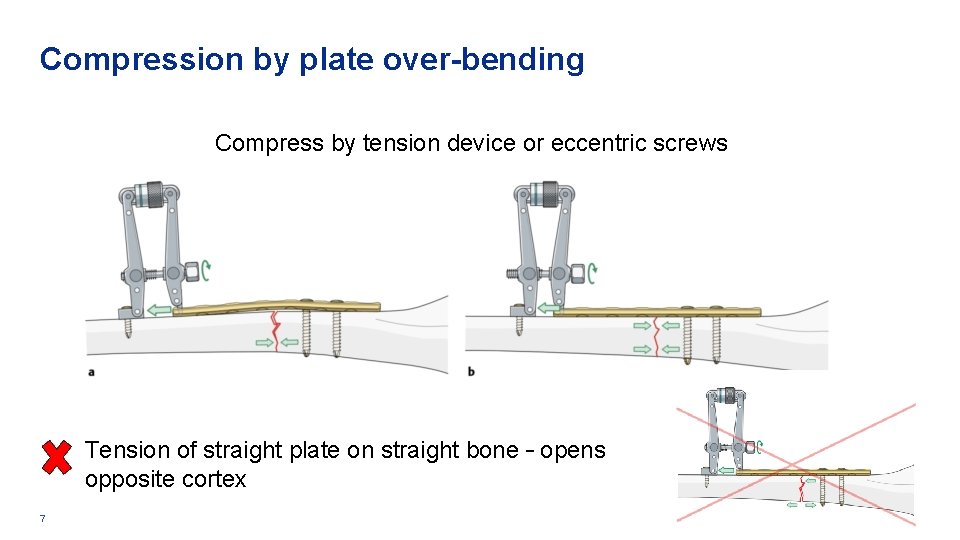
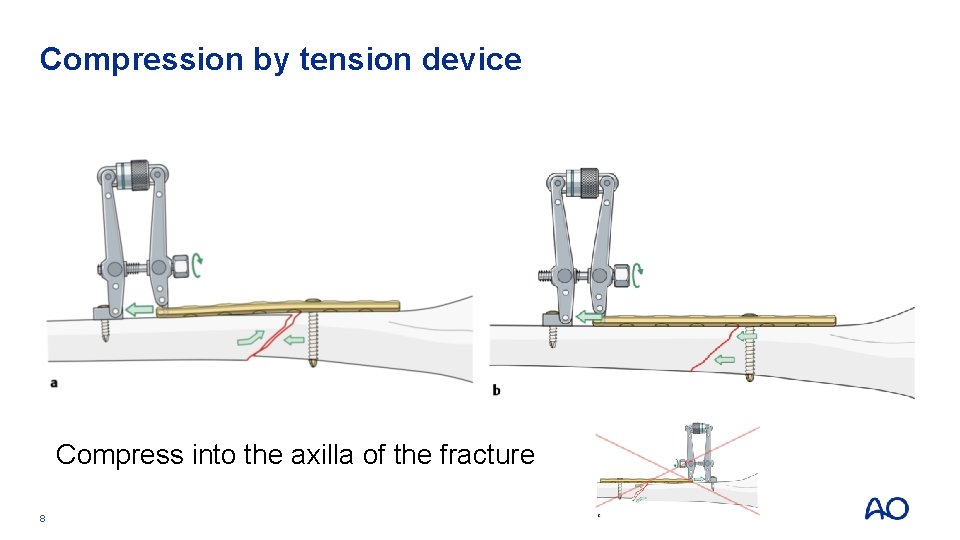
Compression plating • Dynamic compression principle (DCP) • Plate over-bending • Tensioning device ……provides absolute stability – direct bone healing (no callus)
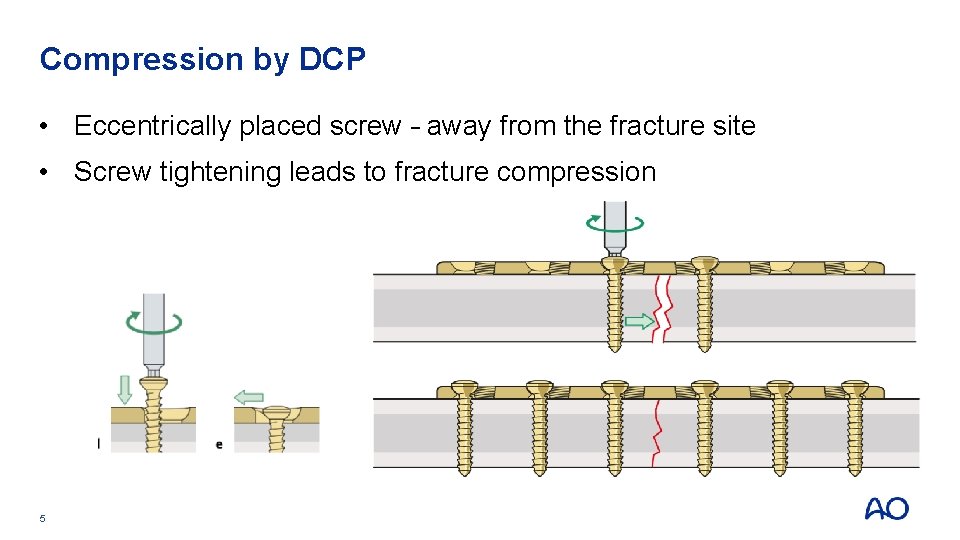
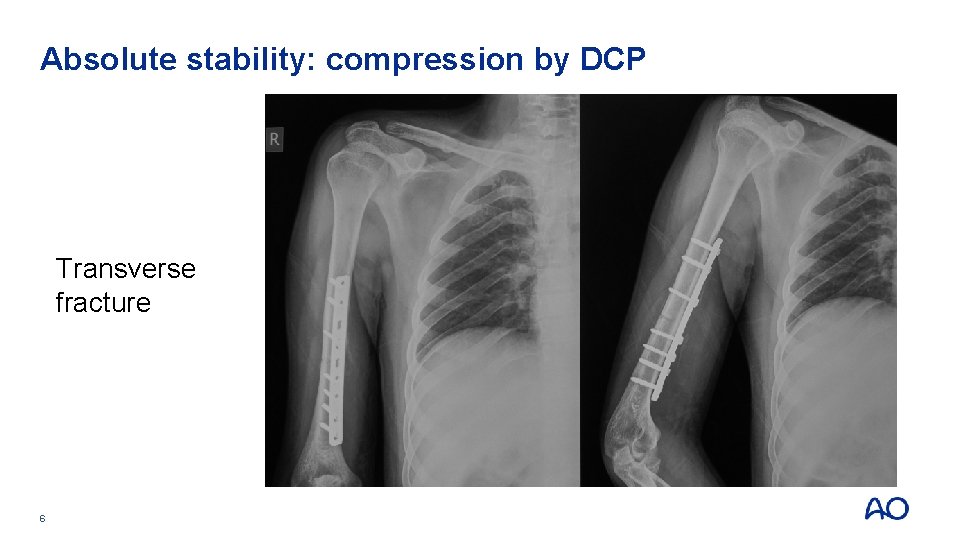
Compression by DCP • Eccentrically placed screw – away from the fracture site • Screw tightening leads to fracture compression 5
Absolute stability: compression by DCP Transverse fracture 6
Compression by plate over-bending Compress by tension device or eccentric screws Tension of straight plate on straight bone – opens opposite cortex 7
Compression by tension device Compress into the axilla of the fracture 8
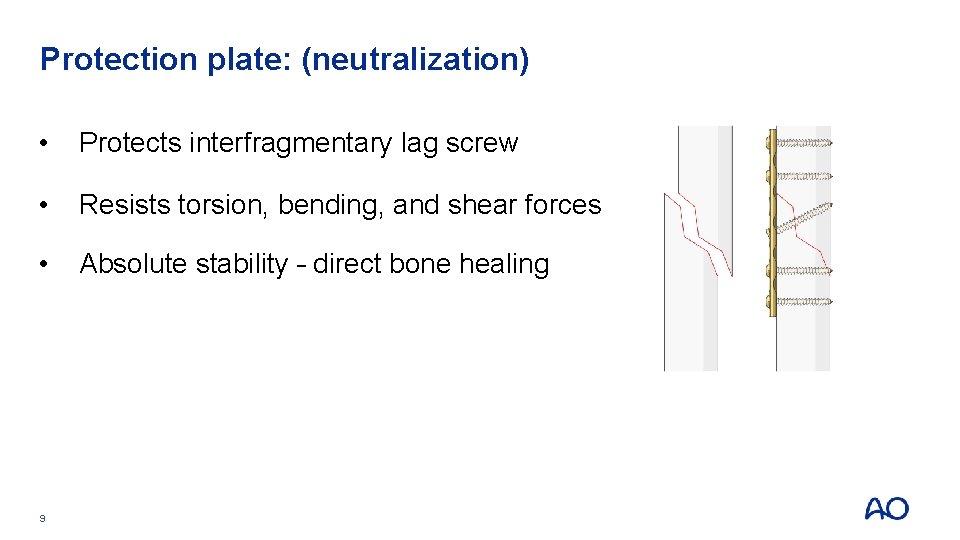
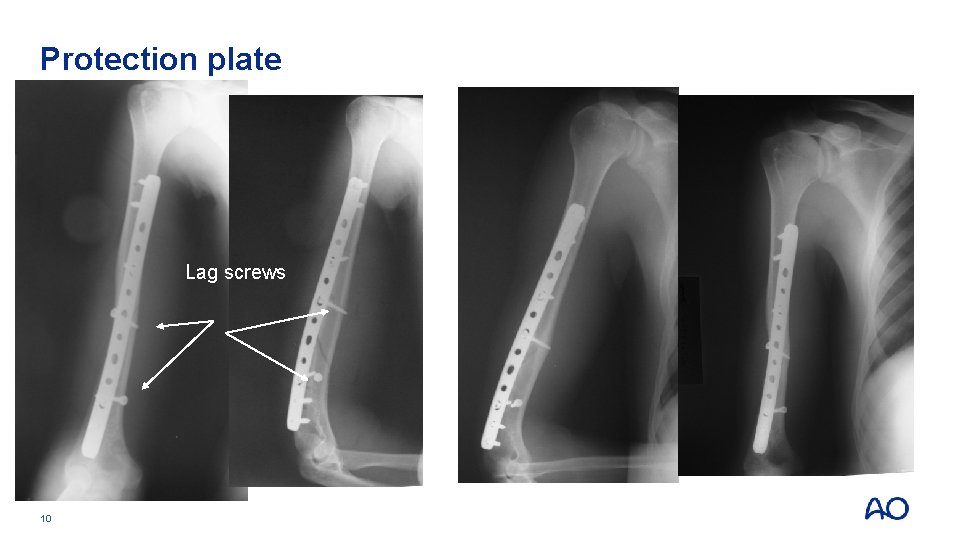
Protection plate: (neutralization) • Protects interfragmentary lag screw • Resists torsion, bending, and shear forces • Absolute stability – direct bone healing 9
Protection plate Lag screws 10
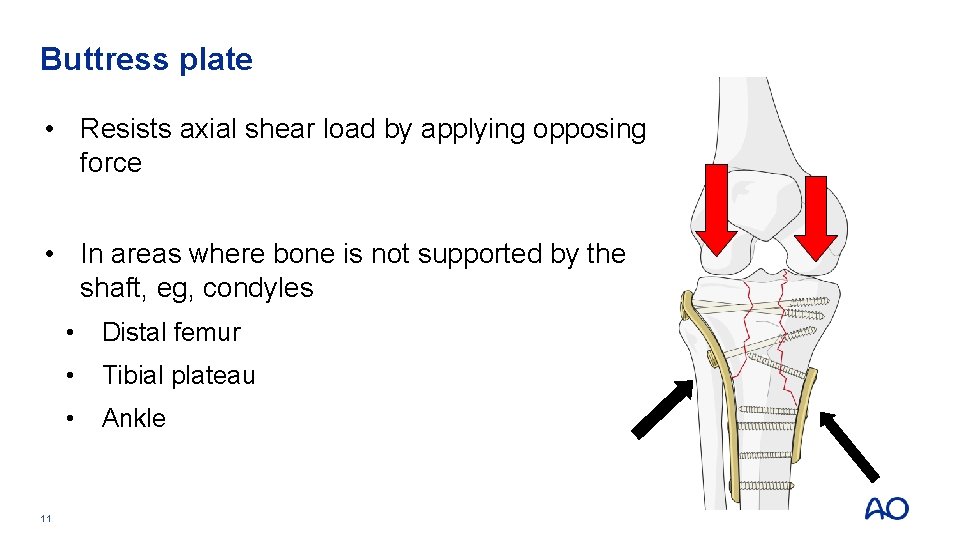
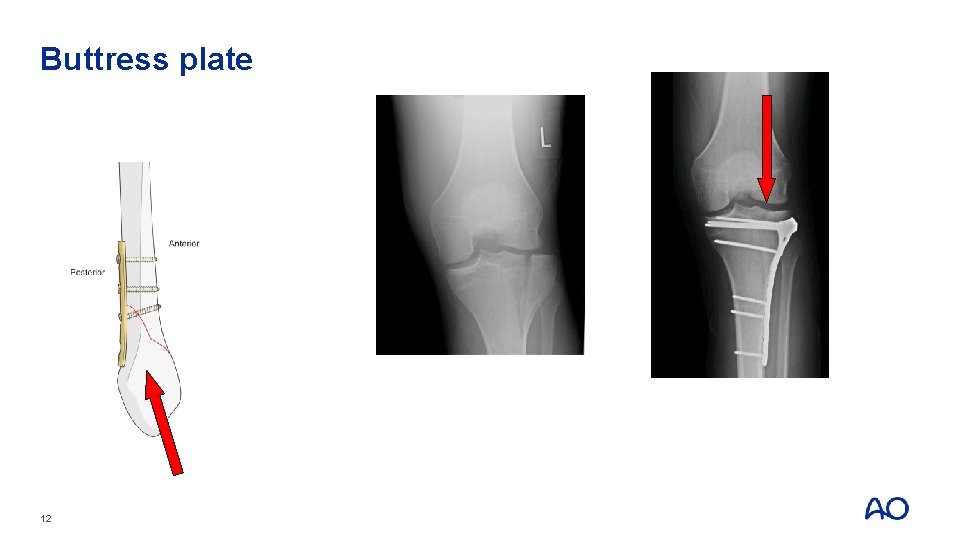
Buttress plate • Resists axial shear load by applying opposing force • In areas where bone is not supported by the shaft, eg, condyles 11 • Distal femur • Tibial plateau • Ankle
Buttress plate 12
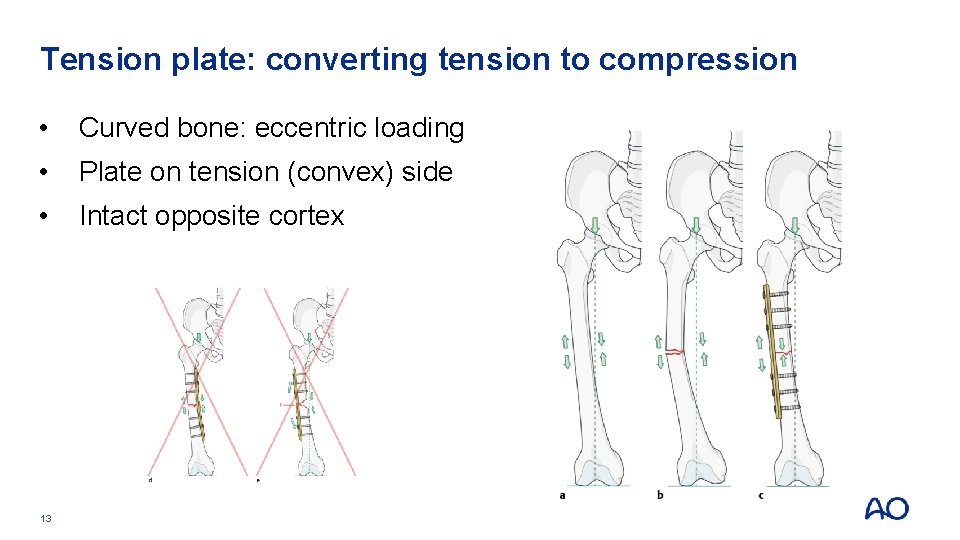
Tension plate: converting tension to compression • Curved bone: eccentric loading • Plate on tension (convex) side • Intact opposite cortex 13
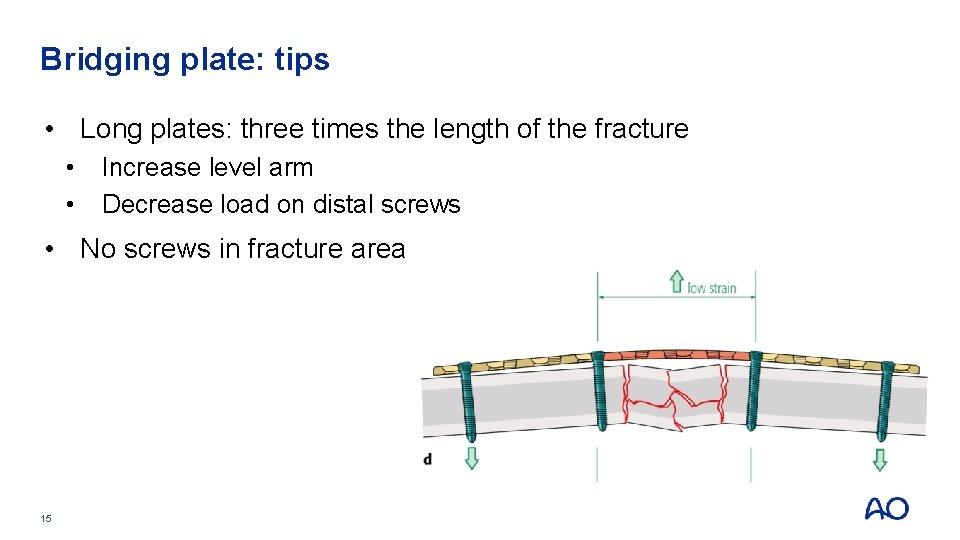
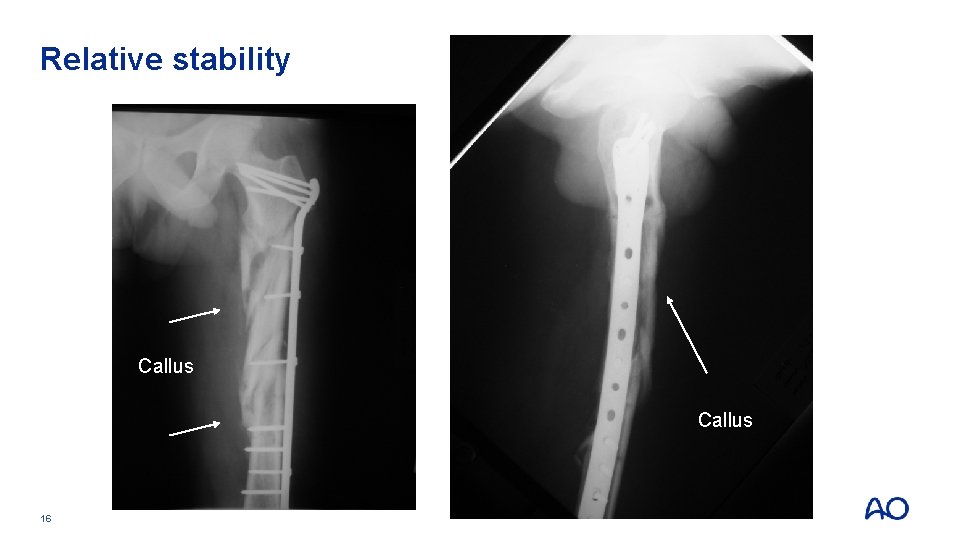
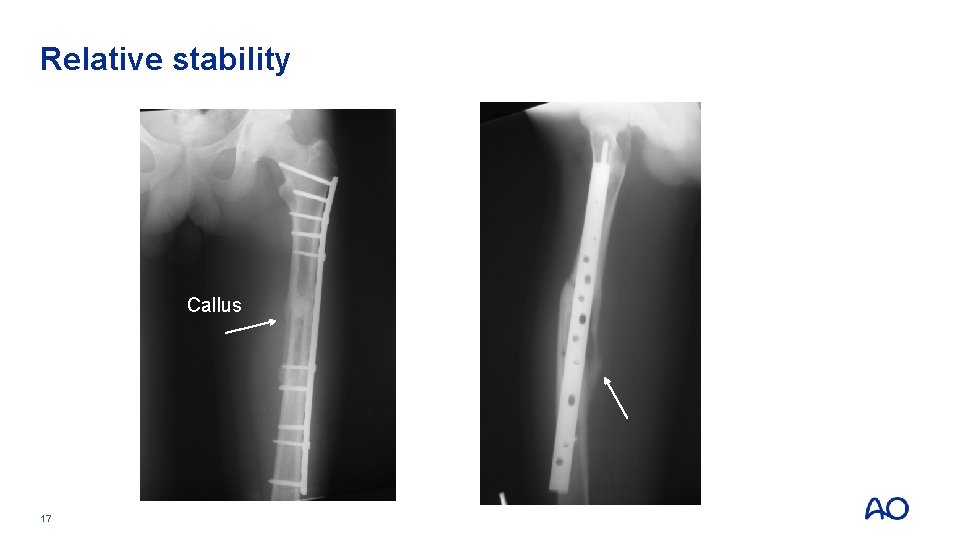
Bridging plate • Multifragmentary fractures • Bridge the fracture site: restore length, rotation, and angulation • Relative stability – healing by callus 14
Bridging plate: tips • Long plates: three times the length of the fracture • • Increase level arm Decrease load on distal screws • No screws in fracture area 15
Relative stability Callus 16
Relative stability Callus 17
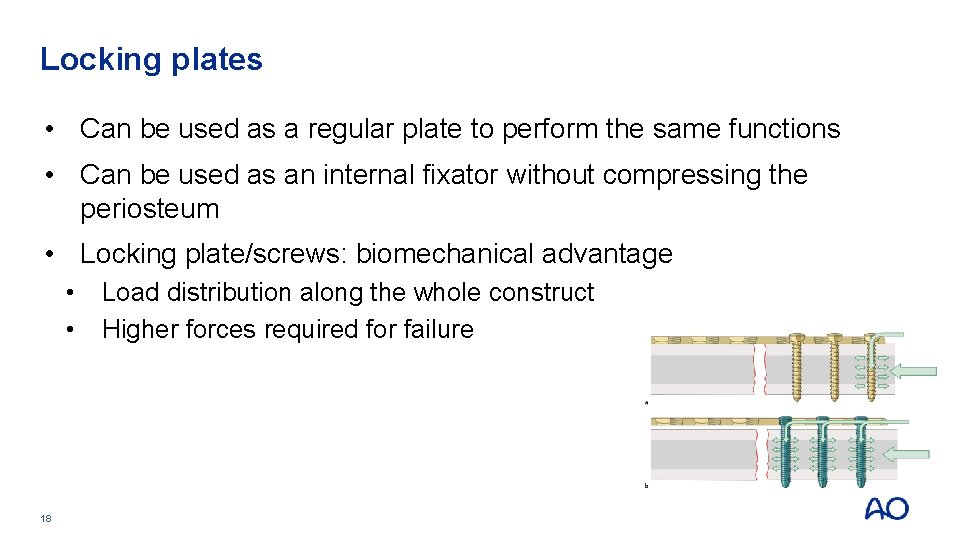
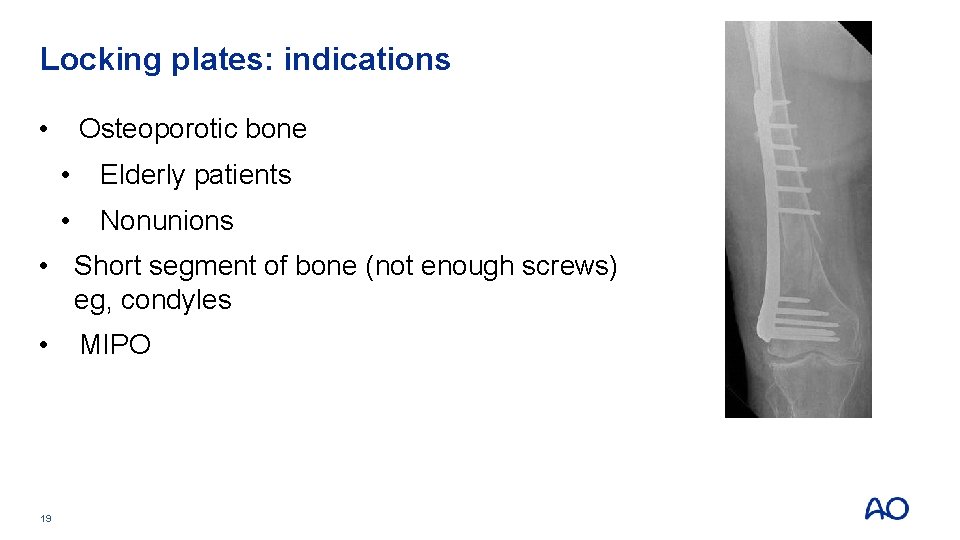
Locking plates • Can be used as a regular plate to perform the same functions • Can be used as an internal fixator without compressing the periosteum • Locking plate/screws: biomechanical advantage • • 18 Load distribution along the whole construct Higher forces required for failure
Locking plates: indications • Osteoporotic bone • Elderly patients • Nonunions • Short segment of bone (not enough screws) eg, condyles • 19 MIPO Photos
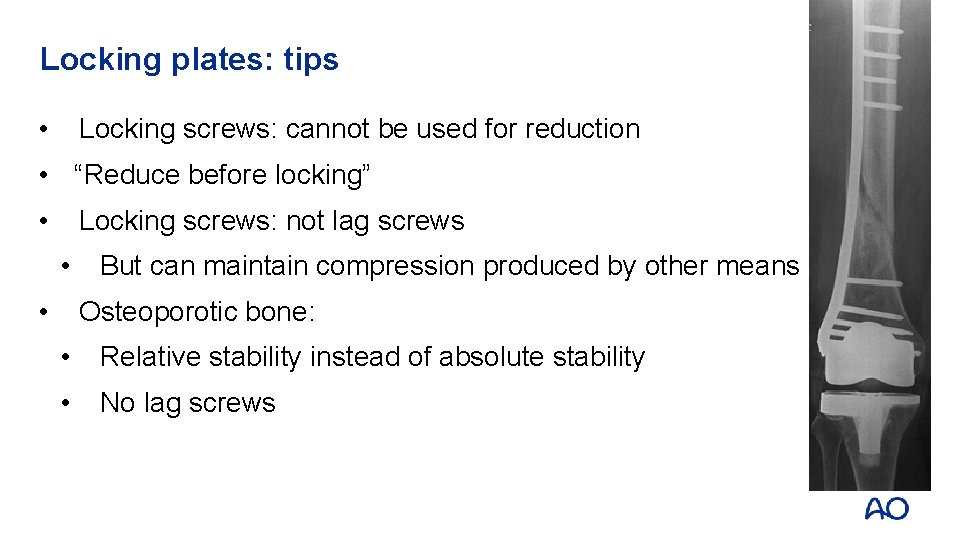
Locking plates: tips • Locking screws: cannot be used for reduction • “Reduce before locking” • Locking screws: not lag screws • • But can maintain compression produced by other means Osteoporotic bone: • Relative stability instead of absolute stability • No lag screws
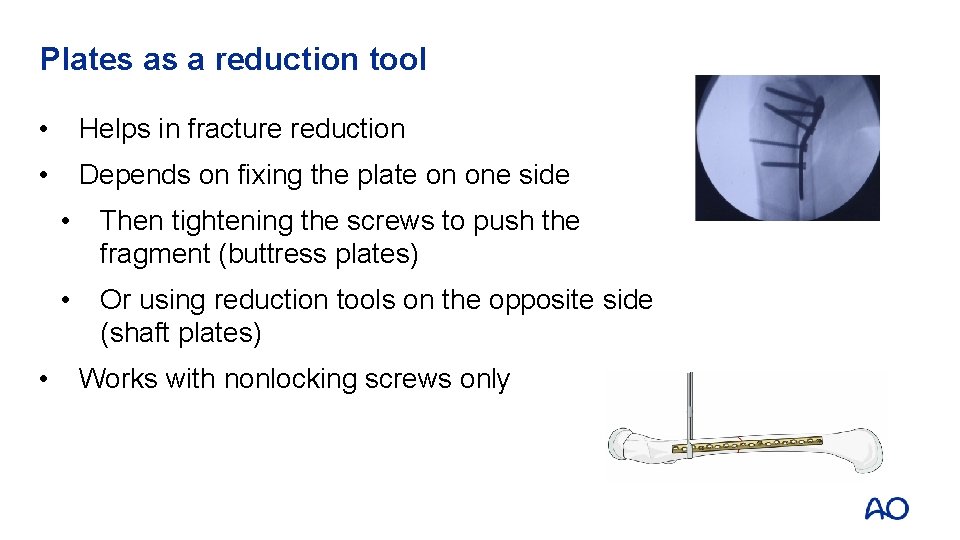
Plates as a reduction tool • Helps in fracture reduction • Depends on fixing the plate on one side • • Then tightening the screws to push the fragment (buttress plates) • Or using reduction tools on the opposite side (shaft plates) Works with nonlocking screws only
Take-home messages • Plates have different functions in fracture fixation depending on their application method • They can produce absolute or relative stability • Locking plates have specific indications • Plates can be used as a reduction tool