
THE USE OF MULTIMEDIA TO ENHANCE READING WRITING
- Slides: 12
THE USE OF MULTIMEDIA TO ENHANCE READING, WRITING AND MATHEMATICAL SKILLS Dr. Audrey Klopper North-West University Potchefstroom campus
Definition – multimedia learning “ Dual-code”/ “Dual channel” Learn more effectively – words, visual images and auditory input are combined Animation DBD (digital book disc)
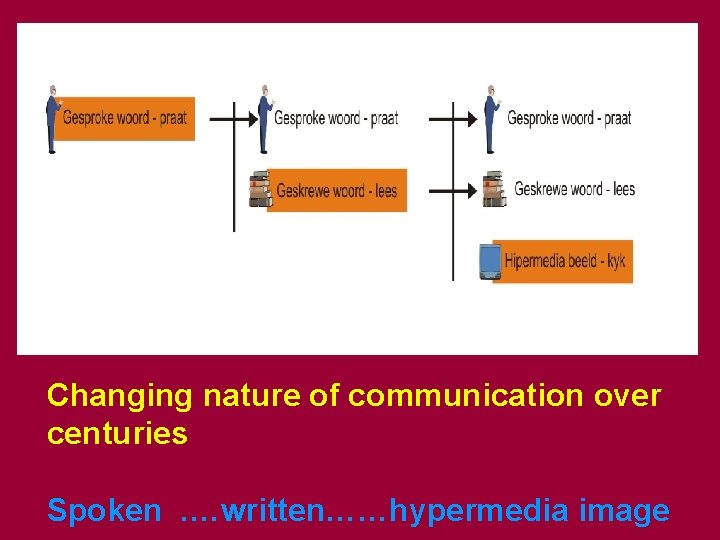
Changing nature of communication over centuries Spoken. …written……hypermedia image
Demonstration of DBDprogramme
Advantages • Quality of communication determines success of teaching and learning • Teaching in mother tongue/ home language • TV - available in most homes & schools; • TV and DVD-players – cheaper and more affordable than computers; • More information can be stored on DVD than on CD (rewritable); • User friendly • Help bridging “digital divide” –preparing for information age
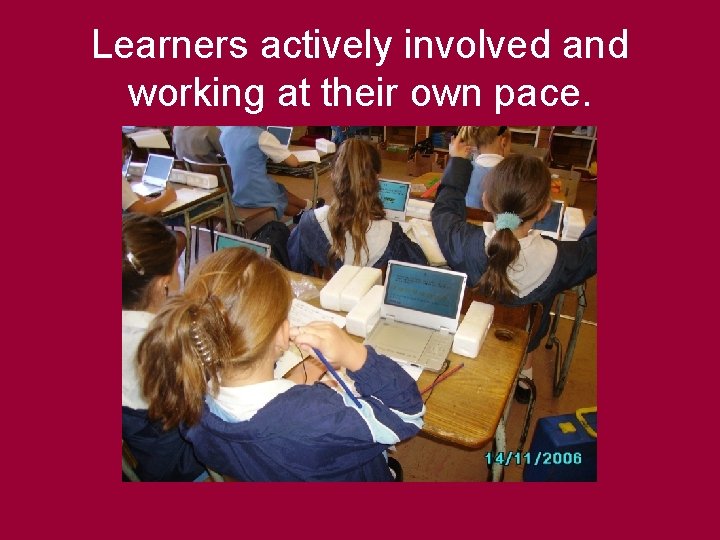
Learners actively involved and working at their own pace.
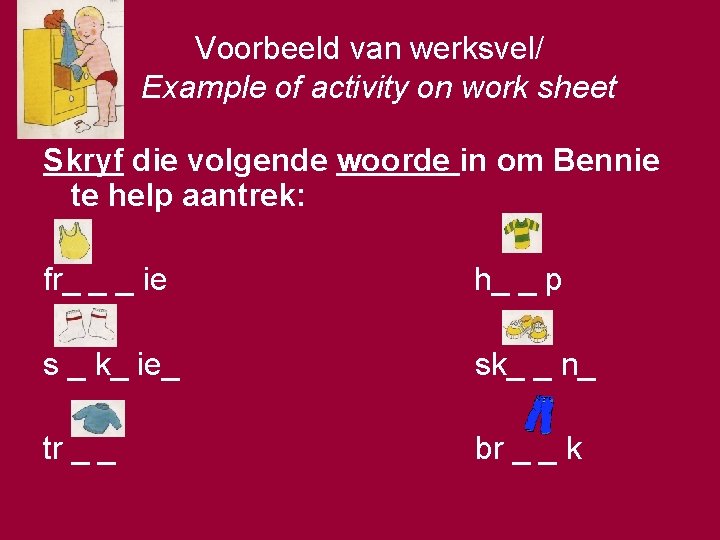
Voorbeeld van werksvel/ Example of activity on work sheet Skryf die volgende woorde in om Bennie te help aantrek: fr_ _ _ ie h_ _ p s _ k_ ie_ sk_ _ n_ tr _ _ br _ _ k
Skills on which DBD focused 3 R’s 1 2 3 • READING • WRITING • ARITHMETIC (MATHS)
Reading q Reading and writing facilitated informally and in an integrated manner. q Text developed in accordance to relevant level of learners. q Model reading and guided reading. q Progression built into learning material. q Continuous opportunity for repetition and practicing of skills. q Learners associate reading with fun and enjoyment, more motivated to read. q Assessment of word recognition and questions about content on daily basis.
Writing • Learners encouraged to discover rules spontaneously. • Relation between reading and writing established. • Rules for spelling taught in integration with reading. • Writing skills practiced at own individual pace.
Arithmetic (Mathematics) • Based on real life experiences and linked to learners’ interest and field of experience. • Variety of learning contexts by means of themes. • Drill and practice exercises important for repetition of basic concepts. • Emphasize on high-order thinking skills and metacognition. • Animation used to highlight mathematical procedures. • Correct answer included during self assessment.
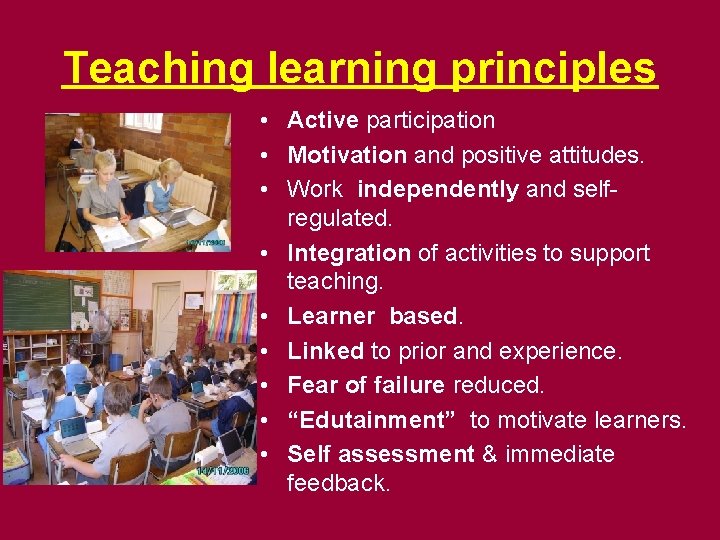
Teaching learning principles • Active participation • Motivation and positive attitudes. • Work independently and selfregulated. • Integration of activities to support teaching. • Learner based. • Linked to prior and experience. • Fear of failure reduced. • “Edutainment” to motivate learners. • Self assessment & immediate feedback.