
The Use of Mesh Prosthesis for Hiatal Hernia
- Slides: 23
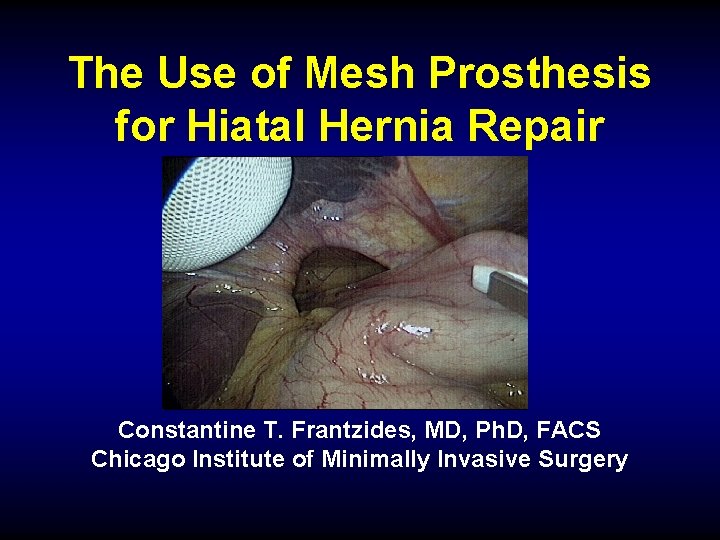
The Use of Mesh Prosthesis for Hiatal Hernia Repair Constantine T. Frantzides, MD, Ph. D, FACS Chicago Institute of Minimally Invasive Surgery
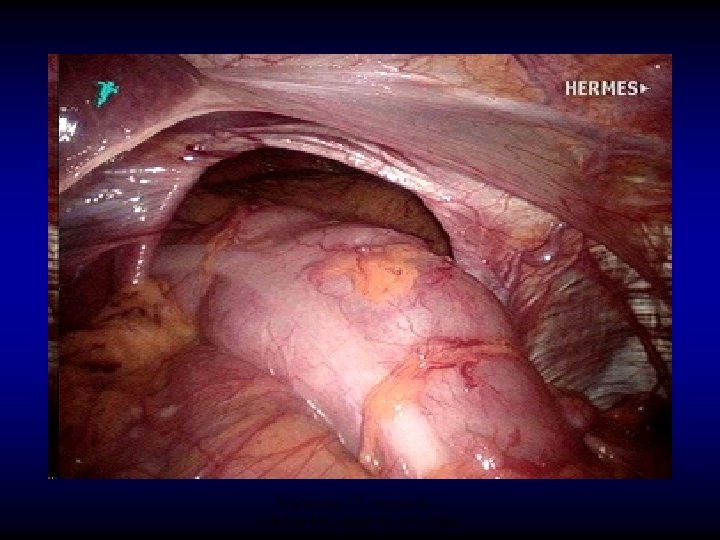
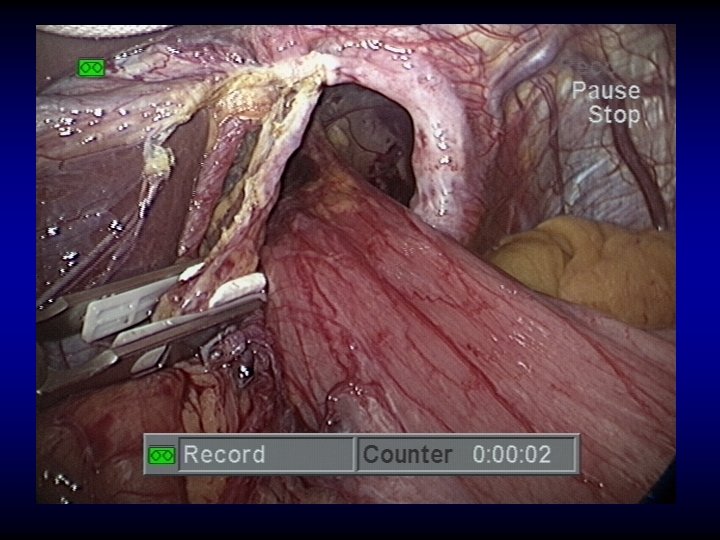
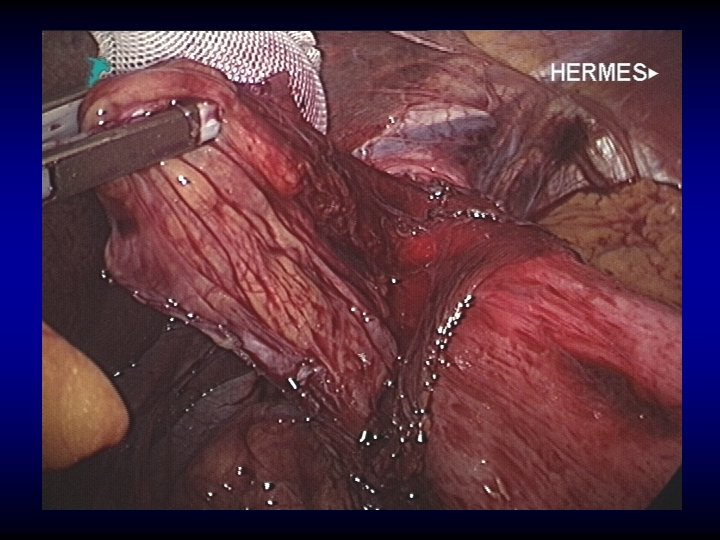
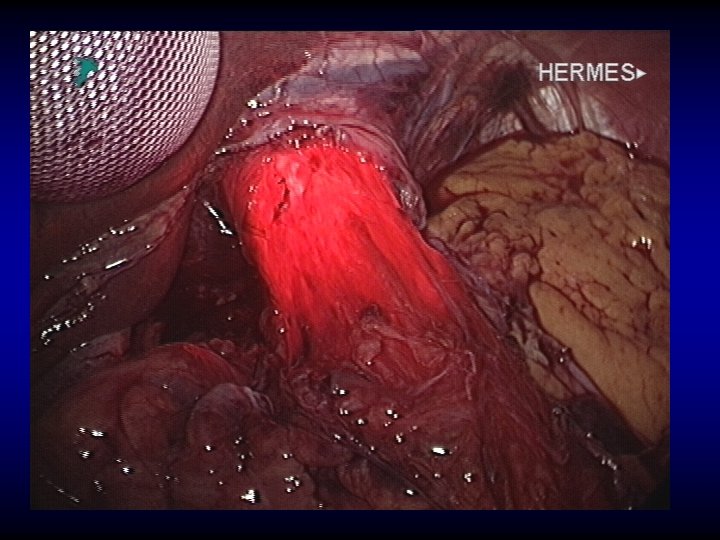
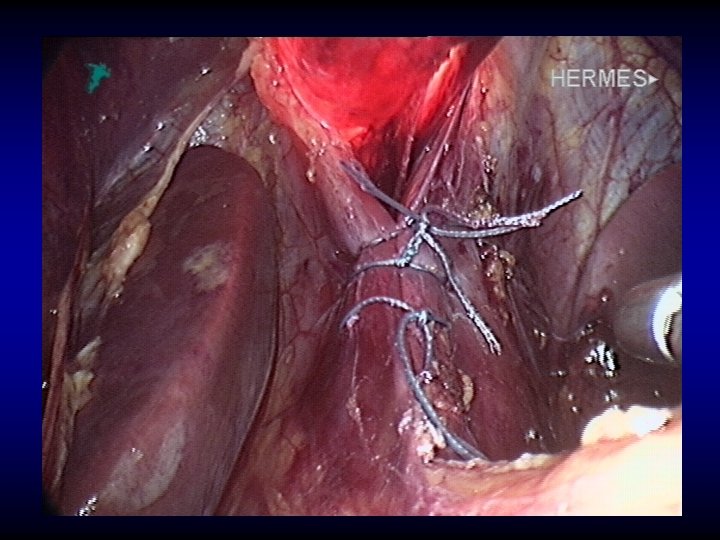
Introduction • Large Hiatal Hernia - High Recurrence Rate Complications and Results of Laparoscopic Reflux Procedures: A Review of 10, 489 Cases --Frantzides CT, J Am Coll Surg. 2001 • Technique of Hiatal Hernia Repair Management of Intrathoracic Stomach with Polypropylene Mesh Prosthesis Reinforced Transabdominal Hiatus Hernia Repair -- Condon RE, et al. J. Am. Coll. Surg. 1998 Prosthetic Reinforcement of Posterior Cruroplasty During Laparoscopic Hiatal Herniorrhaphy -- Frantzides CT, Surg Endosc. 1997
Hypothesis The use of prosthetic mesh reinforcement may decrease the recurrence rate of large hiatal hernias. Frantzides CT, Madan AK, A prospective randomized trial of PTFE patch repair vs. simple cruroplasty for large hiatal hernia. Arch. Surg. 2002
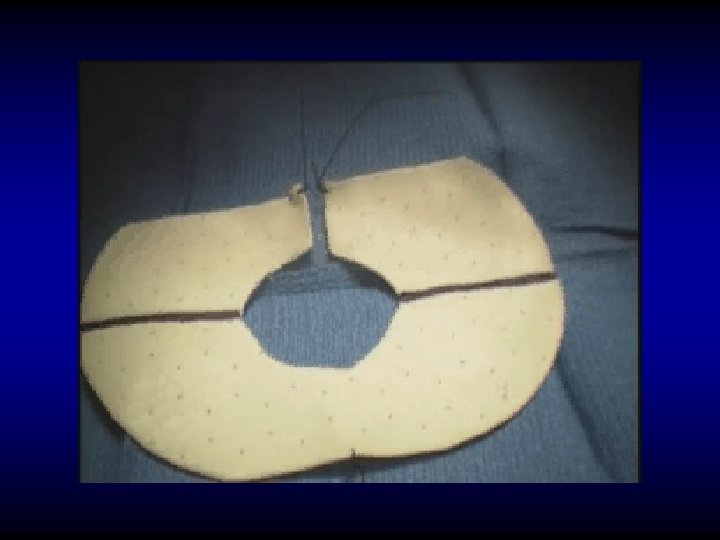
Study Design • • Prospective 1991 -2000 Randomized Patients with 8 cm hiatal defect Two Groups: – Simple Cruroplasty – PTFE onlay mesh with cruroplasty
Frantzides CT, Madan AD, Carlson MA, Archives of Surgery
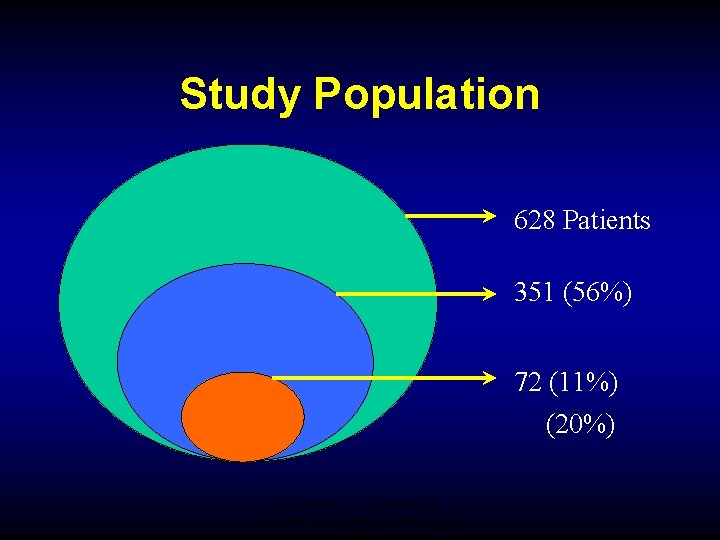
Study Population 628 Patients 351 (56%) 72 (11%) (20%) Frantzides CT, Madan AD, Carlson MA, Archives of Surgery
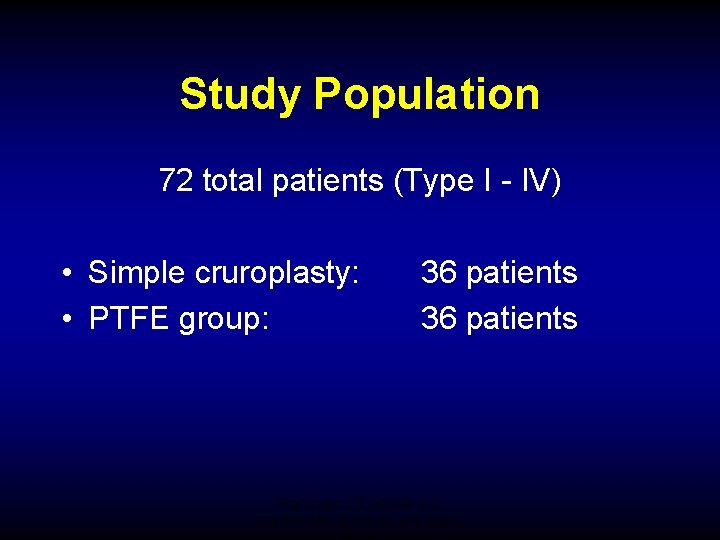
Study Population 72 total patients (Type I - IV) • Simple cruroplasty: • PTFE group: 36 patients Frantzides CT, Madan AD, Carlson MA, Archives of Surgery
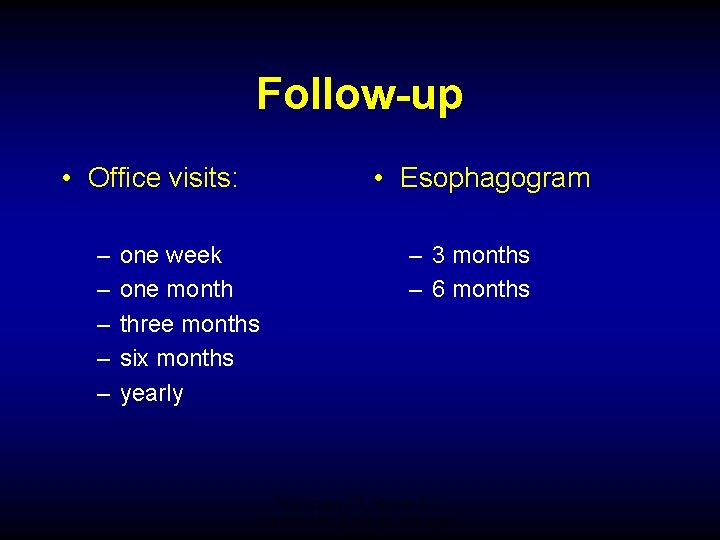
Follow-up • Office visits: – – – • Esophagogram one week one month three months six months yearly – 3 months – 6 months Frantzides CT, Madan AD, Carlson MA, Archives of Surgery
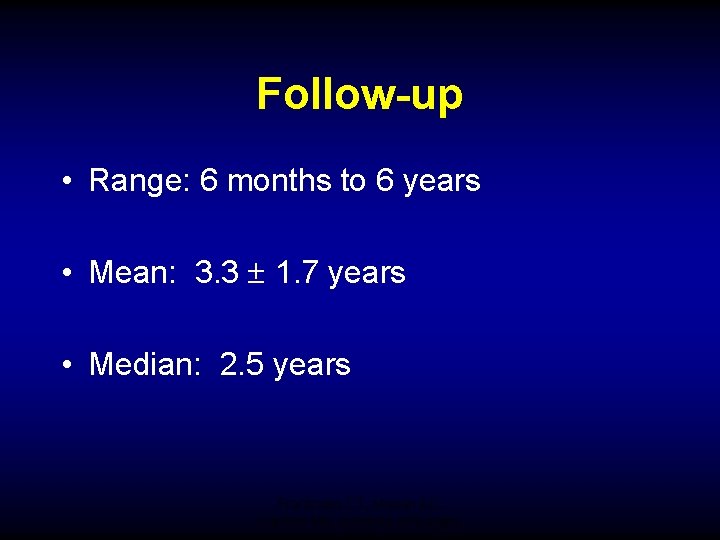
Follow-up • Range: 6 months to 6 years • Mean: 3. 3 1. 7 years • Median: 2. 5 years Frantzides CT, Madan AD, Carlson MA, Archives of Surgery
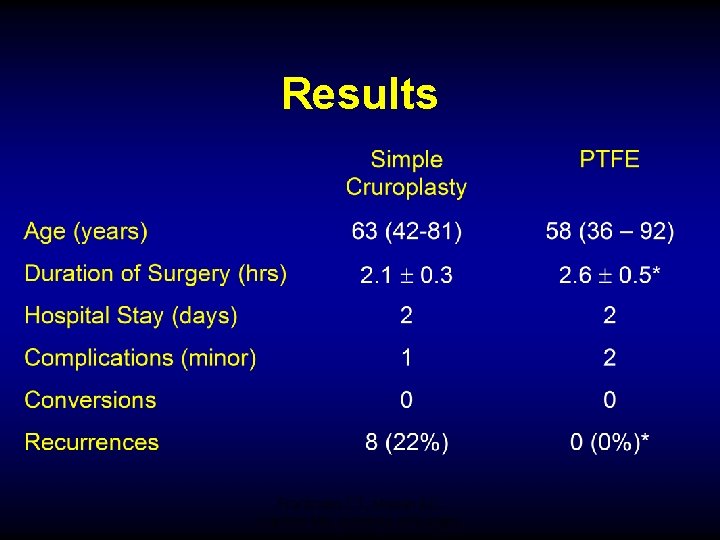
Results Frantzides CT, Madan AD, Carlson MA, Archives of Surgery
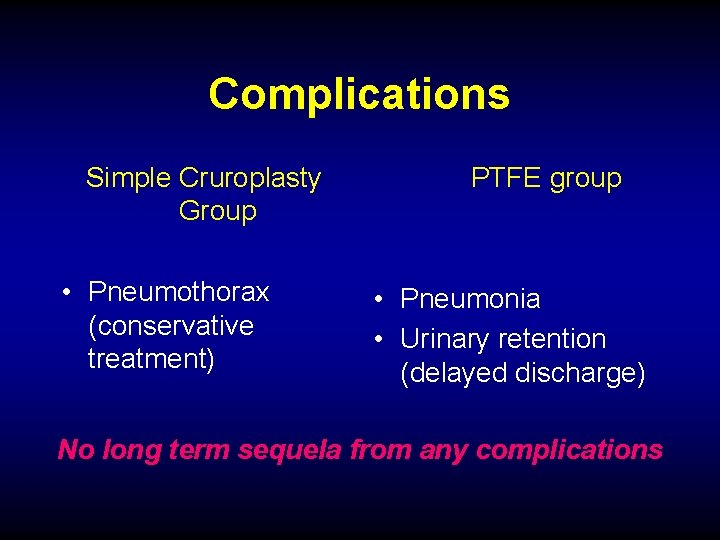
Complications Simple Cruroplasty Group • Pneumothorax (conservative treatment) PTFE group • Pneumonia • Urinary retention (delayed discharge) No long term sequela from any complications
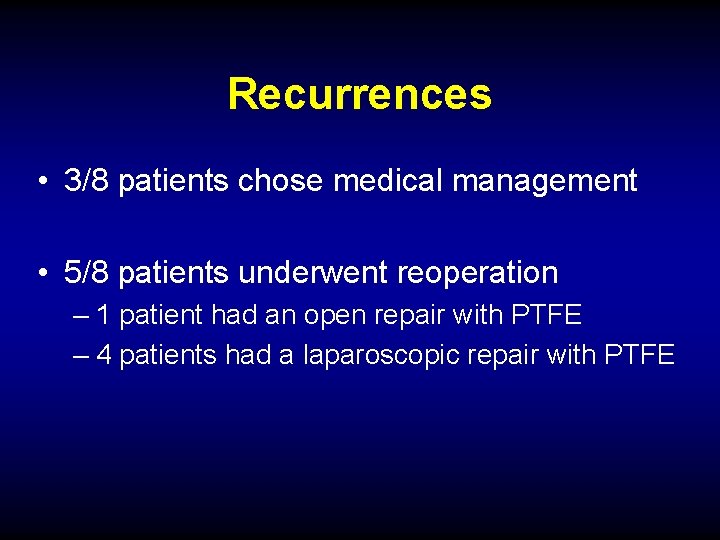
Recurrences • 3/8 patients chose medical management • 5/8 patients underwent reoperation – 1 patient had an open repair with PTFE – 4 patients had a laparoscopic repair with PTFE
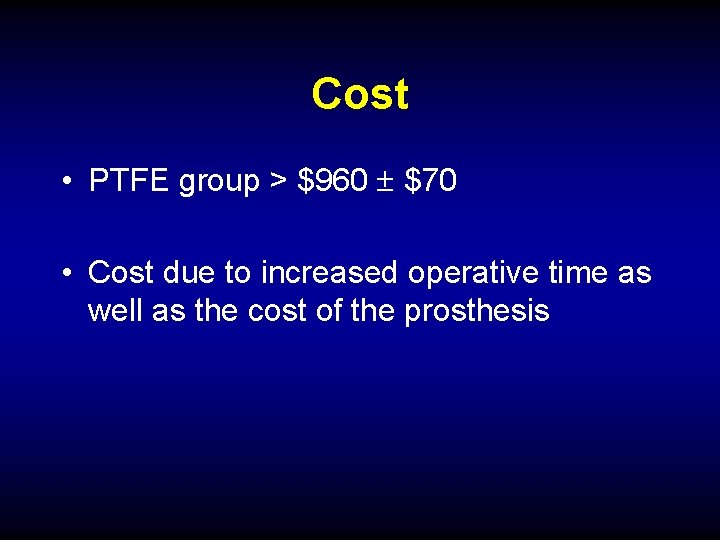
Cost • PTFE group > $960 $70 • Cost due to increased operative time as well as the cost of the prosthesis
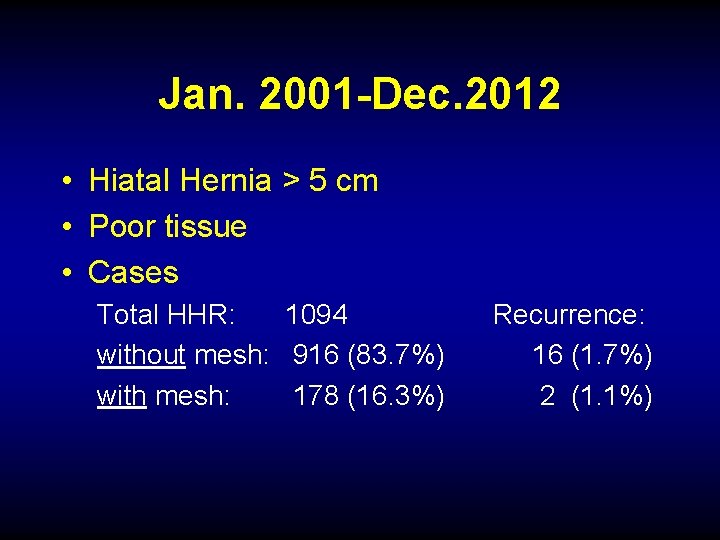
Jan. 2001 -Dec. 2012 • Hiatal Hernia > 5 cm • Poor tissue • Cases Total HHR: 1094 without mesh: 916 (83. 7%) with mesh: 178 (16. 3%) Recurrence: 16 (1. 7%) 2 (1. 1%)
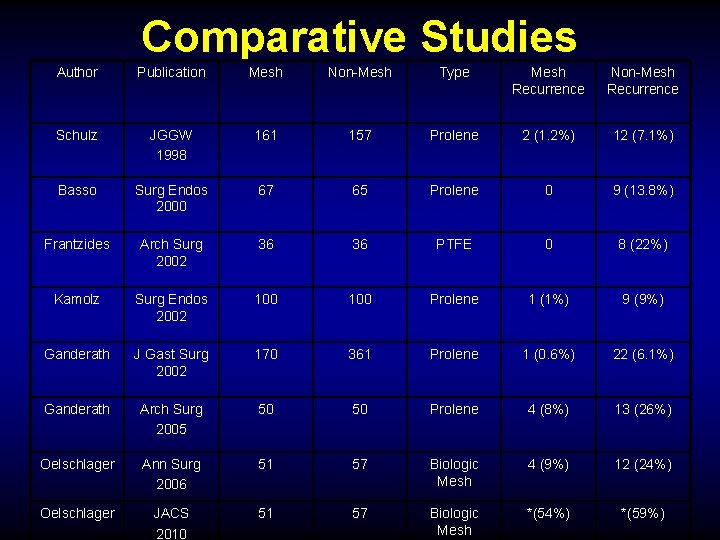
Comparative Studies Author Publication Mesh Non-Mesh Type Mesh Recurrence Non-Mesh Recurrence Schulz JGGW 1998 161 157 Prolene 2 (1. 2%) 12 (7. 1%) Basso Surg Endos 2000 67 65 Prolene 0 9 (13. 8%) Frantzides Arch Surg 2002 36 36 PTFE 0 8 (22%) Kamolz Surg Endos 2002 100 Prolene 1 (1%) 9 (9%) Ganderath J Gast Surg 2002 170 361 Prolene 1 (0. 6%) 22 (6. 1%) Ganderath Arch Surg 2005 50 50 Prolene 4 (8%) 13 (26%) Oelschlager Ann Surg 2006 51 57 Biologic Mesh 4 (9%) 12 (24%) Oelschlager JACS 2010 51 57 Biologic Mesh *(54%) *(59%)
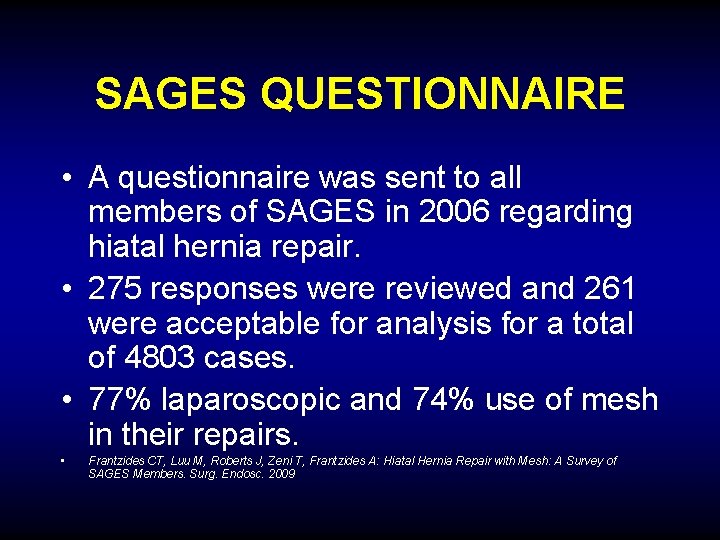
SAGES QUESTIONNAIRE • A questionnaire was sent to all members of SAGES in 2006 regarding hiatal hernia repair. • 275 responses were reviewed and 261 were acceptable for analysis for a total of 4803 cases. • 77% laparoscopic and 74% use of mesh in their repairs. • Frantzides CT, Luu M, Roberts J, Zeni T, Frantzides A: Hiatal Hernia Repair with Mesh: A Survey of SAGES Members. Surg. Endosc. 2009
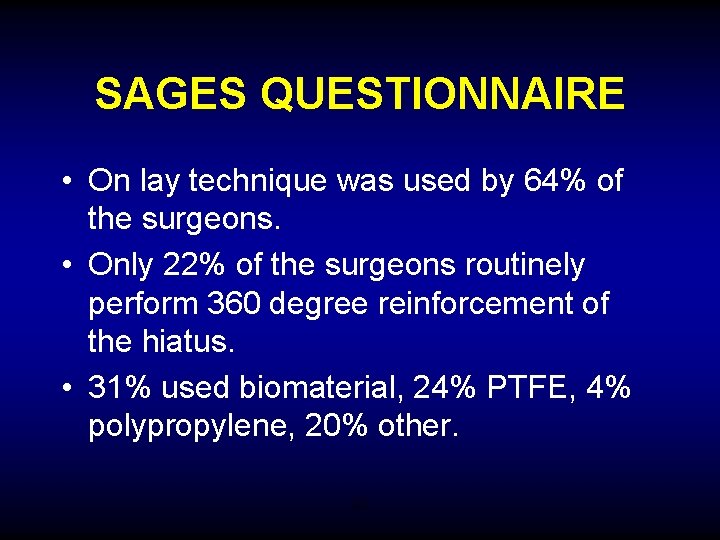
SAGES QUESTIONNAIRE • On lay technique was used by 64% of the surgeons. • Only 22% of the surgeons routinely perform 360 degree reinforcement of the hiatus. • 31% used biomaterial, 24% PTFE, 4% polypropylene, 20% other. 02
Conclusion Prosthetic reinforcement of cruroplasty in large hiatal hernias lowers recurrence rate.