
The use of heat pumps in district heating

- Slides: 21
The use of heat pumps in district heating systems Joe Grice Energy capital projects manager 24/11/2015
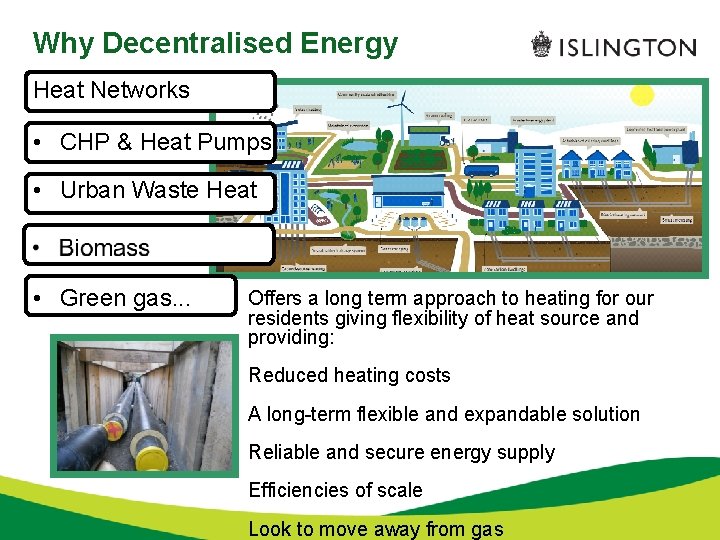
Why Decentralised Energy Heat Networks • CHP & Heat Pumps • Urban Waste Heat • Green gas. . . Offers a long term approach to heating for our residents giving flexibility of heat source and providing: Reduced heating costs A long-term flexible and expandable solution Reliable and secure energy supply Efficiencies of scale Look to move away from gas
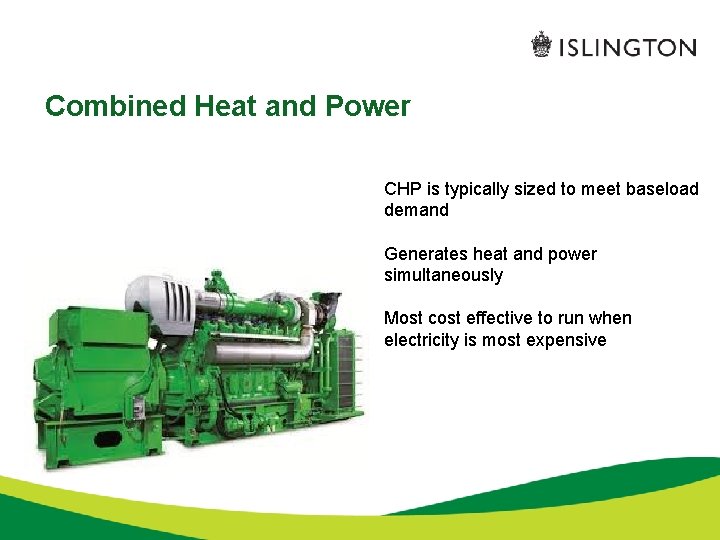
Combined Heat and Power CHP is typically sized to meet baseload demand Generates heat and power simultaneously Most cost effective to run when electricity is most expensive
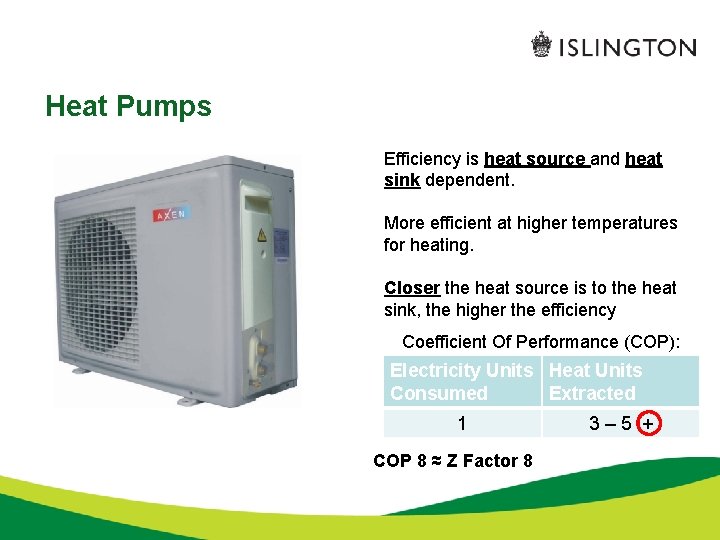
Heat Pumps Efficiency is heat source and heat sink dependent. More efficient at higher temperatures for heating. Closer the heat source is to the heat sink, the higher the efficiency Coefficient Of Performance (COP): Electricity Units Heat Units Consumed Extracted 1 COP 8 ≈ Z Factor 8 3– 5 +
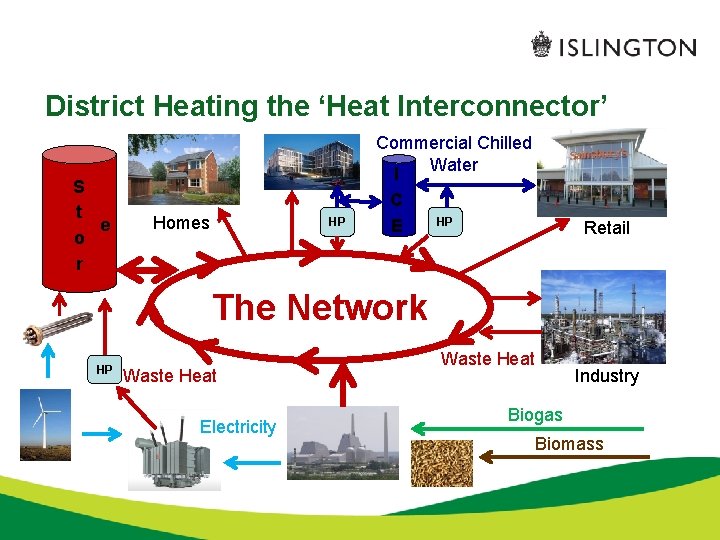
District Heating the ‘Heat Interconnector’ S t e o r Homes HP Commercial Chilled Water I C HP E Retail The Network HP Waste Heat Electricity Waste Heat Industry Biogas Biomass
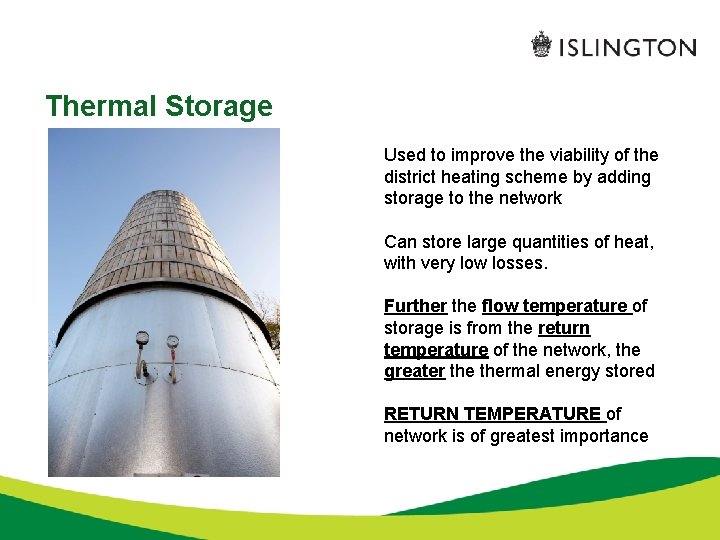
Thermal Storage Used to improve the viability of the district heating scheme by adding storage to the network Can store large quantities of heat, with very low losses. Further the flow temperature of storage is from the return temperature of the network, the greater thermal energy stored RETURN TEMPERATURE of network is of greatest importance
Why use heat pump • • Adds greater resilience to the network. Energy input to a heat pump is electricity which can be fed from the power generated by CHP engine More efficient to use for heating when ambient temperatures are high CHP better when ambient temperatures are lower as export prices for electricity tend to be higher Common in Norway where hydro generated electricity is much cheaper than in the UK Main barrier to expansion in UK is electricity price and capital cost Eligible for government support in the form of RHI
Network temperatures • • • Heat pumps are more efficient at lower temperatures Consideration should be given at an early stage as retrofitting into existing network is complex and expensive Secondary networks are often standard 82 c/71 c flow and return systems This can be relatively easily achieved at new build stage but existing buildings looking to connect may need to be incentivised Lower flow and return temperatures also reduce losses through the network An allowance would be required for larger distribution pipework
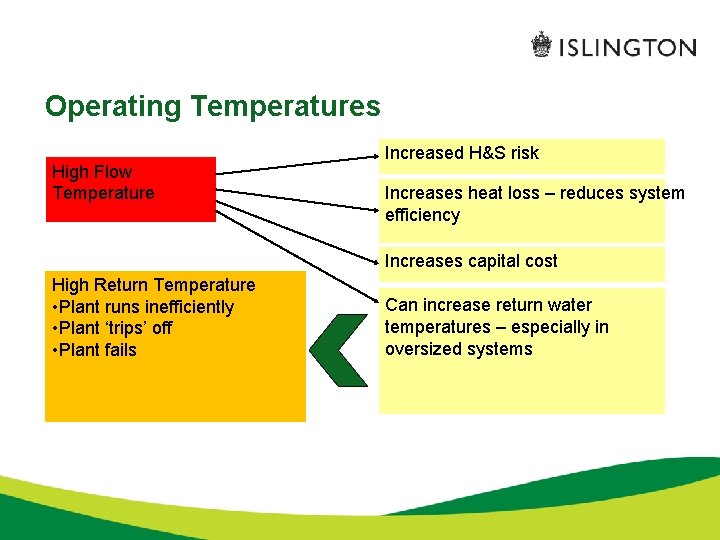
Operating Temperatures High Flow Temperature Increased H&S risk Increases heat loss – reduces system efficiency Increases capital cost High Return Temperature • Plant runs inefficiently • Plant ‘trips’ off • Plant fails Can increase return water temperatures – especially in oversized systems
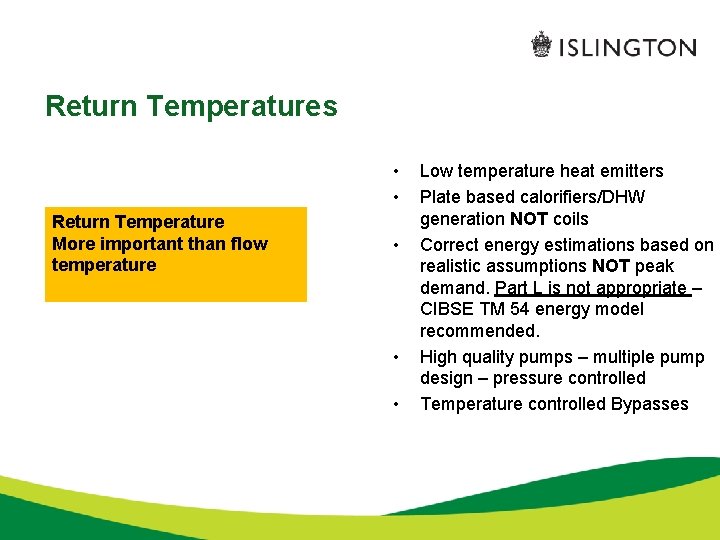
Return Temperatures • • Return Temperature More important than flow temperature • • • Low temperature heat emitters Plate based calorifiers/DHW generation NOT coils Correct energy estimations based on realistic assumptions NOT peak demand. Part L is not appropriate – CIBSE TM 54 energy model recommended. High quality pumps – multiple pump design – pressure controlled Temperature controlled Bypasses
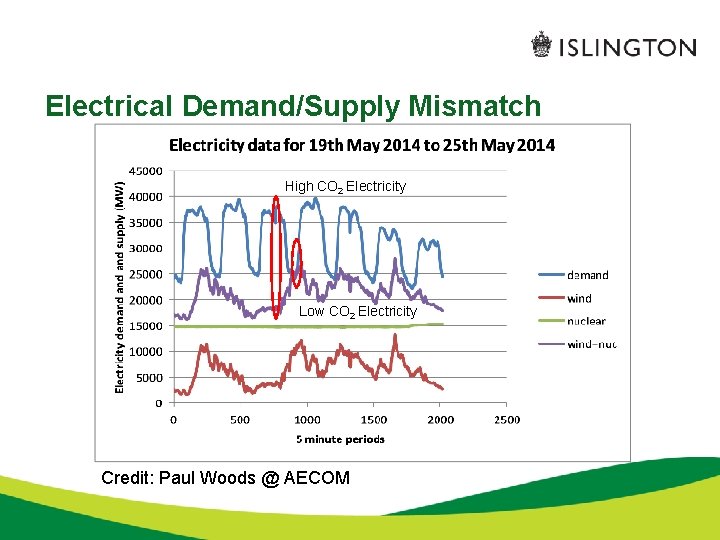
Electrical Demand/Supply Mismatch High CO 2 Electricity Low CO 2 Electricity Credit: Paul Woods @ AECOM
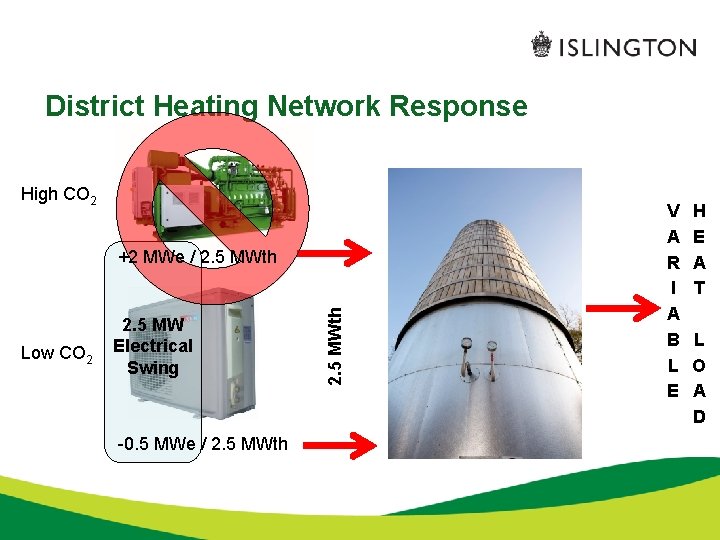
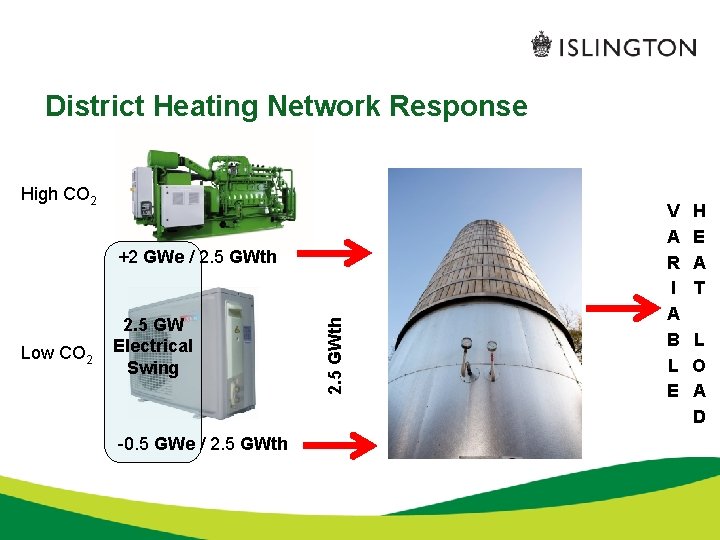
District Heating Network Response High CO 2 Low CO 2 2. 5 MW Electrical Swing -0. 5 MWe / 2. 5 MWth +2 MWe / 2. 5 MWth V A R I A B L E H E A T L O A D
District Heating Network Response High CO 2 Low CO 2 2. 5 GW Electrical Swing -0. 5 GWe / 2. 5 GWth +2 GWe / 2. 5 GWth V A R I A B L E H E A T L O A D
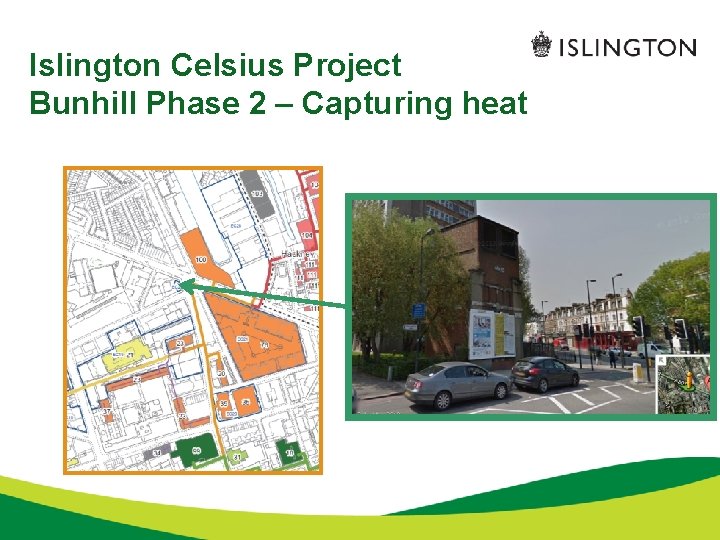
Islington Celsius Project Bunhill Phase 2 – Capturing heat
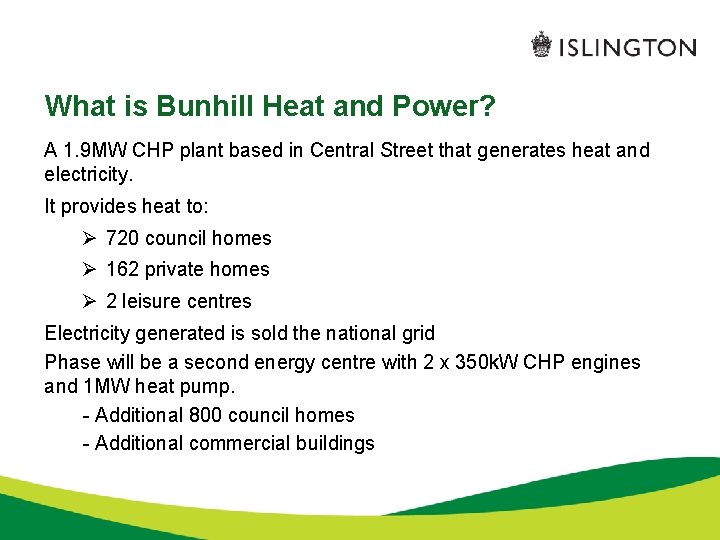
What is Bunhill Heat and Power? A 1. 9 MW CHP plant based in Central Street that generates heat and electricity. It provides heat to: Ø 720 council homes Ø 162 private homes Ø 2 leisure centres Electricity generated is sold the national grid Phase will be a second energy centre with 2 x 350 k. W CHP engines and 1 MW heat pump. - Additional 800 council homes - Additional commercial buildings
Bunhill extension objectives • • To demonstrate innovative solutions to the technical challenges of using low temperature heat to supply heat to new and existing homes. To connect a further 500 existing council homes and more new homes: Ø Reducing energy costs by at least 10% to connected residents to tackle fuel poverty Ø Reduce carbon emissions Ø Improving the security of heat supply • • To help London develop a replicable vision for how to evolve into a truly energy-smart city. To demonstrate and to promote roll-out of Smart District Heating through-out Europe and support 50 new cities by 2016 & another 100 cities by 2026.
Development – How we got here • Policies and guidance – Well developed – Council and member commitment – Officer understanding • Communication – Consultation • Information & Knowledge – Spacial opportunities – Strategic opportunities – Best Practice
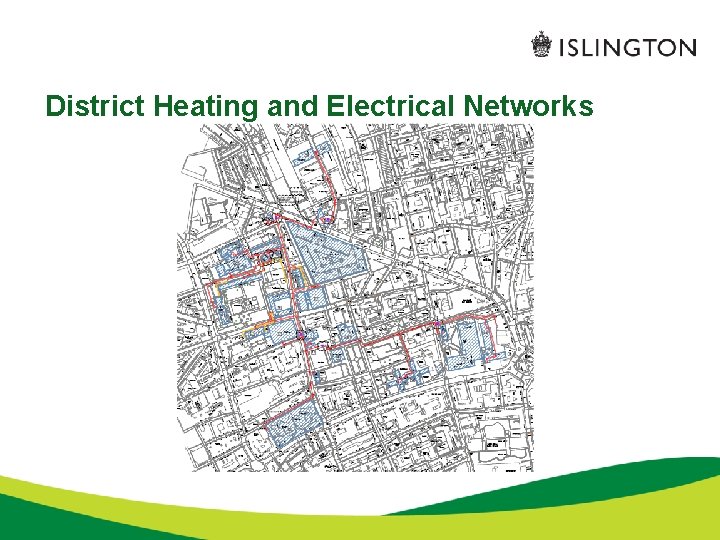
District Heating and Electrical Networks
The heat pump • 1 MW thermal output heat pump • Electrical input of 345 k. W (Met by CHP engine) • Coil located within London Underground shaft as ambient temperatures are higher • Ammonia refrigerant selected for highest COP possible operation at higher temperatures • Ammonia is toxic and a fire risk. Safety features need to be engineered into design
Ground and water source heat pumps • Higher efficiency that air-source heat pumps • More complex and expensive to install that air -source heat pumps • Very expensive and complex to retrofit into existing networks • Can be integrated into new development and could possible supply a district heating scheme
Conclusions • • CHP and Heat pumps are complementary technologies Heat Pumps with a COP ~ 8 are competitive with CHP It is easy and cheap to store large quantities of heat District heating is a technology agnostic energy distributor District heating facilitates the efficient utilisation and sharing of diverse energy sources including waste heat Waste heat includes conventional cooling plant In combination, these technologies facilitate the use and balancing of low carbon heating, cooling AND electrical demands