
The use of DSLR photometry in measuring the
- Slides: 18
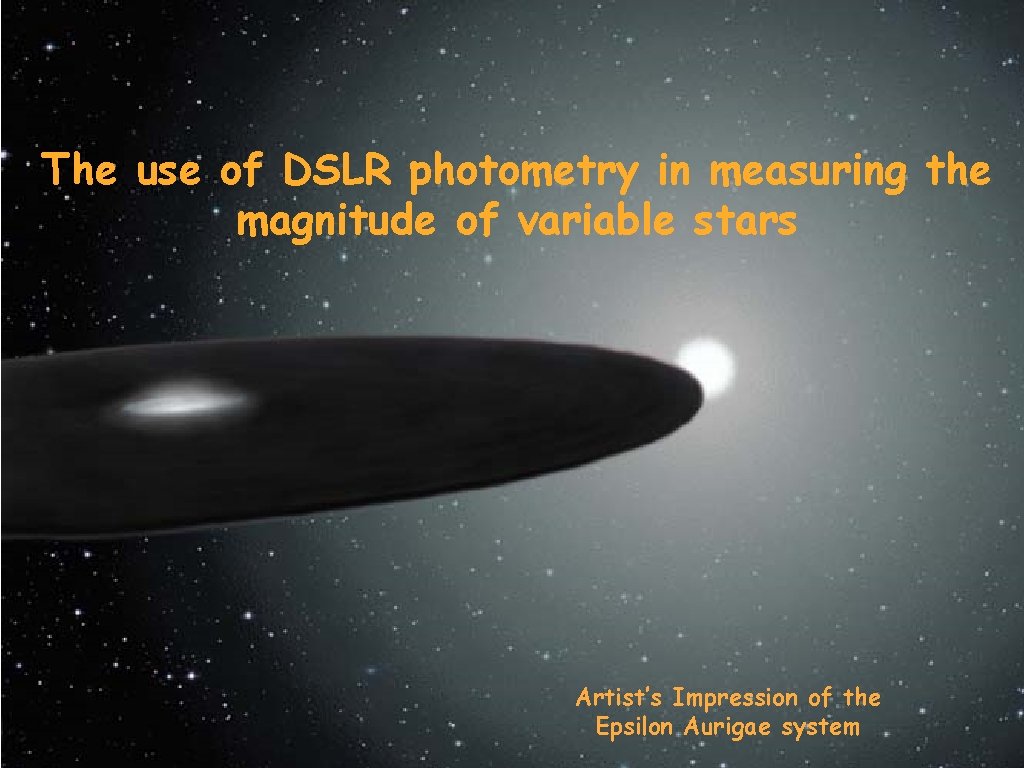
The use of DSLR photometry in measuring the magnitude of variable stars The International Epsilon Aurigae Campaign - photometry Artist’s Impression of the Epsilon Aurigae system
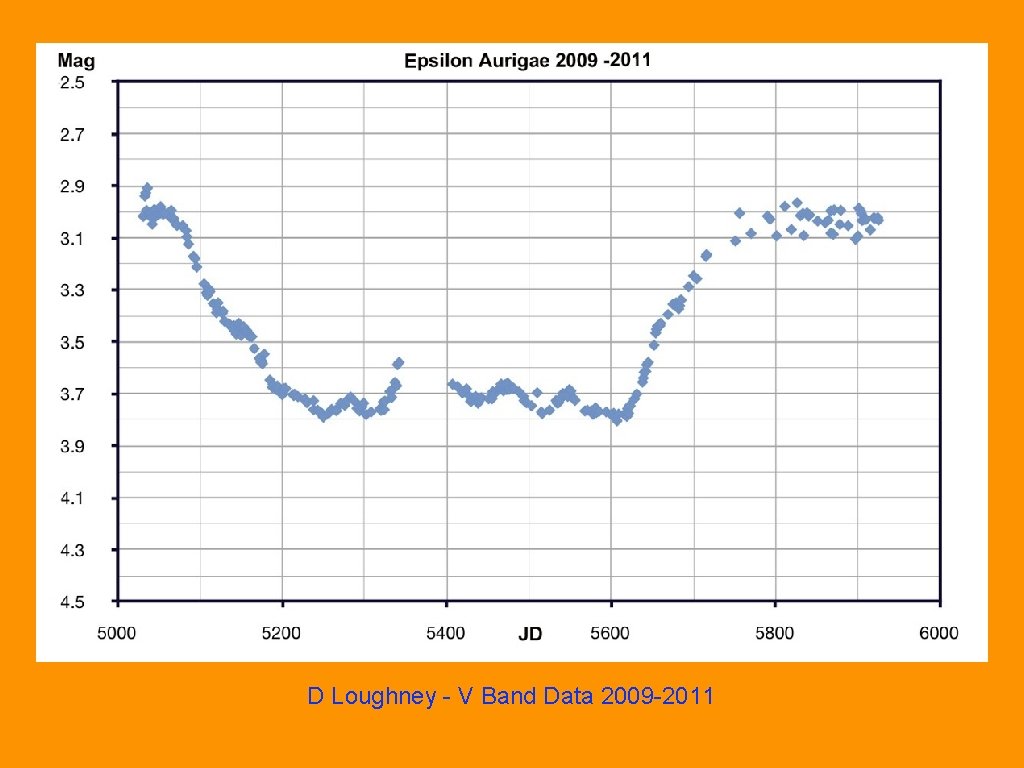
D Loughney - V Band Data 2009 -2011
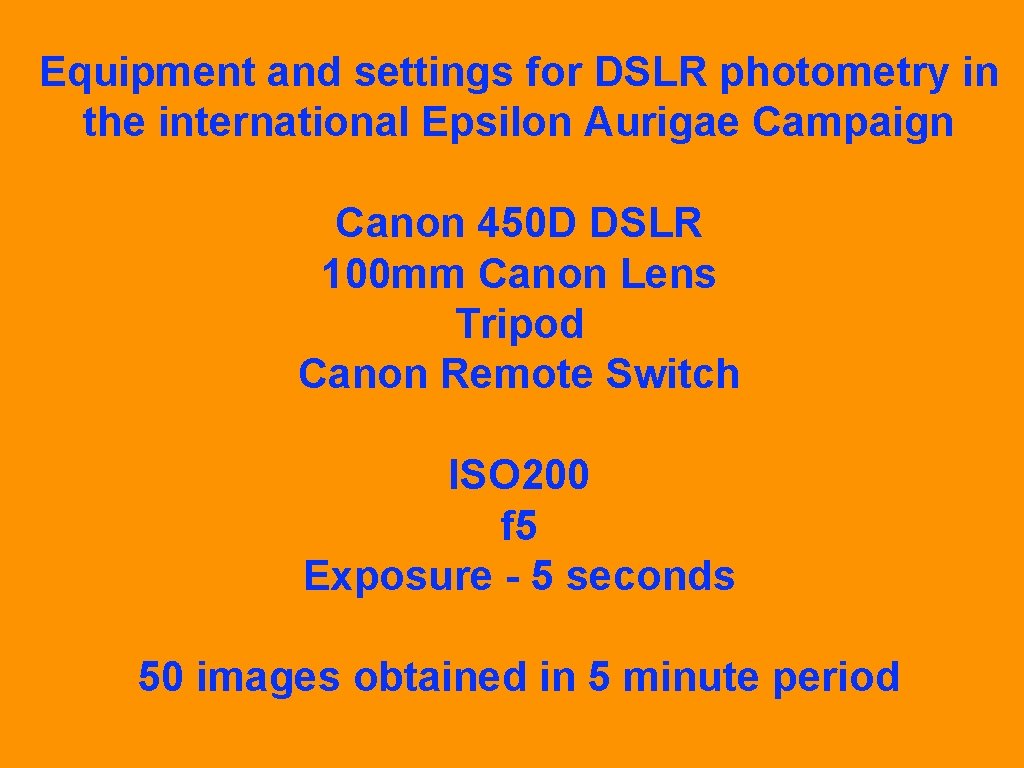
Equipment and settings for DSLR photometry in the international Epsilon Aurigae Campaign Canon 450 D DSLR 100 mm Canon Lens Tripod Canon Remote Switch ISO 200 f 5 Exposure - 5 seconds 50 images obtained in 5 minute period
Reach of DSLR Photometry with undriven camera using 5 second exposures to achieve reasonable signal to noise ratios. 100 mm lens (58 mm aperture) down to 8 magnitude 200 mm lens (72 mm aperture) down to 10 magnitude Longer exposures and lower magnitudes are possible measuring stars near the Pole. Experimenting with the use of ‘sum stacking’ rather than ‘average stacking’ within AIP 4 WIN.
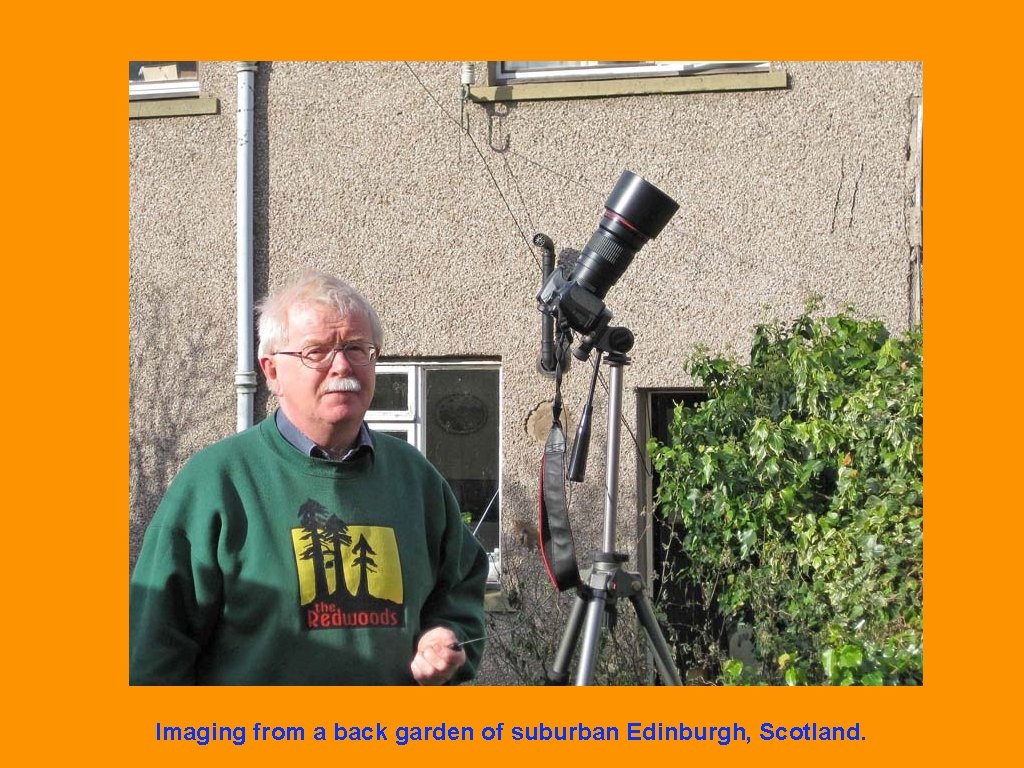
Imaging from a back garden of suburban Edinburgh, Scotland.
Processing of Images using AIP 4 WIN The 50 images will be average stacked in groups of ten and the V magnitude measured. 1 st February 2011 3. 763 3. 766 3. 762 3. 783 3. 775 V magnitude = 3. 770 Standard Deviation = 0. 009
V Magnitude - Doing ‘green channel’ photometry; - Working out the camera transformation co-efficient;
Sources of Error: Observer error: DSLR Camera Time Focus and ambient temperature Other errors: Star altitude Wind - scintillation Wind - Tripod vibration Number of images Length of exposure
Advantages of DSLR Photometry Equipment is very portable Good results from a suburban setting Quick results - precision V magnitude in 45 minutes Allows a whole new class of variable stars to be measured by amateur astronomers - brighter stars that vary by under 0. 5 magnitude
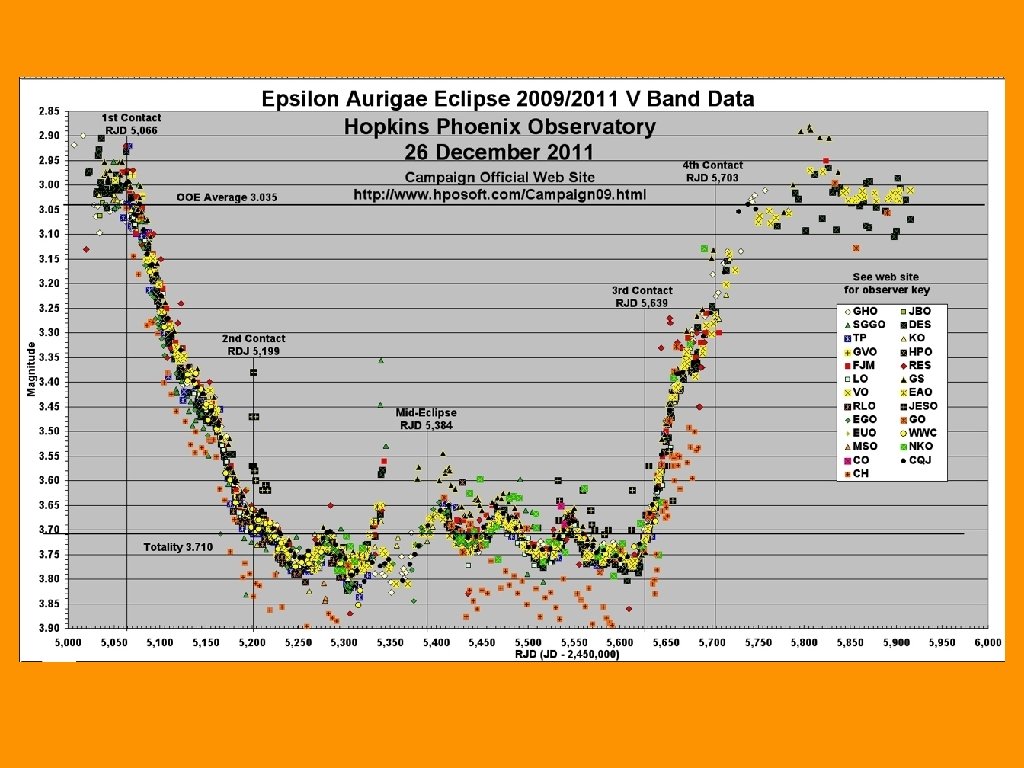
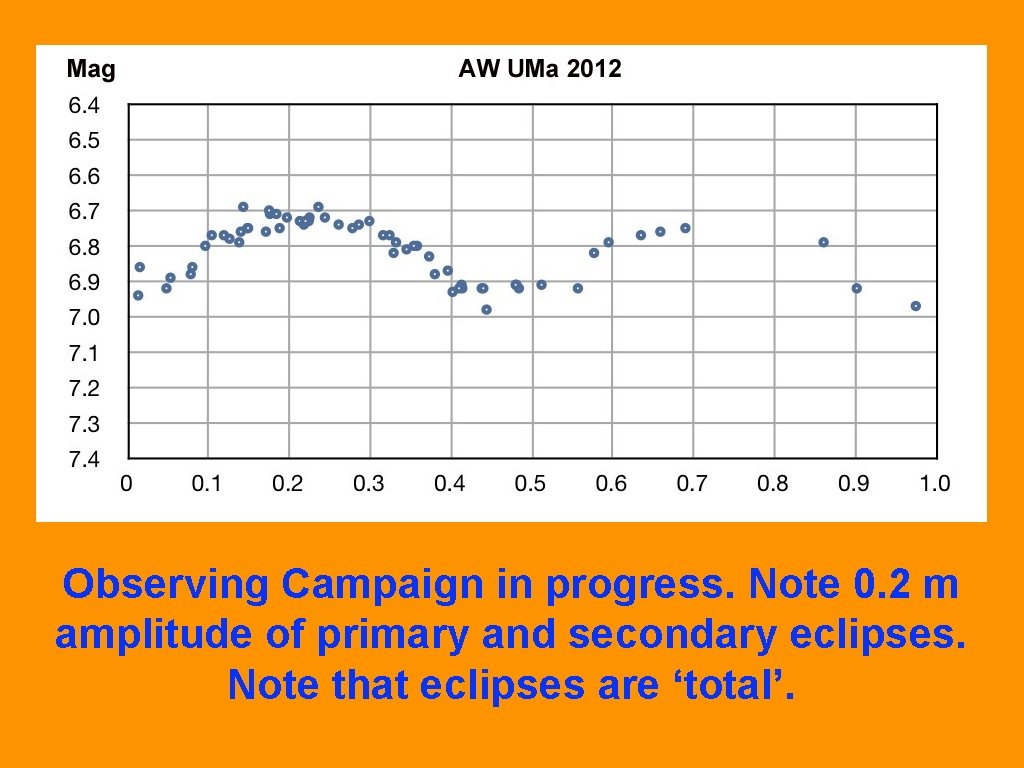
Observing Campaign in progress. Note 0. 2 m amplitude of primary and secondary eclipses. Note that eclipses are ‘total’.
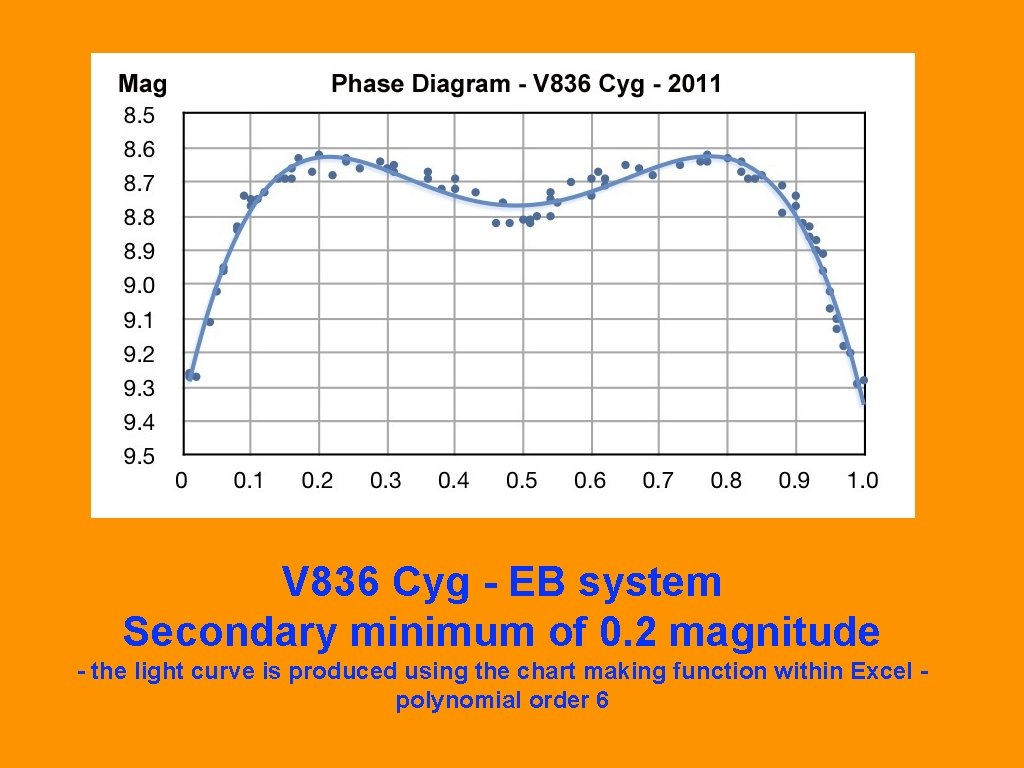
V 836 Cyg - EB system Secondary minimum of 0. 2 magnitude - the light curve is produced using the chart making function within Excel polynomial order 6
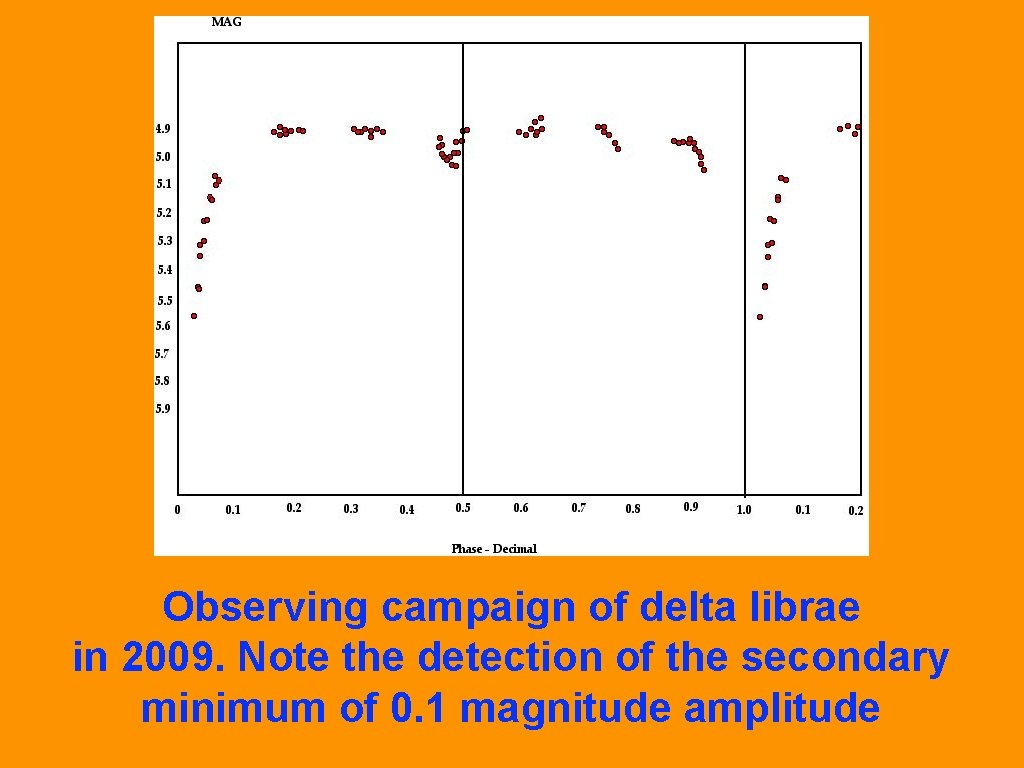
Observing campaign of delta librae in 2009. Note the detection of the secondary minimum of 0. 1 magnitude amplitude
Current precision photometry projects: - P Cygni international campaign - Rho Cas international campaign
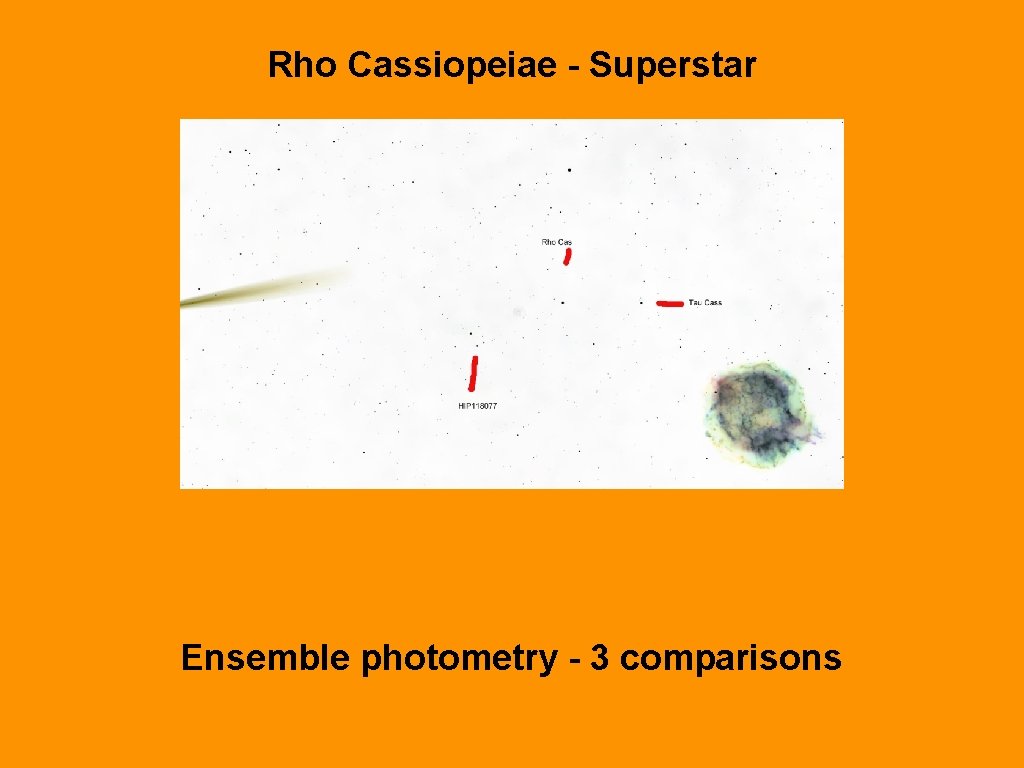
Rho Cassiopeiae - Superstar Ensemble photometry - 3 comparisons
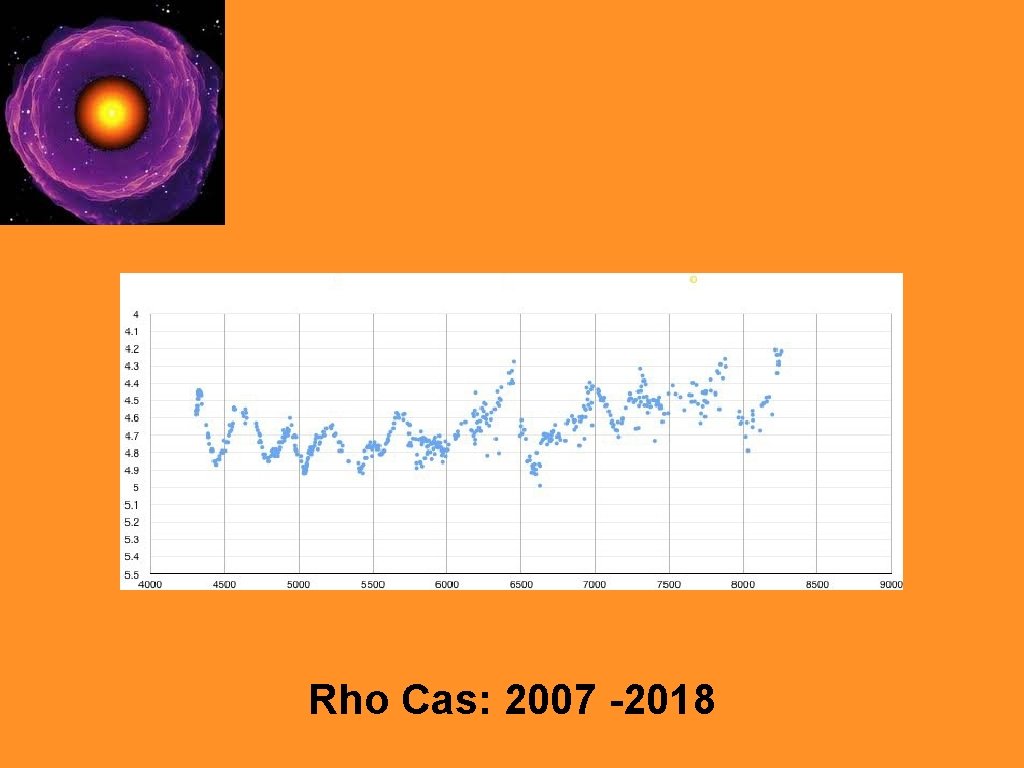
Rho Cas: 2007 -2018