
The use of distance learning technologies to bring
The use of distance learning technologies to bring simulationbased critical care training to a remote community in northern Canada Timothy Willett, RCPSC; Susan Brien, RCPSC; Pierre Cardinal, RCPSC & u. Ottawa; Rick Hodder, u. Ottawa; John Kim, u. Ottawa; Dave Neilipovitz, u. Ottawa; Shahin Shirzad, UBC. 2011 Med. Biq Conference, 11 May 2011
Critical care • Patients with an imminently life-threatening condition • Time is tissue • Community: • Critical illness can happen anywhere • Community practitioners recognition & early intervention • Training: • Simulation-based • ABCs, crisis resource management 2
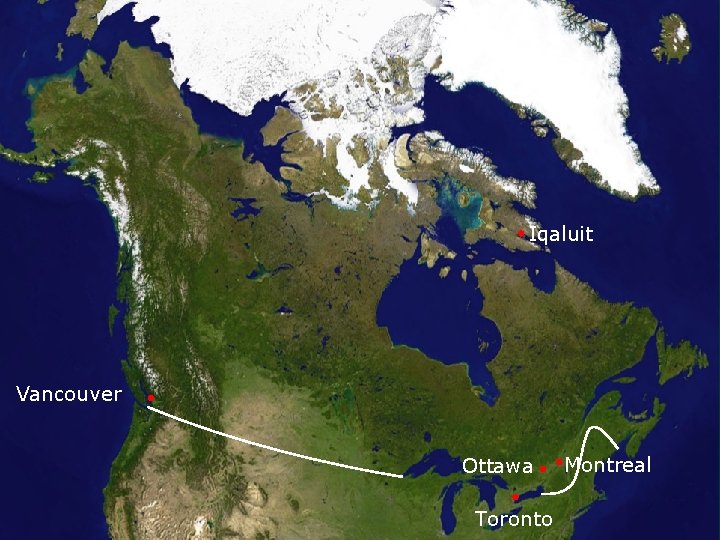
Iqaluit Vancouver Ottawa Toronto Montreal 3
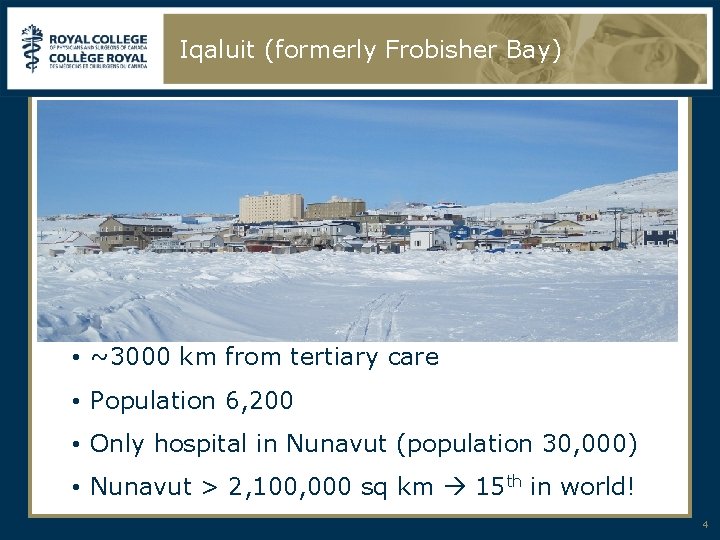
Iqaluit (formerly Frobisher Bay) • ~3000 km from tertiary care • Population 6, 200 • Only hospital in Nunavut (population 30, 000) • Nunavut > 2, 100, 000 sq km 15 th in world! 4
Challenges • Health human resources • Transport • Access to CPD • Cost (either way) • Goal: Test a distance-learning model of a simulation-based critical care course (ACES) 5
Methods Funding: • • • Health Canada RBC Foundation Royal College 1) Needs assessment • • • Context Priority needs Learners 2) Modify course 6
Methods 3) Delivery • • • Web modules Lectures Case discussions Task training Simulation Tele. Medicine 4) Evaluation • • Questionnaires Pre- and post-course quiz Post-course simulation (on-site) Delayed interviews 7
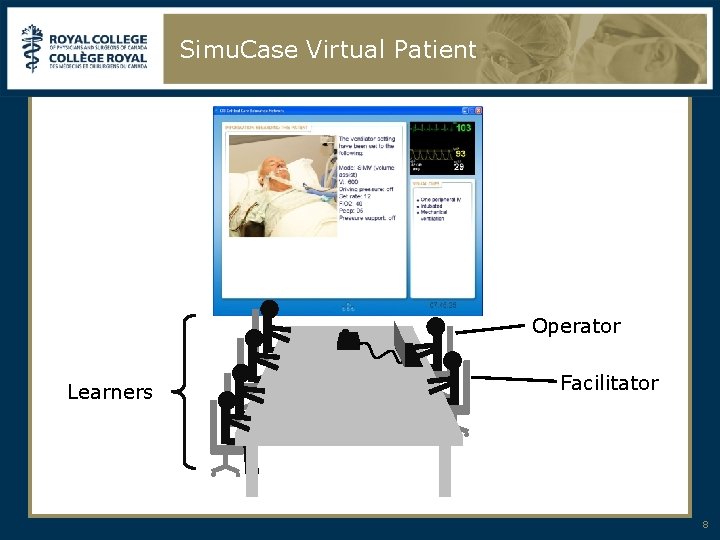
Simu. Case Virtual Patient Operator Learners Facilitator 8
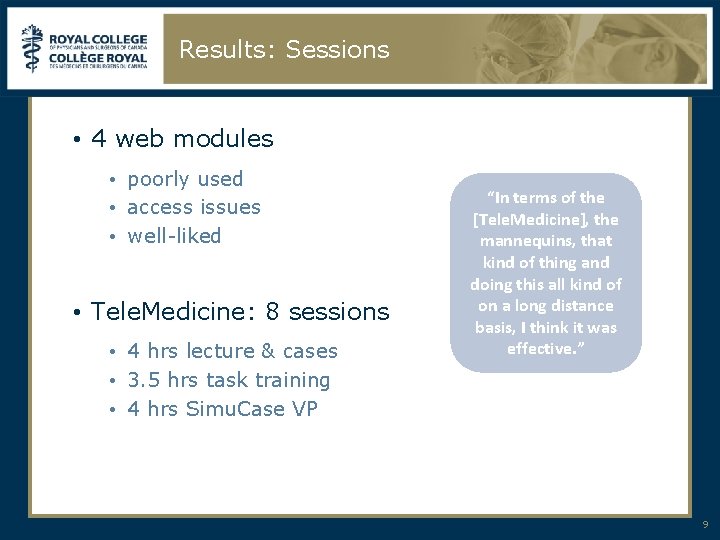
Results: Sessions • 4 web modules • poorly used • access issues • well-liked • Tele. Medicine: 8 sessions • 4 hrs lecture & cases • 3. 5 hrs task training • 4 hrs Simu. Case VP “In terms of the [Tele. Medicine], the mannequins, that kind of thing and doing this all kind of on a long distance basis, I think it was effective. ” 9
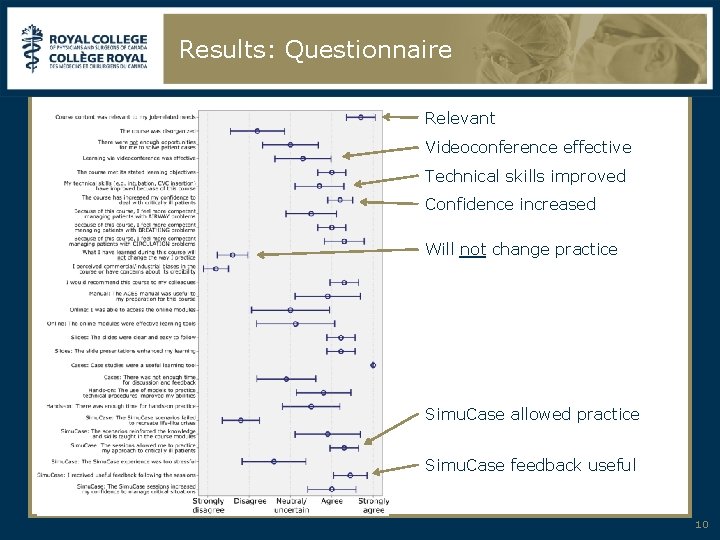
Results: Questionnaire Relevant Videoconference effective Technical skills improved Confidence increased Will not change practice Simu. Case allowed practice Simu. Case feedback useful 10
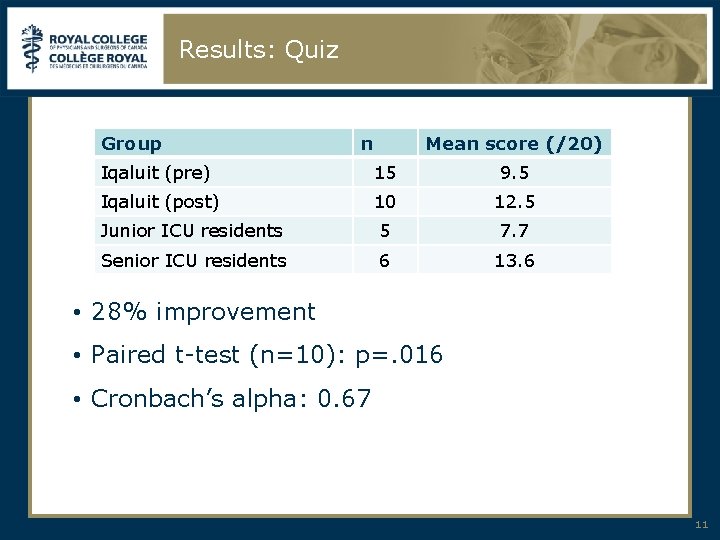
Results: Quiz Group n Mean score (/20) Iqaluit (pre) 15 9. 5 Iqaluit (post) 10 12. 5 Junior ICU residents 5 7. 7 Senior ICU residents 6 13. 6 • 28% improvement • Paired t-test (n=10): p=. 016 • Cronbach’s alpha: 0. 67 11
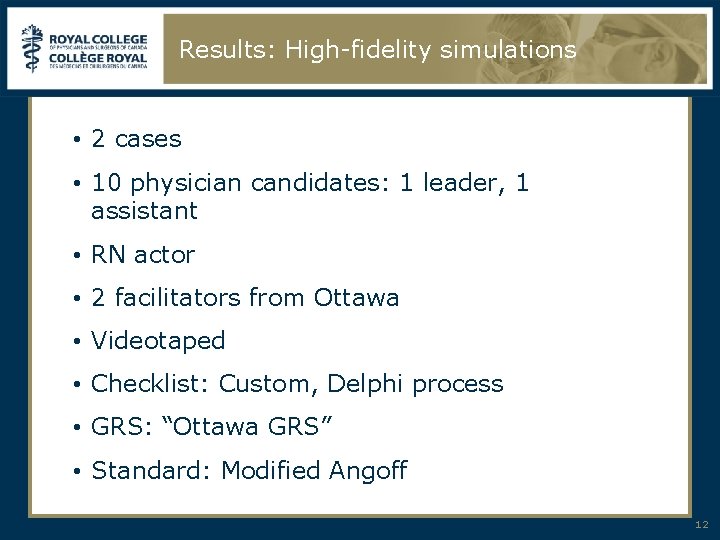
Results: High-fidelity simulations • 2 cases • 10 physician candidates: 1 leader, 1 assistant • RN actor • 2 facilitators from Ottawa • Videotaped • Checklist: Custom, Delphi process • GRS: “Ottawa GRS” • Standard: Modified Angoff 12
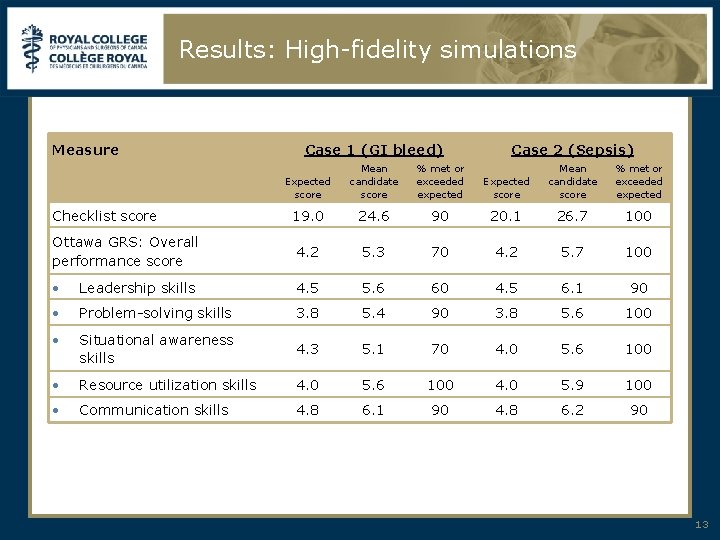
Results: High-fidelity simulations Measure Case 1 (GI bleed) Case 2 (Sepsis) Expected score Mean candidate score % met or exceeded expected 19. 0 24. 6 90 20. 1 26. 7 100 Ottawa GRS: Overall performance score 4. 2 5. 3 70 4. 2 5. 7 100 • Leadership skills 4. 5 5. 6 60 4. 5 6. 1 90 • Problem-solving skills 3. 8 5. 4 90 3. 8 5. 6 100 • Situational awareness skills 4. 3 5. 1 70 4. 0 5. 6 100 • Resource utilization skills 4. 0 5. 6 100 4. 0 5. 9 100 • Communication skills 4. 8 6. 1 90 4. 8 6. 2 90 Checklist score 13
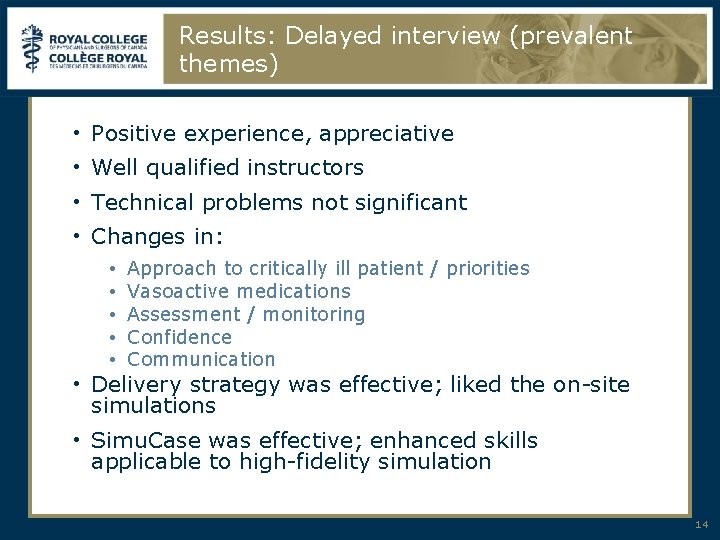
Results: Delayed interview (prevalent themes) • Positive experience, appreciative • Well qualified instructors • Technical problems not significant • Changes in: • • • Approach to critically ill patient / priorities Vasoactive medications Assessment / monitoring Confidence Communication • Delivery strategy was effective; liked the on-site simulations • Simu. Case was effective; enhanced skills applicable to high-fidelity simulation 14
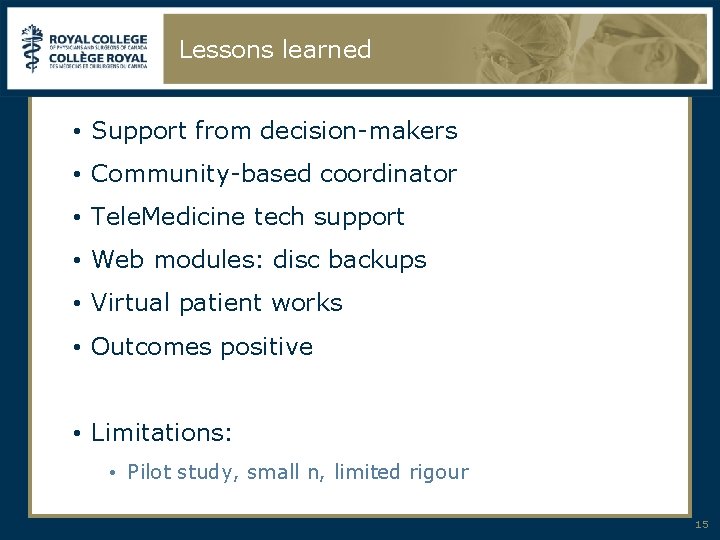
Lessons learned • Support from decision-makers • Community-based coordinator • Tele. Medicine tech support • Web modules: disc backups • Virtual patient works • Outcomes positive • Limitations: • Pilot study, small n, limited rigour 15
Thank you • Questions? • twillett@royalcollege. ca 16
- Slides: 16