
The use of Bauxite Residue for Phosphorus P
The use of Bauxite Residue for Phosphorus (P) recovery in wastewater Patricia B. Cusack 1, 2, 3*, Mark G. Healy 2, Eva Ujaczki 3, 4, Lisa M. T. O’ Donoghue 4, Teresa Curtin 5, Ronan Courtney 1, 3 1 Department of Biological Sciences, University of Limerick, Castletroy, Co. Limerick, Ireland. 2 Civil Engineering, National University of Ireland, Galway, Ireland. 3 The Bernal Institute, University of Limerick, Castletroy, Co. Limerick, Ireland. 4 Department of Design and Manufacturing Technology, University of Limerick, Castletroy, Co. Limerick, Ireland. 5 Chemical Sciences Department, University of Limerick, Castletroy, Co. Limerick, Ireland. Corresponding Author Email Address: Patricia. Cusack@ul. ie
Objectives of presentation 1. Some background on Critical Raw Materials (CRM) and phosphorus 2. Bauxite residue, what is it? 3. Bauxite residue as an adsorbent for phosphorus (P) 4. My study and results
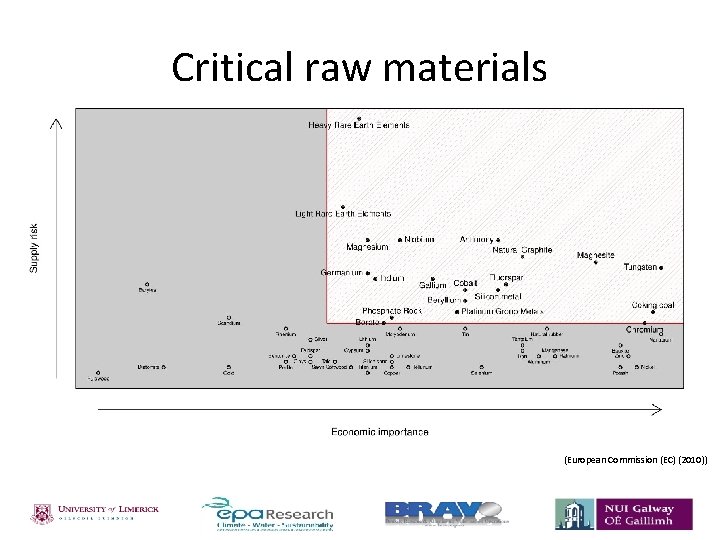
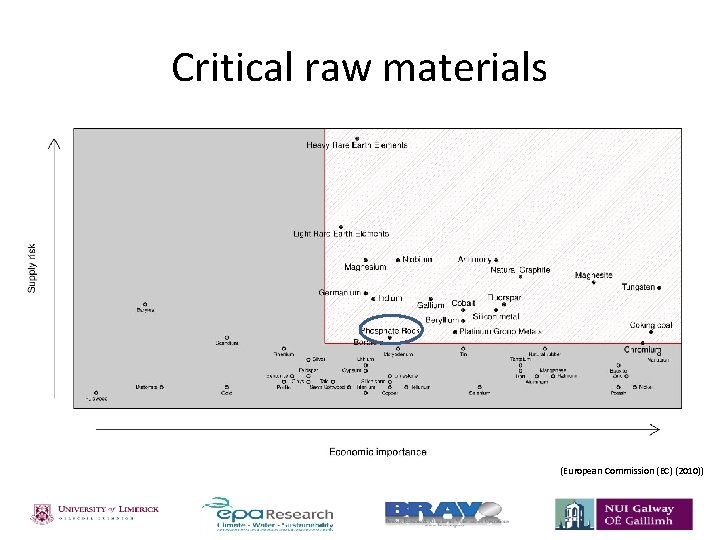
Critical raw materials (European Commission (EC) (2010))
Critical raw materials (European Commission (EC) (2010))
Phosphorus • Phosphorus is a non-metal and a key component in the composition of animals and plants; essential for successful crop yields. • Phosphorus is added to land through the use of fertilisers. 1. 2. Organic fertiliser – phosphorus sourced from the manure. Mineral fertiliser – phosphorus sourced from phosphate rock. • Demand projected to increase with increasing population; production costs increasing. • Therefore decline in phosphate rock supplies. • Eutrophication – Phosphorus one of the major nutrients contributing to eutrophication of lakes/natural waters. Table 1 Estimation of remaining phosphate rock reserves. Estimated lifetime of reserves Estimated year of depletion Reference 80 years 93 years 90 years 2080 2102 2099 Smil 2000 Fixen 2009 Vaccari 2009
Methods of P removal from wastewater • Chemical Precipitation • Biological Phosphate Removal (BPR) • Adsorbents
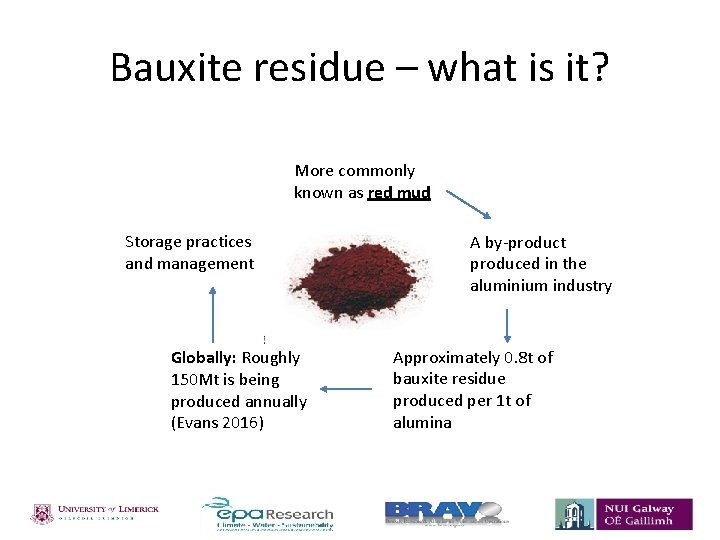
Bauxite residue – what is it? More commonly known as red mud Storage practices and management Globally: Roughly 150 Mt is being produced annually (Evans 2016) A by-product produced in the aluminium industry Approximately 0. 8 t of bauxite residue produced per 1 t of alumina
Bauxite residue – storage considerations • Highly alkaline • High electrical conductivity (EC) • Fine particle size (Gräfe et al. 2009)
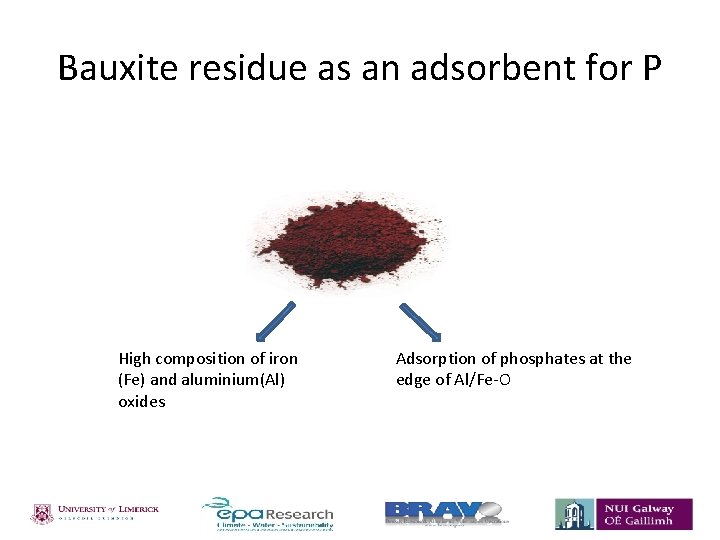
Bauxite residue as an adsorbent for P High composition of iron (Fe) and aluminium(Al) oxides Adsorption of phosphates at the edge of Al/Fe-O
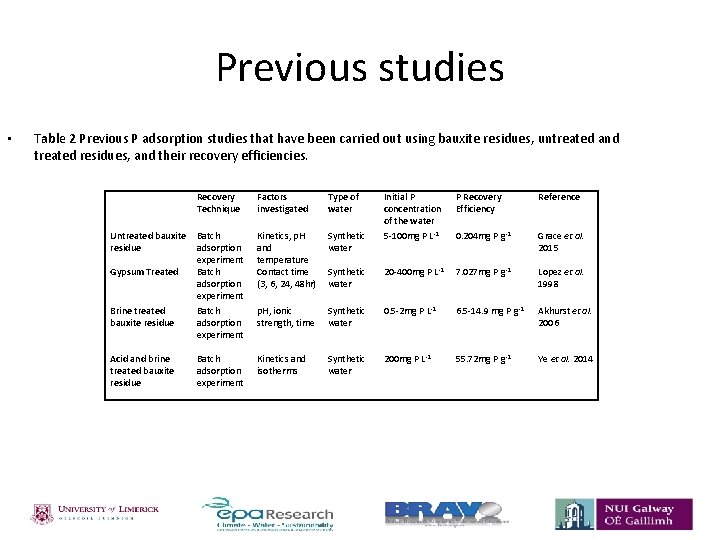
Previous studies • Table 2 Previous P adsorption studies that have been carried out using bauxite residues, untreated and treated residues, and their recovery efficiencies. Recovery Technique Factors investigated Type of water Untreated bauxite residue Gypsum Treated Batch adsorption experiment Kinetics, p. H and temperature Contact time (3, 6, 24, 48 hr) p. H, ionic strength, time Synthetic water Kinetics and isotherms Brine treated bauxite residue Acid and brine treated bauxite residue Initial P concentration of the water 5 -100 mg P L-1 P Recovery Efficiency Reference 0. 204 mg P g -1 Synthetic water 20 -400 mg P L -1 7. 027 mg P g -1 Grace et al. 2015 Lopez et al. 1998 0. 5 -2 mg P L-1 6. 5 -14. 9 mg P g-1 Akhurst et al. 2006 Synthetic water 200 mg P L-1 55. 72 mg P g -1 Ye et al. 2014
Objectives of this segment of the study • To characterise and treat bauxite residue from two different refineries, with seawater and gypsum. • To investigate the effect of the treated bauxite residue on P adsorption.
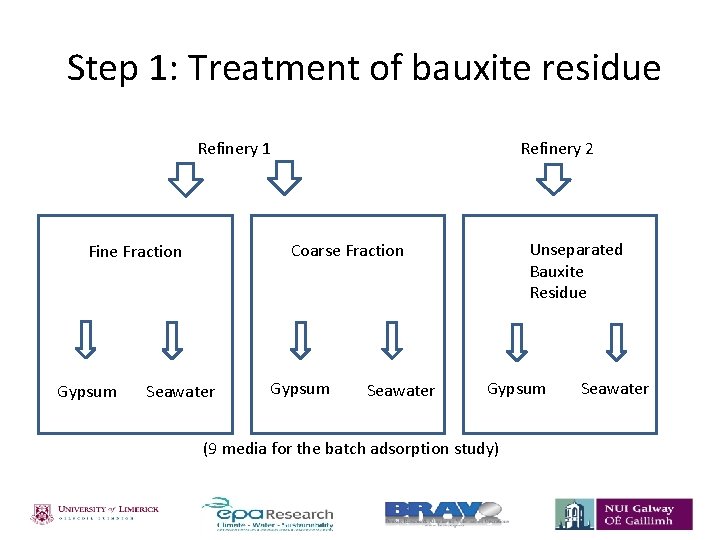
Step 1: Treatment of bauxite residue Refinery 2 Refinery 1 Gypsum Unseparated Bauxite Residue Coarse Fraction Fine Fraction Seawater Gypsum (9 media for the batch adsorption study) Seawater
Step 2: Characterisation of bauxite residue samples 1. Physicochemical properties 2. Mineralogiclal composition 3. Elemental composition
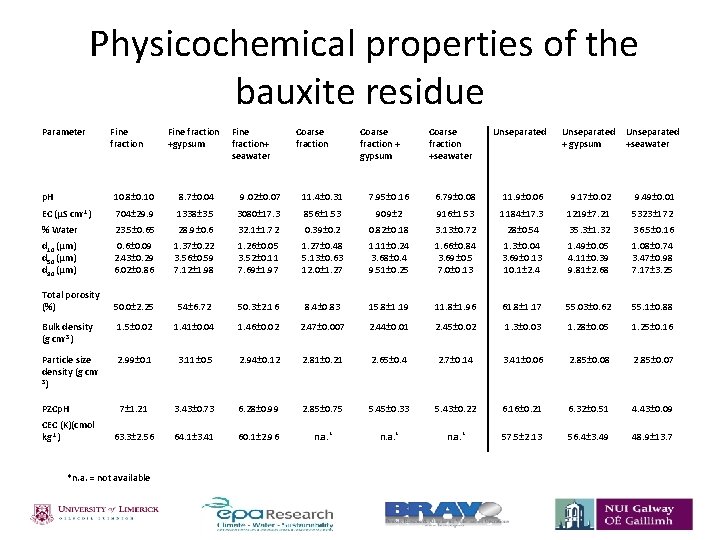
Physicochemical properties of the bauxite residue Parameter Fine fraction Fine +gypsum fraction+ seawater Coarse fraction + gypsum Coarse fraction +seawater Unseparated + gypsum Unseparated +seawater p. H 10. 8± 0. 10 8. 7± 0. 04 9. 02± 0. 07 11. 4± 0. 31 7. 95± 0. 16 6. 79± 0. 08 11. 9± 0. 06 9. 17± 0. 02 9. 49± 0. 01 EC (µS cm-1) 704± 29. 9 1338± 3. 5 3080± 17. 3 856± 1. 53 909± 2 916± 1. 53 1184± 17. 3 1219± 7. 21 5323± 172 % Water 23. 5± 0. 65 28. 9± 0. 6 32. 1± 1. 72 0. 39± 0. 2 0. 82± 0. 18 3. 13± 0. 72 28± 0. 54 35. 3± 1. 32 36. 5± 0. 16 d 10 (µm) d 50 (µm) d 90 (µm) 0. 6± 0. 09 2. 43± 0. 29 6. 02± 0. 86 1. 37± 0. 22 3. 56± 0. 59 7. 12± 1. 98 1. 26± 0. 05 3. 52± 0. 11 7. 69± 1. 97 1. 27± 0. 48 5. 13± 0. 63 12. 0± 1. 27 1. 11± 0. 24 3. 68± 0. 4 9. 51± 0. 25 1. 66± 0. 84 3. 69± 0. 5 7. 0± 0. 13 1. 3± 0. 04 3. 69± 0. 13 10. 1± 2. 4 1. 49± 0. 05 4. 11± 0. 39 9. 81± 2. 68 1. 08± 0. 74 3. 47± 0. 98 7. 17± 3. 25 Total porosity (%) 50. 0± 2. 25 54± 6. 72 50. 3± 2. 16 8. 4± 0. 83 15. 8± 1. 19 11. 8± 1. 96 61. 8± 1. 17 55. 03± 0. 62 55. 1± 0. 88 Bulk density (g cm-3) 1. 5± 0. 02 1. 41± 0. 04 1. 46± 0. 02 2. 47± 0. 007 2. 44± 0. 01 2. 45± 0. 02 1. 3± 0. 03 1. 28± 0. 05 1. 25± 0. 16 Particle size density (g cm 3) 2. 99± 0. 1 3. 11± 0. 5 2. 94± 0. 12 2. 81± 0. 21 2. 65± 0. 4 2. 7± 0. 14 3. 41± 0. 06 2. 85± 0. 08 2. 85± 0. 07 7± 1. 21 3. 43± 0. 73 6. 28± 0. 99 2. 85± 0. 75 5. 45± 0. 33 5. 43± 0. 22 6. 16± 0. 21 6. 32± 0. 51 4. 43± 0. 09 63. 3± 2. 56 64. 1± 3. 41 60. 1± 2. 96 n. a. * 57. 5± 2. 13 56. 4± 3. 49 48. 9± 13. 7 PZCp. H CEC (K)(cmol kg-1) *n. a. = not available
Physicochemical properties of the bauxite residue Parameter Fine fraction Fine +gypsum fraction+ seawater Coarse fraction + gypsum Coarse fraction +seawater Unseparated + gypsum Unseparated +seawater p. H 10. 8± 0. 10 8. 7± 0. 04 9. 02± 0. 07 11. 4± 0. 31 7. 95± 0. 16 6. 79± 0. 08 11. 9± 0. 06 9. 17± 0. 02 9. 49± 0. 01 EC (µS cm-1) 704± 29. 9 1338± 3. 5 3080± 17. 3 856± 1. 53 909± 2 916± 1. 53 1184± 17. 3 1219± 7. 21 5323± 172 % Water 23. 5± 0. 65 28. 9± 0. 6 32. 1± 1. 72 0. 39± 0. 2 0. 82± 0. 18 3. 13± 0. 72 28± 0. 54 35. 3± 1. 32 36. 5± 0. 16 d 10 (µm) d 50 (µm) d 90 (µm) 0. 6± 0. 09 2. 43± 0. 29 6. 02± 0. 86 1. 37± 0. 22 3. 56± 0. 59 7. 12± 1. 98 1. 26± 0. 05 3. 52± 0. 11 7. 69± 1. 97 1. 27± 0. 48 5. 13± 0. 63 12. 0± 1. 27 1. 11± 0. 24 3. 68± 0. 4 9. 51± 0. 25 1. 66± 0. 84 3. 69± 0. 5 7. 0± 0. 13 1. 3± 0. 04 3. 69± 0. 13 10. 1± 2. 4 1. 49± 0. 05 4. 11± 0. 39 9. 81± 2. 68 1. 08± 0. 74 3. 47± 0. 98 7. 17± 3. 25 Total Porosity (%)d 50. 0± 2. 25 54± 6. 72 50. 3± 2. 16 8. 4± 0. 83 15. 8± 1. 19 11. 8± 1. 96 61. 8± 1. 17 55. 03± 0. 62 55. 1± 0. 88 Bulk Density (g cm-3) 1. 5± 0. 02 1. 41± 0. 04 1. 46± 0. 02 2. 47± 0. 007 2. 44± 0. 01 2. 45± 0. 02 1. 3± 0. 03 1. 28± 0. 05 1. 25± 0. 16 Particle Size Density (g cm 3) 2. 99± 0. 1 3. 11± 0. 5 2. 94± 0. 12 2. 81± 0. 21 2. 65± 0. 4 2. 7± 0. 14 3. 41± 0. 06 2. 85± 0. 08 2. 85± 0. 07 7± 1. 21 3. 43± 0. 73 6. 28± 0. 99 2. 85± 0. 75 5. 45± 0. 33 5. 43± 0. 22 6. 16± 0. 21 6. 32± 0. 51 4. 43± 0. 09 63. 3± 2. 56 64. 1± 3. 41 60. 1± 2. 96 n. a. * 57. 5± 2. 13 56. 4± 3. 49 48. 9± 13. 7 PZCp. H CEC (K)(cmol kg-1) *n. a. = not available
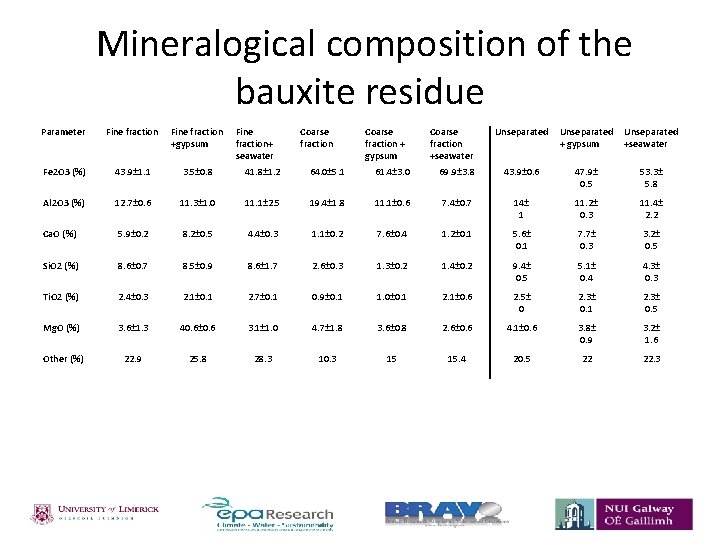
Mineralogical composition of the bauxite residue Parameter Fine fraction +gypsum Fine fraction+ seawater Fe 2 O 3 (%) 43. 9± 1. 1 3. 5± 0. 8 41. 8± 1. 2 Al 2 O 3 (%) 12. 7± 0. 6 11. 3± 1. 0 Ca. O (%) 5. 9± 0. 2 Si. O 2 (%) Coarse fraction + gypsum Coarse fraction +seawater Unseparated + gypsum Unseparated +seawater 64. 0± 5. 1 61. 4± 3. 0 69. 9± 3. 8 43. 9± 0. 6 47. 9± 0. 5 53. 3± 5. 8 11. 1± 2. 5 19. 4± 1. 8 11. 1± 0. 6 7. 4± 0. 7 14± 1 11. 2± 0. 3 11. 4± 2. 2 8. 2± 0. 5 4. 4± 0. 3 1. 1± 0. 2 7. 6± 0. 4 1. 2± 0. 1 5. 6± 0. 1 7. 7± 0. 3 3. 2± 0. 5 8. 6± 0. 7 8. 5± 0. 9 8. 6± 1. 7 2. 6± 0. 3 1. 3± 0. 2 1. 4± 0. 2 9. 4± 0. 5 5. 1± 0. 4 4. 3± 0. 3 Ti. O 2 (%) 2. 4± 0. 3 2. 1± 0. 1 2. 7± 0. 1 0. 9± 0. 1 1. 0± 0. 1 2. 1± 0. 6 2. 5± 0 2. 3± 0. 1 2. 3± 0. 5 Mg. O (%) 3. 6± 1. 3 40. 6± 0. 6 3. 1± 1. 0 4. 7± 1. 8 3. 6± 0. 8 2. 6± 0. 6 4. 1± 0. 6 3. 8± 0. 9 3. 2± 1. 6 Other (%) 22. 9 25. 8 28. 3 10. 3 15 15. 4 20. 5 22 22. 3
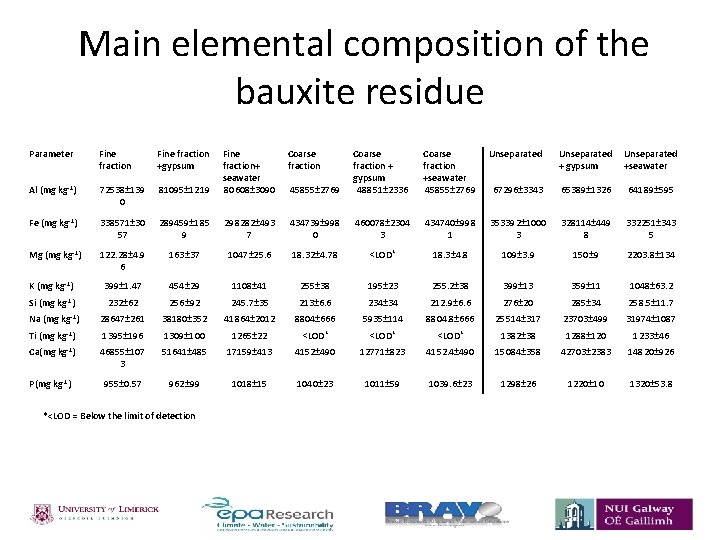
Main elemental composition of the bauxite residue Parameter Fine fraction +gypsum Coarse fraction 81095± 1219 Fine fraction+ seawater 80608± 3090 Coarse fraction +seawater 45855± 2769 Unseparated + gypsum Unseparated +seawater 45855± 2769 Coarse fraction + gypsum 48851± 2336 Al (mg kg-1) 72538± 139 0 67296± 3343 65389± 1326 64189± 595 Fe (mg kg-1) 338571± 30 57 289459± 185 9 298282± 493 7 434739± 998 0 460078± 2304 3 434740± 998 1 353392± 1000 3 328114± 449 8 332251± 343 5 Mg (mg kg-1) 122. 28± 4. 9 6 163± 37 1047± 25. 6 18. 32± 4. 78 <LOD* 18. 3± 4. 8 109± 3. 9 150± 9 2203. 8± 134 K (mg kg-1) Si (mg kg-1) 399± 1. 47 454± 29 1108± 41 255± 38 195± 23 255. 2± 38 399± 13 359± 11 1048± 63. 2 Na (mg kg-1) 232± 62 256± 92 245. 7± 35 213± 6. 6 234± 34 212. 9± 6. 6 276± 20 285± 34 258. 5± 11. 7 28647± 261 38180± 352 41864± 2012 8804± 666 5935± 114 8804. 8± 666 25514± 317 23703± 499 31974± 1087 <LOD* 1382± 38 1288± 120 1233± 46 Ti (mg kg-1) 1395± 196 1309± 100 1265± 22 <LOD* Ca(mg kg-1) 46855± 107 3 51641± 485 17159± 413 4152± 490 12771± 823 4152. 4± 490 15084± 358 42703± 2383 14820± 926 P(mg kg-1) 955± 0. 57 962± 99 1018± 15 1040± 23 1011± 59 1039. 6± 23 1298± 26 1220± 10 1320± 53. 8 *<LOD = Below the limit of detection
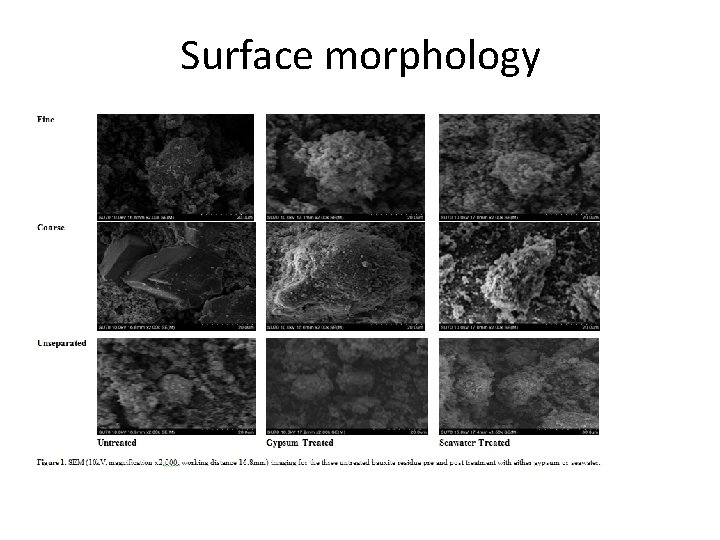
Surface morphology
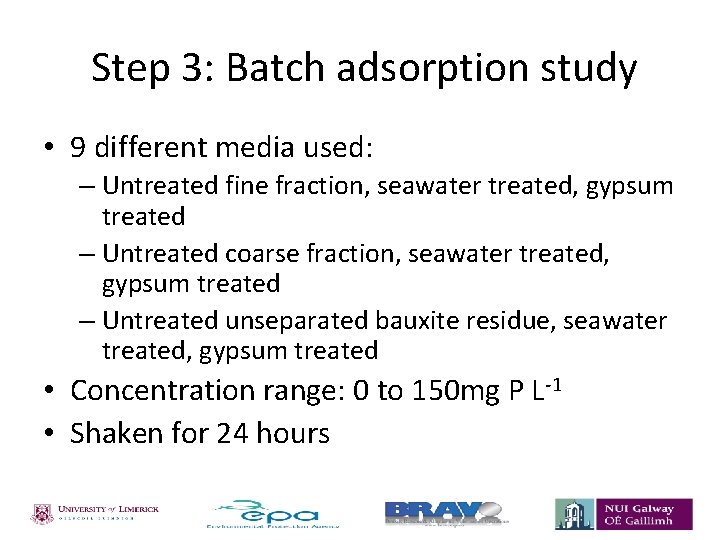
Step 3: Batch adsorption study • 9 different media used: – Untreated fine fraction, seawater treated, gypsum treated – Untreated coarse fraction, seawater treated, gypsum treated – Untreated unseparated bauxite residue, seawater treated, gypsum treated • Concentration range: 0 to 150 mg P L-1 • Shaken for 24 hours
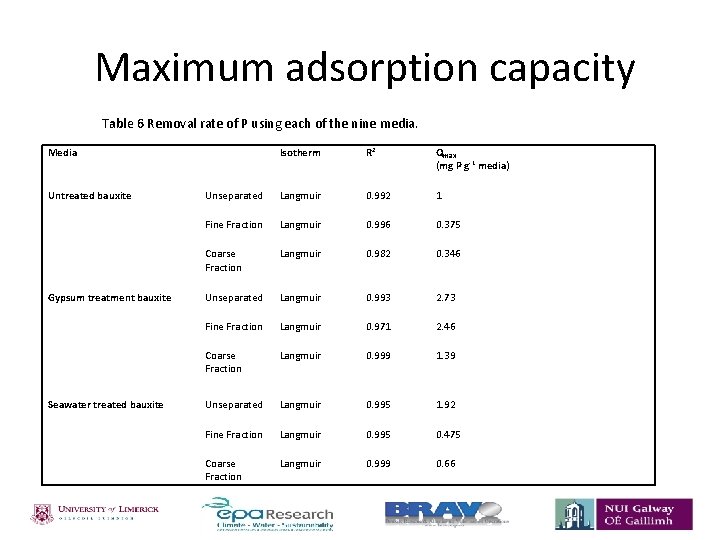
Maximum adsorption capacity Table 6 Removal rate of P using each of the nine media. Media Isotherm R 2 Qmax (mg P g-1 media) Untreated bauxite Unseparated Langmuir 0. 992 1 Fine Fraction Langmuir 0. 996 0. 375 Langmuir 0. 982 0. 346 Gypsum treatment bauxite Coarse Fraction Unseparated Langmuir 0. 993 2. 73 Fine Fraction Langmuir 0. 971 2. 46 Langmuir 0. 999 1. 39 Coarse Fraction Seawater treated bauxite Unseparated Langmuir 0. 995 1. 92 Fine Fraction Langmuir 0. 995 0. 475 Coarse Fraction Langmuir 0. 999 0. 66
Present and future work. • Permeability testing to achieve a suitable media mix to set up column trials. • Column trials with wastewater. – Look at media volume, kinetics of adsorption, effect of retention time and flow rate.
References • • • Akhurst, D. J. , Jones, G. B. , Clark, M. and Mc. Conchie, D. , 2006. Phosphate removal from aqueous solutions using neutralised bauxite refinery residues (Bauxsol™). Environmental chemistry, 3(1), pp. 65 -74. European Commission (EC) (2010) Critical Raw Materials [image], available: https: //ec. europa. eu/growth/sectors/raw-materials/specific-interest/critical_en [accessed 30 March 2017]. Fixen, P. E. and Johnston, A. M. , 2012. World fertilizer nutrient reserves: a view to the future. Journal of the Science of Food and Agriculture, 92(5), pp. 1001 -1005. Grace, M. A. , Healy, M. G. and Clifford, E. , 2015. Use of industrial by-products and natural media to adsorb nutrients, metals and organic carbon from drinking water. Science of The Total Environment, 518, pp. 491 -497. Gräfe, M. , Power, G. and Klauber, C. , 2009. Review of bauxite residue alkalinity and associated chemistry. Clay Miner. Karawara, WA, Australia. Evans, K. , 2016. The history, challenges, and new developments in the management and use of bauxite residue. Journal of Sustainable Metallurgy, 2(4), pp. 316 -331. Lopez, E. , Soto, B. , Arias, M. , Nunez, A. , Rubinos, D. and Barral, M. T. , 1998. Adsorbent properties of red mud and its use for wastewater treatment. Water Research, 32(4), pp. 1314 -1322. Smil, V. , 2000. Phosphorus in the environment: natural flows and human interferences. Annual review of energy and the environment, 25(1), pp. 53 -88. Vaccari, D. A. , 2009. Phosphorus: a looming crisis. Scientific American, 300(6), pp. 54 -59. Ye, J. , Zhang, P. , Hoffmann, E. , Zeng, G. , Tang, Y. , Dresely, J. and Liu, Y. , 2014. Comparison of response surface methodology and artificial neural network in optimization and prediction of acid activation of Bauxsol for phosphorus adsorption. Water, Air, & Soil Pollution, 225(12), p. 2225.

Acknowledgements • Acknowledgements and thanks to the EPA for funding this project. • Special thanks to my supervisors Dr. Ronan Courtney (UL) and Dr. Mark G. Healy (NUIG).
- Slides: 23