
The Use and Abuse of the Carterfone Principle
The Use and Abuse of the Carterfone Principle James B. Speta Northwestern University Law School Santa Clara – Carterfone Conference October 17, 2008 1

OR 2

Why $2. 99 for that Michigan Marching Band ringtone was an OK price 3
What Is The “Carterfone Principle”? Narrow Carterfone decision n Broader Carterfone meme n Problems: n ¨ Disconnect between its current use and the premises of the FCC’s decision ¨ Broader meme requires fuller analysis 4
The Carterfone Principle Today Carterfone is innovation policy; it drives decentralized innovation. n Carterfone embodies a nondiscrimination rule, preventing carriers from engaging in inevitable discrimination. n Carterfone was a great success, and future successes are likely n 5
n FCC ¨ Net neutrality policy statement: “To encourage broadband deployment and preserve and promote the open and interconnected nature of the public Internet, consumers are entitled to connect their choice of legal devices that do not harm the network. ” [fn Carterfone] ¨ 700 MHz C Block Open Access conditions 6
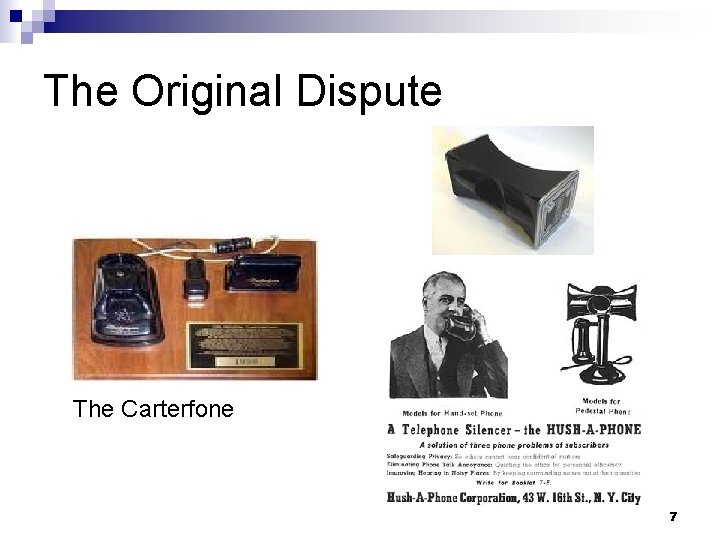
The Original Dispute The Carterfone 7
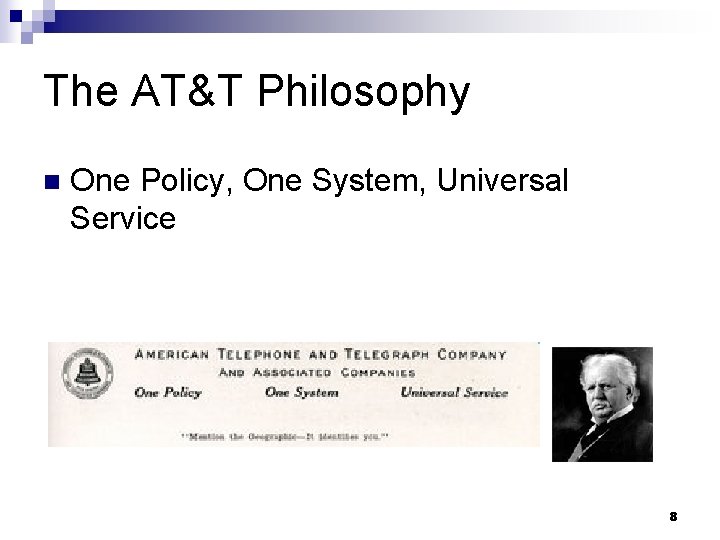
The AT&T Philosophy n One Policy, One System, Universal Service 8
The FCC’s Decisions Following on Hush-a-phone n Carterfone is different, because it’s an interconnection device n FCC holds n ¨ Unjust and unreasonable tariff preclusion ¨ Originally – but not ultimately – finds a nondiscrimination violation 9
n FCC does not address economic arguments (not presented) ¨ “We agree that economics effects upon a carriers’ rate structure might well be a public interest question” n The decision did not order interconnection ¨ “Our decision does not have the asserted effect of delineating any particular interconnections as permissible. ” 10
Current Fight over the Principle Broader meme combines Carterphone, Part 68, Computer III, Execunet, Breakup. . . n Generally turns on controlling monopoly incentives to discriminate n Typical response: no monopoly n 11
Missed Context n Carterfone decision better thought of as a “scope of regulated network” decision ¨ Arose specifically in a tariff review situation ¨ With specific statutory authority n Consistent with fight over monopoly power/incentives to discriminate 12
n But fuller context recalls that regulated monopolies. . . ¨ Had public service obligations, and ¨ Were entitled to revenue protection n Cost of service regulation ¨ Controlled monopoly pricing ¨ But also ensured the generation of revenue sufficient to meet public service obligations and to attract capital 13
¨ 1967 conclusion of AT&T rate proceeding: “the requirements of the public interest in just and reasonable rates [includes] that rate of return which will sustain the financial integrity of respondents' business and enable them to attract capital” 14
Contrary examples Limitations on interconnection n Persistent regulatory price discrimination n Scope of service disputes n 15
Conclusions Narrow Carterfone tells us very little n Carterfone meme tells us little more, except about control of monopoly n Regulated industries rate-making context suggests analogic application is suspect n Fuller competition analysis required n 16
n That fuller analysis will find it hard to extend Carterfone principles ¨ Market is not mature ¨ Market is competitive 17
18
19
- Slides: 19