
The US Presidents Series Harding and Coolidge Warren
- Slides: 16
The US Presidents Series - Harding and Coolidge Warren G. Harding Calvin Coolidge
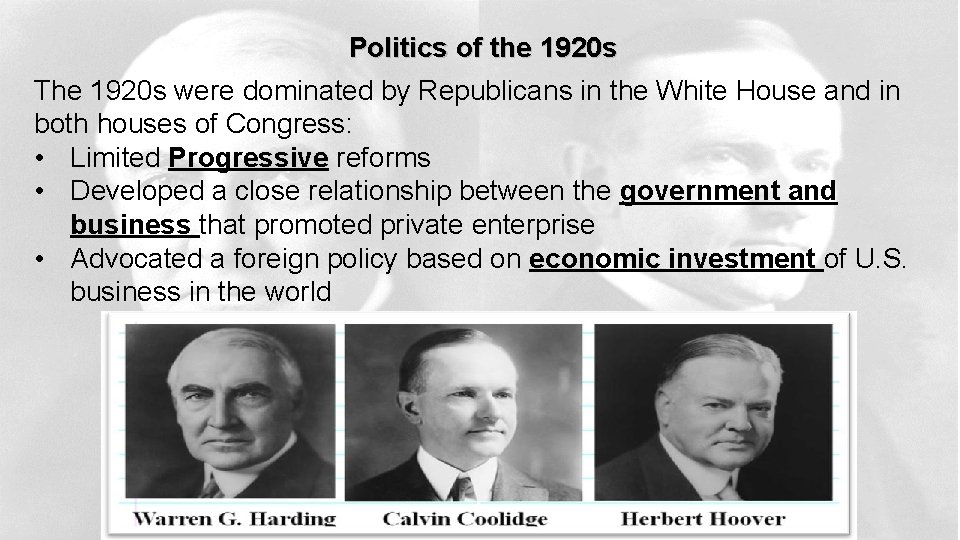
Politics of the 1920 s The 1920 s were dominated by Republicans in the White House and in both houses of Congress: • Limited Progressive reforms • Developed a close relationship between the government and business that promoted private enterprise • Advocated a foreign policy based on economic investment of U. S. business in the world
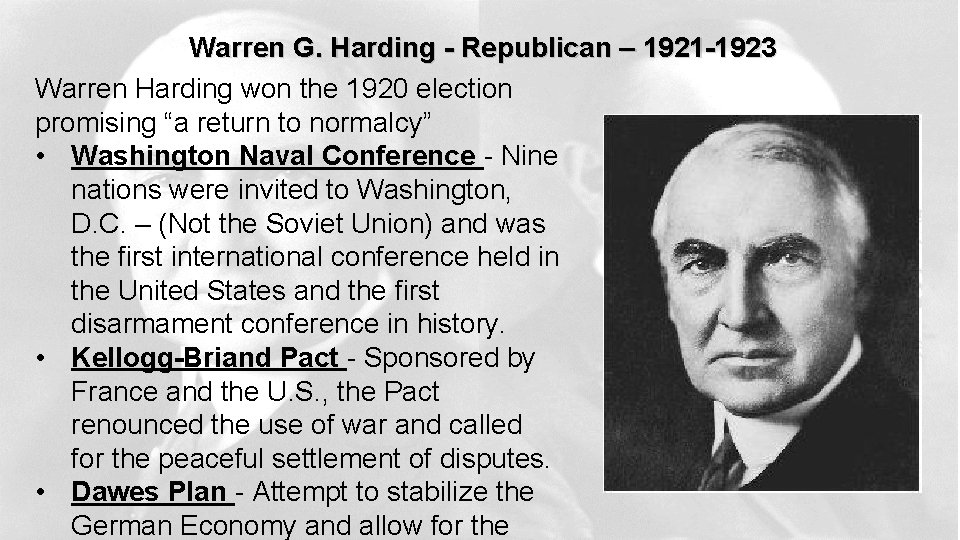
Warren G. Harding - Republican – 1921 -1923 Warren Harding won the 1920 election promising “a return to normalcy” • Washington Naval Conference - Nine nations were invited to Washington, D. C. – (Not the Soviet Union) and was the first international conference held in the United States and the first disarmament conference in history. • Kellogg-Briand Pact - Sponsored by France and the U. S. , the Pact renounced the use of war and called for the peaceful settlement of disputes. • Dawes Plan - Attempt to stabilize the German Economy and allow for the
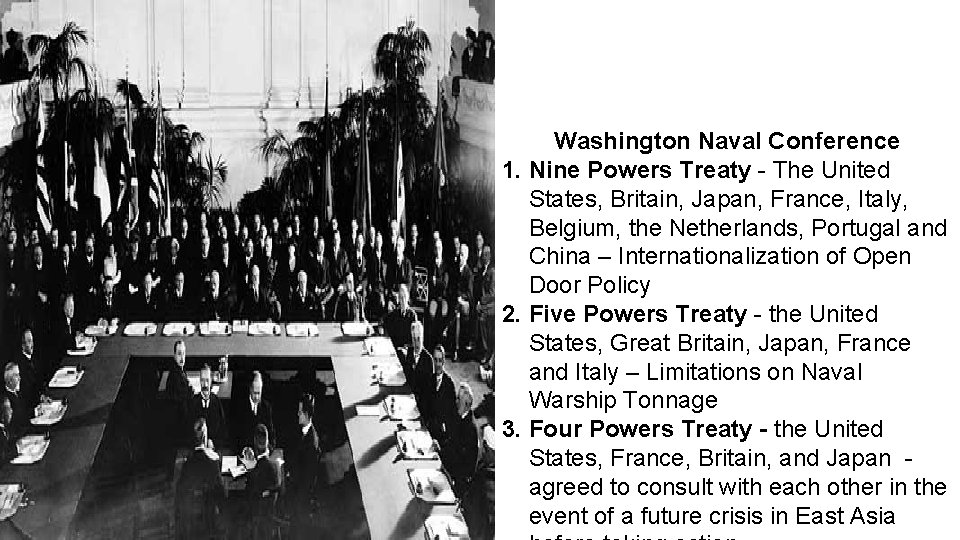
Washington Naval Conference 1. Nine Powers Treaty - The United States, Britain, Japan, France, Italy, Belgium, the Netherlands, Portugal and China – Internationalization of Open Door Policy 2. Five Powers Treaty - the United States, Great Britain, Japan, France and Italy – Limitations on Naval Warship Tonnage 3. Four Powers Treaty - the United States, France, Britain, and Japan agreed to consult with each other in the event of a future crisis in East Asia
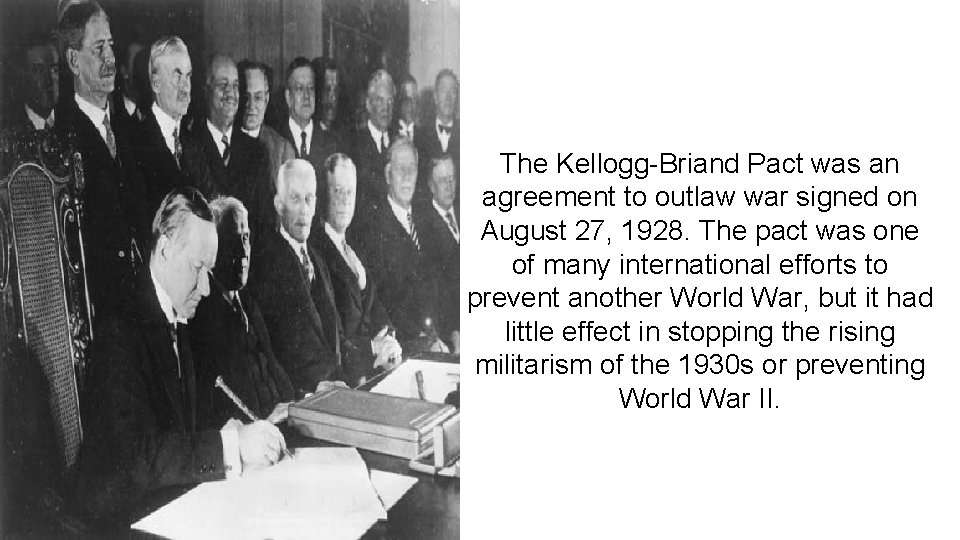
The Kellogg-Briand Pact was an agreement to outlaw war signed on August 27, 1928. The pact was one of many international efforts to prevent another World War, but it had little effect in stopping the rising militarism of the 1930 s or preventing World War II.
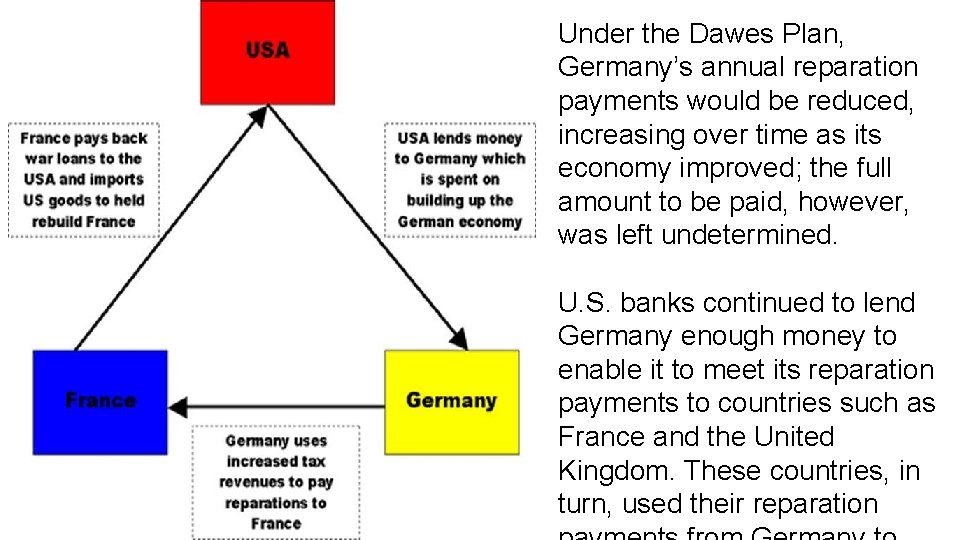
Under the Dawes Plan, Germany’s annual reparation payments would be reduced, increasing over time as its economy improved; the full amount to be paid, however, was left undetermined. U. S. banks continued to lend Germany enough money to enable it to meet its reparation payments to countries such as France and the United Kingdom. These countries, in turn, used their reparation
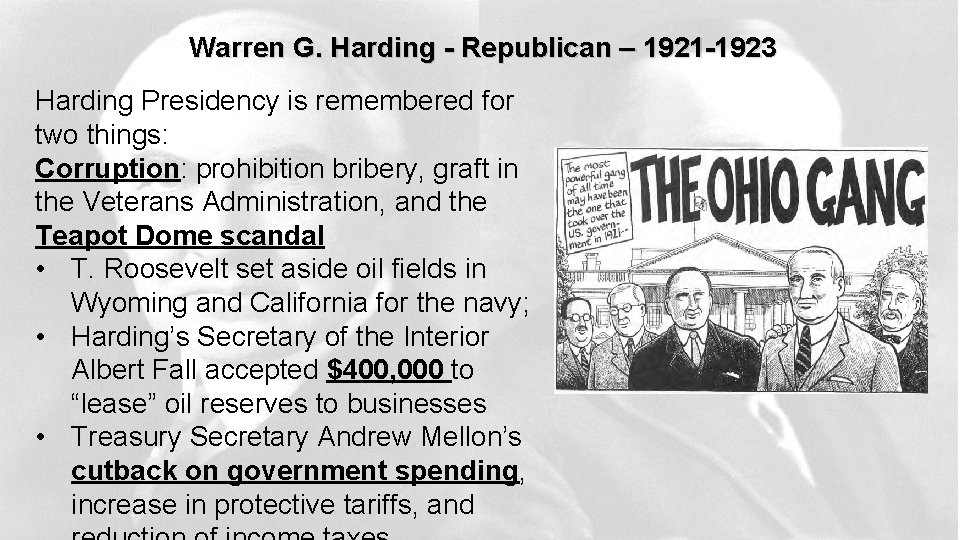
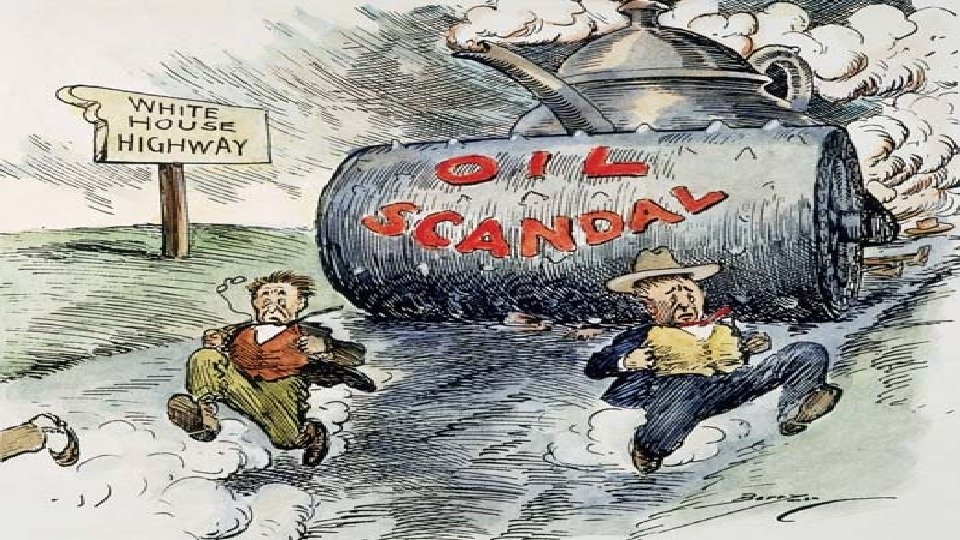
Warren G. Harding - Republican – 1921 -1923 Harding Presidency is remembered for two things: Corruption: prohibition bribery, graft in the Veterans Administration, and the Teapot Dome scandal • T. Roosevelt set aside oil fields in Wyoming and California for the navy; • Harding’s Secretary of the Interior Albert Fall accepted $400, 000 to “lease” oil reserves to businesses • Treasury Secretary Andrew Mellon’s cutback on government spending, increase in protective tariffs, and
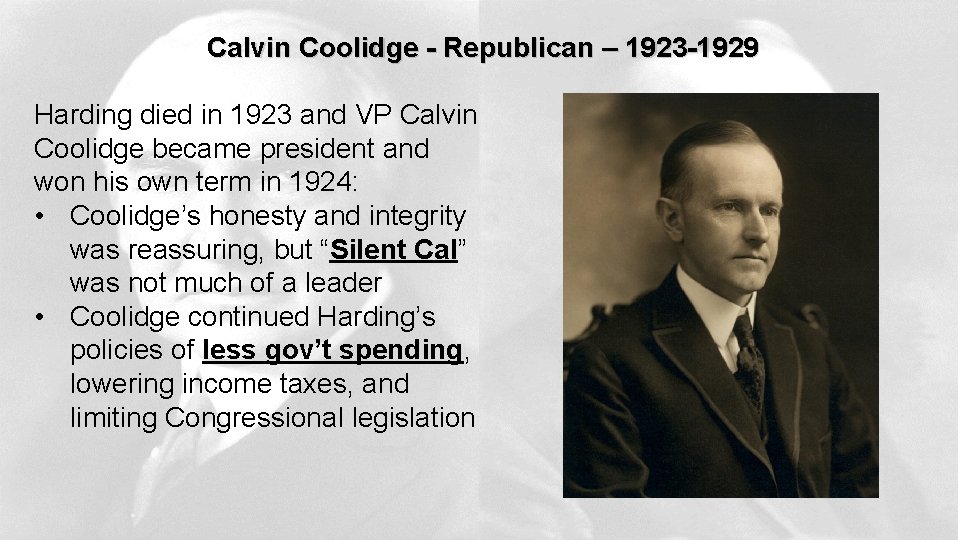
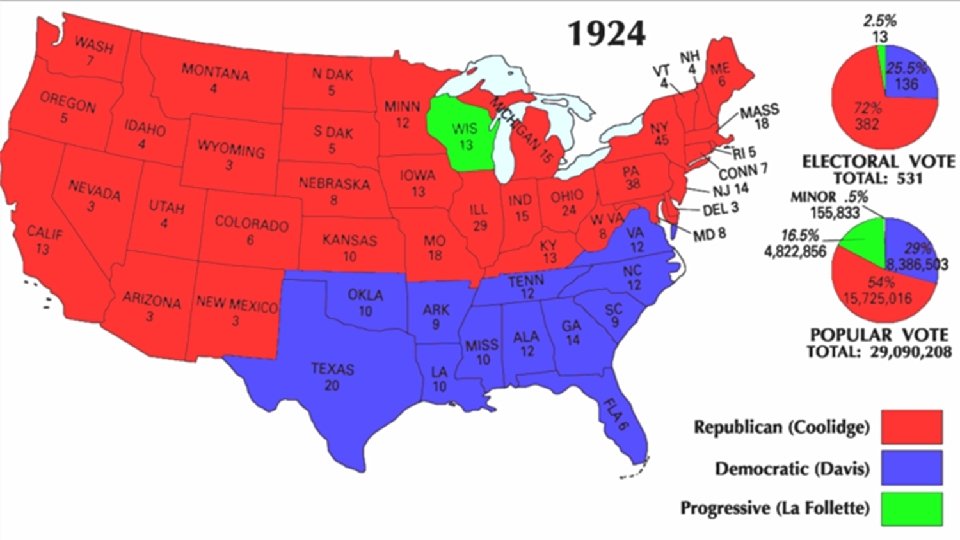
Calvin Coolidge - Republican – 1923 -1929 Harding died in 1923 and VP Calvin Coolidge became president and won his own term in 1924: • Coolidge’s honesty and integrity was reassuring, but “Silent Cal” was not much of a leader • Coolidge continued Harding’s policies of less gov’t spending, lowering income taxes, and limiting Congressional legislation
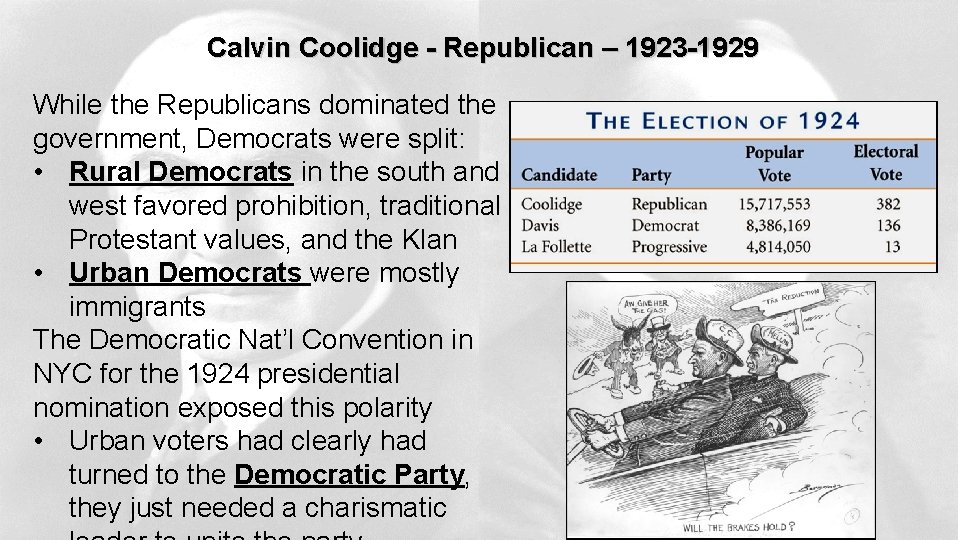
Calvin Coolidge - Republican – 1923 -1929 While the Republicans dominated the government, Democrats were split: • Rural Democrats in the south and west favored prohibition, traditional Protestant values, and the Klan • Urban Democrats were mostly immigrants The Democratic Nat’l Convention in NYC for the 1924 presidential nomination exposed this polarity • Urban voters had clearly had turned to the Democratic Party, they just needed a charismatic
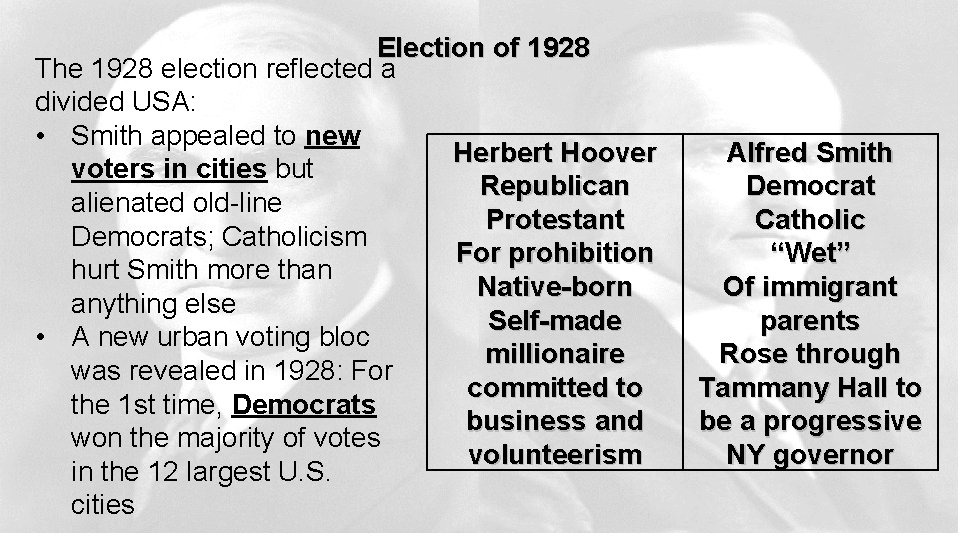
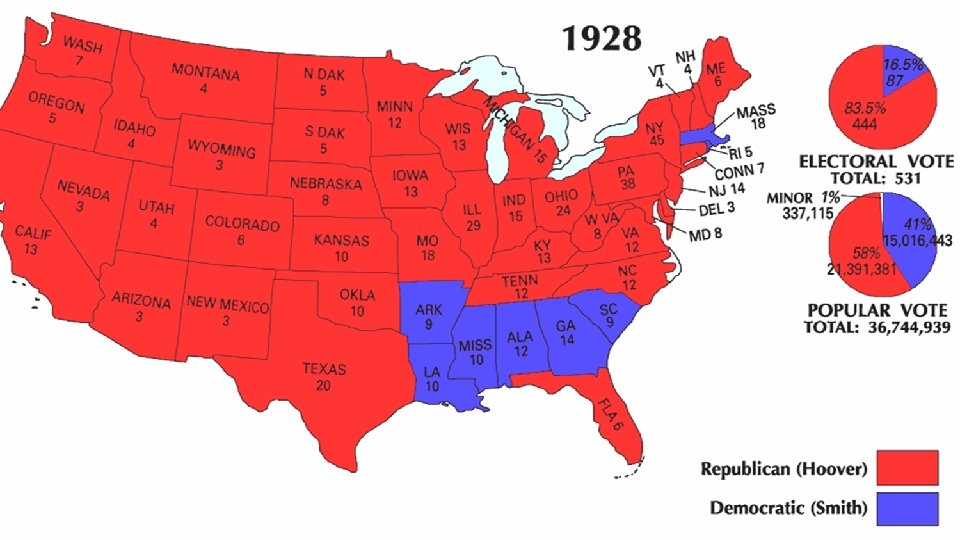
Election of 1928 The 1928 election reflected a divided USA: • Smith appealed to new Herbert Hoover voters in cities but Republican alienated old-line Protestant Democrats; Catholicism For prohibition hurt Smith more than Native-born anything else Self-made • A new urban voting bloc millionaire was revealed in 1928: For committed to the 1 st time, Democrats business and won the majority of votes volunteerism in the 12 largest U. S. cities Alfred Smith Democrat Catholic “Wet” Of immigrant parents Rose through Tammany Hall to be a progressive NY governor
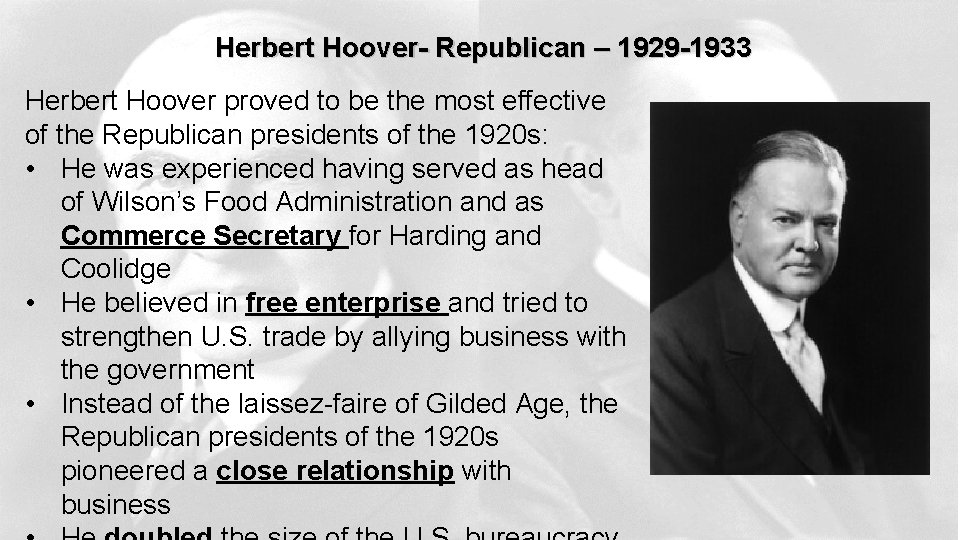
Herbert Hoover- Republican – 1929 -1933 Herbert Hoover proved to be the most effective of the Republican presidents of the 1920 s: • He was experienced having served as head of Wilson’s Food Administration and as Commerce Secretary for Harding and Coolidge • He believed in free enterprise and tried to strengthen U. S. trade by allying business with the government • Instead of the laissez-faire of Gilded Age, the Republican presidents of the 1920 s pioneered a close relationship with business
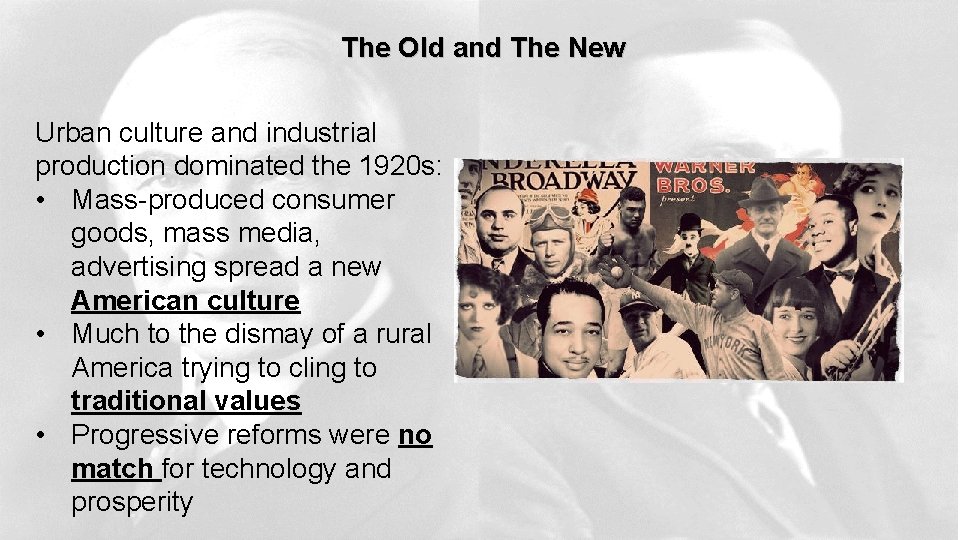
The Old and The New Urban culture and industrial production dominated the 1920 s: • Mass-produced consumer goods, mass media, advertising spread a new American culture • Much to the dismay of a rural America trying to cling to traditional values • Progressive reforms were no match for technology and prosperity
Sum It Up To what extent did Republican dominance in the 1920 s represent a change from Gilded Age and Progressive politics?