
The US Housing Market Facts Trends and Policy




- Slides: 63
The US Housing Market: Facts, Trends, and Policy Questions <Audience> Month, # 2019 <Your name, Ph. D. > 1
National Economic Education Delegation • Vision - One day, the public discussion of policy issues will be grounded in an accurate perception of the underlying economic principles and data. • Mission - NEED unites the skills and knowledge of a vast network of professional economists to promote understanding of the economics of policy issues in the United States • NEED Presentations - Are nonpartisan and intended to reflect the consensus of the economics profession 2
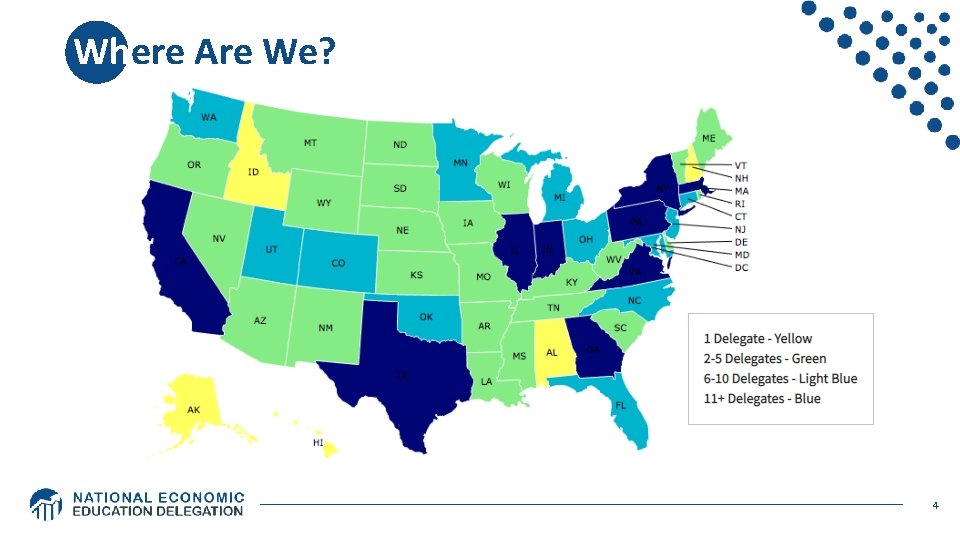
Who Are We? • Honorary Board: 44 members - 2 Fed Chairs: Janet Yellen, Ben Bernanke - 6 Chairs Council of Economic Advisers o Furman (D), Rosen (R), Bernanke (R), Yellen (D), Tyson (D), Goolsbee (D) - 3 Nobel Prize Winners o Akerlof, Smith, Maskin • Delegates: 364 members - At all levels of academia and some in government service All have a Ph. D. in economics Crowdsource slide decks Give presentations • Global Partners: 42 Ph. D. Economists - Aid in slide deck development 3
Where Are We? 4
Credits and Disclaimer • This slide deck was authored by: - Daniel Marcin, George Washington University - Dmitriy Stolyarov, University of Michigan • This slide deck was reviewed by: - Jon Haveman, Ph. D, NEED • Disclaimer - The views presented today are those of the presenter and not necessarily those of the National Economic Education Delegation (NEED) 5
Outline • Introduction • Home prices • Housing as a store of wealth • Housing as an Investment • Understanding home prices • Affordability • Government Regulation of Housing 6
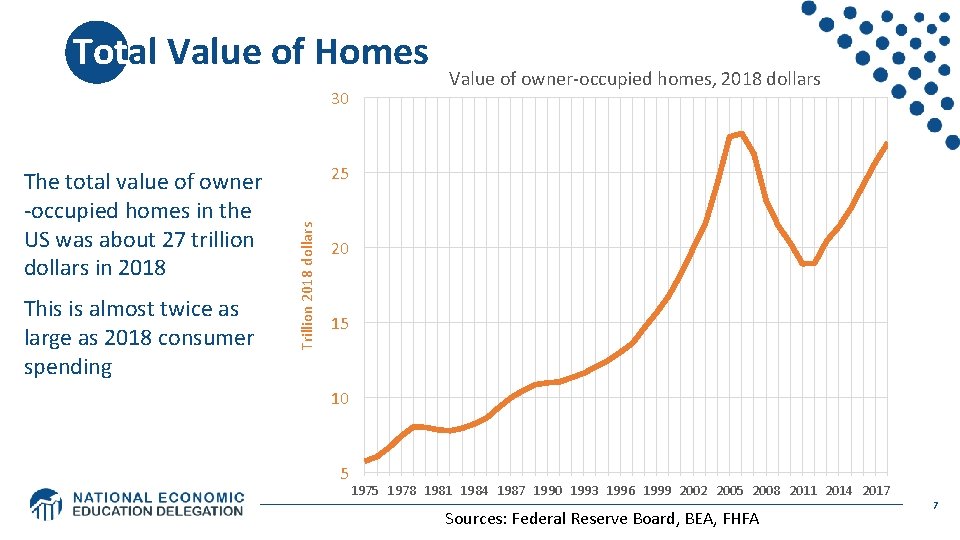
Total Value of Homes 30 This is almost twice as large as 2018 consumer spending 25 Trillion 2018 dollars The total value of owner -occupied homes in the US was about 27 trillion dollars in 2018 Value of owner-occupied homes, 2018 dollars 20 15 10 5 1978 1981 1984 1987 1990 1993 1996 1999 2002 2005 2008 2011 2014 2017 Sources: Federal Reserve Board, BEA, FHFA 7
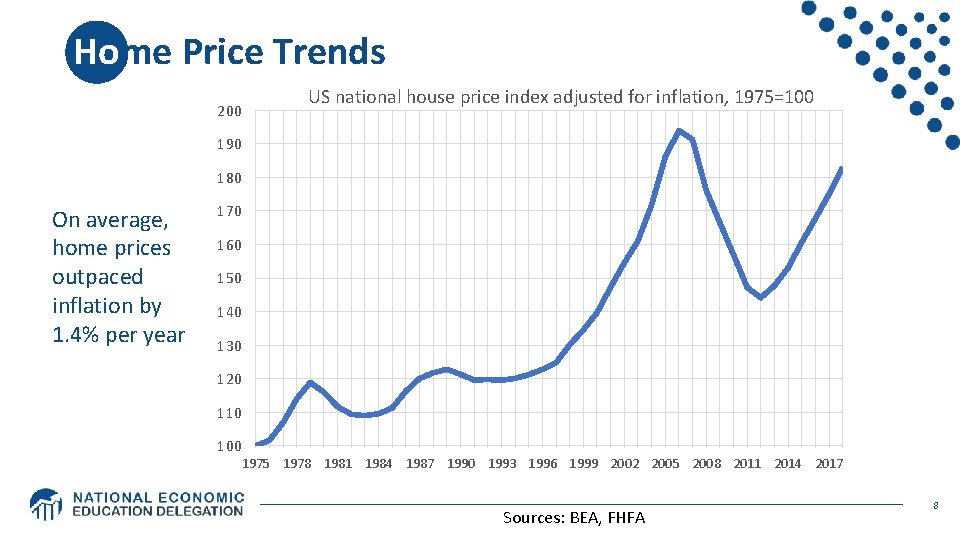
Home Price Trends 200 US national house price index adjusted for inflation, 1975=100 190 180 On average, home prices outpaced inflation by 1. 4% per year 170 160 150 140 130 120 110 100 1975 1978 1981 1984 1987 1990 1993 1996 1999 2002 2005 2008 2011 2014 2017 Sources: BEA, FHFA 8
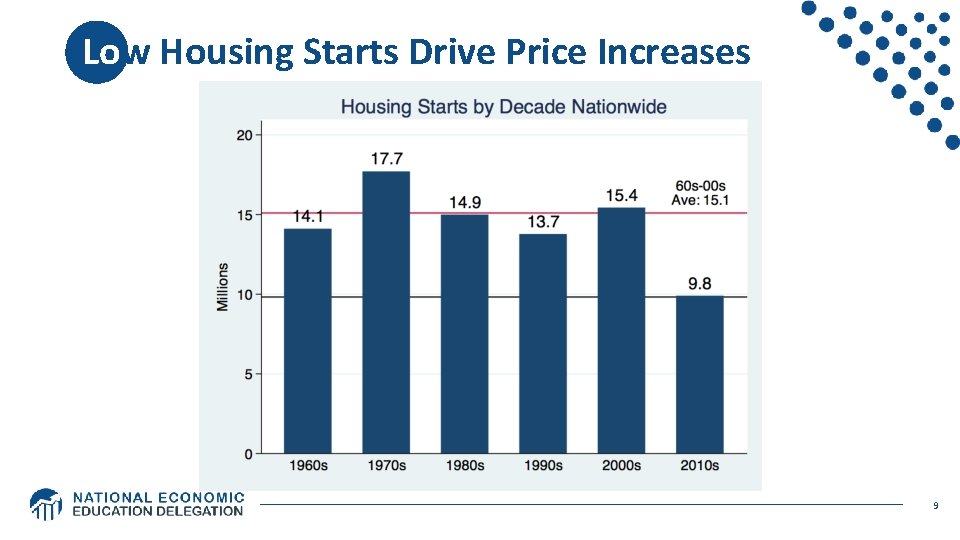
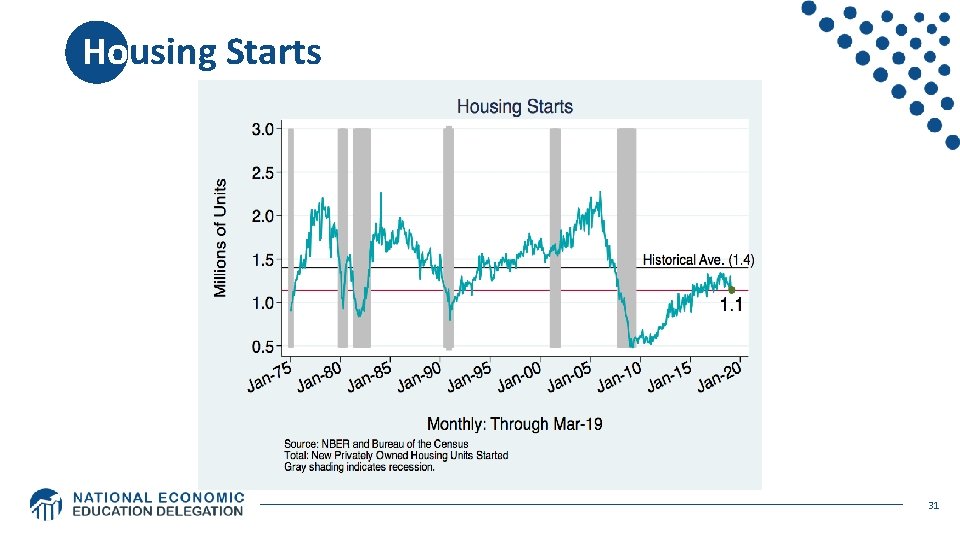
Low Housing Starts Drive Price Increases 9
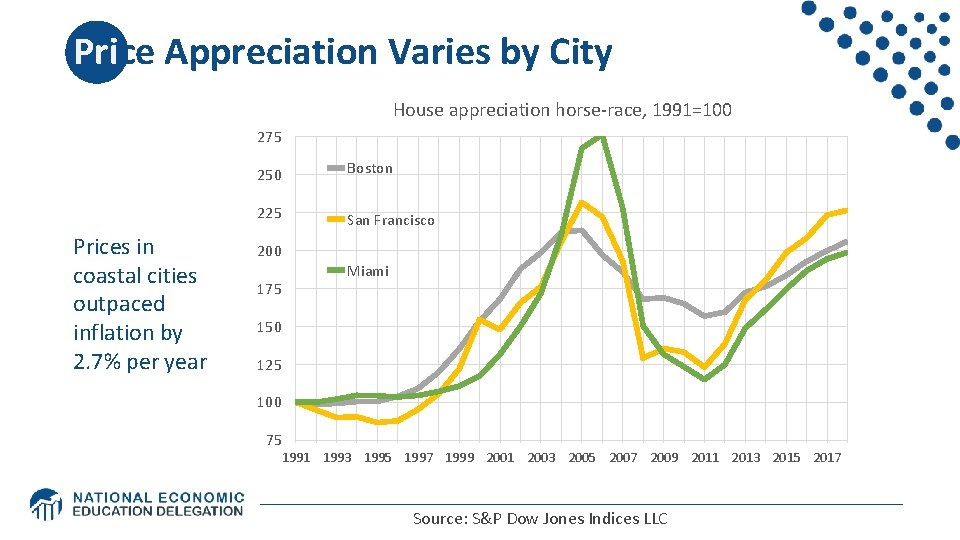
Price Appreciation Varies by City House appreciation horse-race, 1991=100 275 Prices in coastal cities outpaced inflation by 2. 7% per year 250 Boston 225 San Francisco 200 175 Miami 150 125 100 75 1991 1993 1995 1997 1999 2001 2003 2005 2007 2009 2011 2013 2015 2017 Source: S&P Dow Jones Indices LLC
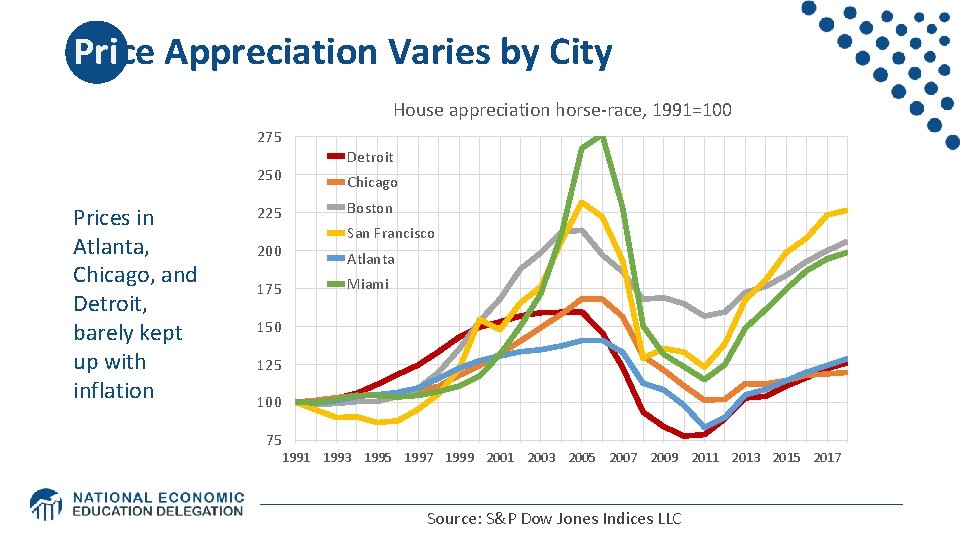
Price Appreciation Varies by City House appreciation horse-race, 1991=100 275 250 Prices in Atlanta, Chicago, and Detroit, barely kept up with inflation 225 200 175 Detroit Chicago Boston San Francisco Atlanta Miami 150 125 100 75 1991 1993 1995 1997 1999 2001 2003 2005 2007 2009 2011 2013 2015 2017 Source: S&P Dow Jones Indices LLC
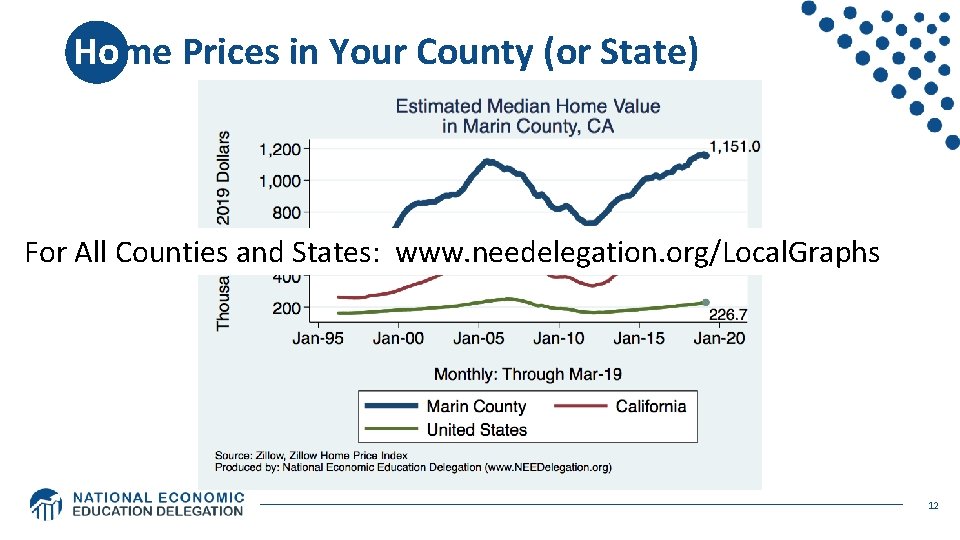
Home Prices in Your County (or State) For All Counties and States: www. needelegation. org/Local. Graphs 12
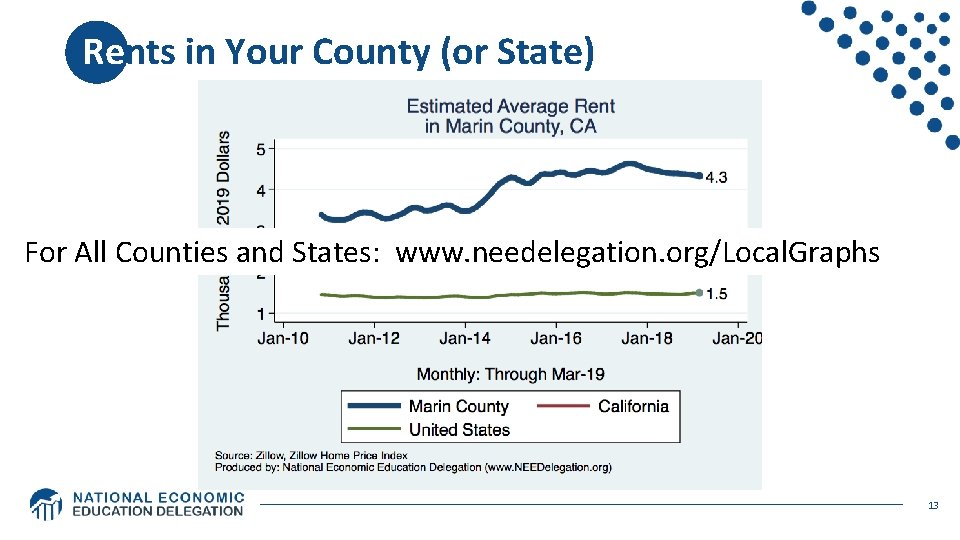
Rents in Your County (or State) For All Counties and States: www. needelegation. org/Local. Graphs 13
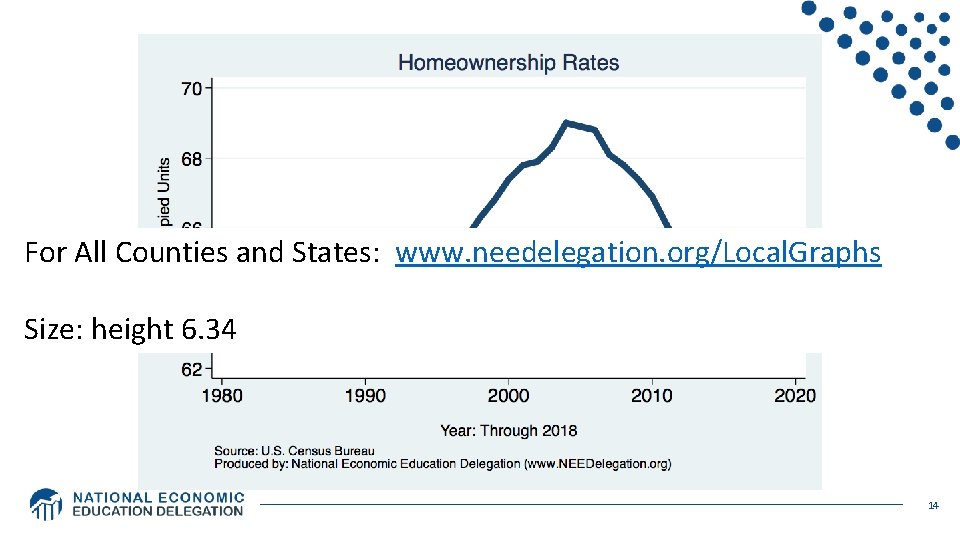
For All Counties and States: www. needelegation. org/Local. Graphs Size: height 6. 34 14
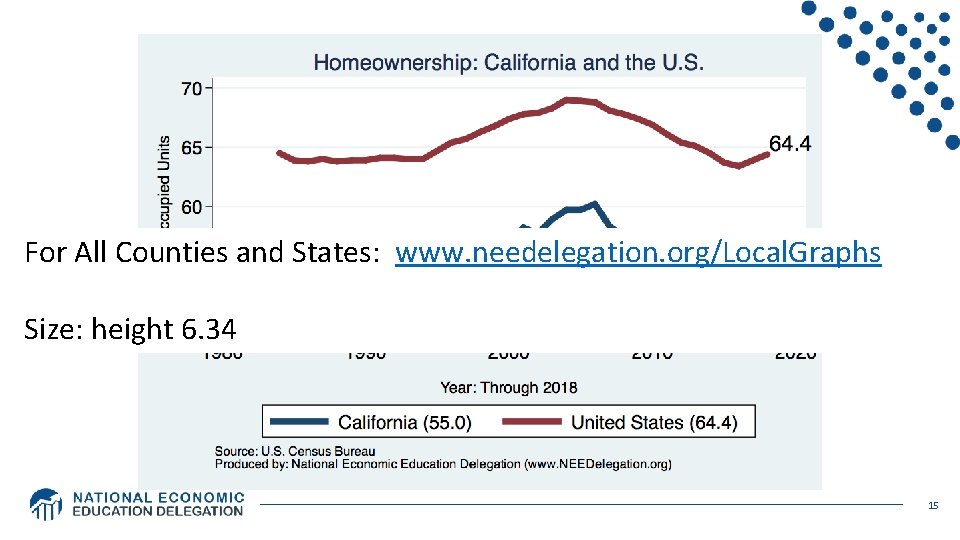
For All Counties and States: www. needelegation. org/Local. Graphs Size: height 6. 34 15
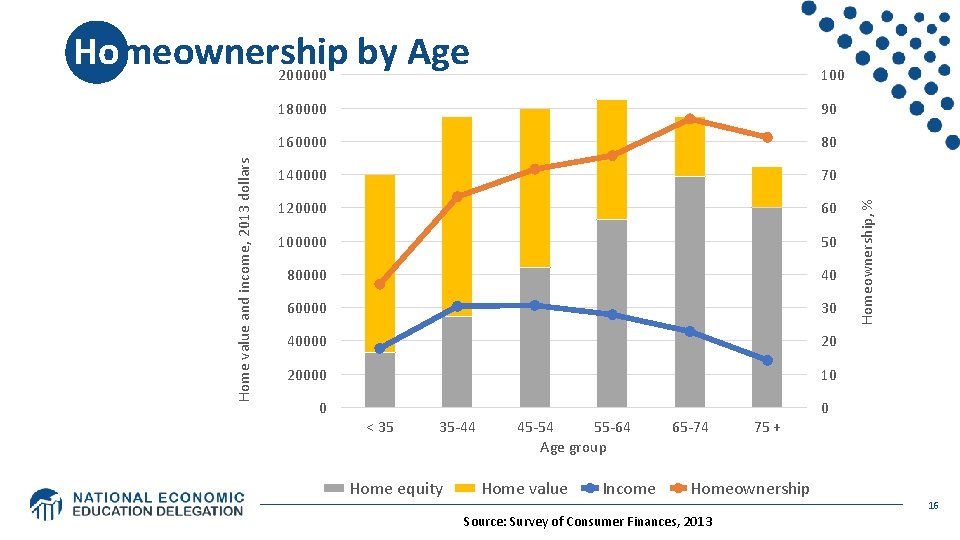
200000 180000 90 160000 80 140000 70 120000 60 100000 50 80000 40 60000 30 40000 20 20000 10 0 Homeownership, % Home value and income, 2013 dollars Homeownership by Age 0 < 35 35 -44 Home equity 45 -54 55 -64 Age group Home value Income 65 -74 75 + Homeownership Source: Survey of Consumer Finances, 2013 16
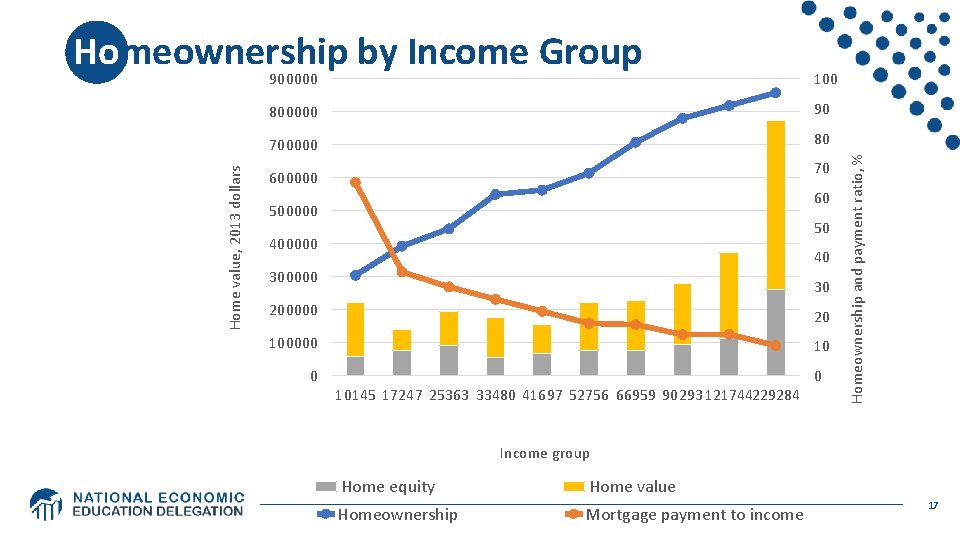
900000 100 800000 90 700000 80 70 600000 60 500000 50 400000 40 300000 30 200000 20 100000 10 0 0 10145 17247 25363 33480 41697 52756 66959 90293 121744229284 Homeownership and payment ratio, % Home value, 2013 dollars Homeownership by Income Group Income group Home equity Home value Homeownership Mortgage payment to income 17
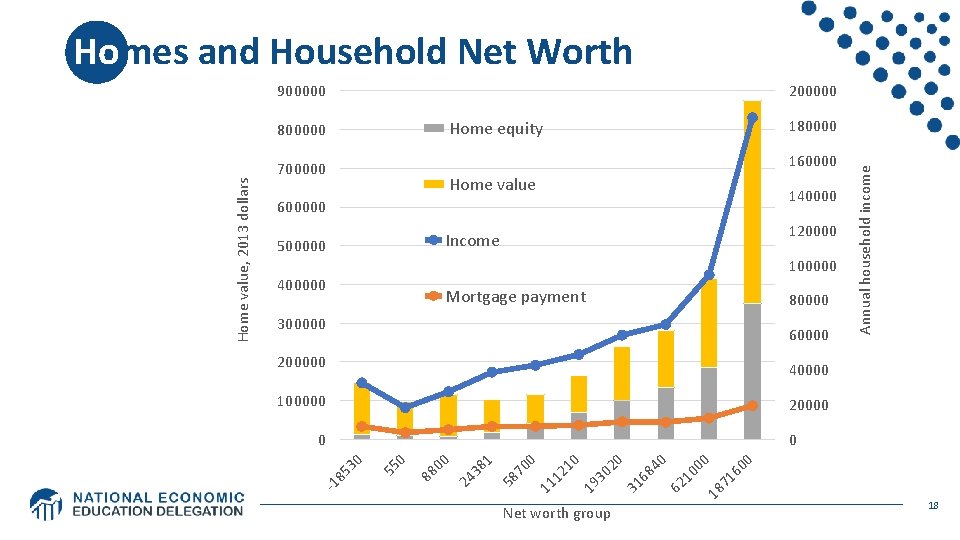
Homes and Household Net Worth 900000 200000 Home value 140000 600000 120000 Income 500000 100000 400000 Mortgage payment 80000 300000 60000 200000 40000 100000 20000 Net worth group 0 71 60 18 00 0 62 1 84 0 31 6 02 0 19 3 21 0 11 1 70 0 58 38 1 24 00 88 85 3 55 0 0 Annual household income 160000 700000 -1 Home value, 2013 dollars 180000 Home equity 800000 18
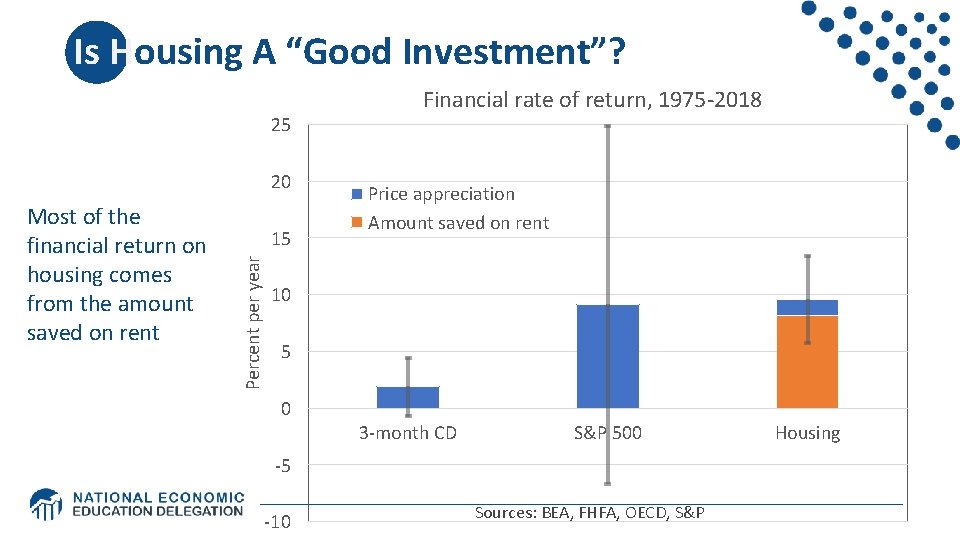
Is Housing A “Good Investment”? 25 20 15 Percent per year Most of the financial return on housing comes from the amount saved on rent Financial rate of return, 1975 -2018 Price appreciation Amount saved on rent 10 5 0 3 -month CD S&P 500 -5 -10 Sources: BEA, FHFA, OECD, S&P Housing
Benefits and Costs of Homeownership Financial benefits of homeownership • Money saved on rent • House price appreciation (if any) Financial costs of homeownership • Maintenance/upkeep, insurance, property tax • Mortgage interest (if any) • House price depreciation (if any) 20
Benefits and Costs of Homeownership Tax benefits of owning a home • Money saved on rent is not considered taxable income • Homeowners typically pay lower property taxes than landlords • Mortgage interest and property tax can sometimes be deducted from taxable income (same is true for landlords) • Capital gains from selling a primary house are tax-free (up to a point) 21
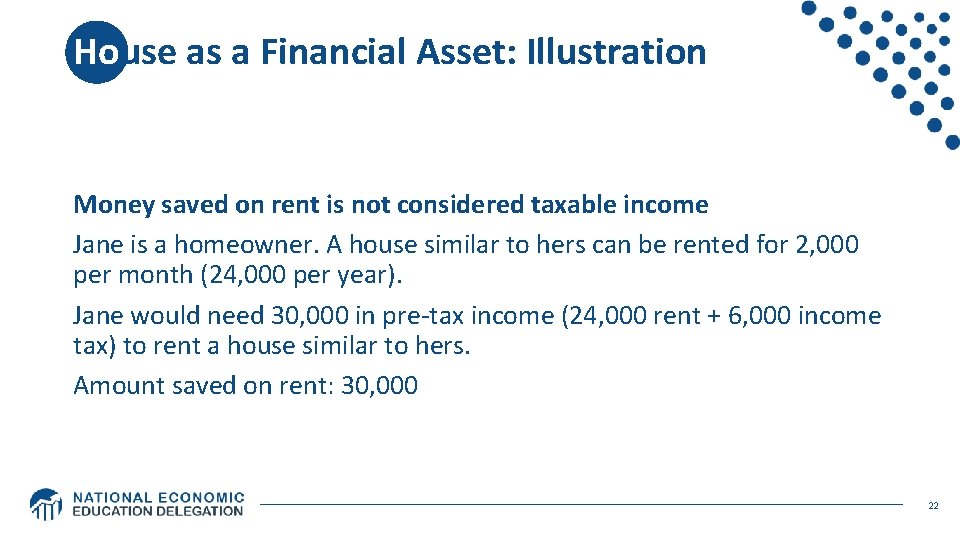
House as a Financial Asset: Illustration Money saved on rent is not considered taxable income Jane is a homeowner. A house similar to hers can be rented for 2, 000 per month (24, 000 per year). Jane would need 30, 000 in pre-tax income (24, 000 rent + 6, 000 income tax) to rent a house similar to hers. Amount saved on rent: 30, 000 22
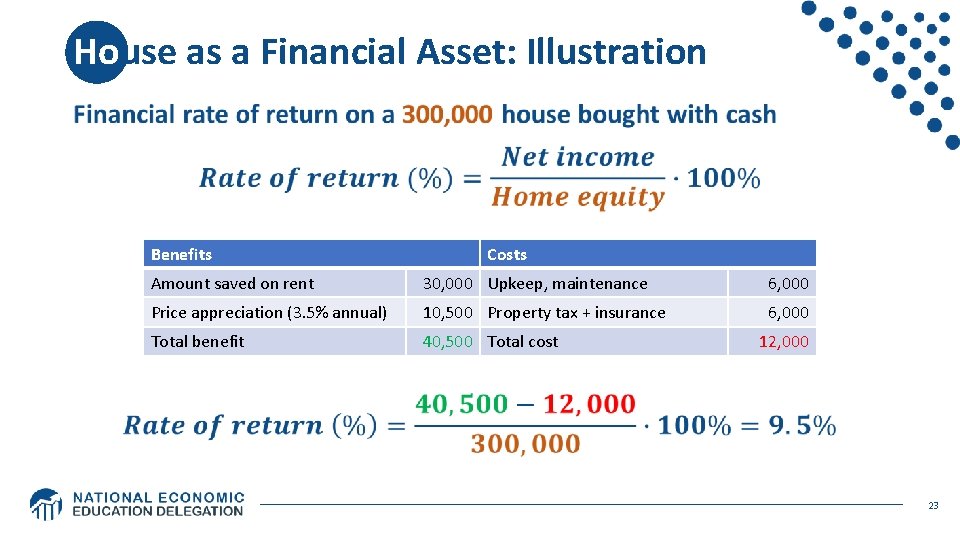
House as a Financial Asset: Illustration • Benefits Costs Amount saved on rent 30, 000 Upkeep, maintenance 6, 000 Price appreciation (3. 5% annual) 10, 500 Property tax + insurance 6, 000 Total benefit 40, 500 Total cost 12, 000 23
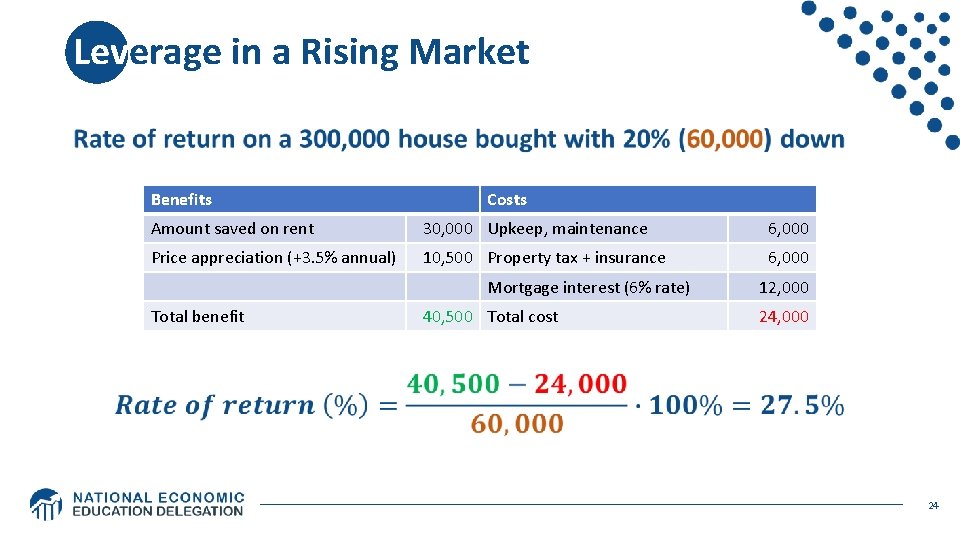
Leverage in a Rising Market Benefits • Costs Amount saved on rent 30, 000 Upkeep, maintenance 6, 000 Price appreciation (+3. 5% annual) 10, 500 Property tax + insurance 6, 000 Mortgage interest (6% rate) Total benefit 40, 500 Total cost 12, 000 24
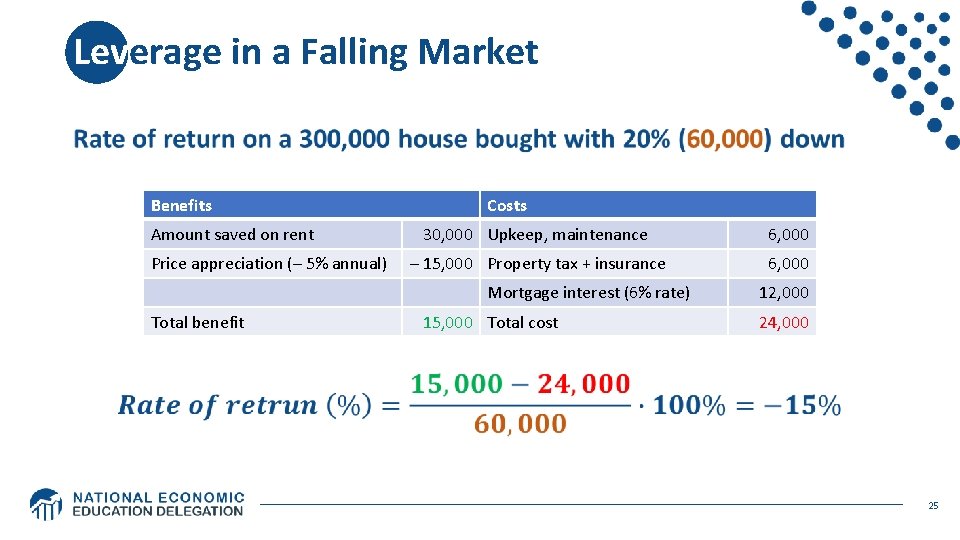
Leverage in a Falling Market Benefits Amount saved on rent • Price appreciation (– 5% annual) Costs 30, 000 Upkeep, maintenance 6, 000 – 15, 000 Property tax + insurance 6, 000 Mortgage interest (6% rate) Total benefit 15, 000 Total cost 12, 000 24, 000 25
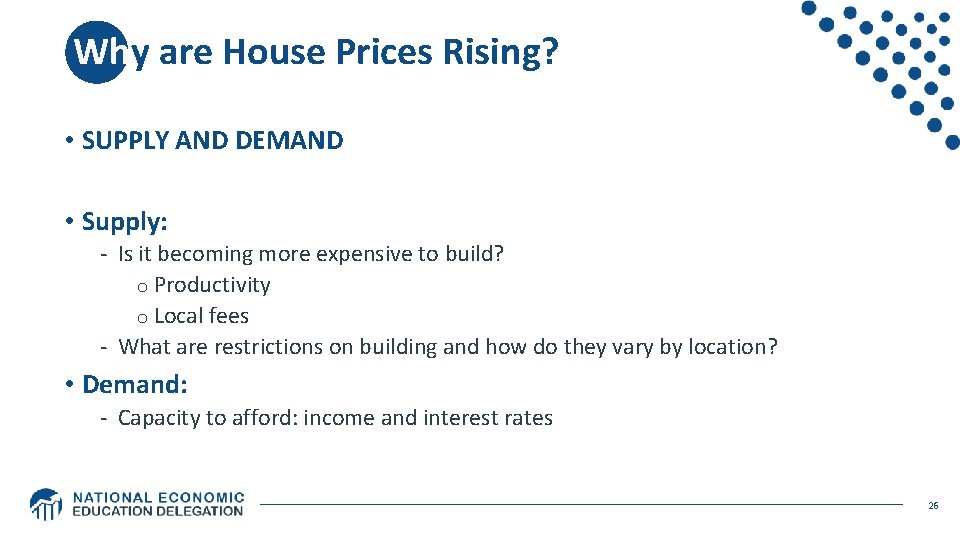
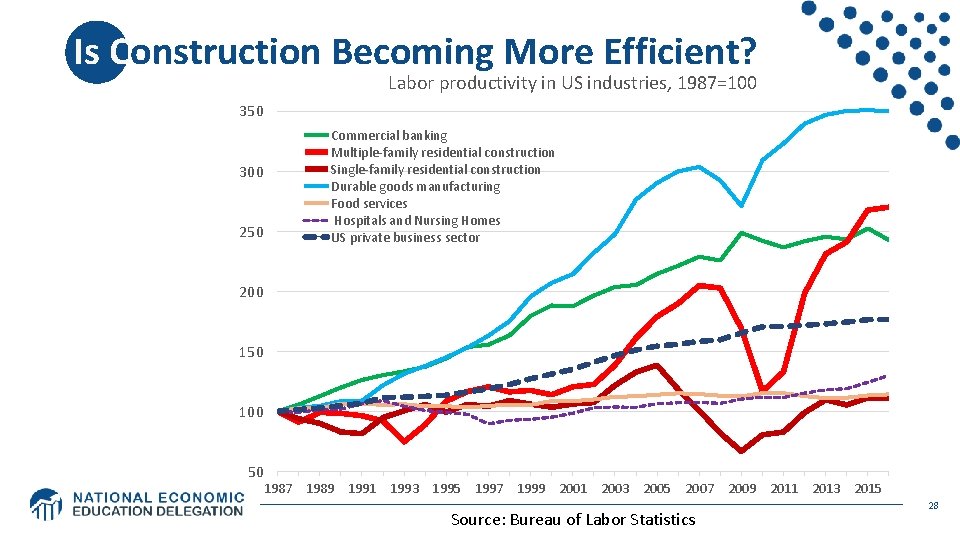
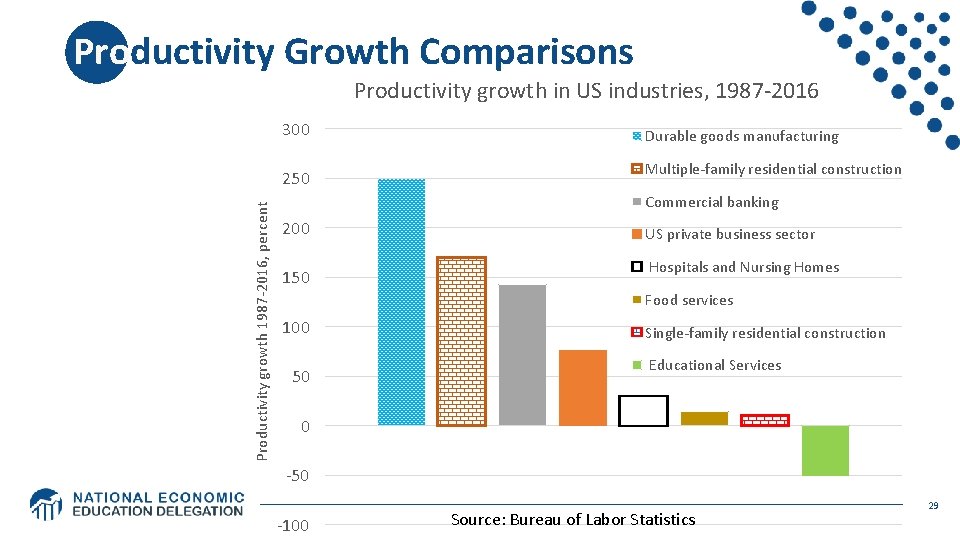
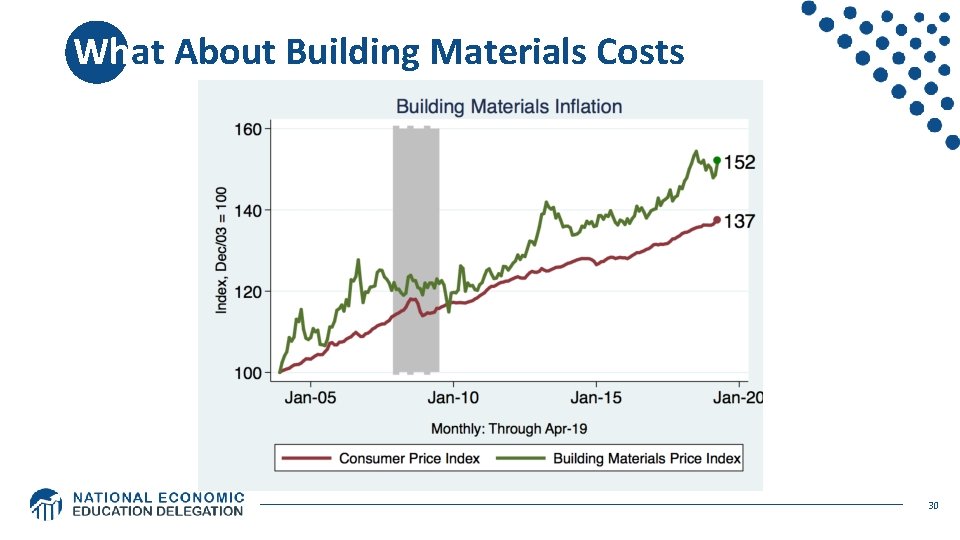
Why are House Prices Rising? • SUPPLY AND DEMAND • Supply: - Is it becoming more expensive to build? o Productivity o Local fees - What are restrictions on building and how do they vary by location? • Demand: - Capacity to afford: income and interest rates 26
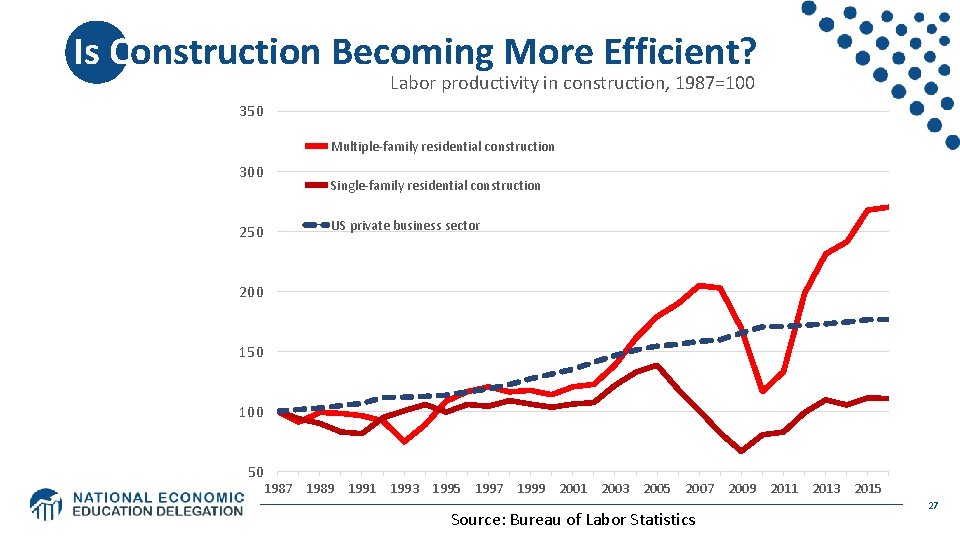
Is Construction Becoming More Efficient? Labor productivity in construction, 1987=100 350 Multiple-family residential construction 300 250 Single-family residential construction US private business sector 200 150 100 50 1987 1989 1991 1993 1995 1997 1999 2001 2003 2005 2007 2009 2011 2013 2015 Source: Bureau of Labor Statistics 27
Is Construction Becoming More Efficient? Labor productivity in US industries, 1987=100 350 300 250 Commercial banking Multiple-family residential construction Single-family residential construction Durable goods manufacturing Food services Hospitals and Nursing Homes US private business sector 200 150 100 50 1987 1989 1991 1993 1995 1997 1999 2001 2003 2005 2007 2009 2011 2013 2015 Source: Bureau of Labor Statistics 28
Productivity Growth Comparisons Productivity growth in US industries, 1987 -2016 300 Productivity growth 1987 -2016, percent 250 Durable goods manufacturing Multiple-family residential construction Commercial banking 200 150 US private business sector Hospitals and Nursing Homes Food services 100 50 Single-family residential construction Educational Services 0 -50 -100 Source: Bureau of Labor Statistics 29
What About Building Materials Costs 30
Housing Starts 31
New Construction Permits and House Prices House prices are generally higher where fewer permits are issued 32 Source: Glaeser and Gyouko (2018)
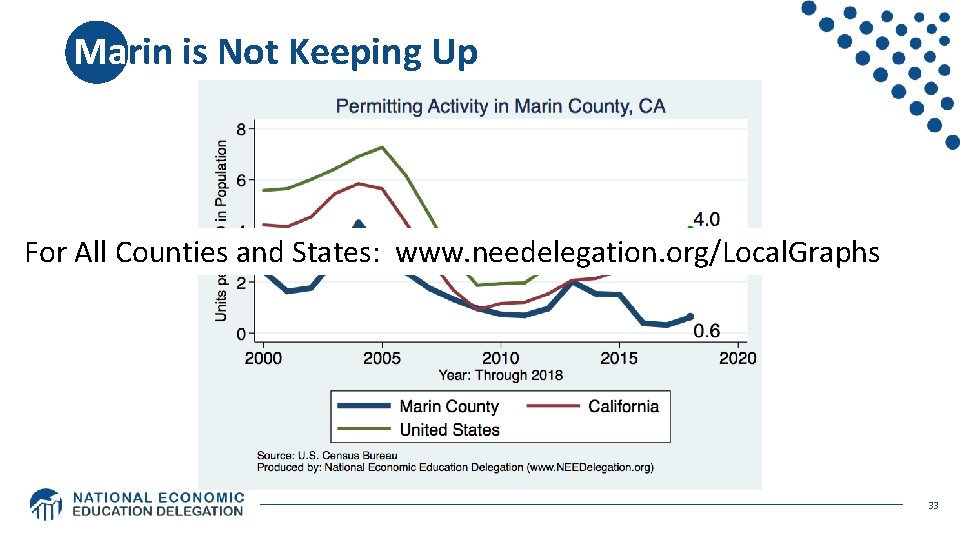
Marin is Not Keeping Up For All Counties and States: www. needelegation. org/Local. Graphs 33
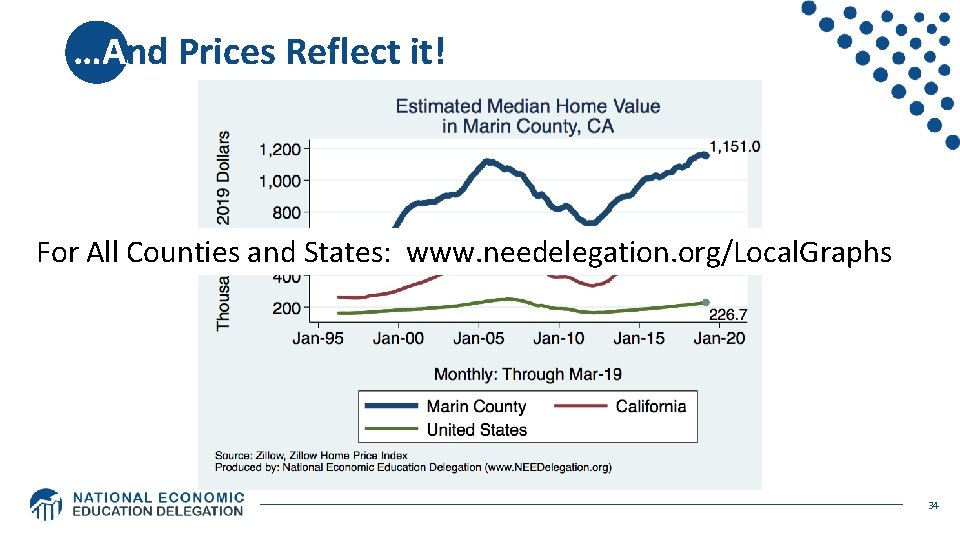
…And Prices Reflect it! For All Counties and States: www. needelegation. org/Local. Graphs 34
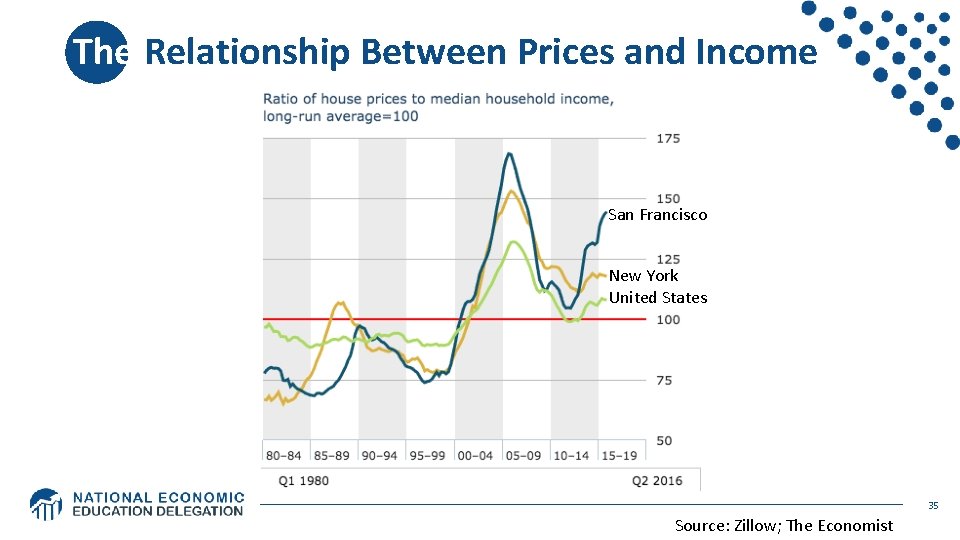
The Relationship Between Prices and Income San Francisco New York United States 35 Source: Zillow; The Economist
Policy Issues: Government Influence • Restrictions on new housing construction • Affordability • Government housing programs
Examples of Local Restrictions • Lot size requirements • Multiplexes – du or triplex • Setbacks • Limits on # of people/lot • Availability of on street parking • Cost increases through fees 37
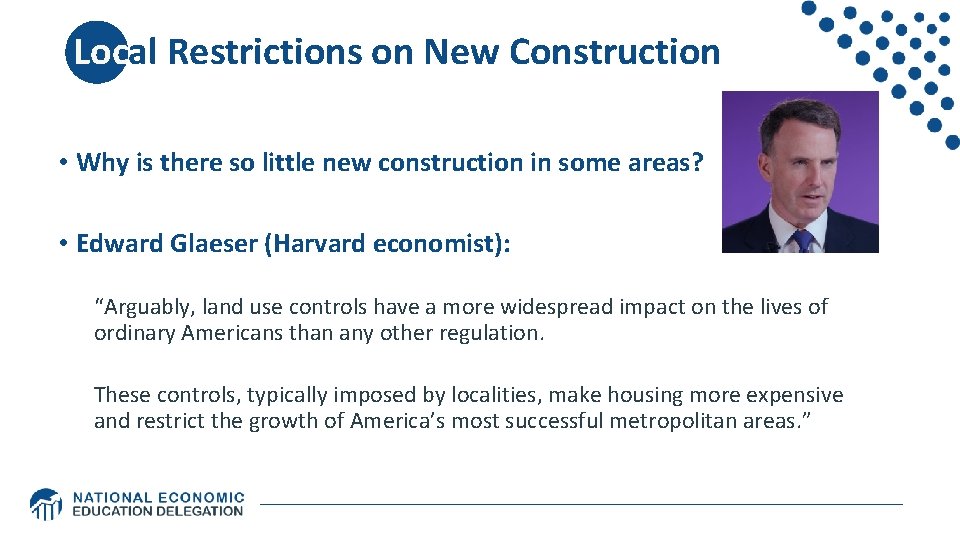
Local Restrictions on New Construction • Why is there so little new construction in some areas? • Edward Glaeser (Harvard economist): “Arguably, land use controls have a more widespread impact on the lives of ordinary Americans than any other regulation. These controls, typically imposed by localities, make housing more expensive and restrict the growth of America’s most successful metropolitan areas. ”
Building Restrictions and Economic Inequality • Glaeser, continued: “These regulations have accreted over time with virtually no cost-benefit analysis. Restricting growth is often locally popular. Promoting affordability is hardly a financially attractive aim for someone who owns a home. Yet the maze of local land use controls imposes costs on outsiders, and on the American economy as a whole. ” • “There is no better way to reduce inequality than building more housing. ”
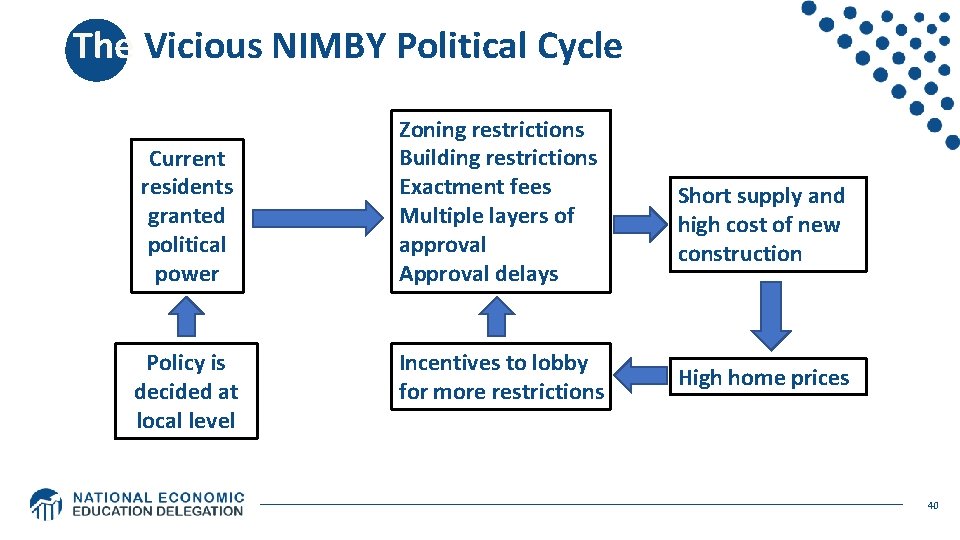
The Vicious NIMBY Political Cycle Current residents granted political power Policy is decided at local level Zoning restrictions Building restrictions Exactment fees Multiple layers of approval Approval delays Incentives to lobby for more restrictions Short supply and high cost of new construction High home prices 40
Home Prices: Summary • Housing market is not a free market • Differences in home prices across locations often have to do with local building restrictions in the face of economic growth • US coastal areas experienced an economic boom and tightening of building restrictions at the same time For example, there were 13, 000 new housing units permitted in Manhattan in the single year of 1960 alone. Compare this to 21, 000 new units permitted throughout the entire decade of the 1990 s. Source: Glaeser, Gyourko and Saks 2005. 41
Economic Damage From Building Restrictions • National income would have been higher if workers could afford to move to high-wage locations. • The economists’ estimate of potential income lost to low housing affordability caused by building restrictions is 2 -9 % of US output (400 -1800 billion current dollars per year). • By way of comparison, the cost of the entire Medicare (health care for 65+ population) program is about 600 billion annually.
Policy Reforms and Debates: Government Regulation of the Housing Inequality and Poverty Market 43
Affordability • What is the best way to make affordable housing? - Free market? - Mandates? - Rent control? - Subsidies to low income households?
How Does Rent Control Work? • Sets limits on rent increases - Could set a cap on rent - Regulates frequency of rent increases - Usually w/in a tenancy • Limits reasons for evictions - E. g. , non-payment or significant damage to the rental property • Implications: - Increases well-being of current tenants - Can reduce the supply of or lead to decay of rental housing stock - Can lower the value of nearby housing - Contribute to gentrification 45
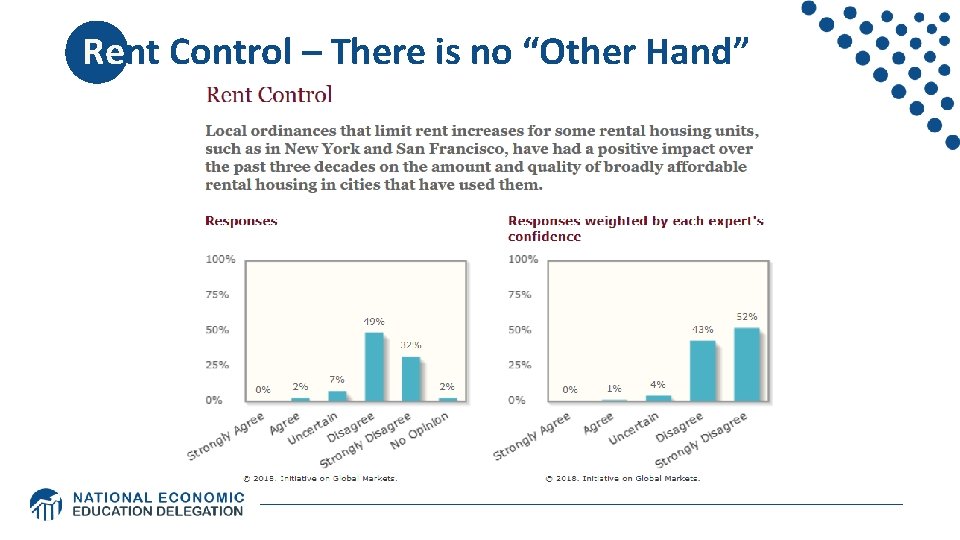
Rent Control – There is no “Other Hand”
Rent Control – What’s Not to Like? • Why don’t economists like rent control? - We usually think housing costs too much because there’s not enough of it to go around. - Landlords raise rent because they can; if somebody moves out, somebody else is willing to move in. - If there were more places to live, the landlord could not raise rent as easily. • Rent control does nothing to stop the increase in prices in uncontrolled units. And controlled units may see neglect, since they will often lose their owners money.
Rent Control – The San Francisco Experience • A 2018 study of San Francisco rent control showed: - Renters were 20% more likely to stay at their address - But, landlords stopped renting 15% of rent-controlled units - The lower number of units was related to a 5. 1% citywide rent increase. The Effects of Rent Control Expansion on Tenants, Landlords, and Inequality: Evidence from San Francisco Rebecca Diamond, Timothy Mc. Quade, Franklin Qian, NBER Working Paper No. 24181, Issued in January 2018, https: //www. nber. org/papers/w 24181
Rent Control – The Cambridge Experience • Elimination of rent control in 1994. • Decontrolled properties’ market value increased by 45%. - Neighboring properties also increased in value. • Value of the changes is significant between 1994 and 2004. - Direct effect: $300 million for decontrolled properties - Indirect effect: $1. 7 billion for nearby never controlled properties • Rent control is a VERY expensive way of increasing affordability. 49
Government Regulation • There is a federal agency involved in housing, commonly known as HUD (Department of Housing and Urban Development). • HUD has a few main ways in which it acts in the housing market - Public Housing - FHA Mortgage Insurance - Housing vouchers - Community Development Block Grants - Fair Housing • Some of these solve issues like discrimination, and some address affordability issues
HUD - Affordability • FHA Mortgage Insurance - Makes loans available to those who have lower credit scores, or cannot afford a 20% down payment • Section 8 Vouchers - Allows households to find rental housing, but the waiting lists are too long and many landlords do not accept the vouchers • Public Housing
HUD - Discrimination • Fair Housing: the market may include discriminatory landlords, realtors, mortgage brokers, etc. , and the government needs to correct this. • For example, HUD sued Facebook in April 2019, since Facebook was (allegedly) allowing landlords to only show their apartment listings to certain racial groups.
HUD – Fair Housing and Local Land Use • Some argue that the Fair Housing Act allows the federal government to prohibit exclusionary and burdensome zoning regulations, as they disproportionately work against the classes protected by the FHA. • This has been a popular idea with both left-wing and rightwing HUD secretaries.
Local Government and Housing Policy • Public Housing Agencies - HUD leaves the administration of public housing and vouchers to local Public Housing Agencies; there are over 3, 000 PHAs. • Other - Local government is far more involved in the housing market via land use policies like zoning. o Community input process o Historical designation o Permitting
Proposed Reforms - Federal • Further subsidization of more building? - Some reformers have proposed that rent is too expensive, and therefore should be subsidized. - However, it may make sense to spend that subsidy money building new public housing, to expand the supply, rather than demand. • Stronger anti-discrimination policies, including for discrimination against voucher holders.
Proposed Reforms – State and Local • Taxation on absentee owners, investors, Air. Bn. B, etc. - These are attacking symptoms rather than causes. Air. Bn. B is profitable because there are not enough hotel rooms. Investors buy properties because they expect the returns to be high. • States can give or take money from localities in their states - For example, a recent budget proposal in California would link transportation funding to housing production. Localities that don’t add enough housing would lose money.
Proposed Reforms – State and Local • Spread property tax revenue more equitably - Currently, parents essentially buy spaces in desirable public schools for their children. This method of school finance may perpetuate economic privilege across generations. • Loosen zoning - Minneapolis has recently made it legal to build triplexes almost citywide. In contrast, it is illegal to build a duplex or triplex in most space in most American cities. - Mixed use zoning: it is also currently illegal in many places to have a first floor grocery store (or any kind of commercial use) with apartments or condominiums on top. Why?
Proposed Reforms – Economists’ Take • Economists will, in general, support government intervention when free markets don’t work well, and support government restraint when free markets would work well, or too much government is causing a problem. • Most people can buy or rent housing in a market transaction with another person or corporation, with minimal government involvement (enforcement of contracts via courts, protection against overt fraud, health and safety protections for renters, etc. ) - However, equity matters too. Some economists may support policies that alleviate the effects of racial discrimination which still persist.
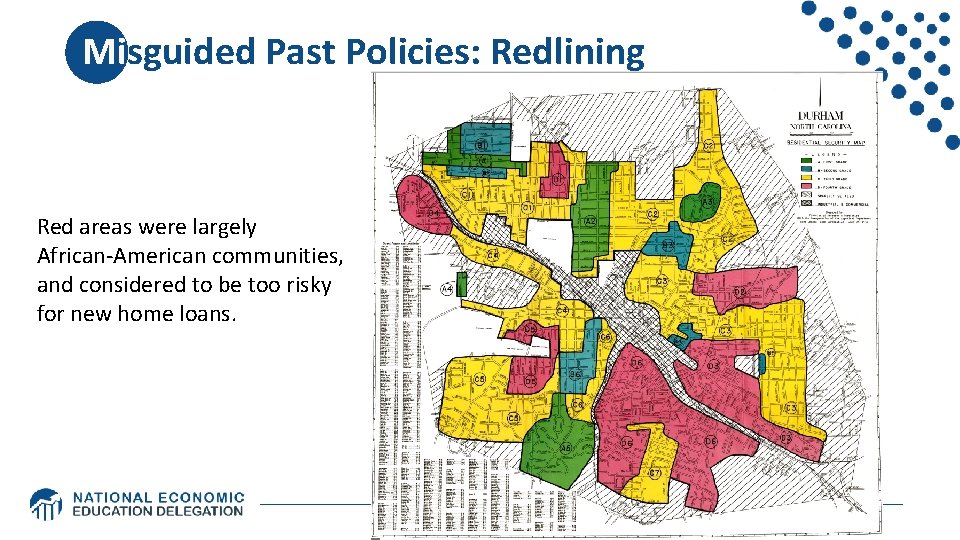
Misguided Past Policies: Redlining • For example, the government “redlined” heavily minority neighborhoods. - Redlining occurred when maps were drawn to show risky investment in certain areas would be. The “riskiest” areas usually had the highest concentrations of black people. o Some argue that the government merely drew these maps, and did not discriminate in their own lending practices, but others say private and public lenders relied on these maps to deny investment or loans in those areas. - Some relationships between redlined areas and outcomes still hold today in peer-reviewed economics research. Note this is a failure introduced by government!
Misguided Past Policies: Redlining Red areas were largely African-American communities, and considered to be too risky for new home loans.
Conclusions • A modest-size house is a good investment that pays a great dividend. • Housing market is not a free market. - Government stimulates homeownership through tax policy and mortgage insurance. - Zoning and other building regulations contribute to economic inequality and may cause substantial economic damage.
Conclusions: More on Government Intervention • Policies need to be considered carefully – unintended consequences - Rent control can have an enormous impact on: o Supply – both quantity and quality o Nearby uncontrolled properties - Zoning and permitting o Can feed inequality of access to resources: housing/education • Government intervention is a likely contributor to home price appreciation. - May well achieve goals, but at lowest possible cost? Unclear. 62
Thank you! Any Questions? www. NEEDelegation. org <presenter name> <presenter email> Contact NEED: Info@NEEDelegation. org Submit a testimonial: www. NEEDelegation. org/testimonials. php Get NEED Updates: www. NEEDelegation. org/friends. php 63