
The US Homefront During WWII 1 Japanese Internment
- Slides: 15
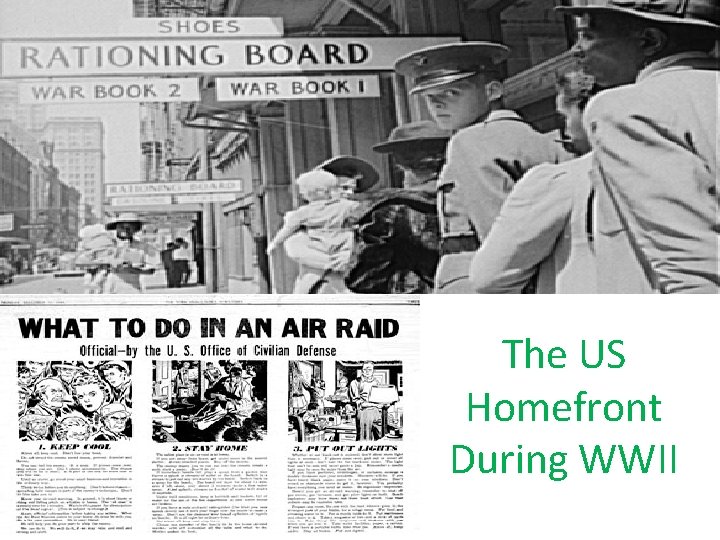
The US Homefront During WWII
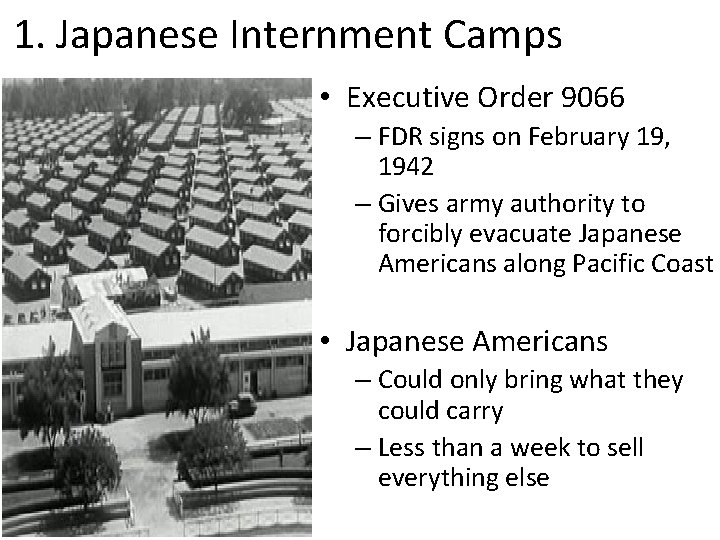
1. Japanese Internment Camps • Executive Order 9066 – FDR signs on February 19, 1942 – Gives army authority to forcibly evacuate Japanese Americans along Pacific Coast • Japanese Americans – Could only bring what they could carry – Less than a week to sell everything else
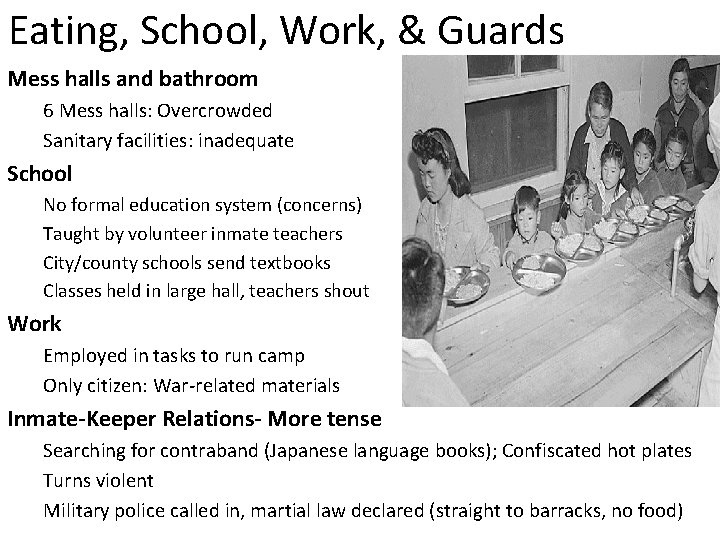
Eating, School, Assembly Work, & Guards Santa Anita Camp Mess halls and bathroom 6 Mess halls: Overcrowded Sanitary facilities: inadequate School No formal education system (concerns) Taught by volunteer inmate teachers City/county schools send textbooks Classes held in large hall, teachers shout Work Employed in tasks to run camp Only citizen: War-related materials Inmate-Keeper Relations- More tense Searching for contraband (Japanese language books); Confiscated hot plates Turns violent Military police called in, martial law declared (straight to barracks, no food)
Partner Activity • April: Harry Ferguson was able to visit Manzanar, a concentration center in California, in April and write an article for the San Francisco News It is a settlement that grew of the sagebrush of the Mojave Desert. This is one of the places where the 118, 000 Japanese who are being moved out of the strategic area of the Pacific Coast are being resettled. Many of the loyal ones came here with fear and doubt in their hearts, expecting a Nazi-type concentration camp. Instead they found comfortable wooden buildings covered with tar paper, bathhouses and showers and plenty of wholesome food. Democracy is at work among them. An election has been held to choose block leaders. Eventually from these block leaders will be chosen an advisory committee of five to work with the camp management in preserving order and arranging for the planting of crops. • Another reporter, Kimi Tambara, wrote this at the Minidoka Relocation Center in Idaho: “This life behind a fence is not a pleasant one, but nothing can be pleasant in these times, could it? I can now understand how an eagle feels when his wings are clipped and caged. Beyond the bars of his prison lies the wide expanse of the boundless skies, flocked with soft clouds, the wide, fields of brush and woods—limitless space for the pursuit of Life itself. ”
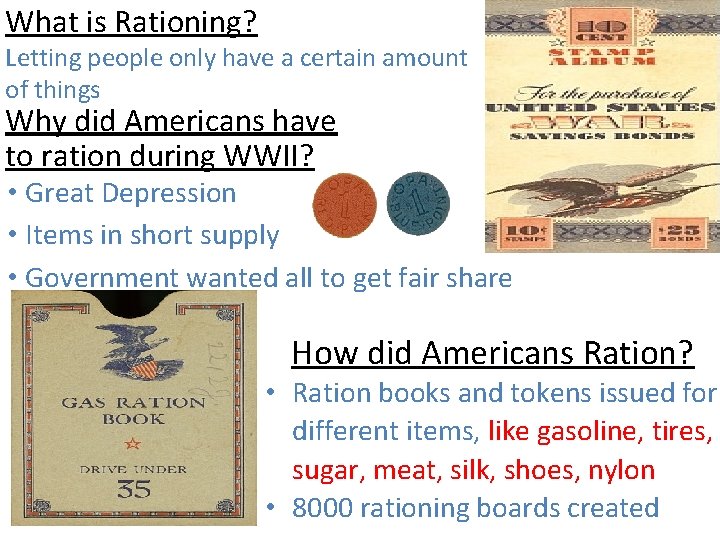
What is Rationing? Letting people only have a certain amount of things Why did Americans have to ration during WWII? • Great Depression • Items in short supply • Government wanted all to get fair share How did Americans Ration? • Ration books and tokens issued for different items, like gasoline, tires, sugar, meat, silk, shoes, nylon • 8000 rationing boards created
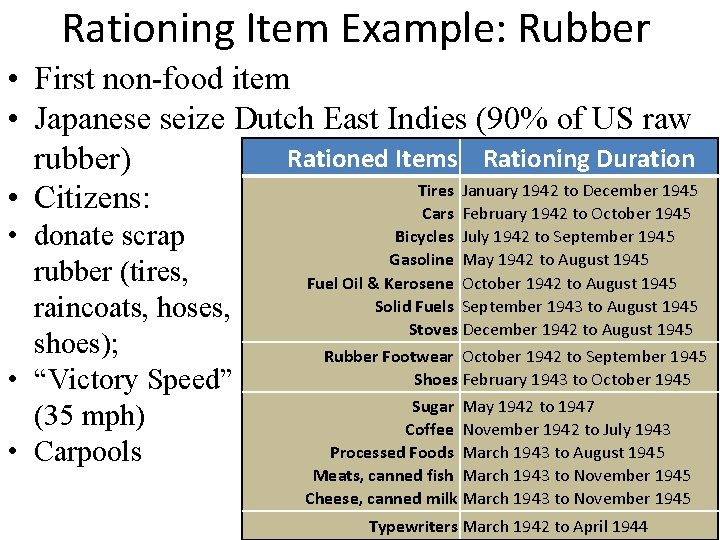
Rationing Item Example: Rubber • First non-food item • Japanese seize Dutch East Indies (90% of US raw Rationed Items Rationing Duration rubber) Tires January 1942 to December 1945 • Citizens: Cars February 1942 to October 1945 • donate scrap rubber (tires, raincoats, hoses, shoes); • “Victory Speed” (35 mph) • Carpools Bicycles July 1942 to September 1945 Gasoline May 1942 to August 1945 Fuel Oil & Kerosene October 1942 to August 1945 Solid Fuels September 1943 to August 1945 Stoves December 1942 to August 1945 Rubber Footwear October 1942 to September 1945 Shoes February 1943 to October 1945 Sugar May 1942 to 1947 Coffee November 1942 to July 1943 Processed Foods March 1943 to August 1945 Meats, canned fish March 1943 to November 1945 Cheese, canned milk March 1943 to November 1945 Typewriters March 1942 to April 1944
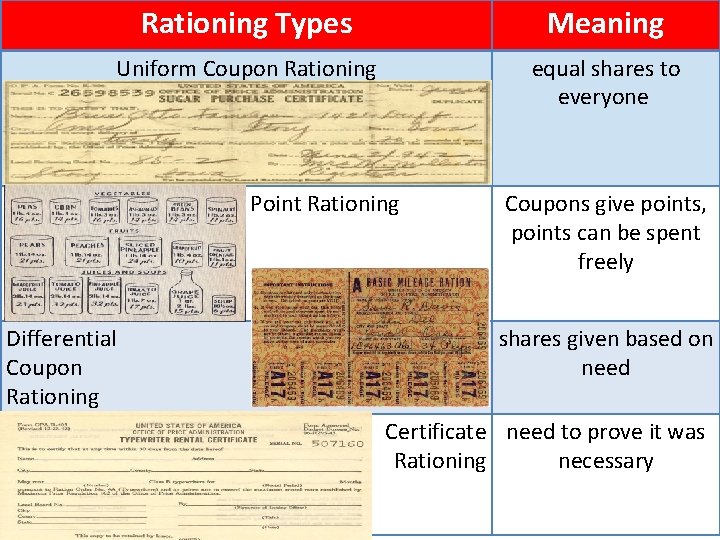
Rationing Types Meaning Uniform Coupon Rationing equal shares to everyone Point Rationing Differential Coupon Rationing Coupons give points, points can be spent freely shares given based on need Certificate need to prove it was Rationing necessary
Partner Discussion Imagine US citizens today were forced to ration: What items would be difficult for you to ration? Why? How might rationing affect your life?
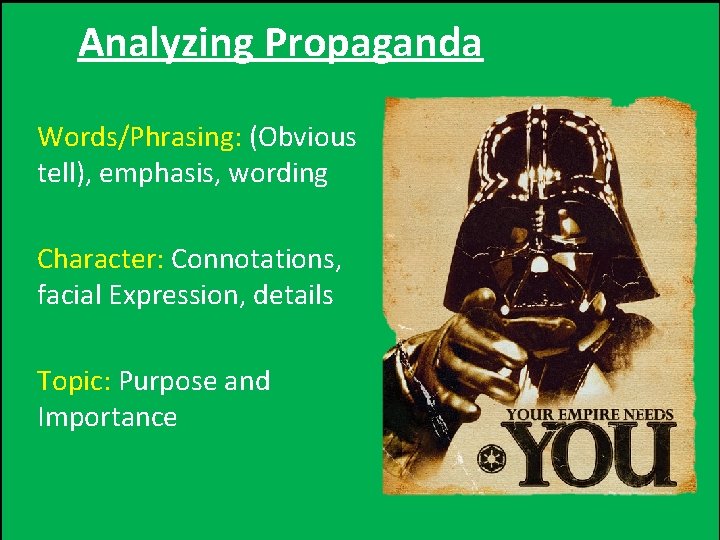
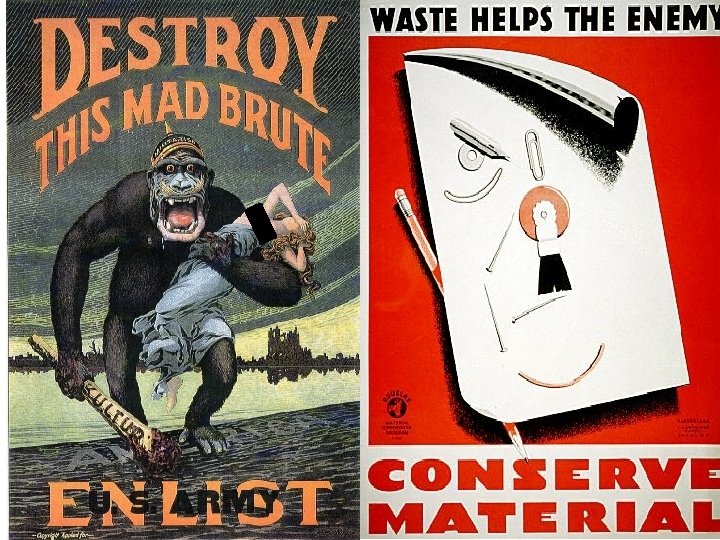
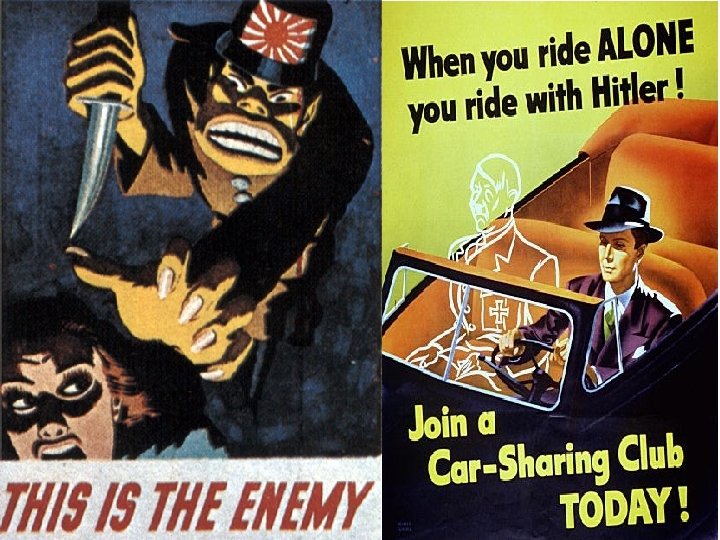
Analyzing Propaganda Words/Phrasing: (Obvious tell), emphasis, wording Character: Connotations, facial Expression, details Topic: Purpose and Importance
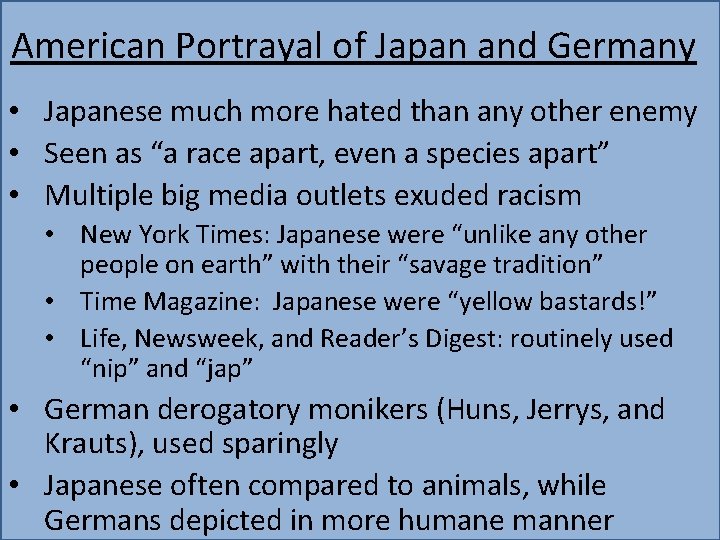
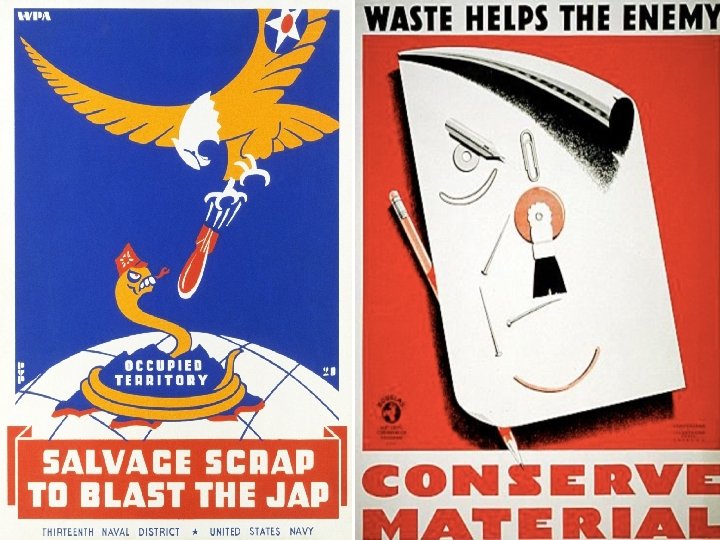
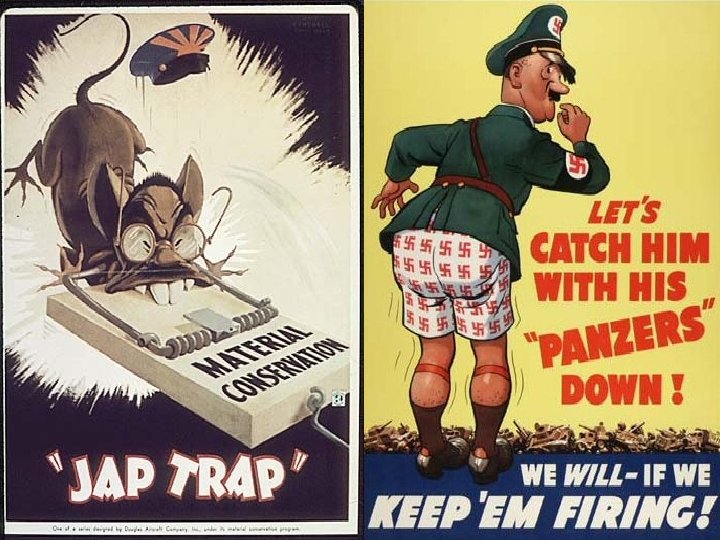
American Portrayal of Japan and Germany • Japanese much more hated than any other enemy • Seen as “a race apart, even a species apart” • Multiple big media outlets exuded racism • New York Times: Japanese were “unlike any other people on earth” with their “savage tradition” • Time Magazine: Japanese were “yellow bastards!” • Life, Newsweek, and Reader’s Digest: routinely used “nip” and “jap” • German derogatory monikers (Huns, Jerrys, and Krauts), used sparingly • Japanese often compared to animals, while Germans depicted in more humane manner
Big Takeaways 1. Japanese Americans experience unfair treatment both in media and law 2. America at war helps create jobs / end Great Depression 3. American lifestyle adjusts to support war effort (rationing, blackouts, air raid drills) 4. Similar effects felt all over world by citizens of countries at war