
THE URINARY SYSTEM THE BODIES LIQUID WASTE REMOVAL

THE URINARY SYSTEM THE BODIES LIQUID WASTE REMOVAL SYSTEM

FUNCTION ~ The urinary system, also called the renal system, filters and removes waste products from blood, resulting in the excretion of urine from the body. ~ There are four main parts to this process: ~ Removing waste products ~ Adjusting water ~ Adjusting electrolyte levels ~ Maintaining a correct p. H balance
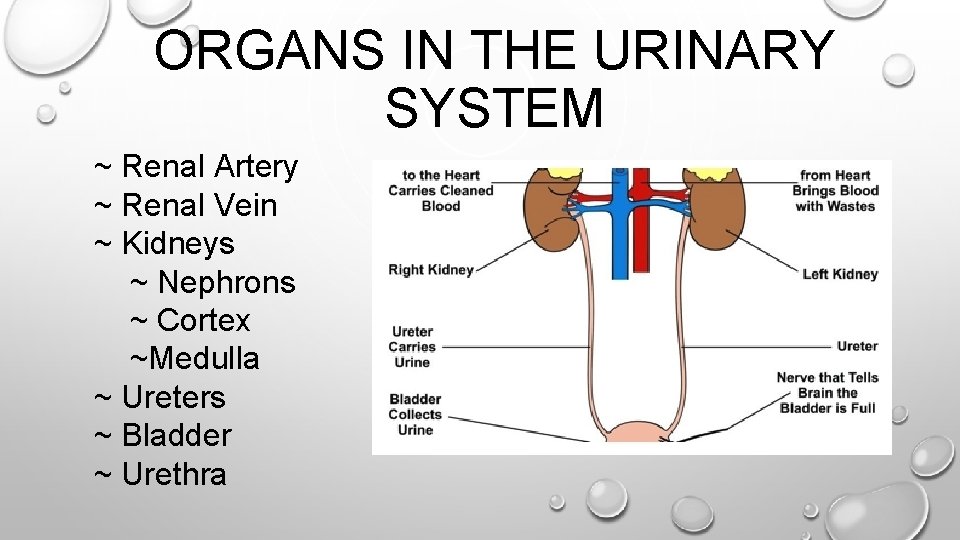
ORGANS IN THE URINARY SYSTEM ~ Renal Artery ~ Renal Vein ~ Kidneys ~ Nephrons ~ Cortex ~Medulla ~ Ureters ~ Bladder ~ Urethra

RENAL ARTERY AND VEIN ~ The renal artery delivers blood that is full of waste products to the kidneys ~ The renal vein returns to clean blood to our general circulation
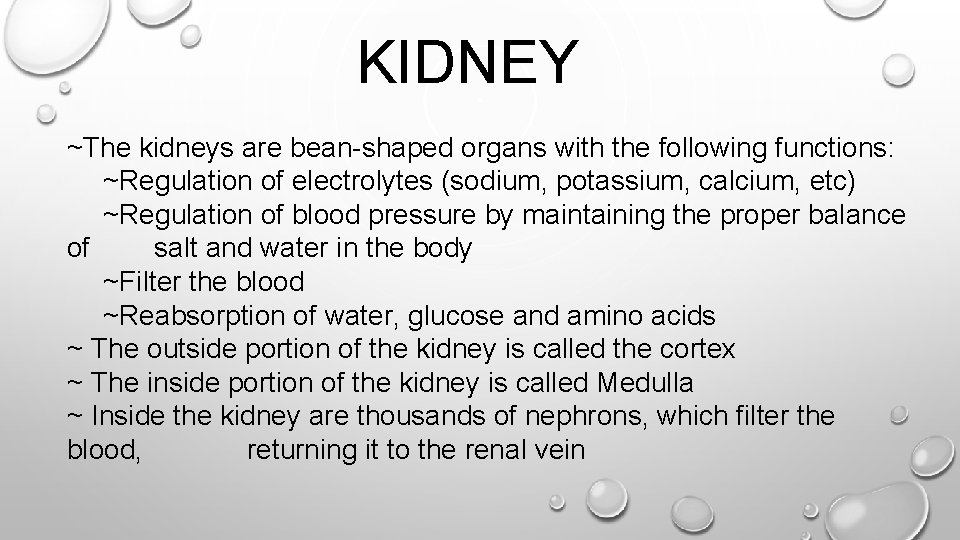
KIDNEY ~The kidneys are bean-shaped organs with the following functions: ~Regulation of electrolytes (sodium, potassium, calcium, etc) ~Regulation of blood pressure by maintaining the proper balance of salt and water in the body ~Filter the blood ~Reabsorption of water, glucose and amino acids ~ The outside portion of the kidney is called the cortex ~ The inside portion of the kidney is called Medulla ~ Inside the kidney are thousands of nephrons, which filter the blood, returning it to the renal vein
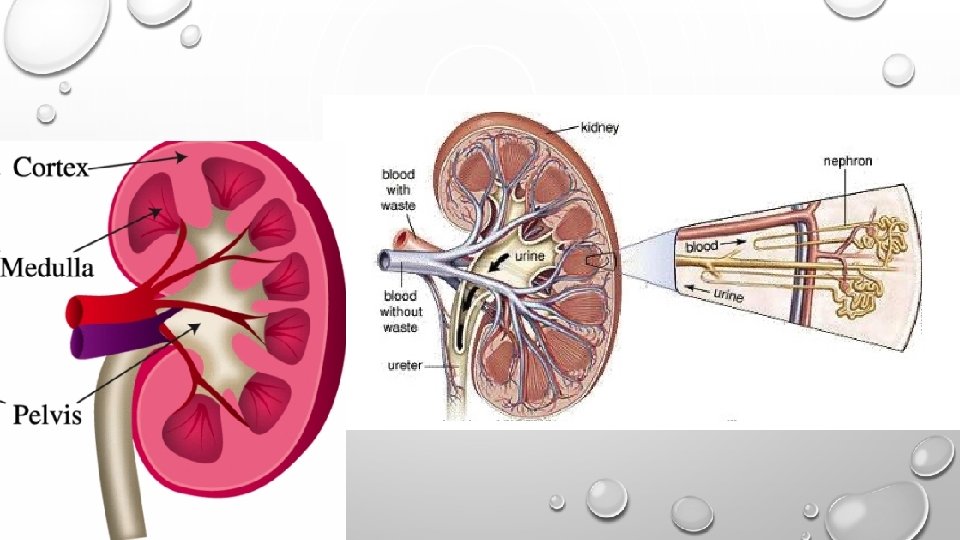
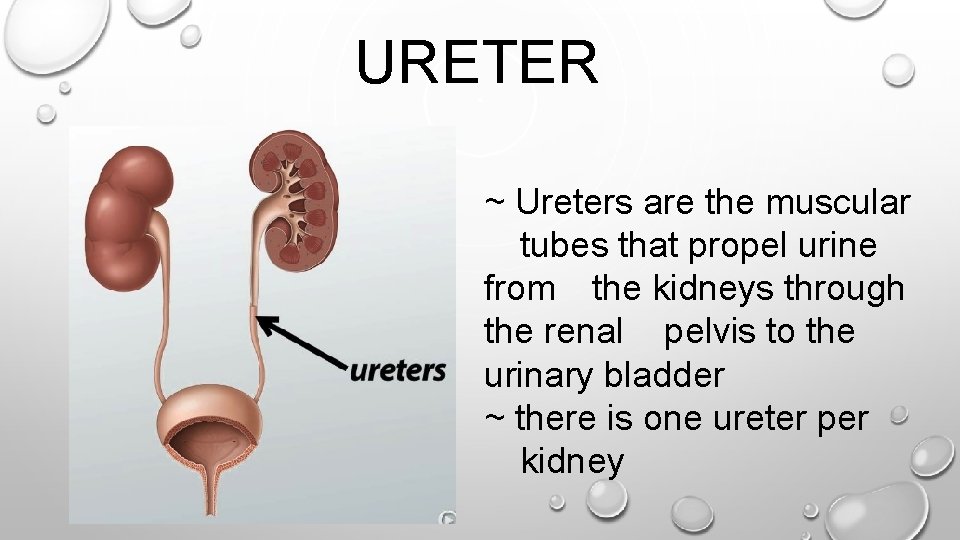
URETER ~ Ureters are the muscular tubes that propel urine from the kidneys through the renal pelvis to the urinary bladder ~ there is one ureter per kidney
BLADDER ~ The bladder is an elastic muscle sack that lies at the base of the pelvis ~ It is composed of three layers of smooth muscle tissue lined with a mucous membrane ~ Folds in the bladder allow it to stretch ~ The bladder receives urine directly from the ureters and stores it until it is ready to be excreted ~ Voluntary muscle action controls the external sphincter which opens on demand to allow the intentional emptying of the bladder ~ Involuntary muscle action causes the bladder to contract and the internal sphincter to relax
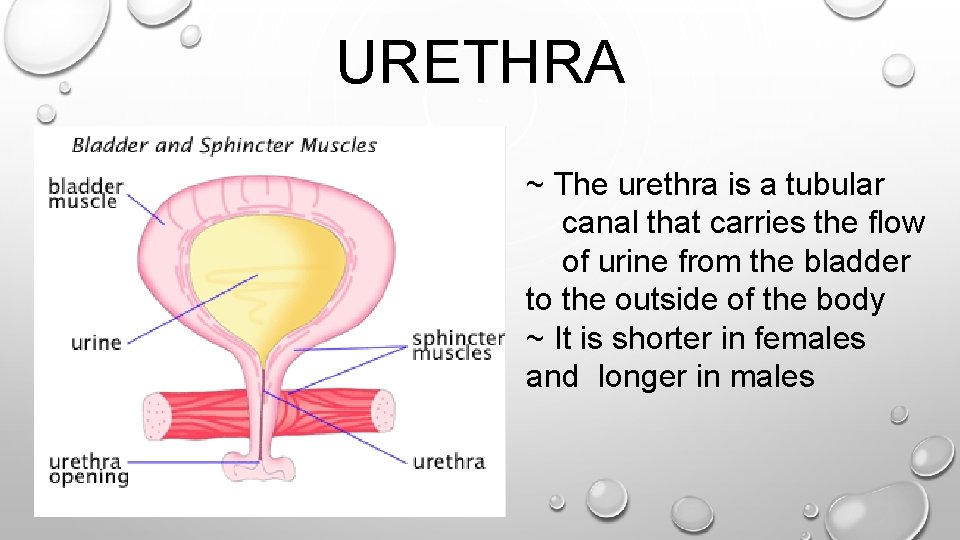
URETHRA ~ The urethra is a tubular canal that carries the flow of urine from the bladder to the outside of the body ~ It is shorter in females and longer in males
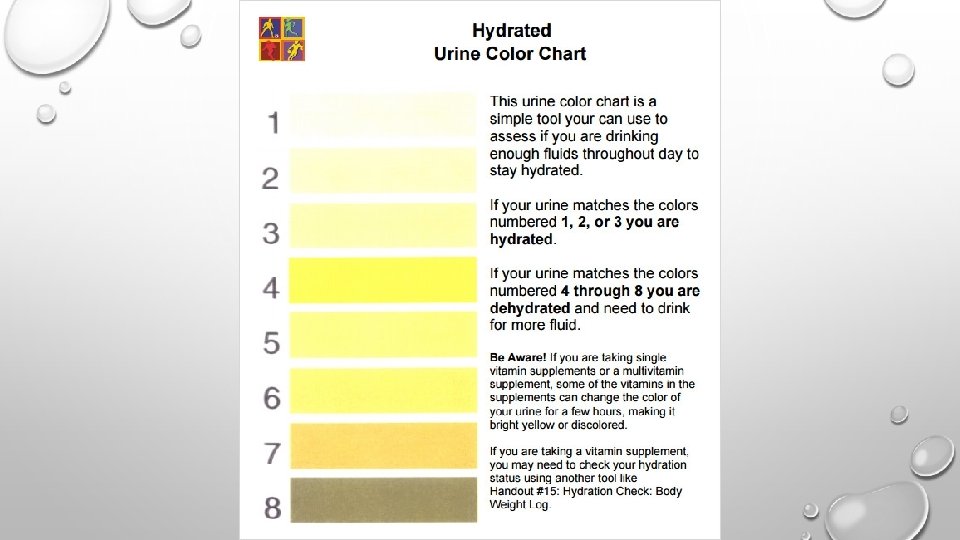
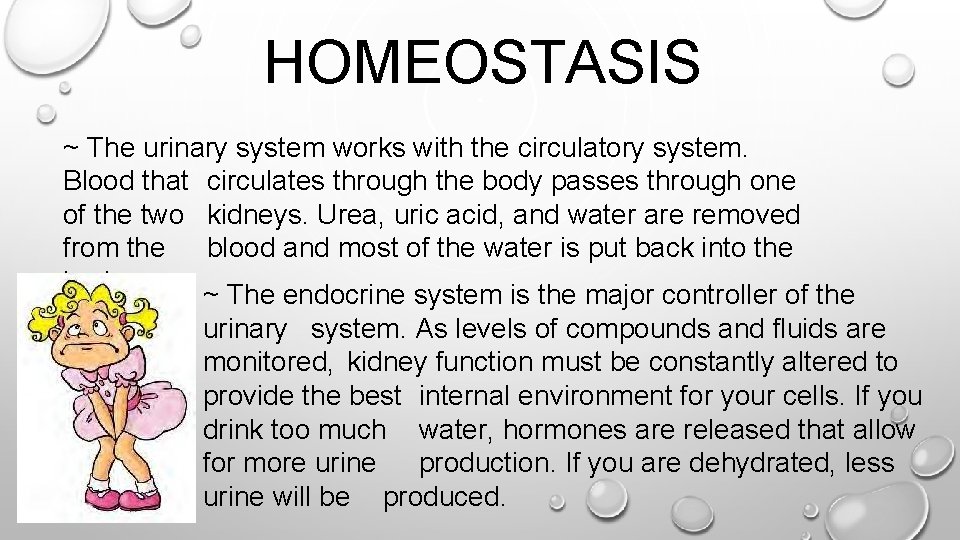
HOMEOSTASIS ~ The urinary system works with the circulatory system. Blood that circulates through the body passes through one of the two kidneys. Urea, uric acid, and water are removed from the blood and most of the water is put back into the body. ~ The endocrine system is the major controller of the urinary system. As levels of compounds and fluids are monitored, kidney function must be constantly altered to provide the best internal environment for your cells. If you drink too much water, hormones are released that allow for more urine production. If you are dehydrated, less urine will be produced.
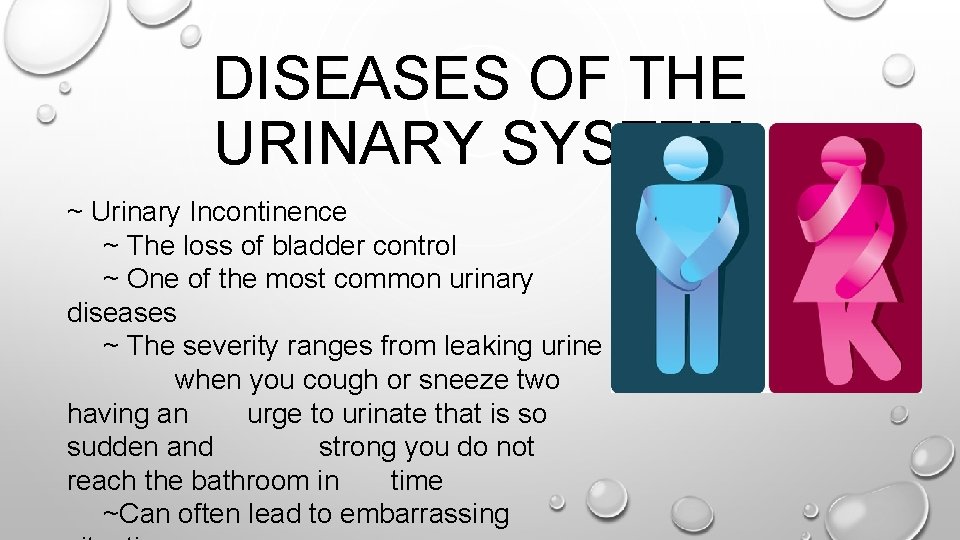
DISEASES OF THE URINARY SYSTEM ~ Urinary Incontinence ~ The loss of bladder control ~ One of the most common urinary diseases ~ The severity ranges from leaking urine when you cough or sneeze two having an urge to urinate that is so sudden and strong you do not reach the bathroom in time ~Can often lead to embarrassing
DISEASES OF THE URINARY SYSTEM ~ Bladder Infection (also called urinary tract infection or UTI) ~ Also one of the most common urinary diseases ~ A bacterial infection with in the bladder, most often caused by E. coli ~ Symptoms include urinating more often than usual, pain or burning when urinating, cramping and pressure in the lower abdomen or lower back
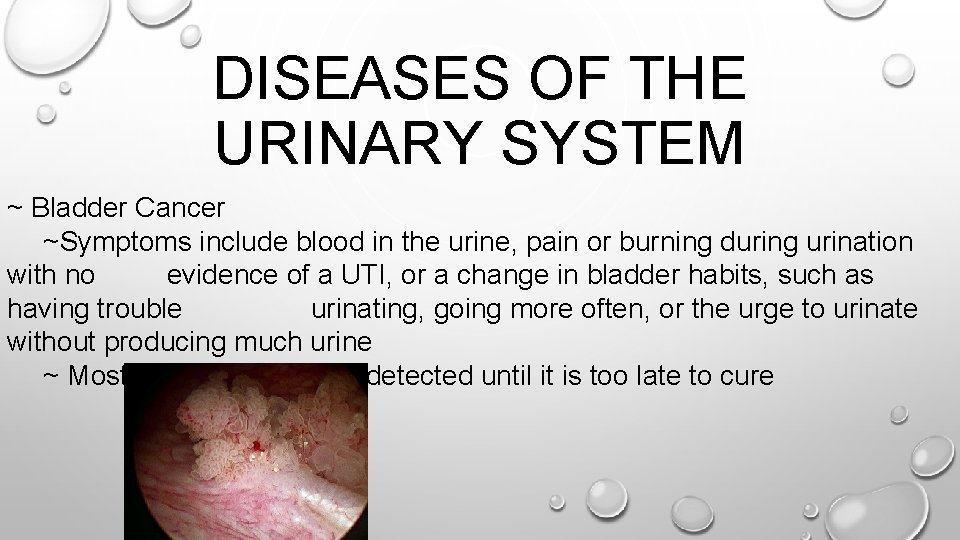
DISEASES OF THE URINARY SYSTEM ~ Bladder Cancer ~Symptoms include blood in the urine, pain or burning during urination with no evidence of a UTI, or a change in bladder habits, such as having trouble urinating, going more often, or the urge to urinate without producing much urine ~ Most symptoms are not detected until it is too late to cure
- Slides: 14