
The Urinary System Maintenance Systems Unit 5 Basic
The Urinary System Maintenance Systems Unit 5
Basic Functions of the Urinary System • Regulates the composition and volume of the blood by removing and restoring selected amounts of water and solutes. • Eliminates water, nitrogenous wastes from the breakdown of protein, inorganic salts, and assists in eliminating heat and carbon dioxide.
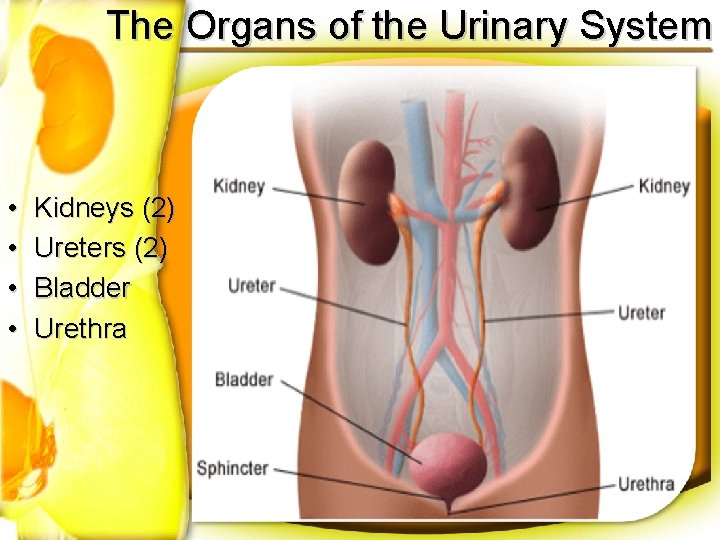
The Organs of the Urinary System • • Kidneys (2) Ureters (2) Bladder Urethra
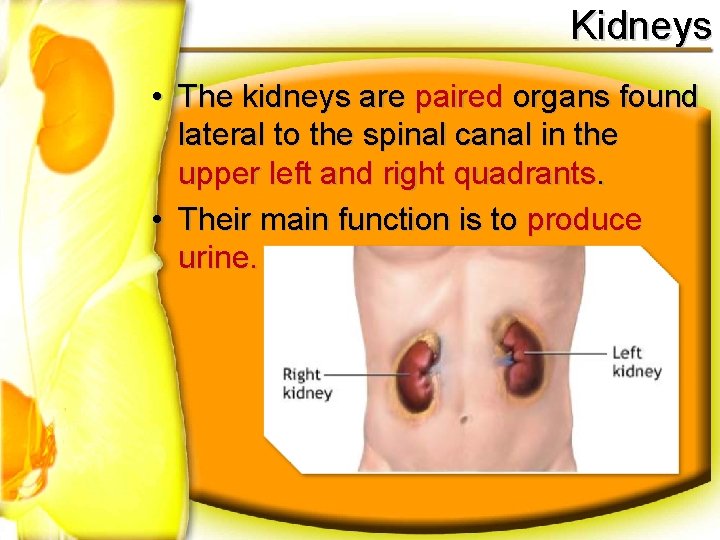
Kidneys • The kidneys are paired organs found lateral to the spinal canal in the upper left and right quadrants. • Their main function is to produce urine.
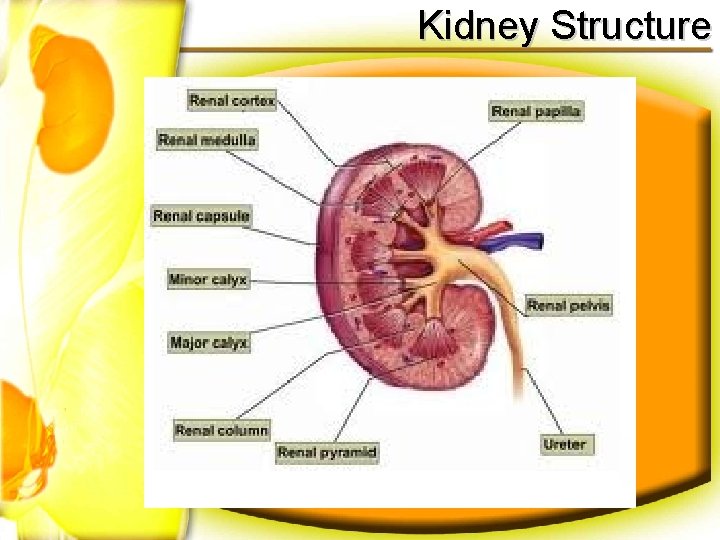
Kidney Structure
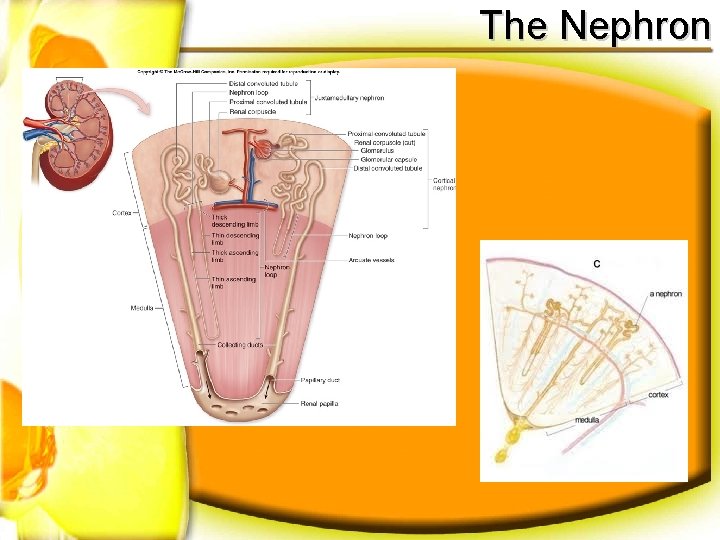
The Nephron
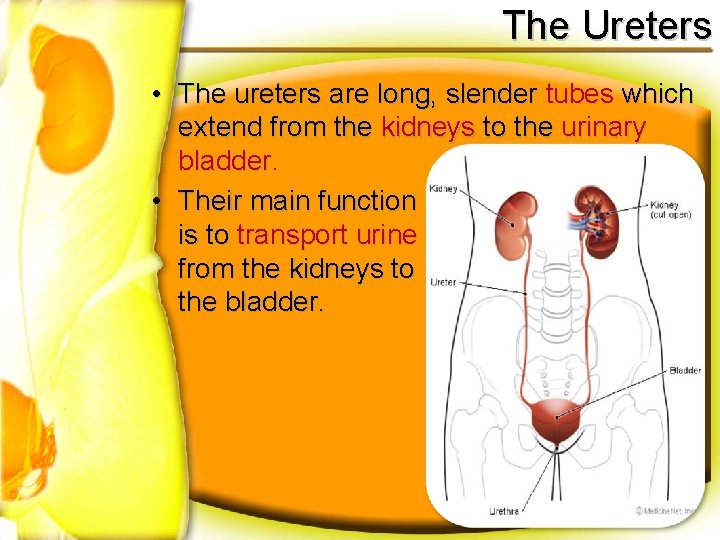
The Ureters • The ureters are long, slender tubes which extend from the kidneys to the urinary bladder. • Their main function is to transport urine from the kidneys to the bladder.
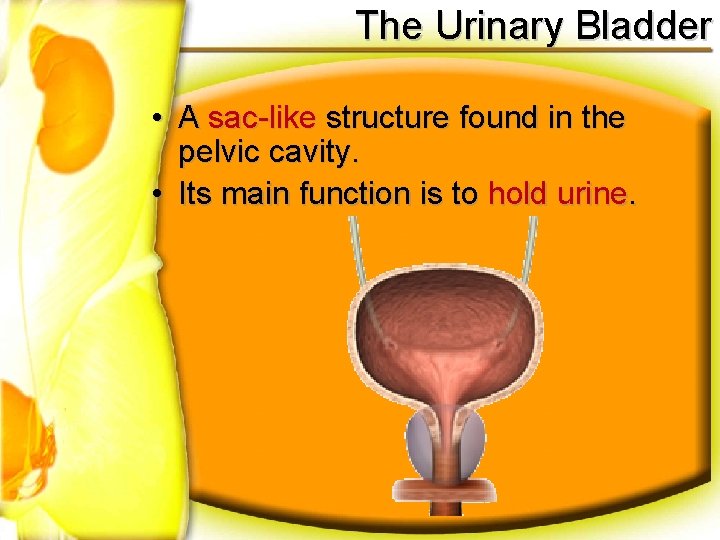
The Urinary Bladder • A sac-like structure found in the pelvic cavity. • Its main function is to hold urine.
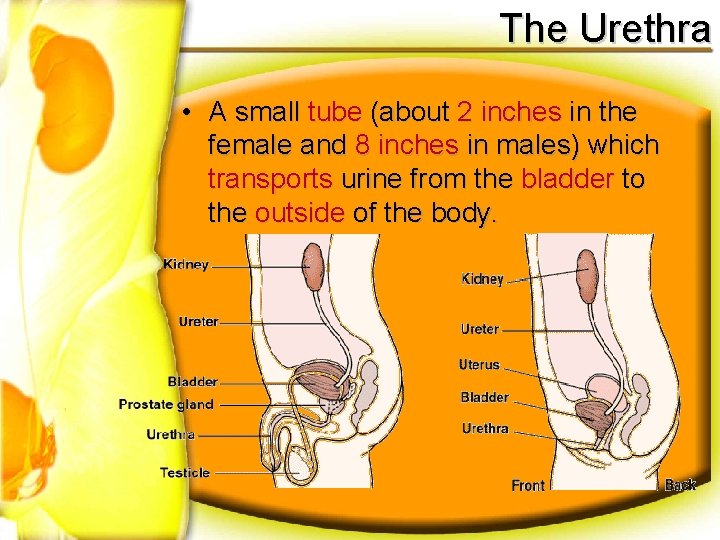
The Urethra • A small tube (about 2 inches in the female and 8 inches in males) which transports urine from the bladder to the outside of the body.
Diseases and Careers of the Urinary System
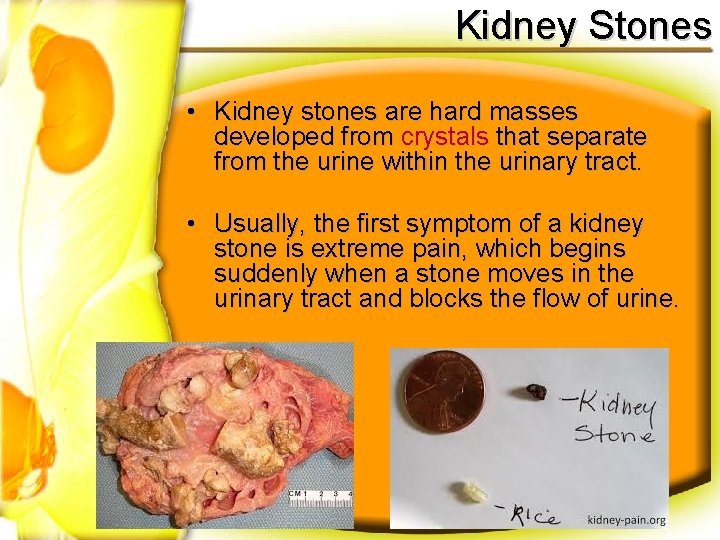
Kidney Stones • Kidney stones are hard masses developed from crystals that separate from the urine within the urinary tract. • Usually, the first symptom of a kidney stone is extreme pain, which begins suddenly when a stone moves in the urinary tract and blocks the flow of urine.

Kidney Stones continued • Typically, a person feels a sharp, cramping pain in the back and side in the area of the kidney or in the lower abdomen. Sometimes nausea and vomiting occur. • Later, pain may spread to the groin. Predisposing factors for kidney stones include dehydration, infection, obstruction, and genetics. • Treatment includes medication to relieve the pain, forcing fluids, and sometimes surgical intervention such as lithotripsy.
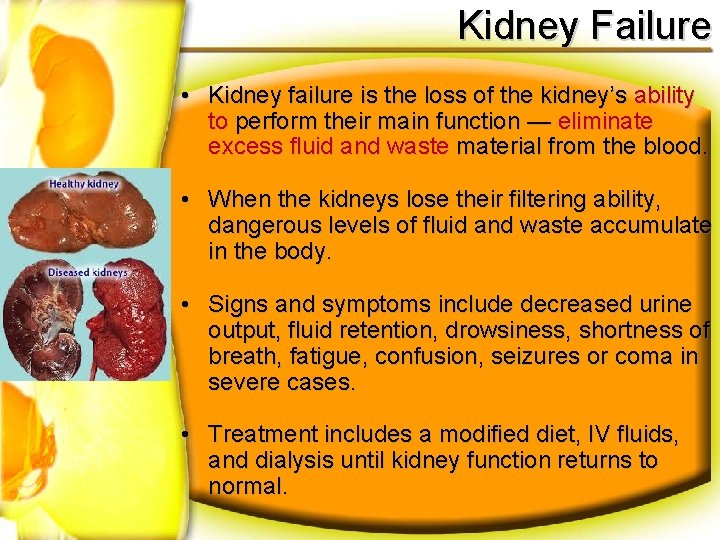
Kidney Failure • Kidney failure is the loss of the kidney’s ability to perform their main function — eliminate excess fluid and waste material from the blood. • When the kidneys lose their filtering ability, dangerous levels of fluid and waste accumulate in the body. • Signs and symptoms include decreased urine output, fluid retention, drowsiness, shortness of breath, fatigue, confusion, seizures or coma in severe cases. • Treatment includes a modified diet, IV fluids, and dialysis until kidney function returns to normal.
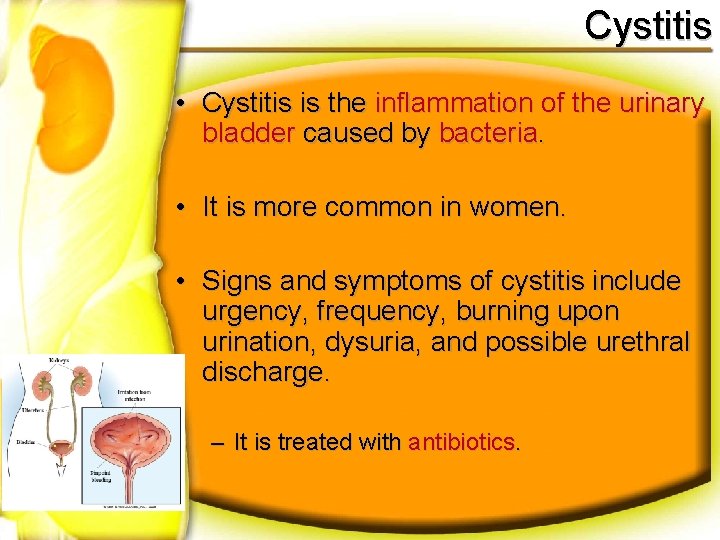
Cystitis • Cystitis is the inflammation of the urinary bladder caused by bacteria. • It is more common in women. • Signs and symptoms of cystitis include urgency, frequency, burning upon urination, dysuria, and possible urethral discharge. – It is treated with antibiotics.
Careers • Urologist – diagnose, treat, and manage patients with urological disorders. • Dialysis Technician – operates the equipment that removes waste and excess fluids from the blood of patients whose kidneys do not function properly. • Medical Lab Technician – peforms tests on tissues, blood, and other body fluids to help diagnose and treat disorders/diseases. • Medical Assistant – perform basic lab tests, dispose of contaminated supplies, sterilize medical instruments, etc.
- Slides: 15