
The Urinary System Functions of the Urinary system



- Slides: 26
The Urinary System
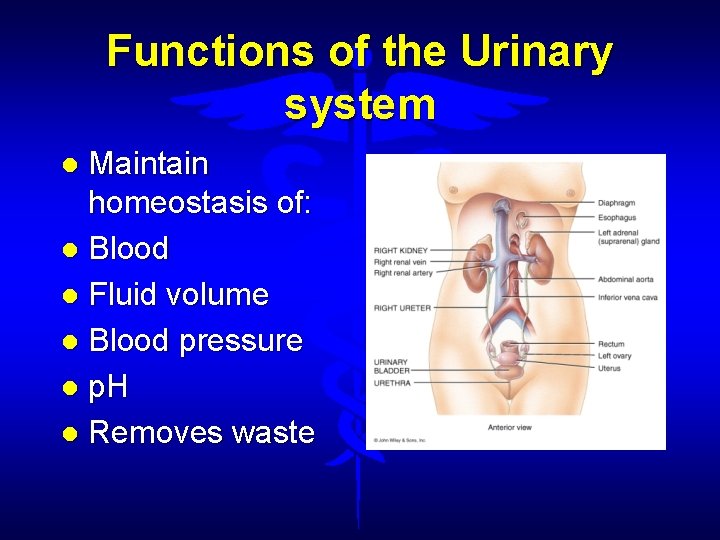
Functions of the Urinary system Maintain homeostasis of: Blood Fluid volume Blood pressure p. H Removes waste
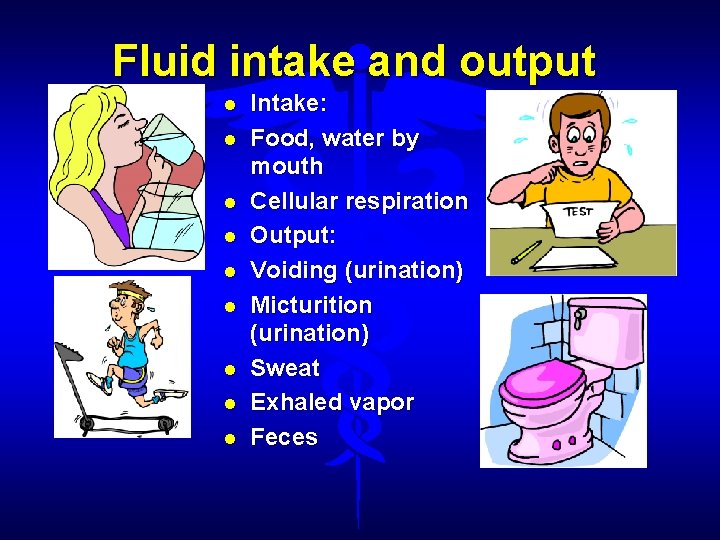
Fluid intake and output Intake: Food, water by mouth Cellular respiration Output: Voiding (urination) Micturition (urination) Sweat Exhaled vapor Feces
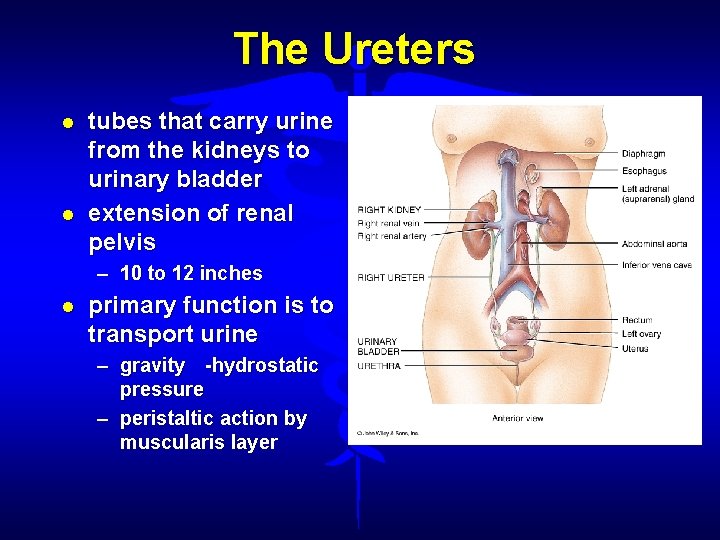
The Ureters tubes that carry urine from the kidneys to urinary bladder extension of renal pelvis – 10 to 12 inches primary function is to transport urine – gravity -hydrostatic pressure – peristaltic action by muscularis layer
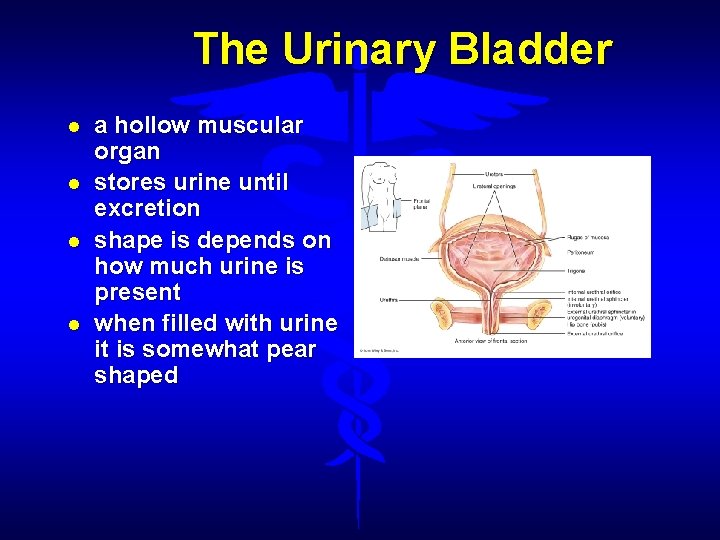
The Urinary Bladder a hollow muscular organ stores urine until excretion shape is depends on how much urine is present when filled with urine it is somewhat pear shaped
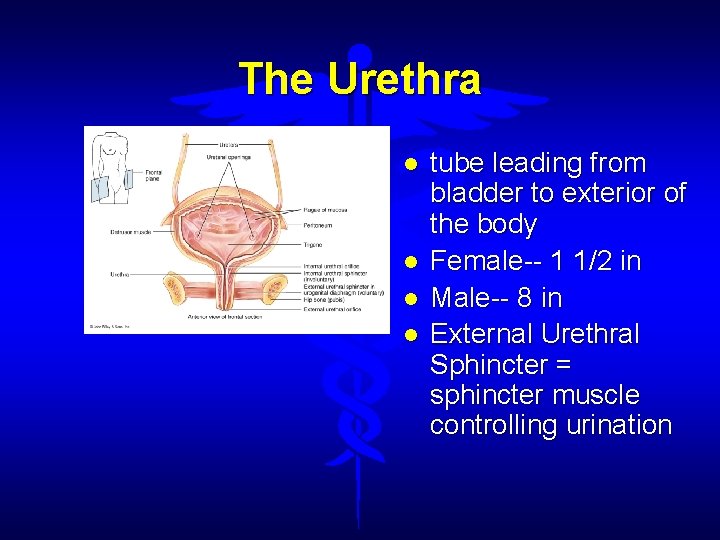
The Urethra tube leading from bladder to exterior of the body Female-- 1 1/2 in Male-- 8 in External Urethral Sphincter = sphincter muscle controlling urination
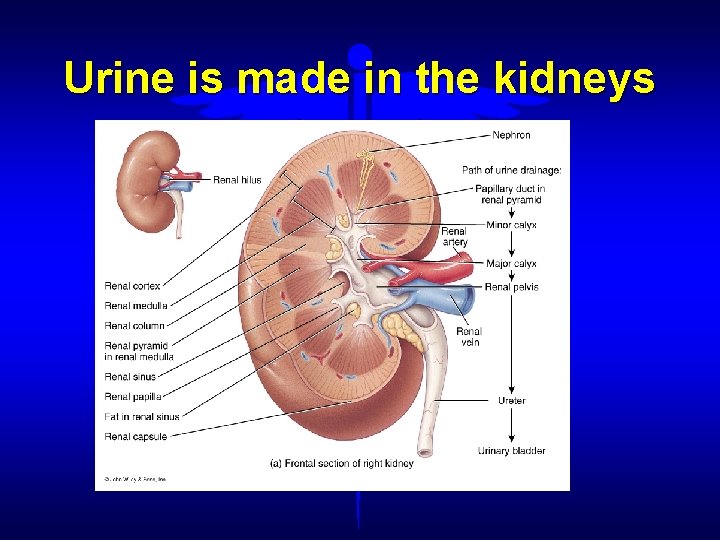
Urine is made in the kidneys
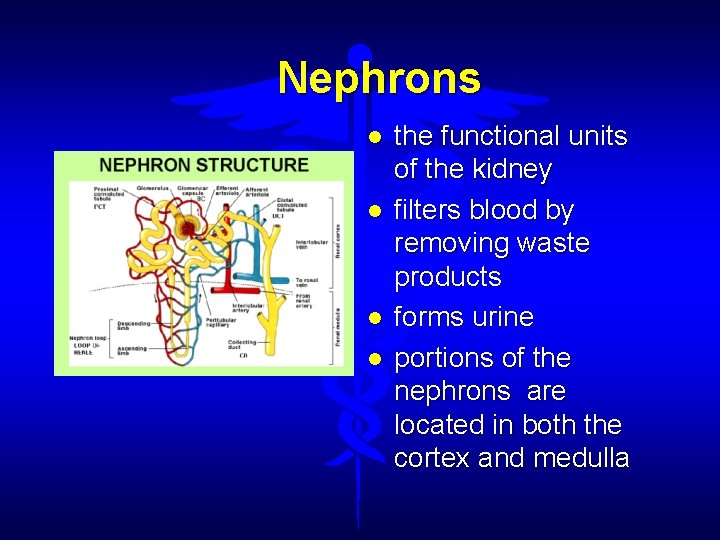
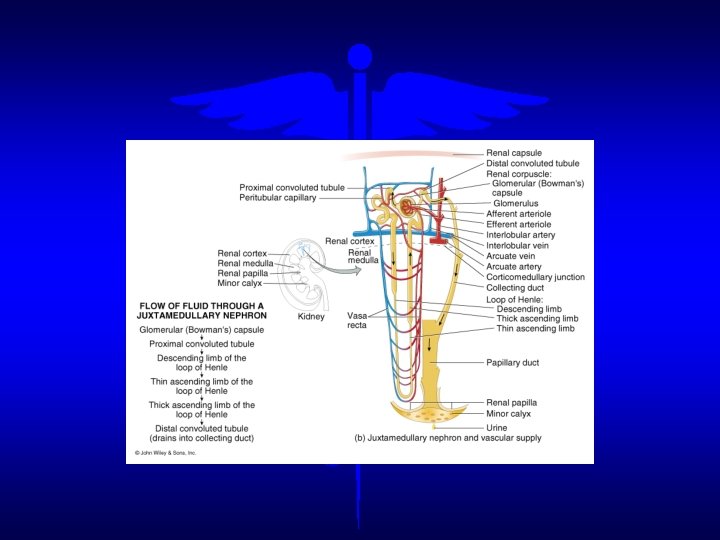
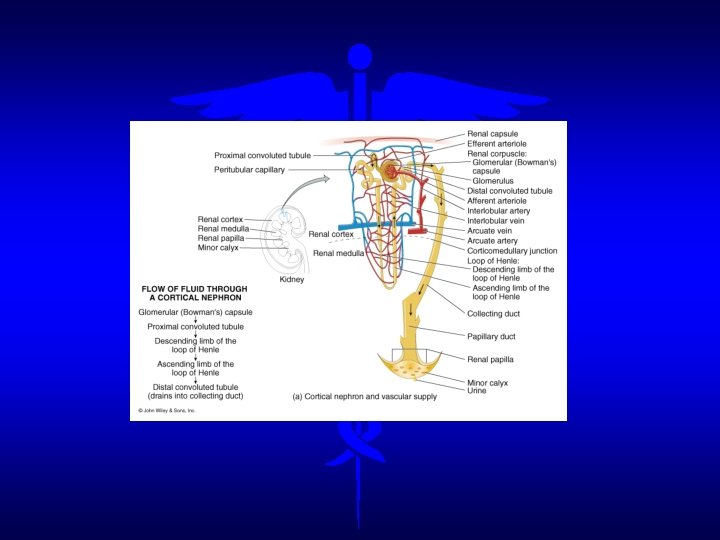
Nephrons the functional units of the kidney filters blood by removing waste products forms urine portions of the nephrons are located in both the cortex and medulla
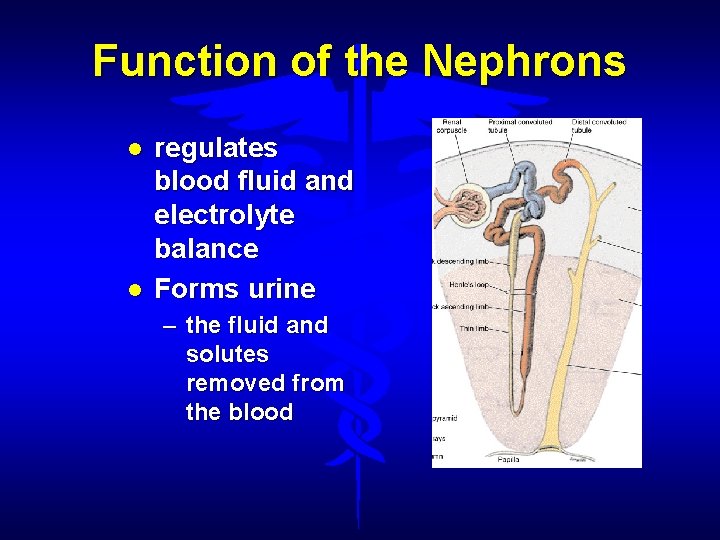
Function of the Nephrons regulates blood fluid and electrolyte balance Forms urine – the fluid and solutes removed from the blood
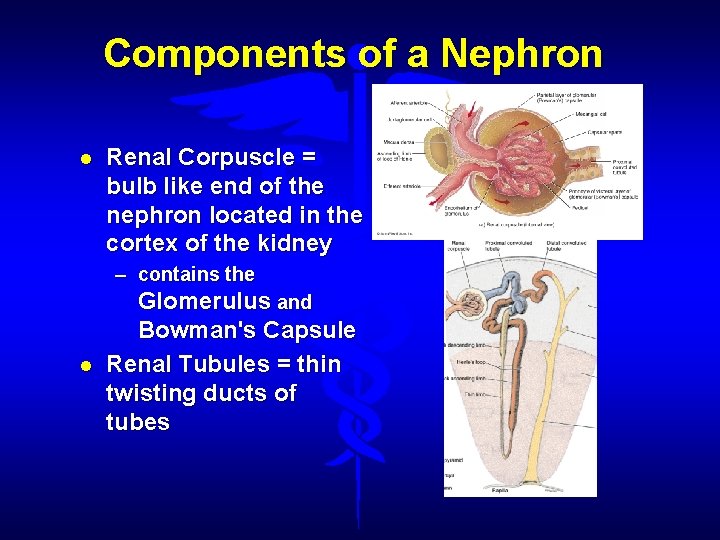
Components of a Nephron Renal Corpuscle = bulb like end of the nephron located in the cortex of the kidney – contains the Glomerulus and Bowman's Capsule Renal Tubules = thin twisting ducts of tubes
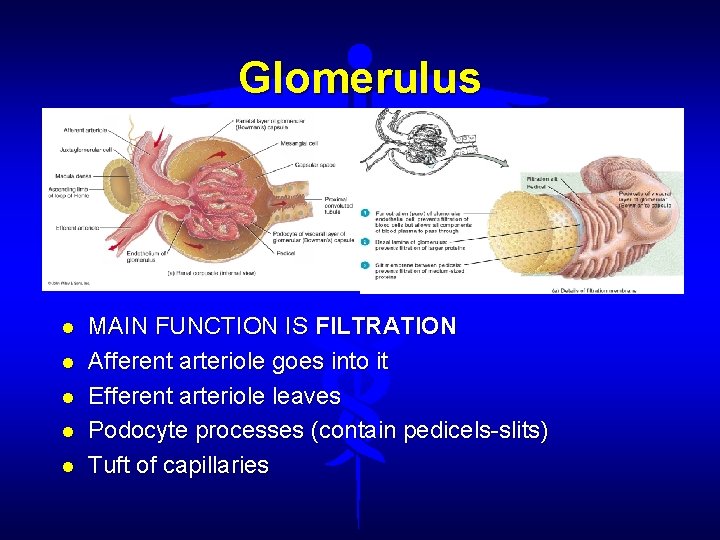
Glomerulus MAIN FUNCTION IS FILTRATION Afferent arteriole goes into it Efferent arteriole leaves Podocyte processes (contain pedicels-slits) Tuft of capillaries
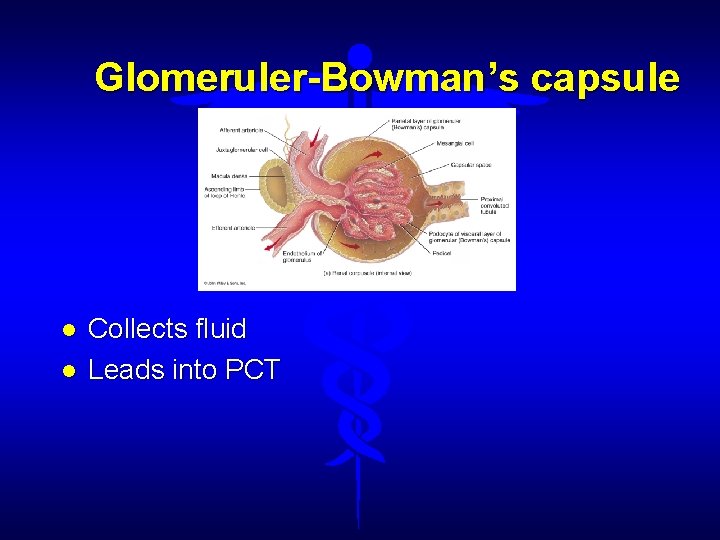
Glomeruler-Bowman’s capsule Collects fluid Leads into PCT
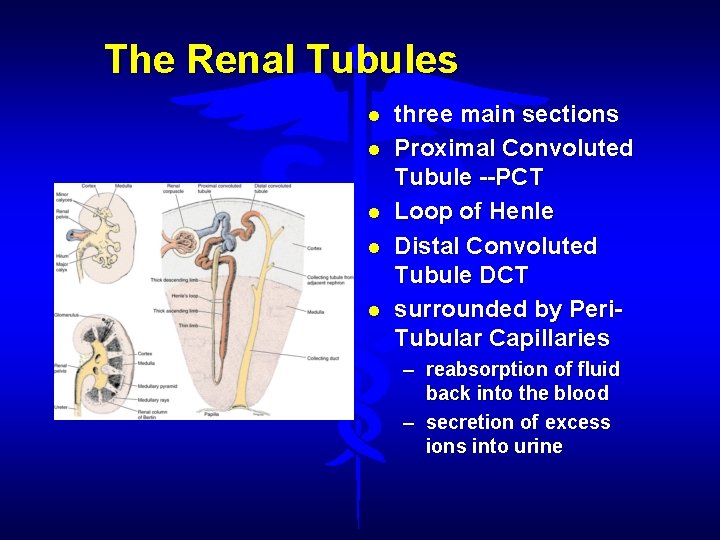
The Renal Tubules three main sections Proximal Convoluted Tubule --PCT Loop of Henle Distal Convoluted Tubule DCT surrounded by Peri. Tubular Capillaries – reabsorption of fluid back into the blood – secretion of excess ions into urine
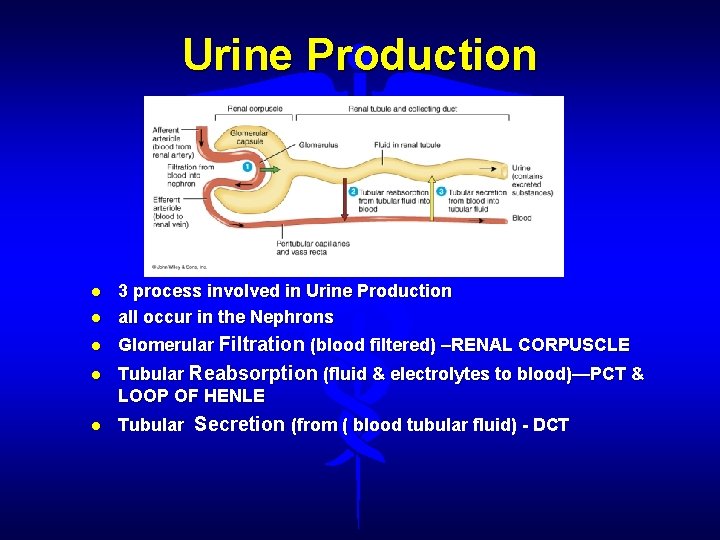
Urine Production 3 process involved in Urine Production all occur in the Nephrons Glomerular Filtration (blood filtered) –RENAL CORPUSCLE Tubular Reabsorption (fluid & electrolytes to blood)—PCT & LOOP OF HENLE Tubular Secretion (from ( blood tubular fluid) - DCT
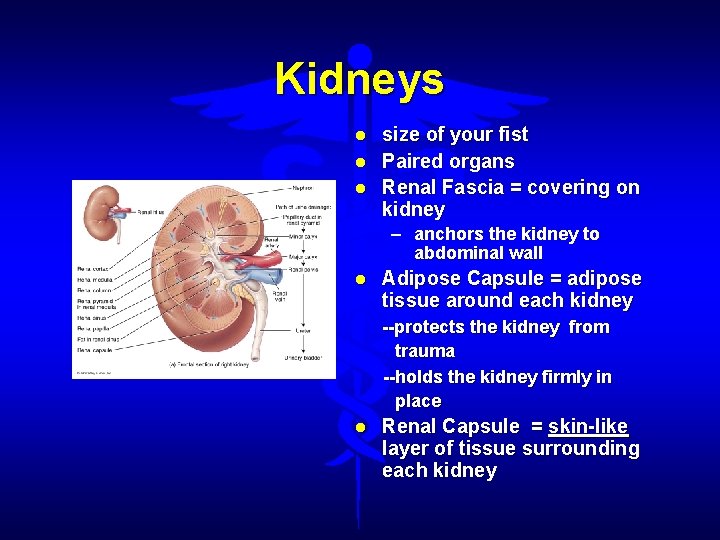
Kidneys size of your fist Paired organs Renal Fascia = covering on kidney – anchors the kidney to abdominal wall Adipose Capsule = adipose tissue around each kidney --protects the kidney from trauma --holds the kidney firmly in place Renal Capsule = skin-like layer of tissue surrounding each kidney
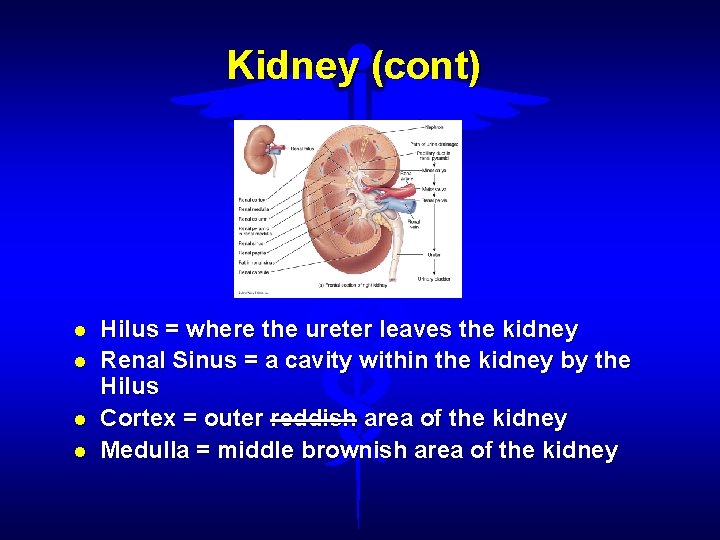
Kidney (cont) Hilus = where the ureter leaves the kidney Renal Sinus = a cavity within the kidney by the Hilus Cortex = outer reddish area of the kidney Medulla = middle brownish area of the kidney
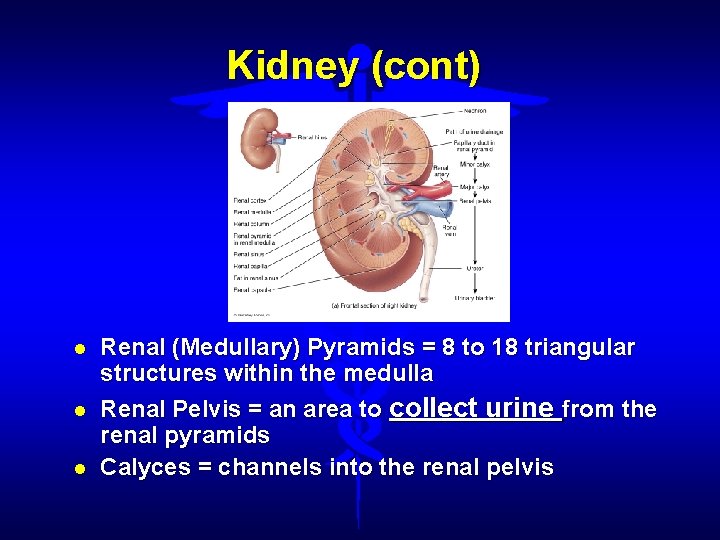
Kidney (cont) Renal (Medullary) Pyramids = 8 to 18 triangular structures within the medulla Renal Pelvis = an area to collect urine from the renal pyramids Calyces = channels into the renal pelvis
Physical Characteristics of Urine Color = yellow or amber – can vary considerably with diet Turbidity = clear then turns cloudy Odor = usually odorless, but can smell if left standing
Urine Volume normally one to three quarts per day influenced by: Blood Pressure Blood Concentration Temperature Diuretics Emotions Hormones
-Chemical Composition of Urine Water = 95% 5% solutes from cellular metabolism or Organic Components of Urine – Urea - Uric Acid Creatine – Hippuric Acid - Ketone Bodies - Others Inorganic Components of Urine – Na. Cl - Ca++ - NH 4+ – Mg++ - PO 4 (3 -) - SO 4 (2 -)
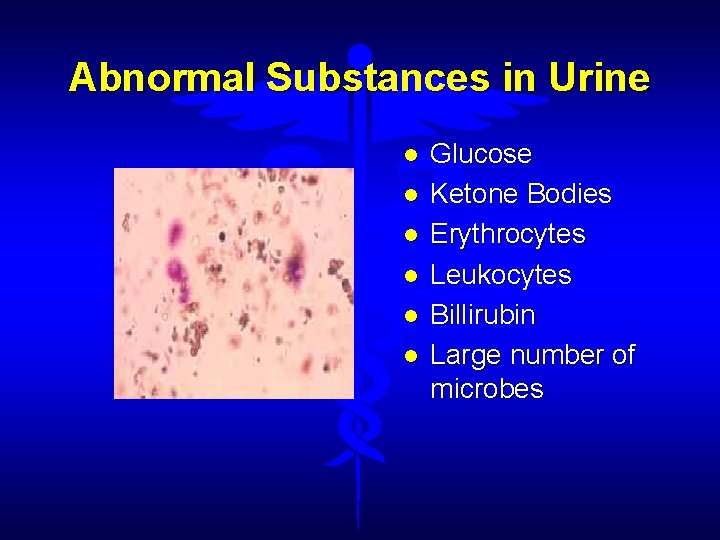
Abnormal Substances in Urine Glucose Ketone Bodies Erythrocytes Leukocytes Billirubin Large number of microbes
FYI the entire volume of blood in the body is filtered by the kidneys about 60 times each day filters about 180 Liters (45 gallons) of fluid a day returns over 99% of the fluid back to the body
The end