
The Urinary System Function of the Excretory System
- Slides: 16
The Urinary System
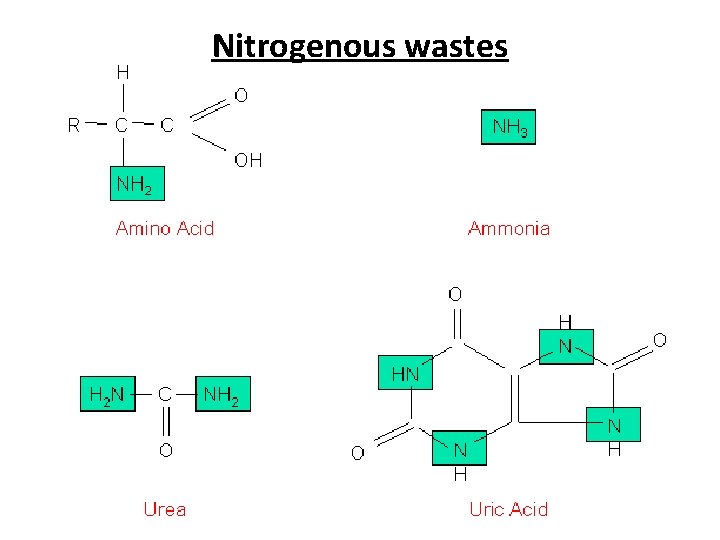
Function of the Excretory System • The excretory system functions in ridding the body of nitrogenous wastes (urea, uric acid, ammonia) and other wastes. • It also regulates the amount of water and ions present in the body fluids.
Nitrogenous wastes
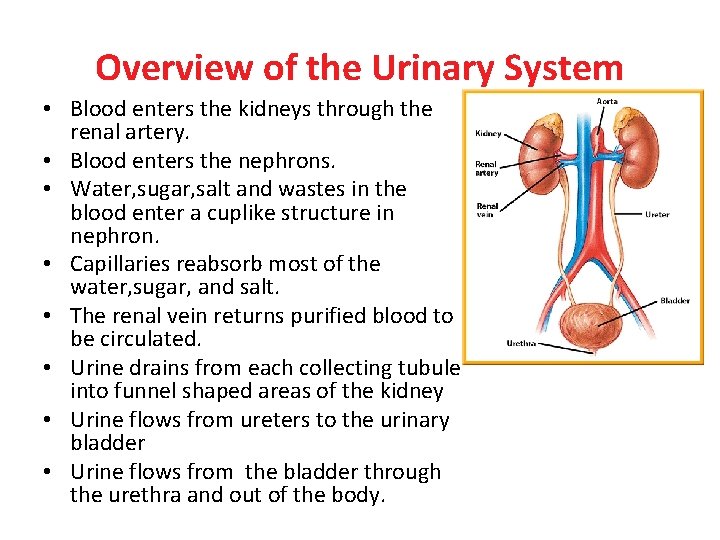
Overview of the Urinary System • Blood enters the kidneys through the renal artery. • Blood enters the nephrons. • Water, sugar, salt and wastes in the blood enter a cuplike structure in nephron. • Capillaries reabsorb most of the water, sugar, and salt. • The renal vein returns purified blood to be circulated. • Urine drains from each collecting tubule into funnel shaped areas of the kidney • Urine flows from ureters to the urinary bladder • Urine flows from the bladder through the urethra and out of the body.
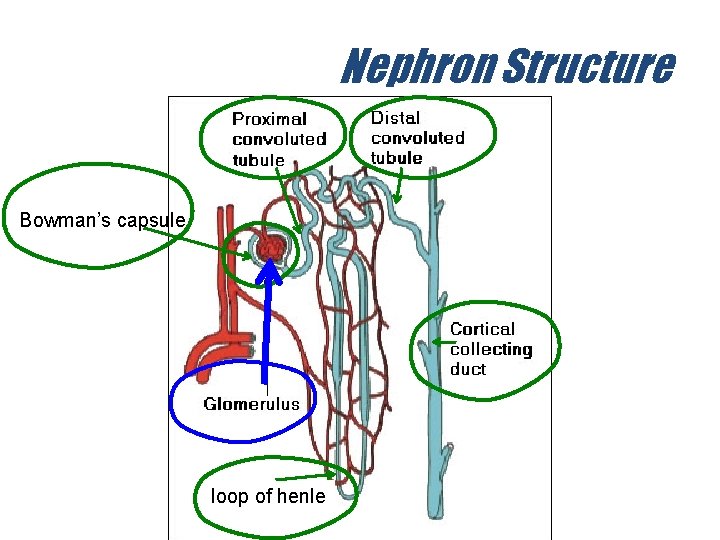
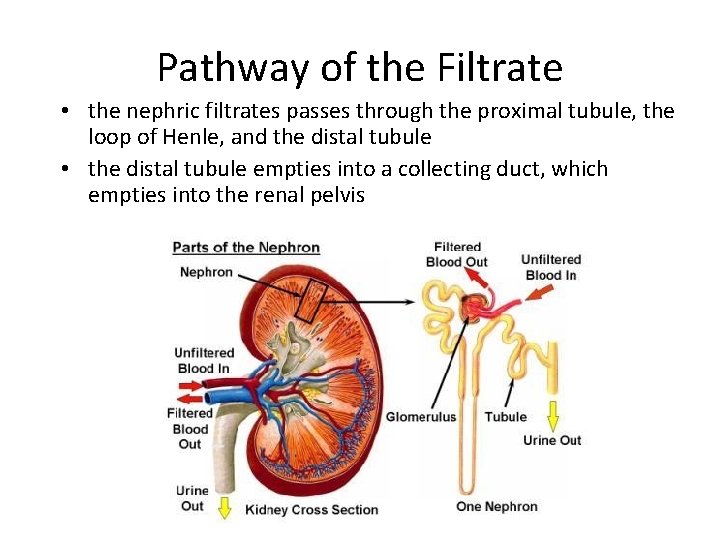
Nephron Structure Bowman’s capsule loop of henle
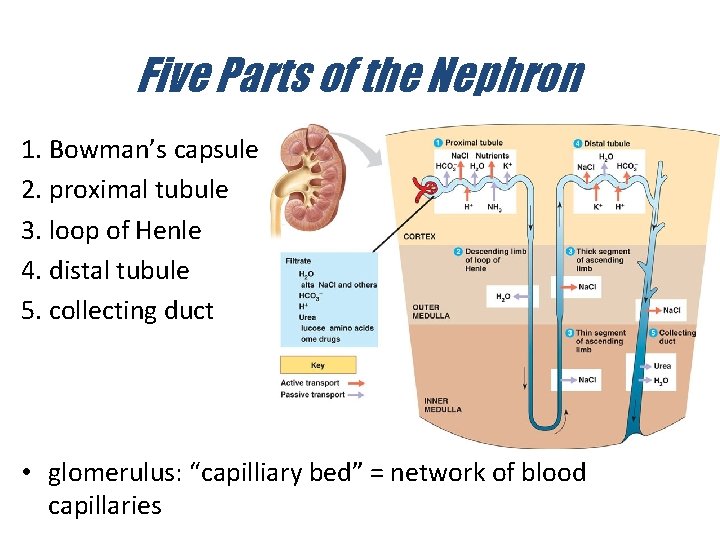
Five Parts of the Nephron 1. Bowman’s capsule 2. proximal tubule 3. loop of Henle 4. distal tubule 5. collecting duct • glomerulus: “capilliary bed” = network of blood capillaries
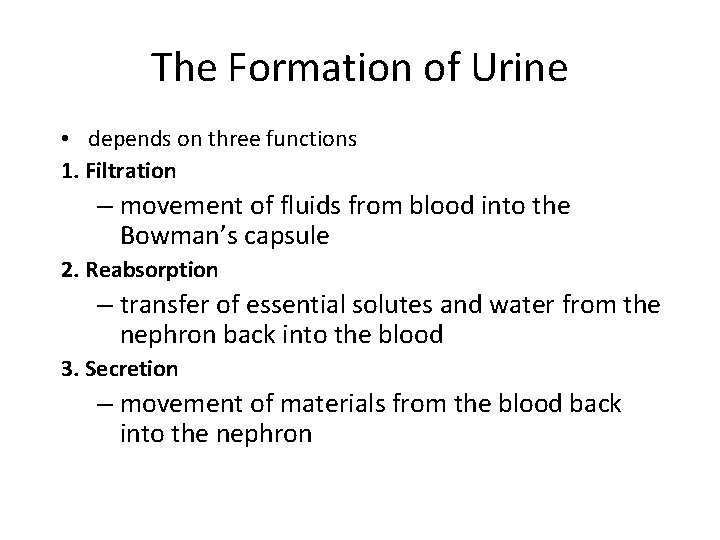
The Formation of Urine • depends on three functions 1. Filtration – movement of fluids from blood into the Bowman’s capsule 2. Reabsorption – transfer of essential solutes and water from the nephron back into the blood 3. Secretion – movement of materials from the blood back into the nephron
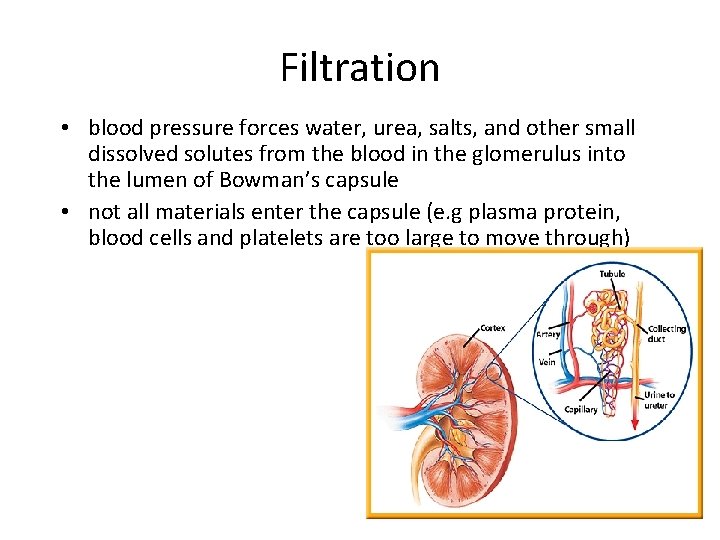
Filtration • blood pressure forces water, urea, salts, and other small dissolved solutes from the blood in the glomerulus into the lumen of Bowman’s capsule • not all materials enter the capsule (e. g plasma protein, blood cells and platelets are too large to move through)
Pathway of the Filtrate • the nephric filtrates passes through the proximal tubule, the loop of Henle, and the distal tubule • the distal tubule empties into a collecting duct, which empties into the renal pelvis
Pathway of the Filtrate • 1100 to 2000 L of blood flows through the kidneys each day • kidneys excrete only 1. 5 L of urine Where’s the rest of the filtrate and water?
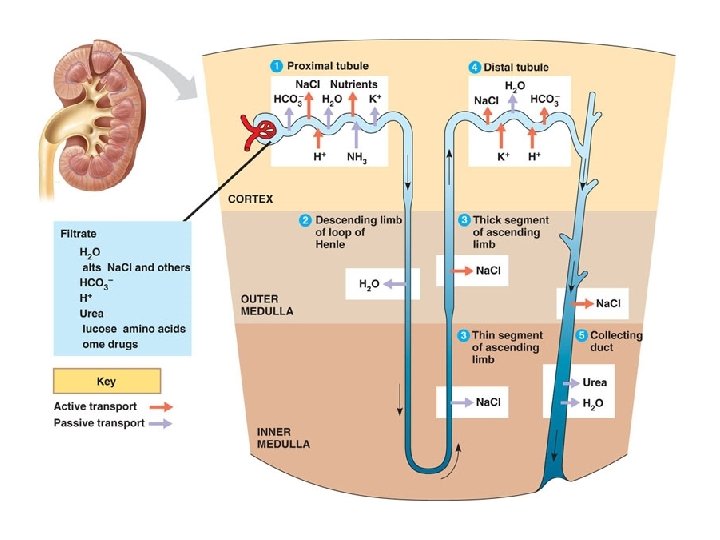
Reabsorption • The rest of the filtrate and water are reabsorbed into the blood in the process of reabsorption! • commences when the nephric fluid enters the proximal tubule and continues to the loop of Henle and then the distal tubule • is the process by which materials required by the body are removed from the filtrate and returned to the blood
Reabsorption • almost ALL the sugar, vitamins, and other organic nutrients from filtrate and water are reabsorbed • helps to control the concentration of salts in body fluids • Both active and passive transport are used to pump these substances out of the nephron and back into the blood stream
Secretion • the proximal and distal tubules are the most common sites of secretion • VERY selective process involving mostly active transport • movement of wastes from blood into the nephrons
Secretion • nitrogen containing wastes, excess H+ ions and minerals such as K+ get secreted • cells containing mitochondria line the distal tubule • molecules are shuttled from the blood into the nephron
Homework • Pg. 348 Q: 1 -3 • Pg. 352 Q: 1, 3 Answer the following questions: 1. How does ADH help to ensure homeostasis? 2. Why is the liver important in the excretory system?