
THE URINARY SYSTEM FORM AND FUNCTION COMPONENTS 2
- Slides: 25
THE URINARY SYSTEM FORM AND FUNCTION
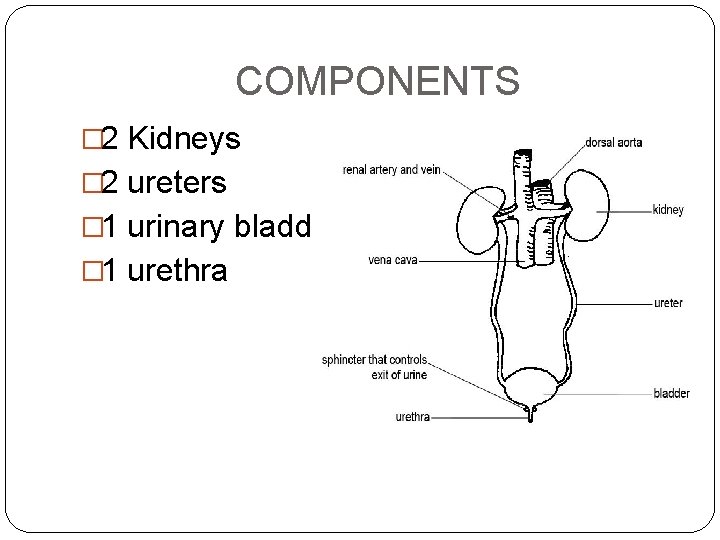
COMPONENTS � 2 Kidneys � 2 ureters � 1 urinary bladder � 1 urethra
FUNCTIONS: �Excretion and filtration �Regulation of blood volume and pressure �Regulation of blood solutes �Regulation of p. H �Regulation of Red Blood Cell synthesis �Vitamin D synthesis
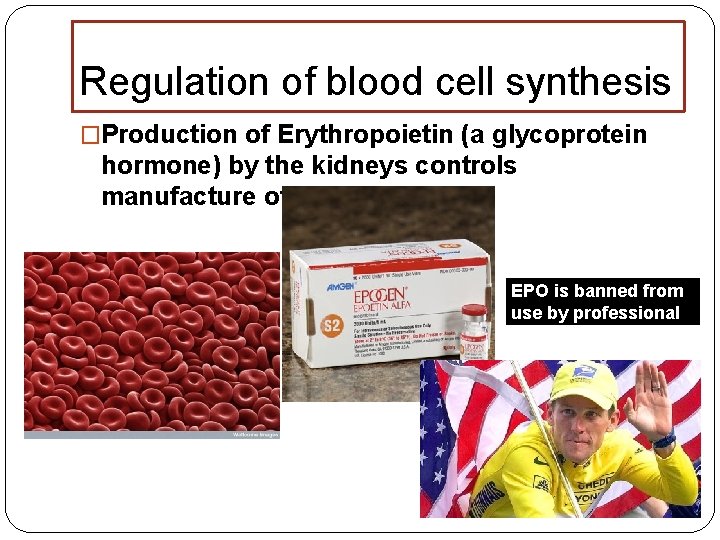
Regulation of blood cell synthesis �Production of Erythropoietin (a glycoprotein hormone) by the kidneys controls manufacture of new RBC’s EPO is banned from use by professional athletes
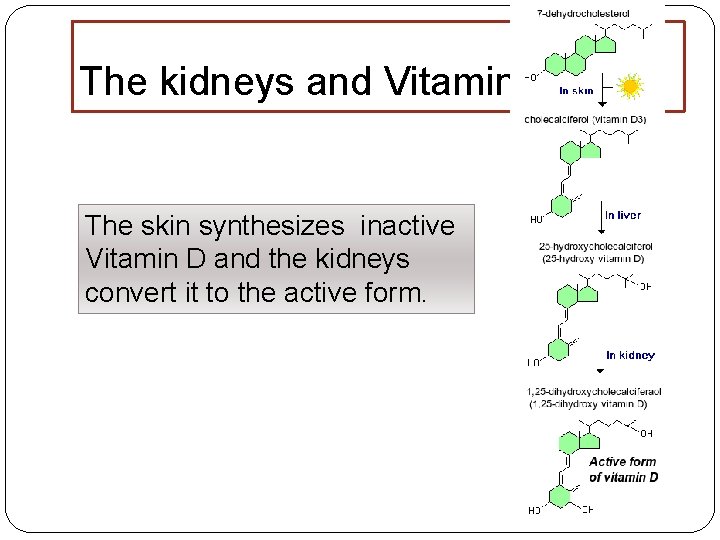
The kidneys and Vitamin D The skin synthesizes inactive Vitamin D and the kidneys convert it to the active form.
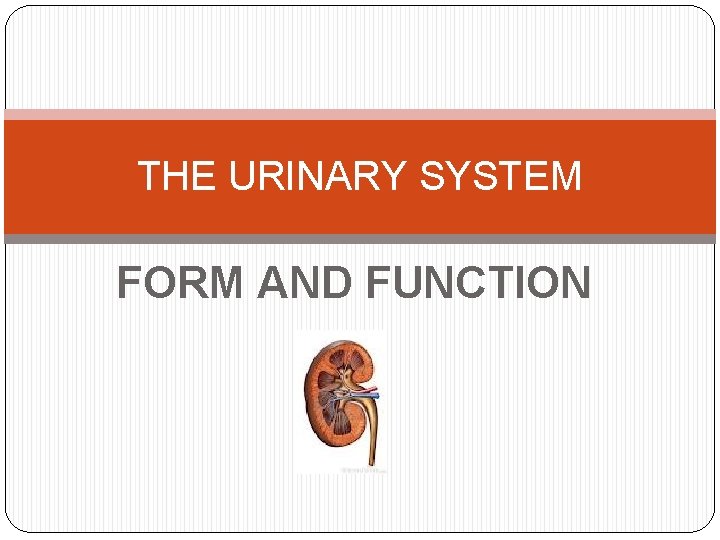
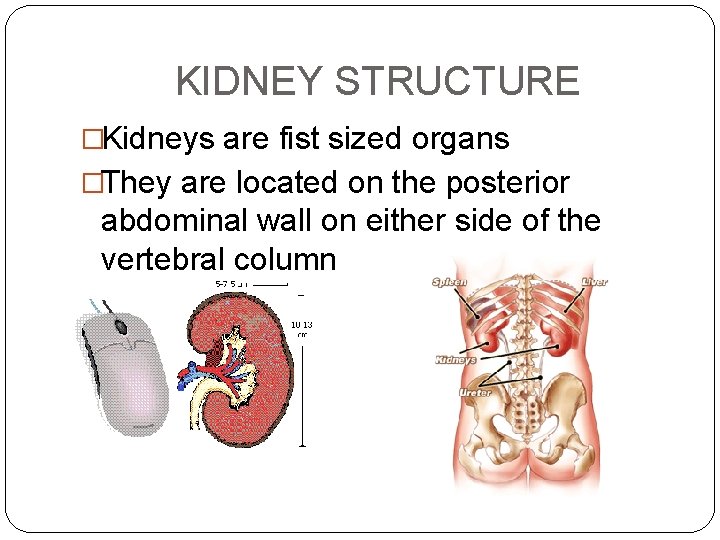
KIDNEY STRUCTURE �Kidneys are fist sized organs �They are located on the posterior abdominal wall on either side of the vertebral column
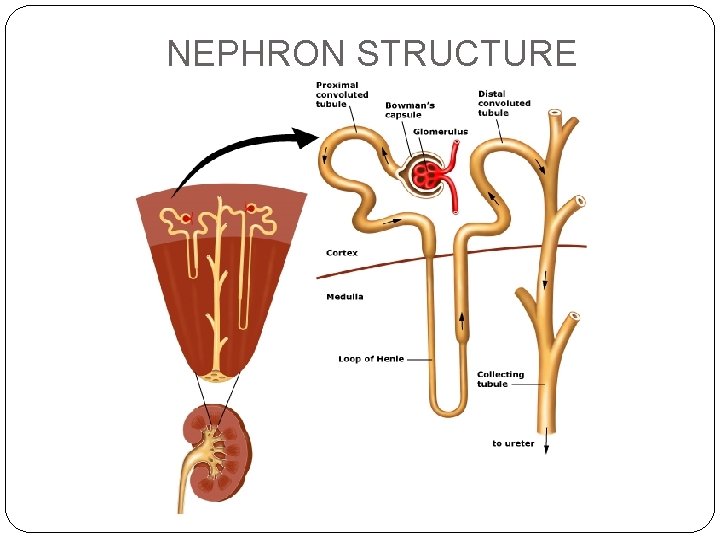
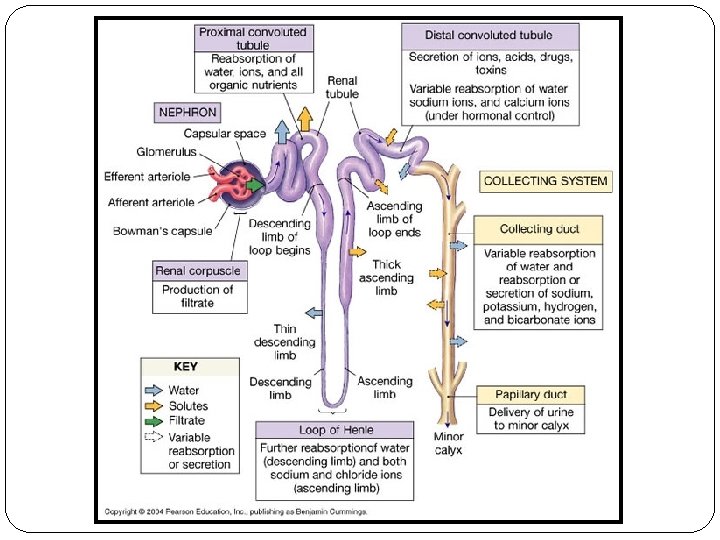
THE NEPHRON �Each kidney is composed of millions of microscopic filtering units known as nephrons �The nephron is the functional unit of the kidney, doing all of the actual work
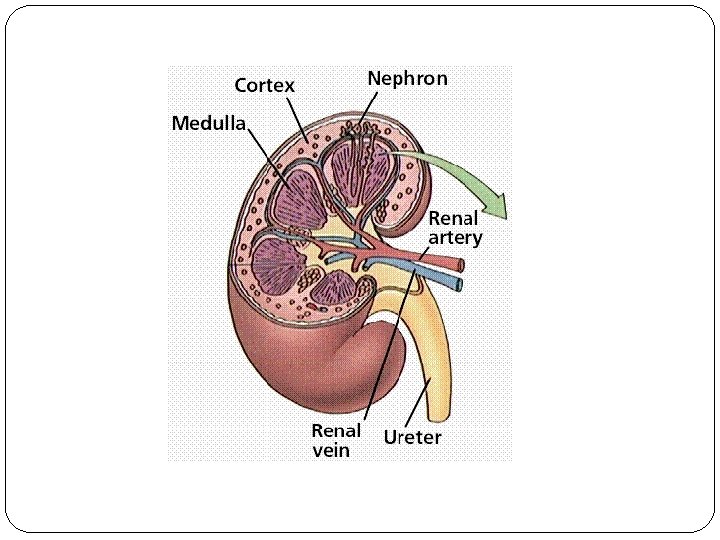
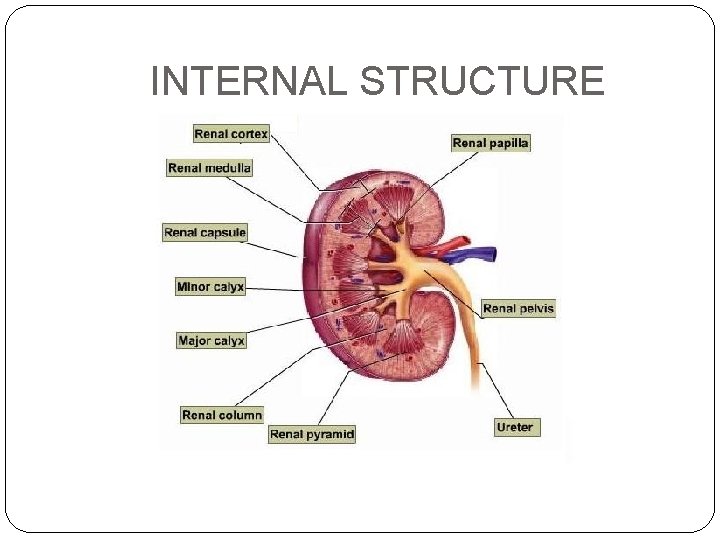
INTERNAL STRUCTURE
NEPHRON STRUCTURE
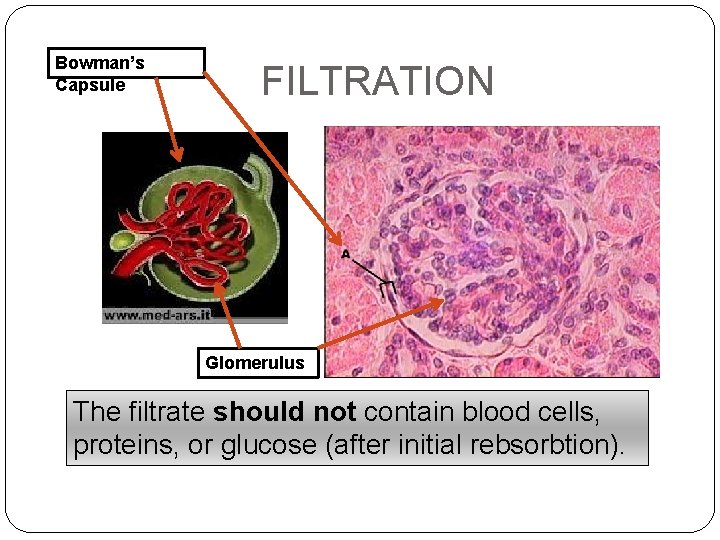
FILTRATION � 21% of blood pumped by the heart each minute flows through the kidneys � 19% of the blood plasma that flows through the capillary bed of the glomerulus passes through the filtration membrane into Bowman’s Capsule, the first part of the nephron. �The liquid is called the filtrate.
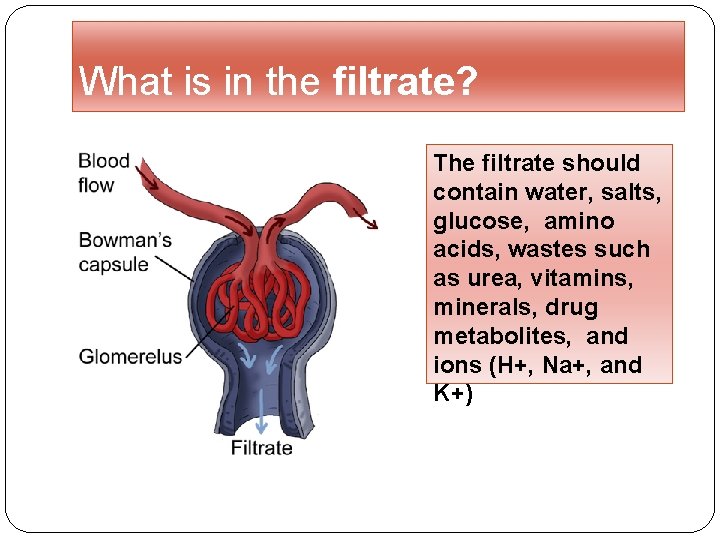
What is in the filtrate? The filtrate should contain water, salts, glucose, amino acids, wastes such as urea, vitamins, minerals, drug metabolites, and ions (H+, Na+, and K+)
Bowman’s Capsule FILTRATION Glomerulus The filtrate should not contain blood cells, proteins, or glucose (after initial rebsorbtion).
REABSORPTION � 180 liters of filtrate are produced daily! �Plasma volume is only 3 liters so how many times daily is the entire plasma volume filtered? � 60 times! �Only 1 -2 L of urine are produced daily �Almost all of the water and useful solutes are reabsorbed
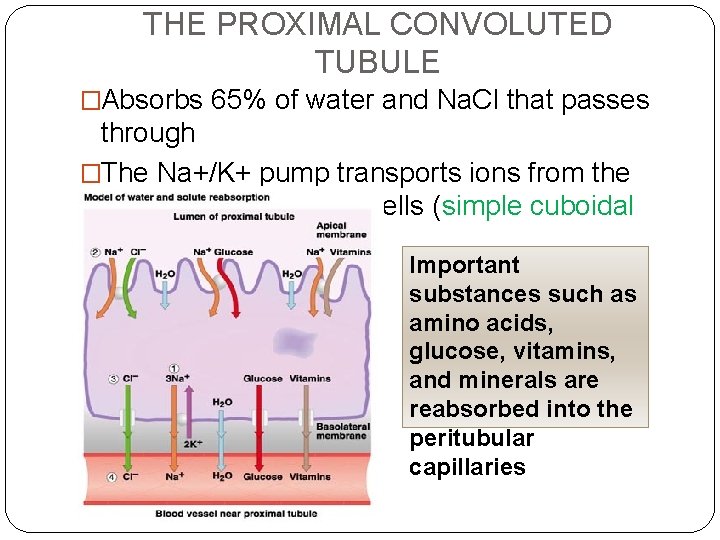
THE PROXIMAL CONVOLUTED TUBULE �Absorbs 65% of water and Na. Cl that passes through �The Na+/K+ pump transports ions from the filtrate into the tubule cells (simple cuboidal epithelium) Important substances such as amino acids, glucose, vitamins, and minerals are reabsorbed into the peritubular capillaries
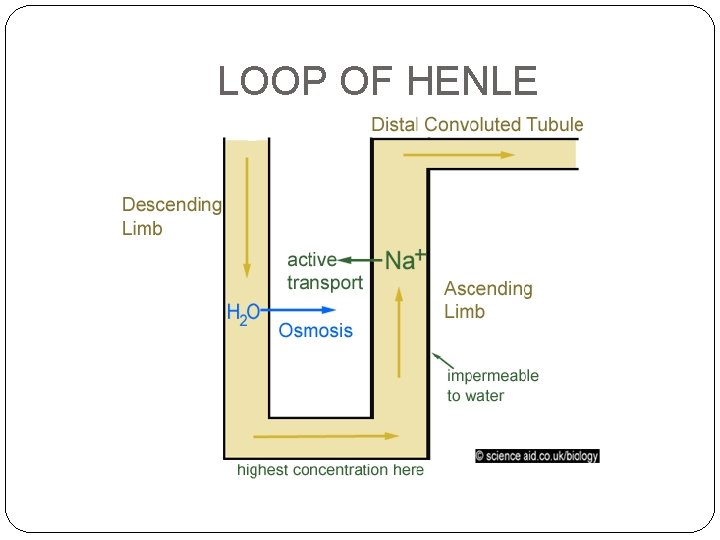
MORE REABSORPTION �The descending Loop of Henle concentrates the filtrate by removing water through osmosis �This reduces the filtrate volume by another 15% �Urea is removed by facilitated diffusion �In the acsending loop, the Na+/K+ pump moves Na+ to the interstitial fluid surrounding the loop. �Cl- and K+ are moved by symport �This part of the loop is impermeable to water, so it cannot follow the ions passively
LOOP OF HENLE
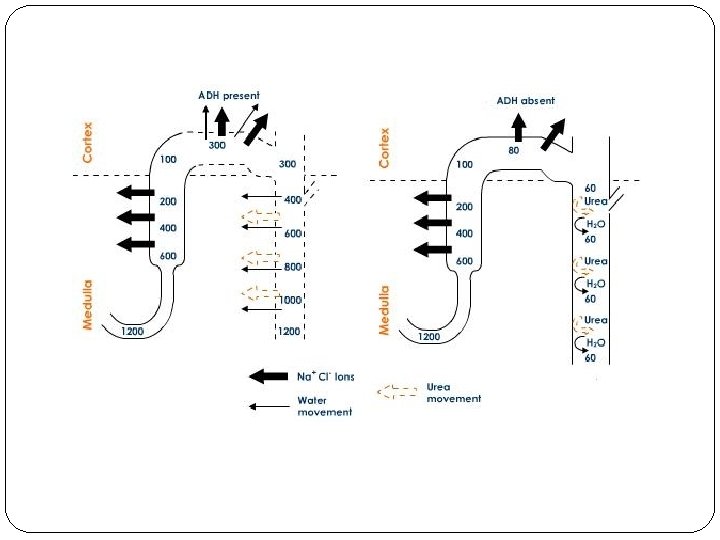
THE DISTAL CONVOLUTED TUBULE �About 80% of water and 90% of solutes have been removed from the filtrate so far �Helps regulate p. H by controlling H+ elimination and retention. �Works with PTH to reabsorb Ca 2+ ions �Further water reabsorption is under hormonal control �ADH- Anti-diuretic Hormone causes water to leave the filtrate and enter the tubule cells
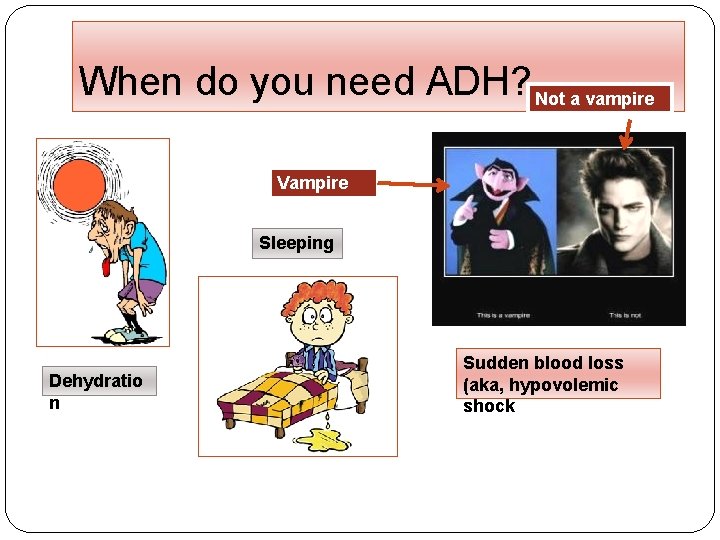
When do you need ADH? Not a vampire Vampire Sleeping Dehydratio n Sudden blood loss (aka, hypovolemic shock
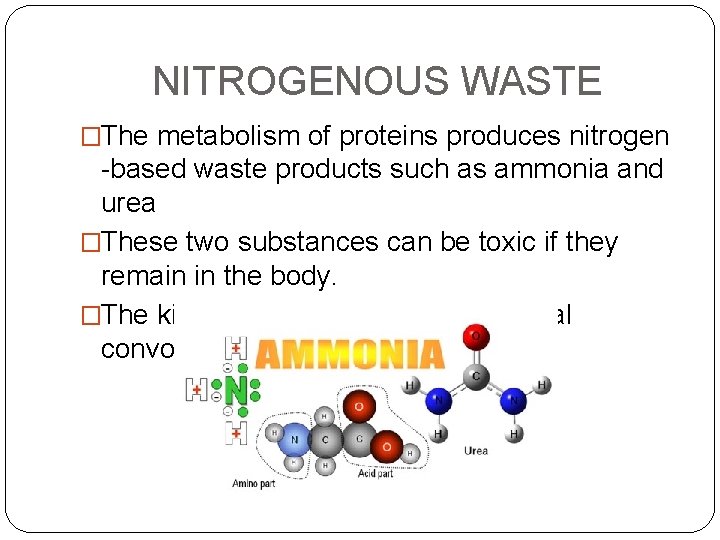
NITROGENOUS WASTE �The metabolism of proteins produces nitrogen -based waste products such as ammonia and urea �These two substances can be toxic if they remain in the body. �The kidneys remove them in the distal convoluted tubule
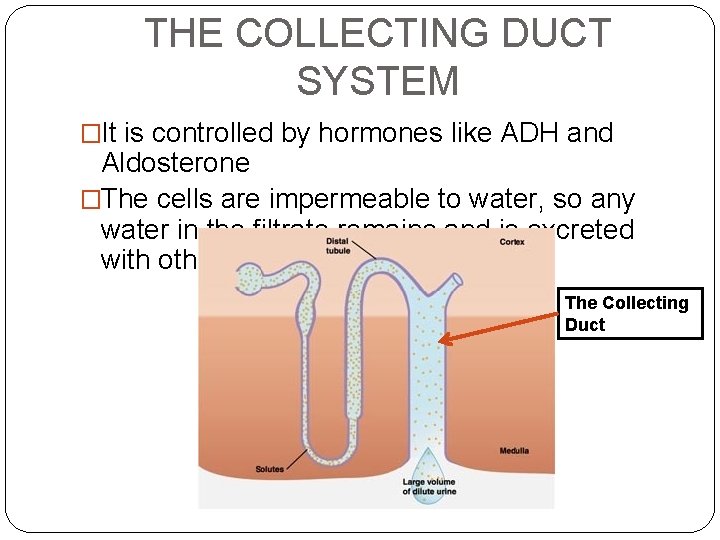
THE COLLECTING DUCT SYSTEM �It is controlled by hormones like ADH and Aldosterone �The cells are impermeable to water, so any water in the filtrate remains and is excreted with other wastes as urine The Collecting Duct
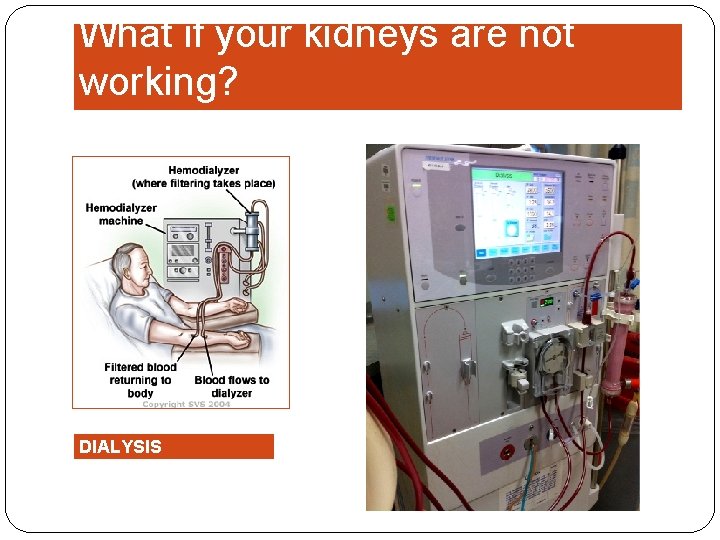
What if your kidneys are not working? DIALYSIS TREATMENT
The Kidneys at Work http: //www. youtube. com/watch? v=a. QZa. NX Nro. VY&feature=related http: //www. youtube. com/watch? v=glu 0 dz. K 4 db. U