
The Urinary System By Scientist Cindy What is
The Urinary System By Scientist Cindy
What is the Urinary System? • The Urinary System is a group of organs in the body concerned with filtering out excess fluid and other substances from the bloodstream. • The substances are filtered out from the body in the form of urine. • Urine is a liquid produced by the kidneys, collected in the bladder and excreted through the urethra. • Urine is used to extract excess minerals or vitamins from the body.
Excretion – the process of eliminating waste products Functions of the Urinary System Maintains an appropriate fluid volume – regulating the amount of water that is excreted in the urine. Regulates the concentrations of various electrolytes in the body fluids Maintaining normal p. H of the blood.
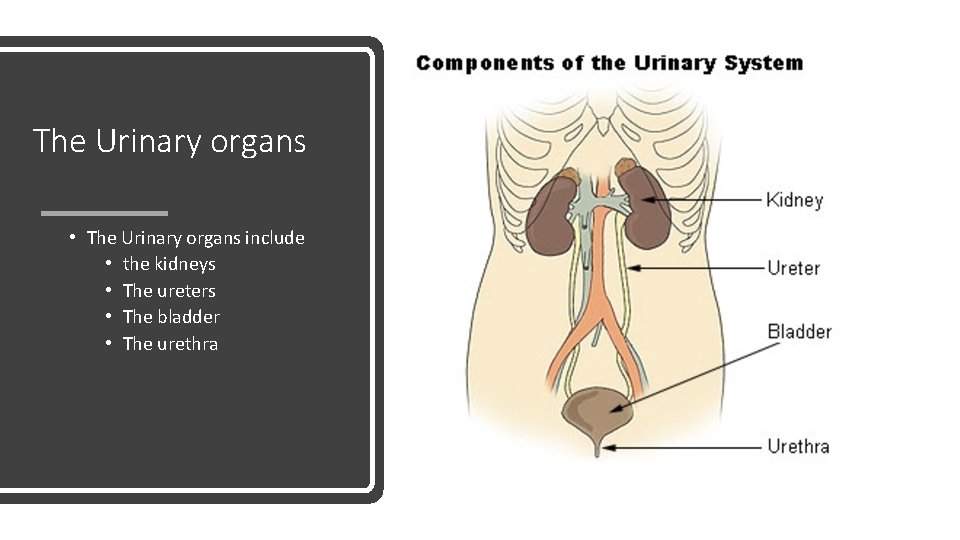
The Urinary organs • The Urinary organs include • the kidneys • The ureters • The bladder • The urethra
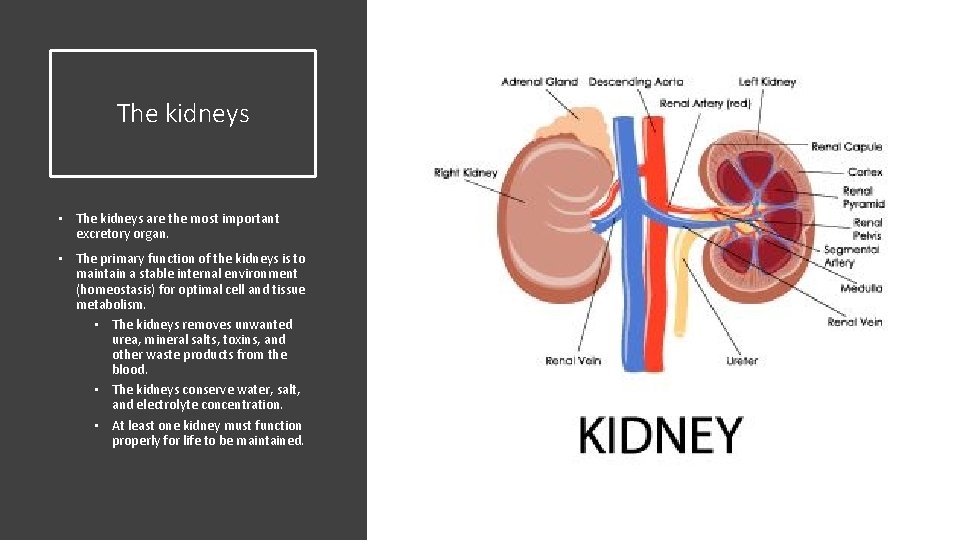
The kidneys • The kidneys are the most important excretory organ. • The primary function of the kidneys is to maintain a stable internal environment (homeostasis) for optimal cell and tissue metabolism. • The kidneys removes unwanted urea, mineral salts, toxins, and other waste products from the blood. • The kidneys conserve water, salt, and electrolyte concentration. • At least one kidney must function properly for life to be maintained.
Regulation of plasma ionic composition Regulation of plasma osmolarity Six important roles of the kidneys are: Regulation of plasma volume Regulation of plasma hydrogen ion concentration (p. H) Removal of metabolic waste products and foreign substances from the plasma Secretion of Hormones
ROLES OF THE KIDNEYS - Removal of waste • The kidneys get rid of • Urea - metabolic waste from the liver • Ammonia - metabolic waste from the liver • Creatinine - metabolic waste from the muscles • Uric acid - metabolic waste from the break down of nucleotides. • Uric acid is insoluble and too much uric acid in the blood will build up and form crystals that can collect in the joints and cause gout.
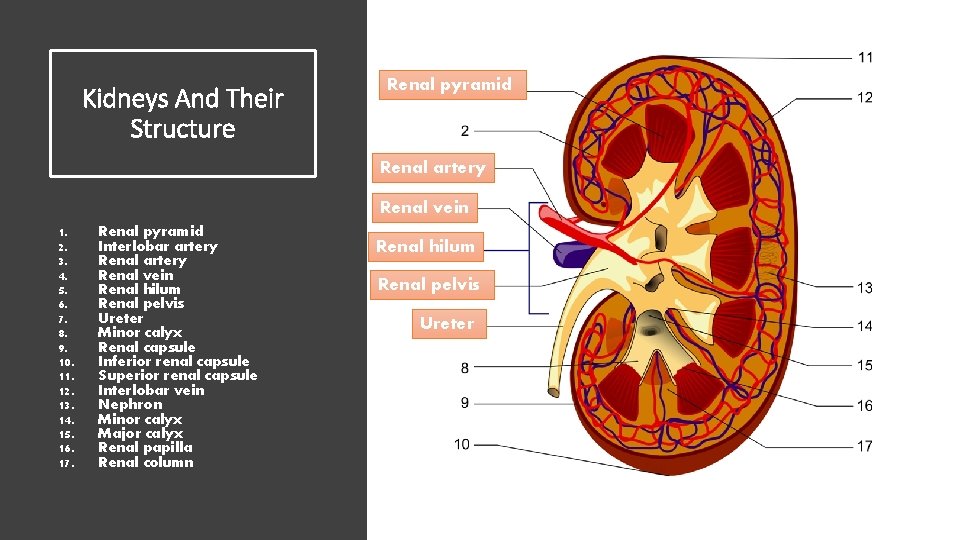
Kidneys And Their Structure Renal pyramid Renal artery Renal vein 1. 2. 3. 4. 5. 6. 7. 8. 9. 10. 11. 12. 13. 14. 15. 16. 17. Renal pyramid Interlobar artery Renal vein Renal hilum Renal pelvis Ureter Minor calyx Renal capsule Inferior renal capsule Superior renal capsule Interlobar vein Nephron Minor calyx Major calyx Renal papilla Renal column Renal hilum Renal pelvis Ureter
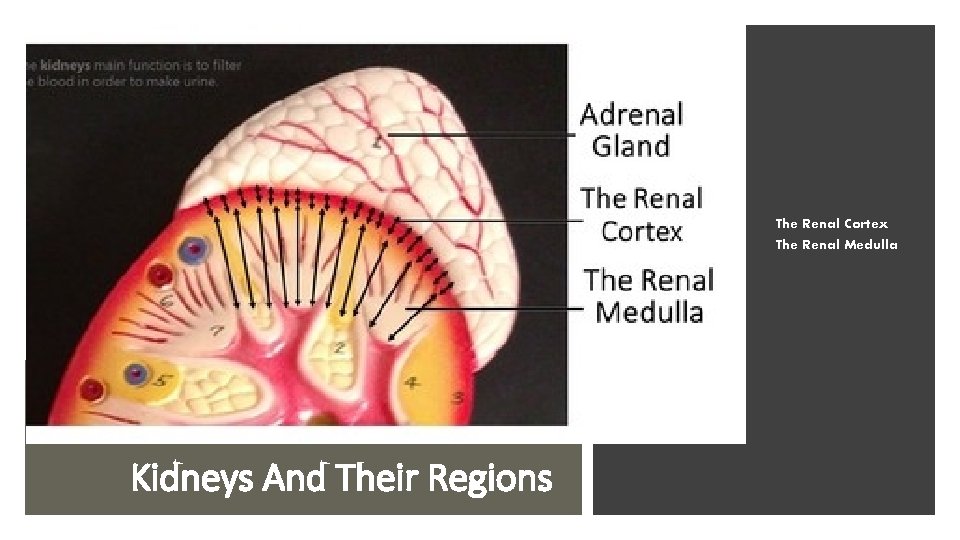
The Renal Cortex The Renal Medulla Kidneys And Their Regions
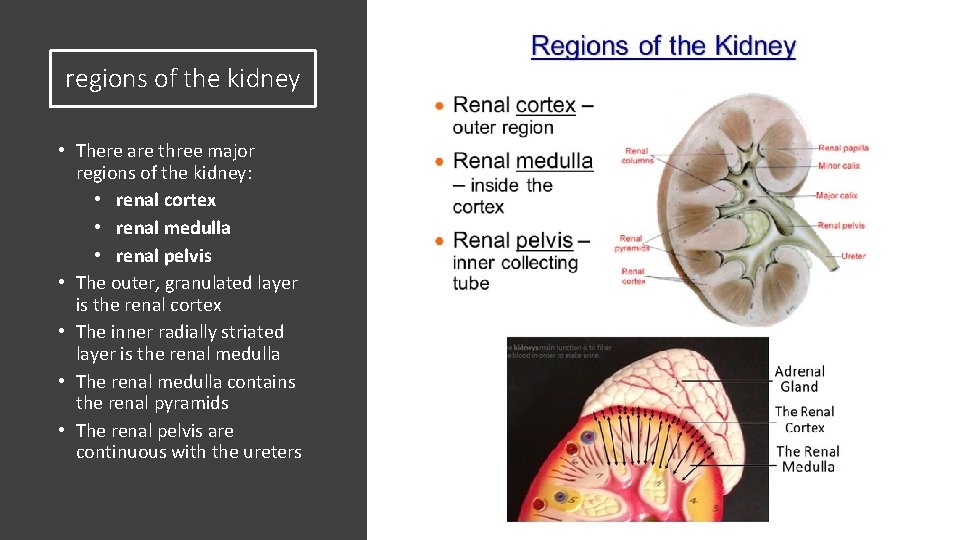
regions of the kidney • There are three major regions of the kidney: • renal cortex • renal medulla • renal pelvis • The outer, granulated layer is the renal cortex • The inner radially striated layer is the renal medulla • The renal medulla contains the renal pyramids • The renal pelvis are continuous with the ureters
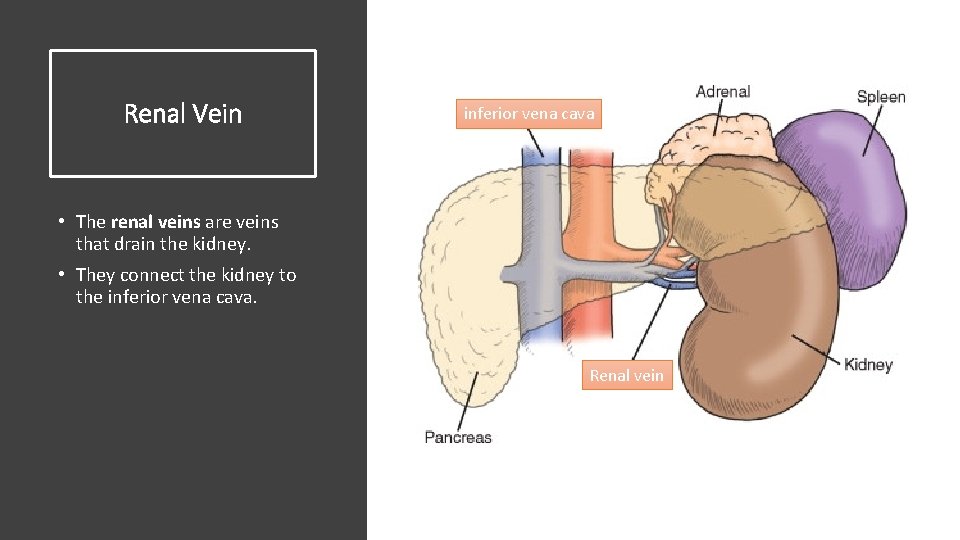
Renal Vein inferior vena cava • The renal veins are veins that drain the kidney. • They connect the kidney to the inferior vena cava. Renal vein
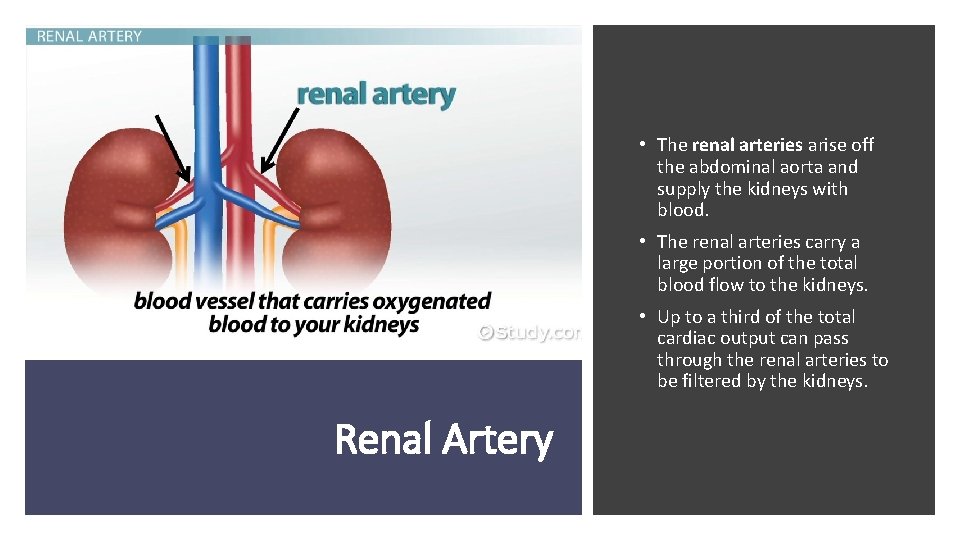
• The renal arteries arise off the abdominal aorta and supply the kidneys with blood. • The renal arteries carry a large portion of the total blood flow to the kidneys. • Up to a third of the total cardiac output can pass through the renal arteries to be filtered by the kidneys. Renal Artery
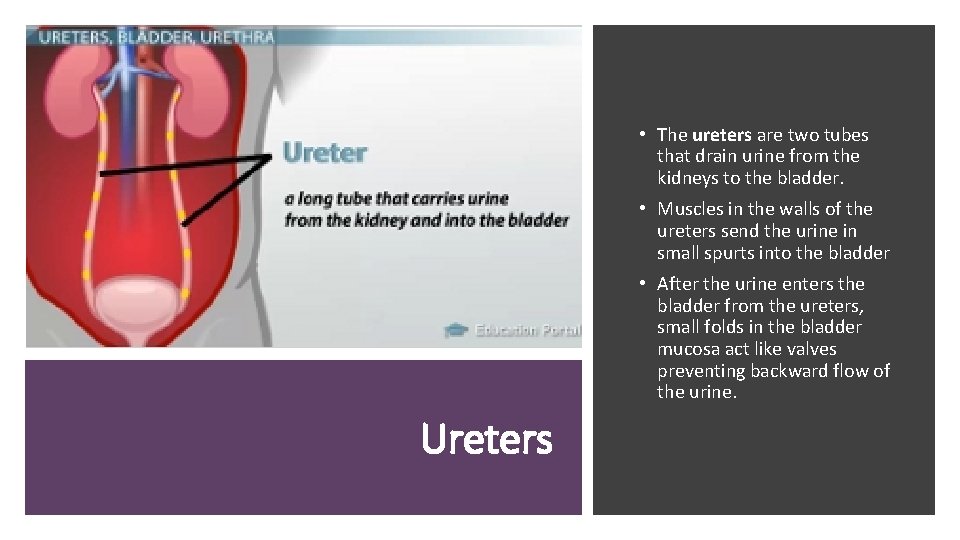
• The ureters are two tubes that drain urine from the kidneys to the bladder. • Muscles in the walls of the ureters send the urine in small spurts into the bladder • After the urine enters the bladder from the ureters, small folds in the bladder mucosa act like valves preventing backward flow of the urine. Ureters
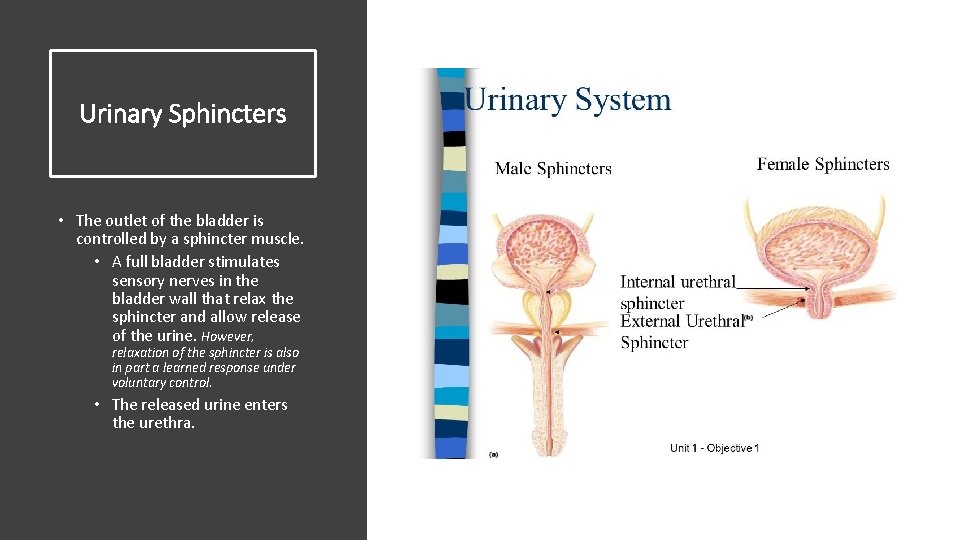
Urinary Sphincters • The outlet of the bladder is controlled by a sphincter muscle. • A full bladder stimulates sensory nerves in the bladder wall that relax the sphincter and allow release of the urine. However, relaxation of the sphincter is also in part a learned response under voluntary control. • The released urine enters the urethra.
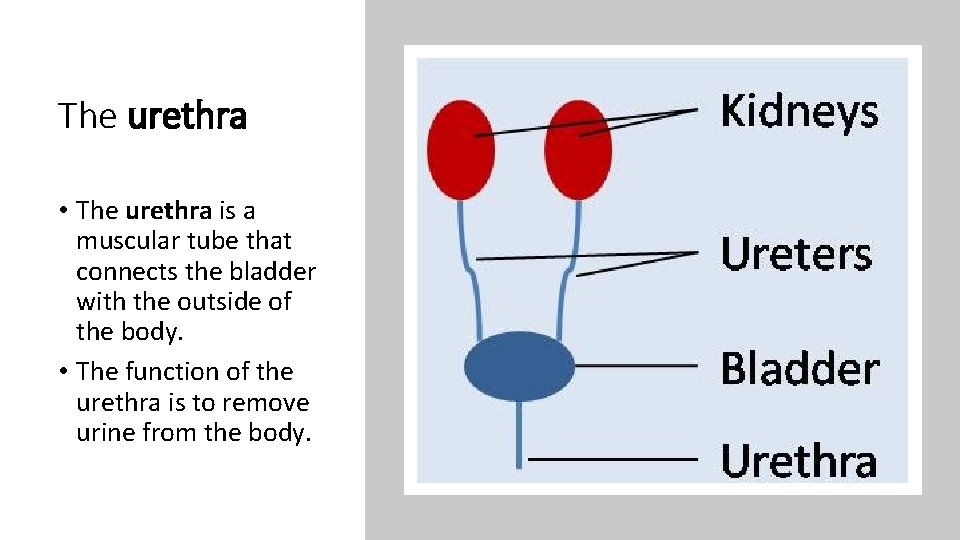
The urethra • The urethra is a muscular tube that connects the bladder with the outside of the body. • The function of the urethra is to remove urine from the body.
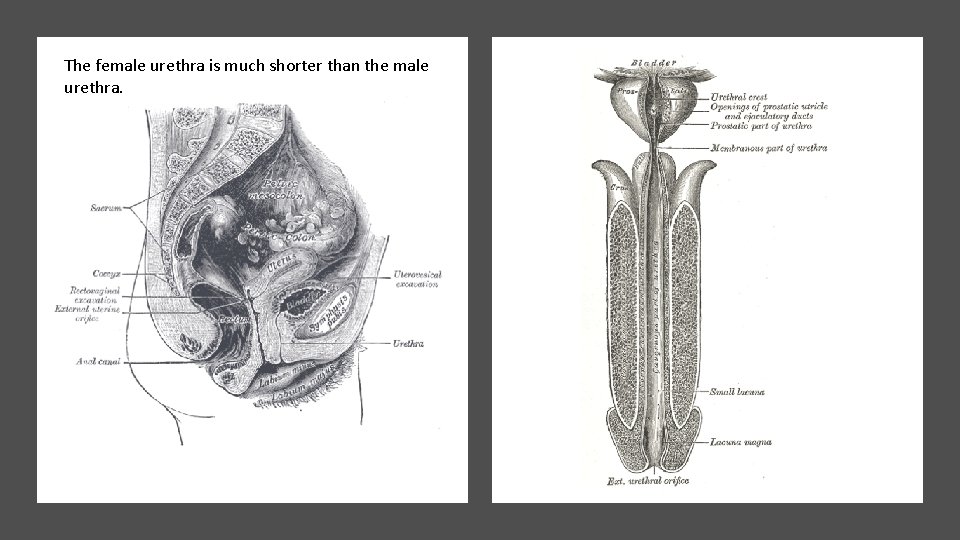
The female urethra is much shorter than the male urethra.
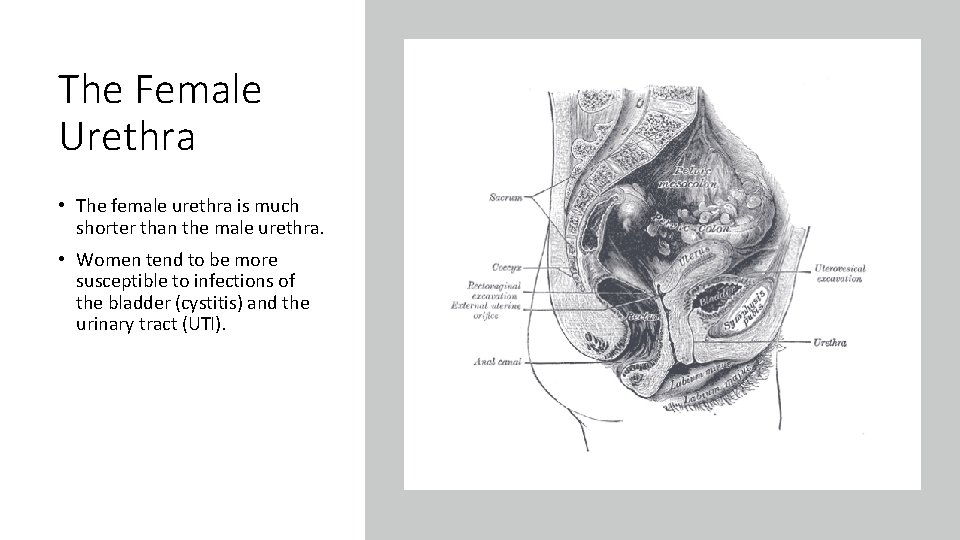
The Female Urethra • The female urethra is much shorter than the male urethra. • Women tend to be more susceptible to infections of the bladder (cystitis) and the urinary tract (UTI).
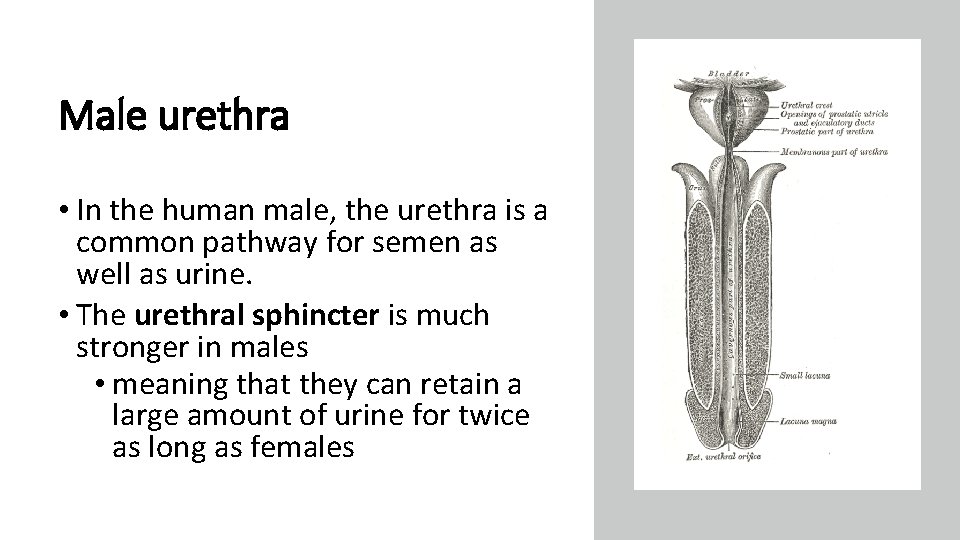
Male urethra • In the human male, the urethra is a common pathway for semen as well as urine. • The urethral sphincter is much stronger in males • meaning that they can retain a large amount of urine for twice as long as females
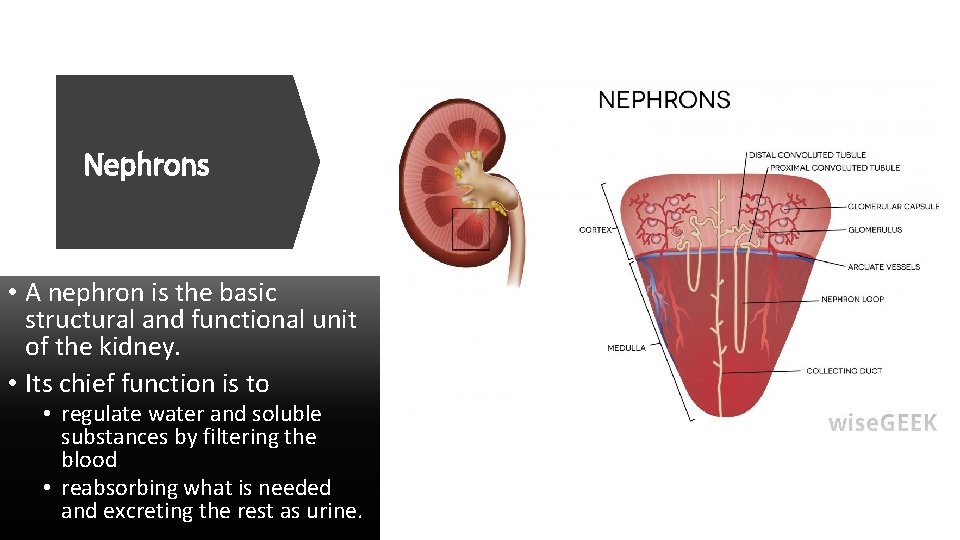
Nephrons • A nephron is the basic structural and functional unit of the kidney. • Its chief function is to • regulate water and soluble substances by filtering the blood • reabsorbing what is needed and excreting the rest as urine.
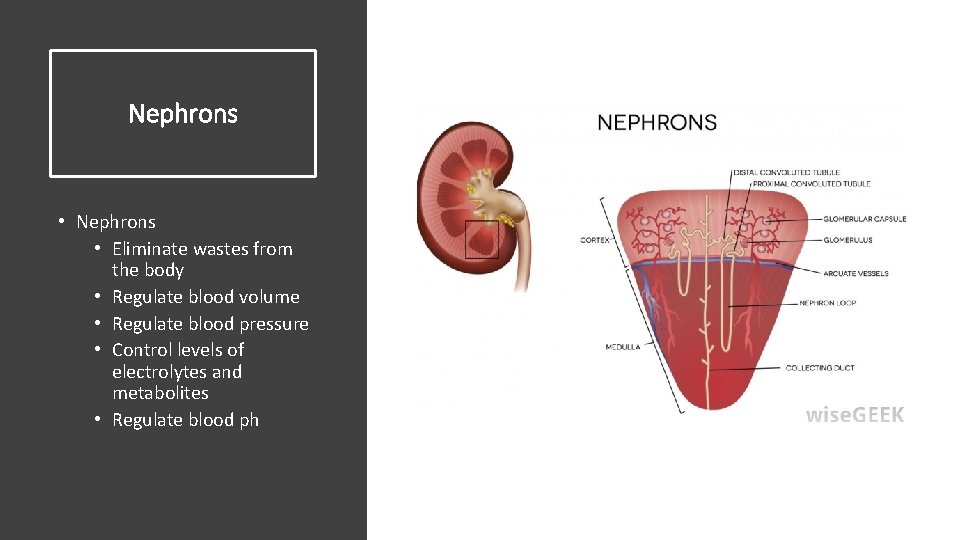
Nephrons • Nephrons • Eliminate wastes from the body • Regulate blood volume • Regulate blood pressure • Control levels of electrolytes and metabolites • Regulate blood ph
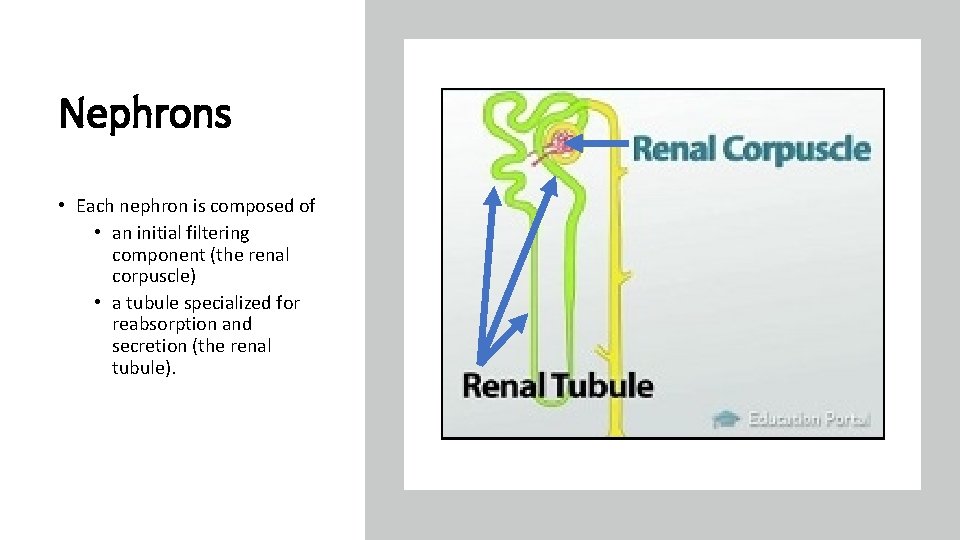
Nephrons • Each nephron is composed of • an initial filtering component (the renal corpuscle) • a tubule specialized for reabsorption and secretion (the renal tubule).
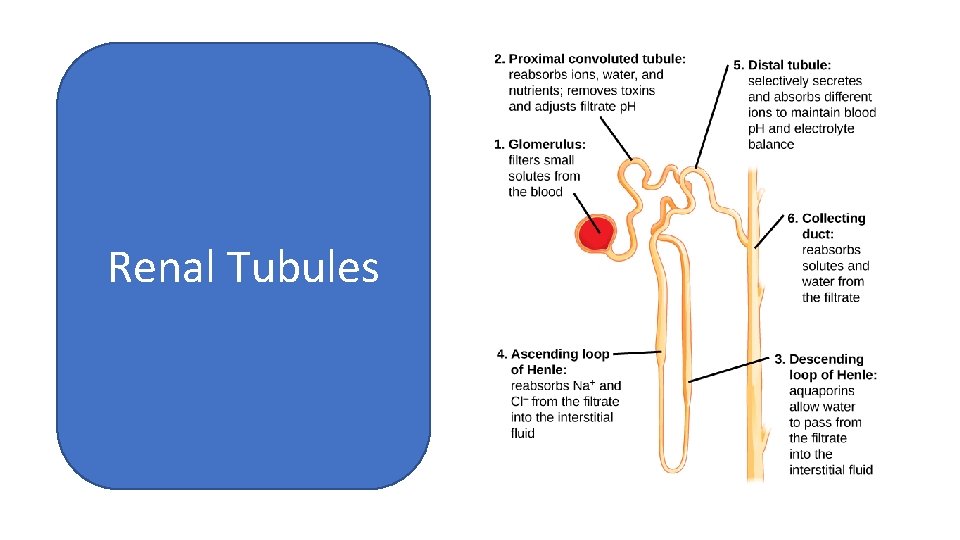
Renal Tubules
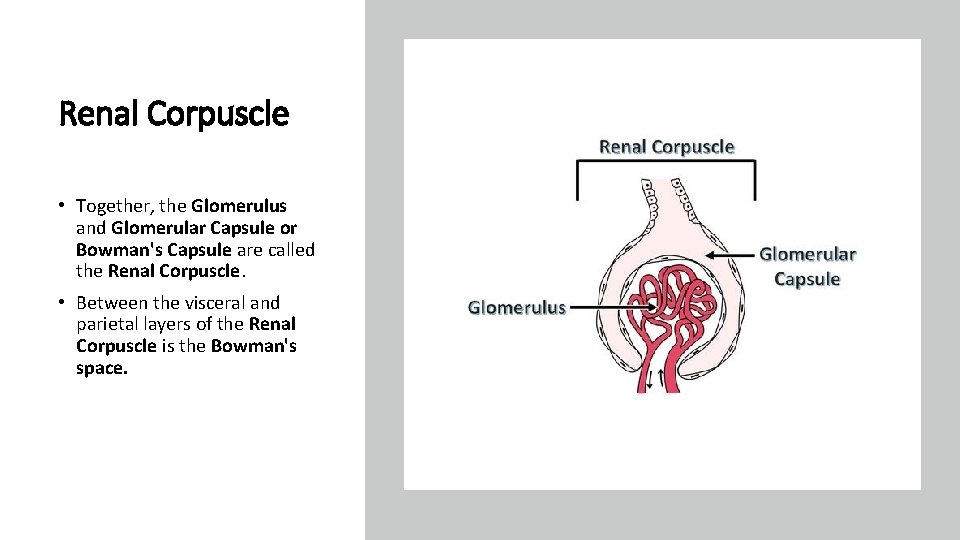
Renal Corpuscle • Together, the Glomerulus and Glomerular Capsule or Bowman's Capsule are called the Renal Corpuscle. • Between the visceral and parietal layers of the Renal Corpuscle is the Bowman's space.
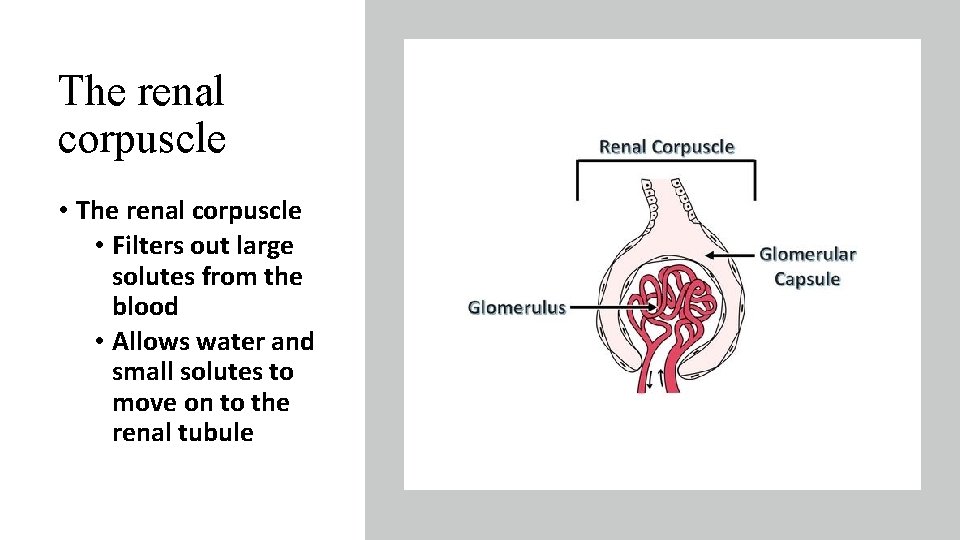
The renal corpuscle • Filters out large solutes from the blood • Allows water and small solutes to move on to the renal tubule
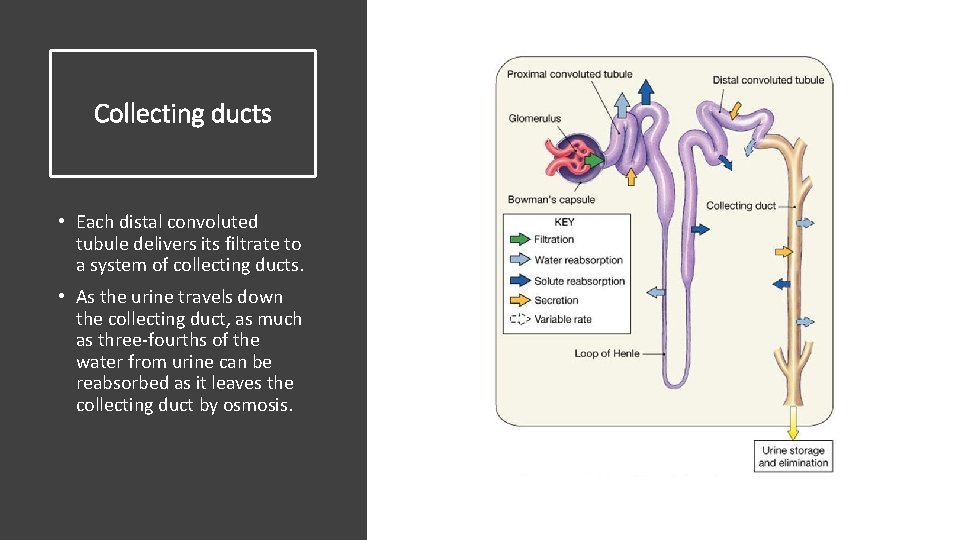
Collecting ducts • Each distal convoluted tubule delivers its filtrate to a system of collecting ducts. • As the urine travels down the collecting duct, as much as three-fourths of the water from urine can be reabsorbed as it leaves the collecting duct by osmosis.
Tubular Secretion • Urine is a collection of substances that have not been reabsorbed during glomerular filtration or tubular reabsorbtion.
- Slides: 26