
The Upper Respiratory System Nose Pharynx throat Middle


- Slides: 59
The Upper Respiratory System § § Nose Pharynx (throat) Middle ear Eustachian tubes
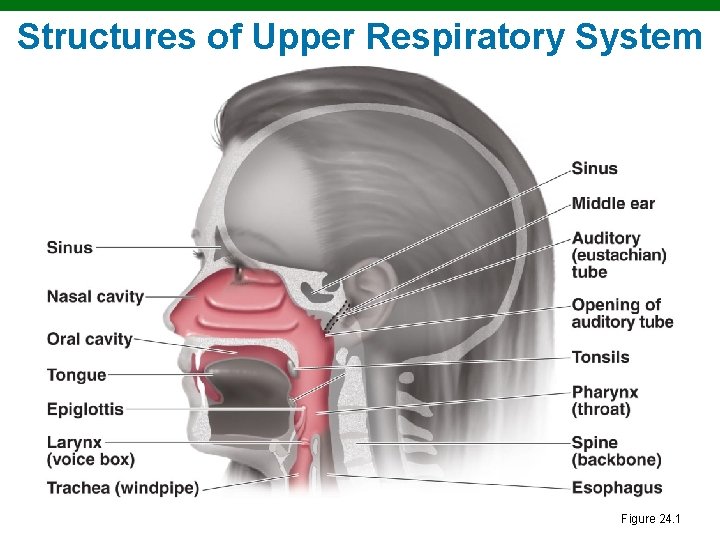
Structures of Upper Respiratory System Figure 24. 1
The Lower Respiratory System § § § Larynx Trachea Bronchial tubes Alveoli Pleura
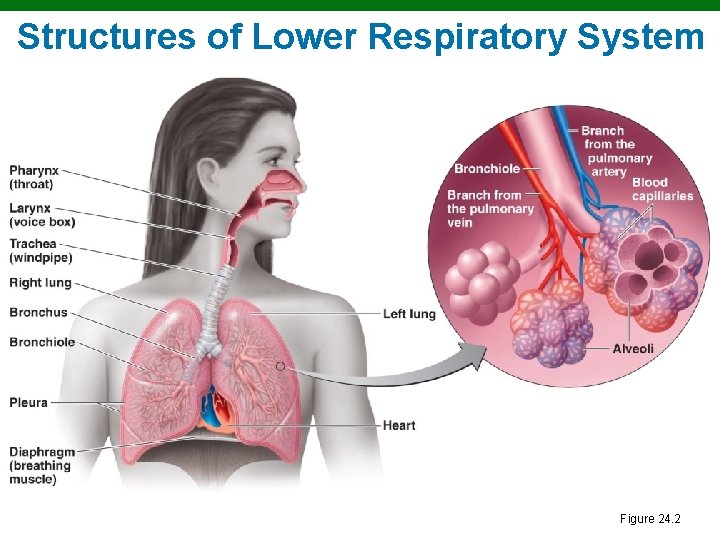
Structures of Lower Respiratory System Figure 24. 2
Normal Biota of the Respiratory Tract Bacteria considered “normal biota” can cause disease: § Streptococcus pyogenes § Haemophilus influenzae § Streptococcus pneumoniae § Neisseria meningitidis § Staphylococcus aureus Copyright © 2018 Mc. Graw-Hill Education. All rights reserved. No reproduction or distribution without the prior written consent of Mc. Graw-Hill Education. 5
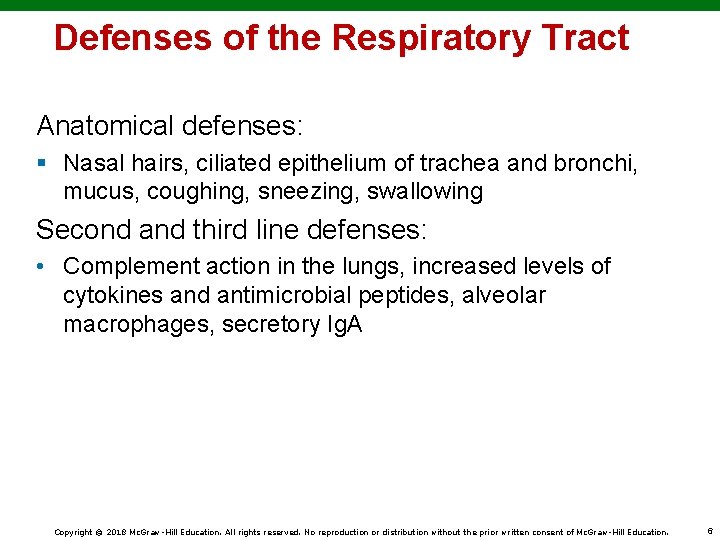
Defenses of the Respiratory Tract Anatomical defenses: § Nasal hairs, ciliated epithelium of trachea and bronchi, mucus, coughing, sneezing, swallowing Second and third line defenses: • Complement action in the lungs, increased levels of cytokines and antimicrobial peptides, alveolar macrophages, secretory Ig. A Copyright © 2018 Mc. Graw-Hill Education. All rights reserved. No reproduction or distribution without the prior written consent of Mc. Graw-Hill Education. 6
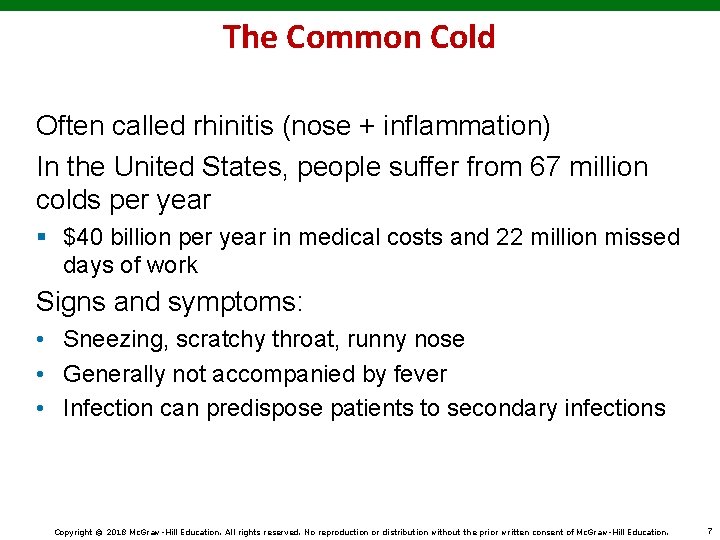
The Common Cold Often called rhinitis (nose + inflammation) In the United States, people suffer from 67 million colds per year § $40 billion per year in medical costs and 22 million missed days of work Signs and symptoms: • Sneezing, scratchy throat, runny nose • Generally not accompanied by fever • Infection can predispose patients to secondary infections Copyright © 2018 Mc. Graw-Hill Education. All rights reserved. No reproduction or distribution without the prior written consent of Mc. Graw-Hill Education. 7
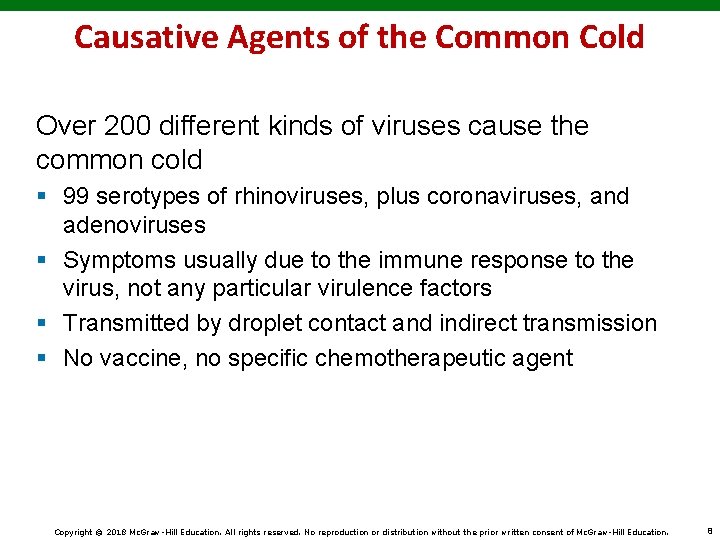
Causative Agents of the Common Cold Over 200 different kinds of viruses cause the common cold § 99 serotypes of rhinoviruses, plus coronaviruses, and adenoviruses § Symptoms usually due to the immune response to the virus, not any particular virulence factors § Transmitted by droplet contact and indirect transmission § No vaccine, no specific chemotherapeutic agent Copyright © 2018 Mc. Graw-Hill Education. All rights reserved. No reproduction or distribution without the prior written consent of Mc. Graw-Hill Education. 8
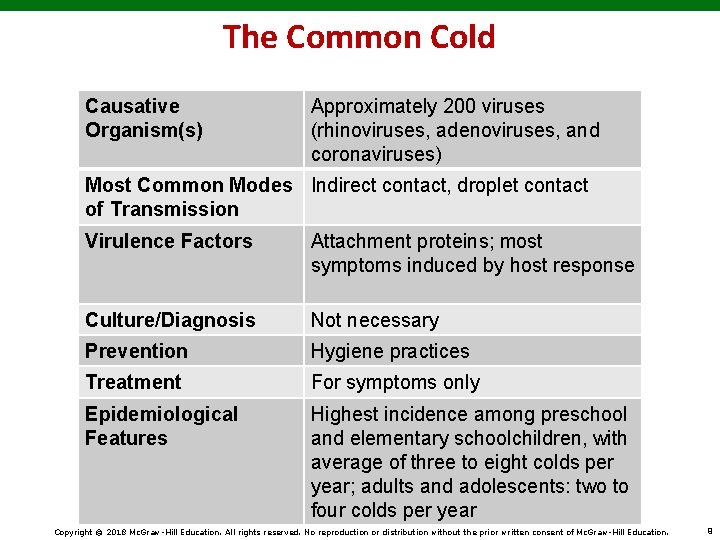
The Common Cold Causative Organism(s) Approximately 200 viruses (rhinoviruses, adenoviruses, and coronaviruses) Most Common Modes Indirect contact, droplet contact of Transmission Virulence Factors Attachment proteins; most symptoms induced by host response Culture/Diagnosis Not necessary Prevention Hygiene practices Treatment For symptoms only Epidemiological Features Highest incidence among preschool and elementary schoolchildren, with average of three to eight colds per year; adults and adolescents: two to four colds per year Copyright © 2018 Mc. Graw-Hill Education. All rights reserved. No reproduction or distribution without the prior written consent of Mc. Graw-Hill Education. 9
Sinusitis Sinus infection: § Inflammatory condition of any of the four pairs of sinuses in the skull § Can be caused by allergy or infection § Patients suffering from a cold often also develop sinusitis Signs and symptoms: • Sinus pain, nasal congestion, pressure, headache, or toothache • Discharge is opaque and can be yellow or green in color Copyright © 2018 Mc. Graw-Hill Education. All rights reserved. No reproduction or distribution without the prior written consent of Mc. Graw-Hill Education. 10
Causative Agents of Sinusitis Causative agents: § Viruses—most common § Bacteria: • Most often normal biota • Pathogenesis due to underlying infection, buildup of fluids which provides a rich bacterial medium, and the anatomy of the sinuses which can entrap bacteria and mucus § Fungi: rare, but recognized when antibacterial drugs fail to alleviate symptoms Copyright © 2018 Mc. Graw-Hill Education. All rights reserved. No reproduction or distribution without the prior written consent of Mc. Graw-Hill Education. 11
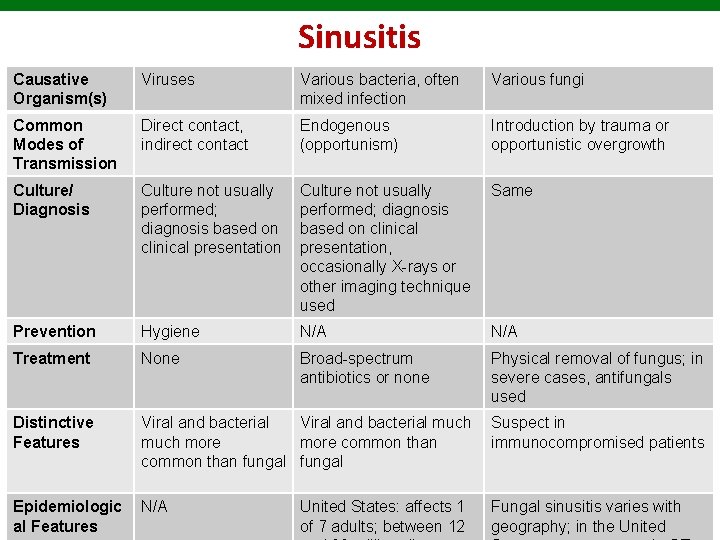
Sinusitis Causative Organism(s) Viruses Various bacteria, often mixed infection Various fungi Common Modes of Transmission Direct contact, indirect contact Endogenous (opportunism) Introduction by trauma or opportunistic overgrowth Culture/ Diagnosis Culture not usually performed; diagnosis based on clinical presentation, occasionally X-rays or other imaging technique used Same Prevention Hygiene N/A Treatment None Broad-spectrum antibiotics or none Physical removal of fungus; in severe cases, antifungals used Distinctive Features Viral and bacterial much more common than fungal Suspect in immunocompromised patients Epidemiologic N/A United States: affects 1 Fungal sinusitis varies with al Features 7 adults; or distribution between 12 the priorgeography; the United Copyright © 2018 Mc. Graw-Hill Education. All rights reserved. of No reproduction without written consent of in Mc. Graw-Hill Education. 12
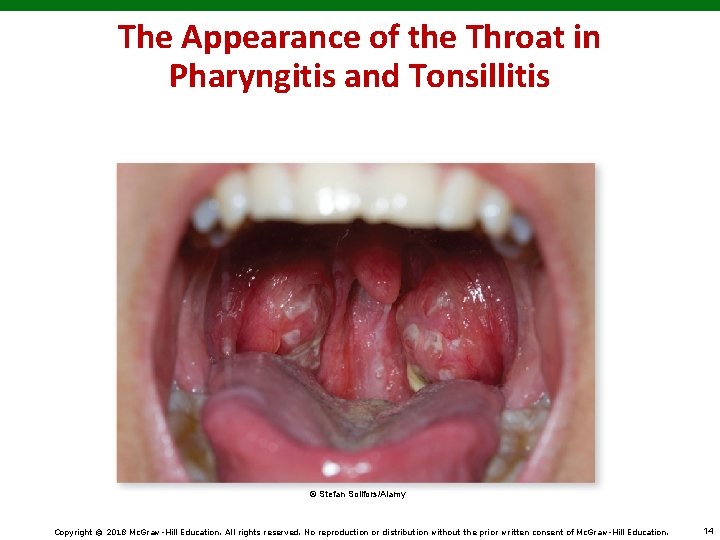
Pharyngitis Signs and symptoms: § Inflammation of the throat causing pain and swelling § Inflammatory packets visible on the walls of the throat, difficulty swallowing, foul breath § Viral sore throat: mild and sometimes lead to hoarseness § Bacterial: more painful, often accompanied by fever, headache, and nausea Copyright © 2018 Mc. Graw-Hill Education. All rights reserved. No reproduction or distribution without the prior written consent of Mc. Graw-Hill Education. 13
The Appearance of the Throat in Pharyngitis and Tonsillitis © Stefan Sollfors/Alamy Copyright © 2018 Mc. Graw-Hill Education. All rights reserved. No reproduction or distribution without the prior written consent of Mc. Graw-Hill Education. 14
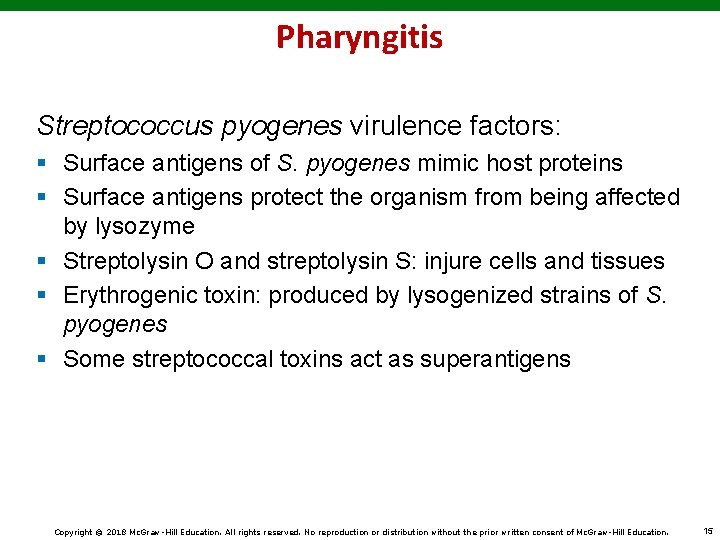
Pharyngitis Streptococcus pyogenes virulence factors: § Surface antigens of S. pyogenes mimic host proteins § Surface antigens protect the organism from being affected by lysozyme § Streptolysin O and streptolysin S: injure cells and tissues § Erythrogenic toxin: produced by lysogenized strains of S. pyogenes § Some streptococcal toxins act as superantigens Copyright © 2018 Mc. Graw-Hill Education. All rights reserved. No reproduction or distribution without the prior written consent of Mc. Graw-Hill Education. 15
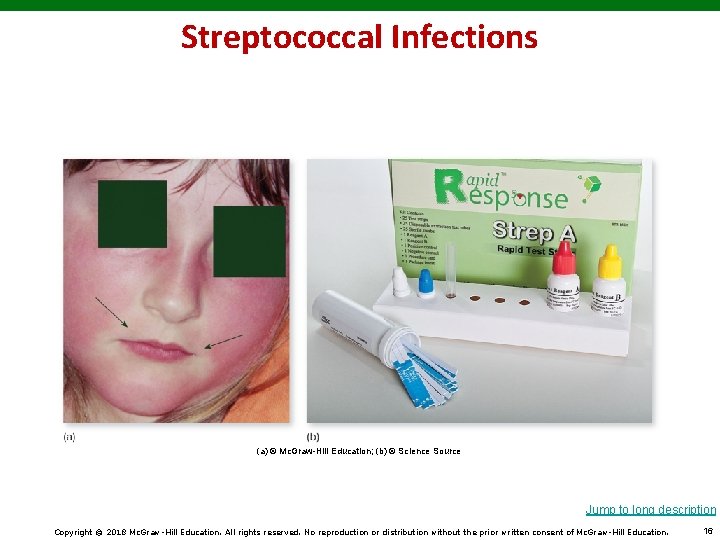
Streptococcal Infections (a) © Mc. Graw-Hill Education; (b) © Science Source Jump to long description Copyright © 2018 Mc. Graw-Hill Education. All rights reserved. No reproduction or distribution without the prior written consent of Mc. Graw-Hill Education. 16
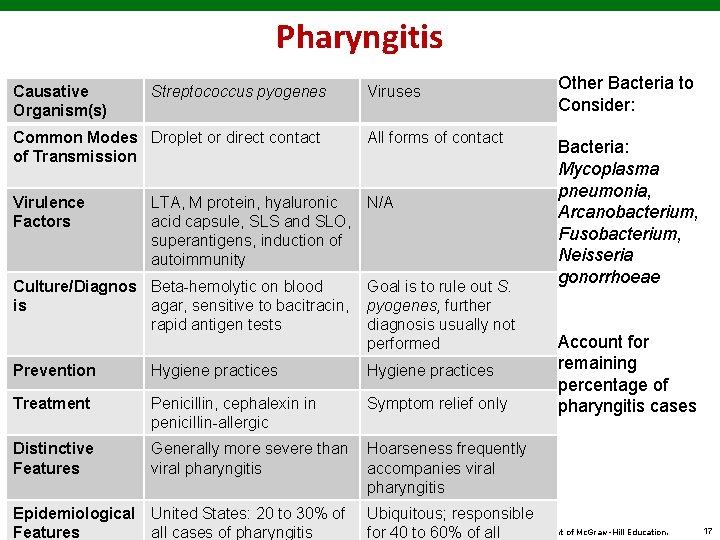
Pharyngitis Causative Organism(s) Streptococcus pyogenes Viruses Common Modes Droplet or direct contact of Transmission All forms of contact Virulence Factors N/A LTA, M protein, hyaluronic acid capsule, SLS and SLO, superantigens, induction of autoimmunity Culture/Diagnos Beta-hemolytic on blood is agar, sensitive to bacitracin, rapid antigen tests Goal is to rule out S. pyogenes, further diagnosis usually not performed Prevention Hygiene practices Treatment Penicillin, cephalexin in penicillin-allergic Symptom relief only Distinctive Features Generally more severe than viral pharyngitis Hoarseness frequently accompanies viral pharyngitis Other Bacteria to Consider: Bacteria: Mycoplasma pneumonia, Arcanobacterium, Fusobacterium, Neisseria gonorrhoeae Account for remaining percentage of pharyngitis cases Epidemiological United States: 20 to 30% of Ubiquitous; responsible Copyright © 2018 Mc. Graw-Hill Education. rights reserved. No reproductionfor or distribution without the Features all cases of. All pharyngitis 40 to 60% ofprior allwritten consent of Mc. Graw-Hill Education. 17
Diphtheria Significant cause of morbidity and mortality for hundreds of years § Immunization with the diphtheria toxoid has caused the number of cases to decline significantly § Epidemics and smaller outbreaks have occurred due to a breakdown in immunity due to lack of vaccination ©BSIP/Universal Images Group/Getty Images Jump to long description Copyright © 2018 Mc. Graw-Hill Education. All rights reserved. No reproduction or distribution without the prior written consent of Mc. Graw-Hill Education. 18
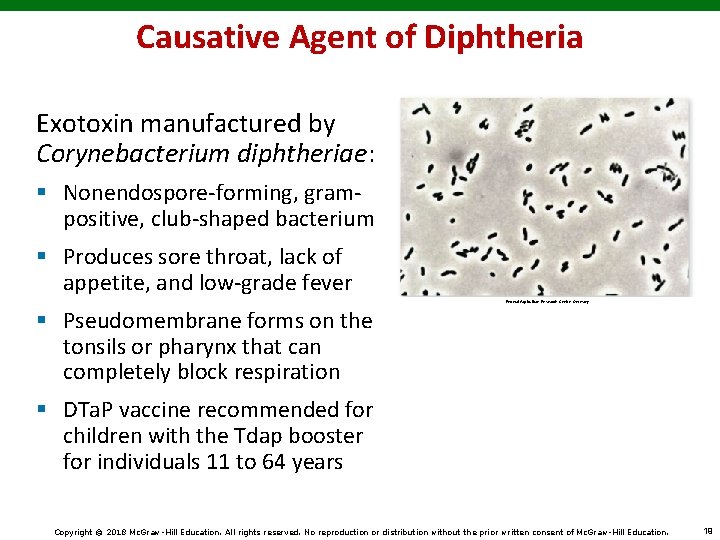
Causative Agent of Diphtheria Exotoxin manufactured by Corynebacterium diphtheriae: § Nonendospore-forming, grampositive, club-shaped bacterium § Produces sore throat, lack of appetite, and low-grade fever Federal Agriculture Research Centre, Germany § Pseudomembrane forms on the tonsils or pharynx that can completely block respiration § DTa. P vaccine recommended for children with the Tdap booster for individuals 11 to 64 years Copyright © 2018 Mc. Graw-Hill Education. All rights reserved. No reproduction or distribution without the prior written consent of Mc. Graw-Hill Education. 19
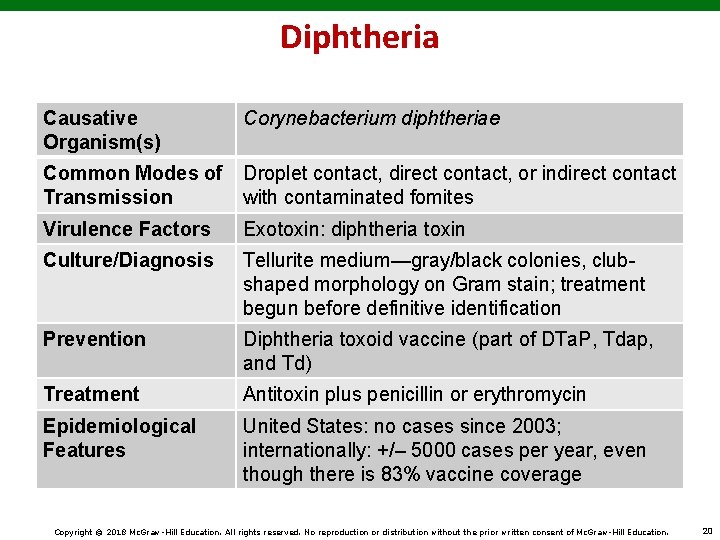
Diphtheria Causative Organism(s) Corynebacterium diphtheriae Common Modes of Transmission Droplet contact, direct contact, or indirect contact with contaminated fomites Virulence Factors Exotoxin: diphtheria toxin Culture/Diagnosis Tellurite medium—gray/black colonies, clubshaped morphology on Gram stain; treatment begun before definitive identification Prevention Diphtheria toxoid vaccine (part of DTa. P, Tdap, and Td) Treatment Antitoxin plus penicillin or erythromycin Epidemiological Features United States: no cases since 2003; internationally: +/– 5000 cases per year, even though there is 83% vaccine coverage Copyright © 2018 Mc. Graw-Hill Education. All rights reserved. No reproduction or distribution without the prior written consent of Mc. Graw-Hill Education. 20
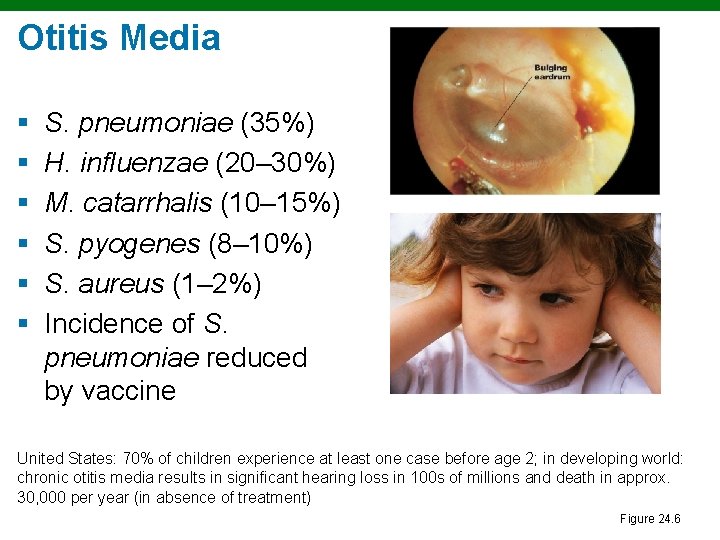
Otitis Media § § § S. pneumoniae (35%) H. influenzae (20– 30%) M. catarrhalis (10– 15%) S. pyogenes (8– 10%) S. aureus (1– 2%) Incidence of S. pneumoniae reduced by vaccine United States: 70% of children experience at least one case before age 2; in developing world: chronic otitis media results in significant hearing loss in 100 s of millions and death in approx. 30, 000 per year (in absence of treatment) Figure 24. 6
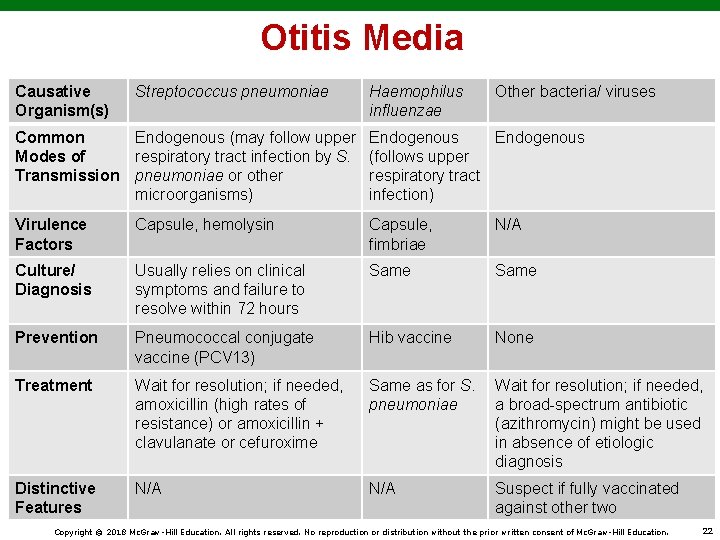
Otitis Media Causative Organism(s) Streptococcus pneumoniae Haemophilus influenzae Other bacteria/ viruses Common Modes of Transmission Endogenous (may follow upper respiratory tract infection by S. pneumoniae or other microorganisms) Endogenous (follows upper respiratory tract infection) Virulence Factors Capsule, hemolysin Capsule, fimbriae N/A Culture/ Diagnosis Usually relies on clinical symptoms and failure to resolve within 72 hours Same Prevention Pneumococcal conjugate vaccine (PCV 13) Hib vaccine None Treatment Wait for resolution; if needed, amoxicillin (high rates of resistance) or amoxicillin + clavulanate or cefuroxime Same as for S. pneumoniae Wait for resolution; if needed, a broad-spectrum antibiotic (azithromycin) might be used in absence of etiologic diagnosis Distinctive Features N/A Suspect if fully vaccinated against other two Copyright © 2018 Mc. Graw-Hill Education. All rights reserved. No reproduction or distribution without the prior written consent of Mc. Graw-Hill Education. 22
Lower Respiratory System Diseases § Bacteria, viruses, and fungi cause § Bronchitis § Bronchiolitis § Pneumonia
Whooping Cough Catarrhal phase: § Bacteria in the respiratory tract cause cold symptoms Paroxysmal phase: • Uncontrollable coughing accompanied by a “whoop” sound • Can result in broken blood vessels in the eyes, vomiting, or even hemorrhages in the brain Convalescent phase: • Bacteria are decreasing, but ciliated epithelia have been damaged, requiring weeks to months of recovery Copyright © 2018 Mc. Graw-Hill Education. All rights reserved. No reproduction or distribution without the prior written consent of Mc. Graw-Hill Education. 24
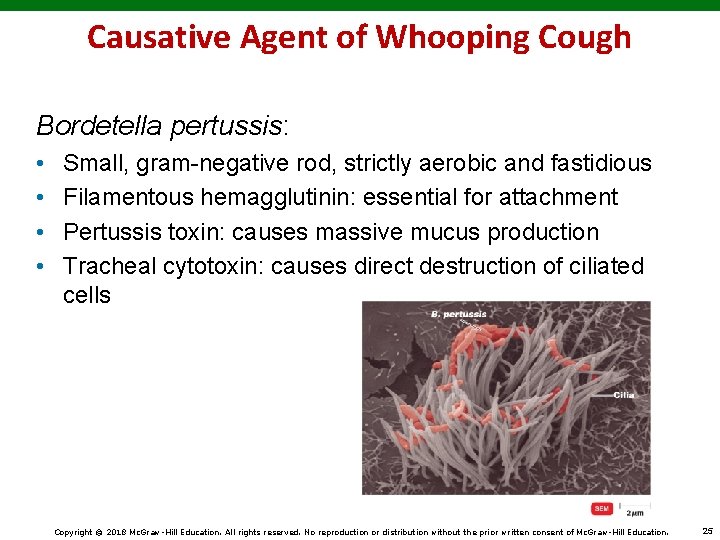
Causative Agent of Whooping Cough Bordetella pertussis: • • Small, gram-negative rod, strictly aerobic and fastidious Filamentous hemagglutinin: essential for attachment Pertussis toxin: causes massive mucus production Tracheal cytotoxin: causes direct destruction of ciliated cells Copyright © 2018 Mc. Graw-Hill Education. All rights reserved. No reproduction or distribution without the prior written consent of Mc. Graw-Hill Education. 25
Whooping Cough Vaccine Pertussis vaccine: • High vaccination coverage has kept incidence low in the United States • Vaccine does not provide lifelong protection: • Immunity wanes a few years after childhood • Increasing incidence in adult patients • Disease can be passed to infants who are not yet fully immunized Copyright © 2018 Mc. Graw-Hill Education. All rights reserved. No reproduction or distribution without the prior written consent of Mc. Graw-Hill Education. 26
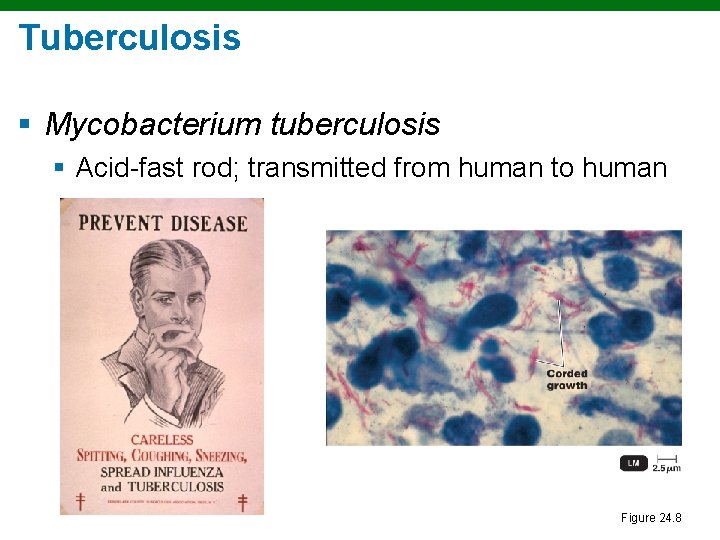
Tuberculosis § Mycobacterium tuberculosis § Acid-fast rod; transmitted from human to human Figure 24. 8
Tuberculosis An ancient human disease: § Prevalent cause of disease historically—“Captain of the Men of Death, ” “The White Plague” § Streptomycin reduced rates significantly Now a reemerging disease • HIV epidemic • Drug-resistant strains • Nearly 1/3 of the world’s population is infected Copyright © 2018 Mc. Graw-Hill Education. All rights reserved. No reproduction or distribution without the prior written consent of Mc. Graw-Hill Education. 28
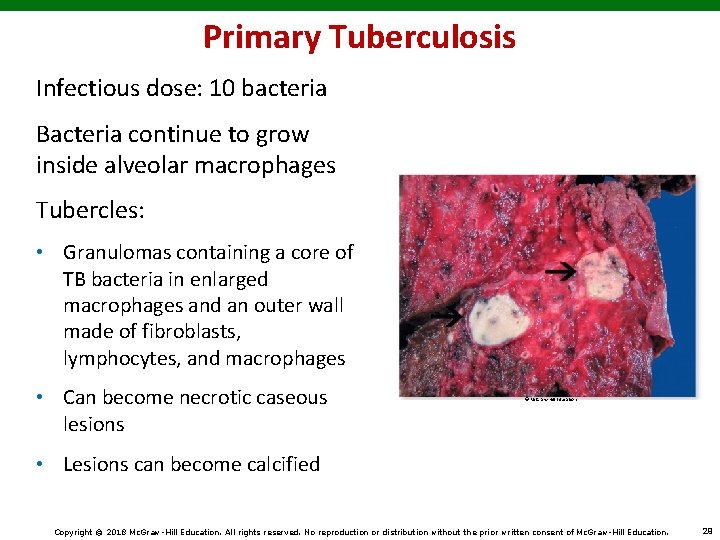
Primary Tuberculosis Infectious dose: 10 bacteria Bacteria continue to grow inside alveolar macrophages Tubercles: • Granulomas containing a core of TB bacteria in enlarged macrophages and an outer wall made of fibroblasts, lymphocytes, and macrophages • Can become necrotic caseous lesions © Mc. Graw-Hill Education • Lesions can become calcified Copyright © 2018 Mc. Graw-Hill Education. All rights reserved. No reproduction or distribution without the prior written consent of Mc. Graw-Hill Education. 29
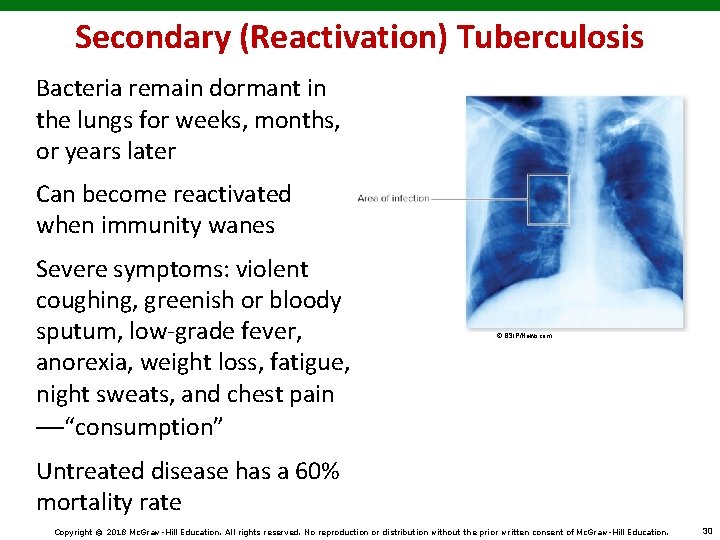
Secondary (Reactivation) Tuberculosis Bacteria remain dormant in the lungs for weeks, months, or years later Can become reactivated when immunity wanes Severe symptoms: violent coughing, greenish or bloody sputum, low-grade fever, anorexia, weight loss, fatigue, night sweats, and chest pain —“consumption” © BSIP/Newscom Untreated disease has a 60% mortality rate Copyright © 2018 Mc. Graw-Hill Education. All rights reserved. No reproduction or distribution without the prior written consent of Mc. Graw-Hill Education. 30
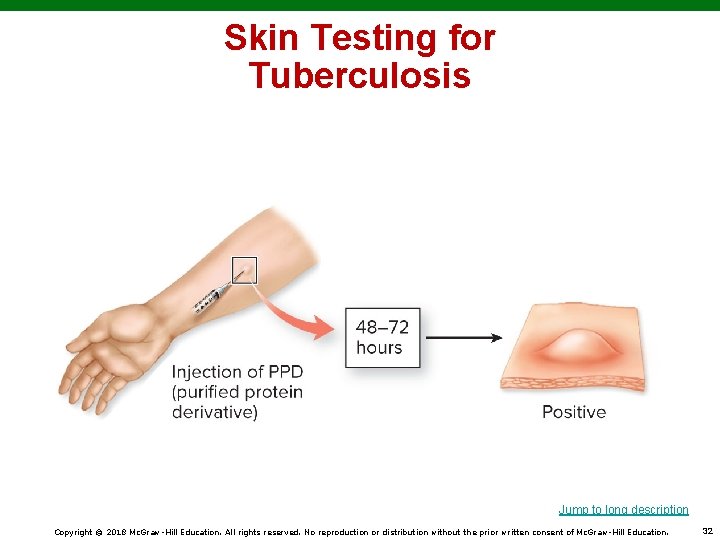
Tuberculosis Diagnosis Mantoux test: shows evidence of delayed hypersensitivity after initial infection with TB • Purified protein derivative is injected under the skin and observed for evidence of an induration indicating delayed hypersensitivity IGRA: blood test to determine T-cell reactivity to M. tuberculosis Acid-fast staining of sputum sample PCR methods Chest X-rays verify TB when other tests give indeterminate results Copyright © 2018 Mc. Graw-Hill Education. All rights reserved. No reproduction or distribution without the prior written consent of Mc. Graw-Hill Education. 31
Skin Testing for Tuberculosis Jump to long description Copyright © 2018 Mc. Graw-Hill Education. All rights reserved. No reproduction or distribution without the prior written consent of Mc. Graw-Hill Education. 32
Tuberculosis Treatment Active tuberculosis: § First two months: Rifampin, isoniazid, ethambutol, pyrazinamide § 4 to 7 months: rifampin, isoniazid Latent tuberculosis: isoniazid, rifampin, rifapentine Patient noncompliance leads to drug-resistant strains • Multidrug-Resistant Tuberculosis (MDR-TB) • Extensively Drug-Resistant Tuberculosis (XDR-TB) Copyright © 2018 Mc. Graw-Hill Education. All rights reserved. No reproduction or distribution without the prior written consent of Mc. Graw-Hill Education. 33
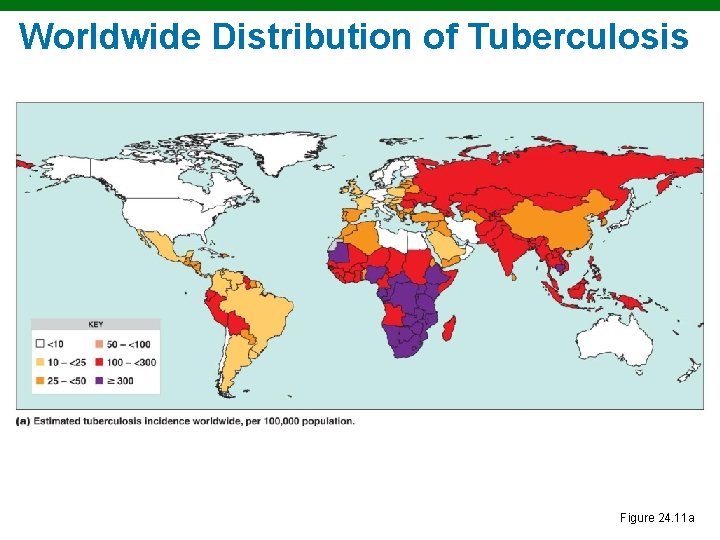
Worldwide Distribution of Tuberculosis Figure 24. 11 a
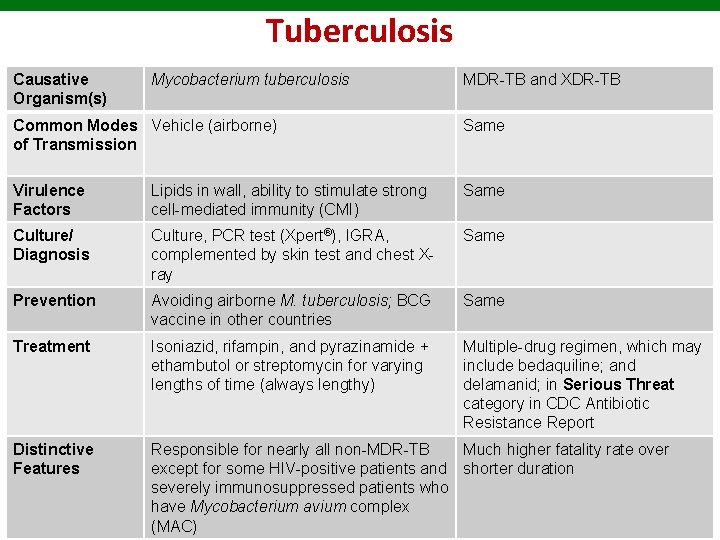
Tuberculosis Causative Organism(s) Mycobacterium tuberculosis MDR-TB and XDR-TB Common Modes Vehicle (airborne) of Transmission Same Virulence Factors Lipids in wall, ability to stimulate strong cell-mediated immunity (CMI) Same Culture/ Diagnosis Culture, PCR test (Xpert®), IGRA, complemented by skin test and chest Xray Same Prevention Avoiding airborne M. tuberculosis; BCG vaccine in other countries Same Treatment Isoniazid, rifampin, and pyrazinamide + ethambutol or streptomycin for varying lengths of time (always lengthy) Multiple-drug regimen, which may include bedaquiline; and delamanid; in Serious Threat category in CDC Antibiotic Resistance Report Distinctive Features Responsible for nearly all non-MDR-TB Much higher fatality rate over except for some HIV-positive patients and shorter duration severely immunosuppressed patients who have Mycobacterium avium complex (MAC) Copyright © 2018 Mc. Graw-Hill Education. All rights reserved. No reproduction or distribution without the prior written consent of Mc. Graw-Hill Education. 35
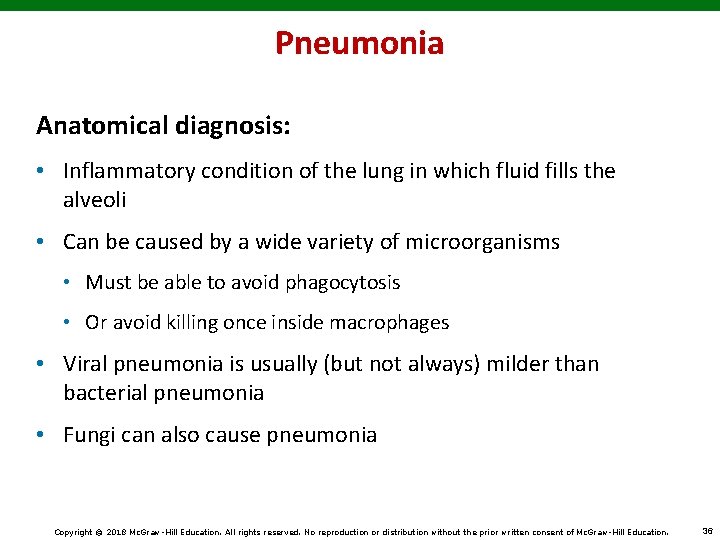
Pneumonia Anatomical diagnosis: • Inflammatory condition of the lung in which fluid fills the alveoli • Can be caused by a wide variety of microorganisms • Must be able to avoid phagocytosis • Or avoid killing once inside macrophages • Viral pneumonia is usually (but not always) milder than bacterial pneumonia • Fungi can also cause pneumonia Copyright © 2018 Mc. Graw-Hill Education. All rights reserved. No reproduction or distribution without the prior written consent of Mc. Graw-Hill Education. 36
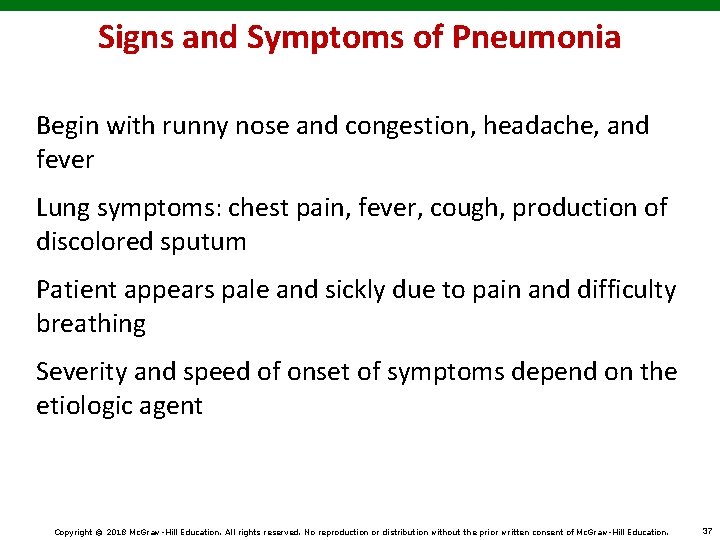
Signs and Symptoms of Pneumonia Begin with runny nose and congestion, headache, and fever Lung symptoms: chest pain, fever, cough, production of discolored sputum Patient appears pale and sickly due to pain and difficulty breathing Severity and speed of onset of symptoms depend on the etiologic agent Copyright © 2018 Mc. Graw-Hill Education. All rights reserved. No reproduction or distribution without the prior written consent of Mc. Graw-Hill Education. 37
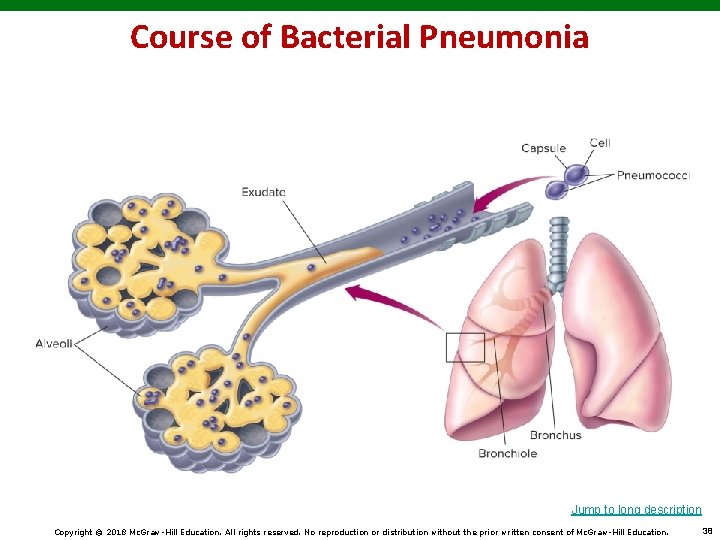
Course of Bacterial Pneumonia Jump to long description Copyright © 2018 Mc. Graw-Hill Education. All rights reserved. No reproduction or distribution without the prior written consent of Mc. Graw-Hill Education. 38
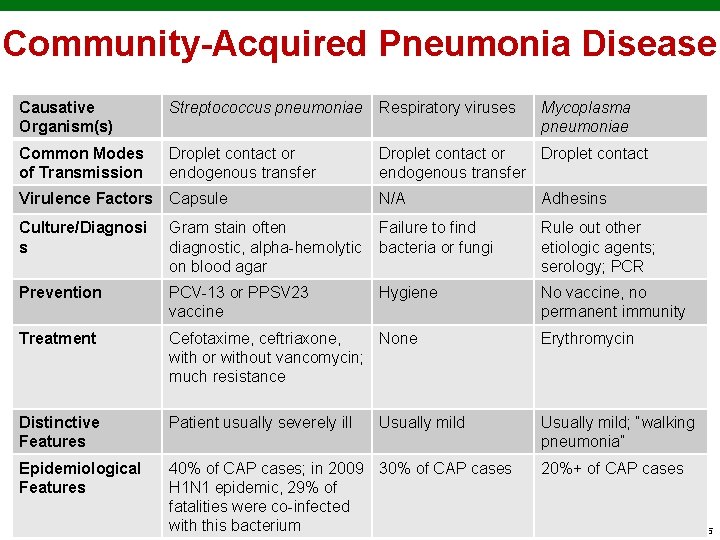
Causative Agents of Community. Acquired Pneumonia Streptococcus pneumoniae accounts for 40% of community-acquired cases Viruses account for 30% Mycoplasma accounts for 20% 10% are caused by other organisms: • Legionella • Haemophilus influenzae • Histoplasma capsulatum Copyright © 2018 Mc. Graw-Hill Education. All rights reserved. No reproduction or distribution without the prior written consent of Mc. Graw-Hill Education. 39
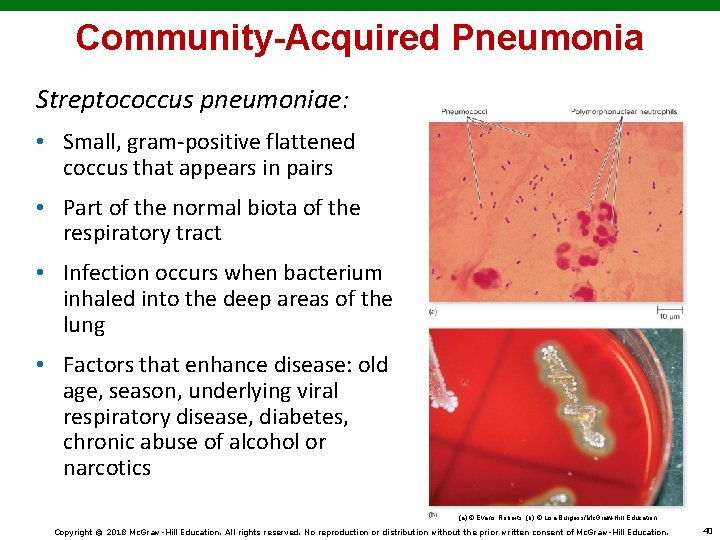
Community-Acquired Pneumonia Streptococcus pneumoniae: • Small, gram-positive flattened coccus that appears in pairs • Part of the normal biota of the respiratory tract • Infection occurs when bacterium inhaled into the deep areas of the lung • Factors that enhance disease: old age, season, underlying viral respiratory disease, diabetes, chronic abuse of alcohol or narcotics (a) © Evans Roberts; (b) © Lisa Burgess/Mc. Graw-Hill Education Copyright © 2018 Mc. Graw-Hill Education. All rights reserved. No reproduction or distribution without the prior written consent of Mc. Graw-Hill Education. 40
Community-Acquired Pneumonia Streptococcus pneumoniae (continued): § Polysaccharide capsule prevents effective phagocytosis: • Blocks complement • Causes inflammatory fluids to build up in the lung § Vaccine is encouraged for older adults § Organism is resistant to penicillin and its derivatives, macrolides, tetracyclines, and fluoroquinolones Copyright © 2018 Mc. Graw-Hill Education. All rights reserved. No reproduction or distribution without the prior written consent of Mc. Graw-Hill Education. 41
Community-Acquired Pneumonia Mycoplasma pneumoniae: § Atypical pneumonia: symptoms do not resemble those of pneumococcal or other pneumonias § Lack a cell wall, irregularly shaped § Transmitted by aerosol droplets among individuals in close quarters § “Walking pneumonia” § Diagnosis through ruling out other causes, PCR, or serological analysis Copyright © 2018 Mc. Graw-Hill Education. All rights reserved. No reproduction or distribution without the prior written consent of Mc. Graw-Hill Education. 42
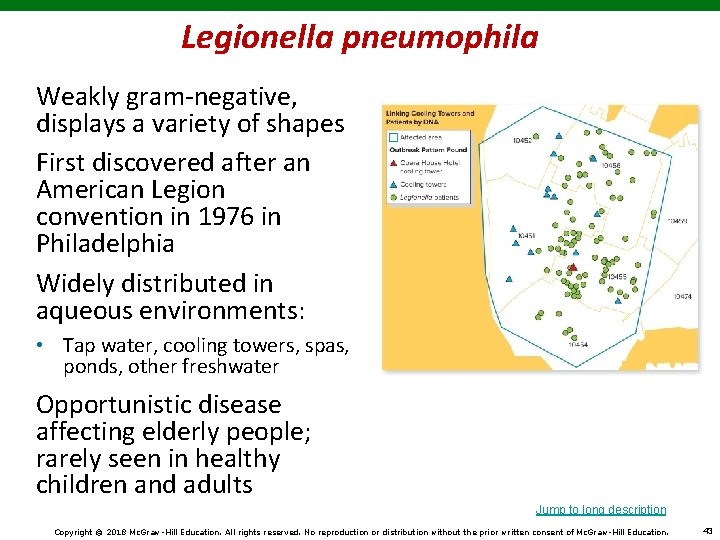
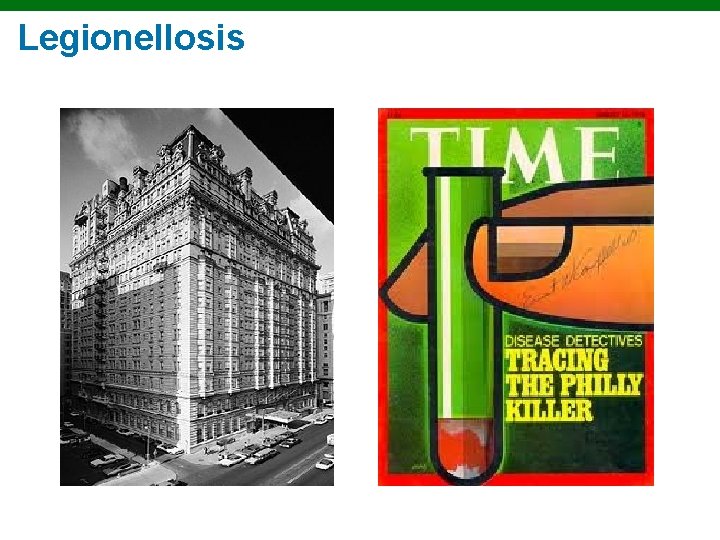
Legionella pneumophila Weakly gram-negative, displays a variety of shapes First discovered after an American Legion convention in 1976 in Philadelphia Widely distributed in aqueous environments: • Tap water, cooling towers, spas, ponds, other freshwater Opportunistic disease affecting elderly people; rarely seen in healthy children and adults Jump to long description Copyright © 2018 Mc. Graw-Hill Education. All rights reserved. No reproduction or distribution without the prior written consent of Mc. Graw-Hill Education. 43
Legionellosis
Community-Acquired Pneumonia Disease Causative Organism(s) Streptococcus pneumoniae Respiratory viruses Mycoplasma pneumoniae Common Modes of Transmission Droplet contact or endogenous transfer Droplet contact or Droplet contact endogenous transfer Virulence Factors Capsule N/A Adhesins Culture/Diagnosi s Gram stain often diagnostic, alpha-hemolytic on blood agar Failure to find bacteria or fungi Rule out other etiologic agents; serology; PCR Prevention PCV-13 or PPSV 23 vaccine Hygiene No vaccine, no permanent immunity Treatment Cefotaxime, ceftriaxone, None with or without vancomycin; much resistance Erythromycin Distinctive Features Patient usually severely ill Usually mild; “walking pneumonia” Usually mild Epidemiological Features 40% of CAP cases; in 2009 30% of CAP cases 20%+ of CAP cases H 1 N 1 epidemic, 29% of fatalities were co-infected with this. Allbacterium Copyright © 2018 Mc. Graw-Hill Education. rights reserved. No reproduction or distribution without the prior written consent of Mc. Graw-Hill Education. 45
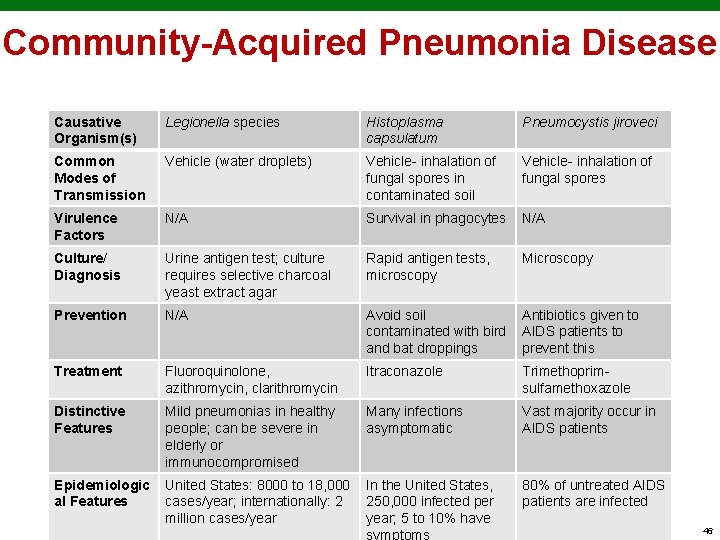
Community-Acquired Pneumonia Disease Causative Organism(s) Legionella species Histoplasma capsulatum Pneumocystis jiroveci Common Modes of Transmission Vehicle (water droplets) Vehicle- inhalation of fungal spores in contaminated soil Vehicle- inhalation of fungal spores Virulence Factors N/A Survival in phagocytes N/A Culture/ Diagnosis Urine antigen test; culture requires selective charcoal yeast extract agar Rapid antigen tests, microscopy Microscopy Prevention N/A Avoid soil contaminated with bird and bat droppings Antibiotics given to AIDS patients to prevent this Treatment Fluoroquinolone, azithromycin, clarithromycin Itraconazole Trimethoprimsulfamethoxazole Distinctive Features Mild pneumonias in healthy people; can be severe in elderly or immunocompromised Many infections asymptomatic Vast majority occur in AIDS patients Epidemiologic al Features United States: 8000 to 18, 000 cases/year; internationally: 2 million cases/year In the United States, 250, 000 infected per year; 5 to 10% have 80% of untreated AIDS patients are infected Copyright © 2018 Mc. Graw-Hill Education. All rights reserved. No reproduction or distribution without the prior written consent of Mc. Graw-Hill Education. 46
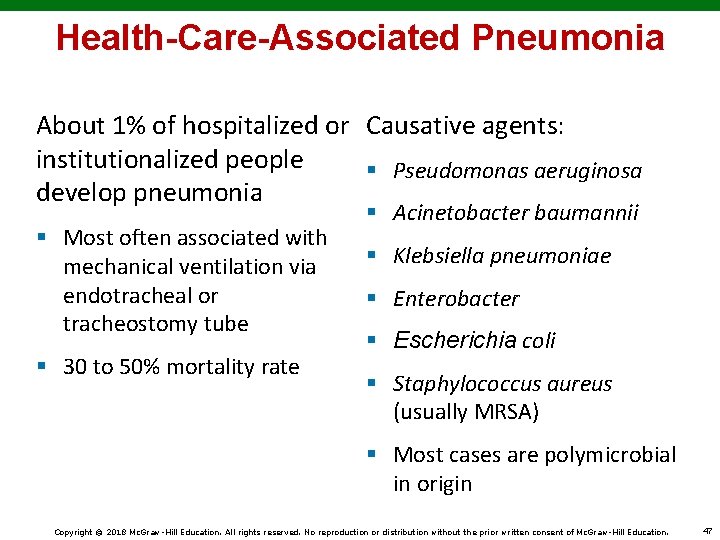
Health-Care-Associated Pneumonia About 1% of hospitalized or Causative agents: institutionalized people § Pseudomonas aeruginosa develop pneumonia § Most often associated with mechanical ventilation via endotracheal or tracheostomy tube § 30 to 50% mortality rate § Acinetobacter baumannii § Klebsiella pneumoniae § Enterobacter § Escherichia coli § Staphylococcus aureus (usually MRSA) § Most cases are polymicrobial in origin Copyright © 2018 Mc. Graw-Hill Education. All rights reserved. No reproduction or distribution without the prior written consent of Mc. Graw-Hill Education. 47
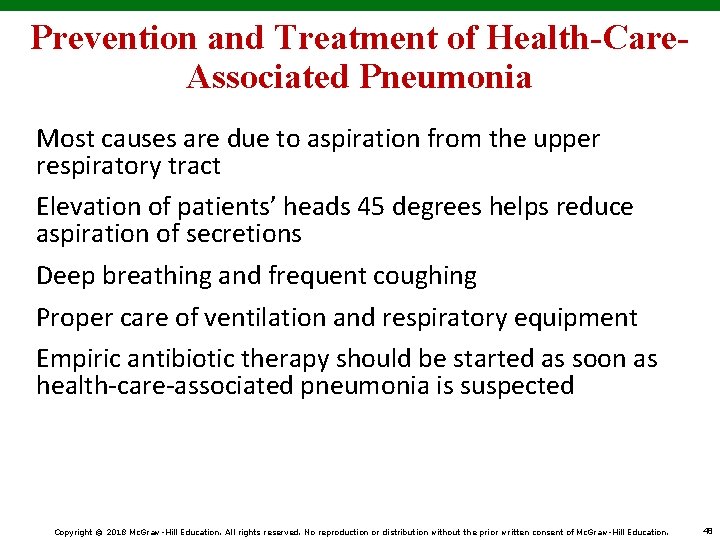
Prevention and Treatment of Health-Care. Associated Pneumonia Most causes are due to aspiration from the upper respiratory tract Elevation of patients’ heads 45 degrees helps reduce aspiration of secretions Deep breathing and frequent coughing Proper care of ventilation and respiratory equipment Empiric antibiotic therapy should be started as soon as health-care-associated pneumonia is suspected Copyright © 2018 Mc. Graw-Hill Education. All rights reserved. No reproduction or distribution without the prior written consent of Mc. Graw-Hill Education. 48
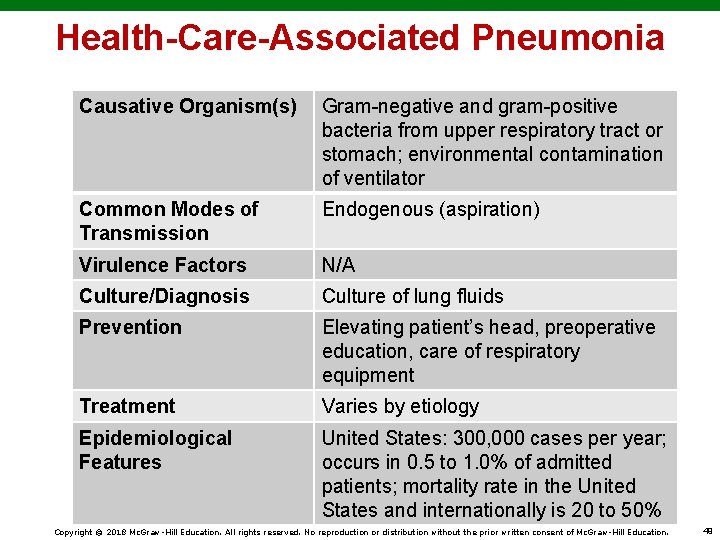
Health-Care-Associated Pneumonia Causative Organism(s) Gram-negative and gram-positive bacteria from upper respiratory tract or stomach; environmental contamination of ventilator Common Modes of Transmission Endogenous (aspiration) Virulence Factors N/A Culture/Diagnosis Culture of lung fluids Prevention Elevating patient’s head, preoperative education, care of respiratory equipment Treatment Varies by etiology Epidemiological Features United States: 300, 000 cases per year; occurs in 0. 5 to 1. 0% of admitted patients; mortality rate in the United States and internationally is 20 to 50% Copyright © 2018 Mc. Graw-Hill Education. All rights reserved. No reproduction or distribution without the prior written consent of Mc. Graw-Hill Education. 49
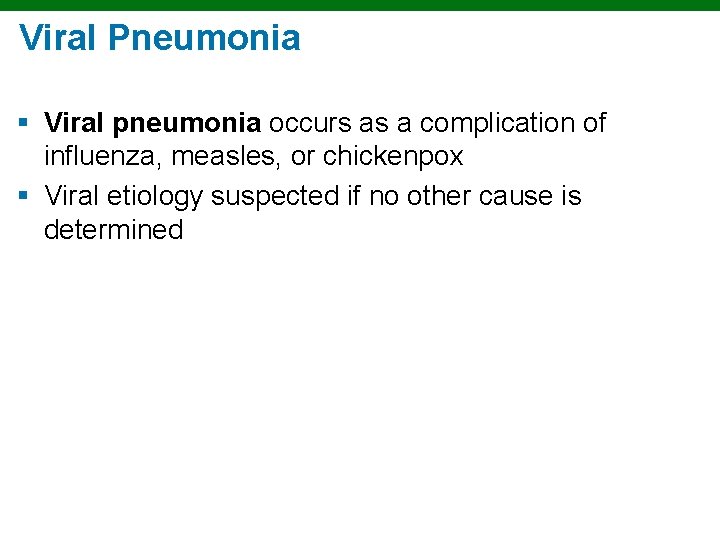
Viral Pneumonia § Viral pneumonia occurs as a complication of influenza, measles, or chickenpox § Viral etiology suspected if no other cause is determined
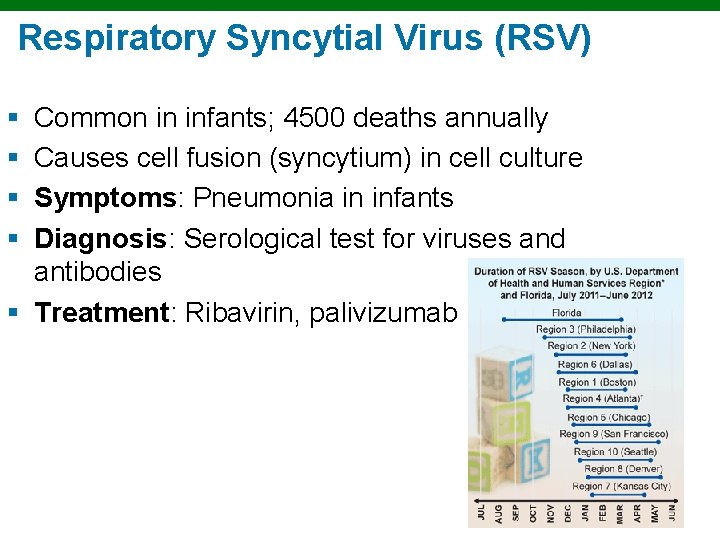
Respiratory Syncytial Virus (RSV) § § Common in infants; 4500 deaths annually Causes cell fusion (syncytium) in cell culture Symptoms: Pneumonia in infants Diagnosis: Serological test for viruses and antibodies § Treatment: Ribavirin, palivizumab
Respiratory Syncytial Virus Infects the respiratory tract and produces giant multinucleated cells § Outbreaks occur around the world, peak incidence in winter and early spring § Mortality highest among premature infants, those with congenital disease, or immunodeficiency Copyright © 2018 Mc. Graw-Hill Education. All rights reserved. No reproduction or distribution without the prior written consent of Mc. Graw-Hill Education. 52
Respiratory Syncytial Virus Signs and symptoms: • Rhinitis, pharyngitis, otitis • More serious infections: progress to bronchial tree and parenchyma, symptoms of croup and difficulty breathing Transmission: • Highly contagious and transmitted through droplet contact and fomites Passive antibody therapy is an effective treatment. • Ribavirin is available through an inhaled aerosol Copyright © 2018 Mc. Graw-Hill Education. All rights reserved. No reproduction or distribution without the prior written consent of Mc. Graw-Hill Education. 53
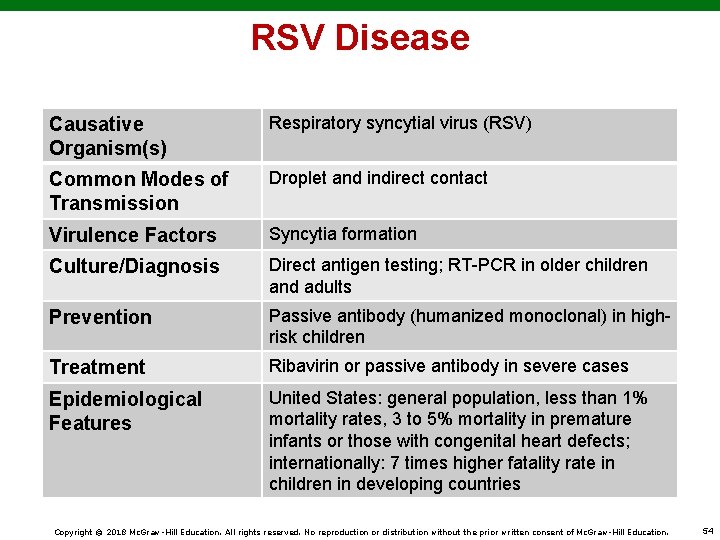
RSV Disease Causative Organism(s) Respiratory syncytial virus (RSV) Common Modes of Transmission Droplet and indirect contact Virulence Factors Syncytia formation Culture/Diagnosis Direct antigen testing; RT-PCR in older children and adults Prevention Passive antibody (humanized monoclonal) in highrisk children Treatment Ribavirin or passive antibody in severe cases Epidemiological Features United States: general population, less than 1% mortality rates, 3 to 5% mortality in premature infants or those with congenital heart defects; internationally: 7 times higher fatality rate in children in developing countries Copyright © 2018 Mc. Graw-Hill Education. All rights reserved. No reproduction or distribution without the prior written consent of Mc. Graw-Hill Education. 54
Influenza Reasons to study “the flu”: § Annual flu seasons have the potential for turning deadly for many people very quickly § Many diseases are erroneously termed “the flu” § Behavior of influenza viruses illustrates how viruses can and do cause more serious diseases than they did previously Copyright © 2018 Mc. Graw-Hill Education. All rights reserved. No reproduction or distribution without the prior written consent of Mc. Graw-Hill Education. 55
Signs and Symptoms of Influenza Headache, chills, dry cough, body aches, fever, stuffy nose, sore throat Extreme fatigue can last for a few days or weeks H 1 N 1 “Swine flu”: not all patients had a fever, many patients had gastrointestinal distress, or developed multiorgan system failure Copyright © 2018 Mc. Graw-Hill Education. All rights reserved. No reproduction or distribution without the prior written consent of Mc. Graw-Hill Education. 56
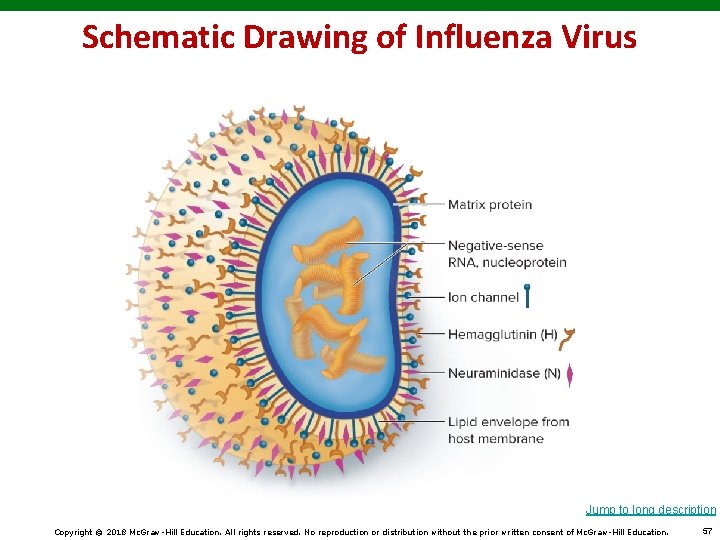
Schematic Drawing of Influenza Virus Jump to long description Copyright © 2018 Mc. Graw-Hill Education. All rights reserved. No reproduction or distribution without the prior written consent of Mc. Graw-Hill Education. 57
Prevention of Influenza Three major types of influenza vaccines in the United States: § An intramuscular inactivated vaccine with three strains of influenza in it § An intramuscular inactivated vaccine with four strains § A recombinant vaccine (not made in eggs for intramuscular injection Scientists are continually researching emerging strains to attempt to prevent a pandemic Copyright © 2018 Mc. Graw-Hill Education. All rights reserved. No reproduction or distribution without the prior written consent of Mc. Graw-Hill Education. 58
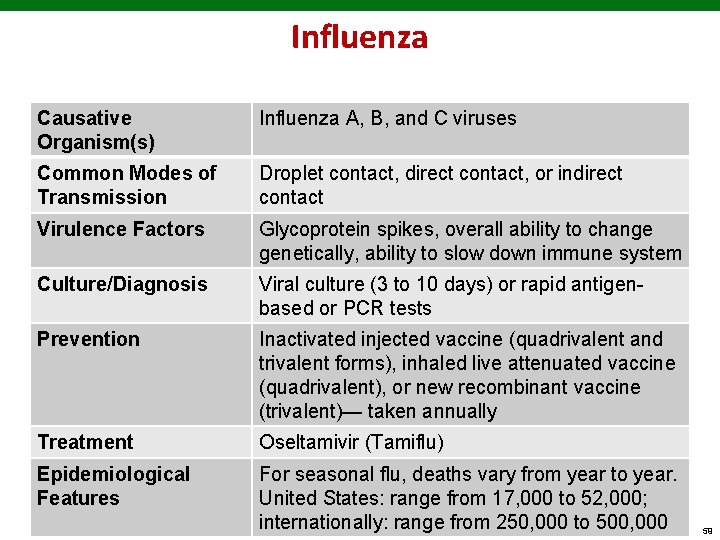
Influenza Causative Organism(s) Influenza A, B, and C viruses Common Modes of Transmission Droplet contact, direct contact, or indirect contact Virulence Factors Glycoprotein spikes, overall ability to change genetically, ability to slow down immune system Culture/Diagnosis Viral culture (3 to 10 days) or rapid antigenbased or PCR tests Prevention Inactivated injected vaccine (quadrivalent and trivalent forms), inhaled live attenuated vaccine (quadrivalent), or new recombinant vaccine (trivalent)— taken annually Treatment Oseltamivir (Tamiflu) Epidemiological Features For seasonal flu, deaths vary from year to year. United States: range from 17, 000 to 52, 000; internationally: range from 250, 000 to 500, 000 Copyright © 2018 Mc. Graw-Hill Education. All rights reserved. No reproduction or distribution without the prior written consent of Mc. Graw-Hill Education. 59