
The unsustainable food system The food supply chain
The unsustainable food system
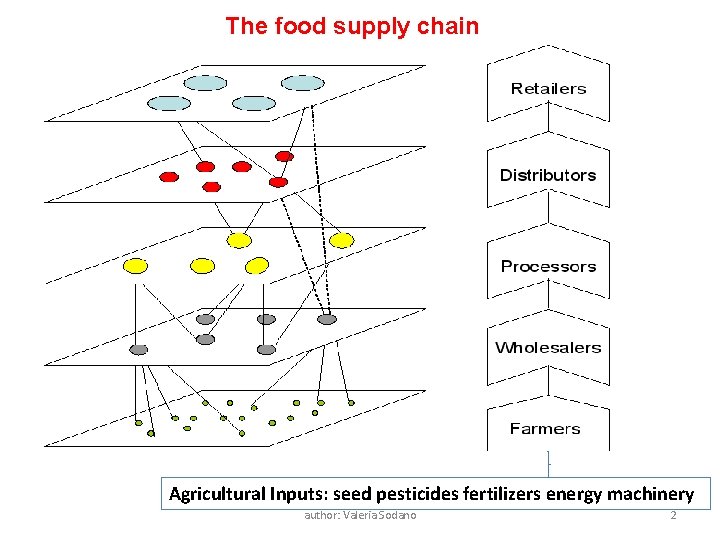
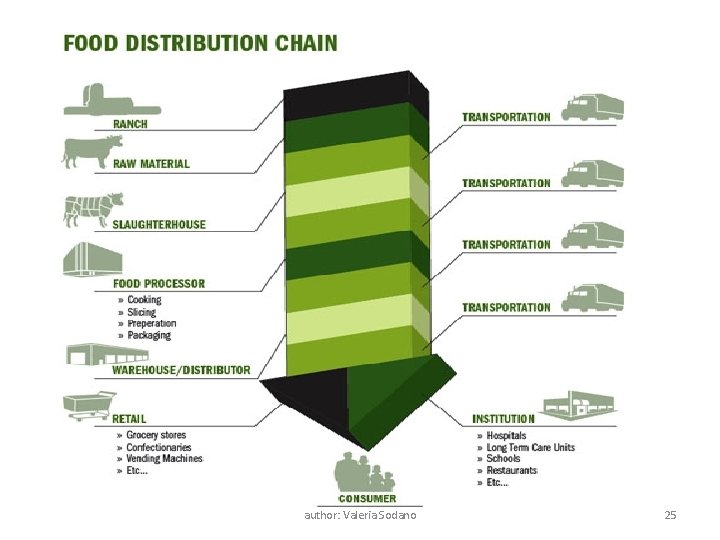
The food supply chain Agricultural Inputs: seed pesticides fertilizers energy machinery author: Valeria Sodano 2
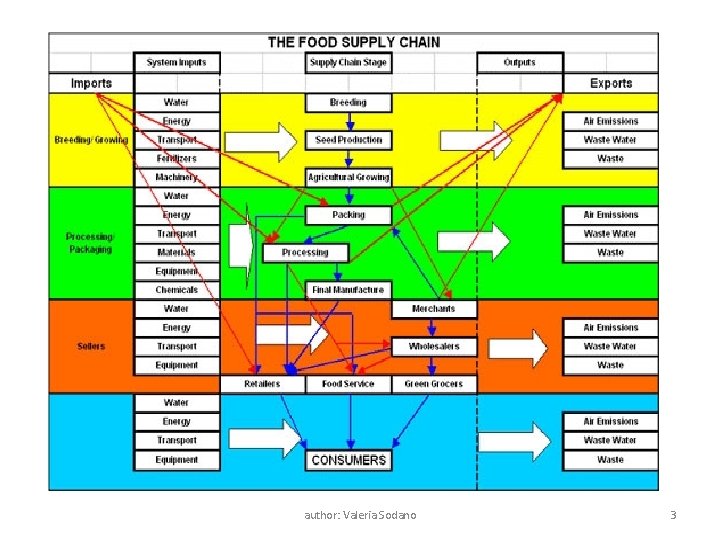
author: Valeria Sodano 3
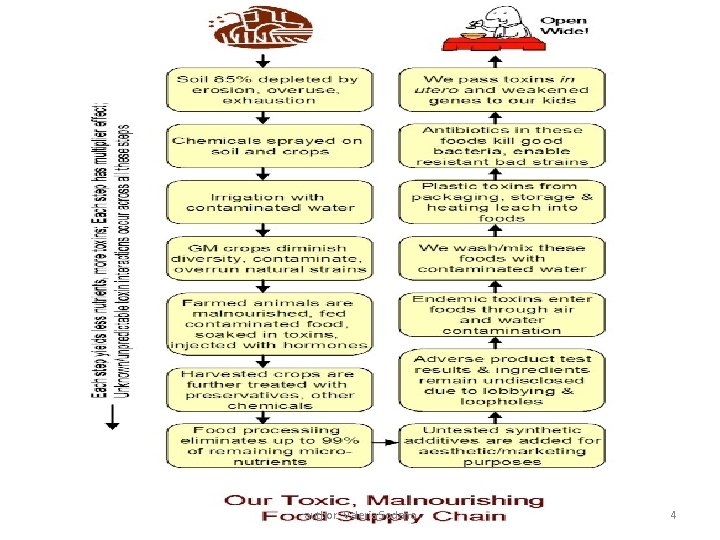
author: Valeria Sodano 4
The unsustainable food system
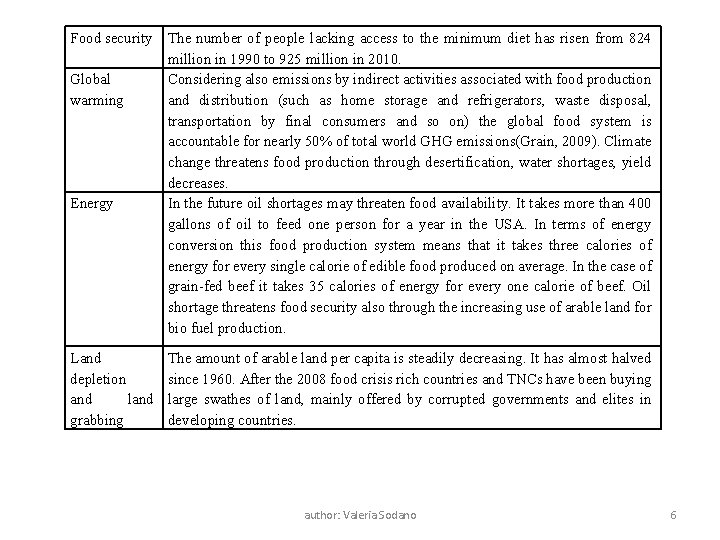
Food security Global warming Energy Land depletion and land grabbing The number of people lacking access to the minimum diet has risen from 824 million in 1990 to 925 million in 2010. Considering also emissions by indirect activities associated with food production and distribution (such as home storage and refrigerators, waste disposal, transportation by final consumers and so on) the global food system is accountable for nearly 50% of total world GHG emissions(Grain, 2009). Climate change threatens food production through desertification, water shortages, yield decreases. In the future oil shortages may threaten food availability. It takes more than 400 gallons of oil to feed one person for a year in the USA. In terms of energy conversion this food production system means that it takes three calories of energy for every single calorie of edible food produced on average. In the case of grain-fed beef it takes 35 calories of energy for every one calorie of beef. Oil shortage threatens food security also through the increasing use of arable land for bio fuel production. The amount of arable land per capita is steadily decreasing. It has almost halved since 1960. After the 2008 food crisis rich countries and TNCs have been buying large swathes of land, mainly offered by corrupted governments and elites in developing countries. author: Valeria Sodano 6
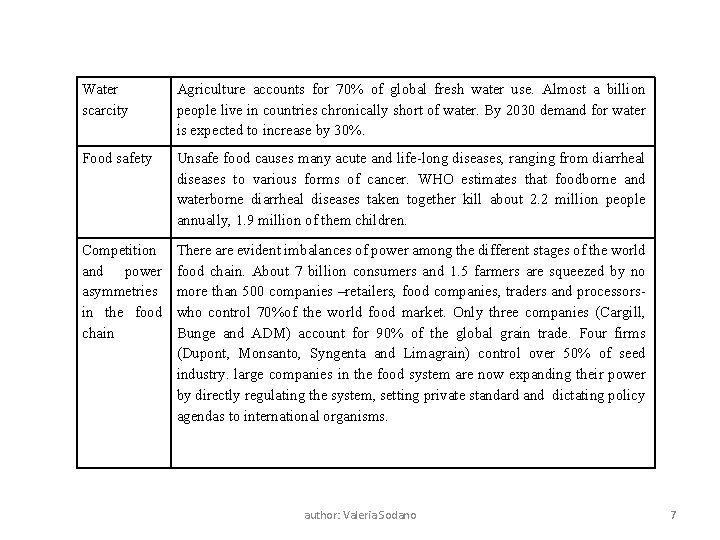
Water scarcity Agriculture accounts for 70% of global fresh water use. Almost a billion people live in countries chronically short of water. By 2030 demand for water is expected to increase by 30%. Food safety Unsafe food causes many acute and life-long diseases, ranging from diarrheal diseases to various forms of cancer. WHO estimates that foodborne and waterborne diarrheal diseases taken together kill about 2. 2 million people annually, 1. 9 million of them children. Competition and power asymmetries in the food chain There are evident imbalances of power among the different stages of the world food chain. About 7 billion consumers and 1. 5 farmers are squeezed by no more than 500 companies –retailers, food companies, traders and processorswho control 70%of the world food market. Only three companies (Cargill, Bunge and ADM) account for 90% of the global grain trade. Four firms (Dupont, Monsanto, Syngenta and Limagrain) control over 50% of seed industry. large companies in the food system are now expanding their power by directly regulating the system, setting private standard and dictating policy agendas to international organisms. author: Valeria Sodano 7
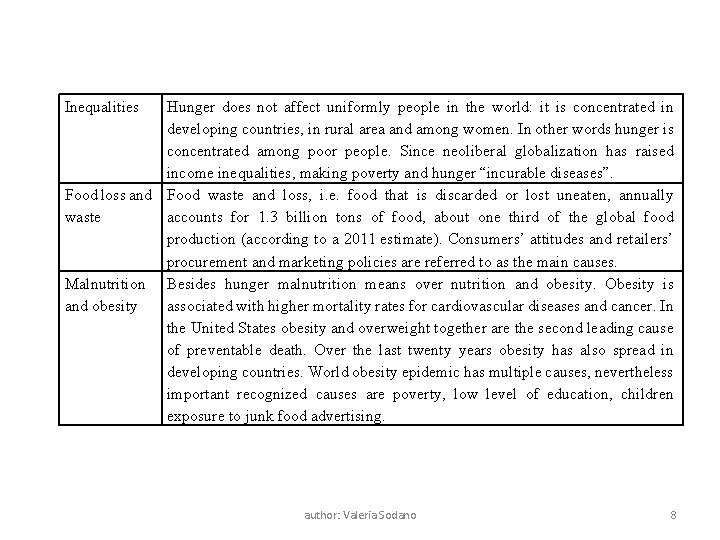
Inequalities Hunger does not affect uniformly people in the world: it is concentrated in developing countries, in rural area and among women. In other words hunger is concentrated among poor people. Since neoliberal globalization has raised income inequalities, making poverty and hunger “incurable diseases”. Food loss and Food waste and loss, i. e. food that is discarded or lost uneaten, annually waste accounts for 1. 3 billion tons of food, about one third of the global food production (according to a 2011 estimate). Consumers’ attitudes and retailers’ procurement and marketing policies are referred to as the main causes. Malnutrition Besides hunger malnutrition means over nutrition and obesity. Obesity is and obesity associated with higher mortality rates for cardiovascular diseases and cancer. In the United States obesity and overweight together are the second leading cause of preventable death. Over the last twenty years obesity has also spread in developing countries. World obesity epidemic has multiple causes, nevertheless important recognized causes are poverty, low level of education, children exposure to junk food advertising. author: Valeria Sodano 8
Food and climate change
The food system contributes between 21 -37 percent of total global greenhouse gas (GHG) emissions, according to the Intergovernmental Panel on Climate Change (IPCC). And the World Research Institute (WRI) finds that if food waste alone were a country, it would be the world’s third-largest emitter of GHG emissions. Livestock production accounts for 70 per cent of all agricultural land use, occupies 30 per cent of the planet’s land surface and is responsible for 18 per cent of greenhouse gases such as methane and nitrous oxide. Growing animals for food is also inefficient. It takes about five to seven kilograms of grain to produce one kilogram of beef. Each of those takes energy and water to produce, process, and transport.
The problems with chemical agriculture Synthetic pesticides and fertilizers are often made from fossil fuels. Manufacturing and transporting them uses energy and produces greenhouse gases. Studies show that chemical farming uses more energy per unit of production than organic farms. Synthetic nitrogen fertilizers in soils produce nitrous oxide, a greenhouse gas about 300 times more powerful than carbon dioxide at trapping heat in the atmosphere. Organic farms rely on natural manure and compost for fertilizer. They store much more carbon in the soil, keeping it out of the atmosphere. Food closer to home The average meal travels 1, 200 kilometres from the farm to plate. Food grown closer to home produces fewer transportation emissions, is fresher and supports local farmers. As the distance food travels decreases, so does the need for processing and refrigeration to reduce spoilage. Local or organic? “Food miles” (the distance food travels from production to consumer) actually make up a small percentage of its overall carbon footprint — about 11 per cent on average. How the food is grown makes up roughly 83 per cent.
Climate Change and Land An IPCC Special Report on climate change, desertification, land degradation, sustainable land management, food security, and greenhouse gas fluxes in terrestrial ecosystems. Summary for Policymakers Revised by the IPCC on January 2020. © 2020 Intergovernmental Panel on Climate Change. Electronic copies of this Summary for Policymakers are available from the IPCC website www. ipcc. ch https: //www. ipcc. ch/site/assets/uploads/sites/4/2020/02/SPM_Updated. Jan 20. pdf
Response options throughout the food system, from production to consumption, including food loss and waste, can be deployed and scaled up to advance adaptation and mitigation (high confidence). B. 6 The total technical mitigation potential from crop and livestock activities, and agroforestry is estimated as 2. 3 – 9. 6 Gt. CO 2 eq yr-1 by 2050 (medium confidence). The total technical mitigation potential of dietary changes is estimated as 0. 7 – 8 Gt. CO 2 eq yr-1 by 2050 (medium confidence).
B. 6. 1 Practices that contribute to climate change adaptation and mitigation in cropland include increasing soil organic matter, erosion control, improved fertiliser management, improved crop management, for example paddy rice management, and use of varieties and genetic improvements for heat and drought tolerance. For livestock, options include better grazing land management, improved manure management, higher-quality feed, and use of breeds and genetic improvement. Different farming and pastoral systems can achieve reductions in the emissions intensity of livestock products. Depending on the farming and pastoral systems and level of development, reductions in the emissions intensity of livestock products may lead to absolute reductions in GHG emissions (medium confidence). Many livestock related options can enhance the adaptive capacity of rural communities, in particular, of smallholders and pastoralists. Significant synergies exist between adaptation and mitigation, for example through sustainable land management approaches (high confidence).
B. 6. 2 Diversification in the food system (e. g. , implementation of integrated production systems, broad-based genetic resources, and diets) can reduce risks from climate change (medium confidence). Balanced diets, featuring plant-based foods, such as those based on coarse grains, legumes, fruits and vegetables, nuts and seeds, and animal-sourced food produced in resilient, sustainable and low-GHG emission systems, present major opportunities for adaptation and mitigation while generating significant co-benefits in terms of human health (high confidence). By 2050, dietary changes could free several million km 2 (medium confidence) of land provide a technical mitigation potential of 0. 7 to 8. 0 Gt. CO 2 eq yr-1, relative to business as usual projections (high confidence). Transitions towards low-GHG emission diets may be influenced by local production practices, technical and financial barriers and associated livelihoods and cultural habits (high confidence).
B. 6. 3 Reduction of food loss and waste can lower GHG emissions and contribute to adaptation through reduction in the land area needed for food production (medium confidence). During 2010 -2016, global food loss and waste contributed 8 – 10% of total anthropogenic GHG emissions (medium confidence). Currently, 25 – 30% of total food produced is lost or wasted (medium confidence). Technical options such as improved harvesting techniques, on-farm storage, infrastructure, transport, packaging, retail and education can reduce food loss and waste across the supply chain. Causes of food loss and waste differ substantially between developed and developing countries, as well as between regions (medium confidence). By 2050, reduced food loss and waste can free several million km 2 of land (low confidence). {5. 5. 2, 6. 3. 6}
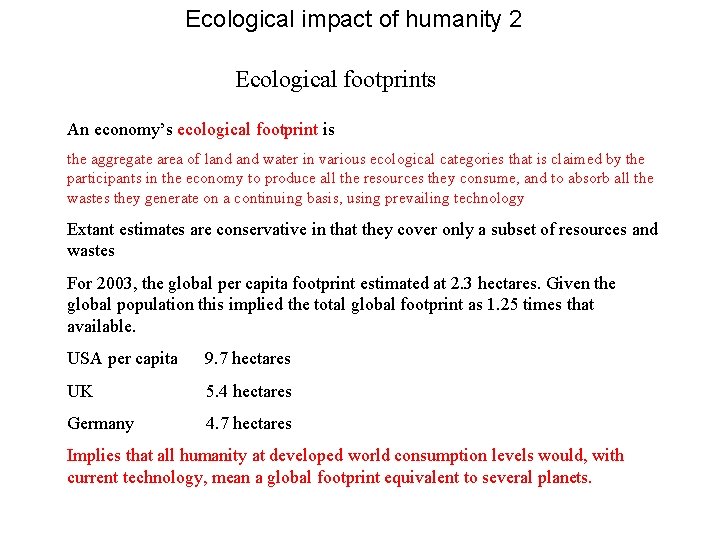
Ecological impact of humanity 2 Ecological footprints An economy’s ecological footprint is the aggregate area of land water in various ecological categories that is claimed by the participants in the economy to produce all the resources they consume, and to absorb all the wastes they generate on a continuing basis, using prevailing technology Extant estimates are conservative in that they cover only a subset of resources and wastes For 2003, the global per capita footprint estimated at 2. 3 hectares. Given the global population this implied the total global footprint as 1. 25 times that available. USA per capita 9. 7 hectares UK 5. 4 hectares Germany 4. 7 hectares Implies that all humanity at developed world consumption levels would, with current technology, mean a global footprint equivalent to several planets.

Food Security Definition • Food Security exists when all people, at all times, have physical and economic access to sufficient, safe and nutritious food to meet their dietary needs and food preferences for an active and healthy life author: Valeria Sodano 19
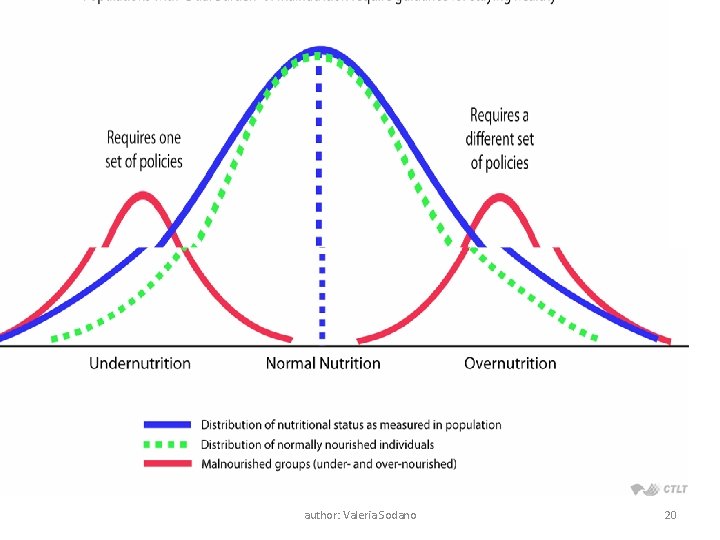
author: Valeria Sodano 20
FAO, IFAD, UNICEF, WFP and WHO. 2017. The State of Food Security and Nutrition in the World 2017. Building resilience for peace and food security. Rome, FAO. Key messages 1 After a prolonged decline, world hunger appears to be on the rise again. The estimated number of undernourished people increased to 815 million in 2016, up from 777 million in 2015. currently, in 2020, undernourished people in the world are 847, 516, 832. 2 Much of the recent increase in food insecurity can be traced to the greater number of conflicts, often exacerbated by climate-related shocks. 3 Even in some peaceful settings, food security has deteriorated as economic slowdowns challenge access to food for the poor. author: Valeria Sodano 21
4 The worrying trend in undernourishment is not yet reflected in levels of chronic child malnutrition (stunting), which continue to fall – but at a slower rate in several regions. 5 Despite the decline, in 2016 stunting still affected one out of four children under the age of five years, or 155 million children. In some regions, stunting affects one-third of children under five. 6 Wasting continues to threaten the lives of almost 52 million children (8 percent). author: Valeria Sodano 22
7 Almost one-third (33 percent) of women of reproductive age worldwide suffer from anaemia, which also puts the nutrition and health of many children at risk. 8 Child overweight and adult obesity are on the rise, including in low- and middle-income countries. 9 Multiple forms of malnutrition are coexisting, with countries experiencing simultaneously high rates of child undernutrition and adult obesity. author: Valeria Sodano 23
In 2016, the food security situation deteriorated sharply in parts of sub-Saharan Africa, South-Eastern Asia and Western Asia. This was most notable in situations of conflict, in particular where the food security impacts of conflict were compounded by droughts or floods, linked in part to the El Niño phenomenon. However, worsening food security conditions have also been observed in more peaceful settings, especially where economic slowdown has drained foreign exchange and fiscal revenues, affecting both food availability through reduced import capacity and food access through reduced fiscal space to protect poor households against rising domestic food prices. author: Valeria Sodano 24
author: Valeria Sodano 25
the dominant rhetoric: it is necessary to increase productivity to feed the growing world population. the truth is: gender equality and a more equitable distribution of wealth would allow the world population to stabilize. moreover: if we were to reduce food waste, we would need to produce less and not more author: Valeria Sodano 26
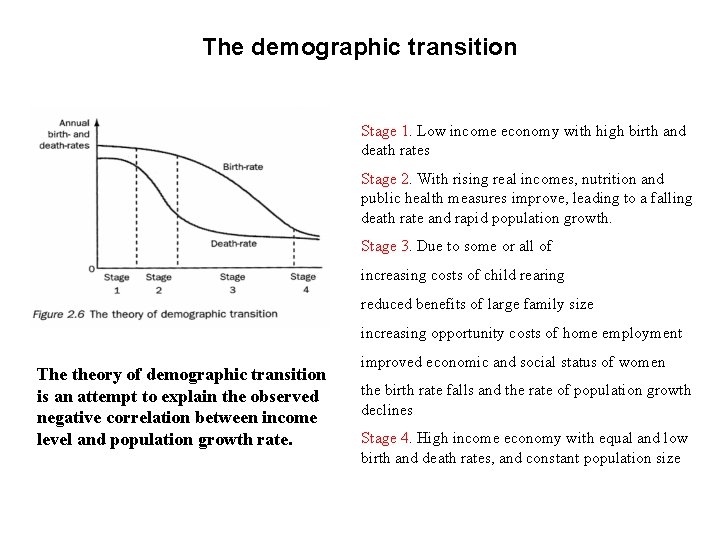
The demographic transition Stage 1. Low income economy with high birth and death rates Stage 2. With rising real incomes, nutrition and public health measures improve, leading to a falling death rate and rapid population growth. Stage 3. Due to some or all of increasing costs of child rearing reduced benefits of large family size increasing opportunity costs of home employment The theory of demographic transition is an attempt to explain the observed negative correlation between income level and population growth rate. improved economic and social status of women the birth rate falls and the rate of population growth declines Stage 4. High income economy with equal and low birth and death rates, and constant population size
3. Economic crisis, women and food security: a counter-agenda
In order to put women at the core of the issue of food security, both as recipients and proponents of a “new global food deal”, it is worth embracing the view of the food sovereignty movement which is not only an anti neoliberal but also an anti-patriarcal and anti-capitalist movement. The Food sovereignty policy framework, which is one of the more advanced and radical synthesis of alternative food policy view (Windfur and Jonsen, 2005; Borras, 2008) was launched at the World Food summit in 1966 by Via Campesina and has been then endorsed by many organizations and social movements in various fora and international meetings.
Half of the people in the world are peasants Peasants make up almost half the world’s peoples and they grow at least 70% of the world’s food There are: 1. 5 billion peasants on 380 million farms; 800 million more growing urban gardens; 410 million gathering the hidden harvest of our forests and savannas; 190 million pastoralists and well over 100 million peasant fishers. At least 370 million of these are also indigenous peoples.
‘Seven Principles to Achieve Food Sovereignty’: 1. Food: A Basic Human Right –Each nation should declare that access to food is a constitutional right and guarantee the development of the primary sector to ensure the concrete realization of this fundamental right. 2. Agrarian Reform – A genuine agrarian reform is necessary which gives landless and farming people – especially women – ownership and control of the land they work and returns territories to indigenous peoples. 3. Protecting Natural Resources – Food Sovereignty entails the sustainable care and use of natural resources, especially land, water, seeds and livestock breeds. The people who work the land must have the right to practice sustainable management of natural resources and to conserve biodiversity free of restrictive intellectual property rights. 4. Reorganizing Food Trade – Food is first and foremost a source of nutrition and only secondarily an item of trade. National agricultural policies must prioritize production for domestic consumption and food self-sufficiency. Food imports must not displace local production nor depress prices. 5. Ending the Globalization of Hunger – Food Sovereignty is undermined by multilateral institutions and by speculative capital. The growing control of multinational corporations over agricultural policies has been facilitated by the economic policies of multilateral organizations such as the WTO, World Bank and the IMF. Regulation and taxation of speculative capital and a strictly enforced Code of Conduct for TNCs is therefore needed. 6. Social Peace – Everyone has the right to be free from violence. Food must not be used as a weapon. 7. Democratic control – Smallholder farmers must have direct input into formulating agricultural policies at all levels. Rural women, in particular, must be granted direct and active decision making on food and rural issues.
The movement of food sovereignty is particularly interesting from a feminist standpoint (Caro, 2011; Vivas, 2010). In fact it sets as priority objectives gender equality (under the more general objective of social justice) and women's access to land, in open defiance of the concentration of land of capitalist systems and of customary laws of patriarchal traditional communities. Moreover, its political project and practices necessarily require not only the participation of women as activists and political actors, but also the bulk of women’s practical and theoretical knowledge.
Literature (both from academics and activists of social movements) has highlighted at least Three critical issues which need to be faced when designing strategies for attaining food sovereignty 1. Given that food sovereignty alludes to the process of food production, preparation and consumption, a social and historical function assigned to women in all societies, it requires (accepting feminist stances) to put an end to the productive/reproductive dichotomy (León). (this dilemma may be also referred to as: productive vs. reproductive labor; labor vs. employment; paid vs. unpaid work). 2. Given that food sovereignty is strongly anchored to the concept of sustainability and respect for nature and its reproductive functions, it calls for a sound environmentalism able to integrate economic, social and environmental discourse in new socioeconomic models and theories (nature preservation and sustainability vs. economic growth). 3. Given that food sovereignty assumes communities self-governance for the management of resources required to fulfill people’s basic needs, it requires to put at the center of economic organization the issue of commons (i. e. : commons vs. commodities; private-state vs. common property rights; property right vs. nature right; the language of rights vs. the language of needs and respect). the actual,
Policy design for food waste reduction: conflicting political and economic interests 34
The various forms of interventions carried out so far in order to contrast food waste have been based on the assumption that food waste is mainly an ethical and organizational/efficiency problem. I suggest instead that the most important causes of food waste are mainly political and economic, such as the excessive market power along the supply chain and the rise of neoliberal economic policies. 35
Food waste: a newly raised issue At an international level the issue was launched by the Food and Agriculture Organization of the United Nations (FAO) in 2011, with the publication of a report (FAO, 2011) which estimated food waste at a global level. In Europe the problem was recognized for the first time in 2010, with the release of the “Preparatory study on food waste across the EU 27” (EU Commission, 2011). More recently, the Organization for Economic Cooperation and Development (OECD) (OECD, 2014) and the US Government (Gunders, 2012) offered new figures and analysis of the phenomenon. 36
Difficulties in addressing the issue of food waste: Lack of: an international uniform definitions and reliable estimates The most general definition is offered by FAO, which distinguishes between food waste and food loss as follows: «Food loss refers to a decrease in mass (dry matter) or nutritional value (quality) of food that was originally intended for human consumption. These losses are mainly caused by inefficiencies in the food supply chains, such as poor infrastructure and logistics, lack of technology, insufficient skills, knowledge and management capacity of supply chain actors, and lack of access to markets. In addition, natural disasters play a role. Food waste refers to food appropriate for human consumption being discarded, whether or not after it is kept beyond its expiry date or left to spoil. Often this is because food has spoiled but it can be for other reasons such as oversupply due to markets, or individual consumer shopping/eating habits. Food wastage refers to any food lost by deterioration or waste. Thus, the term “wastage” encompasses both food loss and food waste. (FAO, 2013)» . 37
FAO definition does not univocally specify how to express food waste, whether in caloric equivalents, weight, volume or value. It also does not take into account the difference between edible-avoidable and inedible-unavoidable food waste Such a difference is instead underlined by the UK charity WRAP, which gives the following definitions: edible/avoidable food waste, which refers to food that is thrown away that was, at some point prior to disposal, edible (e. g. slices of bread, apples, meat); inedible/unavoidable food waste which refers to waste arising from food preparation that is not, or has not been, edible under normal circumstances (e. g. bones, egg shells, pineapple skins) (WRAP, 2009). 38
Estimates made so far of food waste are scarce and their results are not comparable with each other, partly because of the aforementioned lack of a clear definition of the phenomenon. Currently there are three main sources of information coming from the European Commission (EC), the OECD and FAO. EC report estimated that food waste in EU 27 in 2007 amounted to 89 Mt of food waste/year and 179 Kg per capita (EC, 2011). FAO estimated that roughly one-third of the edible parts of food produced for human consumption gets lost or wasted globally, which is about 1. 3 billion tons per year (2007 estimates). per capita food waste in 2007 by consumers in Europe and North. America was 95115 kg/year, while the same figure in Sub-Saharan Africa and South/Southeast Asia was only 6 -11 kg/year 39
In the case of FAO the estimates were indirect; losses and waste were estimated using FAO’s Food Balance Sheets from the year 2007. Also the OECD and the EC offer indirect estimates, made through the statistics on municipal waste. 40
Causes of food waste In developing countries three main causes of food loss and waste have been suggested: poor storage facilities and lack of infrastructure causing postharvest food losses; inadequate market systems and lack of processing; poor quality due to premature harvesting. Instead, in developed countries food waste has been deemed to happen when: production exceeds demand; disposal is cheaper than a ‘using or re-using attitude’; supermarkets require large quantities on display and a wide range of products/ brands in supply; supermarkets stick to a policy of high ‘appearance quality standards’ for fresh products; abundance and consumerist attitudes lead consumers to purchase food in amounts higher than required. 41
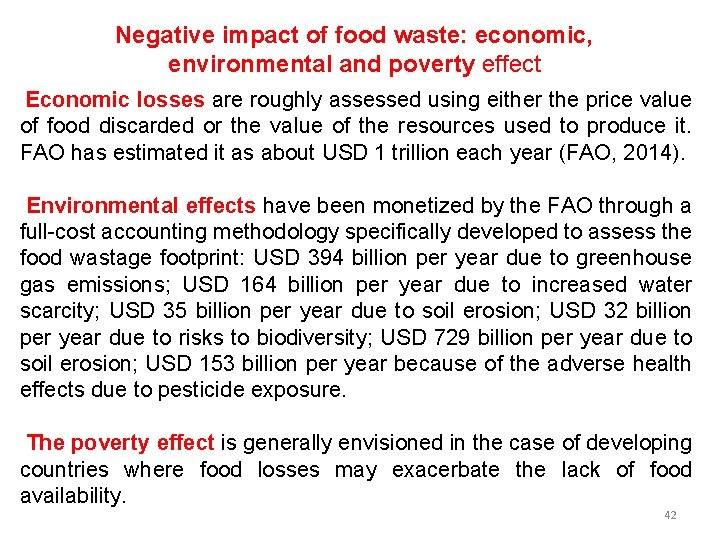
Negative impact of food waste: economic, environmental and poverty effect Economic losses are roughly assessed using either the price value of food discarded or the value of the resources used to produce it. FAO has estimated it as about USD 1 trillion each year (FAO, 2014). Environmental effects have been monetized by the FAO through a full-cost accounting methodology specifically developed to assess the food wastage footprint: USD 394 billion per year due to greenhouse gas emissions; USD 164 billion per year due to increased water scarcity; USD 35 billion per year due to soil erosion; USD 32 billion per year due to risks to biodiversity; USD 729 billion per year due to soil erosion; USD 153 billion per year because of the adverse health effects due to pesticide exposure. The poverty effect is generally envisioned in the case of developing countries where food losses may exacerbate the lack of food availability. 42
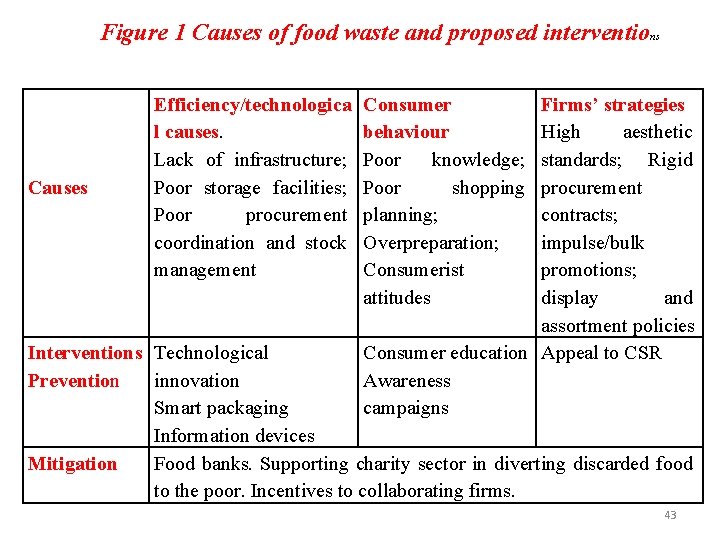
Figure 1 Causes of food waste and proposed interventions Causes Efficiency/technologica l causes. Lack of infrastructure; Poor storage facilities; Poor procurement coordination and stock management Consumer behaviour Poor knowledge; Poor shopping planning; Overpreparation; Consumerist attitudes Firms’ strategies High aesthetic standards; Rigid procurement contracts; impulse/bulk promotions; display and assortment policies Consumer education Appeal to CSR Awareness campaigns Interventions Technological Prevention innovation Smart packaging Information devices Mitigation Food banks. Supporting charity sector in diverting discarded food to the poor. Incentives to collaborating firms. 43
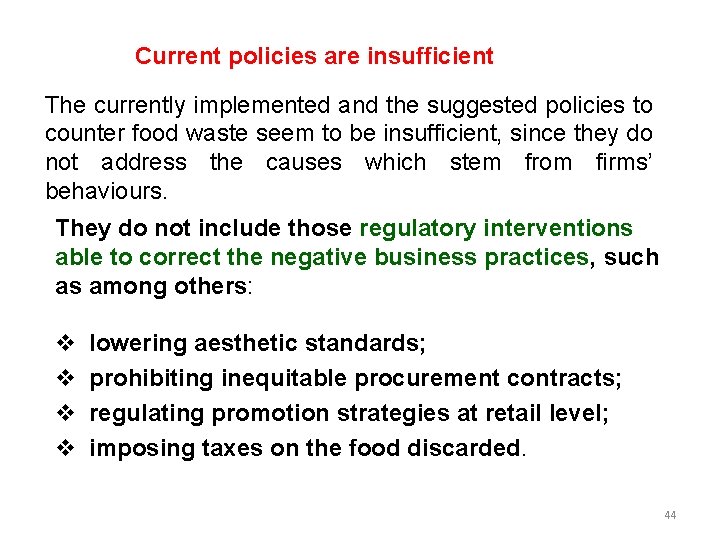
Current policies are insufficient The currently implemented and the suggested policies to counter food waste seem to be insufficient, since they do not address the causes which stem from firms’ behaviours. They do not include those regulatory interventions able to correct the negative business practices, such as among others: v v lowering aesthetic standards; prohibiting inequitable procurement contracts; regulating promotion strategies at retail level; imposing taxes on the food discarded. 44
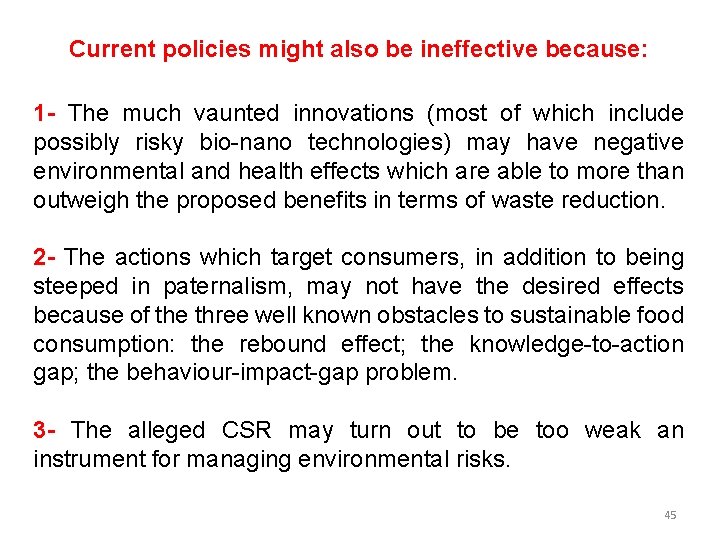
Current policies might also be ineffective because: 1 - The much vaunted innovations (most of which include possibly risky bio-nano technologies) may have negative environmental and health effects which are able to more than outweigh the proposed benefits in terms of waste reduction. 2 - The actions which target consumers, in addition to being steeped in paternalism, may not have the desired effects because of the three well known obstacles to sustainable food consumption: the rebound effect; the knowledge-to-action gap; the behaviour-impact-gap problem. 3 - The alleged CSR may turn out to be too weak an instrument for managing environmental risks. 45
The inability of EU to effectively tackle the food waste issue depends on the endorsement of a strict neoliberalist view. There at least three components of EU choices, with respect to the food waste issue, that bear witness to its neoliberal political stances. 46
1 -Reification of markets The rejection/renouncement of forms of direct regulation is typical of the neoliberal approach which relies on the fiction of perfectly selfregulating competitive markets. The appeal to consumers as those ultimately responsible for food waste and thus the main target of corrective policies is an example of the contradictory neoliberal version of the consumer sovereignty narrative. The latter, on the one hand, accepts the neoclassical consumer sovereignty credo that consumers command the economy through their rational choices, which are deemed neither to be influenced by firms strategies nor based on cultural constructed preferences. On the other hand, by suggesting communication policies to change consumer behaviour, the neoliberal version describes consumers as dependent on the surrounding informative and cultural environment. 47
2 - Deregulation: shift to private regulation and soft law The appeal to CSR is consistent with the neoliberal choice of substituting the regulatory role of the state with forms of soft regulation based on the concept of governance and on the stakeholder approach, which substitute the power of the state with the power of corporations. 3 - Reification of technological progress The reference to technological innovation as an external force, independent of political and economic power, is also part of the neoclassical economics which is the backbone of the neoliberal ideology. 48
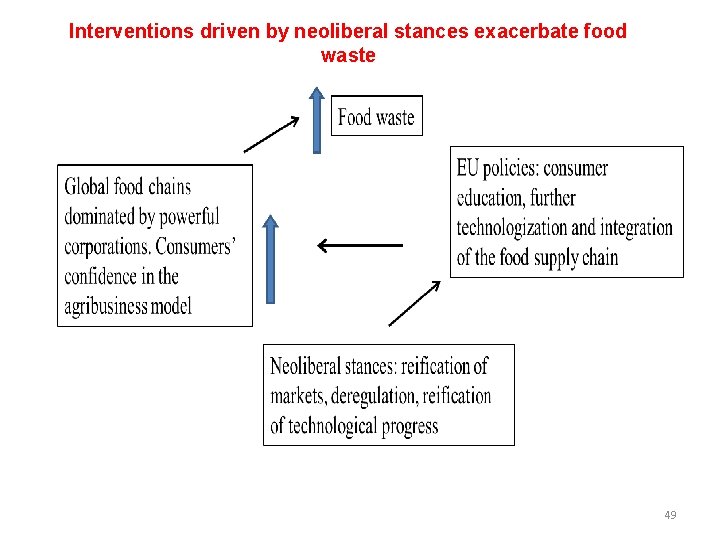
Interventions driven by neoliberal stances exacerbate food waste 49
Conclusion EU policy choices depend on the endorsement of strict neoliberal stances which not only prevent the implementation of more effective regulatory interventions, but also reinforce the causes of food waste. Because the neoliberal food regime entails a complete commodification of food (agribusiness model), it nourishes the roots of food waste. In a capitalist economy, overproduction and over purchasing, which are the main causes of food waste, are at the core of the processes of capital accumulation, and there are no motivations for production activities other than profit maximization. 50
Conclusion When food is nothing but a trivial market good, food waste is a false problem. Capitalistic systems eagerly seek new market opportunities; why should we care for still edible food being discarded when we do not care, for instance, about perfectly good new shoes or cell phones discarded only because unfashionable? Either we assume that food is not a commodity (but a human right, for example) or it is nonsense to talk of food waste; we should instead simply talk, as in the case of other goods, of negative externalities associated with its production and consumption. 51
Conclusion As long as food waste is tackled from a neoliberal perspective it is very unlikely that the fight against food waste may bring benefits to society at large. 52
Current policies might also be ineffective because: 1 - The much vaunted innovations (most of which include possibly risky bio -nano technologies) may have negative environmental and health effects which are able to more than outweigh the proposed benefits in terms of waste reduction. 2 - The actions which target consumers, in addition to being steeped in paternalism, may not have the desired effects because of the three well known obstacles to sustainable food consumption: the rebound effect, which refers to a behavioural or other systemic response to a measure taken to reduce environmental impacts that offsets the effect of the measure; the knowledge-to-action gap, exhibited when the knowledge of environmental problems may not be sufficient to change consumer behaviour and lifestyles; the behaviour-impact-gap problem, confronted whenever the required behavioural change is achieved, but the observed ecological effect is minor or missing. 3 - The alleged CSR may turn out to be too weak an instrument for managing environmental risks. 53
Biodiversity • Biodiversity: the number, variety and variability of all living organisms in terrestrial, marine and other aquatic ecosystems and the ecological complexes of which they are parts. • Biodiversity is intended to capture two dimensions: 1. the number of biological organisms 2. their variability.
Levels of Biodiversity There are three levels at which biodiversity can be considered: • • • Population: genetic diversity within the populations that constitute a species is important as it affects evolutionary and adaptive potential of the species, and so we might measure biodiversity in terms of the number of populations. Species: we might wish to measure biodiversity in terms of the numbers of distinct species in particular locations, the extent to which a species is endemic (unique to a specific location), or in terms of the diversity (rather than the number) of species. Ecosystems: in many ways, the diversity of ecosystems is the most important measure of biodiversity; unfortunately, there is no universally agreed criterion for either defining or measuring biodiversity at this level.
Measures of biodiversity • A species can be taken to be a set of individual organisms which have the capacity to reproduce • A population is a set that actually do reproduce. A population is, that is, a reproductively isolated subset of a species. • Biodiversity is usually considered in terms of species, and the number of distinct species is often used as the indicator of biodiversity. • There are problems with this measure. – Example: Suppose a harvesting programme targets individuals within that population with a particular characteristic (such as large size). – The target individuals are likely to possess genetic material favouring that characteristic, and so the harvesting programme reduces the diversity of the gene pool in the remaining population. – Managed harvesting programmes may result in loss of biodiversity even though the number of extant species shows no change.
Importance of biodiversity • Biodiversity is important in the provision of environmental services to economic activity in a number of ways. – In regard to life-support services, diverse ecological systems facilitate environmental functions, such as carbon cycling, soil fertility maintenance, climate and surface temperature regulation, and watershed flows. – The diversity of flora and fauna in ecosystems contributes to the amenity services that we derive from the environment. – In relation to inputs to production, those flora and fauna are the source of many useful products, particularly pharmaceuticals, foods and fibres; the genes that they contain also constitute the materials on which future developments in biotechnology will depend. – In terms of agriculture, biodiversity is the basis for crop and livestock variability and the development of new varieties.
Importance of biodiversity • Ecologists see the greatest long-term importance of biodiversity in terms of ecosystem resilience and evolutionary potential. • Diverse gene pools represent a form of insurance against ecological collapse: the greater is the extent of diversity, the greater is the capacity for adaptation to stresses and the maintenance of the ecosystem’s organisational and functional structure.
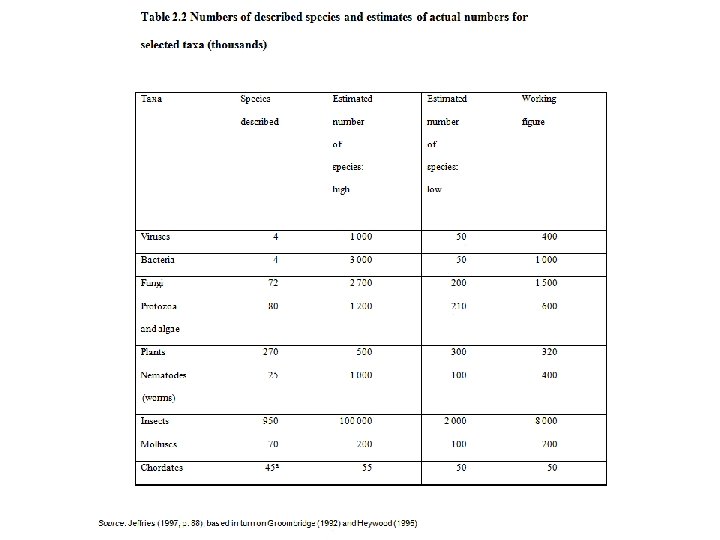
The current extent of biodiversity. • We have very poor information about this. • The number of species that currently exist is not known even to within an order of magnitude. • Estimates that can be found in the literature range from 3 – 10 million to 50– 100 million. • A current best guess of the actual number of species is 12. 5 million. • Even the currently known number of species is subject to some dispute, with a representative figure being 1. 7 million species described to date. • About 13000 new species are described each year.
Biodiversity loss and human impact • For ecologists, the appropriation of the products of photosynthesis is the most fundamental human impact on the natural environment, and is the major driver of the current high rate of biodiversity loss. • Lord Robert May, President of the Royal Society: – There is little doubt that we are standing on the breaking tip of the sixth great wave of extinction in the history of life on earth. It is different from the others in that it is caused not by external events, but by us – by the fact that we consume somewhere between a quarter and a half of all the plants grown last year. • Given that the number of species existing is not known, statements about rates of extinction are necessarily imprecise, and there are disagreements about estimates. • Table 2. 3 shows data for known extinctions since 1600.
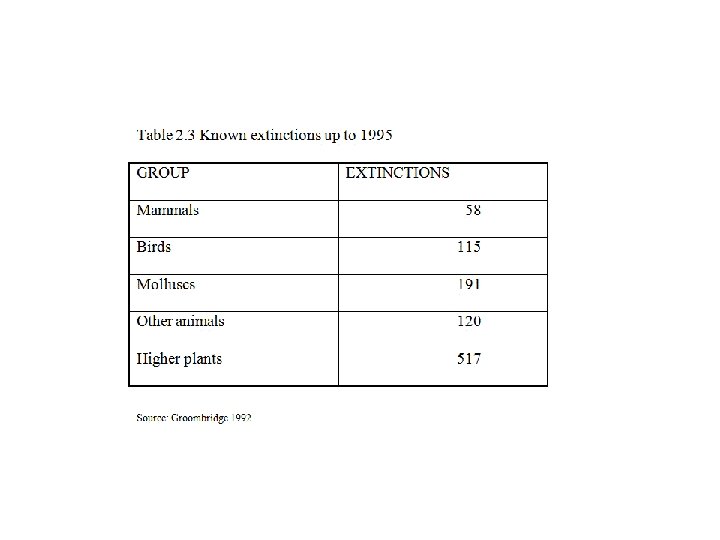
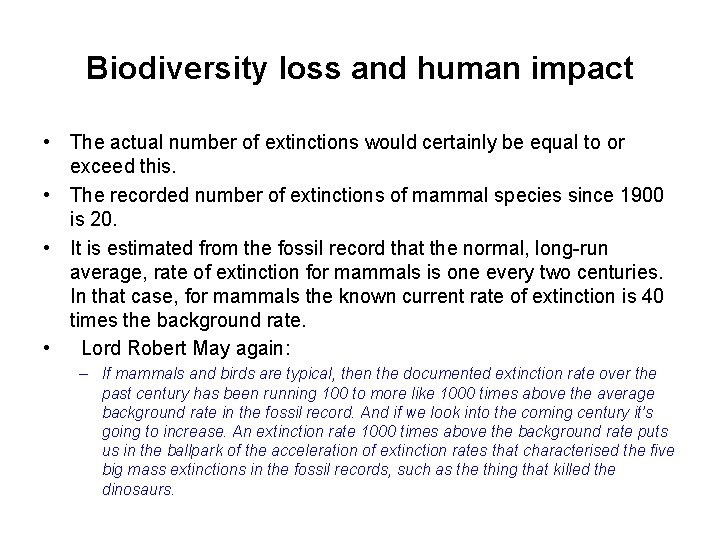
Biodiversity loss and human impact • The actual number of extinctions would certainly be equal to or exceed this. • The recorded number of extinctions of mammal species since 1900 is 20. • It is estimated from the fossil record that the normal, long-run average, rate of extinction for mammals is one every two centuries. In that case, for mammals the known current rate of extinction is 40 times the background rate. • Lord Robert May again: – If mammals and birds are typical, then the documented extinction rate over the past century has been running 100 to more like 1000 times above the average background rate in the fossil record. And if we look into the coming century it’s going to increase. An extinction rate 1000 times above the background rate puts us in the ballpark of the acceleration of extinction rates that characterised the five big mass extinctions in the fossil records, such as the thing that killed the dinosaurs.
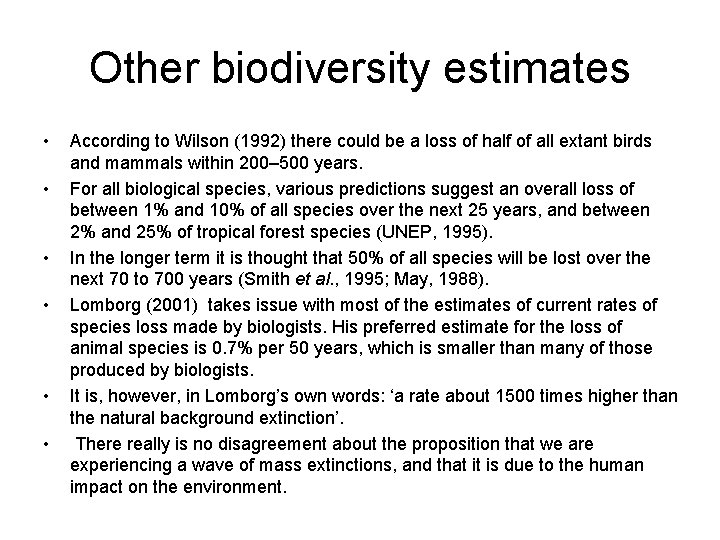
Other biodiversity estimates • • • According to Wilson (1992) there could be a loss of half of all extant birds and mammals within 200– 500 years. For all biological species, various predictions suggest an overall loss of between 1% and 10% of all species over the next 25 years, and between 2% and 25% of tropical forest species (UNEP, 1995). In the longer term it is thought that 50% of all species will be lost over the next 70 to 700 years (Smith et al. , 1995; May, 1988). Lomborg (2001) takes issue with most of the estimates of current rates of species loss made by biologists. His preferred estimate for the loss of animal species is 0. 7% per 50 years, which is smaller than many of those produced by biologists. It is, however, in Lomborg’s own words: ‘a rate about 1500 times higher than the natural background extinction’. There really is no disagreement about the proposition that we are experiencing a wave of mass extinctions, and that it is due to the human impact on the environment.
- Slides: 64