
The UNODCWCO Container Control Programme Transnational Organized Crime









- Slides: 26
The UNODC-WCO Container Control Programme Transnational Organized Crime
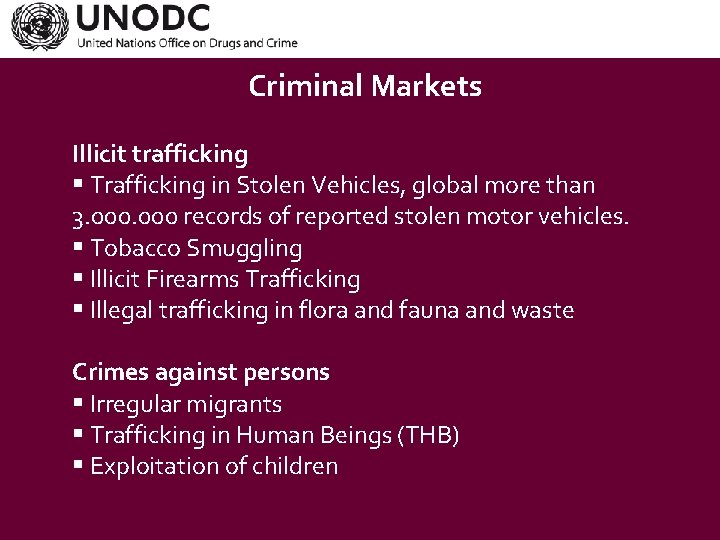
Criminal Markets Illicit trafficking § Trafficking in Stolen Vehicles, global more than 3. 000 records of reported stolen motor vehicles. § Tobacco Smuggling § Illicit Firearms Trafficking § Illegal trafficking in flora and fauna and waste Crimes against persons § Irregular migrants § Trafficking in Human Beings (THB) § Exploitation of children
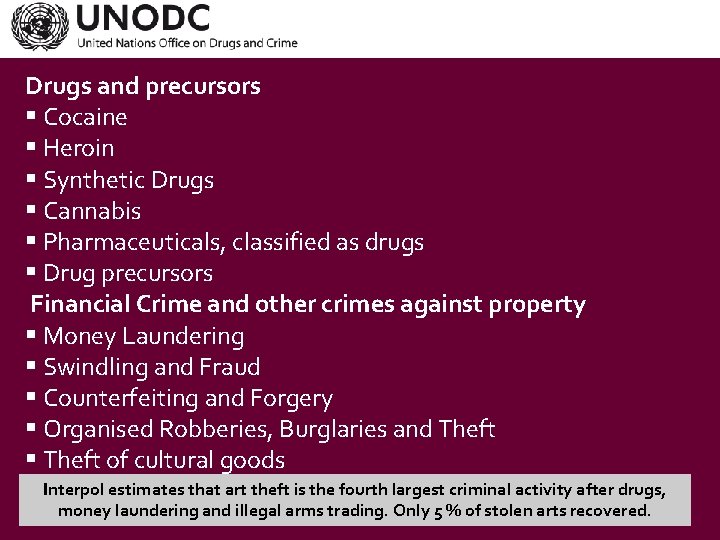
Drugs and precursors § Cocaine § Heroin § Synthetic Drugs § Cannabis § Pharmaceuticals, classified as drugs § Drug precursors Financial Crime and other crimes against property § Money Laundering § Swindling and Fraud § Counterfeiting and Forgery § Organised Robberies, Burglaries and Theft § Theft of cultural goods Interpol estimates that art theft is the fourth largest criminal activity after drugs, money laundering and illegal arms trading. Only 5 % of stolen arts recovered.
TOC Ø Traditional forms of TOC § Heroine and cocaine trafficking § Extortion § Human trafficking § Migrant smuggling § Firearms trafficking § Money laundering Ø New players Ø (Re-)emerging forms of TOC § Trafficking in fraudulent medicine § Natural resource trafficking Global environmental crime, worth up to USD 213 billion each year according to the United Nations Environment Programme (UNEP) and INTERPOL. (report June 2014) § § Counterfeit goods trafficking Cultural property trafficking Piracy Cybercrime ( computer hacking, computer fraud or forgery (identity theft)
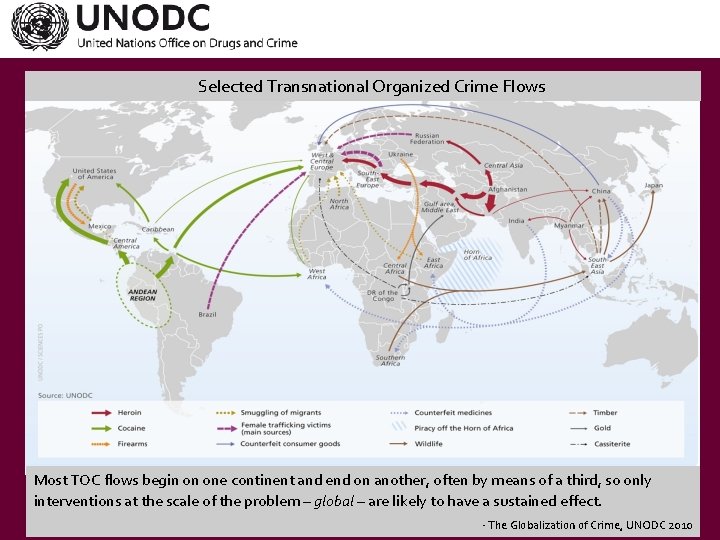
TOC: Global Selected Transnational Organized Crime Flows Most TOC flows begin on one continent and end on another, often by means of a third, so only interventions at the scale of the problem – global – are likely to have a sustained effect. - The Globalization of Crime, UNODC 2010
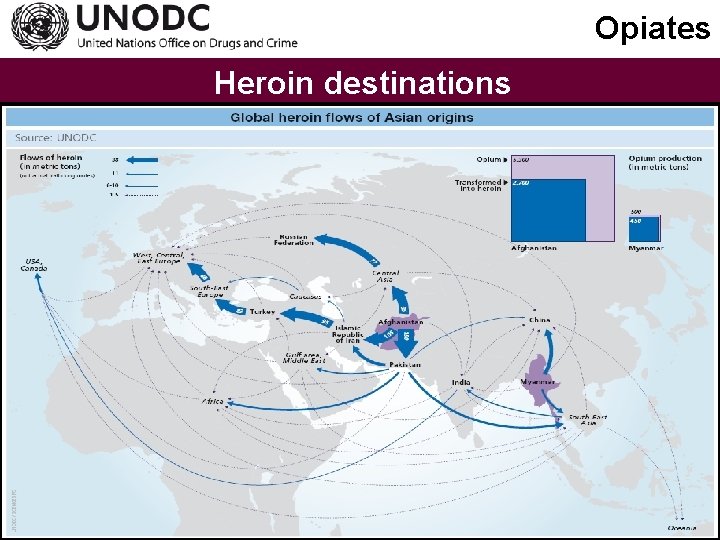
Opiates Heroin destinations
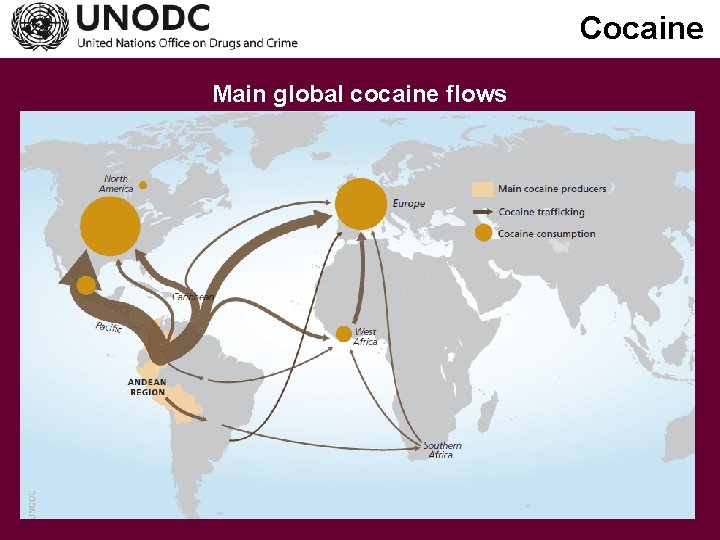
Cocaine Main global cocaine flows
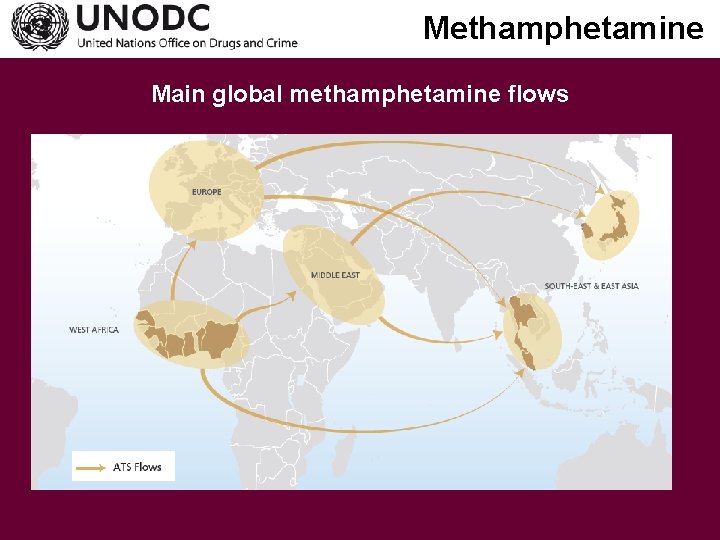
Methamphetamine Main global methamphetamine flows
Responding to TOC Ø An effective response must be § Global, integrated and coordinated § Strategic: including policy and operations in combating TOC § Comprehensive: Addressing all aspects of the “value chain” • UNTOC’s contribution: § Facilitation of regional and international cooperation § Facilitation of legitimate trade, coordination and communication between actors § Offer tools that are flexible, practical and effective
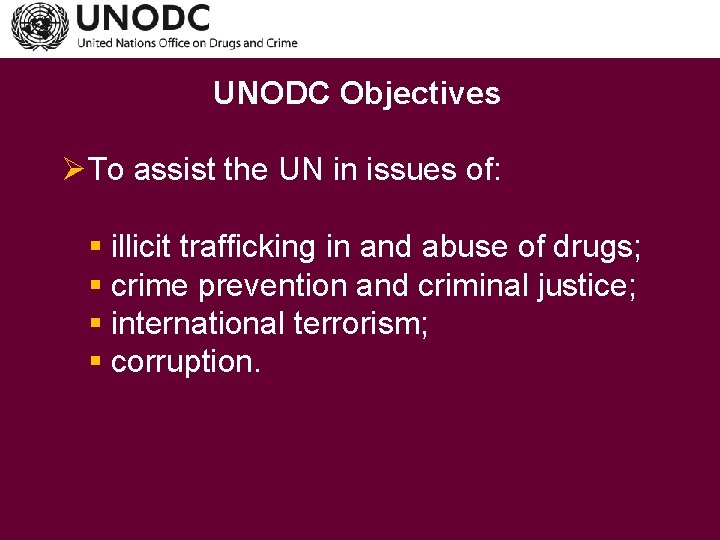
UNODC Objectives ØTo assist the UN in issues of: § illicit trafficking in and abuse of drugs; § crime prevention and criminal justice; § international terrorism; § corruption.
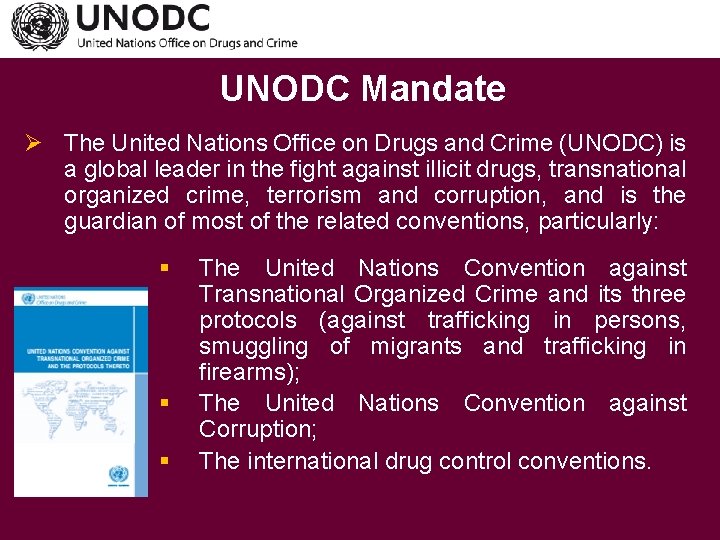
UNODC Mandate Ø The United Nations Office on Drugs and Crime (UNODC) is a global leader in the fight against illicit drugs, transnational organized crime, terrorism and corruption, and is the guardian of most of the related conventions, particularly: § § § The United Nations Convention against Transnational Organized Crime and its three protocols (against trafficking in persons, smuggling of migrants and trafficking in firearms); The United Nations Convention against Corruption; The international drug control conventions.
Overview The three pillars of UNODC’s work are: Ø Research and analytical work; Ø Normative work; and Ø Field-based technical cooperation projects.
Success story of the UNODC-WCO Container Control Programme • UNODC-WCO Container Control Programme (CCP) expanded to 9 geographical regions. • 20 countries have fully operational Port Control Units (50 Ports participate). • In 30 countries, the Programme is engaging with relevant authorities to establish Port Control Units and deliver tailormade training. • In 2013, 56 training workshops, study tours and mentorships took place. 553 Enforcement officials from different Enforcement Agencies were trained. • Results of the programme in 2013: 23444 kg cocaine, 6422 kg cannabis, 1277 kg heroin, 60, 883 kg tramadol and 725 kg ivory. • Large quantities of counterfeit goods (119 containers detained),
Regional structure - Staff # Benin Ghana Senegal # Togo Albania Georgia Montenegro Pakistan # Cape Verde Egypt # Iraq Morocco Oman Yemen Afghanistan # Armenia Azerbaijan Bosnia Herzegovina Kazakhstan Moldova Tajikistan Turkmenistan Ukraine Uzbekistan # Kenya # Tanzania Uganda Maldives Sri Lanka Argentina Brazil Chile ries t n u o c l a n io t a r e p 20 o ies r t n u o c d e d n u f 0 3 Bangladesh India # Indonesia Malaysia Nepal Philippines Thailand # Vietnam
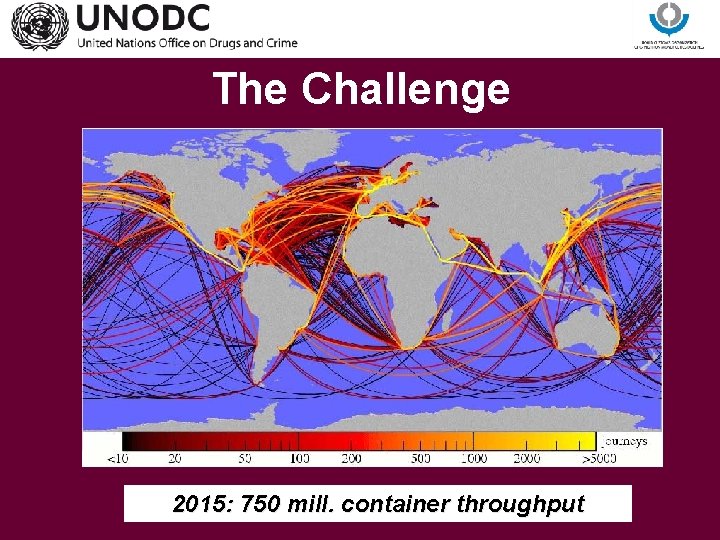
The Challenge 2015: 750 mill. container throughput
UNODC-WCO CCP Objectives Ø Establishment of Container Profiling Units to identify highrisk containers; Ø Risk management based controls; Ø Enhanced Partnership with the Private Sector to facilitate legal trade. Less than 2% inspected
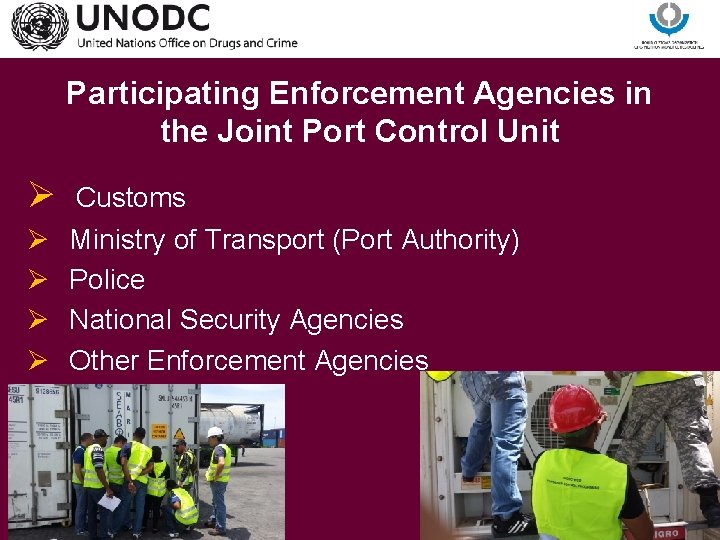
Participating Enforcement Agencies in the Joint Port Control Unit Ø Customs Ø Ø Ministry of Transport (Port Authority) Police National Security Agencies Other Enforcement Agencies
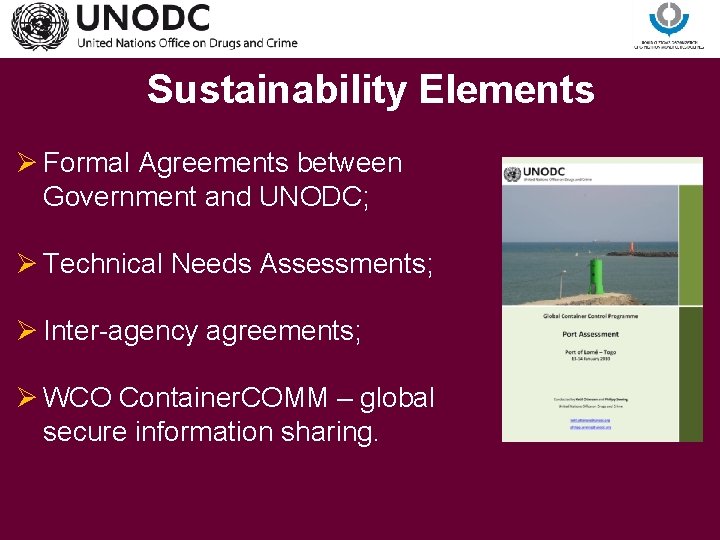
Sustainability Elements Ø Formal Agreements between Government and UNODC; Ø Technical Needs Assessments; Ø Inter-agency agreements; Ø WCO Container. COMM – global secure information sharing.
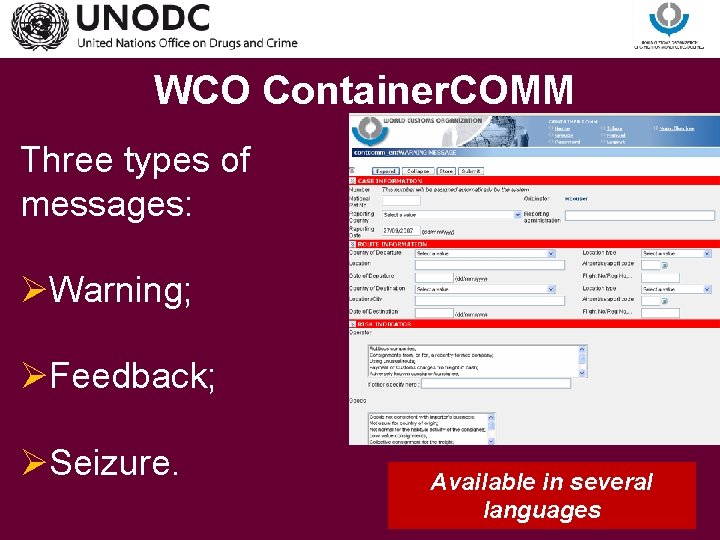
WCO Container. COMM Three types of messages: ØWarning; ØFeedback; ØSeizure. Available in several languages
Training Elements
Risk management based profiling techniques Risk Analysis (targeting)– Commercial Cargo Documents Ø Advanced information from cargo manifests/ Bill of Lading (pre-arrival , pre-departure phase); Ø Entry including transhipments and export. Ø Customs declarations Ø Proactive use of electronic Cargo Data Systems; Ø Effective use of WCO tools and open sources; Ø Active cooperation with the private sector.
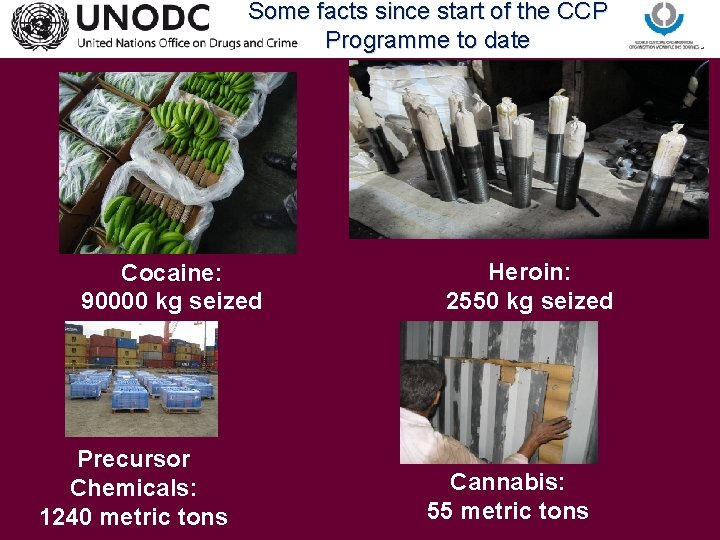
Some facts since start of the CCP Programme to date Cocaine: 90000 kg seized Precursor Chemicals: 1240 metric tons Heroin: 2550 kg seized Cannabis: 55 metric tons
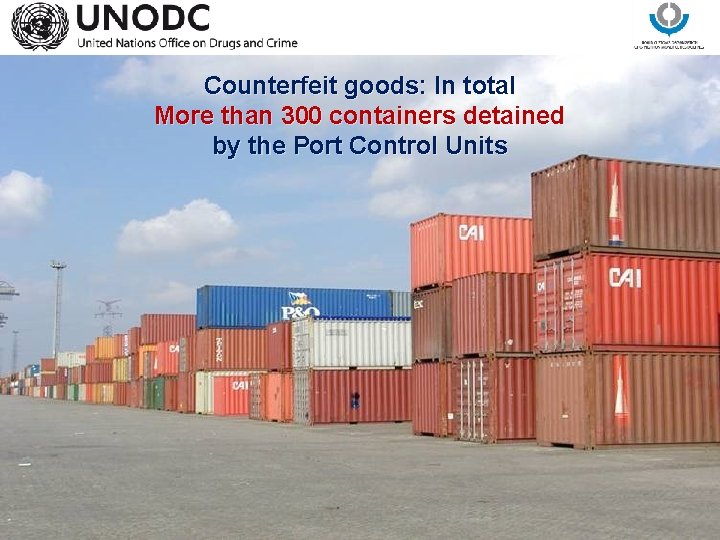
Counterfeit goods: In total More than 300 containers detained by the Port Control Units
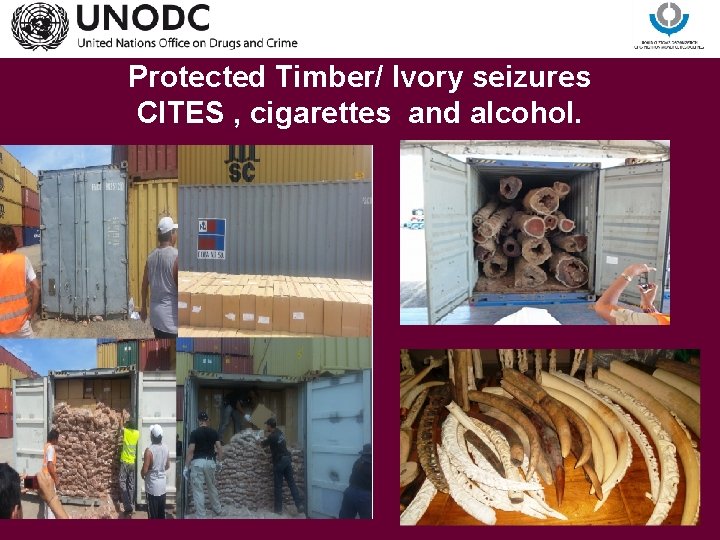
Protected Timber/ Ivory seizures CITES , cigarettes and alcohol.
Future Strategy Ø Global expansion of WCO Container. COMM to ports outside the CCP to enhance port-to-port communication; Ø Intensified use of WCO Regional Training Centers, and WCO tools such as the WCO Cargo targeting System Ø Expanding the programme to the Air cargo sector ( in preparation); Ø Expanding CCP in Asia, East and North Africa; Ø Facilitation/accreditation of trainers; Ø Private sector cooperation; Ø Anti - Corruption – Human Rights; Ø Connecting prosecutors – Latin America and Europe; Ø Basic evidence handling;
THANK YOU For further information: Nicole Maric Crime Prevention Expert Tel: +43 -1 -26060 -5477 nicole. maric@unodc. org www. unodc. org For further information concerning the UNODC-WCO Container Control Programme: Norbert Steilen WCO Programme manager CCP Norbert. Steilen@wcoomd. org