
The University of Texas at Austin Spring 2017





- Slides: 29
The University of Texas at Austin Spring 2017 CAEE Department, Architectural Engineering Program Course: Building Energy Management Systems Instructor: Dr. Atila Novoselac ECJ, 5. 430 Office phone: (512) 475 -8175 e-mail: atila@mail. utexas. edu http: //www. ce. utexas. edu/prof/Novoselac Office Hours: Tuesday and Thursday 11: 00 a. m. – 12: 00 p. m.
Lecture Objectives: • • • Discuss syllabus Describe course scope Introduce course themes Address your concerns Start with review
Introduce yourself • Name • Background • Academic program • Interest and motivation for this course
Building Energy Management Systems Comparison to HVAC Design course - HVAC Design focus on system design - This course: - Focus on large buildings building energy systems More analyses based than just design More independent project Geared towards grad students
Course Objectives: • Learn about advanced building energy and environmental control systems. • Obtain knowledge about district cooling and heating systems. • Gain the skills and tools necessary to evaluate integration of sustainable energy production systems to a given building site. • Study application of combined heat and power systems in a specific building or group of buildings. • Conduct thermal, hydraulic and economic modeling of integrated building energy systems for planning and design
Prerequisites • Graduate students in CAEE, or other engineering fields. Student should have at least one Fluid Dynamics course and at least one Thermodynamics course.
Reading Assignment • Kuehn, T. H. ; Ramsey, J. W. ; Threlkeld, J. L. 1998. Thermal Environmental Engineering (3 rd Edition) Prentice Hall ISBN: 0139172203. • Taylor, S. , P. Dupont, B. Jones, T. Hartman and M. Hydeman. 2000. Chilled water plant design guide. San Francisco: Pacific Gas & Electric Company. http: //www. taylor-engineering. com/downloads/cooltools/EDR_Design. Guidelines_Cool. Tools. Chilled. Water. pdf • ASHRAE. 2007. ASHRAE Handbook--2007 HVAC Systems and Equipment. Atlanta: American Society of Heating, Refrigerating, and Air-Conditioning Engineers. • ASHRAE Handbook--2009 Fundamentals. Atlanta: American Society of Heating, Refrigerating, and Air-Conditioning Engineers. • Handouts • Journal papers
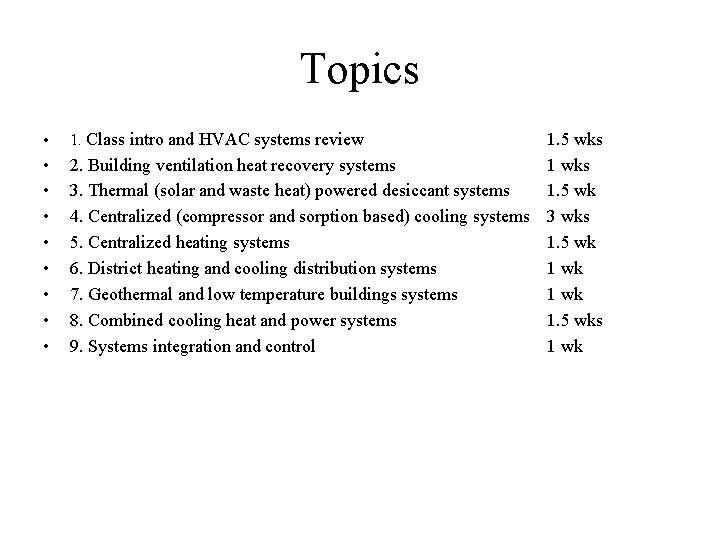
Topics • • • 1. Class intro and HVAC systems review 1. 5 wks 2. Building ventilation heat recovery systems 1 wks 3. Thermal (solar and waste heat) powered desiccant systems 1. 5 wk 4. Centralized (compressor and sorption based) cooling systems 3 wks 5. Centralized heating systems 1. 5 wk 6. District heating and cooling distribution systems 1 wk 7. Geothermal and low temperature buildings systems 1 wk 8. Combined cooling heat and power systems 1. 5 wks 9. Systems integration and control 1 wk
Grading Test Homework Assignments Final Project & Presentation Classroom Participation 30% 35% 30% 5% 100%
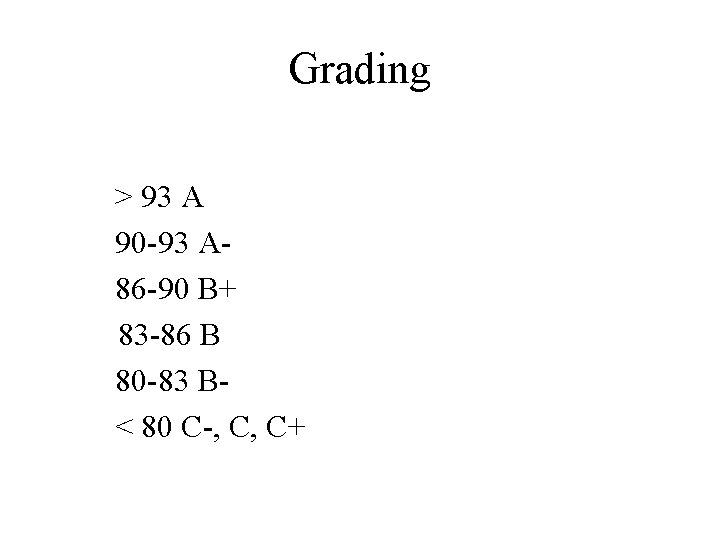
Grading > 93 A 90 -93 A 86 -90 B+ 83 -86 B 80 -83 B< 80 C-, C, C+
Course Website All course information: http: //www. ce. utexas. edu/prof/Novoselac/classes/CE 397 b/ • Your grades and progress on Blackboard • Look at assignments and handout sections • Class notes posted in the morning before the class
Questions ?
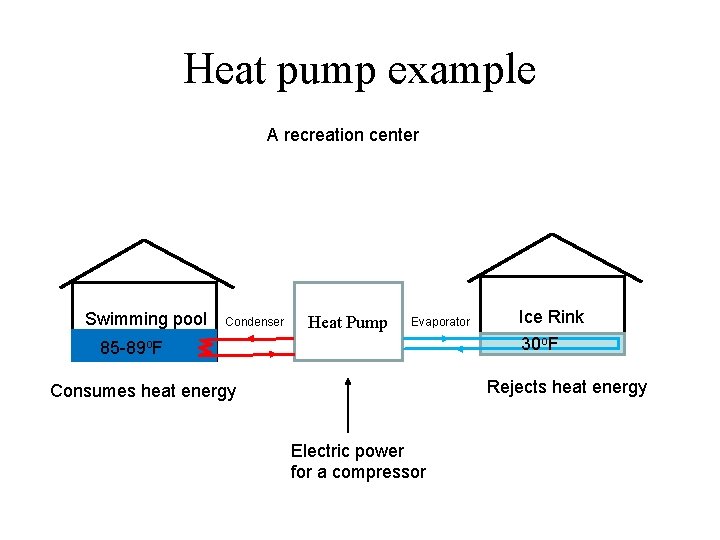
Review – Example problems • Thermodynamics (cycles) • Heat pump example • Psychrometrics: • Swimming pool dehumidification Focus on various operation conditions (not just design condition)
Heat pump example A recreation center Swimming pool Condenser Heat Pump Evaporator Ice Rink 30 o. F 85 -89 o. F Rejects heat energy Consumes heat energy Electric power for a compressor
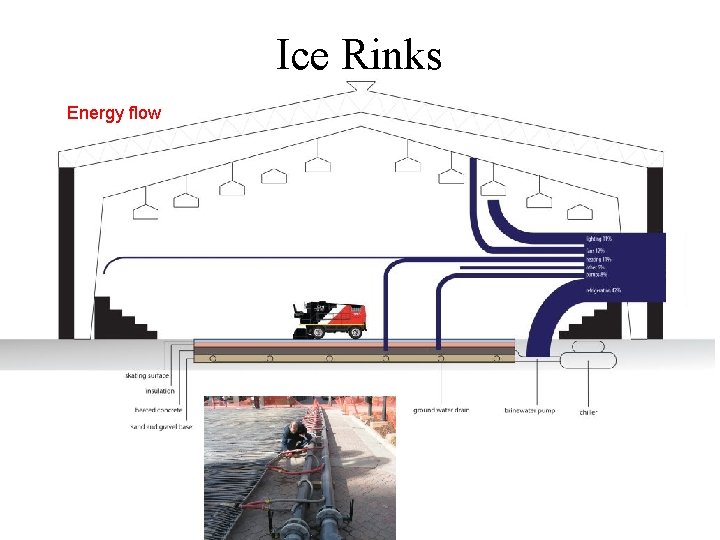
Ice Rinks Energy flow
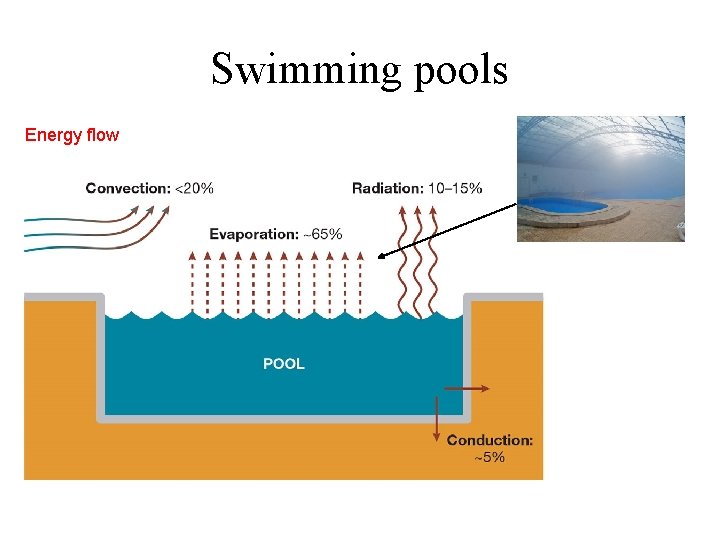
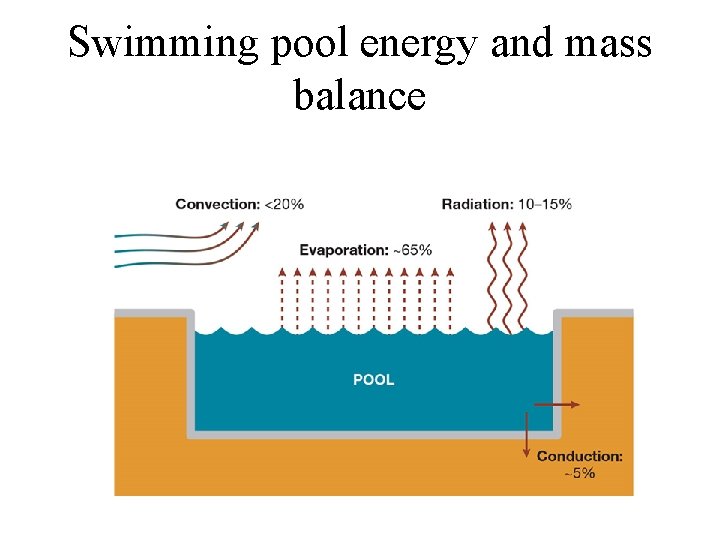
Swimming pools Energy flow
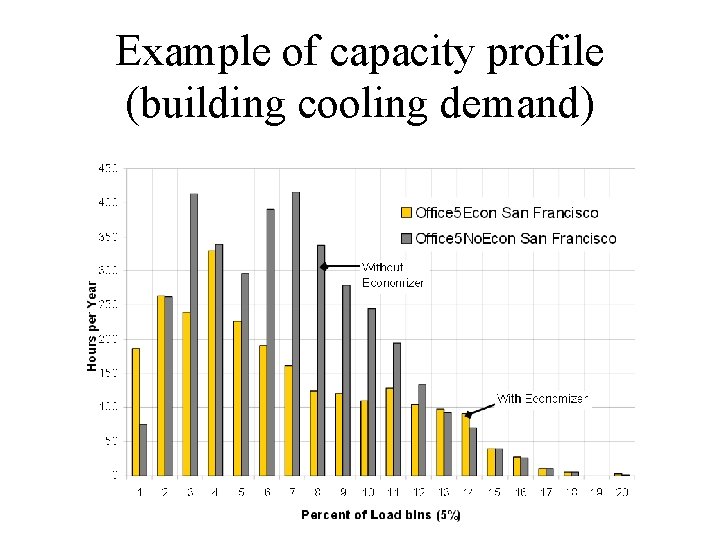
Challenges for this problem • Circulating fluid • Adjustment of evaporation and condensation temperatures • Adjustment of capacity for design condition • Control of capacity for non design conditions • Need to study load profiles • Design sophisticated control • Provide backup system
Example of capacity profile (building cooling demand)
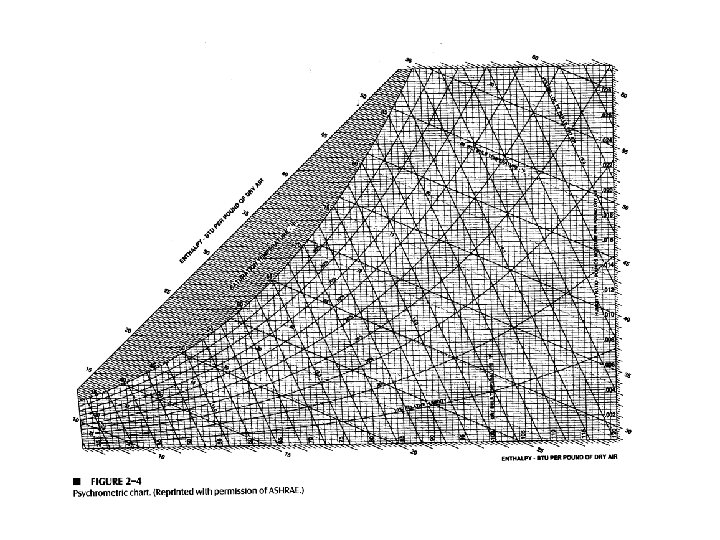
Psychrometric Chart • Need two quantities for a state point • Can get all other quantities from a state point • Can do all calculations without a chart • Often require iteration • Many “digital” psychrometric charts available • Can make your own • Best source is ASHRAE fundamentals (Chapter 6) • Or electronic version at: http: //www. handsdownsoftware. com/
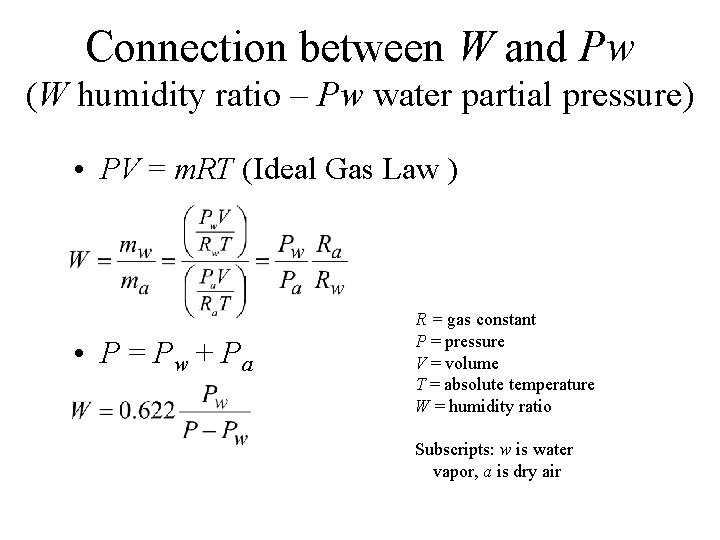
Connection between W and Pw (W humidity ratio – Pw water partial pressure) • PV = m. RT (Ideal Gas Law ) • P = Pw + Pa R = gas constant P = pressure V = volume T = absolute temperature W = humidity ratio Subscripts: w is water vapor, a is dry air
Swimming pool energy and mass balance
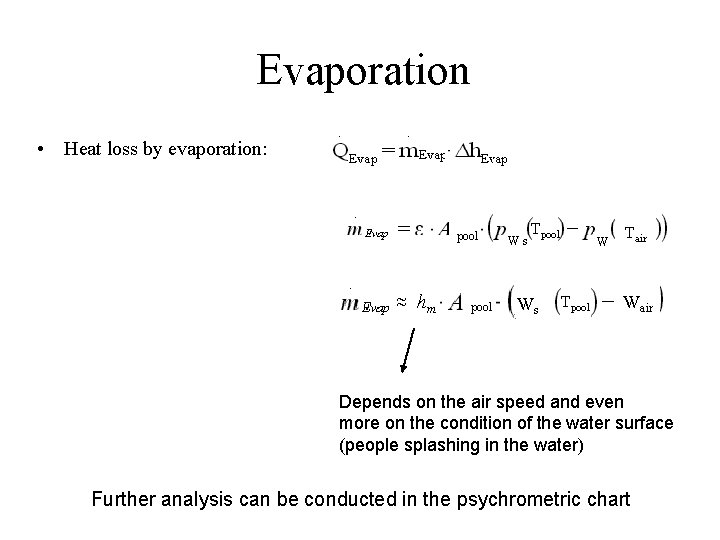
Evaporation • Heat loss by evaporation: pool ≈ hm pool Ws Tpool Ws W Tpool Tair Wair Depends on the air speed and even more on the condition of the water surface (people splashing in the water) Further analysis can be conducted in the psychrometric chart
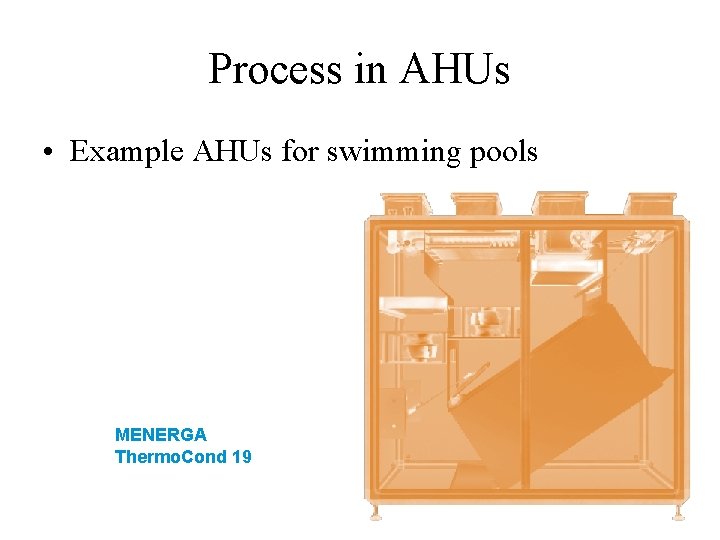
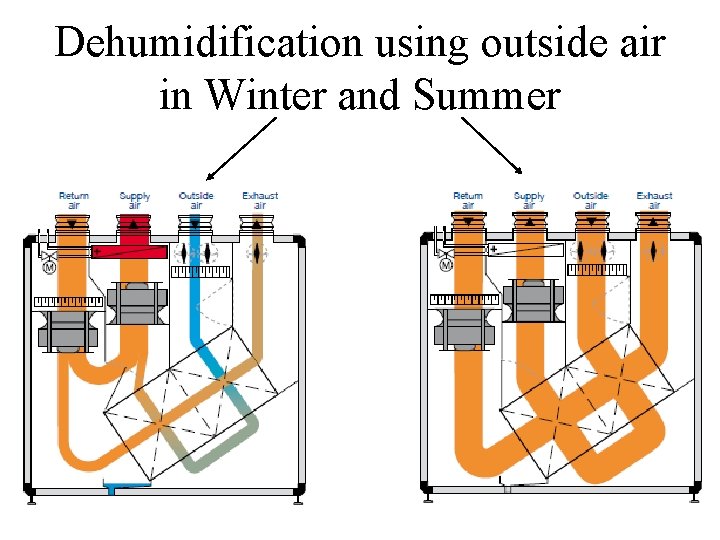
Process in AHUs • Example AHUs for swimming pools MENERGA Thermo. Cond 19
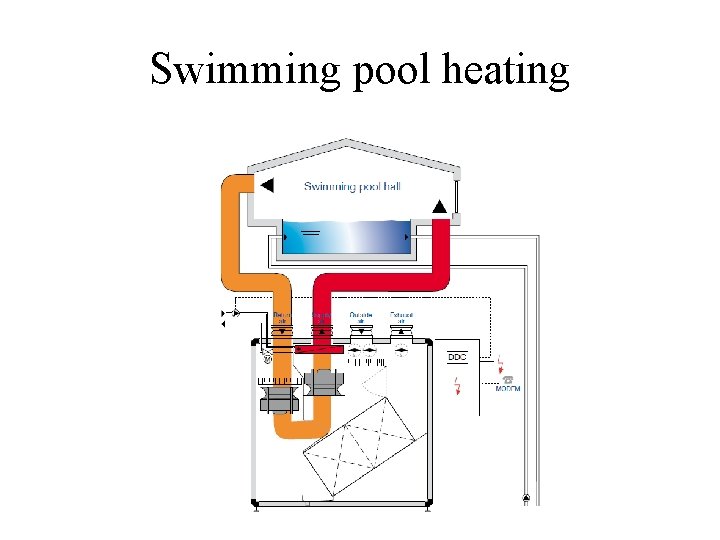
Swimming pool heating
Dehumidification using outside air in Winter and Summer
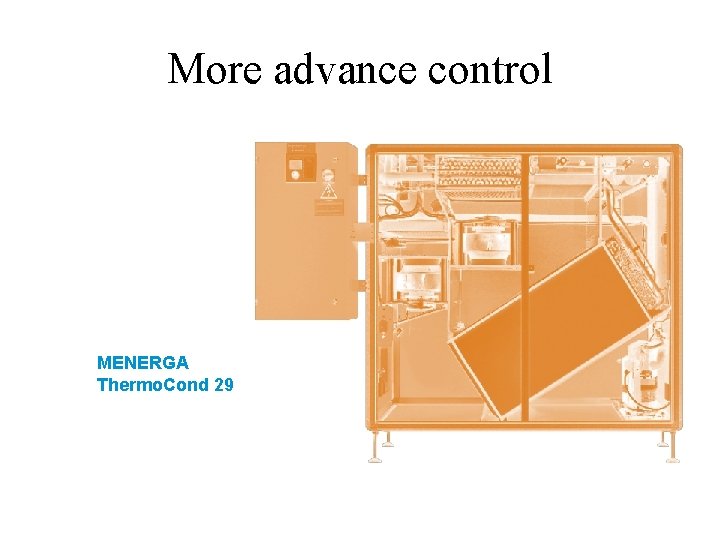
More advance control MENERGA Thermo. Cond 29
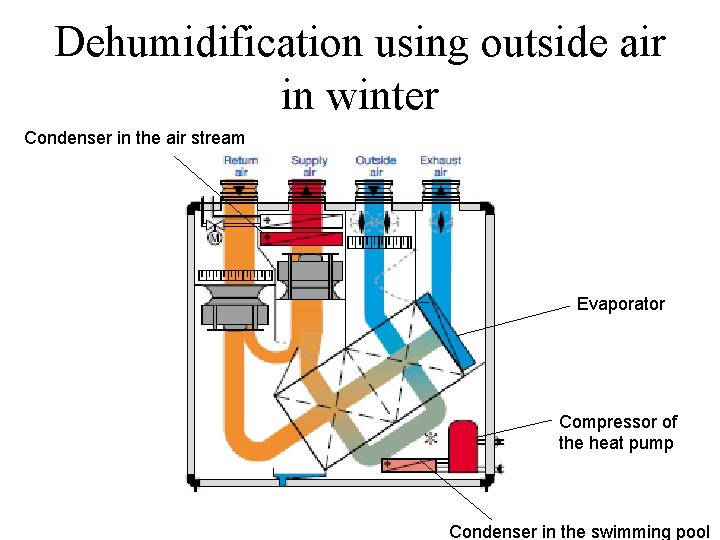
Dehumidification using outside air in winter Condenser in the air stream Evaporator Compressor of the heat pump Condenser in the swimming pool
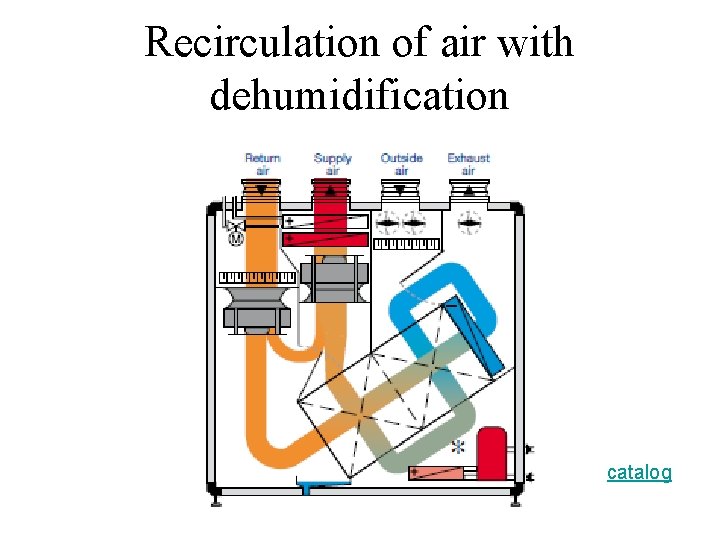
Recirculation of air with dehumidification catalog