
THE UNIVERSE AND SOLAR SYSTEM Study Guide Notes
- Slides: 53
THE UNIVERSE AND SOLAR SYSTEM Study Guide Notes
WHAT IS SCIENTIFIC THEORY? • An explanation that is supported by repeated experimentation or testing. It has evidence to back it up.
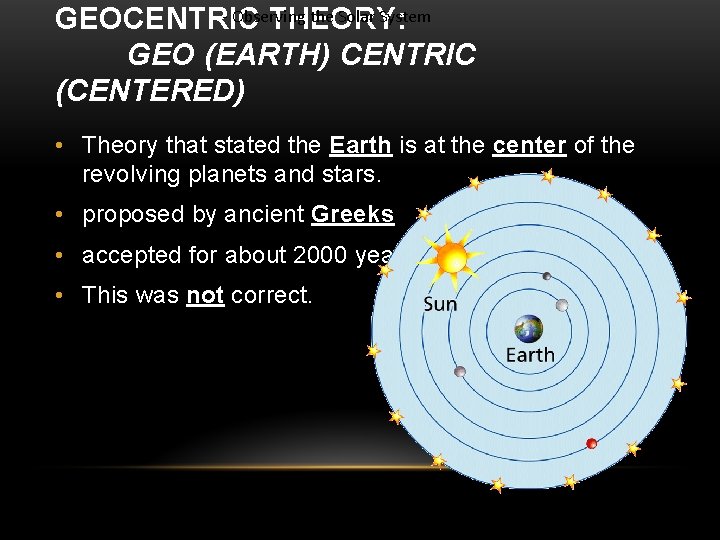
- Observing the Solar System GEOCENTRIC THEORY: GEO (EARTH) CENTRIC (CENTERED) • Theory that stated the Earth is at the center of the revolving planets and stars. • proposed by ancient Greeks • accepted for about 2000 years! • This was not correct.
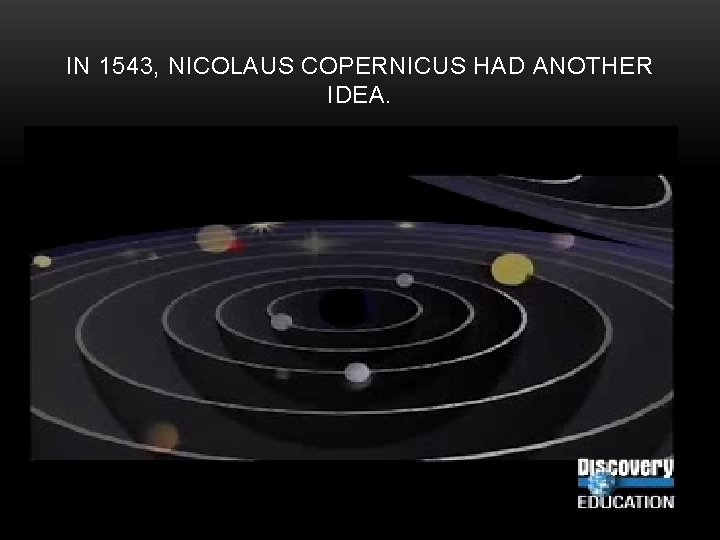
IN 1543, NICOLAUS COPERNICUS HAD ANOTHER IDEA.
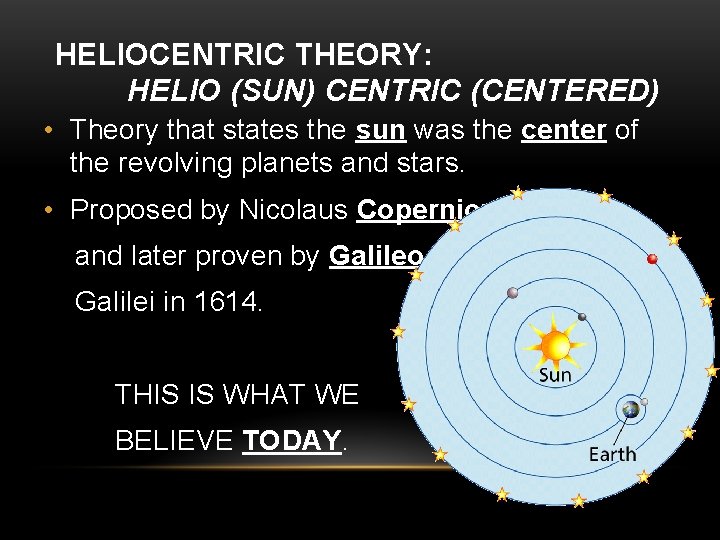
HELIOCENTRIC THEORY: HELIO (SUN) CENTRIC (CENTERED) • Theory that states the sun was the center of the revolving planets and stars. • Proposed by Nicolaus Copernicus and later proven by Galileo Galilei in 1614. THIS IS WHAT WE BELIEVE TODAY.
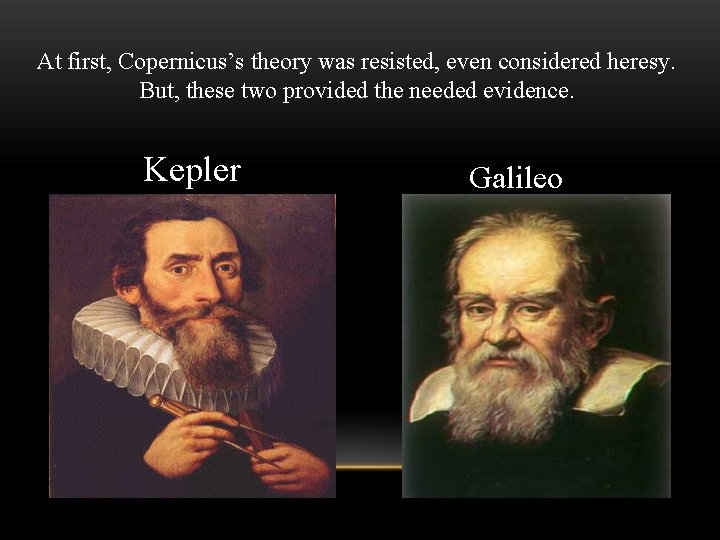
At first, Copernicus’s theory was resisted, even considered heresy. But, these two provided the needed evidence. Kepler Galileo
BIG IDEA: SCIENTIFIC THEORIES CHANGE AS NEW EVIDENCE COMES ALONG! • You. Tube - Galileo Sun-Centered System
LOOK AT THE DIFFERENCE IN HOW THE PLANETS WOULD HAVE TO MOVE IN THE GEOCENTRIC AND THE HELIOCENTRIC MODELS. • http: //www. youtube. com/watch? v=Vy. Q 8 Tb 85 Hr. U
HOW DOES THE EARTH MOVE? Revolution is the length of time required for a planet to make one complete trip around the Sun. Rotation is the length of time required for a planet to make one complete turn on its axis.
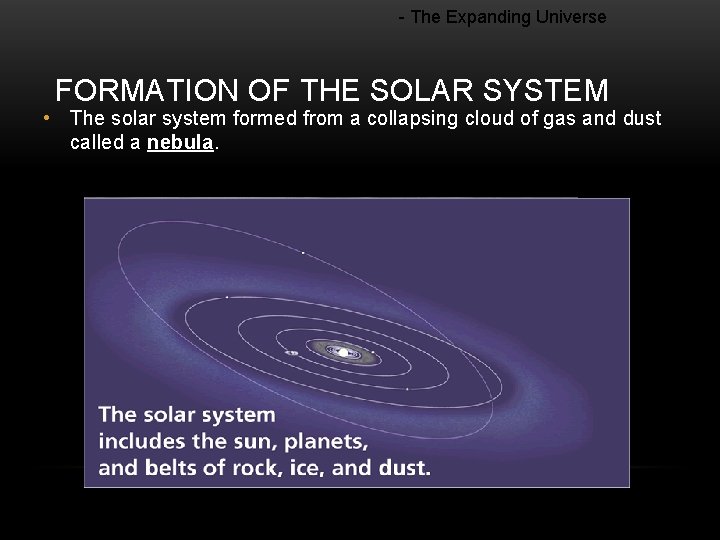
- The Expanding Universe FORMATION OF THE SOLAR SYSTEM • The solar system formed from a collapsing cloud of gas and dust called a nebula.
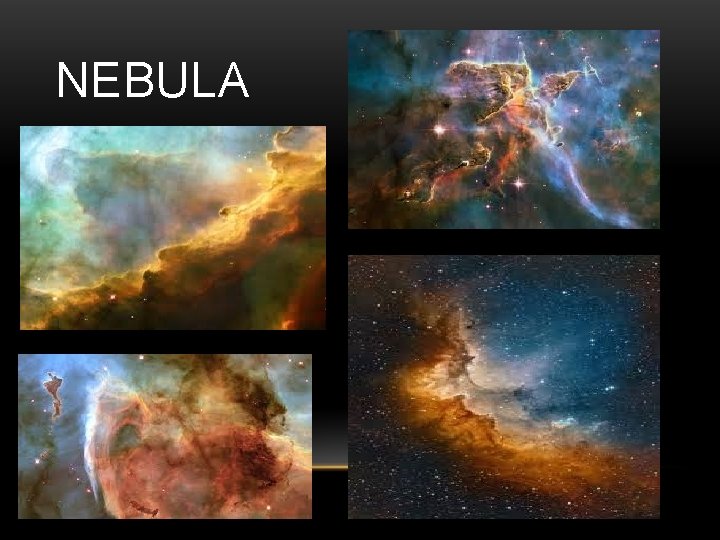
NEBULA
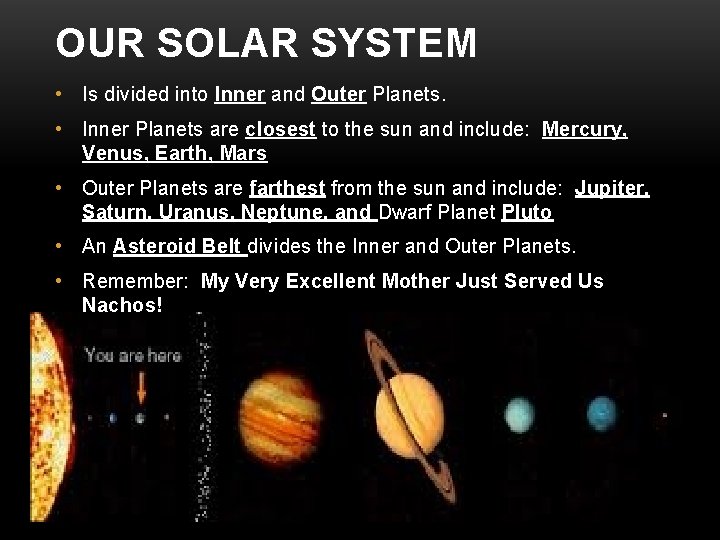
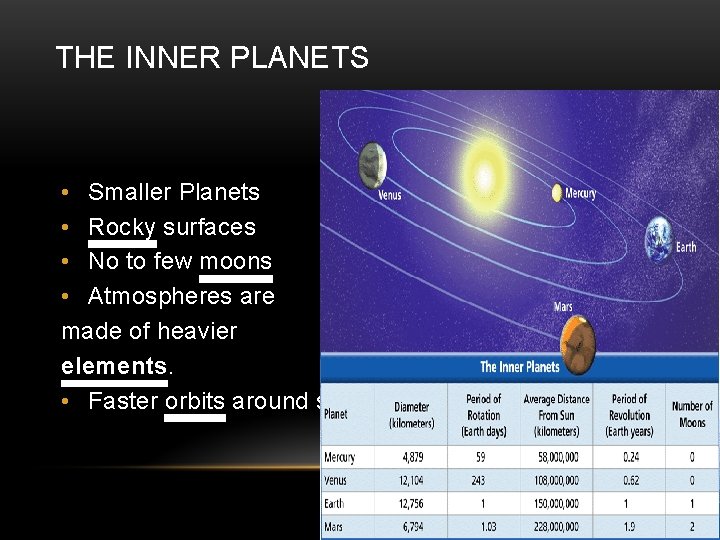
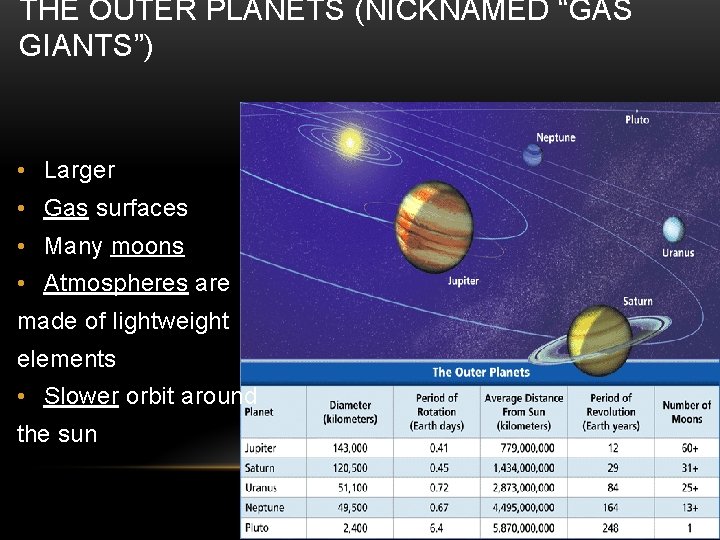
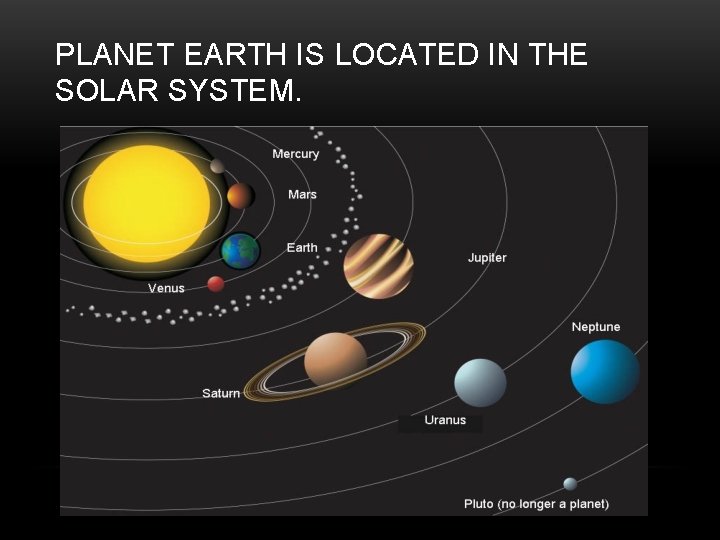
OUR SOLAR SYSTEM • Is divided into Inner and Outer Planets. • Inner Planets are closest to the sun and include: Mercury, Venus, Earth, Mars • Outer Planets are farthest from the sun and include: Jupiter, Saturn, Uranus, Neptune, and Dwarf Planet Pluto • An Asteroid Belt divides the Inner and Outer Planets. • Remember: My Very Excellent Mother Just Served Us Nachos!
THE INNER PLANETS • Smaller Planets • Rocky surfaces • No to few moons • Atmospheres are made of heavier elements. • Faster orbits around sun
THE OUTER PLANETS (NICKNAMED “GAS GIANTS”) • Larger • Gas surfaces • Many moons • Atmospheres are made of lightweight elements • Slower orbit around the sun
RELATIVE SIZE OF THE PLANETS COMPARED TO EARTH • https: //www. youtube. com/watch? v=u 1 Yi 58 jt. Nd. Y • https: //www. youtube. com/watch? v=HEh eh 1 BH 34 Q
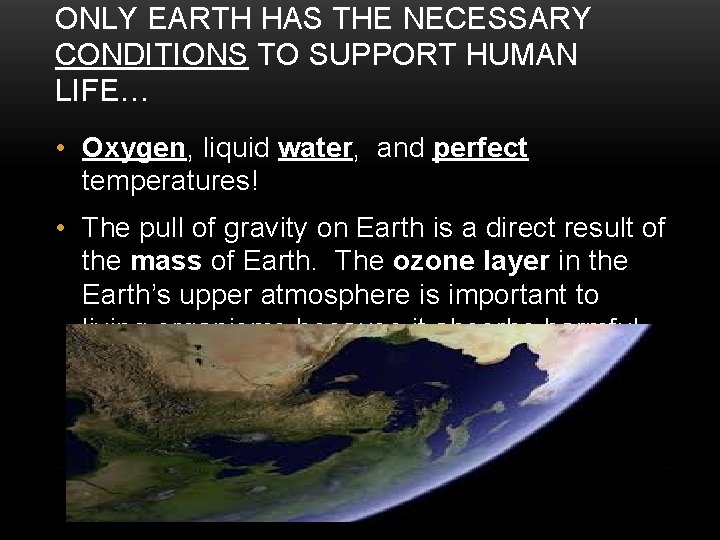
ONLY EARTH HAS THE NECESSARY CONDITIONS TO SUPPORT HUMAN LIFE… • Oxygen, liquid water, and perfect temperatures! • The pull of gravity on Earth is a direct result of the mass of Earth. The ozone layer in the Earth’s upper atmosphere is important to living organisms because it absorbs harmful ultraviolet radiation from the Sun.
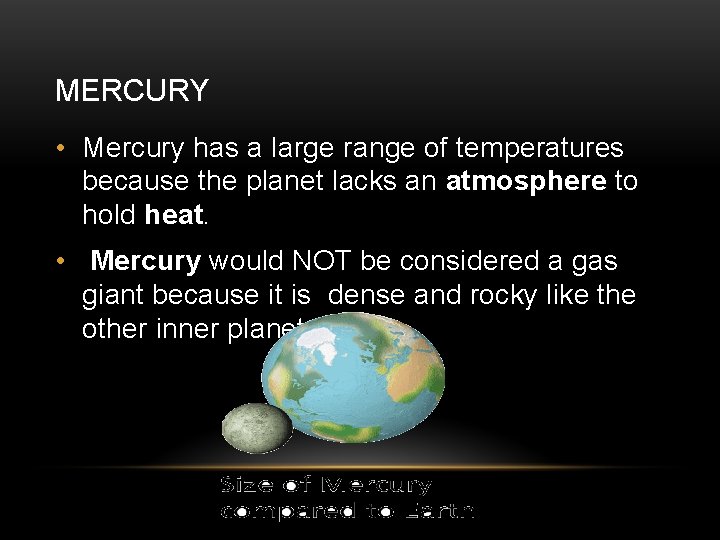
MERCURY • Mercury has a large range of temperatures because the planet lacks an atmosphere to hold heat. • Mercury would NOT be considered a gas giant because it is dense and rocky like the other inner planets.
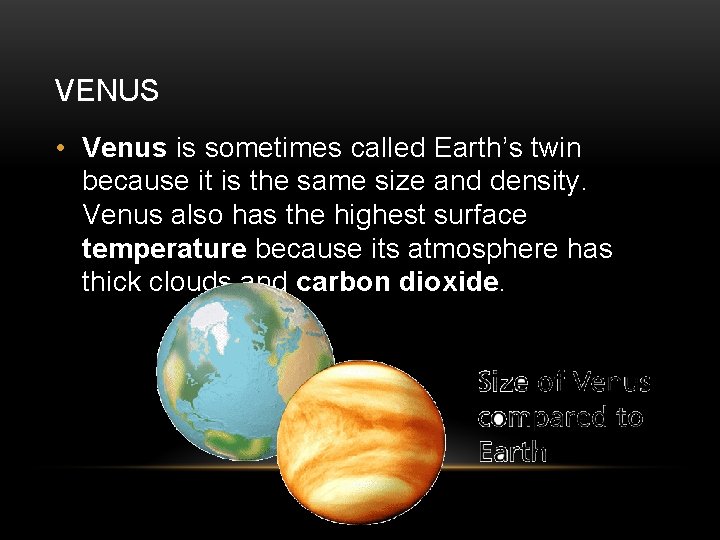
VENUS • Venus is sometimes called Earth’s twin because it is the same size and density. Venus also has the highest surface temperature because its atmosphere has thick clouds and carbon dioxide.
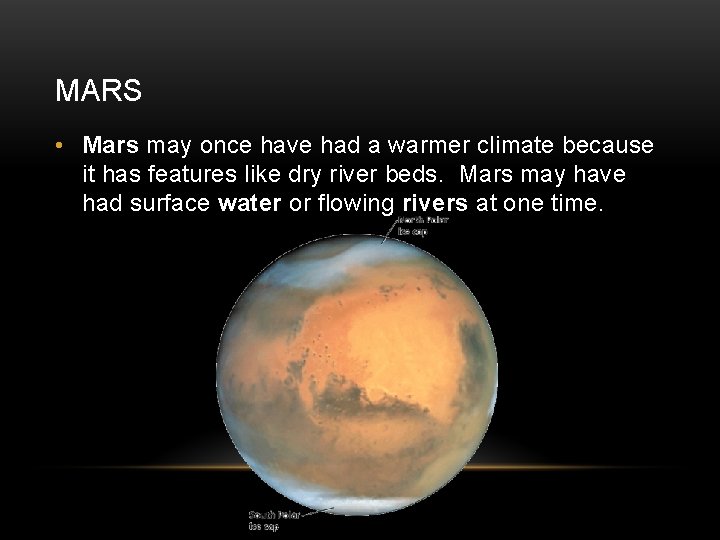
MARS • Mars may once have had a warmer climate because it has features like dry river beds. Mars may have had surface water or flowing rivers at one time.
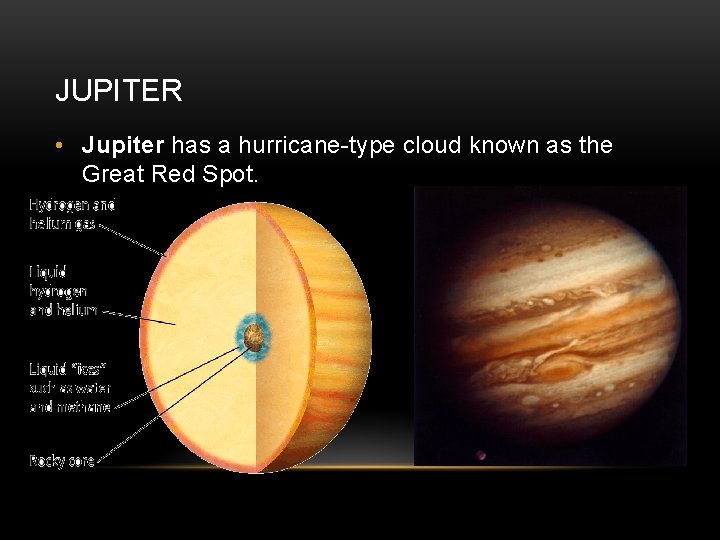
JUPITER • Jupiter has a hurricane-type cloud known as the Great Red Spot.
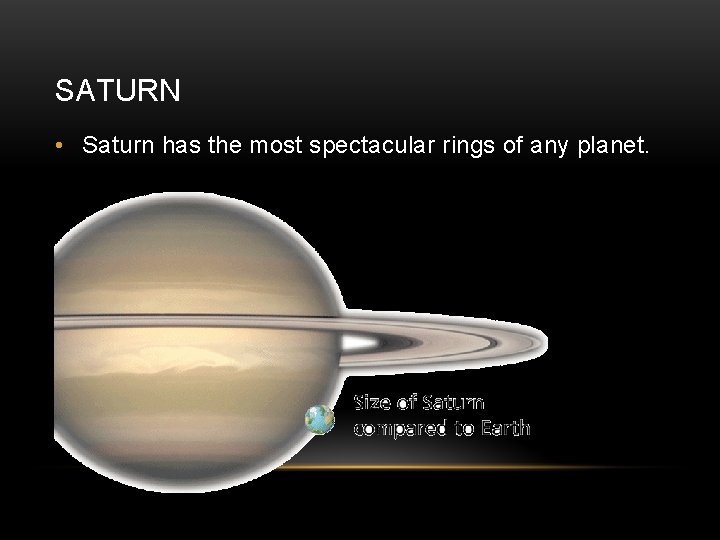
SATURN • Saturn has the most spectacular rings of any planet.
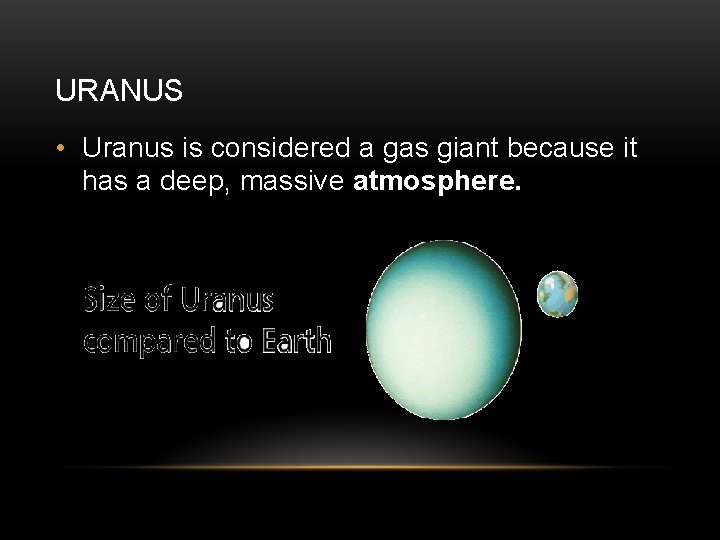
URANUS • Uranus is considered a gas giant because it has a deep, massive atmosphere.
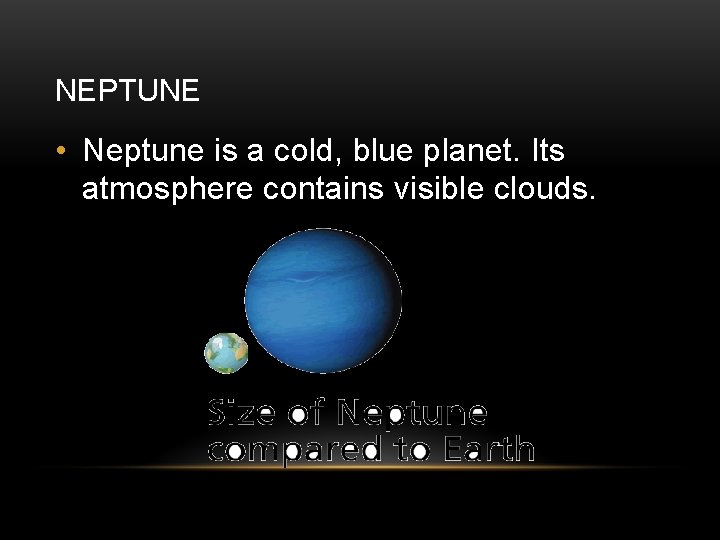
NEPTUNE • Neptune is a cold, blue planet. Its atmosphere contains visible clouds.
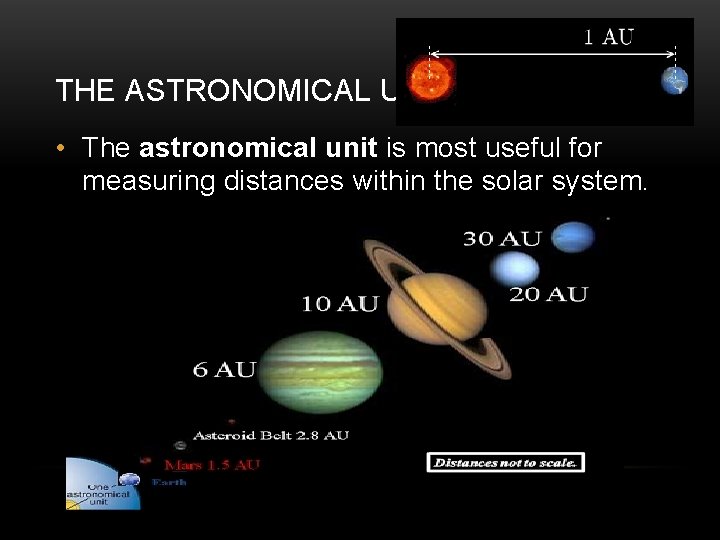
THE ASTRONOMICAL UNIT • The astronomical unit is most useful for measuring distances within the solar system.
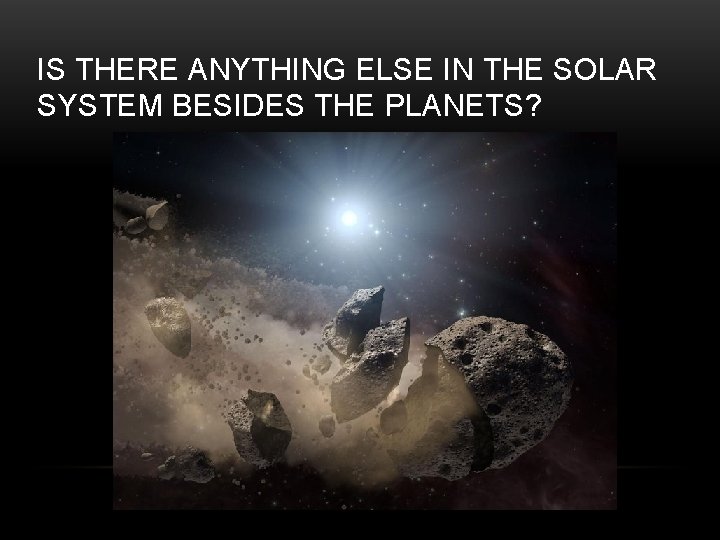
IS THERE ANYTHING ELSE IN THE SOLAR SYSTEM BESIDES THE PLANETS?
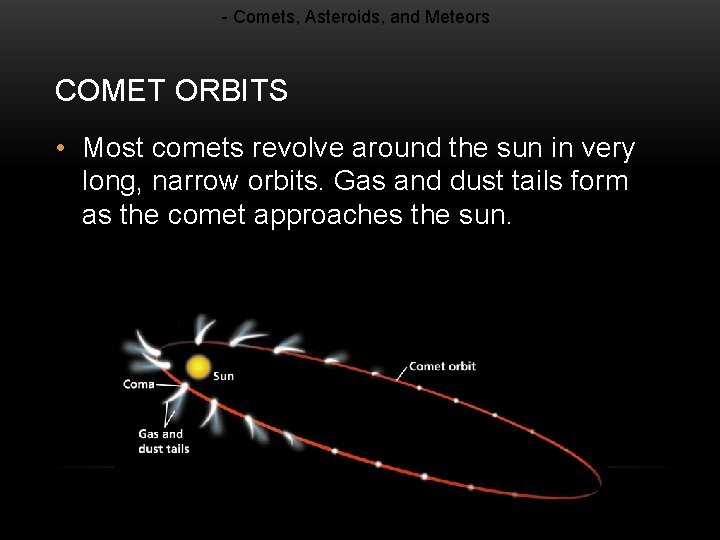
OTHER SMALL BODIES IN THE SOLAR SYSTEM: • Comets: A small body of ice, rock, and cosmic dust that follows an elliptical orbit around the sun. It gives off gas and dust in the form of a tail as it passes close to the sun. The tail always points away from the sun due to solar winds. comet animations
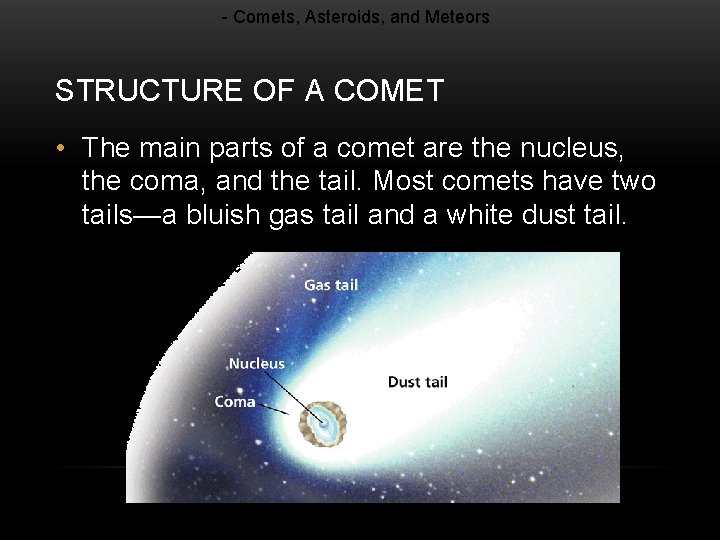
- Comets, Asteroids, and Meteors STRUCTURE OF A COMET • The main parts of a comet are the nucleus, the coma, and the tail. Most comets have two tails—a bluish gas tail and a white dust tail.
- Comets, Asteroids, and Meteors COMET ORBITS • Most comets revolve around the sun in very long, narrow orbits. Gas and dust tails form as the comet approaches the sun.
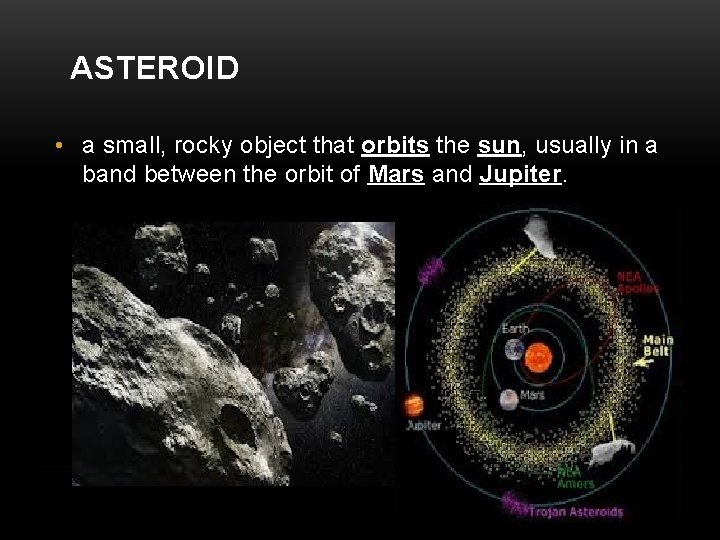
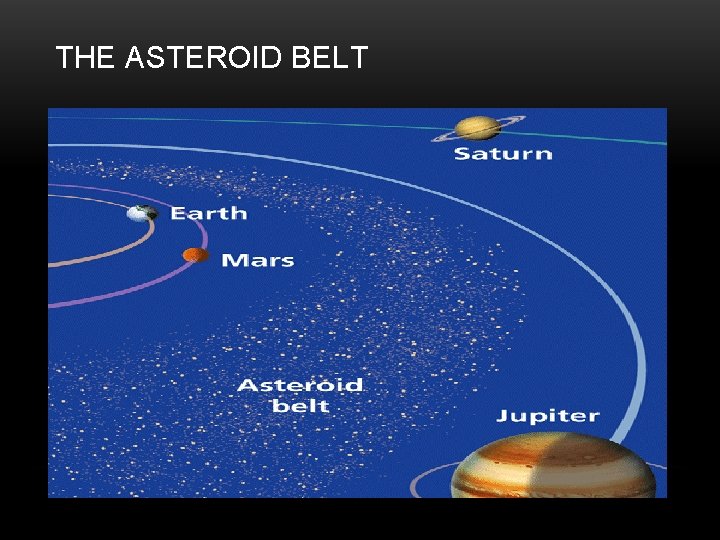
ASTEROID • a small, rocky object that orbits the sun, usually in a band between the orbit of Mars and Jupiter.
THE ASTEROID BELT
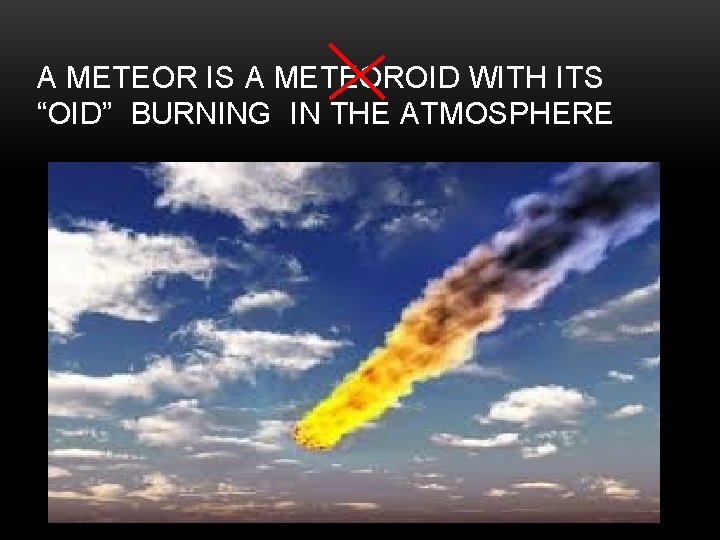
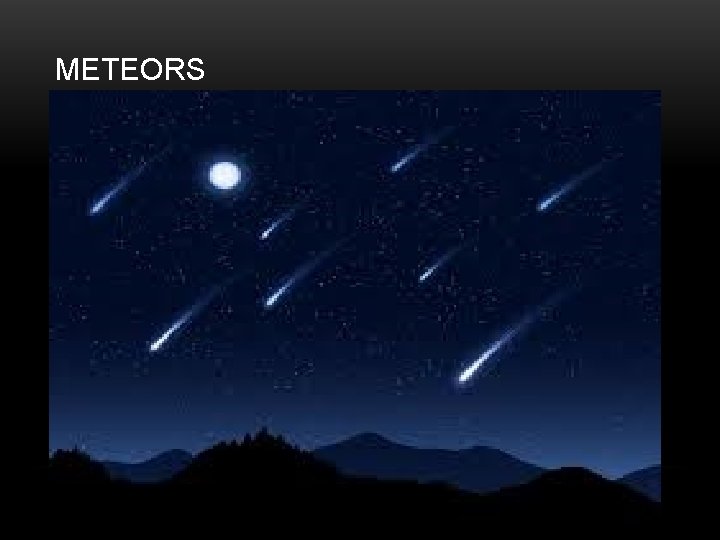
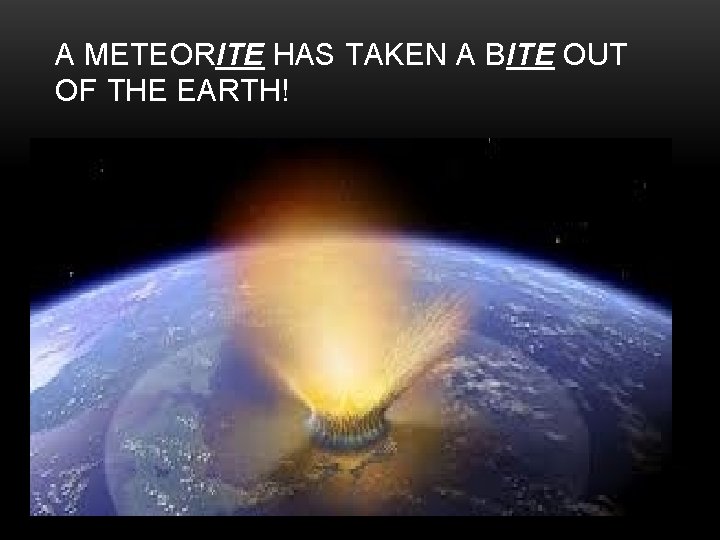
• Meteoroid: small, rocky body that travels through space. • Meteor: bright streak of light that results when a meteoroid burns up in the Earth’s atmosphere- sometimes called a “shooting star” (we see it in the sky) • Meteorite: A meteoroid that reaches Earth’s surface without burning up completely (we see it on the ground)
REMEMBER: A METEOROID IS IN OUTER SPACE!
A METEOR IS A METEOROID WITH ITS “OID” BURNING IN THE ATMOSPHERE
METEORS
A METEORITE HAS TAKEN A BITE OUT OF THE EARTH!
• Planets or moons with atmospheres have fewer impacts because the air in the atmosphere slows and burns up small objects. • Stars begin to glow when the neutrons in the star begin to spin.
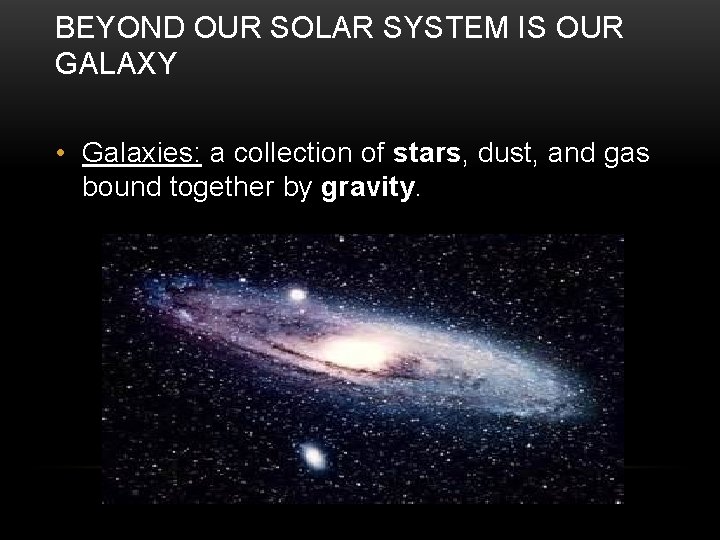
BEYOND OUR SOLAR SYSTEM IS OUR GALAXY • Galaxies: a collection of stars, dust, and gas bound together by gravity.
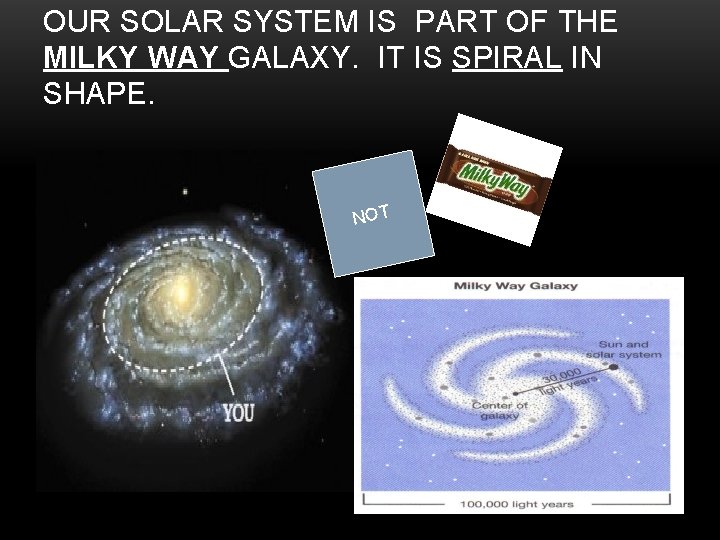
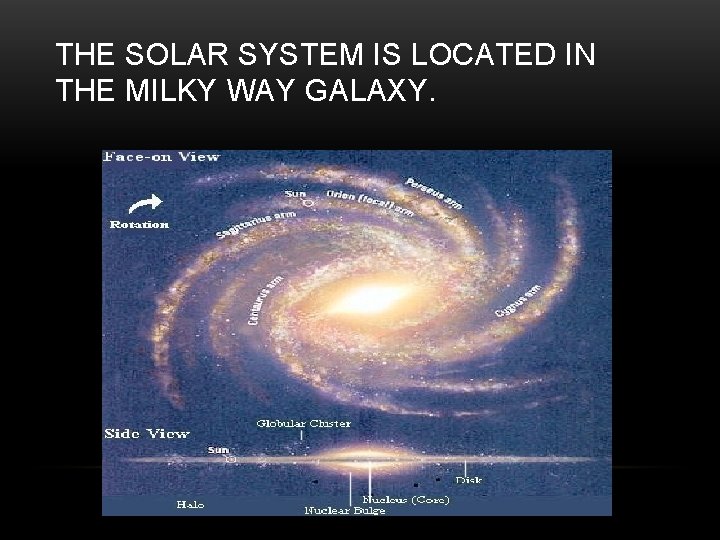
OUR SOLAR SYSTEM IS PART OF THE MILKY WAY GALAXY. IT IS SPIRAL IN SHAPE. NOT
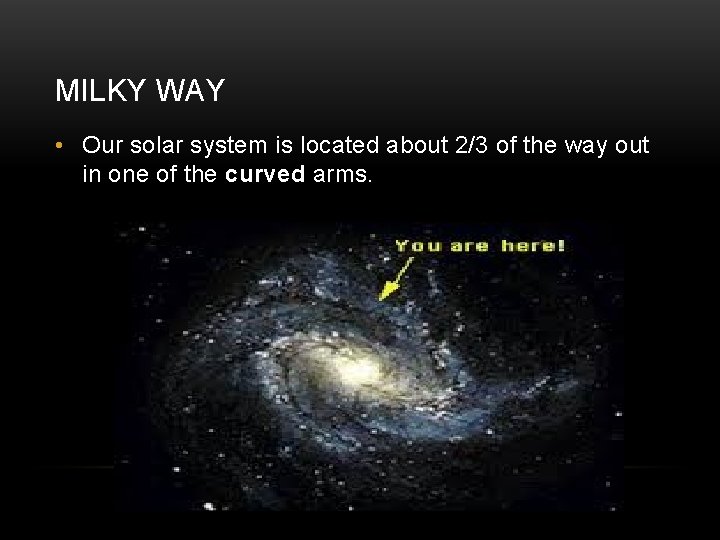
MILKY WAY • Our solar system is located about 2/3 of the way out in one of the curved arms.
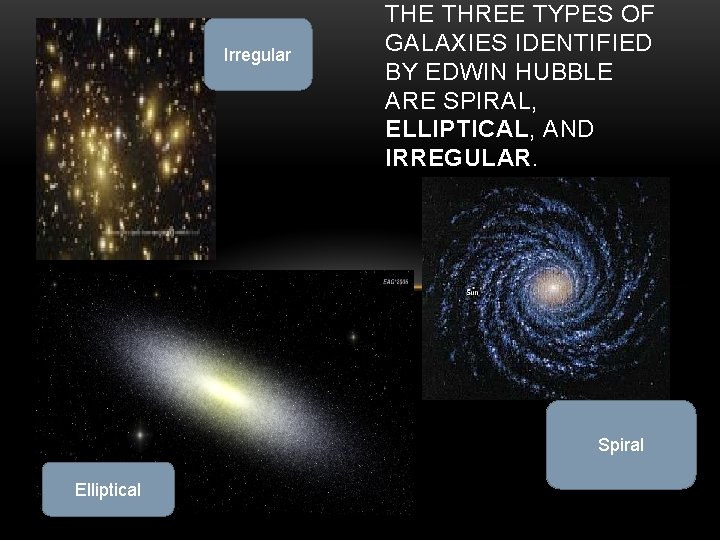
Irregular THE THREE TYPES OF GALAXIES IDENTIFIED BY EDWIN HUBBLE ARE SPIRAL, ELLIPTICAL, AND IRREGULAR. Spiral Elliptical
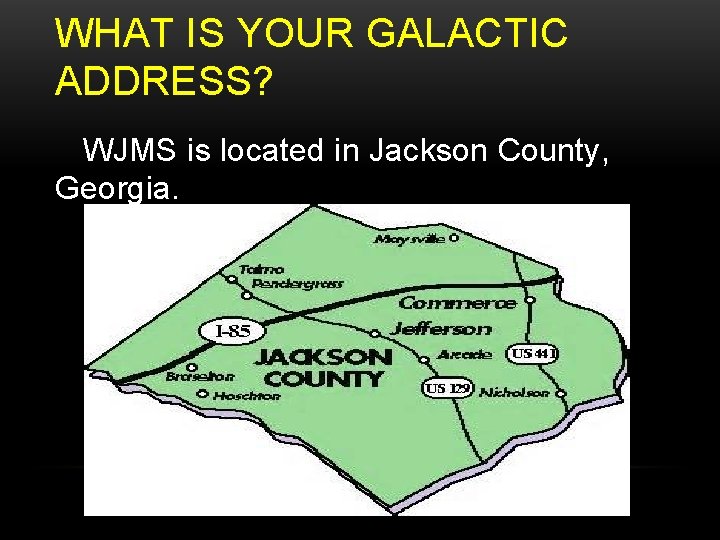
WHAT IS YOUR GALACTIC ADDRESS? WJMS is located in Jackson County, Georgia.
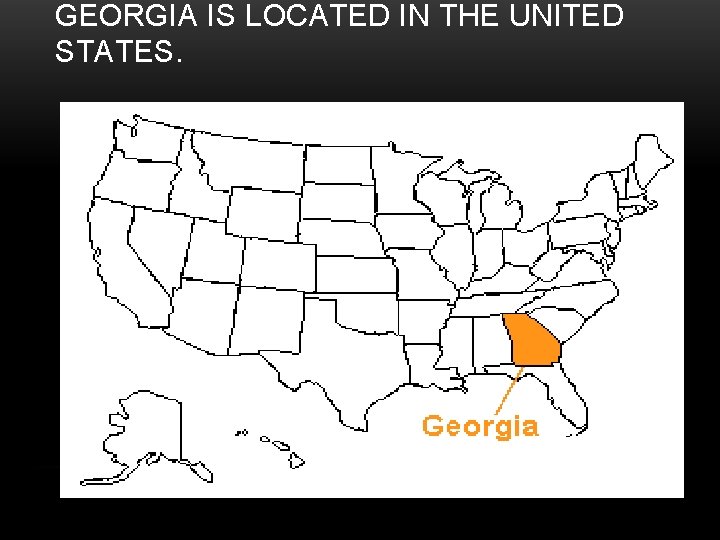
GEORGIA IS LOCATED IN THE UNITED STATES.
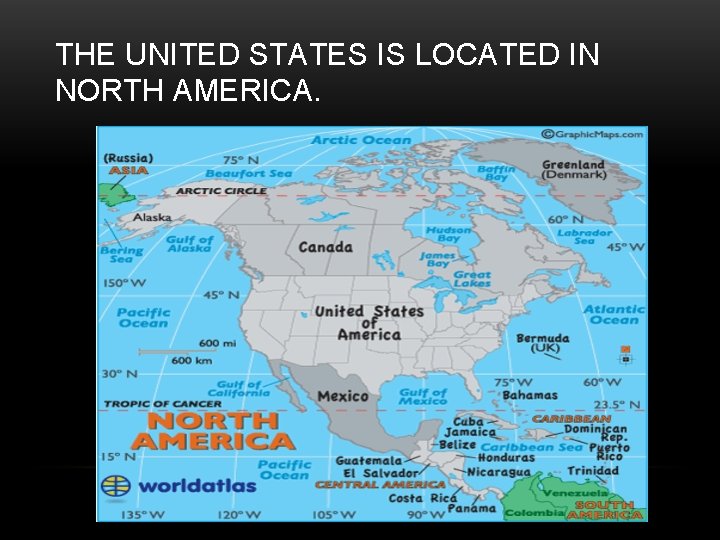
THE UNITED STATES IS LOCATED IN NORTH AMERICA.
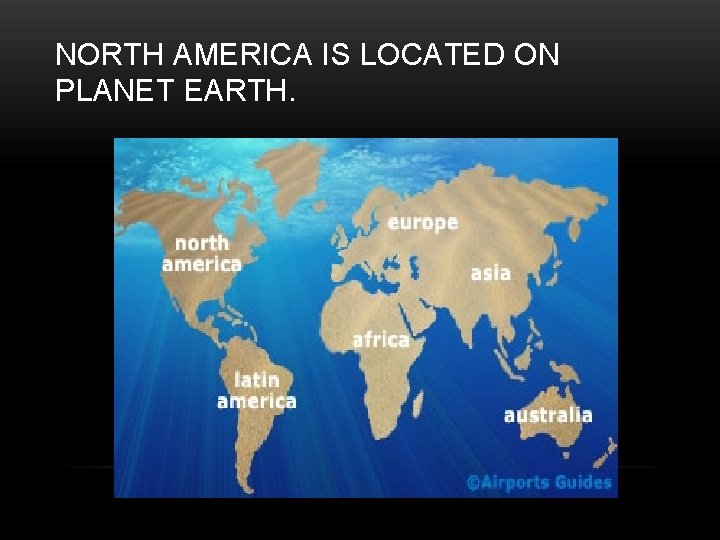
NORTH AMERICA IS LOCATED ON PLANET EARTH.
PLANET EARTH IS LOCATED IN THE SOLAR SYSTEM.
THE SOLAR SYSTEM IS LOCATED IN THE MILKY WAY GALAXY.
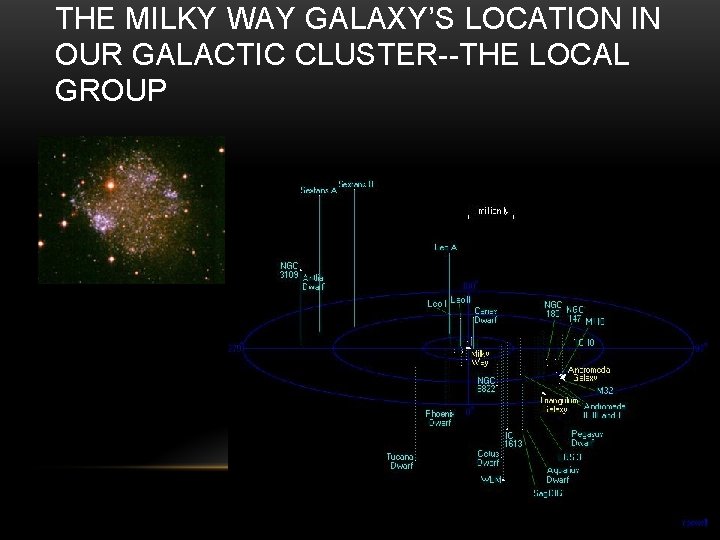
THE MILKY WAY GALAXY’S LOCATION IN OUR GALACTIC CLUSTER--THE LOCAL GROUP
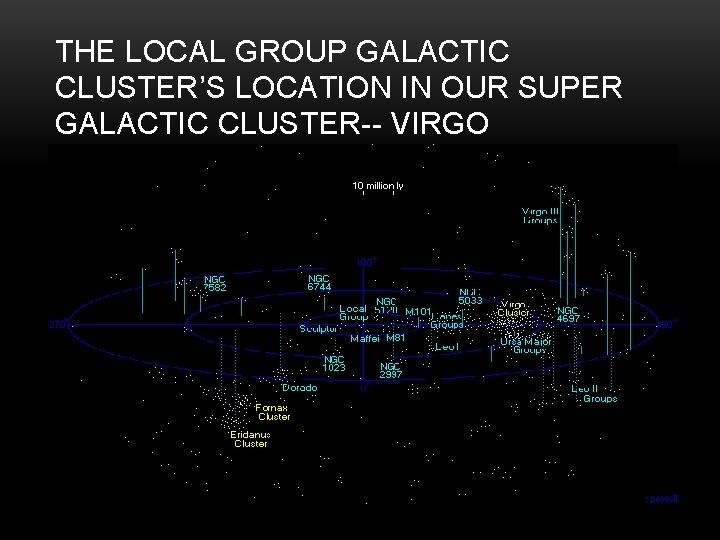
THE LOCAL GROUP GALACTIC CLUSTER’S LOCATION IN OUR SUPER GALACTIC CLUSTER-- VIRGO
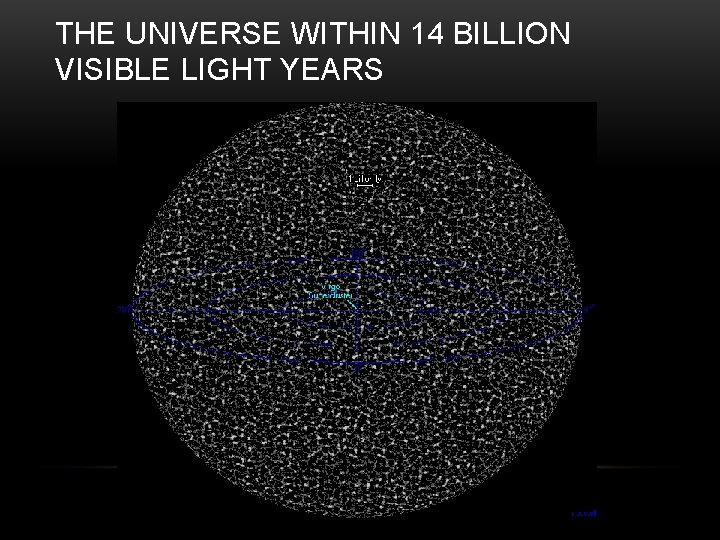
THE UNIVERSE WITHIN 14 BILLION VISIBLE LIGHT YEARS
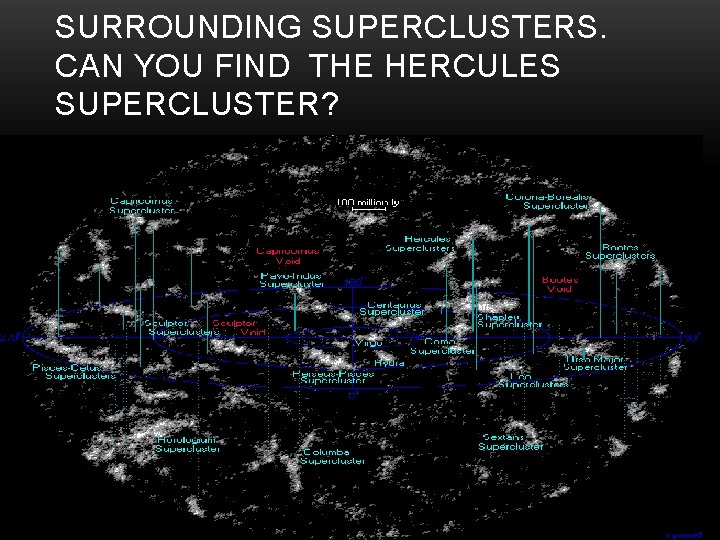
SURROUNDING SUPERCLUSTERS. CAN YOU FIND THE HERCULES SUPERCLUSTER?
SO HOW DID IT ALL START? BIG BANG Theory: theory that states that the universe began with a tremendous explosion where all matter and energy was concentrated. The universe is expanding outward. According to this theory, the universe is about 13. 7 billion years old. One way scientists calculate the age of the universe is measure the distance from Earth to various galaxies.
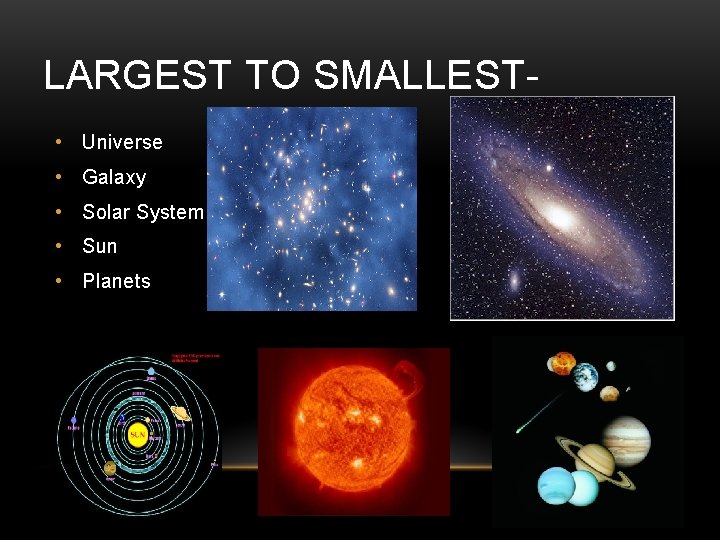
LARGEST TO SMALLEST • Universe • Galaxy • Solar System • Sun • Planets
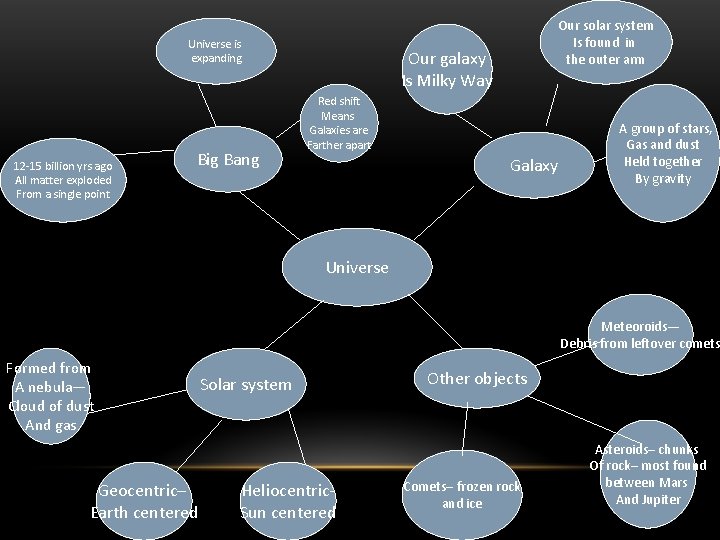
Universe is expanding 12 -15 billion yrs ago All matter exploded From a single point Big Bang Our solar system Is found in the outer arm Our galaxy Is Milky Way Red shift Means Galaxies are Farther apart Galaxy A group of stars, Gas and dust Held together By gravity Universe Meteoroids— Debris from leftover comets Formed from A nebula— Cloud of dust And gas Geocentric– Earth centered Solar system Heliocentric. Sun centered Other objects Comets– frozen rock and ice Asteroids– chunks Of rock– most found between Mars And Jupiter