
The United States entered the Progressive Era from
- Slides: 20
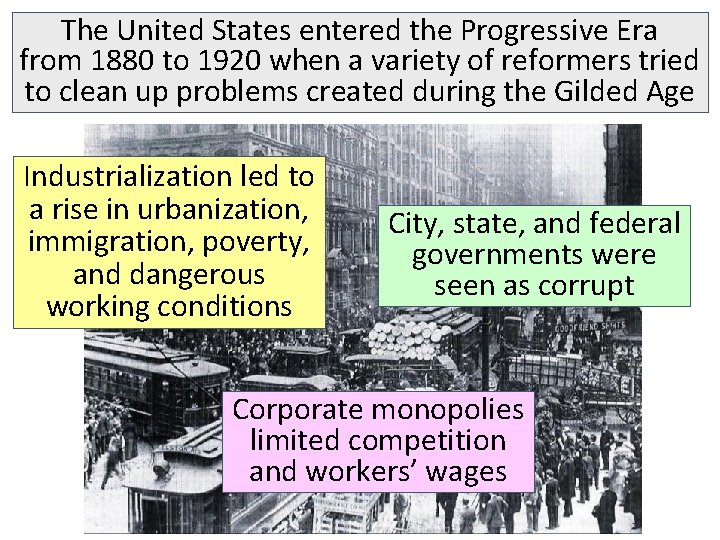
The United States entered the Progressive Era from 1880 to 1920 when a variety of reformers tried to clean up problems created during the Gilded Age Industrialization led to a rise in urbanization, immigration, poverty, and dangerous working conditions City, state, and federal governments were seen as corrupt Corporate monopolies limited competition and workers’ wages
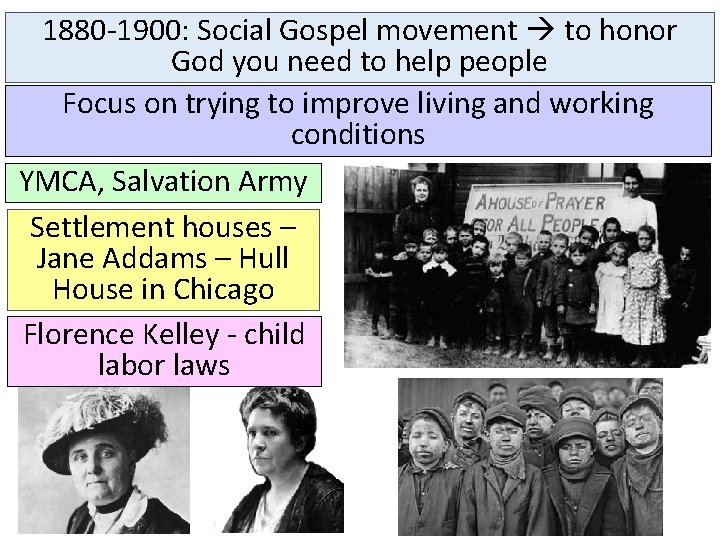
1880 -1900: Social Gospel movement to honor God you need to help people Focus on trying to improve living and working conditions YMCA, Salvation Army Settlement houses – Jane Addams – Hull House in Chicago Florence Kelley - child labor laws
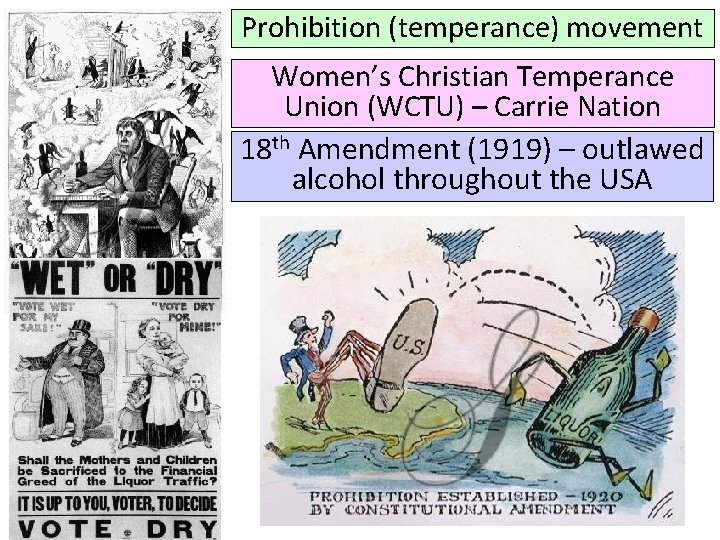
Prohibition (temperance) movement Women’s Christian Temperance Union (WCTU) – Carrie Nation 18 th Amendment (1919) – outlawed alcohol throughout the USA
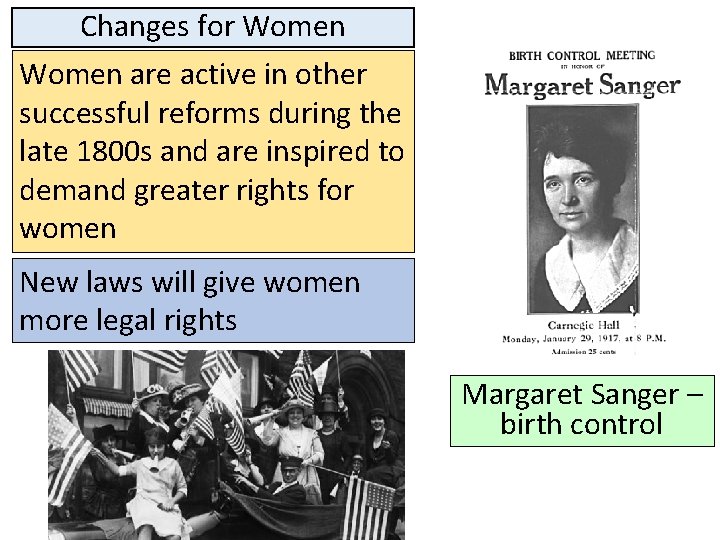
Changes for Women are active in other successful reforms during the late 1800 s and are inspired to demand greater rights for women New laws will give women more legal rights Margaret Sanger – birth control
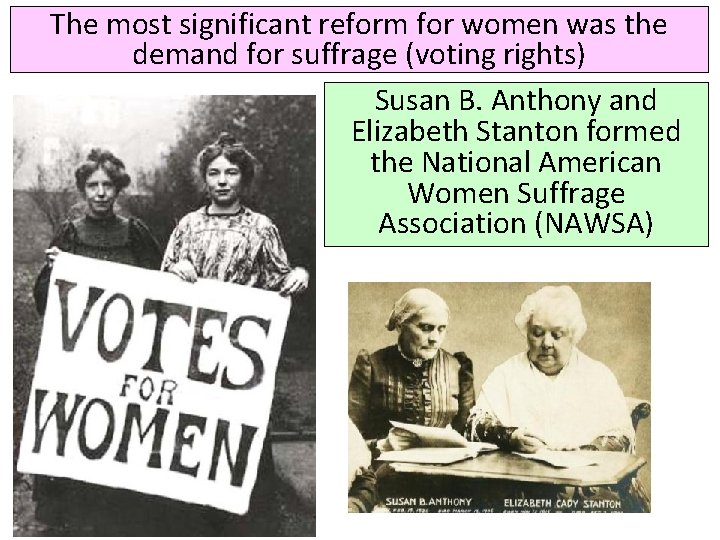
The most significant reform for women was the demand for suffrage (voting rights) Susan B. Anthony and Elizabeth Stanton formed the National American Women Suffrage Association (NAWSA)
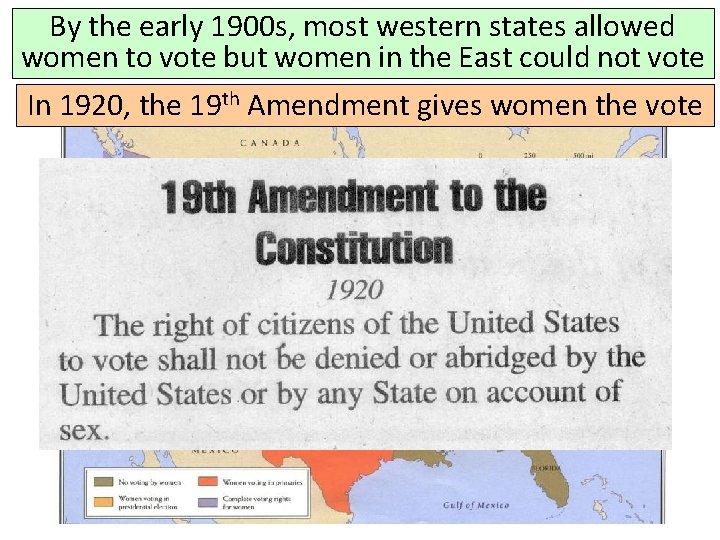
By the early 1900 s, most western states allowed women to vote but women in the East could not vote In 1920, the 19 th Amendment gives women the vote
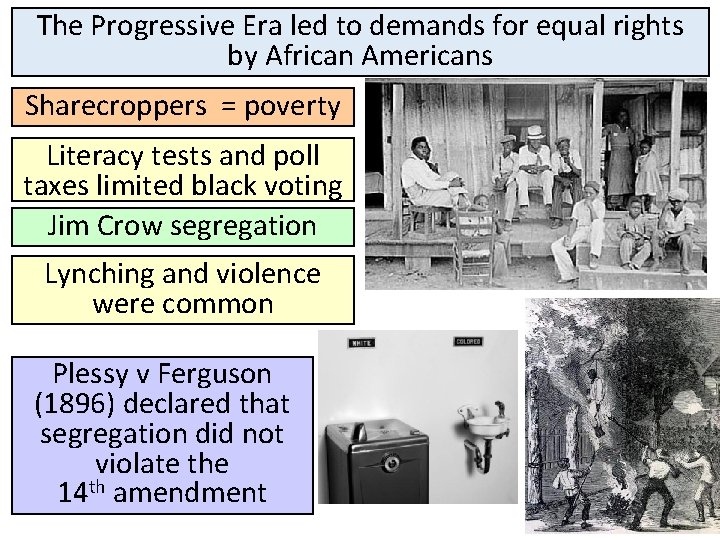
The Progressive Era led to demands for equal rights by African Americans Sharecroppers = poverty Literacy tests and poll taxes limited black voting Jim Crow segregation Lynching and violence were common Plessy v Ferguson (1896) declared that segregation did not violate the 14 th amendment
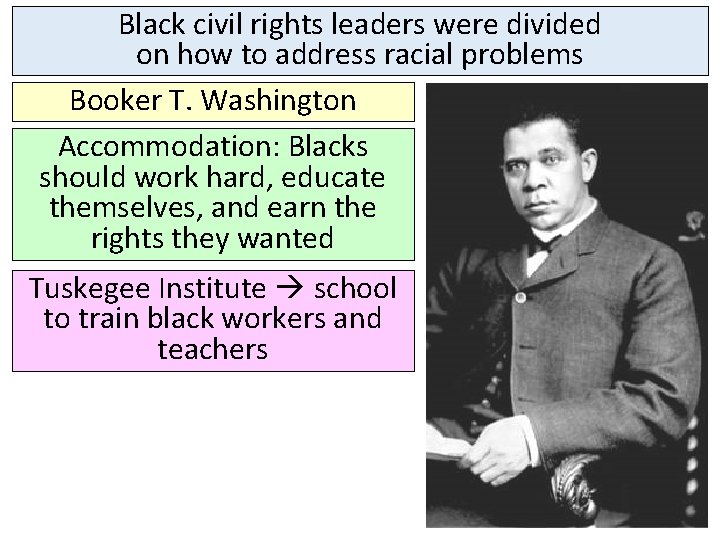
Black civil rights leaders were divided on how to address racial problems Booker T. Washington Accommodation: Blacks should work hard, educate themselves, and earn the rights they wanted Tuskegee Institute school to train black workers and teachers
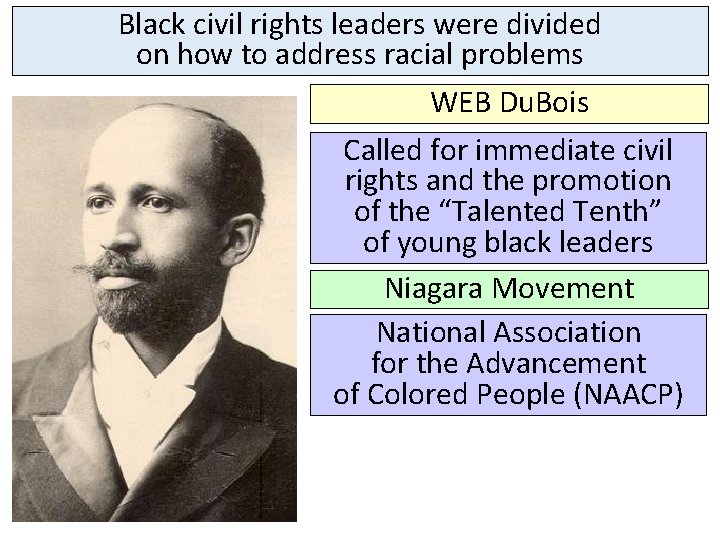
Black civil rights leaders were divided on how to address racial problems WEB Du. Bois Called for immediate civil rights and the promotion of the “Talented Tenth” of young black leaders Niagara Movement National Association for the Advancement of Colored People (NAACP)
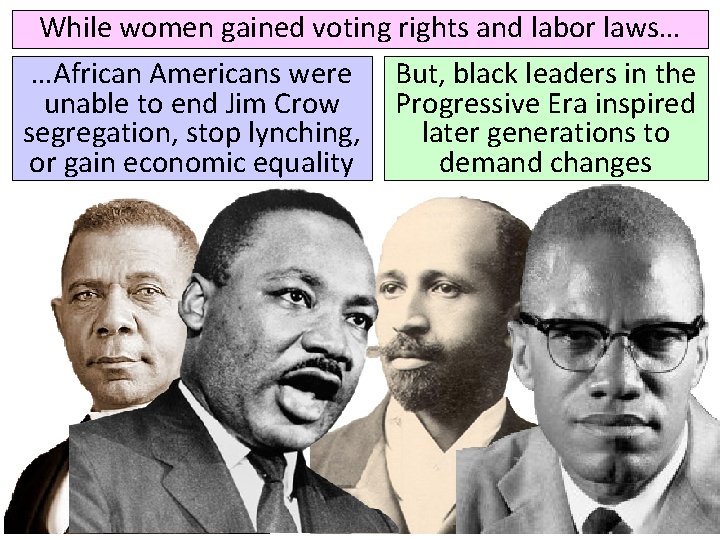
While women gained voting rights and labor laws… …African Americans were But, black leaders in the unable to end Jim Crow Progressive Era inspired segregation, stop lynching, later generations to or gain economic equality demand changes
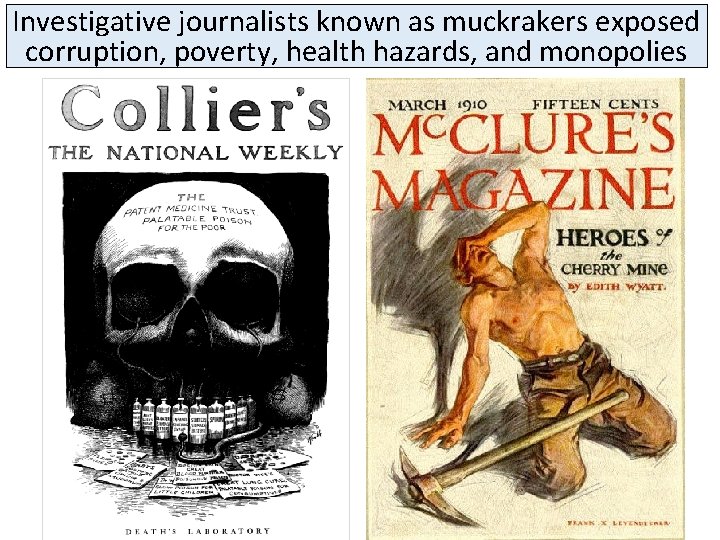
Investigative journalists known as muckrakers exposed corruption, poverty, health hazards, and monopolies
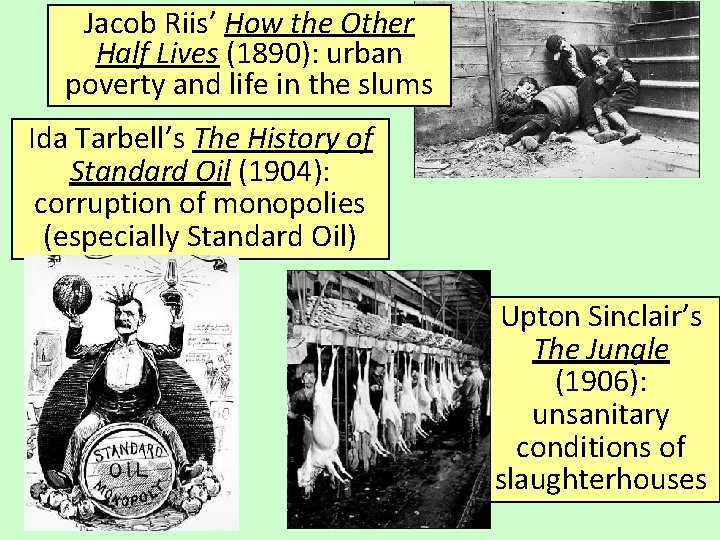
Jacob Riis’ How the Other Half Lives (1890): urban poverty and life in the slums Ida Tarbell’s The History of Standard Oil (1904): corruption of monopolies (especially Standard Oil) Upton Sinclair’s The Jungle (1906): unsanitary conditions of slaughterhouses
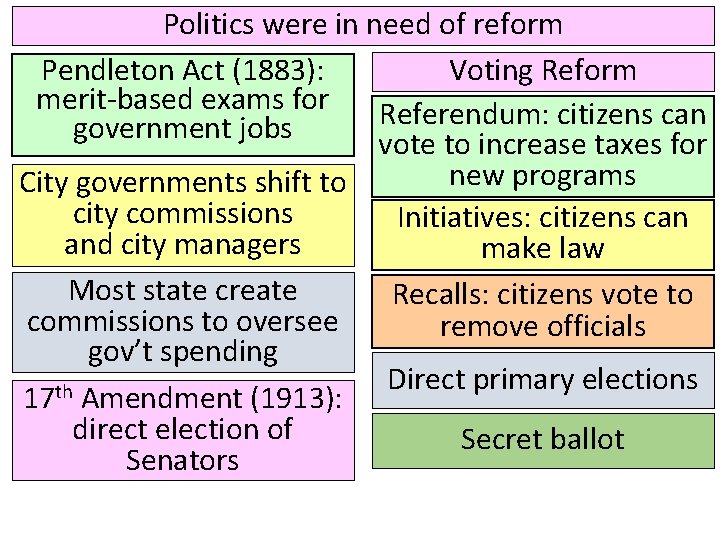
Politics were in need of reform Voting Reform Pendleton Act (1883): merit-based exams for Referendum: citizens can government jobs vote to increase taxes for new programs City governments shift to city commissions Initiatives: citizens can and city managers make law Most state create Recalls: citizens vote to commissions to oversee remove officials gov’t spending Direct primary elections th 17 Amendment (1913): direct election of Secret ballot Senators
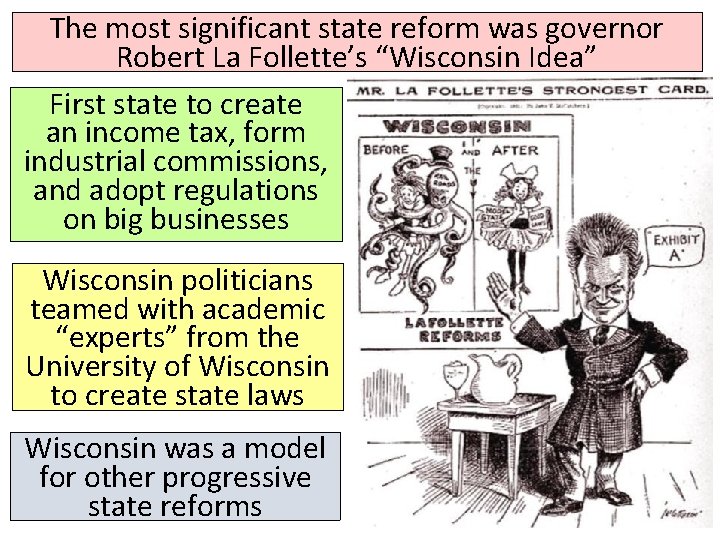
The most significant state reform was governor Robert La Follette’s “Wisconsin Idea” First state to create an income tax, form industrial commissions, and adopt regulations on big businesses Wisconsin politicians teamed with academic “experts” from the University of Wisconsin to create state laws Wisconsin was a model for other progressive state reforms
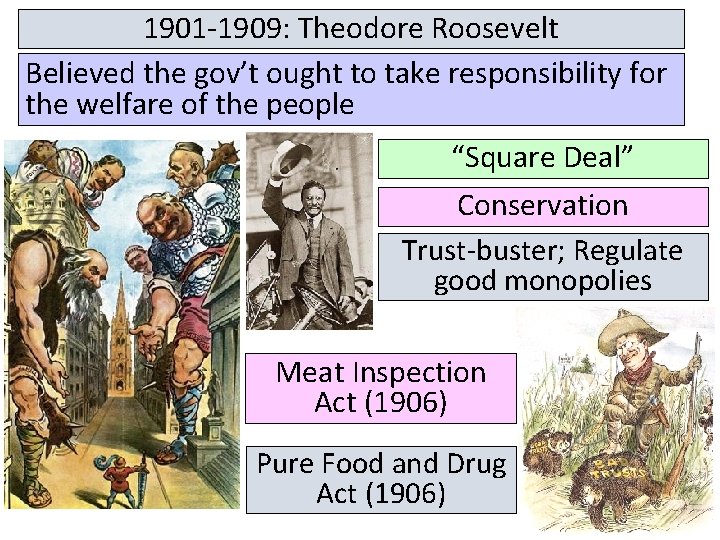
1901 -1909: Theodore Roosevelt Believed the gov’t ought to take responsibility for the welfare of the people “Square Deal” Conservation Trust-buster; Regulate good monopolies Meat Inspection Act (1906) Pure Food and Drug Act (1906)
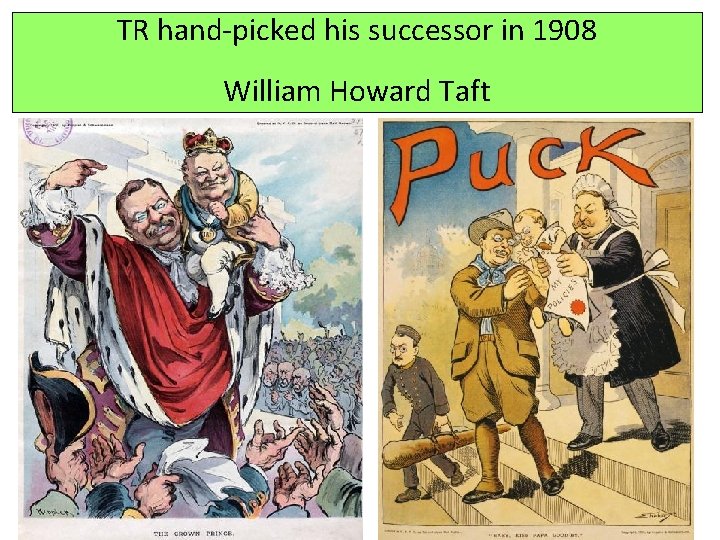
TR hand-picked his successor in 1908 William Howard Taft
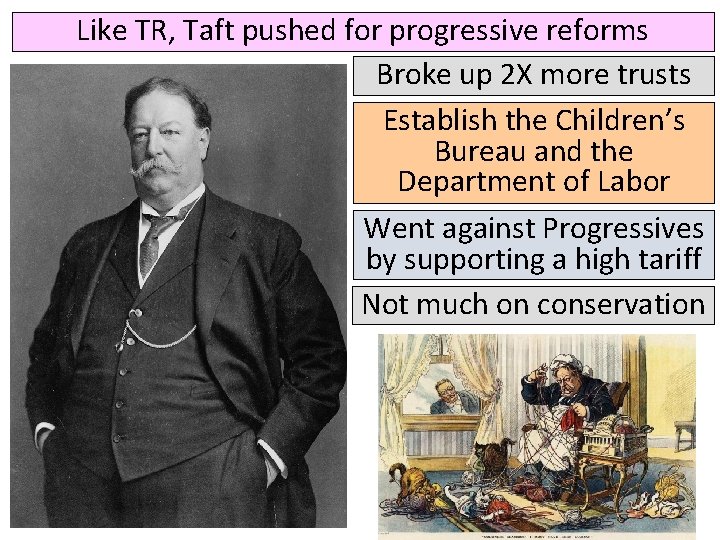
Like TR, Taft pushed for progressive reforms Broke up 2 X more trusts Establish the Children’s Bureau and the Department of Labor Went against Progressives by supporting a high tariff Not much on conservation
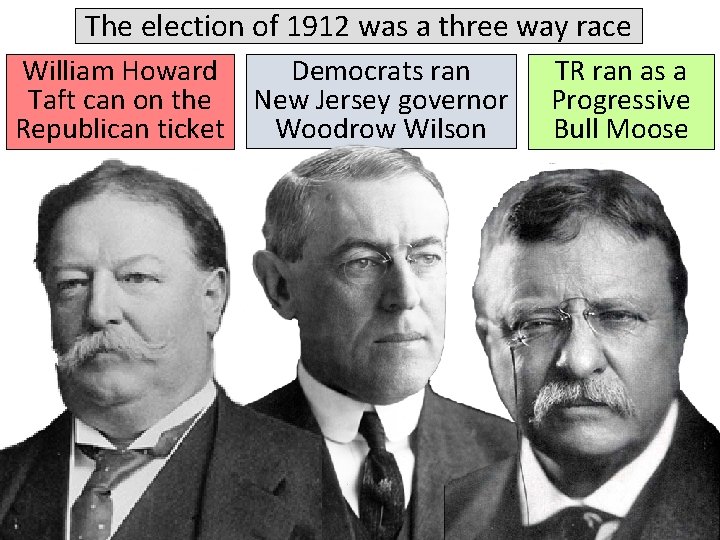
The election of 1912 was a three way race William Howard Democrats ran Taft can on the New Jersey governor Republican ticket Woodrow Wilson TR ran as a Progressive Bull Moose
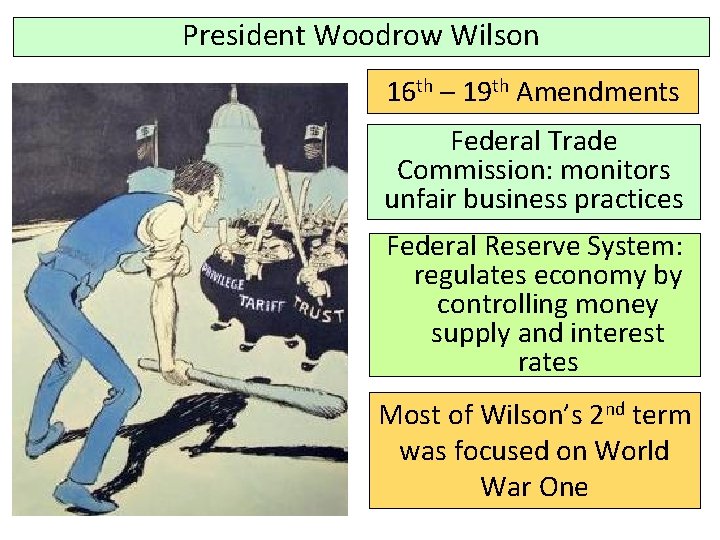
President Woodrow Wilson 16 th – 19 th Amendments Federal Trade Commission: monitors unfair business practices Federal Reserve System: regulates economy by controlling money supply and interest rates Most of Wilson’s 2 nd term was focused on World War One
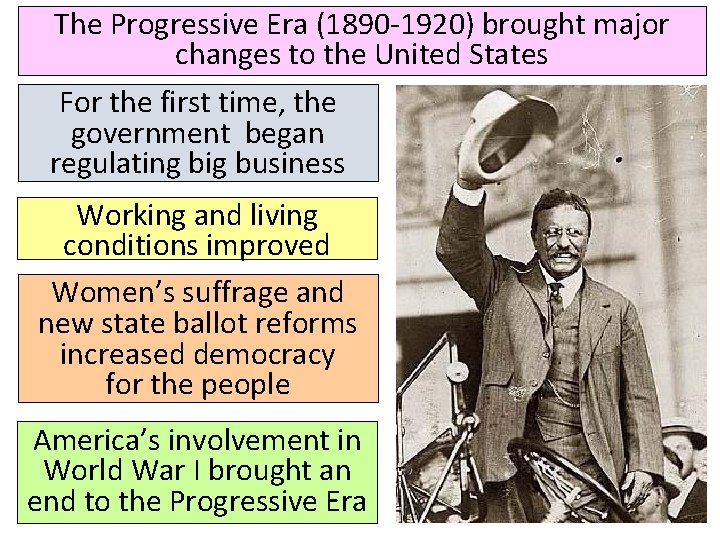
The Progressive Era (1890 -1920) brought major changes to the United States For the first time, the government began regulating big business Working and living conditions improved Women’s suffrage and new state ballot reforms increased democracy for the people America’s involvement in World War I brought an end to the Progressive Era