
The United States Constitution Basics Structure The Preamble
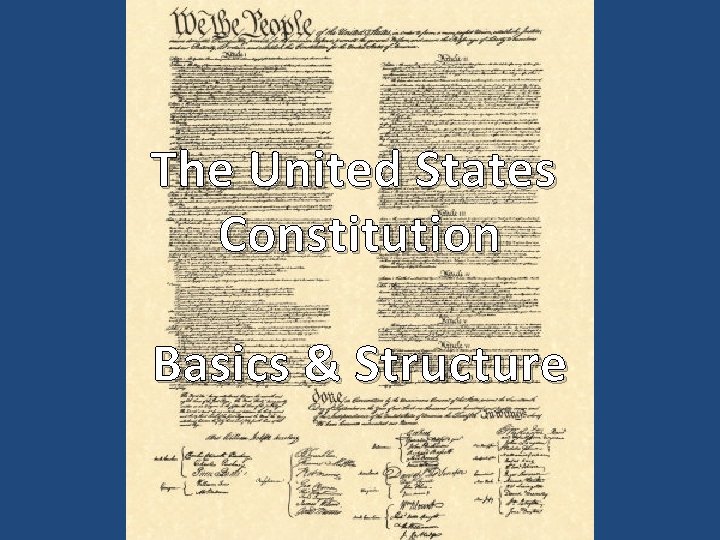
The United States Constitution Basics & Structure
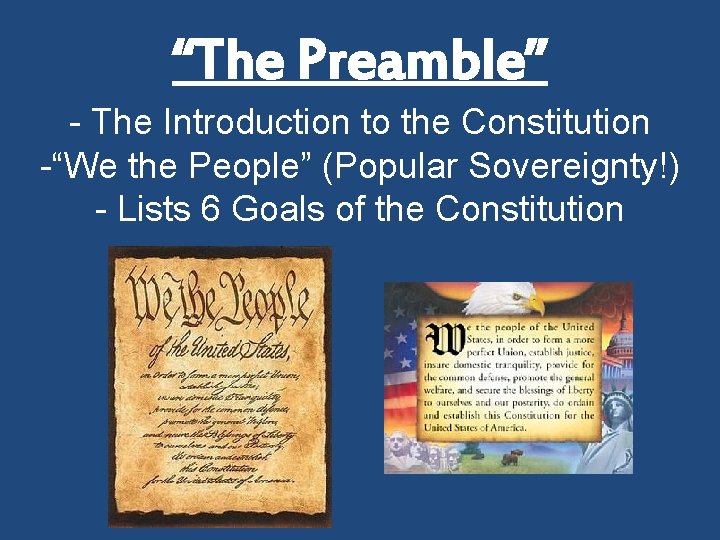
“The Preamble” - The Introduction to the Constitution -“We the People” (Popular Sovereignty!) - Lists 6 Goals of the Constitution
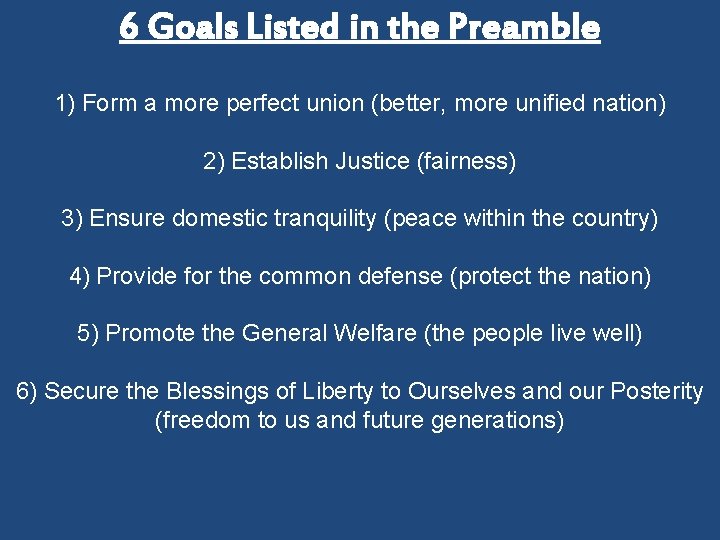
6 Goals Listed in the Preamble 1) Form a more perfect union (better, more unified nation) 2) Establish Justice (fairness) 3) Ensure domestic tranquility (peace within the country) 4) Provide for the common defense (protect the nation) 5) Promote the General Welfare (the people live well) 6) Secure the Blessings of Liberty to Ourselves and our Posterity (freedom to us and future generations)
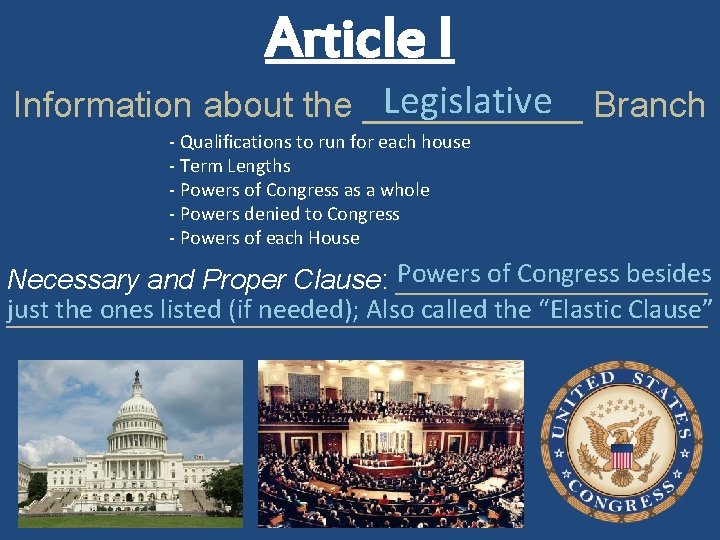
Article I Legislative Branch Information about the ______ - Qualifications to run for each house - Term Lengths - Powers of Congress as a whole - Powers denied to Congress - Powers of each House Powers of Congress besides Necessary and Proper Clause: __________ just the ones listed (if needed); Also called the “Elastic Clause” _______________________
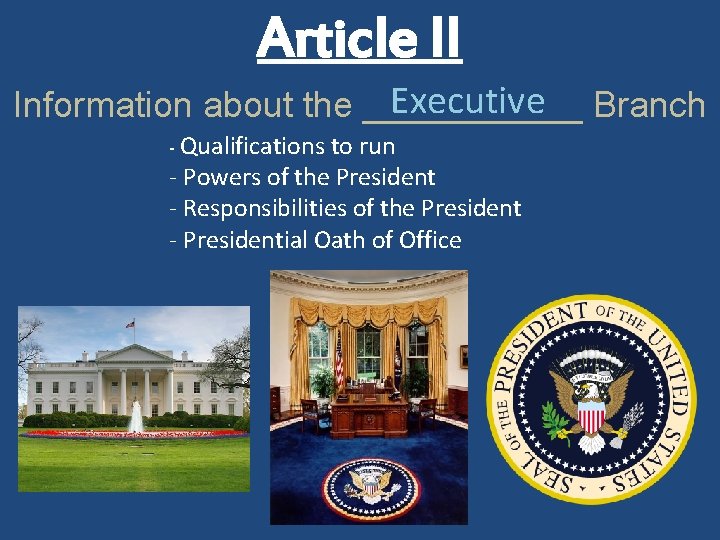
Article II Executive Branch Information about the ______ - Qualifications to run - Powers of the President - Responsibilities of the President - Presidential Oath of Office
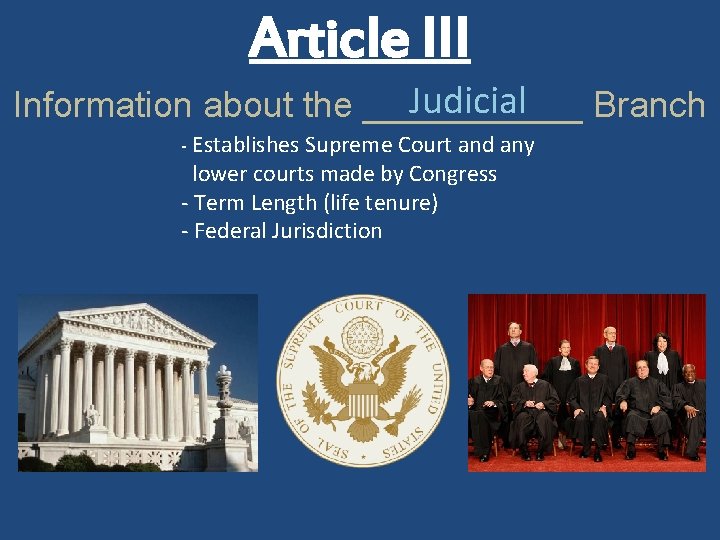
Article III Judicial Information about the ______ Branch - Establishes Supreme Court and any lower courts made by Congress - Term Length (life tenure) - Federal Jurisdiction
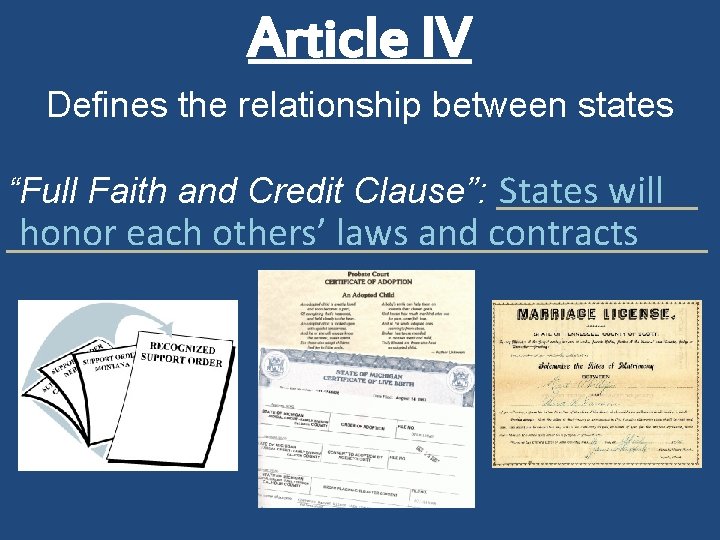
Article IV Defines the relationship between states “Full Faith and Credit Clause”: _____ States will honor each others’ laws and contracts __________________
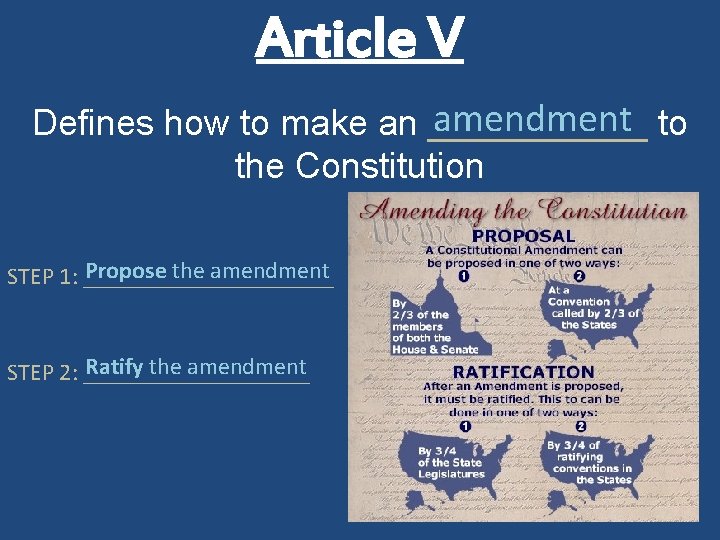
Article V amendment to Defines how to make an ______ the Constitution Propose the amendment STEP 1: ___________ Ratify the amendment STEP 2: __________
“Informal” Amendments Custom: Tradition (Ex. The Cabinet – not in Constitution but made by George Washington, and every president since has had one Court Rulings: Set Precedent (Ex: Early court cases, such as Plessy v. Ferguson, legalizing segregation were frequently upheld in future cases that are similar) Presidential Actions: Defines his own powers (Ex: Gulf of Tonkin Resolution during Vietnam - LBJ used his power as Commander-in. Chief to send as many troops as he thought necessary – eventually Congress passed the War Powers Act to prevent this in the future)
Article VI Defines the power of the Federal Government Constitution is the “Supremacy Clause”: The _________ “Supreme Law of the Land. ” If a state law and a __________________ Federal law conflict, the Federal law is supreme. __________________
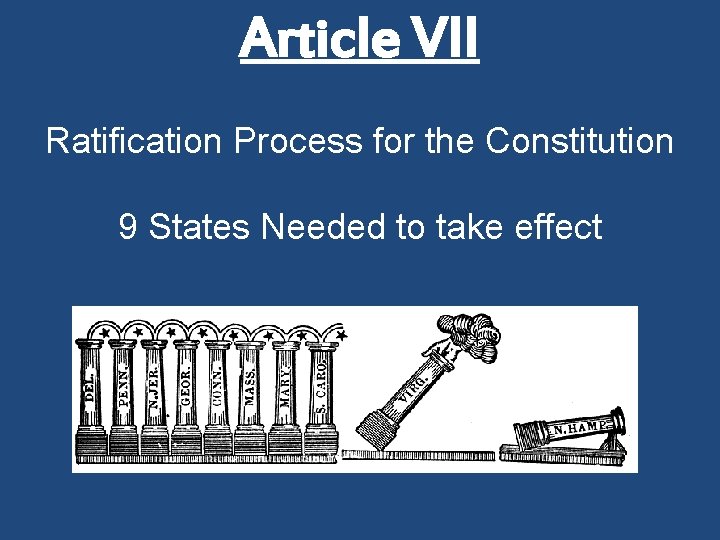
Article VII Ratification Process for the Constitution 9 States Needed to take effect
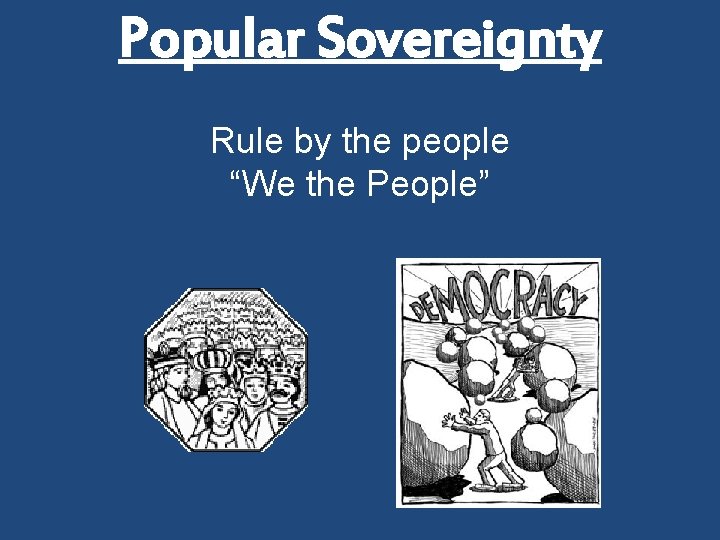
Popular Sovereignty Rule by the people “We the People”
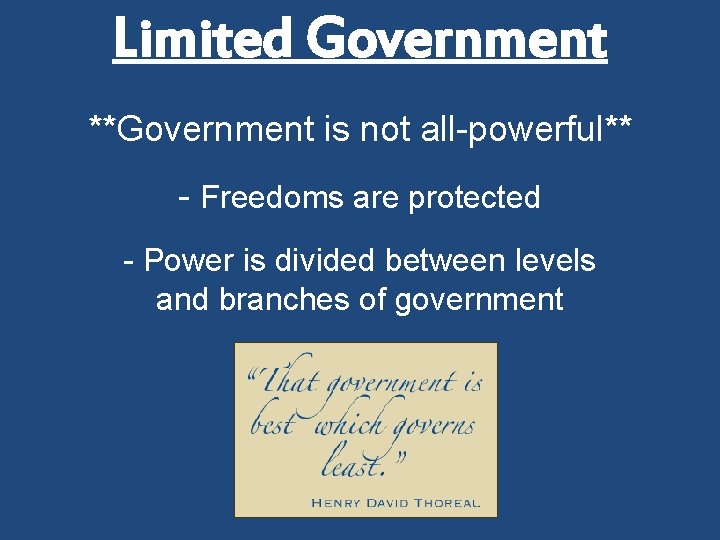
Limited Government **Government is not all-powerful** - Freedoms are protected - Power is divided between levels and branches of government
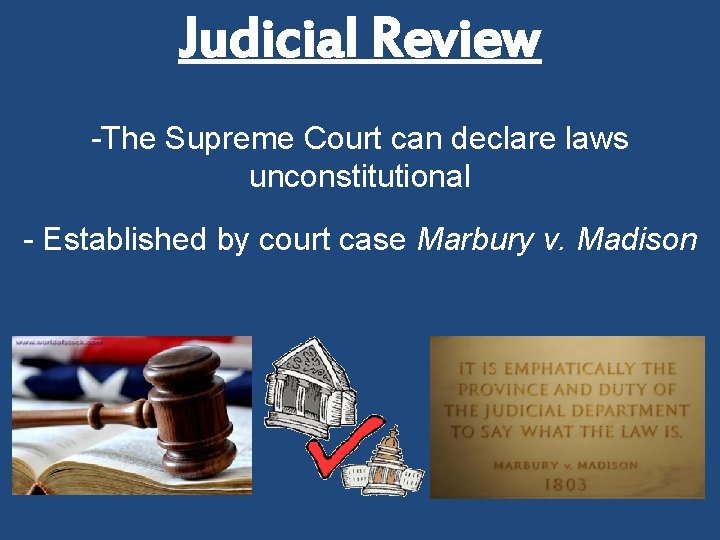
Judicial Review -The Supreme Court can declare laws unconstitutional - Established by court case Marbury v. Madison
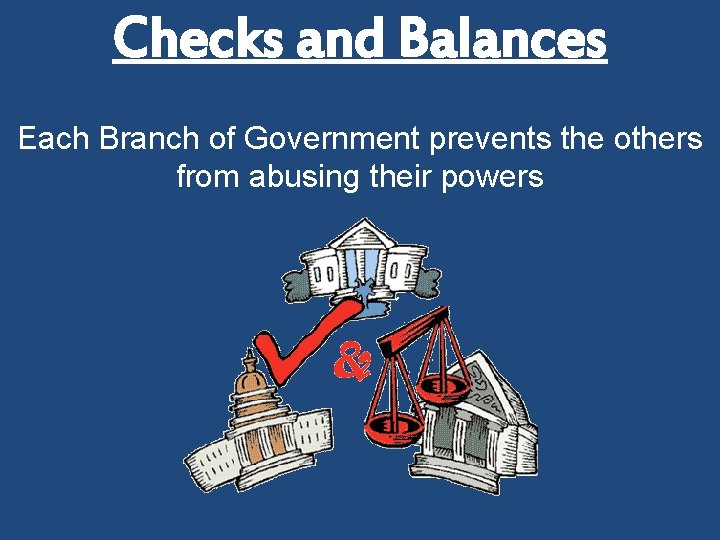
Checks and Balances Each Branch of Government prevents the others from abusing their powers

Separation of Powers Federal power is divided between three branches of government Makes the Laws Enforces the Laws Interprets the Laws
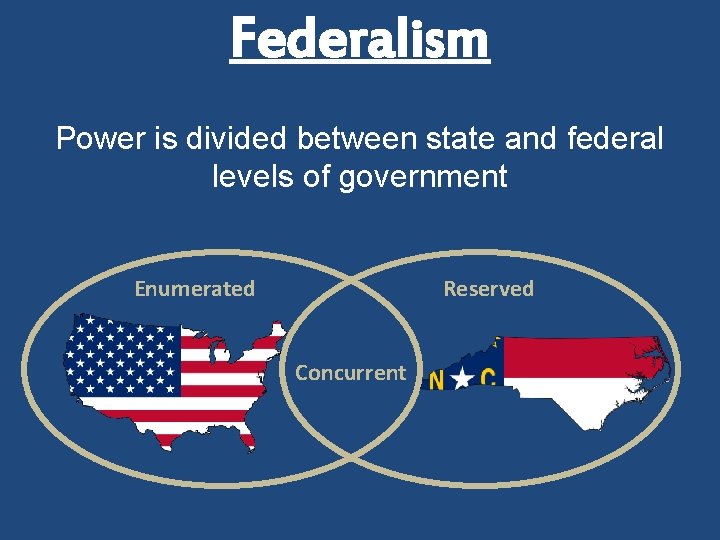
Federalism Power is divided between state and federal levels of government Enumerated Reserved Concurrent
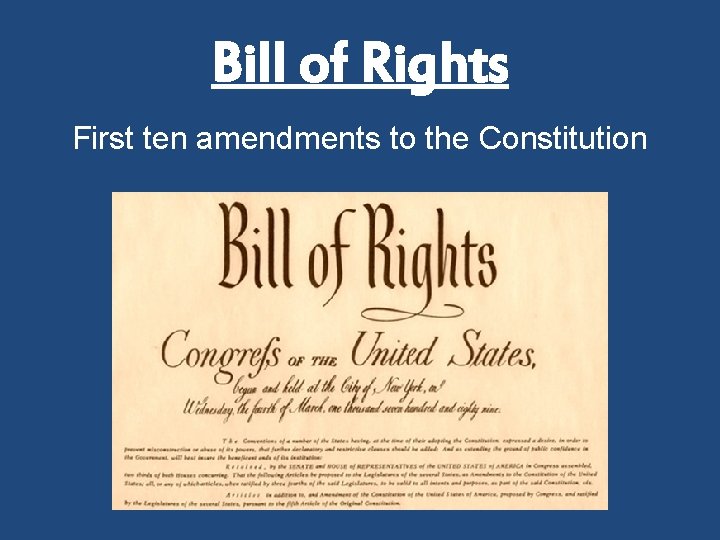
Bill of Rights First ten amendments to the Constitution
- Slides: 18