
THE UNIQUE PROPERTIES OF WATER Water is Polar


- Slides: 15
THE UNIQUE PROPERTIES OF WATER!
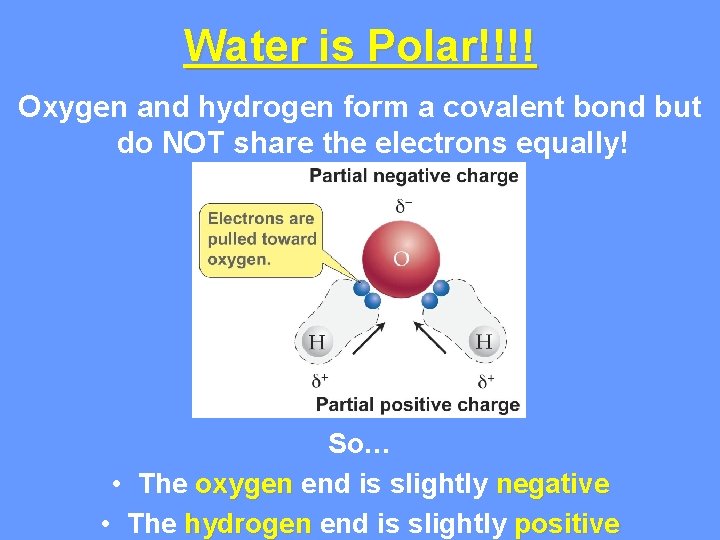
Water is Polar!!!! Oxygen and hydrogen form a covalent bond but do NOT share the electrons equally! So… • The oxygen end is slightly negative • The hydrogen end is slightly positive
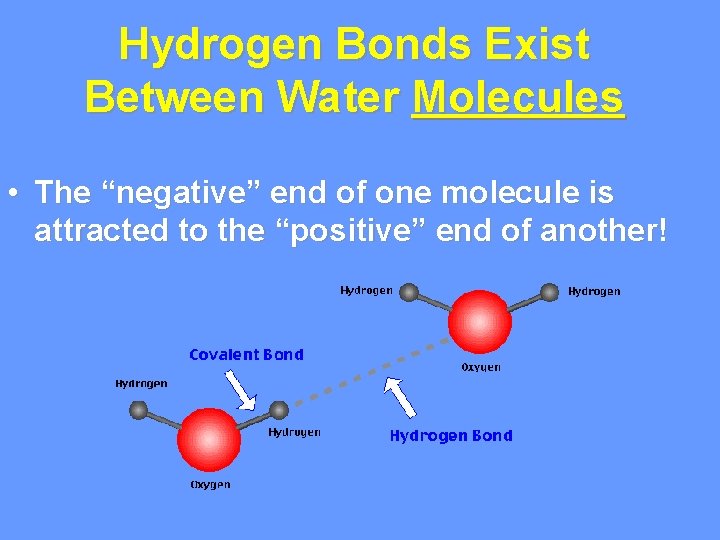
Hydrogen Bonds Exist Between Water Molecules • The “negative” end of one molecule is attracted to the “positive” end of another!
Properties of Water • • • Cohesion Adhesion High Specific Heat/Heat of Vaporization • Capillary Action • EXPANDS when frozen (Less dense as a solid!) • Universal Solvent
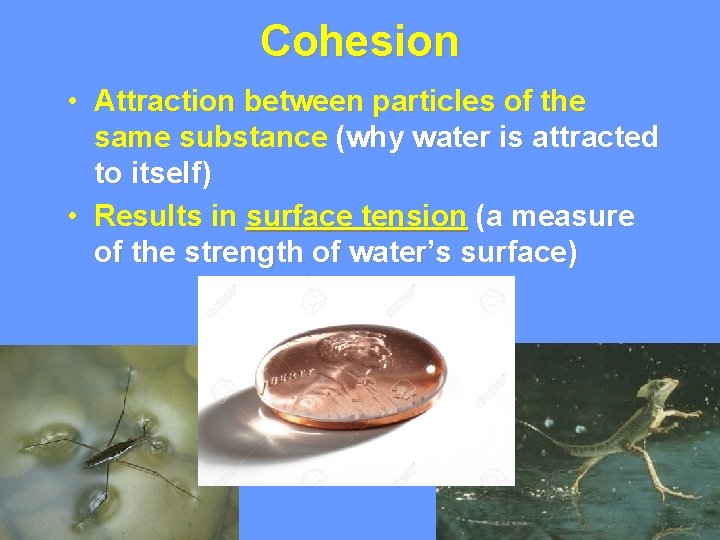
Cohesion • Attraction between particles of the same substance (why water is attracted to itself) • Results in surface tension (a measure of the strength of water’s surface)
Adhesion • Attraction between two different substances, – glass, soil, plant tissues, etc. • Capillary action water molecules will pull each other up a thin tube – How plants get water from roots to tallest branches!
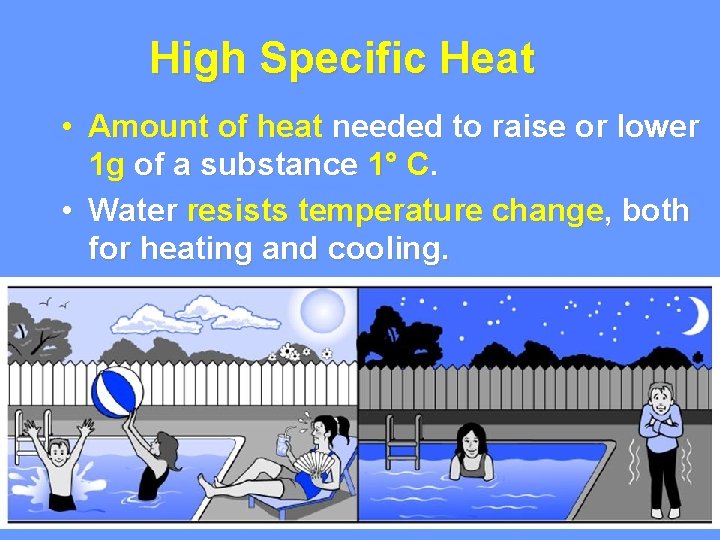
High Specific Heat • Amount of heat needed to raise or lower 1 g of a substance 1° C. • Water resists temperature change, both for heating and cooling.
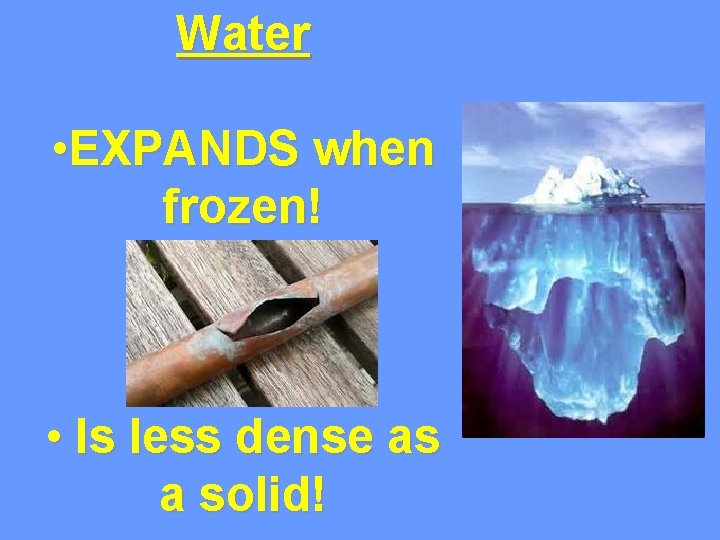
Water • EXPANDS when frozen! • Is less dense as a solid!
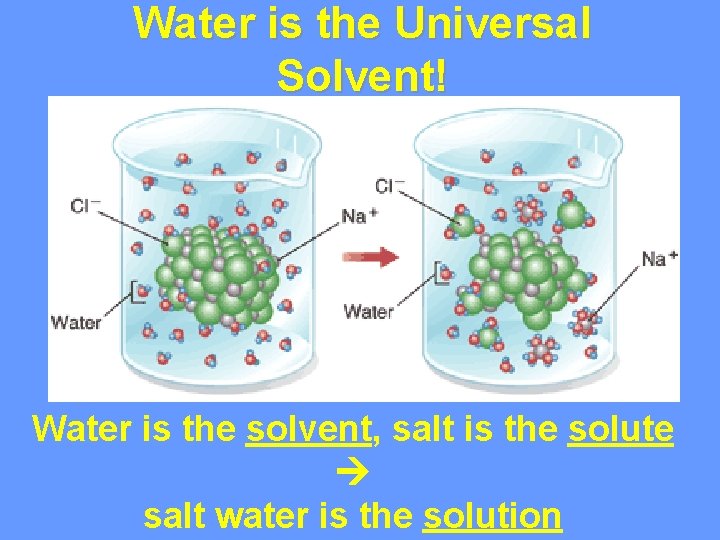
Water is the Universal Solvent! Water is the solvent, salt is the solute salt water is the solution
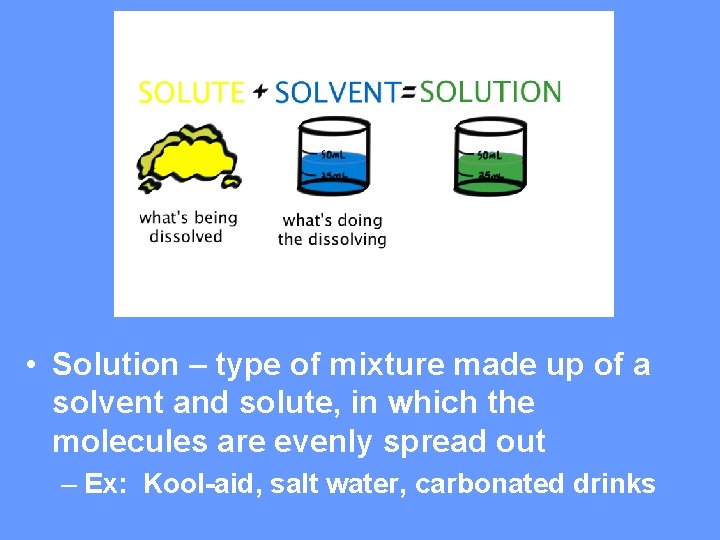
• Solution – type of mixture made up of a solvent and solute, in which the molecules are evenly spread out – Ex: Kool-aid, salt water, carbonated drinks
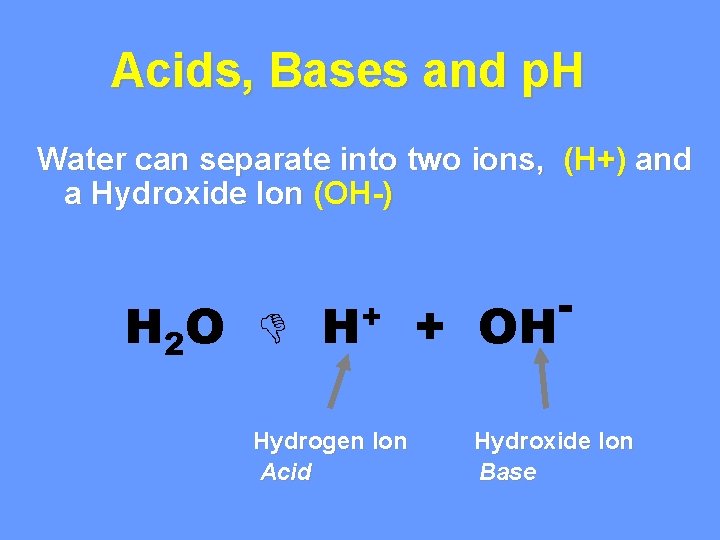
Acids, Bases and p. H Water can separate into two ions, (H+) and a Hydroxide Ion (OH-) H 2 O H+ Hydrogen Ion Acid + OH - Hydroxide Ion Base
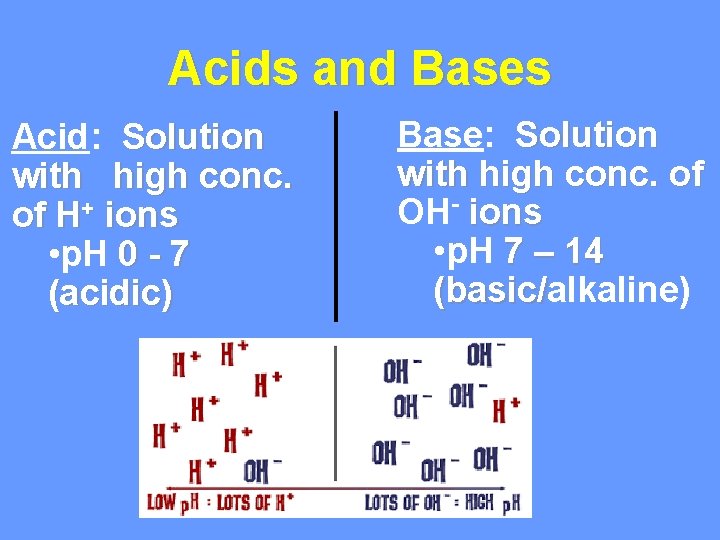
Acids and Bases Acid: Solution with high conc. of H+ ions • p. H 0 - 7 (acidic) Base: Solution with high conc. of OH- ions • p. H 7 – 14 (basic/alkaline) (basic/
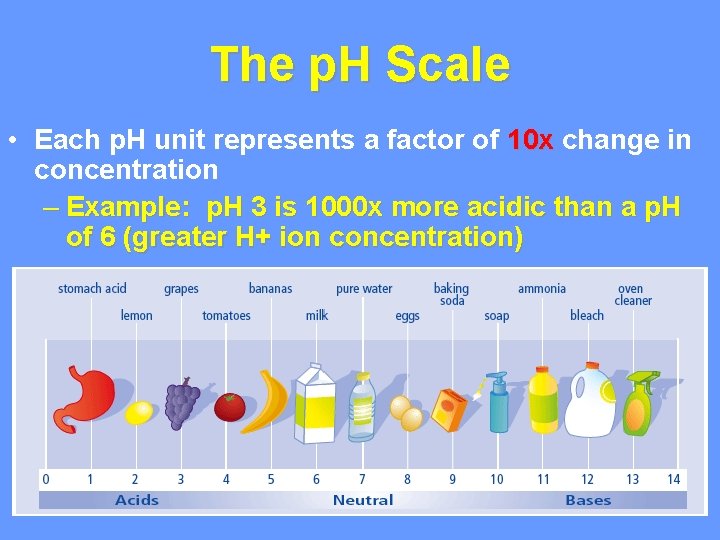
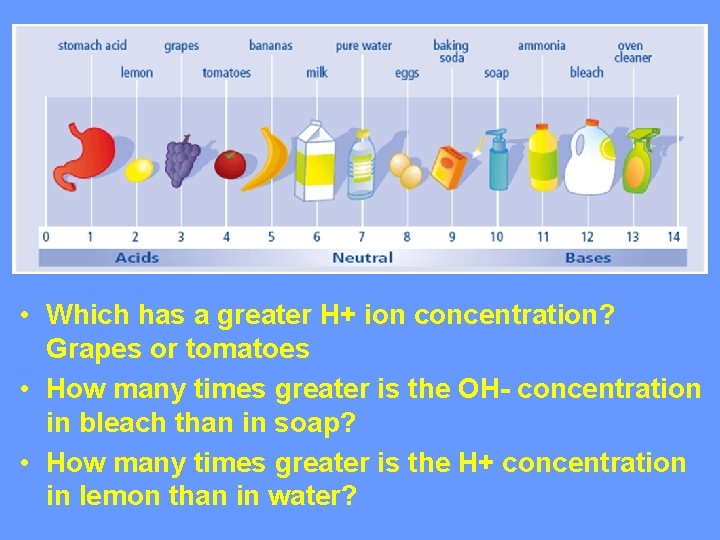
The p. H Scale • Each p. H unit represents a factor of 10 x change in concentration – Example: p. H 3 is 1000 x more acidic than a p. H of 6 (greater H+ ion concentration)
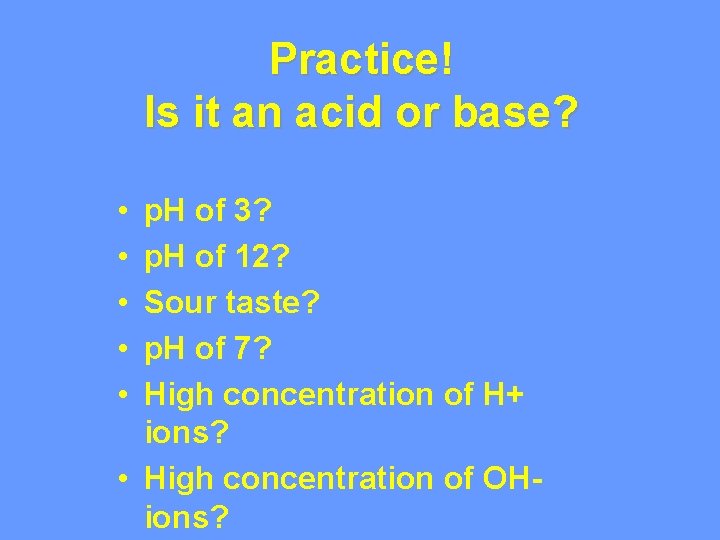
Practice! Is it an acid or base? • • • p. H of 3? p. H of 12? Sour taste? p. H of 7? High concentration of H+ ions? • High concentration of OHions?
• Which has a greater H+ ion concentration? Grapes or tomatoes • How many times greater is the OH- concentration in bleach than in soap? • How many times greater is the H+ concentration in lemon than in water?