
The Unified Registry for Social Programs What is
- Slides: 25
The Unified Registry for Social Programs
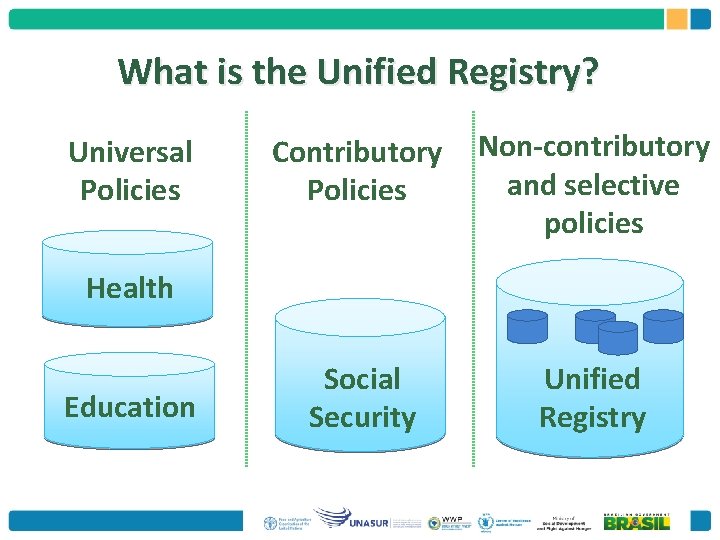
What is the Unified Registry? Universal Policies Contributory Policies Non-contributory and selective policies Social Security Unified Registry Health Education
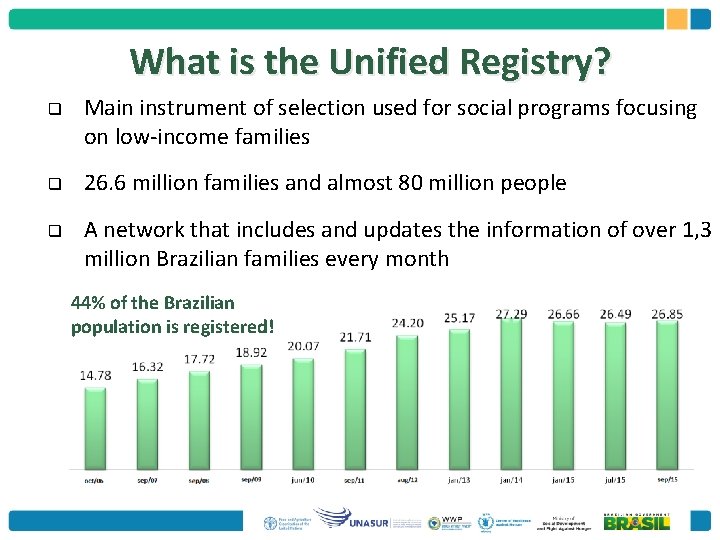
What is the Unified Registry? Main instrument of selection used for social programs focusing on low-income families 26. 6 million families and almost 80 million people A network that includes and updates the information of over 1, 3 million Brazilian families every month 44% of the Brazilian population is registered!
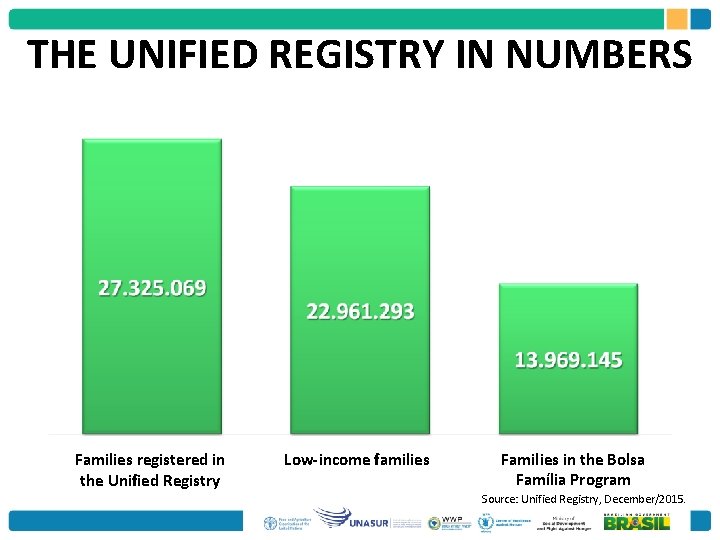
THE UNIFIED REGISTRY IN NUMBERS Families registered in the Unified Registry Low-income families Families in the Bolsa Família Program Source: Unified Registry, December/2015.
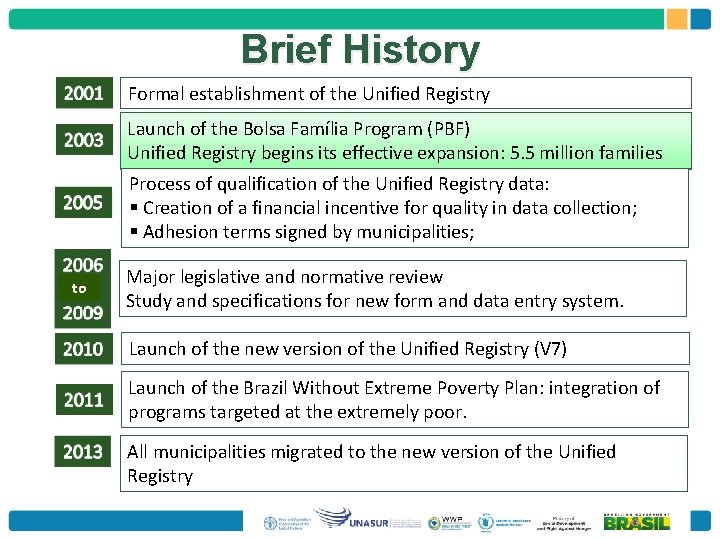
Brief History Formal establishment of the Unified Registry Launch of the Bolsa Família Program (PBF) Unified Registry begins its effective expansion: 5. 5 million families Process of qualification of the Unified Registry data: Creation of a financial incentive for quality in data collection; Adhesion terms signed by municipalities; to Major legislative and normative review Study and specifications for new form and data entry system. Launch of the new version of the Unified Registry (V 7) Launch of the Brazil Without Extreme Poverty Plan: integration of programs targeted at the extremely poor. All municipalities migrated to the new version of the Unified Registry
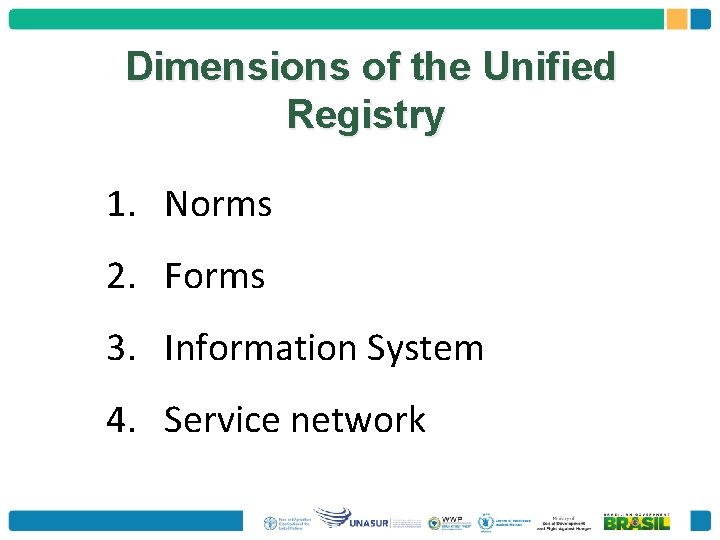
Dimensions of the Unified Registry 1. Norms 2. Forms 3. Information System 4. Service network
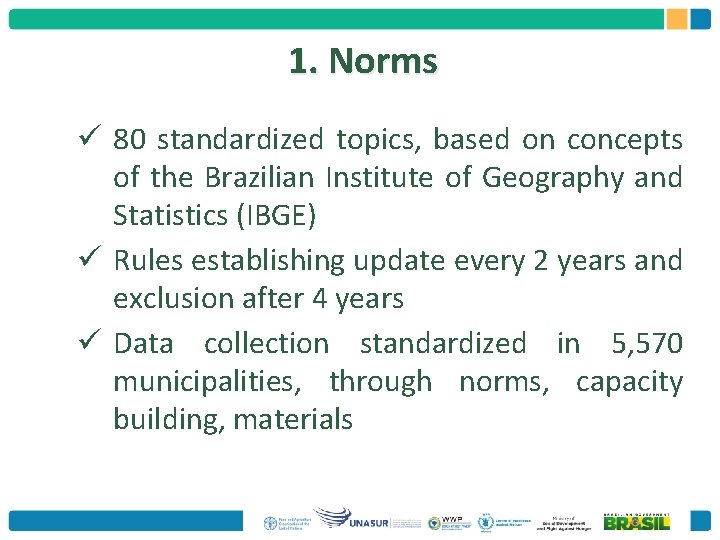
1. Norms 80 standardized topics, based on concepts of the Brazilian Institute of Geography and Statistics (IBGE) Rules establishing update every 2 years and exclusion after 4 years Data collection standardized in 5, 570 municipalities, through norms, capacity building, materials
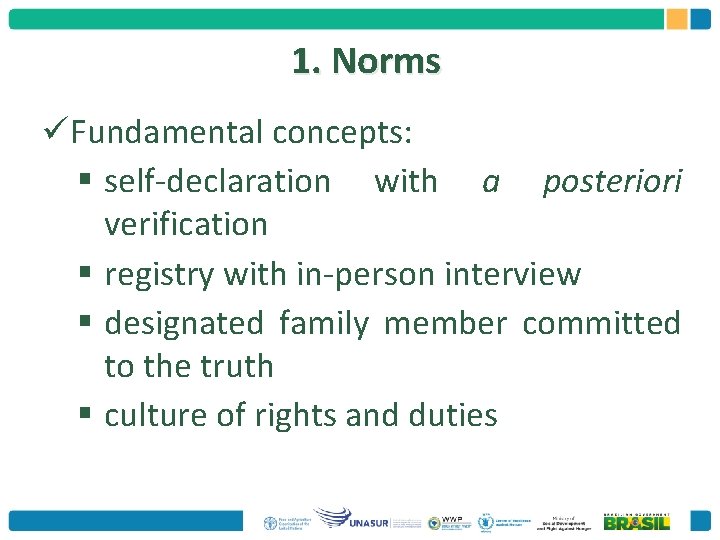
1. Norms Fundamental concepts: self-declaration with a posteriori verification registry with in-person interview designated family member committed to the truth culture of rights and duties
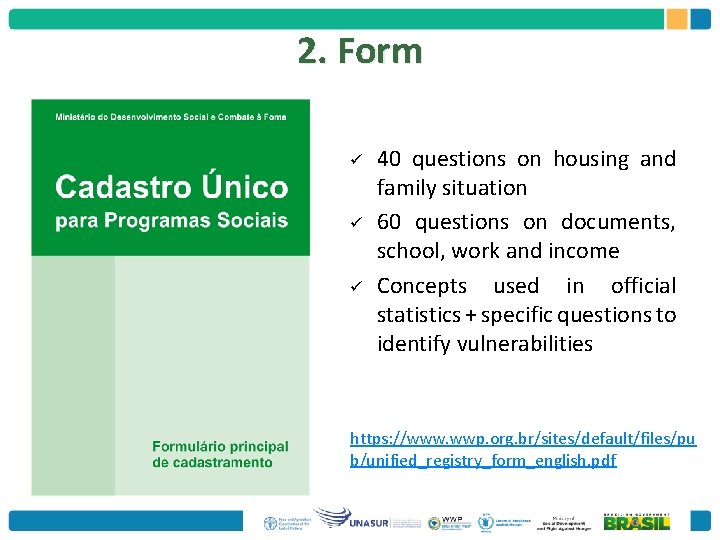
2. Form 40 questions on housing and family situation 60 questions on documents, school, work and income Concepts used in official statistics + specific questions to identify vulnerabilities https: //www. wwp. org. br/sites/default/files/pu b/unified_registry_form_english. pdf
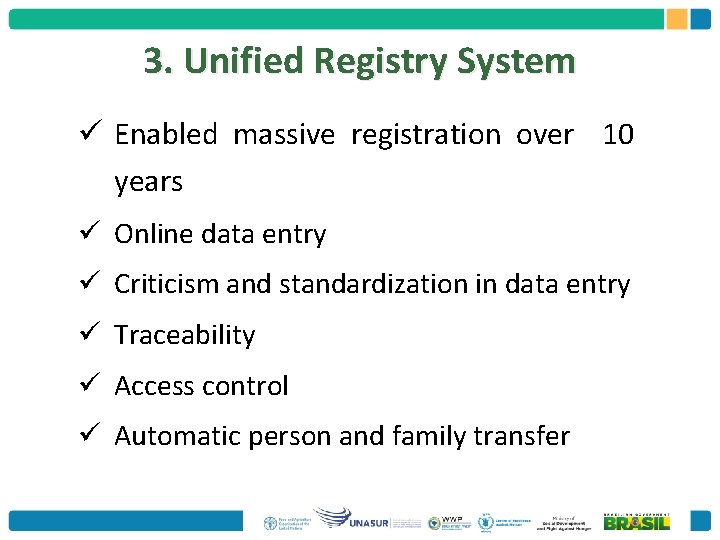
3. Unified Registry System Enabled massive registration over 10 years Online data entry Criticism and standardization in data entry Traceability Access control Automatic person and family transfer
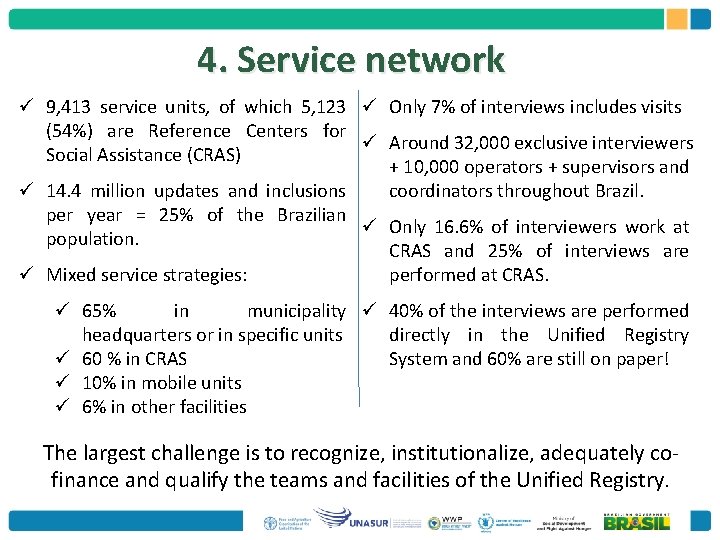
4. Service network 9, 413 service units, of which 5, 123 Only 7% of interviews includes visits (54%) are Reference Centers for Around 32, 000 exclusive interviewers Social Assistance (CRAS) + 10, 000 operators + supervisors and 14. 4 million updates and inclusions coordinators throughout Brazil. per year = 25% of the Brazilian Only 16. 6% of interviewers work at population. CRAS and 25% of interviews are Mixed service strategies: performed at CRAS. 65% in municipality 40% of the interviews are performed headquarters or in specific units directly in the Unified Registry 60 % in CRAS System and 60% are still on paper! 10% in mobile units 6% in other facilities The largest challenge is to recognize, institutionalize, adequately cofinance and qualify the teams and facilities of the Unified Registry.
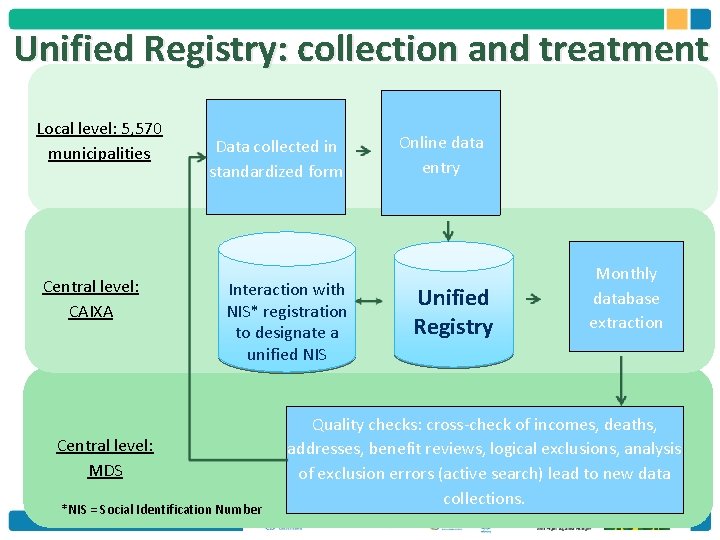
Unified Registry: collection and treatment Local level: 5, 570 municipalities Central level: CAIXA Data collected in standardized form Interaction with NIS* registration to designate a unified NIS Central level: MDS *NIS = Social Identification Number Online data entry Unified Registry Monthly database extraction Quality checks: cross-check of incomes, deaths, addresses, benefit reviews, logical exclusions, analysis of exclusion errors (active search) lead to new data collections.
Social Protection and Promotion in Brazil The Unified Registry is the main focalization instrument for basic social protection and for the promotion of opportunities for poor families Over 30 programs, services and rights use of the Unified Registry to: monitor the situation of vulnerable families plan their actions in the territory offer benefits in a transparent and republican way
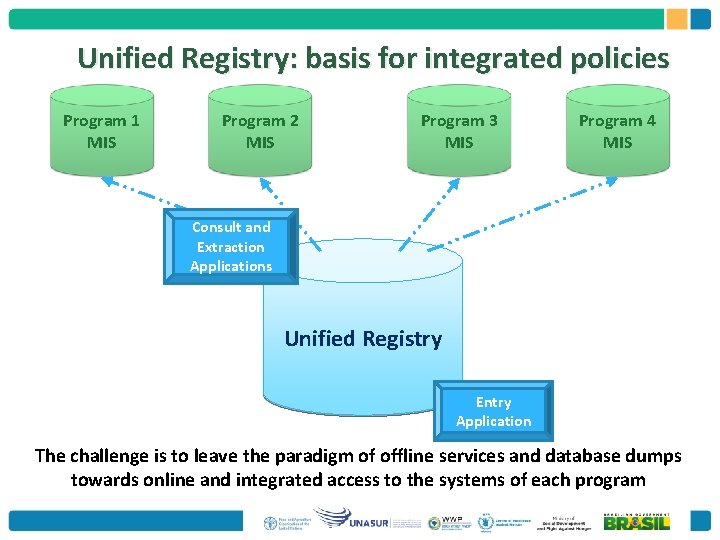
Unified Registry: basis for integrated policies Program 1 MIS Program 2 MIS Program 3 MIS Program 4 MIS Consult and Extraction Applications Unified Registry Entry Application The challenge is to leave the paradigm of offline services and database dumps towards online and integrated access to the systems of each program
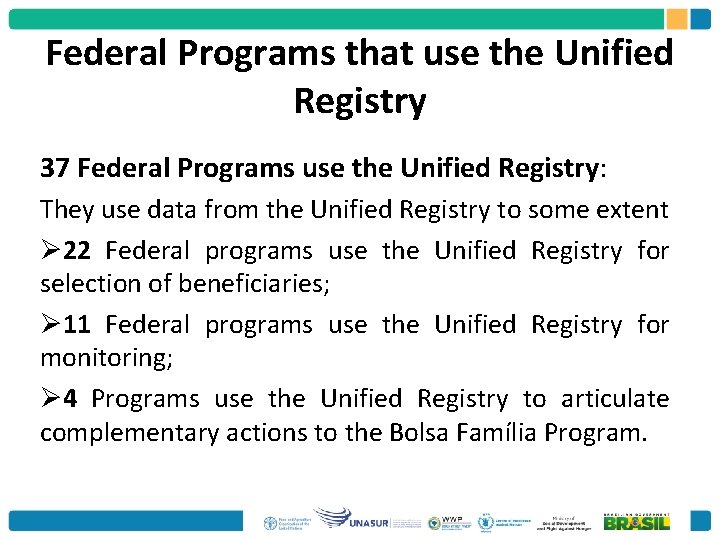
Federal Programs that use the Unified Registry 37 Federal Programs use the Unified Registry: They use data from the Unified Registry to some extent 22 Federal programs use the Unified Registry for selection of beneficiaries; 11 Federal programs use the Unified Registry for monitoring; 4 Programs use the Unified Registry to articulate complementary actions to the Bolsa Família Program.
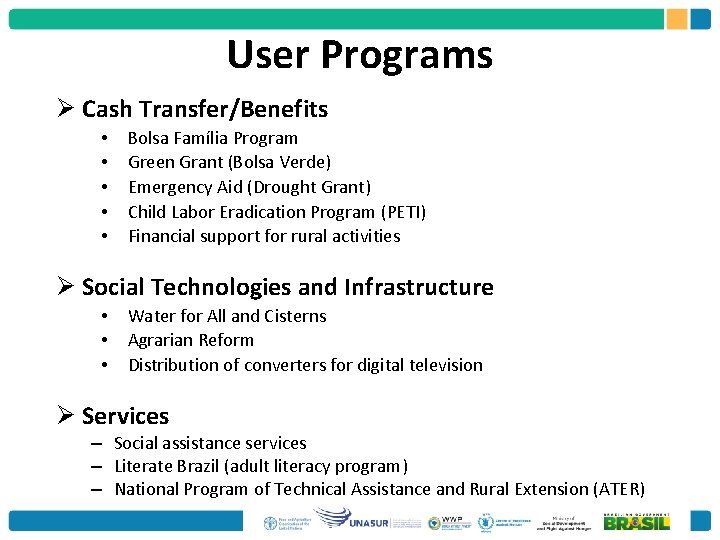
User Programs Cash Transfer/Benefits • • • Bolsa Família Program Green Grant (Bolsa Verde) Emergency Aid (Drought Grant) Child Labor Eradication Program (PETI) Financial support for rural activities Social Technologies and Infrastructure • • • Water for All and Cisterns Agrarian Reform Distribution of converters for digital television Services – Social assistance services – Literate Brazil (adult literacy program) – National Program of Technical Assistance and Rural Extension (ATER)
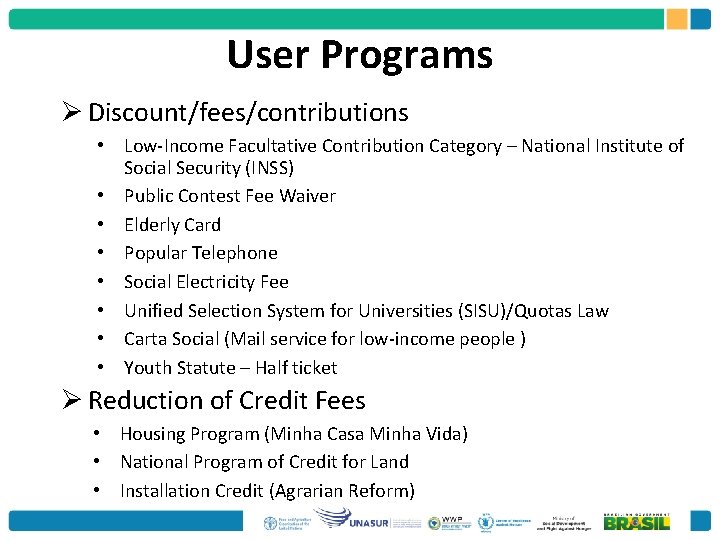
User Programs Discount/fees/contributions • Low-Income Facultative Contribution Category – National Institute of Social Security (INSS) • Public Contest Fee Waiver • Elderly Card • Popular Telephone • Social Electricity Fee • Unified Selection System for Universities (SISU)/Quotas Law • Carta Social (Mail service for low-income people ) • Youth Statute – Half ticket Reduction of Credit Fees • Housing Program (Minha Casa Minha Vida) • National Program of Credit for Land • Installation Credit (Agrarian Reform)
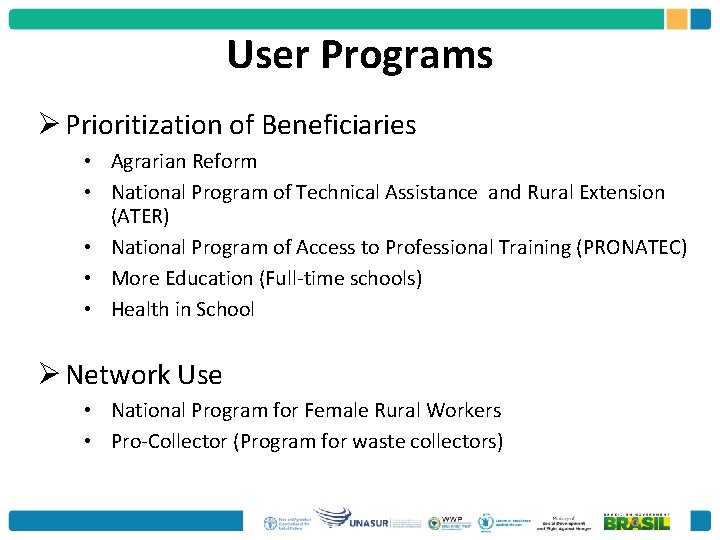
User Programs Prioritization of Beneficiaries • Agrarian Reform • National Program of Technical Assistance and Rural Extension (ATER) • National Program of Access to Professional Training (PRONATEC) • More Education (Full-time schools) • Health in School Network Use • National Program for Female Rural Workers • Pro-Collector (Program for waste collectors)
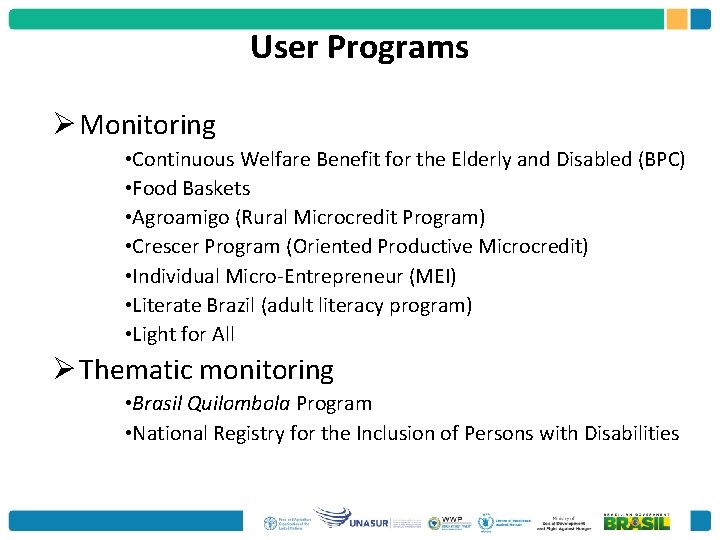
User Programs Monitoring • Continuous Welfare Benefit for the Elderly and Disabled (BPC) • Food Baskets • Agroamigo (Rural Microcredit Program) • Crescer Program (Oriented Productive Microcredit) • Individual Micro-Entrepreneur (MEI) • Literate Brazil (adult literacy program) • Light for All Thematic monitoring • Brasil Quilombola Program • National Registry for the Inclusion of Persons with Disabilities
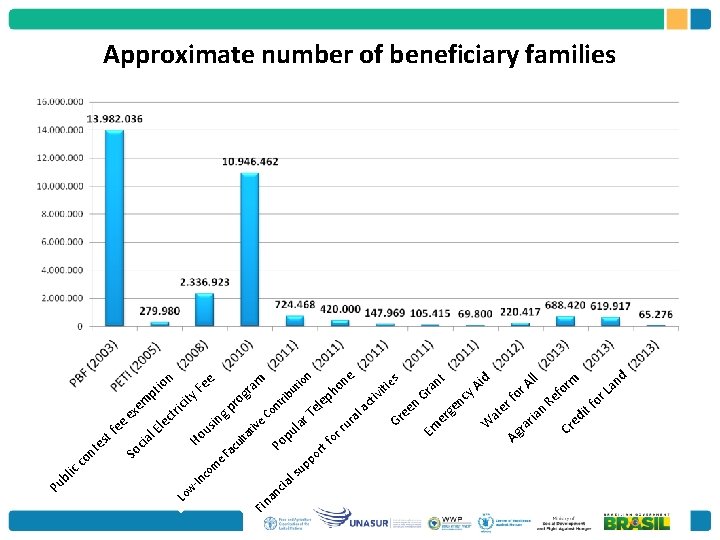
Approximate number of beneficiary families n io pt em x e Pu b lic c ee F y am gr it c tri c e ee El f l t a s i te oc n S o ro p g in H s ou e e m co iv at t ul c Fa n Co L tri ar l pu Po l In ow cia n na Fi ne o h ep n io t bu l Te pp u s t or ct a l ra fo u rr nt es ti ivi Gr n ee a Gr e Em id A y nc e rg W ll A or rf e at r Ag ian r a m Re r fo e Cr t di fo an L r d
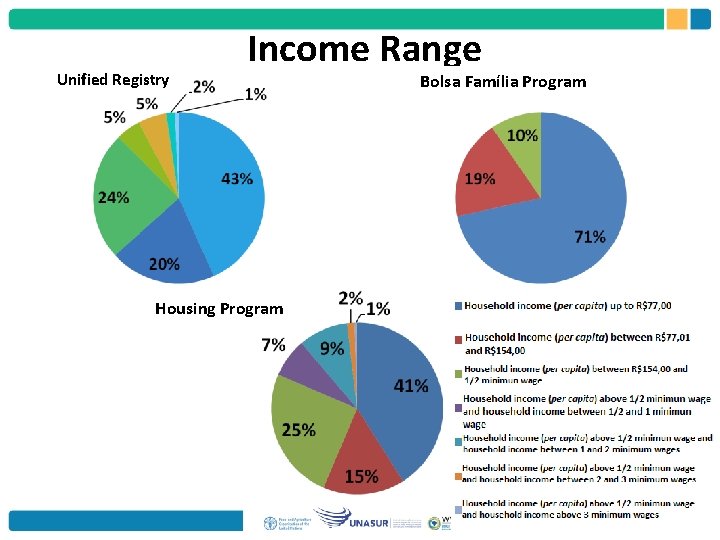
Unified Registry Income Range Housing Program Bolsa Família Program
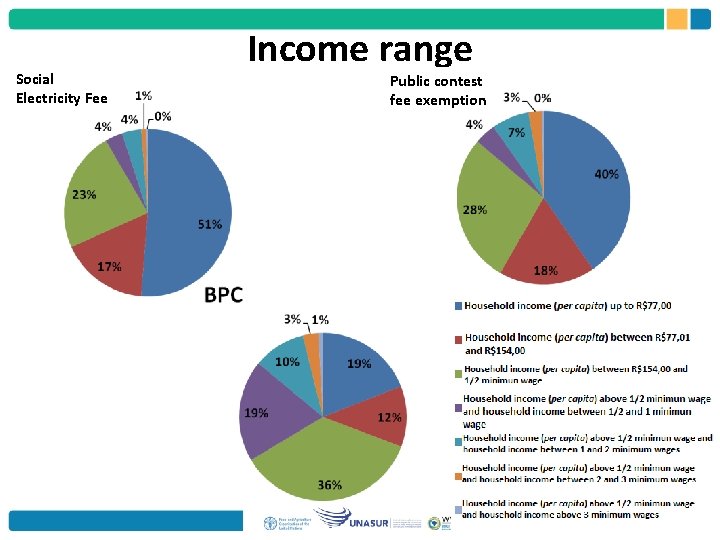
Social Electricity Fee Income range Public contest fee exemption
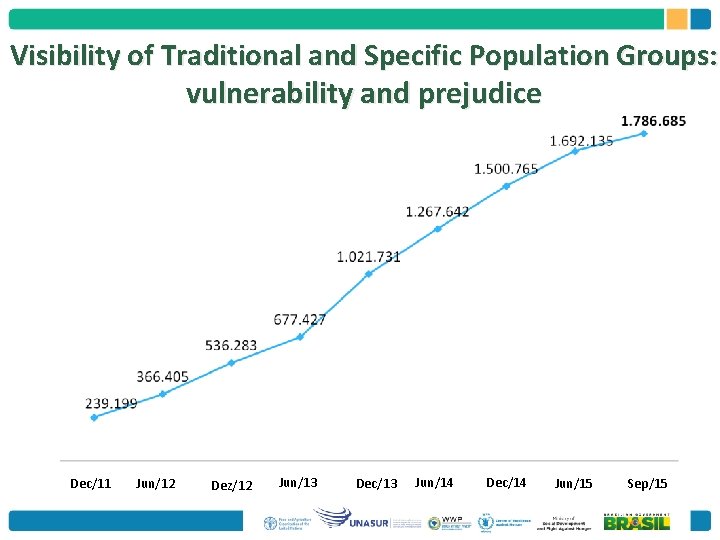
Visibility of Traditional and Specific Population Groups: vulnerability and prejudice Dec/11 Jun/12 Dez/12 Jun/13 Dec/13 Jun/14 Dec/14 Jun/15 Sep/15
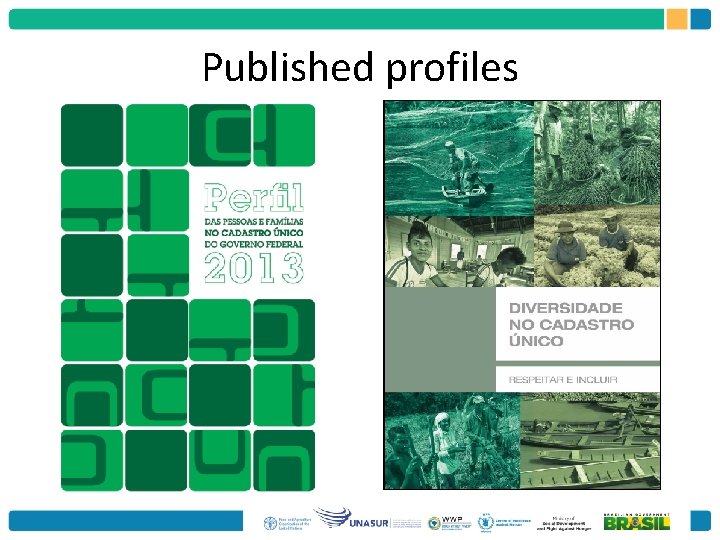
Published profiles
Thank You!