
The Unification of Germany 1815 1871 1 Explain
- Slides: 9
The Unification of Germany 1815 -1871
1. Explain how nationalism contributed to the unification of Germany. 2. What were the effects of German unification?
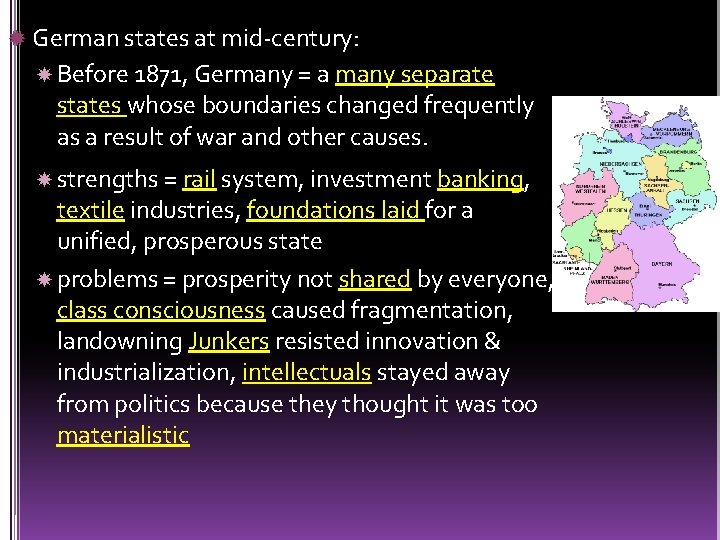
German states at mid-century: Before 1871, Germany = a many separate states whose boundaries changed frequently as a result of war and other causes. strengths = rail system, investment banking, textile industries, foundations laid for a unified, prosperous state problems = prosperity not shared by everyone, class consciousness caused fragmentation, landowning Junkers resisted innovation & industrialization, intellectuals stayed away from politics because they thought it was too materialistic
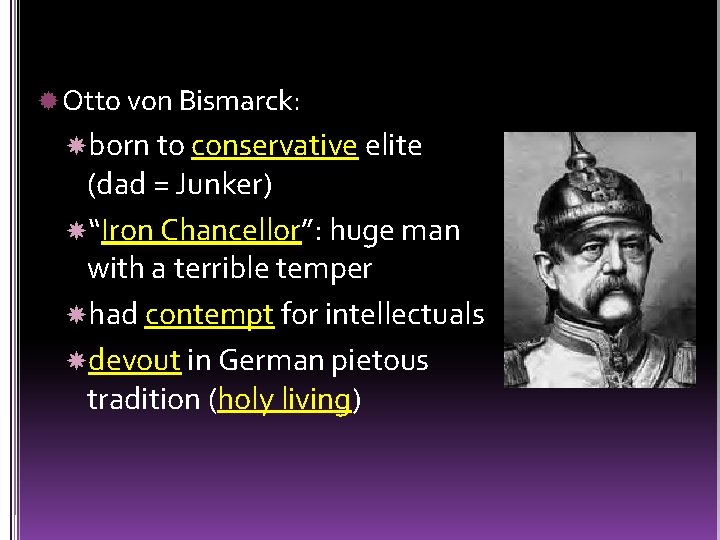
Otto von Bismarck: born to conservative elite (dad = Junker) “Iron Chancellor”: huge man with a terrible temper had contempt for intellectuals devout in German pietous tradition (holy living)
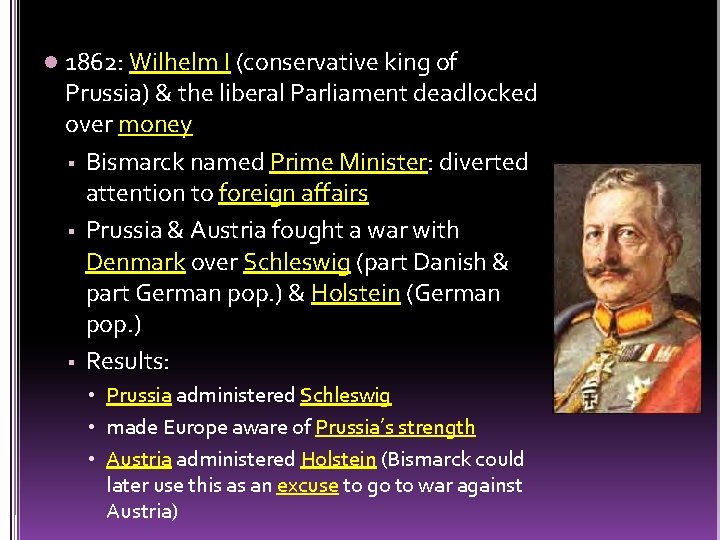
l 1862: Wilhelm I (conservative king of Prussia) & the liberal Parliament deadlocked over money Bismarck named Prime Minister: diverted attention to foreign affairs Prussia & Austria fought a war with Denmark over Schleswig (part Danish & part German pop. ) & Holstein (German pop. ) Results: • Prussia administered Schleswig • made Europe aware of Prussia’s strength • Austria administered Holstein (Bismarck could later use this as an excuse to go to war against Austria)
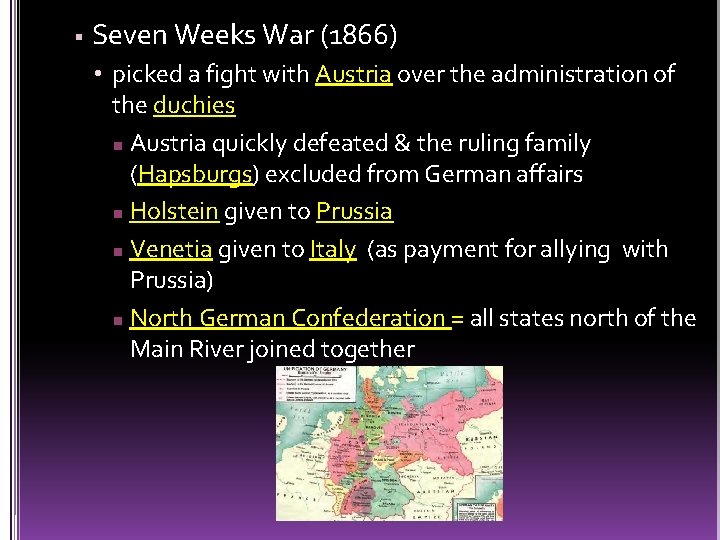
Seven Weeks War (1866) • picked a fight with Austria over the administration of the duchies n Austria quickly defeated & the ruling family (Hapsburgs) excluded from German affairs n Holstein given to Prussia n Venetia given to Italy (as payment for allying with Prussia) n North German Confederation = all states north of the Main River joined together
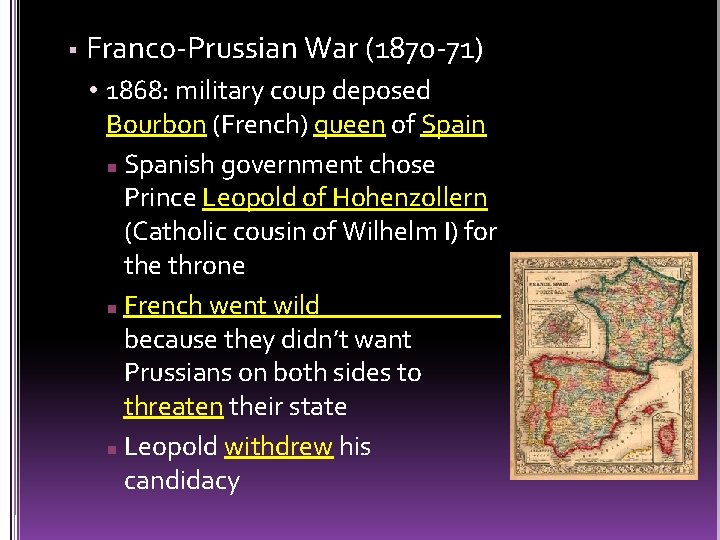
Franco-Prussian War (1870 -71) • 1868: military coup deposed Bourbon (French) queen of Spain n Spanish government chose Prince Leopold of Hohenzollern (Catholic cousin of Wilhelm I) for the throne n French went wild because they didn’t want Prussians on both sides to threaten their state n Leopold withdrew his candidacy
Bismarck believed if Prussia could defeat France in a war, the German princes would agree to German unity n In July, Bismarck doctored a telegram to make it look like Wilhelm I had insulted the French ambassador to provoke Napoleon III to declare war on Prussia (France lost by Sept. ) n
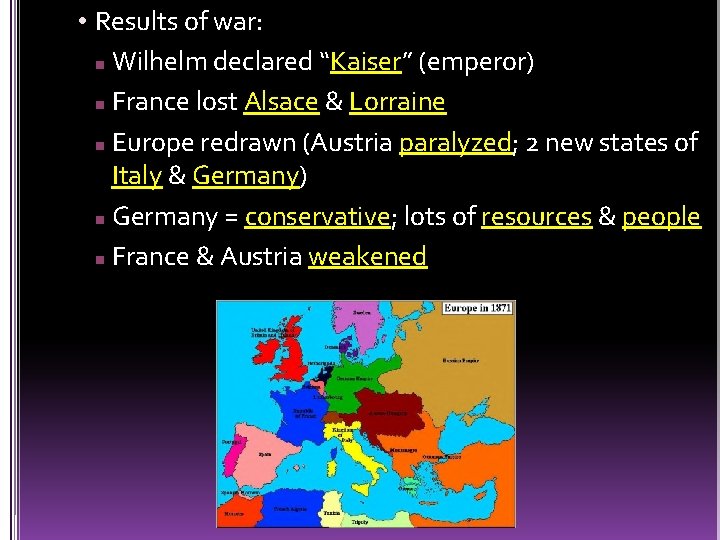
• Results of war: n Wilhelm declared “Kaiser” (emperor) n France lost Alsace & Lorraine n Europe redrawn (Austria paralyzed; 2 new states of Italy & Germany) n Germany = conservative; lots of resources & people n France & Austria weakened