
The Uncontrollable and Controllable Factors of Marketing in
The Uncontrollable and Controllable Factors of Marketing in Globalized Economy
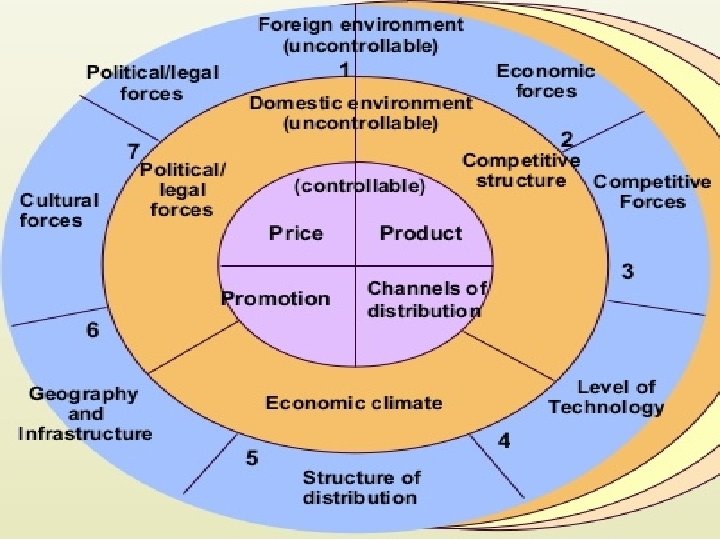
Controllable factor - often called as "Marketing Mix". It includes: Product, Price, Place and Promotion. Which can be control by organization. Uncontrollable factors- often called as "Environmental Factors“ which are out of control.

MICRO ENVIRONMENT
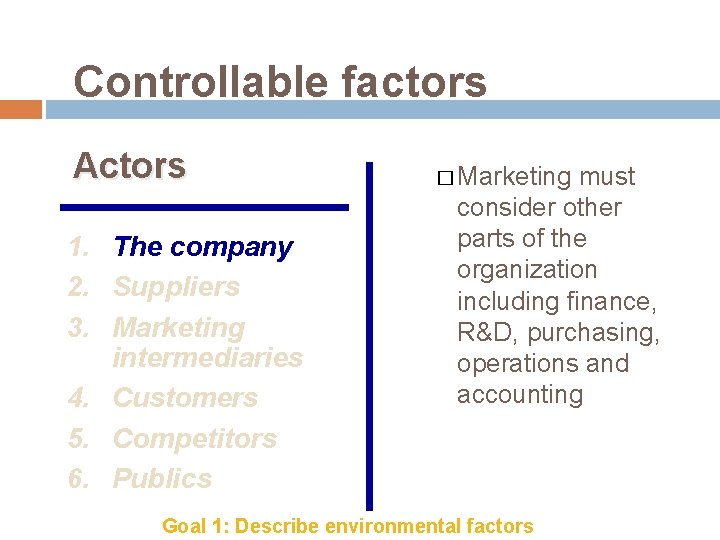
Controllable factors Actors 1. The company 2. Suppliers 3. Marketing intermediaries 4. Customers 5. Competitors 6. Publics � Marketing must consider other parts of the organization including finance, R&D, purchasing, operations and accounting 3 -5 Goal 1: Describe environmental factors
Controllable factors Actors 1. The company 2. Suppliers 3. Marketing intermediaries 4. Customers 5. Competitors 6. Publics � Marketers must watch supply availability and pricing � Effective partnership relationship management with suppliers is essential 3 -6 Goal 1: Describe environmental factors
Controllable factors Actors 1. The company 2. Suppliers 3. Marketing intermediaries 4. Customers 5. Competitors 6. Publics � Help to promote, sell and distribute goods to final buyers � Include resellers, physical distribution firms, marketing services agencies and financial intermediaries � Effective partner relationship management is essential 3 -7 Goal 1: Describe environmental factors
Controllable factors Actors 1. The company 2. Suppliers 3. Marketing intermediaries 4. Customers 5. Competitors 6. Publics � The five types of customer markets Consumer(FMCG) Business(IT Consulting & Outsourcing) Reseller(Super market Chains) Government(Army, Navy, Postal services) International 3 -8 Goal 1: Describe environmental factors
Microenvironment Actors 1. The company 2. Suppliers 3. Marketing intermediaries 4. Customers 5. Competitors 6. Publics � Conducting competitor analysis is critical for success of the firm � A marketer must monitor its competitors’ offerings to create strategic advantage 3 -9 Goal 1: Describe environmental factors
Controllable factors Actors 1. The company 2. Suppliers 3. Marketing intermediaries 4. Customers 5. Competitors 6. Publics �A group that has an actual or potential interest in or impact on an organization � publics include: Financial Media Government Local General 3 - 10 Goal 1: Describe environmental factors

MACRO ENVIRONMENT
Uncontrolled Factors Political Conditions Economic Conditions Socio-Cultural Conditions Technological Conditions Legal Conditions Competition
Demographic forces q Different market segments are typically impacted by common demographic forces, including country/region; age; ethnicity; education level; household lifestyle; cultural characteristics and movements.
Technological Conditions q q Technological factors include ecological and environmental aspects, such as R&D activity, automation, technology incentives and the rate of technological change. They can determine barriers to entry, minimum efficient production level and influence outsourcing decisions. Furthermore, technological shifts can affect costs, quality, and lead to innovation
Natural Environment Natural Environment: � Involves the natural resources that are needed as inputs by marketers or that are affected by marketing activities Trends � Shortages of raw materials � Increased pollution � Increased government intervention 3 - 15
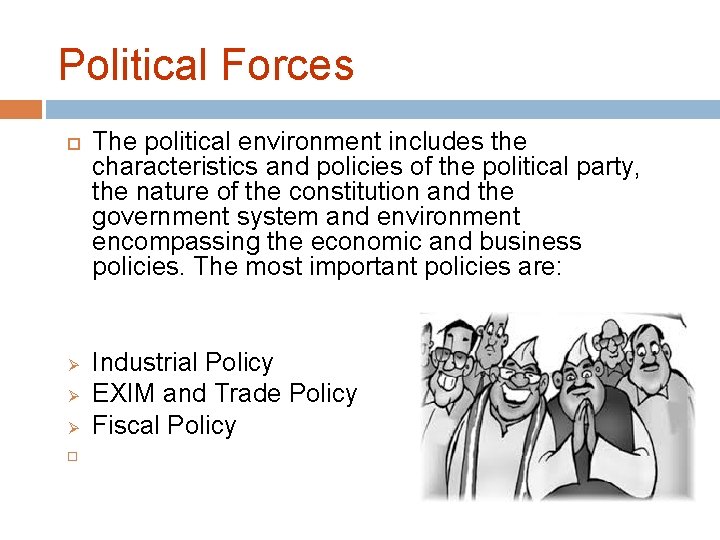
Political Forces Ø Ø Ø The political environment includes the characteristics and policies of the political party, the nature of the constitution and the government system and environment encompassing the economic and business policies. The most important policies are: Industrial Policy EXIM and Trade Policy Fiscal Policy
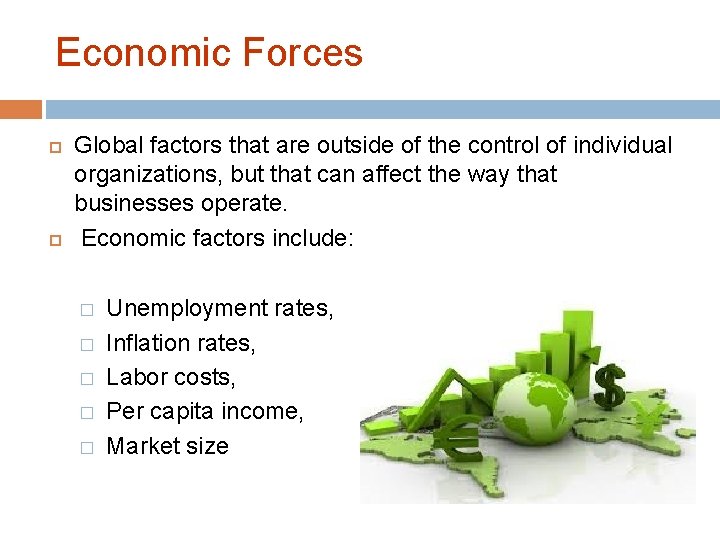
Economic Forces Global factors that are outside of the control of individual organizations, but that can affect the way that businesses operate. Economic factors include: � � � Unemployment rates, Inflation rates, Labor costs, Per capita income, Market size
Socio-Cultural Forces q Ø Ø Social environment also affects the motives to make a buying decision and the communication strategy needs to be customized as per the varied social traits for different market. Education and Language Social Organization Reference Group and Family Role and Status in Society
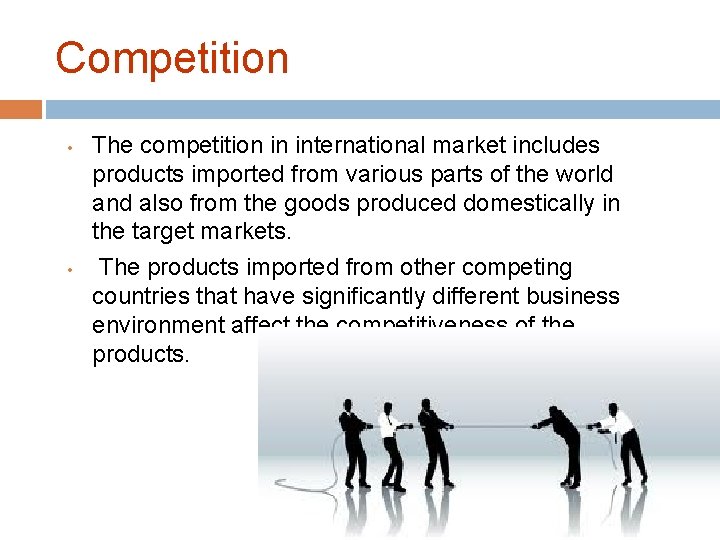
Competition • • The competition in international market includes products imported from various parts of the world and also from the goods produced domestically in the target markets. The products imported from other competing countries that have significantly different business environment affect the competitiveness of the products.
- Slides: 19