
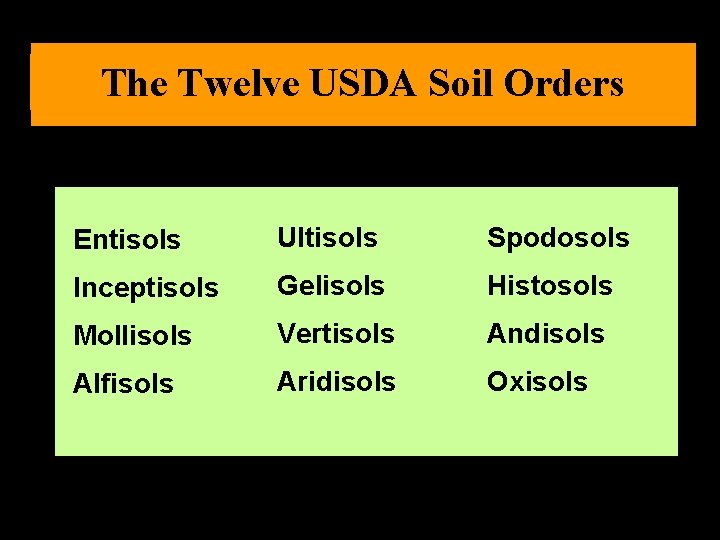
The Twelve USDA Soil Orders Entisols Ultisols Spodosols
- Slides: 13
The Twelve USDA Soil Orders Entisols Ultisols Spodosols Inceptisols Gelisols Histosols Mollisols Vertisols Andisols Alfisols Aridisols Oxisols
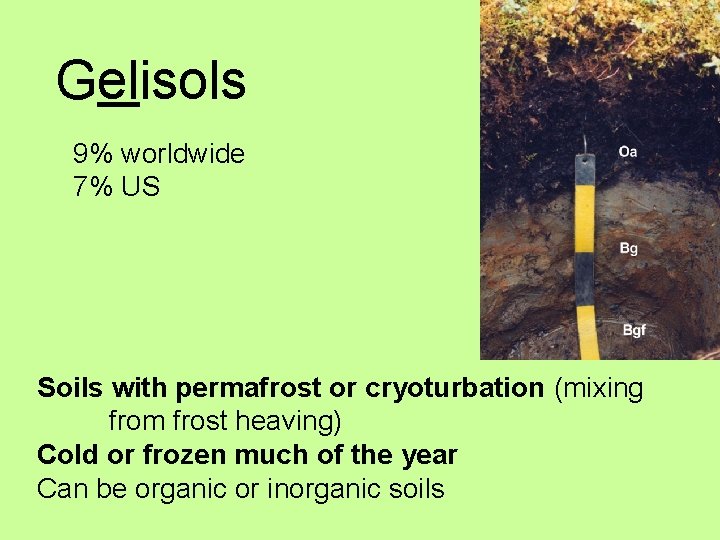
Gelisols 9% worldwide 7% US Soils with permafrost or cryoturbation (mixing from frost heaving) Cold or frozen much of the year Can be organic or inorganic soils
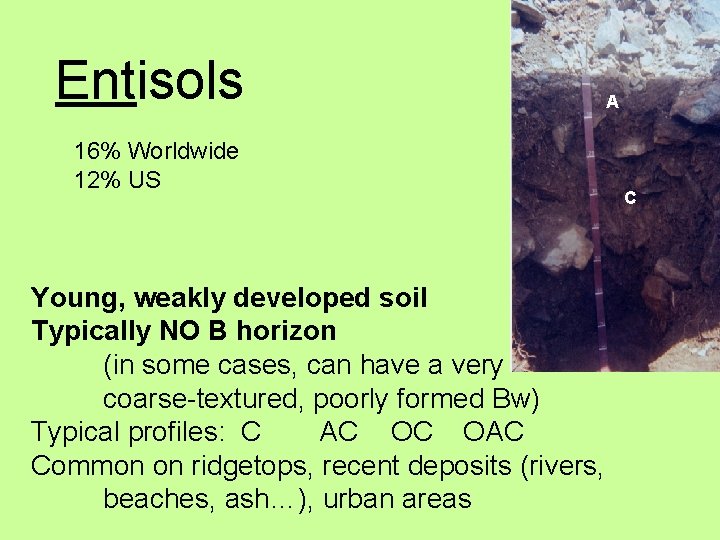
Entisols 16% Worldwide 12% US Young, weakly developed soil Typically NO B horizon (in some cases, can have a very coarse-textured, poorly formed Bw) Typical profiles: C AC OC OAC Common on ridgetops, recent deposits (rivers, beaches, ash…), urban areas A C
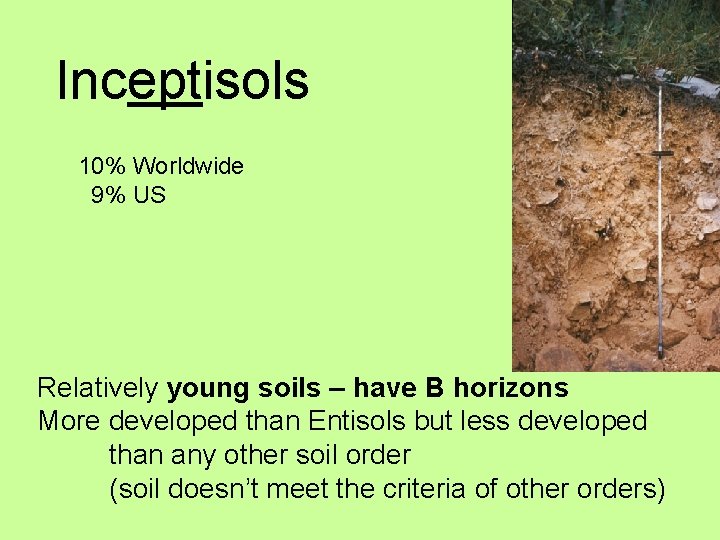
Inceptisols 10% Worldwide 9% US Relatively young soils – have B horizons More developed than Entisols but less developed than any other soil order (soil doesn’t meet the criteria of other orders)
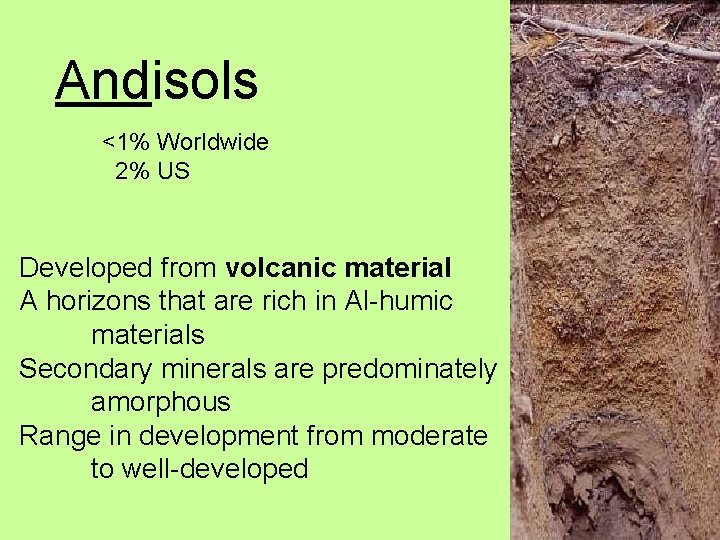
Andisols <1% Worldwide 2% US Developed from volcanic material A horizons that are rich in Al-humic materials Secondary minerals are predominately amorphous Range in development from moderate to well-developed
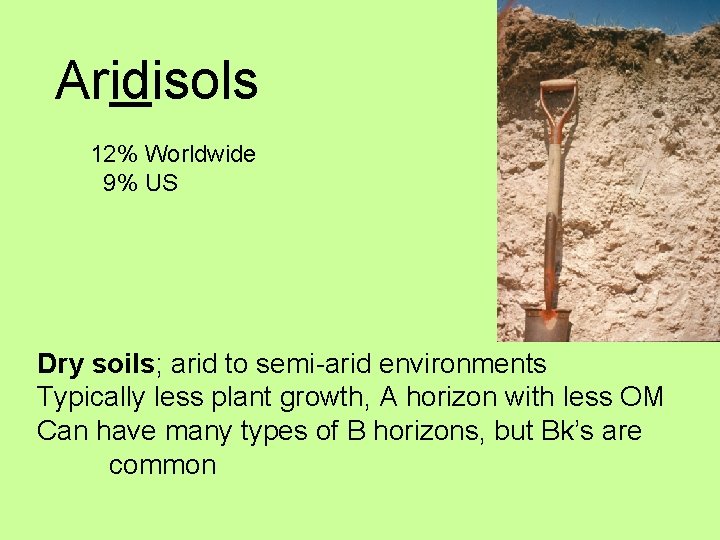
Aridisols 12% Worldwide 9% US Dry soils; arid to semi-arid environments Typically less plant growth, A horizon with less OM Can have many types of B horizons, but Bk’s are common
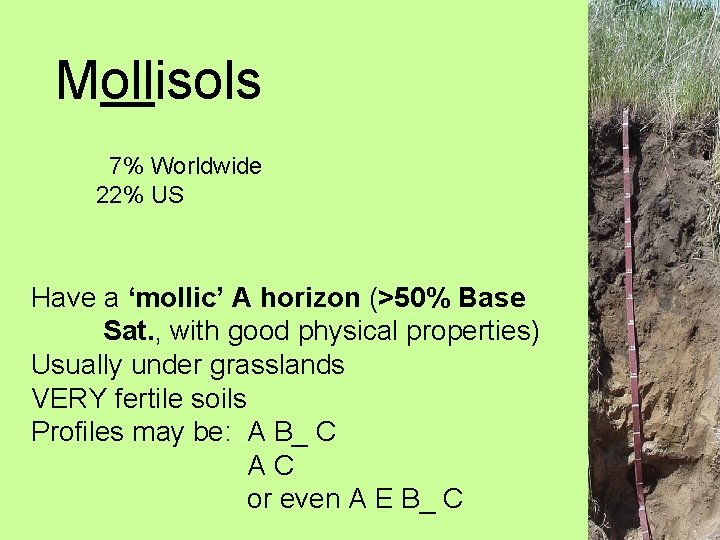
Mollisols 7% Worldwide 22% US Have a ‘mollic’ A horizon (>50% Base Sat. , with good physical properties) Usually under grasslands VERY fertile soils Profiles may be: A B_ C AC or even A E B_ C
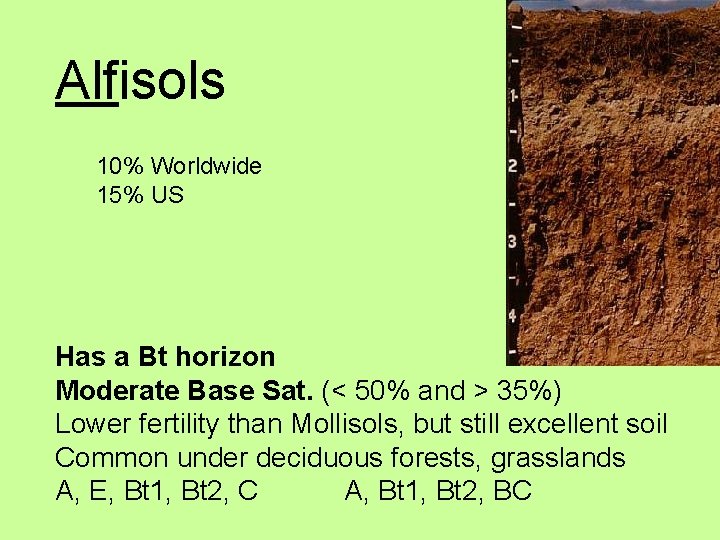
Alfisols 10% Worldwide 15% US Has a Bt horizon Moderate Base Sat. (< 50% and > 35%) Lower fertility than Mollisols, but still excellent soil Common under deciduous forests, grasslands A, E, Bt 1, Bt 2, C A, Bt 1, Bt 2, BC
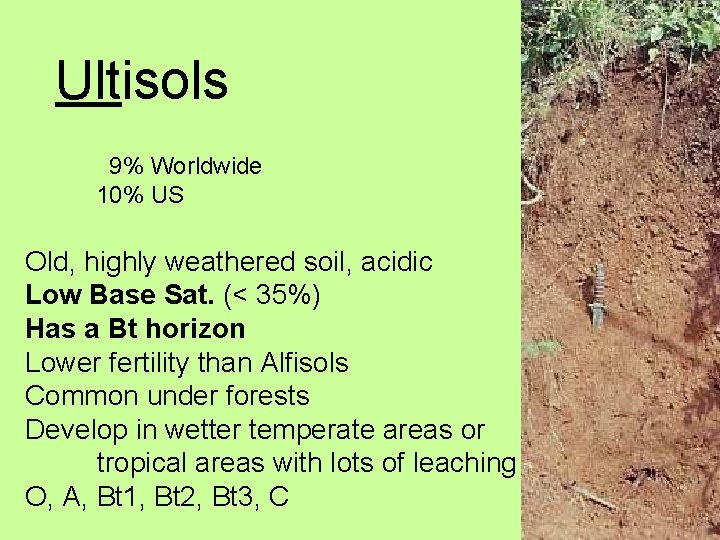
Ultisols 9% Worldwide 10% US Old, highly weathered soil, acidic Low Base Sat. (< 35%) Has a Bt horizon Lower fertility than Alfisols Common under forests Develop in wetter temperate areas or tropical areas with lots of leaching O, A, Bt 1, Bt 2, Bt 3, C
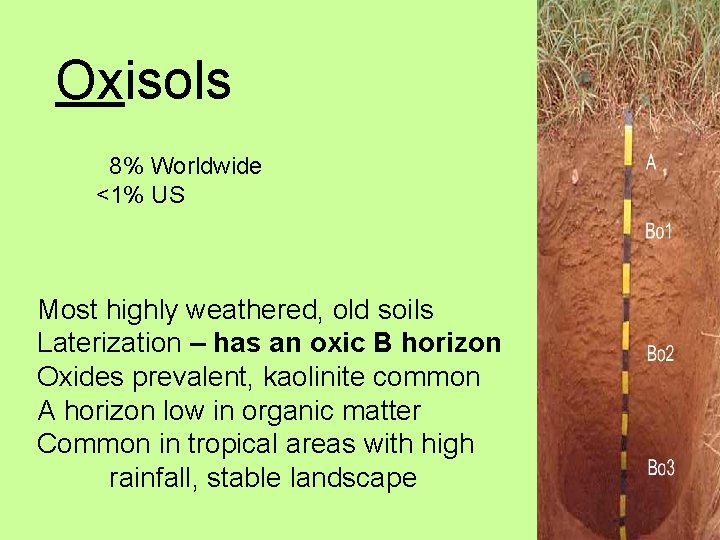
Oxisols 8% Worldwide <1% US Most highly weathered, old soils Laterization – has an oxic B horizon Oxides prevalent, kaolinite common A horizon low in organic matter Common in tropical areas with high rainfall, stable landscape
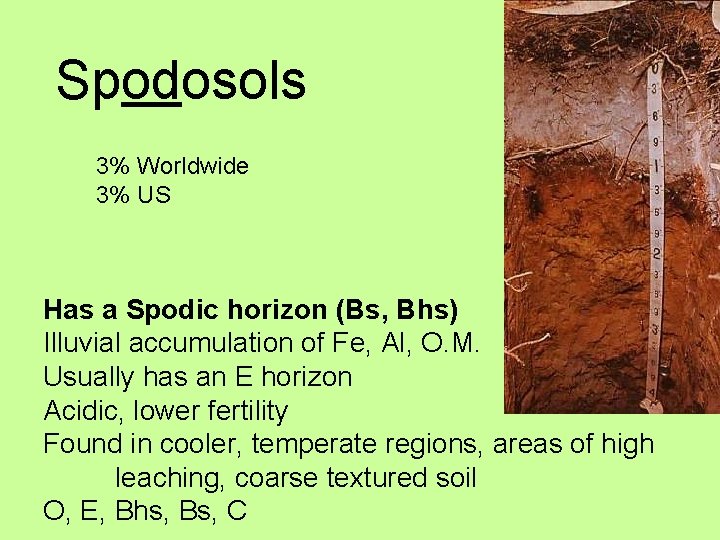
Spodosols 3% Worldwide 3% US Has a Spodic horizon (Bs, Bhs) Illuvial accumulation of Fe, Al, O. M. Usually has an E horizon Acidic, lower fertility Found in cooler, temperate regions, areas of high leaching, coarse textured soil O, E, Bhs, Bs, C
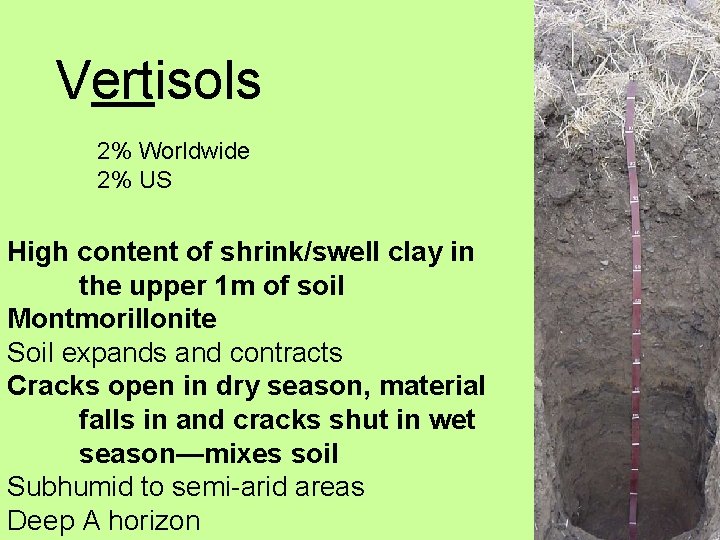
Vertisols 2% Worldwide 2% US High content of shrink/swell clay in the upper 1 m of soil Montmorillonite Soil expands and contracts Cracks open in dry season, material falls in and cracks shut in wet season—mixes soil Subhumid to semi-arid areas Deep A horizon
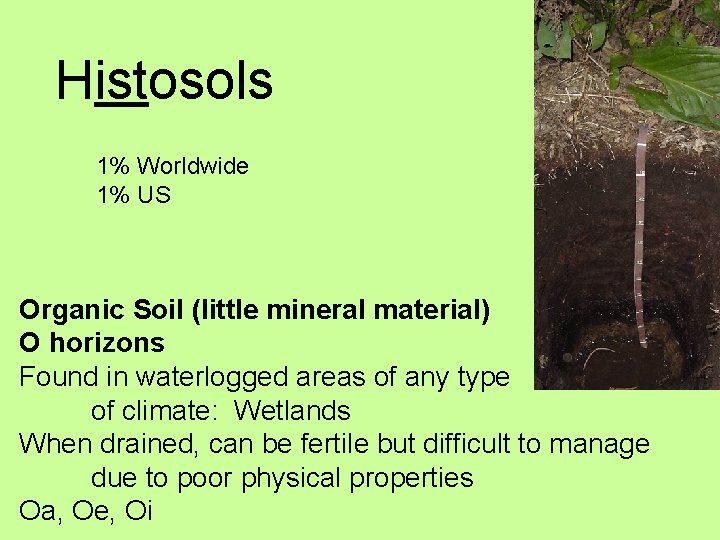
Histosols 1% Worldwide 1% US Organic Soil (little mineral material) O horizons Found in waterlogged areas of any type of climate: Wetlands When drained, can be fertile but difficult to manage due to poor physical properties Oa, Oe, Oi