
The Tsinghua University and Chinas Higher Education Systems








- Slides: 79
The Tsinghua University and China's Higher Education Systems Prof. Dr. Yushun FAN Tsinghua University Beijing, China January 18, Paderborn University
Main Contents n n n About Beijing China’s Higher Education Tsinghua University National CIMS Engineering Research Center International Cooperation
Main Contents n n n About Beijing China’s Higher Education Tsinghua University National CIMS Engineering Research Center International Cooperation
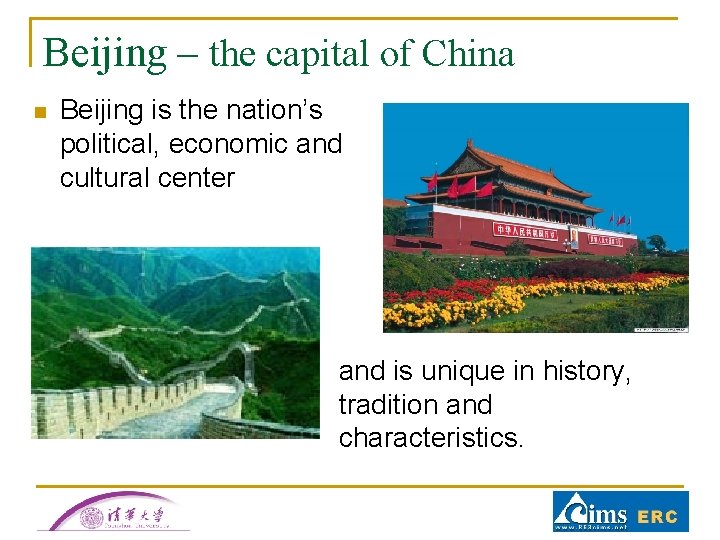
Beijing – the capital of China n Beijing is the nation’s political, economic and cultural center and is unique in history, tradition and characteristics.
Long History of Beijing n The story of Beijing dates back long before the recorded history. The fragments of the bones of "Peking Man", dated to a period about 300, 000 ----500, 000 years ago, were discovered in a village to the southwest of the present-day city. q
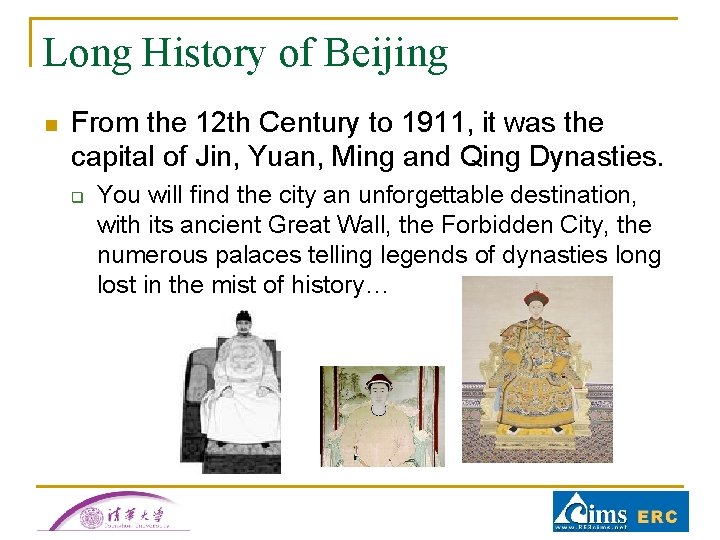
Long History of Beijing n From the 12 th Century to 1911, it was the capital of Jin, Yuan, Ming and Qing Dynasties. q You will find the city an unforgettable destination, with its ancient Great Wall, the Forbidden City, the numerous palaces telling legends of dynasties long lost in the mist of history…
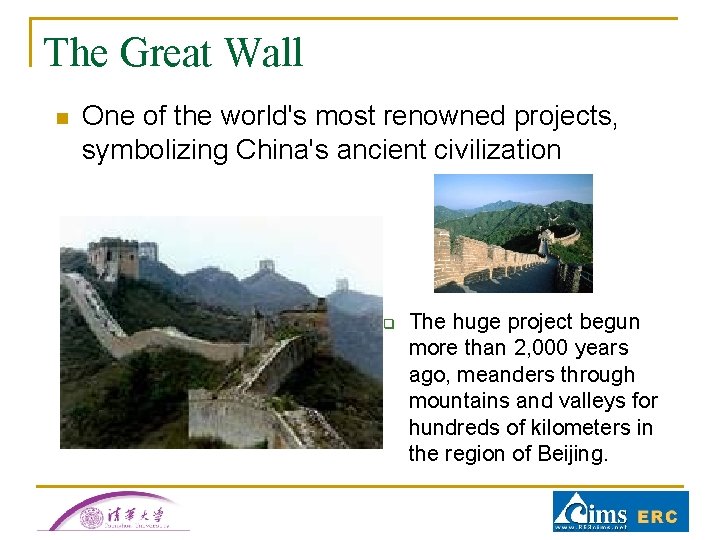
The Great Wall n One of the world's most renowned projects, symbolizing China's ancient civilization q The huge project begun more than 2, 000 years ago, meanders through mountains and valleys for hundreds of kilometers in the region of Beijing.
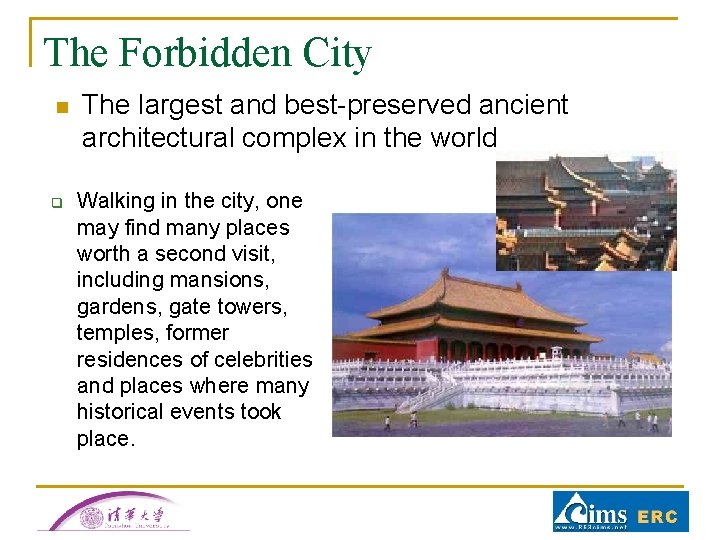
The Forbidden City n q The largest and best-preserved ancient architectural complex in the world Walking in the city, one may find many places worth a second visit, including mansions, gardens, gate towers, temples, former residences of celebrities and places where many historical events took place.
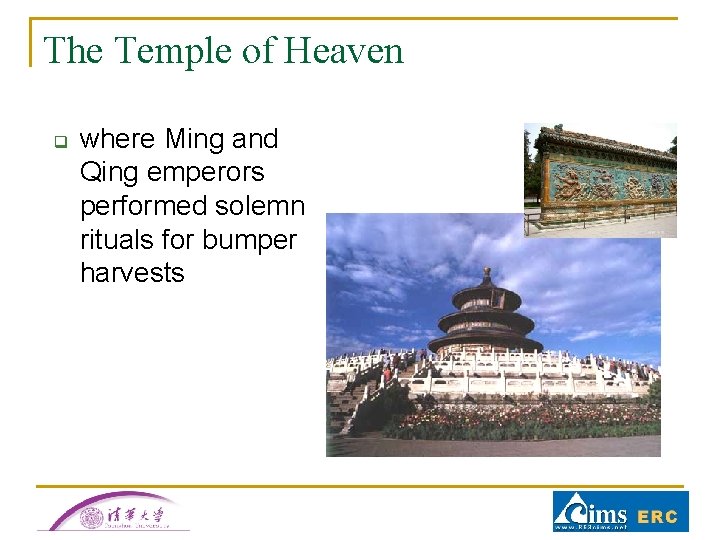
The Temple of Heaven q where Ming and Qing emperors performed solemn rituals for bumper harvests
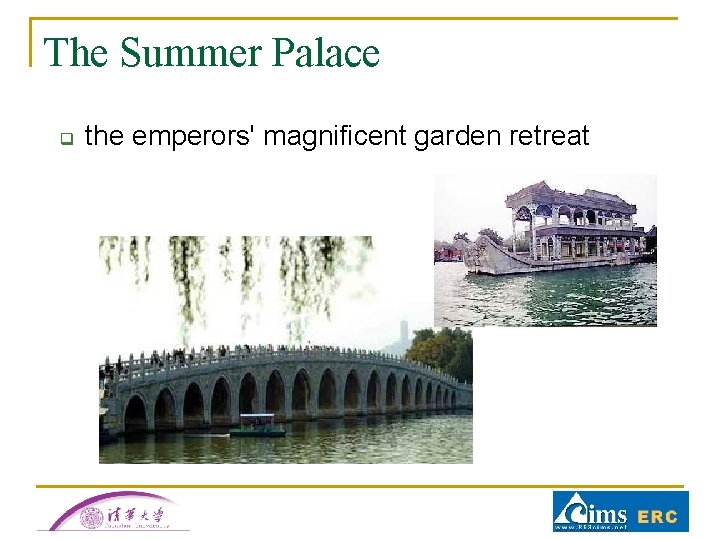
The Summer Palace q the emperors' magnificent garden retreat
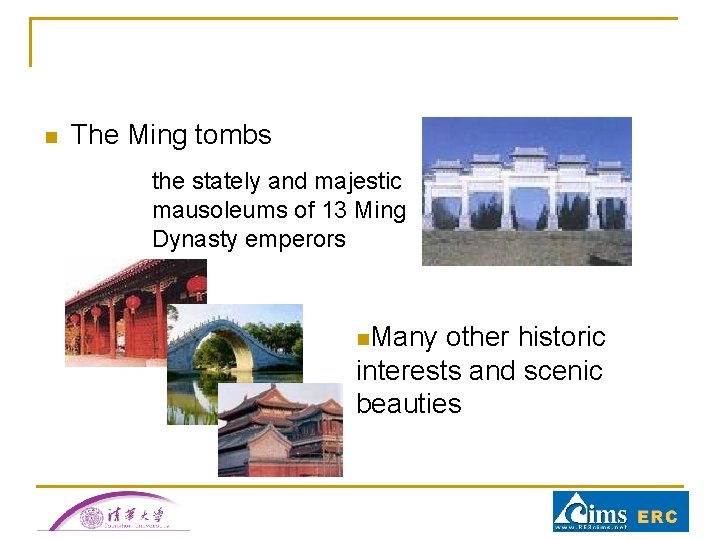
n The Ming tombs the stately and majestic mausoleums of 13 Ming Dynasty emperors n. Many other historic interests and scenic beauties
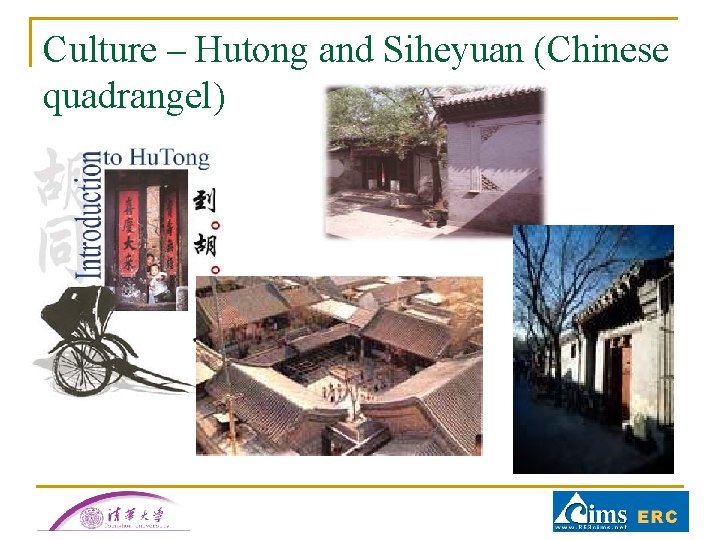
Culture – Hutong and Siheyuan (Chinese quadrangel)
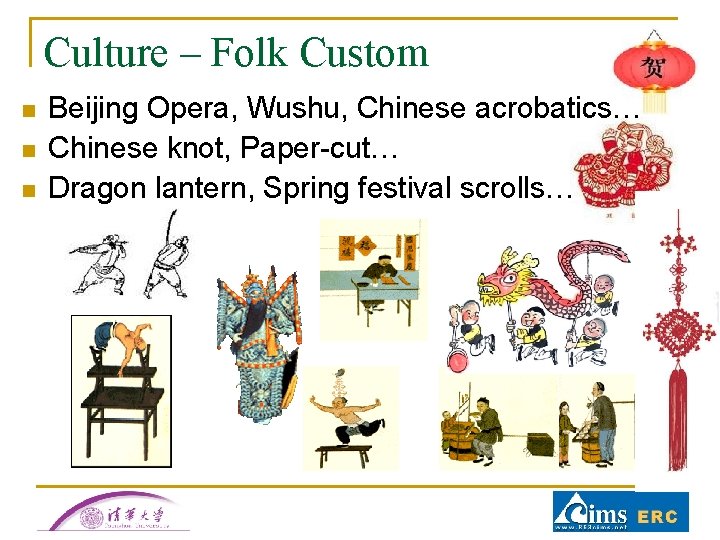
Culture – Folk Custom n n n Beijing Opera, Wushu, Chinese acrobatics… Chinese knot, Paper-cut… Dragon lantern, Spring festival scrolls…
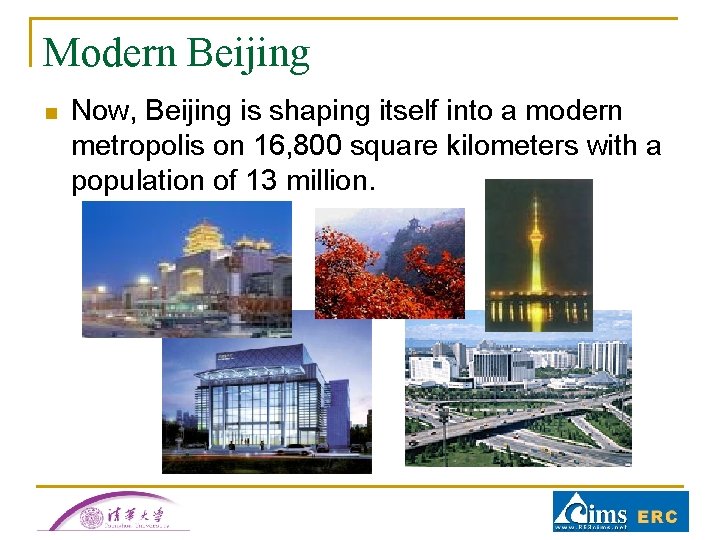
Modern Beijing n Now, Beijing is shaping itself into a modern metropolis on 16, 800 square kilometers with a population of 13 million.
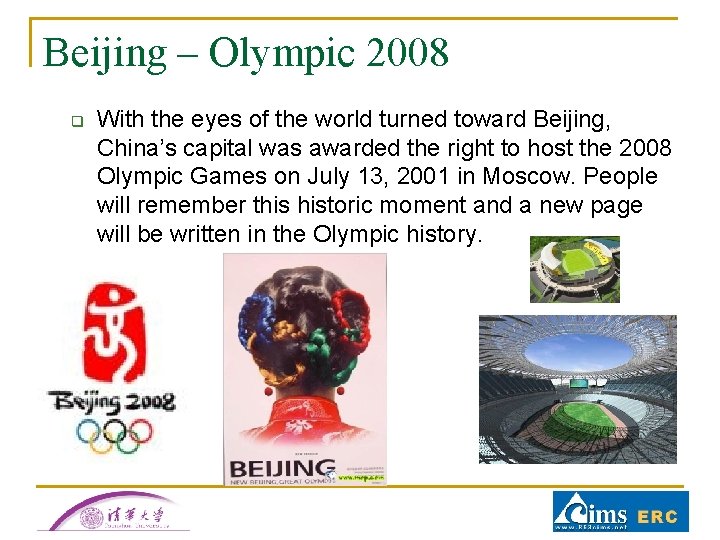
Beijing – Olympic 2008 q With the eyes of the world turned toward Beijing, China’s capital was awarded the right to host the 2008 Olympic Games on July 13, 2001 in Moscow. People will remember this historic moment and a new page will be written in the Olympic history.
Beijing – Educational and Scientific Center n A lot of high grade colleges, universities and institutions q More than 50 major institutions of research and education are located in Beijing. n q such as, Peking University, founded in 1898; Tsinghua University, founded in 1911; the People's University, founded in 1937, and the Chinese Academy of Sciences, founded in 1949. These institutions are located in the northwest suburbs, an area associated with higher education and scientific research.
Main Contents n n n About Beijing China’s Higher Education Tsinghua University National CIMS Engineering Research Center International Cooperation
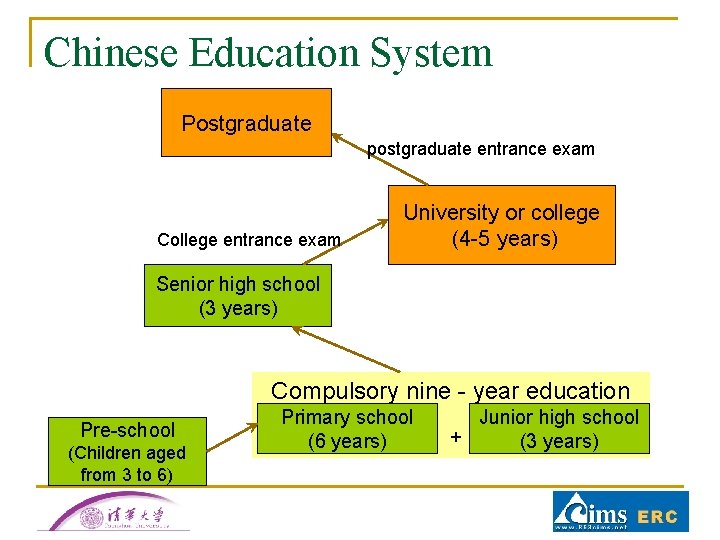
Chinese Education System Postgraduate postgraduate entrance exam College entrance exam University or college (4 -5 years) Senior high school (3 years) Compulsory nine - year education Pre-school (Children aged from 3 to 6) Primary school (6 years) Junior high school + (3 years)
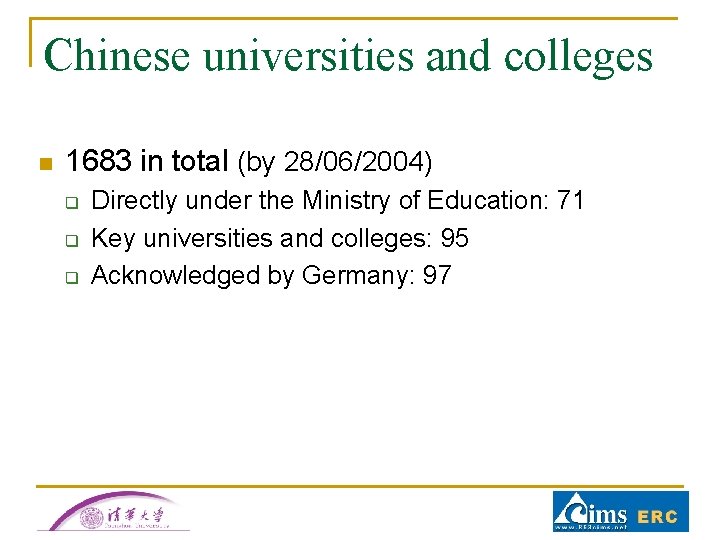
Chinese universities and colleges n 1683 in total (by 28/06/2004) q q q Directly under the Ministry of Education: 71 Key universities and colleges: 95 Acknowledged by Germany: 97
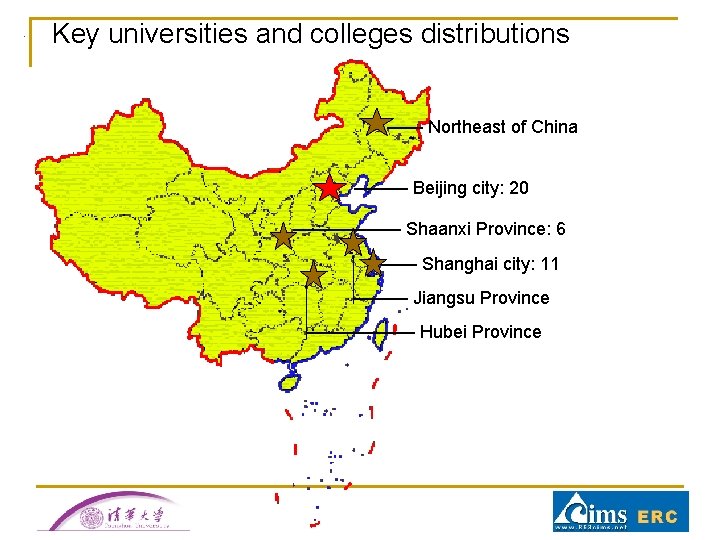
Key universities and colleges distributions —— Northeast of China ——— Beijing city: 20 —————— Shaanxi Province: 6 —— Shanghai city: 11 ——— Jiangsu Province —————— Hubei Province
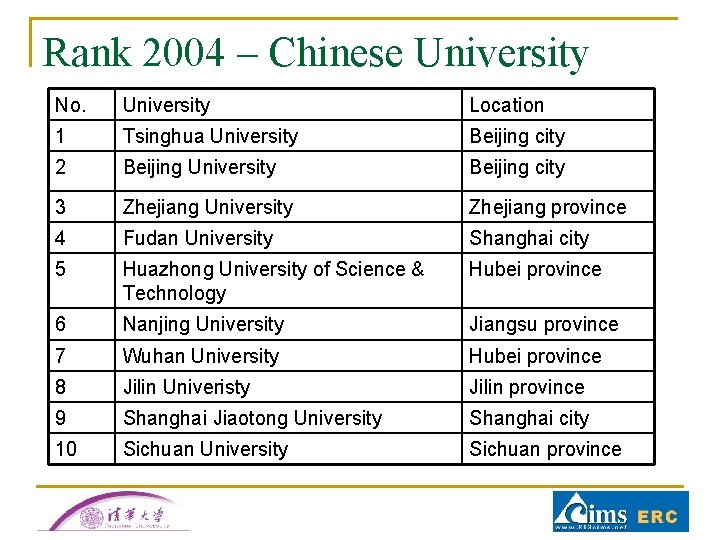
Rank 2004 – Chinese University No. University Location 1 Tsinghua University Beijing city 2 Beijing University Beijing city 3 Zhejiang University Zhejiang province 4 Fudan University Shanghai city 5 Huazhong University of Science & Technology Hubei province 6 Nanjing University Jiangsu province 7 Wuhan University Hubei province 8 Jilin Univeristy Jilin province 9 Shanghai Jiaotong University Shanghai city 10 Sichuan University Sichuan province
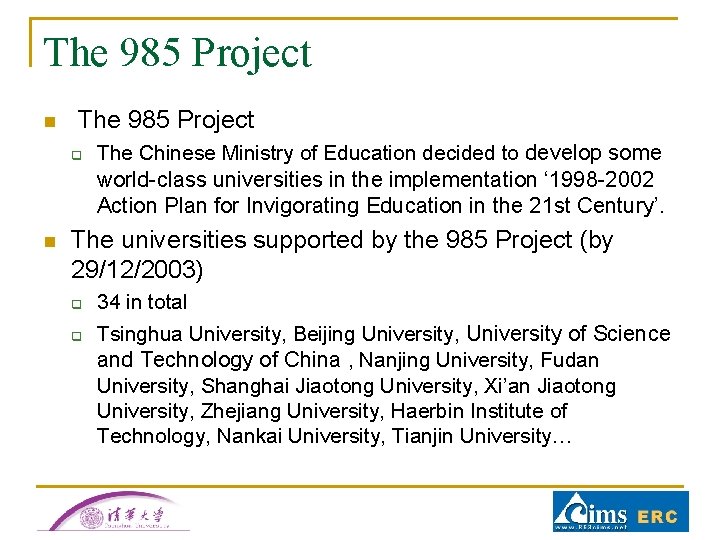
The 985 Project n The 985 Project q n The Chinese Ministry of Education decided to develop some world-class universities in the implementation ‘ 1998 -2002 Action Plan for Invigorating Education in the 21 st Century’. The universities supported by the 985 Project (by 29/12/2003) q q 34 in total Tsinghua University, Beijing University, University of Science and Technology of China , Nanjing University, Fudan University, Shanghai Jiaotong University, Xi’an Jiaotong University, Zhejiang University, Haerbin Institute of Technology, Nankai University, Tianjin University…
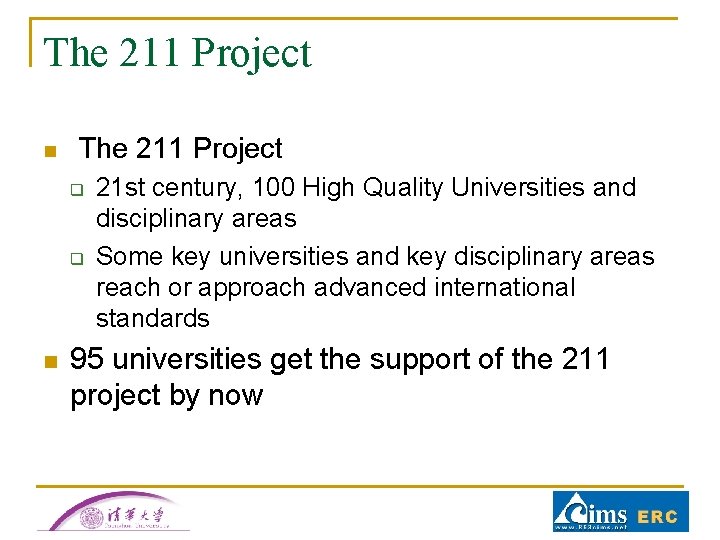
The 211 Project n The 211 Project q q n 21 st century, 100 High Quality Universities and disciplinary areas Some key universities and key disciplinary areas reach or approach advanced international standards 95 universities get the support of the 211 project by now
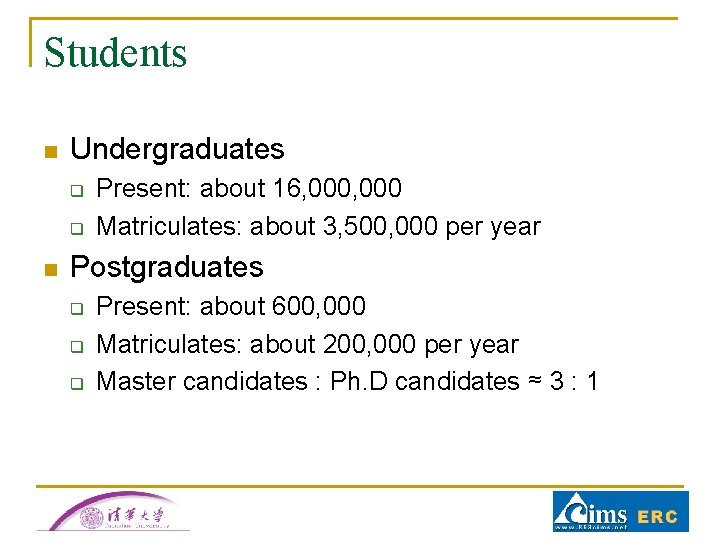
Students n Undergraduates q q n Present: about 16, 000 Matriculates: about 3, 500, 000 per year Postgraduates q q q Present: about 600, 000 Matriculates: about 200, 000 per year Master candidates : Ph. D candidates ≈ 3 : 1
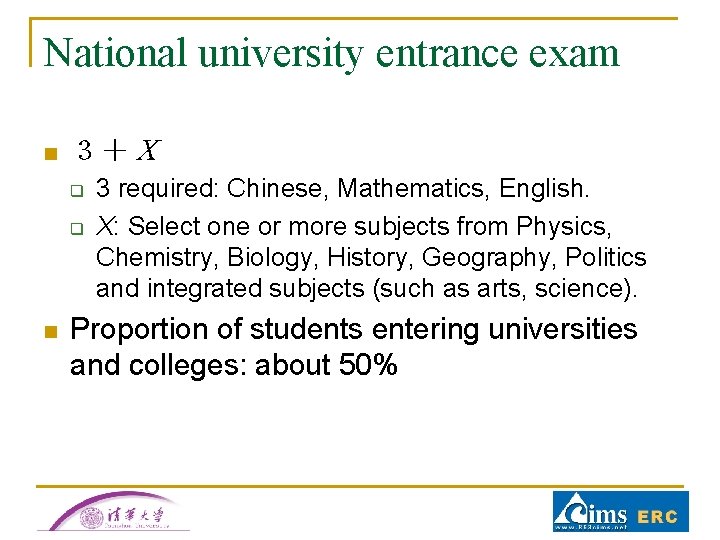
National university entrance exam n 3+X q q n 3 required: Chinese, Mathematics, English. X: Select one or more subjects from Physics, Chemistry, Biology, History, Geography, Politics and integrated subjects (such as arts, science). Proportion of students entering universities and colleges: about 50%
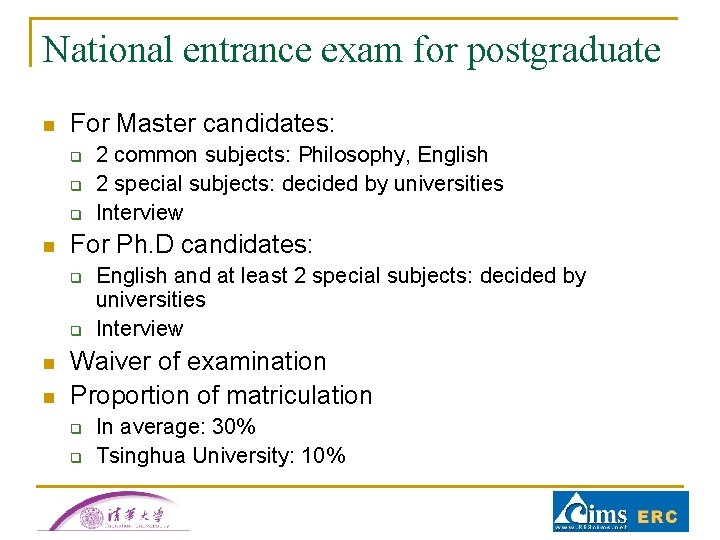
National entrance exam for postgraduate n For Master candidates: q q q n For Ph. D candidates: q q n n 2 common subjects: Philosophy, English 2 special subjects: decided by universities Interview English and at least 2 special subjects: decided by universities Interview Waiver of examination Proportion of matriculation q q In average: 30% Tsinghua University: 10%
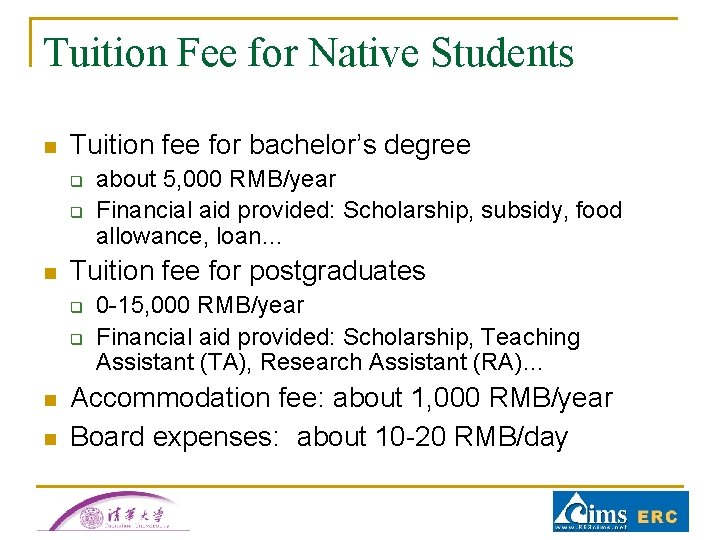
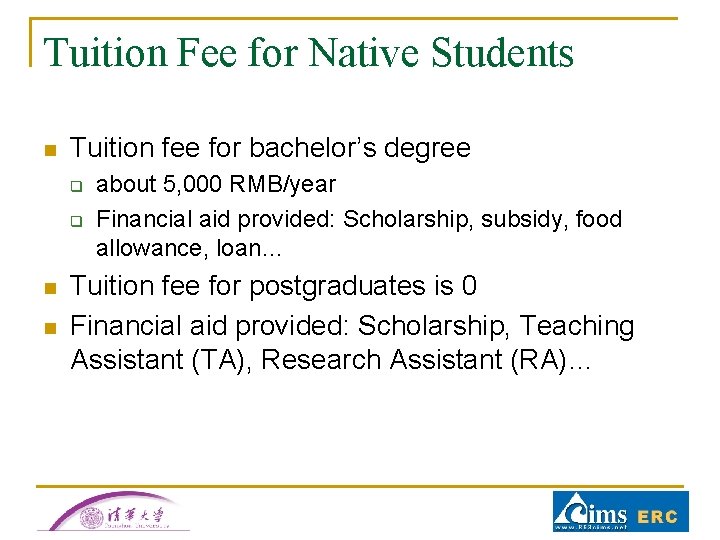
Tuition Fee for Native Students n Tuition fee for bachelor’s degree q q n Tuition fee for postgraduates q q n n about 5, 000 RMB/year Financial aid provided: Scholarship, subsidy, food allowance, loan… 0 -15, 000 RMB/year Financial aid provided: Scholarship, Teaching Assistant (TA), Research Assistant (RA)… Accommodation fee: about 1, 000 RMB/year Board expenses: about 10 -20 RMB/day
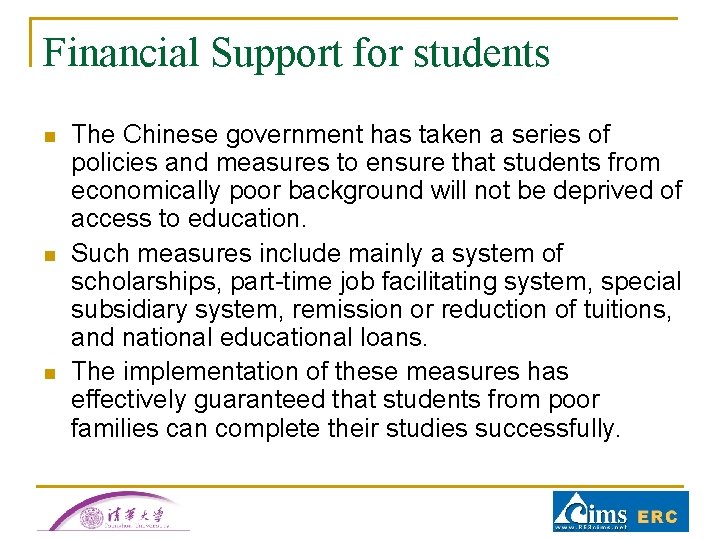
Financial Support for students n n n The Chinese government has taken a series of policies and measures to ensure that students from economically poor background will not be deprived of access to education. Such measures include mainly a system of scholarships, part-time job facilitating system, special subsidiary system, remission or reduction of tuitions, and national educational loans. The implementation of these measures has effectively guaranteed that students from poor families can complete their studies successfully.
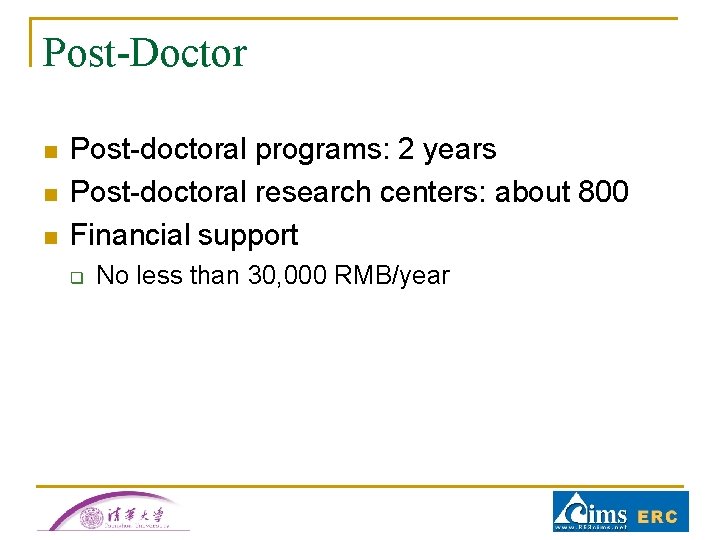
Post-Doctor n n n Post-doctoral programs: 2 years Post-doctoral research centers: about 800 Financial support q No less than 30, 000 RMB/year
Main Contents n n n About Beijing China’s Higher Education Tsinghua University National CIMS Engineering Research Center International Cooperation
Where is Tsinghua University? Tsinghua University
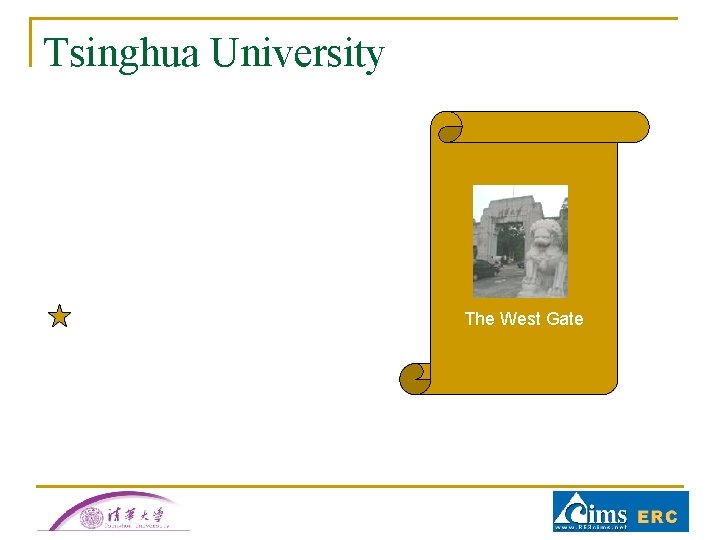
Tsinghua University The West Gate
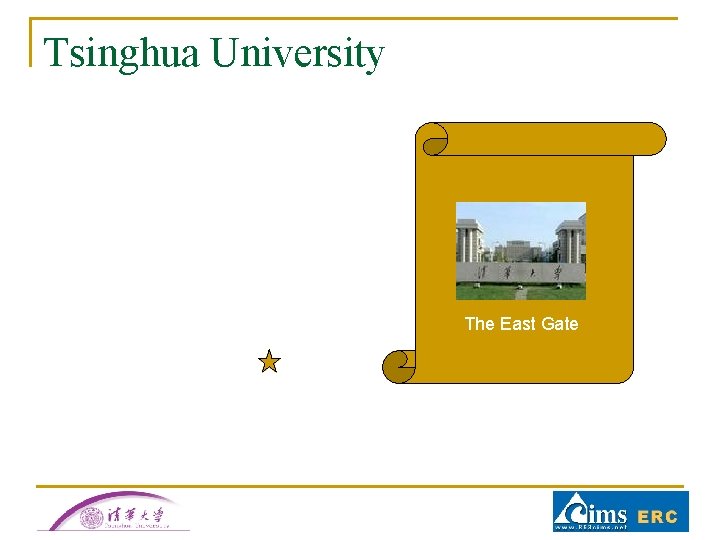
Tsinghua University The East Gate
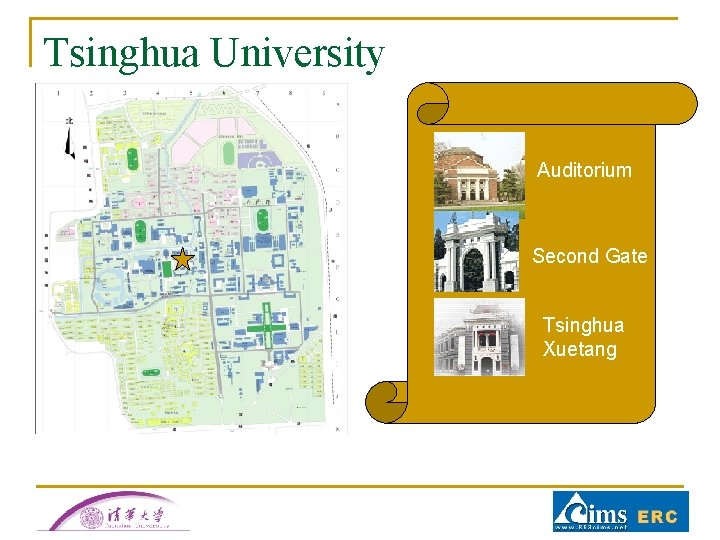
Tsinghua University Auditorium Second Gate Tsinghua Xuetang
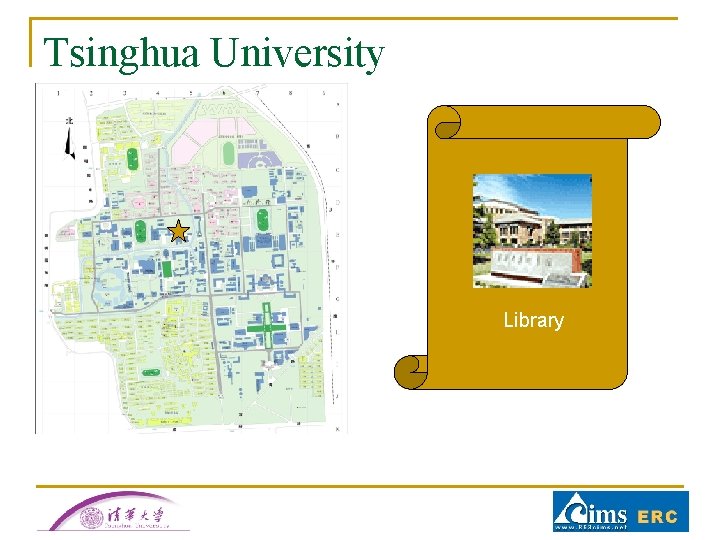
Tsinghua University Library
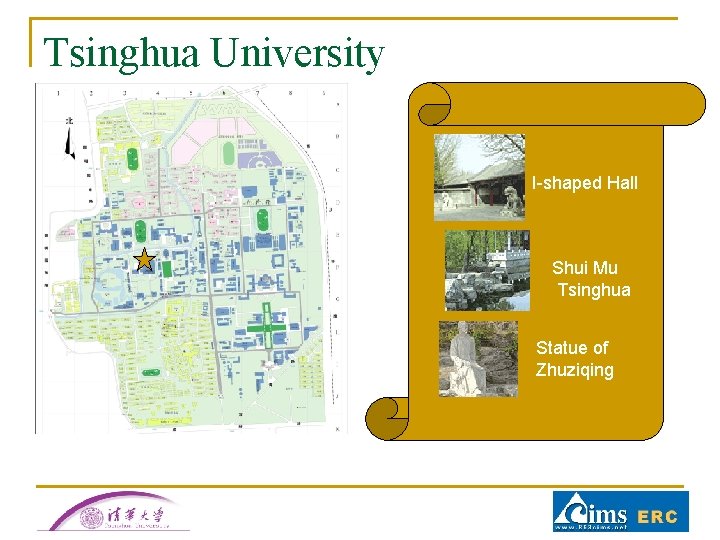
Tsinghua University I-shaped Hall Shui Mu Tsinghua Statue of Zhuziqing
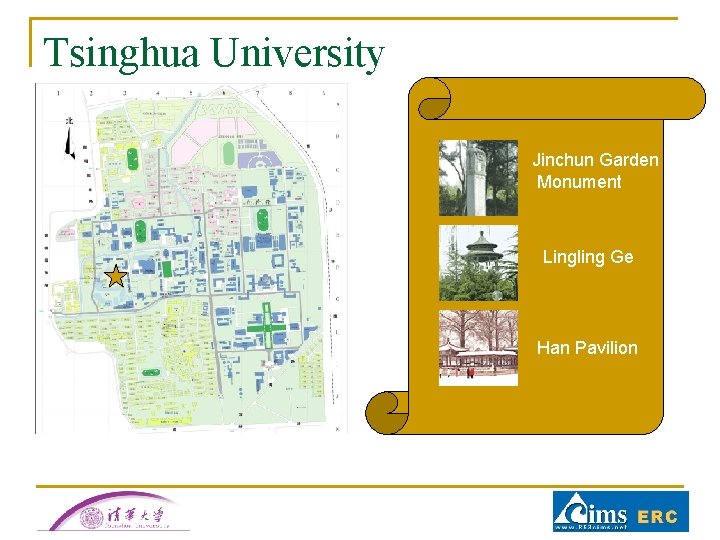
Tsinghua University Jinchun Garden Monument Lingling Ge Han Pavilion
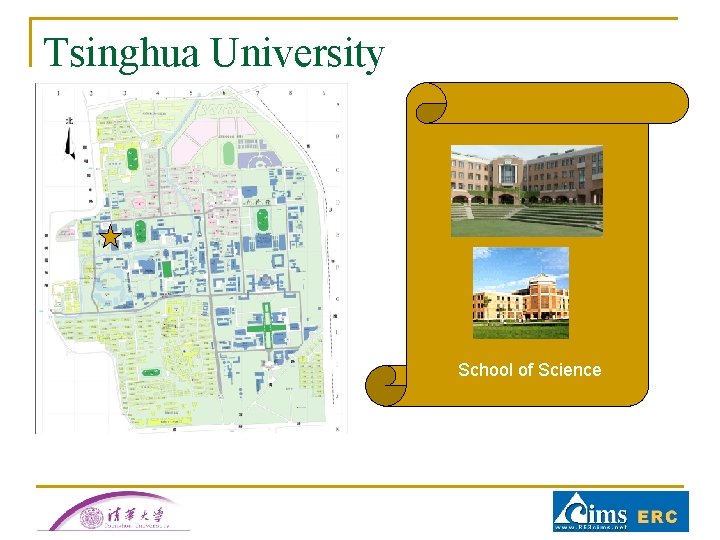
Tsinghua University School of Science
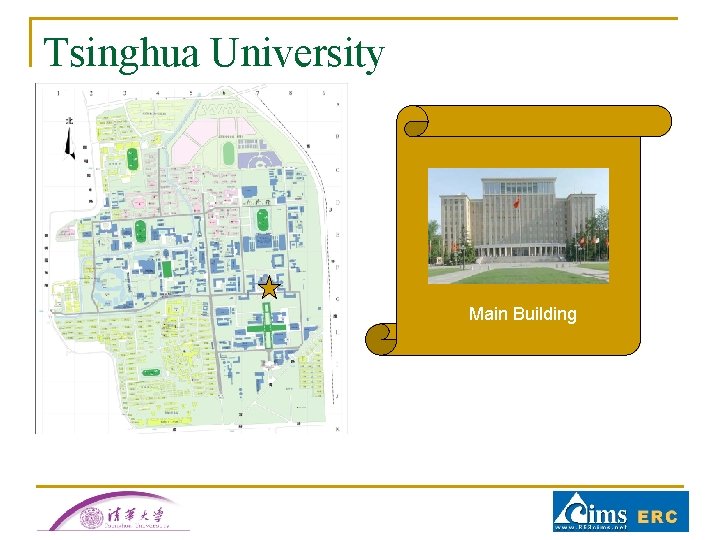
Tsinghua University Main Building
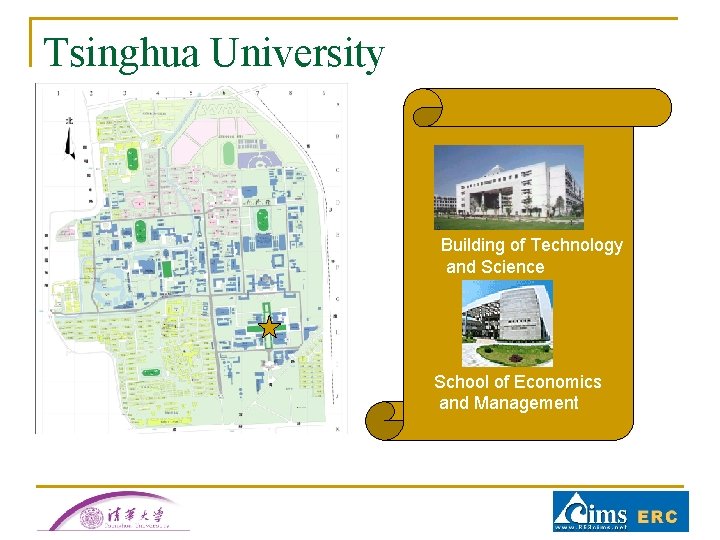
Tsinghua University Building of Technology and Science School of Economics and Management
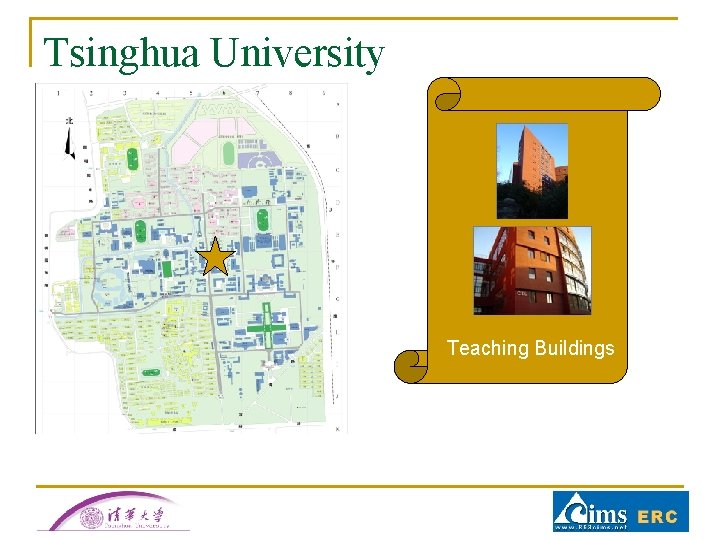
Tsinghua University Teaching Buildings
Tsinghua University Gymnasium
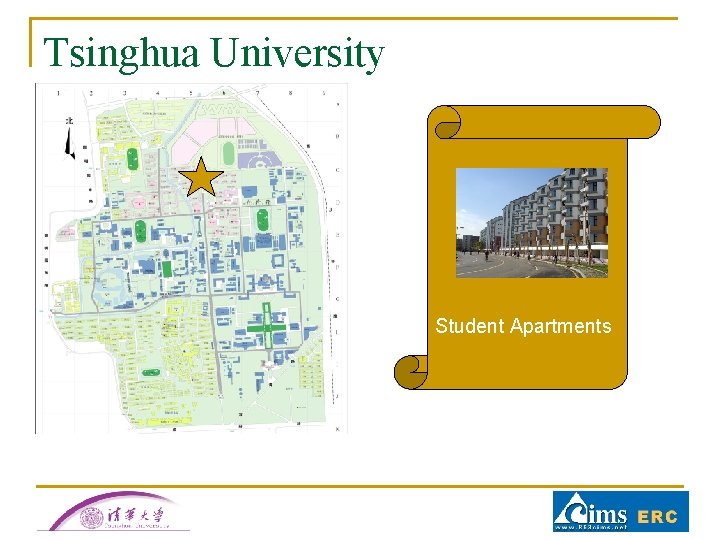
Tsinghua University Student Apartments
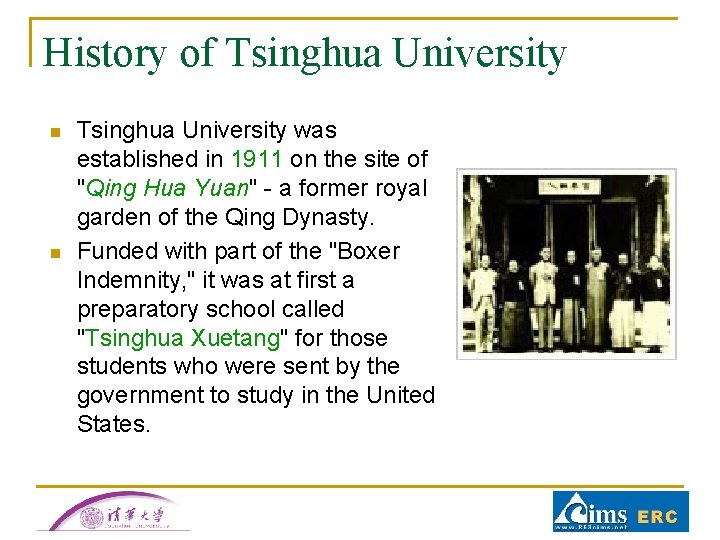
History of Tsinghua University n n Tsinghua University was established in 1911 on the site of "Qing Hua Yuan" - a former royal garden of the Qing Dynasty. Funded with part of the "Boxer Indemnity, " it was at first a preparatory school called "Tsinghua Xuetang" for those students who were sent by the government to study in the United States.
History of Tsinghua University (2) n On April 29, 1911, Tsinghua Xuetang began its first term, and from then on the last Sunday of April was set as the school's anniversary. The name was changed to "Tsinghua School" after the 1911 Revolution. n In 1925, a university section was established, offering a four-year program for students. In 1928, its name was changed to "National Tsinghua University “, and in the autumn of 1929 a graduate school was set up.
History of Tsinghua University (3) n n n Following the outbreak of the War in 1937, Tsinghua University, Peking University and Nankai University merged to form the Southwest Associated University in Kunming. After the war, Tsinghua University moved back to Beijing. After the founding of the People's Republic of China, Tsinghua University became a multidisciplinary polytechnic university with an emphasis on training engineers.
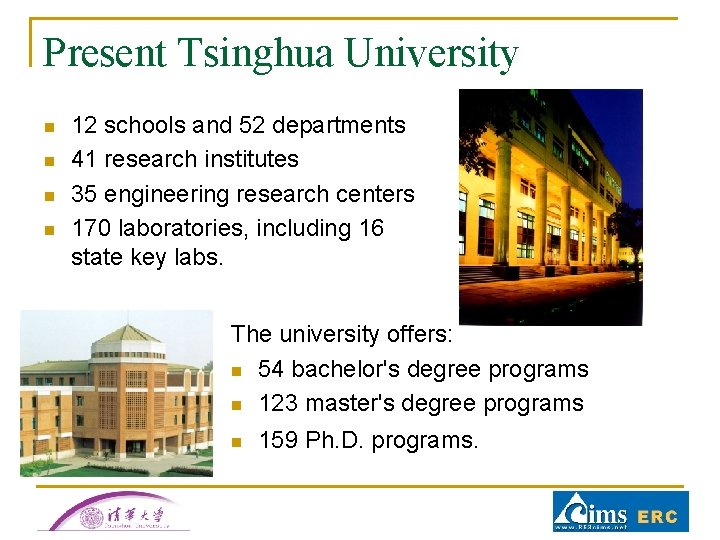
Present Tsinghua University n n 12 schools and 52 departments 41 research institutes 35 engineering research centers 170 laboratories, including 16 state key labs. The university offers: n 54 bachelor's degree programs n 123 master's degree programs n 159 Ph. D. programs.
Present Tsinghua University (2) n Over 7, 500 faculty and staff q 1, 100 full professors and 1, 800 associate professors n n n 31 members of the Chinese Academy of Sciences 24 members of the Chinese Academy of Engineering Over 20, 000 present students q q q 14, 200 undergraduates 7, 900 master's degrees candidates 4, 200 Ph. D candidates.
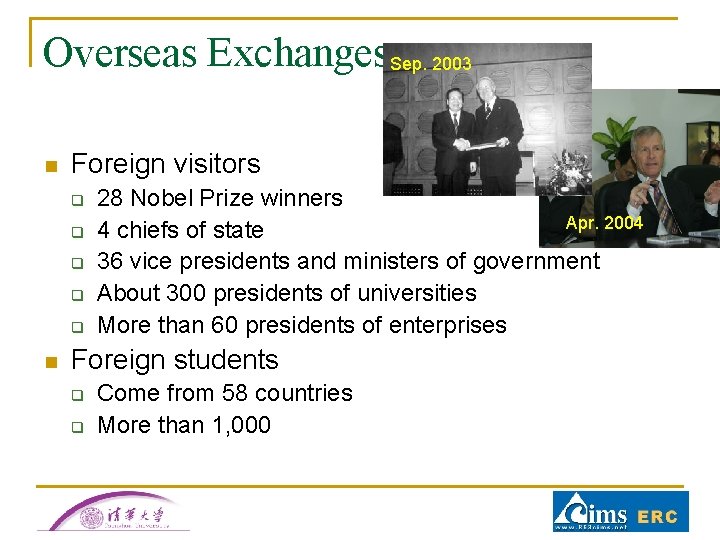
Overseas Exchanges. Sep. 2003 n Foreign visitors q q q n 28 Nobel Prize winners Apr. 2004 4 chiefs of state 36 vice presidents and ministers of government About 300 presidents of universities More than 60 presidents of enterprises Foreign students q q Come from 58 countries More than 1, 000
Present Tsinghua University (3) n The first-class university in China q n Educational philosophy: train students with integrity q n With a splendid legacy accumulated over the past 90 years, Tsinghua has retained its character and charm while promoting rigorous scholarship research, ensuring academic and educational prestige in China and abroad. Among the over 100, 000 students who have graduated from Tsinghua since its founding are many outstanding scholars, eminent entrepreneurs and great statesmen remembered and respected by their fellow Chinese citizens. To study at Tsinghua is the dream of many Chinese youth.
Future n n With strong support from the nation and in the face of unprecedented opportunities, Tsinghua University is poised to become a world-class university in the 21 st century. With the inspiring motto "Self-discipline and Social Commitment, " Tsinghua is dedicated to the well being of Chinese society.
How to Enter Tsinghua University – for native students n Chinese College Entrance Exam q q q Participants: about 7, 000 Matriculate in total: about 3, 800, 000 Matriculate in Tsinghua: about 3, 800 (the top 0. 5‰)
Tuition Fee for Native Students n Tuition fee for bachelor’s degree q q n n about 5, 000 RMB/year Financial aid provided: Scholarship, subsidy, food allowance, loan… Tuition fee for postgraduates is 0 Financial aid provided: Scholarship, Teaching Assistant (TA), Research Assistant (RA)…
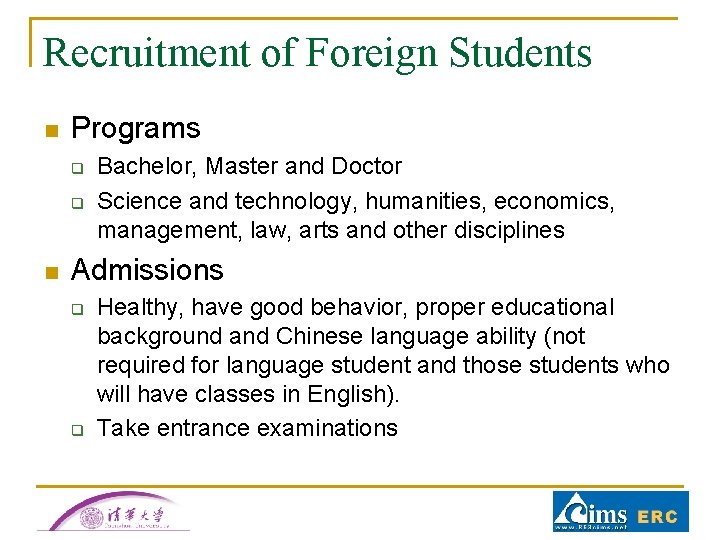
Recruitment of Foreign Students n Programs q q n Bachelor, Master and Doctor Science and technology, humanities, economics, management, law, arts and other disciplines Admissions q q Healthy, have good behavior, proper educational background and Chinese language ability (not required for language student and those students who will have classes in English). Take entrance examinations
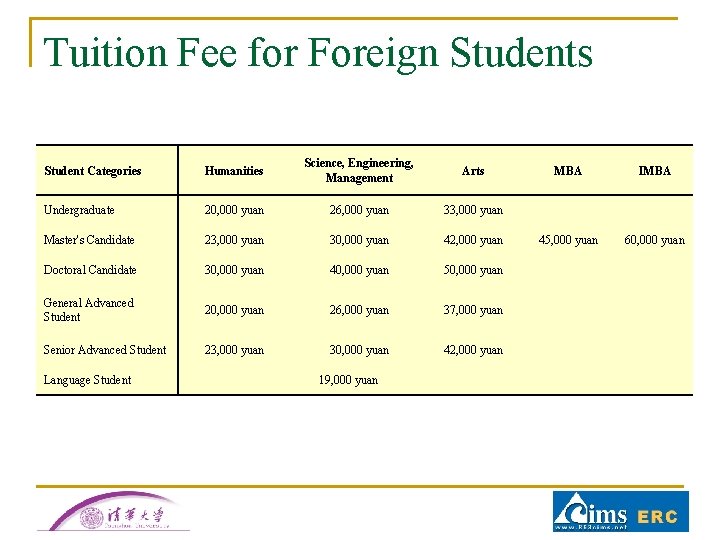
Tuition Fee for Foreign Students Student Categories Humanities Science, Engineering, Management Arts MBA IMBA Undergraduate 20, 000 yuan 26, 000 yuan 33, 000 yuan Master's Candidate 23, 000 yuan 30, 000 yuan 42, 000 yuan 45, 000 yuan 60, 000 yuan Doctoral Candidate 30, 000 yuan 40, 000 yuan 50, 000 yuan General Advanced Student 20, 000 yuan 26, 000 yuan 37, 000 yuan Senior Advanced Student 23, 000 yuan 30, 000 yuan 42, 000 yuan Language Student 19, 000 yuan
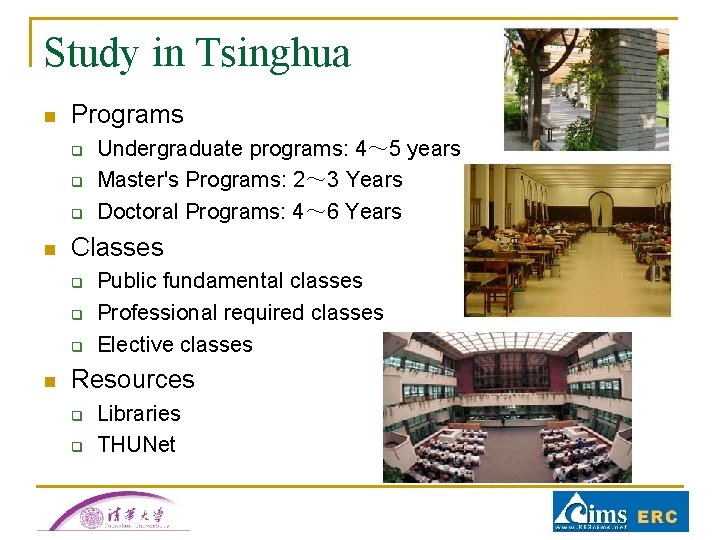
Study in Tsinghua n Programs q q q n Classes q q q n Undergraduate programs: 4~ 5 years Master's Programs: 2~ 3 Years Doctoral Programs: 4~ 6 Years Public fundamental classes Professional required classes Elective classes Resources q q Libraries THUNet
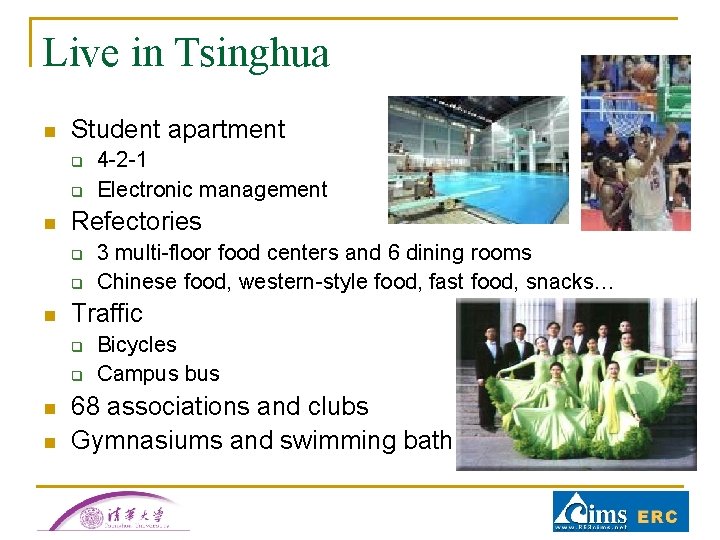
Live in Tsinghua n Student apartment q q n Refectories q q n 3 multi-floor food centers and 6 dining rooms Chinese food, western-style food, fast food, snacks… Traffic q n 4 -2 -1 Electronic management Bicycles Campus bus 68 associations and clubs Gymnasiums and swimming bath
Main Contents n n n About Beijing China’s Higher Education Tsinghua University National CIMS Engineering Research Center International Cooperation
NATIONAL CIMS ENGINEERING RESEARCH CENTER n History q q Start building at 1987 as 863 Key Project “State CIMS Experimental Research Center” completed first phase project at 1992. 11 Universities and Institutes, 250 researchers involved. 1995 named as National CIMS Engineering Research Center (CIMS ERC)
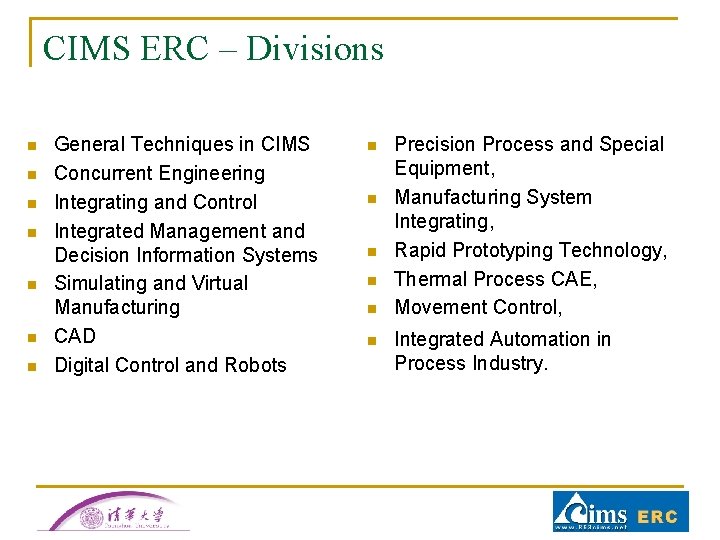
CIMS ERC – Divisions n n n n General Techniques in CIMS Concurrent Engineering Integrating and Control Integrated Management and Decision Information Systems Simulating and Virtual Manufacturing CAD Digital Control and Robots n n n Precision Process and Special Equipment, Manufacturing System Integrating, Rapid Prototyping Technology, Thermal Process CAE, Movement Control, Integrated Automation in Process Industry.
CIMS ERC – Organization and Personnel n Laboratories q q n Information System Laboratory Manufacturing System Laboratory teachers, researchers, or managers q q q 26 professors 30 associate professor 34 assistant professors 69 Ph. D. Candidates 86 Graduate Students 12 Post Doctors
CIMS ERC – Achievements and Awards
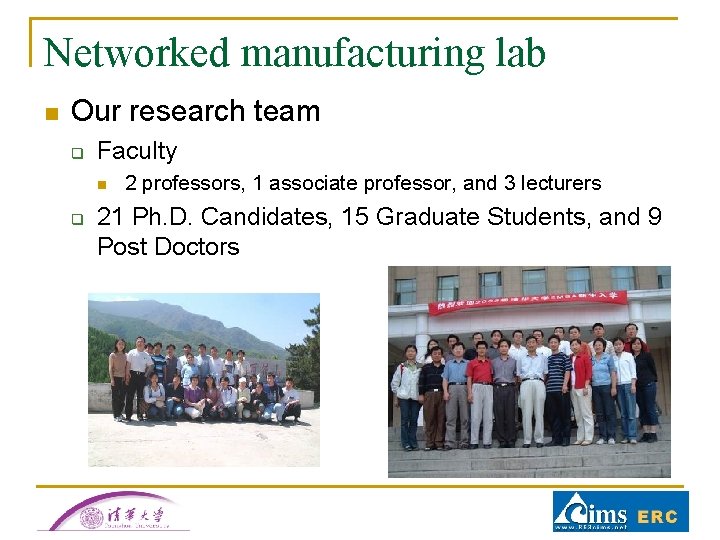
Networked manufacturing lab n Our research team q Faculty n q 2 professors, 1 associate professor, and 3 lecturers 21 Ph. D. Candidates, 15 Graduate Students, and 9 Post Doctors
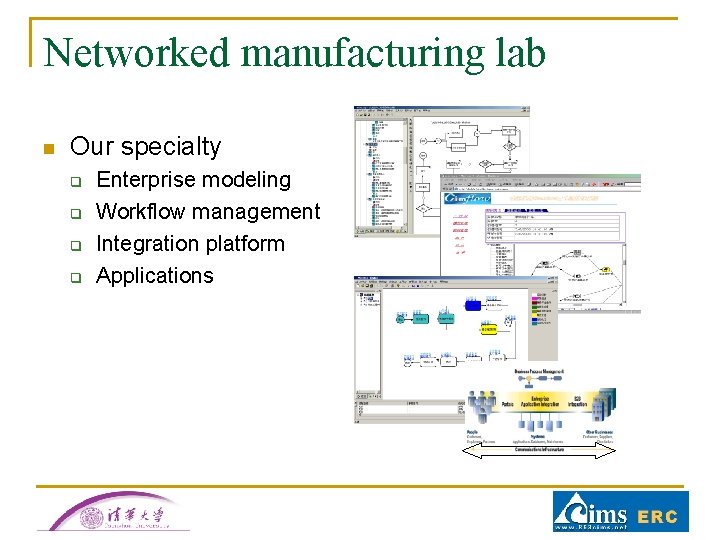
Networked manufacturing lab n Our specialty q q Enterprise modeling Workflow management Integration platform Applications
Main Contents n n n About Beijing China’s Higher Education Tsinghua University National CIMS Engineering Research Center International Cooperation
International Collaboration n Have a long history q n Many countries are involved q n Begin in the early 1990’s Germany, France, Italy, Ireland, UK, Finland, US… Under the support of 863 program, 5 th Framework, 6 th Framework, Sino-Germany Cooperation, …
Cooperative Projects n n n n Development of an Inte. RActive En. Gineering Portal for Open Networks (with Europe) Distributed Planning and Scheduling System under the Structure of Virtual Enterprises (with Germany) CENNET (with Europe) Enterprise Modeling (with France) Workshop Scheduling (with Cambridge University, UK) Supply Chain Management (with Ireland) Automatic Control and Information Technology in Paper Mill (with Finland)
International communication n Long-term visiting scholars q q n Short-term visiting scholars q q n 2 weeks, give a course with 16 hours Funded by Tsinghua University Other visitors q n 3 -6 months, give a course with not less than 32 hours Funded by the ministry of education Lectures and seminars Foreign students
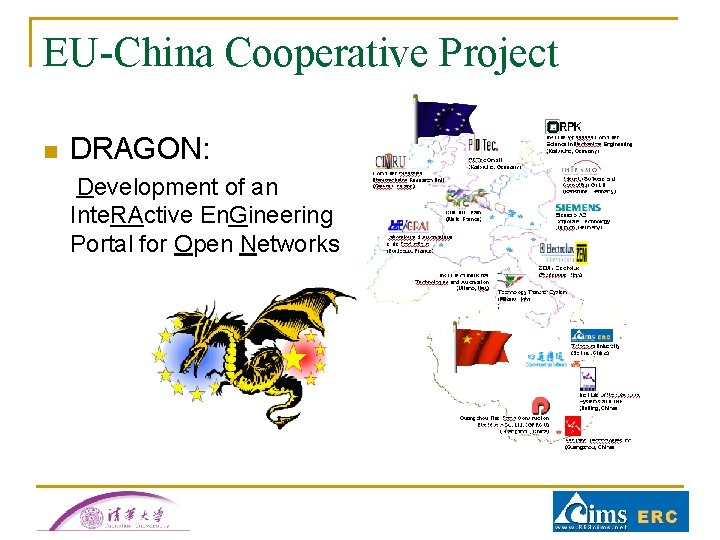
EU-China Cooperative Project n DRAGON: Development of an Inte. RActive En. Gineering Portal for Open Networks
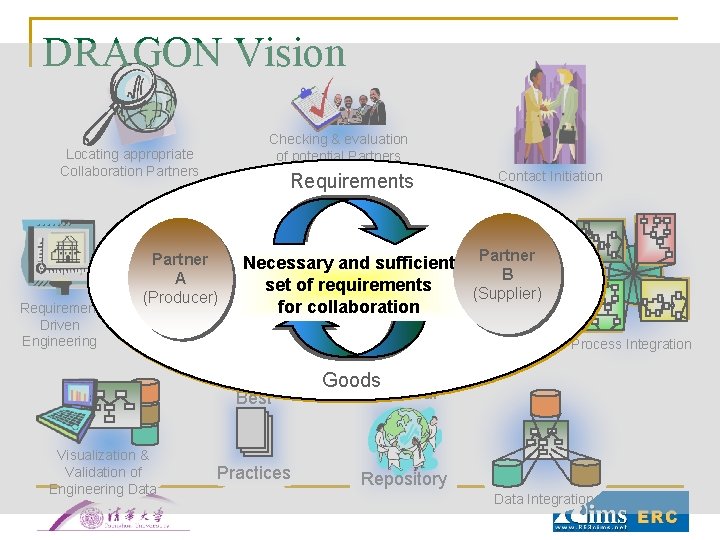
Background and Objectives of DRAGON n n The way of co-operation between companies is of strategic significance, especially with regard to enable the co-operation of enterprises situated in different locations and having a different cultural background. q The main problem is to provide information that is necessary for the common product development process without disclosing internal know-how. The goal of the DRAGON project is to provide an overall framework to support common virtual product development processes between European and Chinese companies. q The aim is to share only a necessary and sufficient subset of information.
Central Question What is the necessary and sufficient subset of information that has to be shared during a common product development process without disclosing internal know-how? Request, Product Information. . . Partner A (Manufacturer) Necessary and sufficient subset of information for the common product development process Partner B (Supplier) Offer, Product Information. . . Product, Service. . . Use Cases: - Searching for a potential partner / product (request and offer) - Collaboration between different partners (product information)
DRAGON Vision Checking & evaluation of potential Partners Locating appropriate Collaboration Partners Requirement Driven Engineering Requirements Partner A (Producer) Necessary and sufficient Partner B set of requirements (Supplier) for collaboration Process Integration Best Visualization & Validation of Engineering Data Contact Initiation Practices Goods Cultural Repository Data Integration
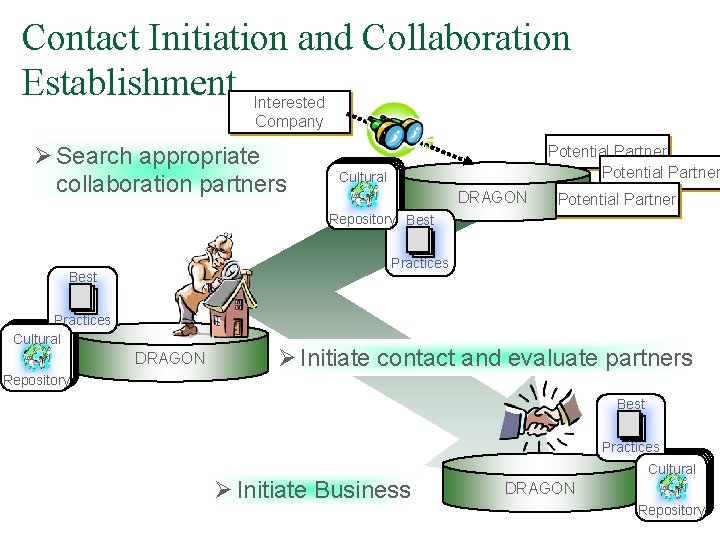
Contact Initiation and Collaboration Establishment Interested Company Ø Search appropriate collaboration partners Potential Partner Cultural DRAGON Potential Partner Repository Best Practices Cultural DRAGON Ø Initiate contact and evaluate partners Repository Best Practices Ø Initiate Business Cultural DRAGON Repository
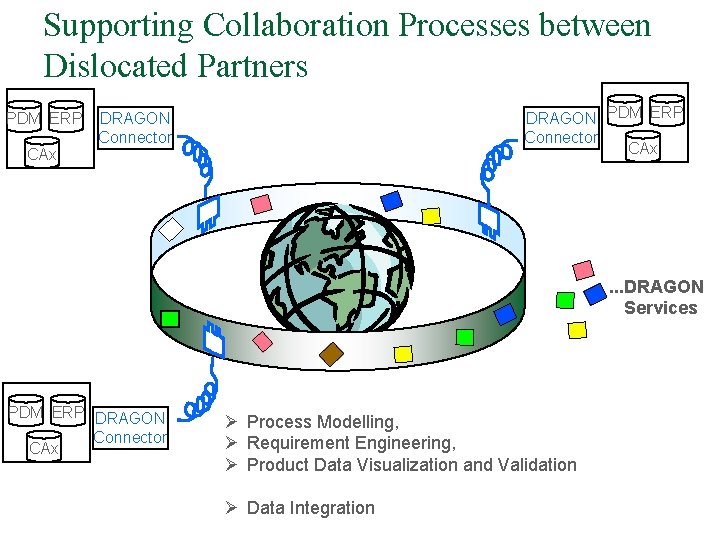
Supporting Collaboration Processes between Dislocated Partners PDM ERP CAx DRAGON PDM ERP Connector CAx DRAGON Connector . . . DRAGON Services PDM ERP DRAGON Connector CAx Ø Process Modelling, Ø Requirement Engineering, Ø Product Data Visualization and Validation Ø Data Integration
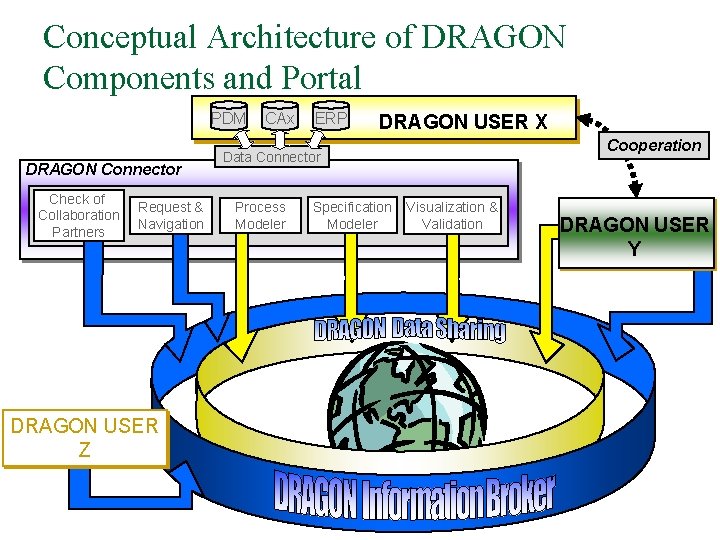
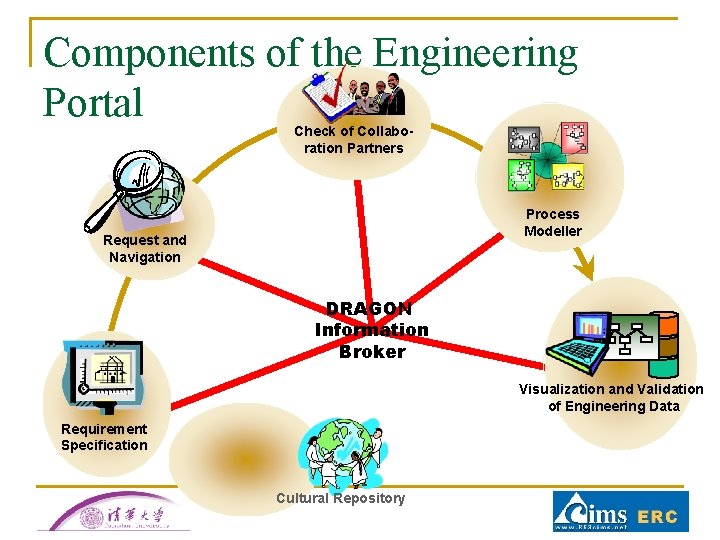
Conceptual Architecture of DRAGON Components and Portal PDM DRAGON Connector Check of Collaboration Partners Request & Navigation DRAGON USER Z CAx ERP DRAGON USER X Cooperation Data Connector Process Modeler Specification Modeler Visualization & Validation DRAGON USER Y
Components of the Engineering Portal Check of Collaboration Partners Process Modeller Request and Navigation DRAGON Information Broker Visualization and Validation of Engineering Data Requirement Specification Cultural Repository
Some useful links n n http: //www. tsinghua. edu. cn/eng/index. htm http: //www. tsinghua. edu. cn/docsn/wb/lxs/elxs. htm http: //www. cims. cn http: //www. simflow. net
Welcome You to Tsinghua! Welcome You to Beijing! Welcome You To China!
Thank You Very Much!