
The Truth About Stalls Great Lakes Aviation Conference
The Truth… About Stalls Great Lakes Aviation Conference 2014 Thomas P. Turner Mastery Flight Training, Inc. www. mastery-flight-training. com

www. eaglegroupusa. com © 2014 Mastery Flight Training, Inc.
Today’s lesson: © 2014 Mastery Flight Training, Inc.
Today’s lesson: Don’t Stall © 2014 Mastery Flight Training, Inc.
Today’s lesson: Don’t Stall …unless you mean to © 2014 Mastery Flight Training, Inc.
Loss of Control © 2014 Mastery Flight Training, Inc.
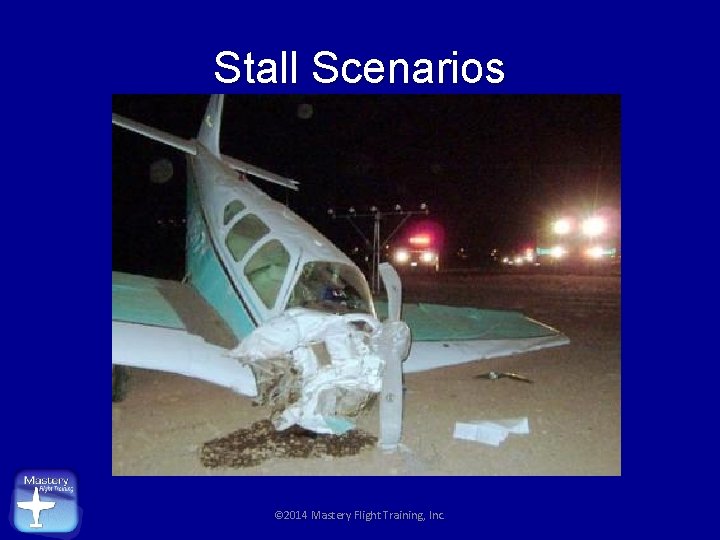
Stall Scenarios © 2014 Mastery Flight Training, Inc.
Type of Stalls • Power OFF • Power ON • Accelerated © 2014 Mastery Flight Training, Inc.
Type of Stalls • Power OFF • Power ON • Accelerated • Flaps UP • Flaps DOWN • Flaps PARTIALLY EXTENDED © 2014 Mastery Flight Training, Inc.
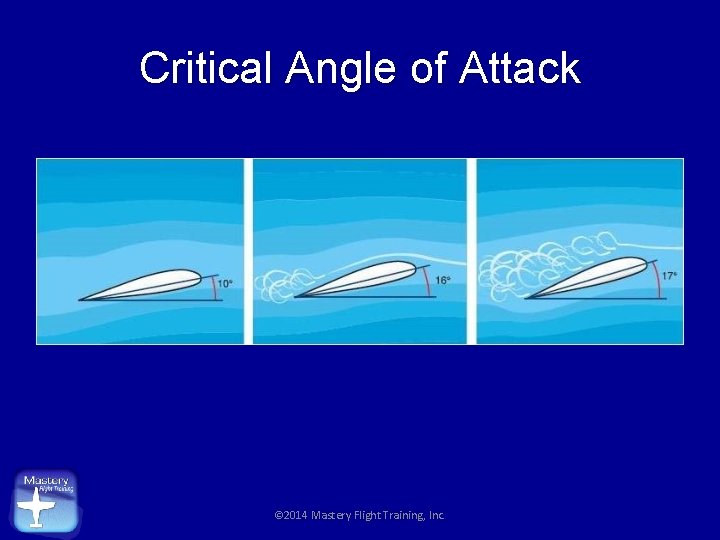
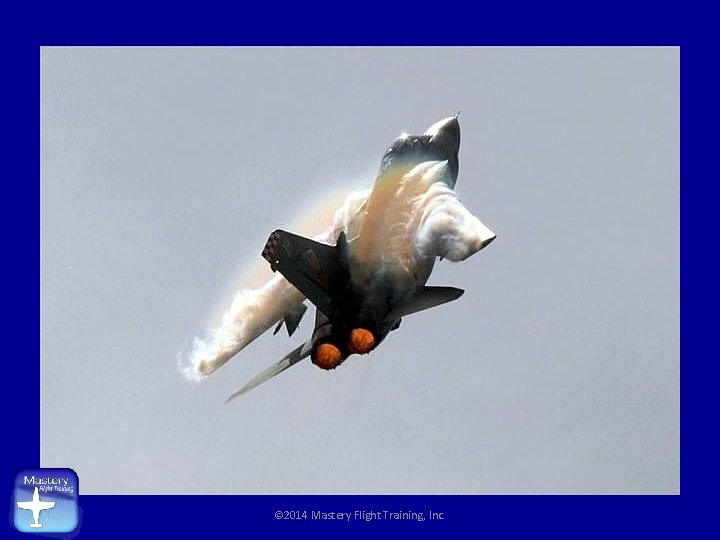
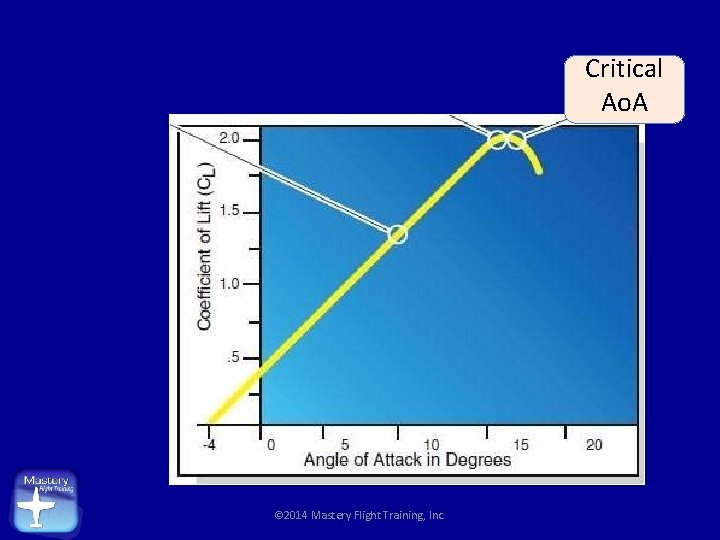
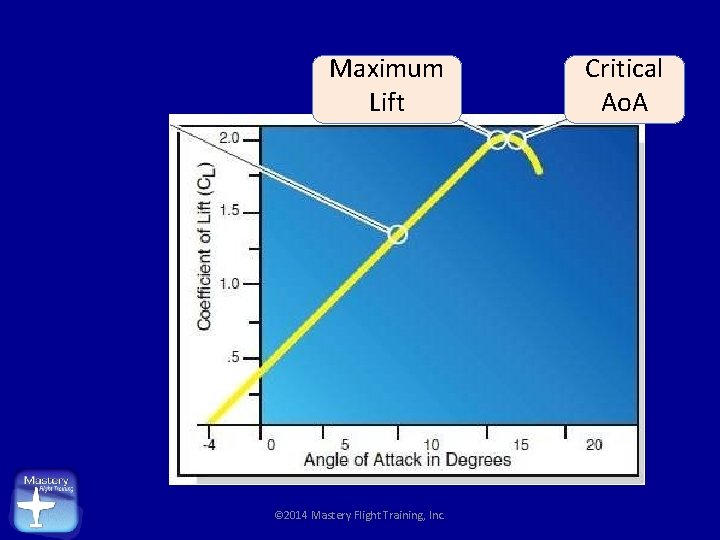
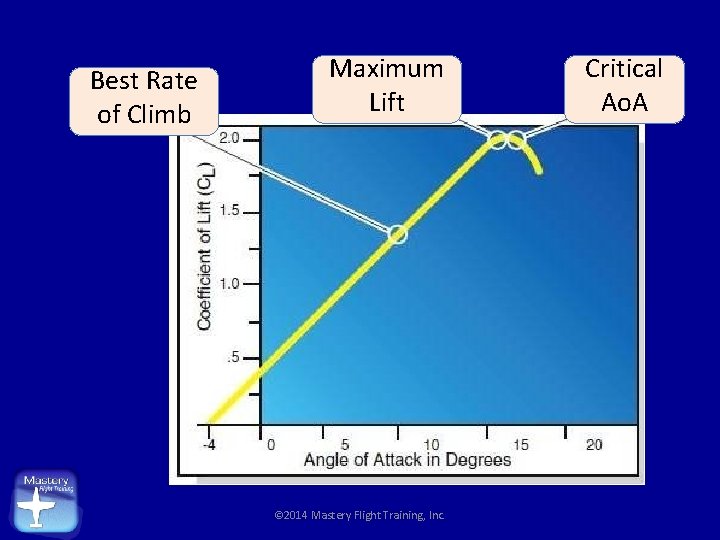
Critical Angle of Attack © 2014 Mastery Flight Training, Inc.
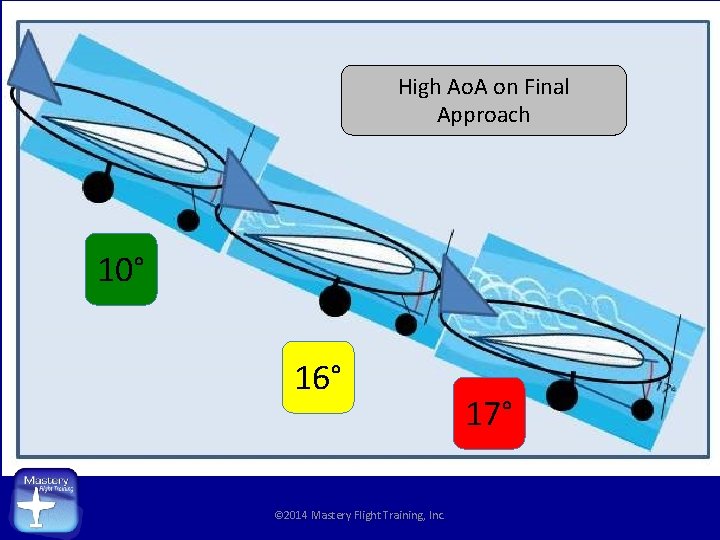
High Ao. A on Final Approach 10° 16° © 2014 Mastery Flight Training, Inc. 17°
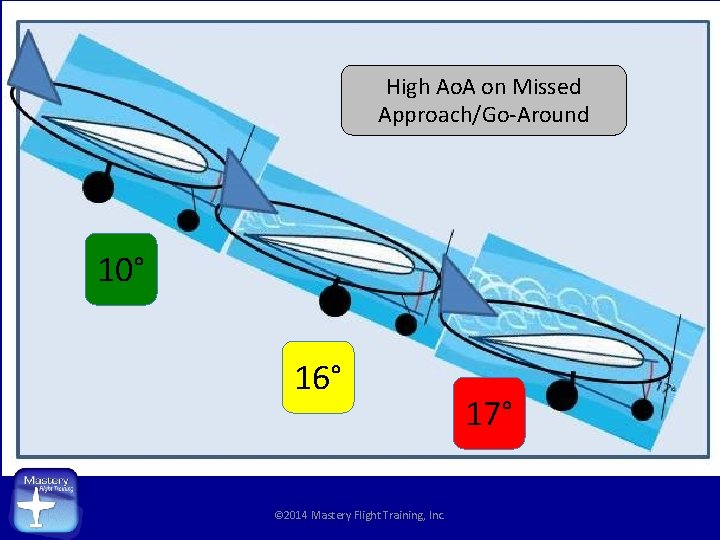
High Ao. A on Missed Approach/Go-Around 10° 16° © 2014 Mastery Flight Training, Inc. 17°
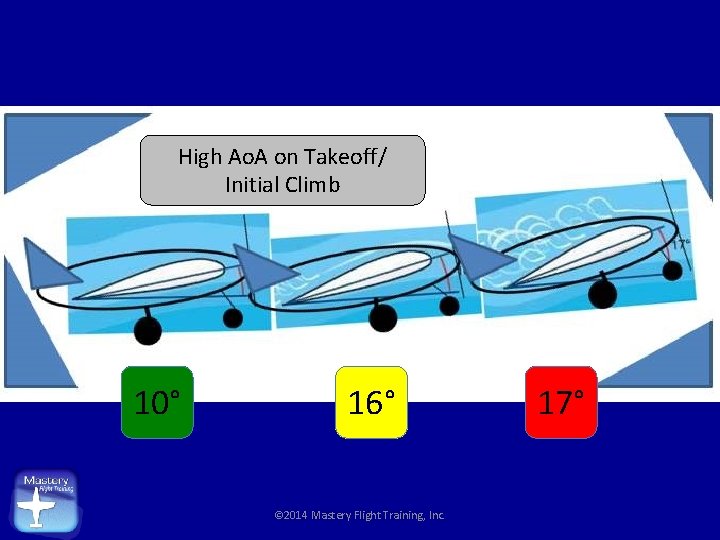
High Ao. A on Takeoff/ Initial Climb 10° 16° © 2014 Mastery Flight Training, Inc. 17°
© 2014 Mastery Flight Training, Inc.
Critical Ao. A © 2014 Mastery Flight Training, Inc.
Maximum Lift © 2014 Mastery Flight Training, Inc. Critical Ao. A
Best Rate of Climb Maximum Lift © 2014 Mastery Flight Training, Inc. Critical Ao. A
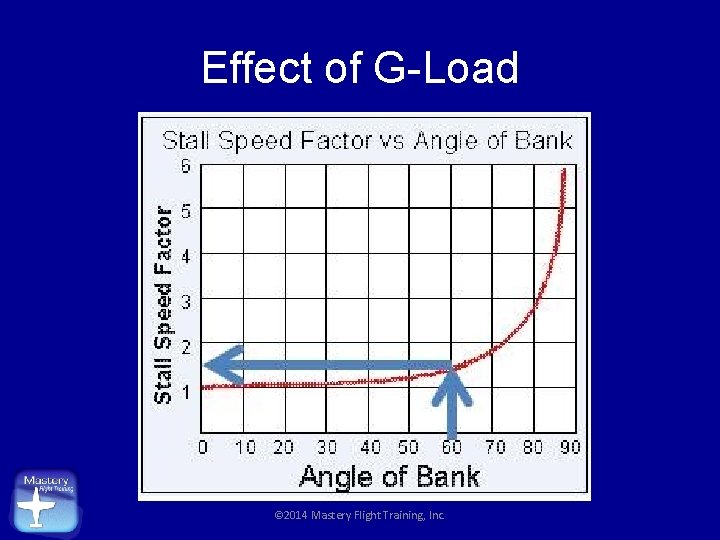
Effect of G-Load © 2014 Mastery Flight Training, Inc.
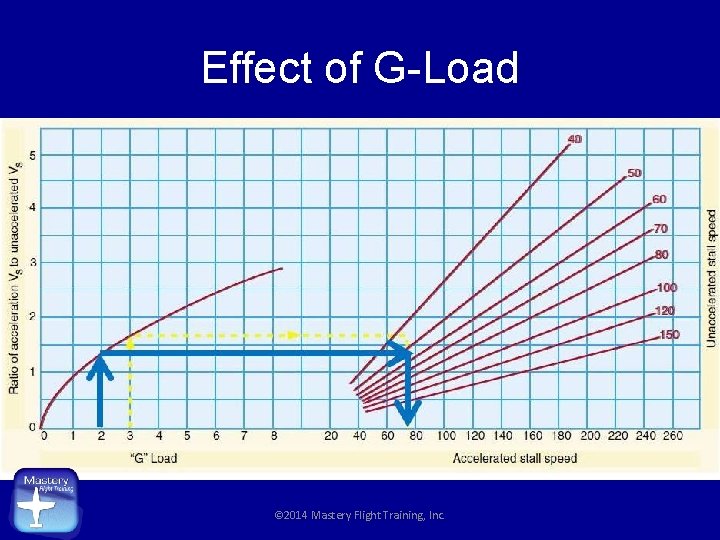
Effect of G-Load © 2014 Mastery Flight Training, Inc.
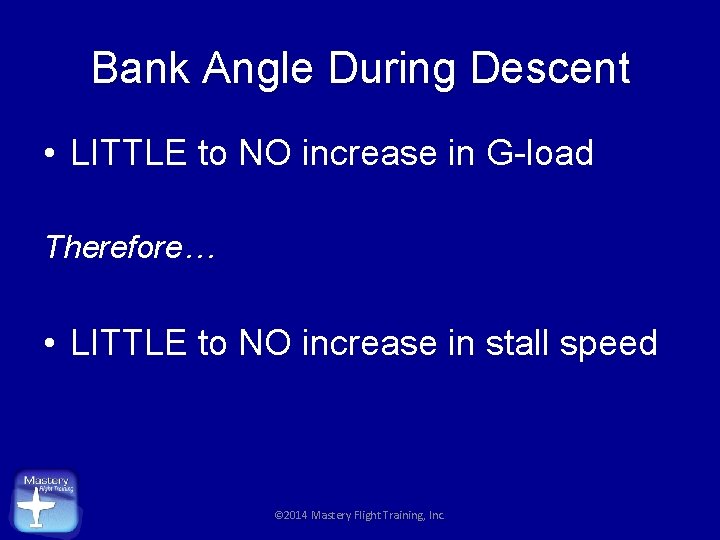
Bank Angle During Descent • LITTLE to NO increase in G-load Therefore… • LITTLE to NO increase in stall speed © 2014 Mastery Flight Training, Inc.
To make an airplane stall, you (or the autopilot or the trim) must actively resist the airplane’s tendency to descend. © 2014 Mastery Flight Training, Inc.
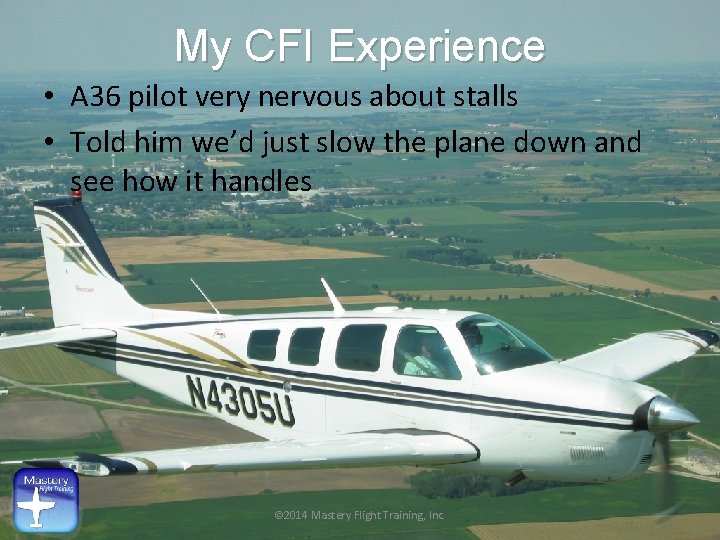
My CFI Experience • A 36 pilot very nervous about stalls • Told him we’d just slow the plane down and see how it handles © 2014 Mastery Flight Training, Inc.
Pre-Stall Indications • Pulling on the yoke © 2014 Mastery Flight Training, Inc.
Pre-Stall Indications • Pulling on the yoke • Right rudder to maintain heading © 2014 Mastery Flight Training, Inc.
Pre-Stall Indications • Pulling on the yoke • Right rudder to maintain heading • Decreasing noise © 2014 Mastery Flight Training, Inc.
Pre-Stall Indications • • Pulling on the yoke Right rudder to maintain heading Decreasing noise Decreasing indicated airspeed © 2014 Mastery Flight Training, Inc.
Pre-Stall Indications • • Pulling on the yoke Right rudder to maintain heading Decreasing noise Decreasing indicated airspeed Release the back pressure to reduce the Ao. A © 2014 Mastery Flight Training, Inc.
© 2014 Mastery Flight Training, Inc.
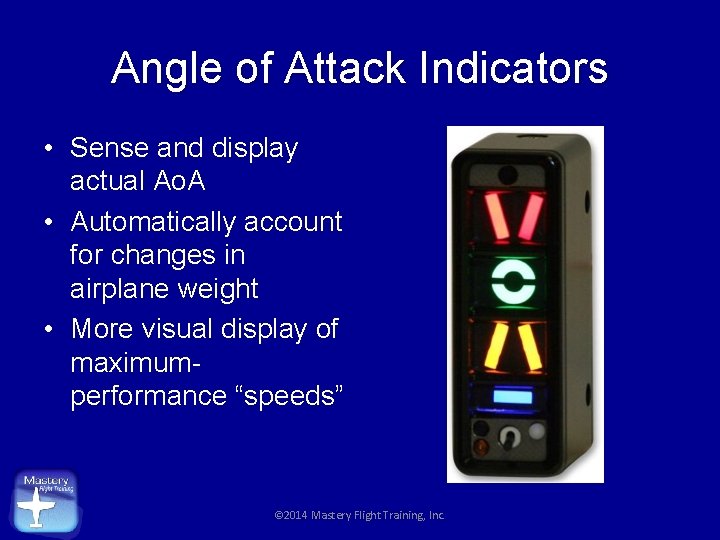
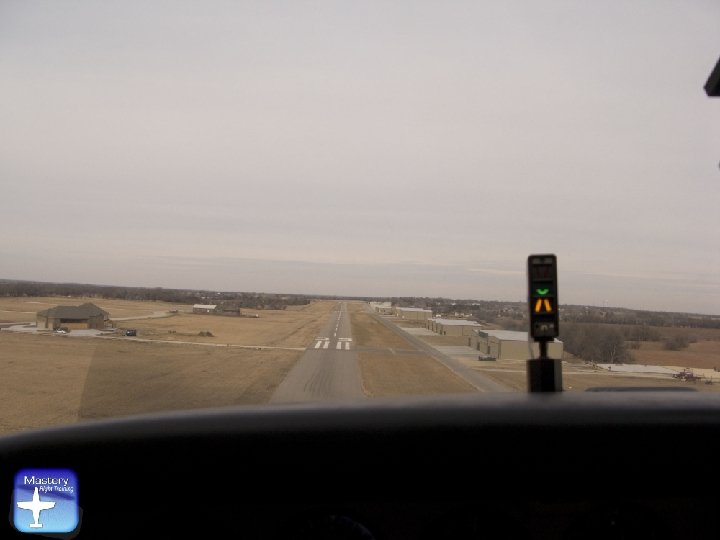
Angle of Attack Indicators • Sense and display actual Ao. A • Automatically account for changes in airplane weight • More visual display of maximumperformance “speeds” © 2014 Mastery Flight Training, Inc.
© 2014 Mastery Flight Training, Inc.
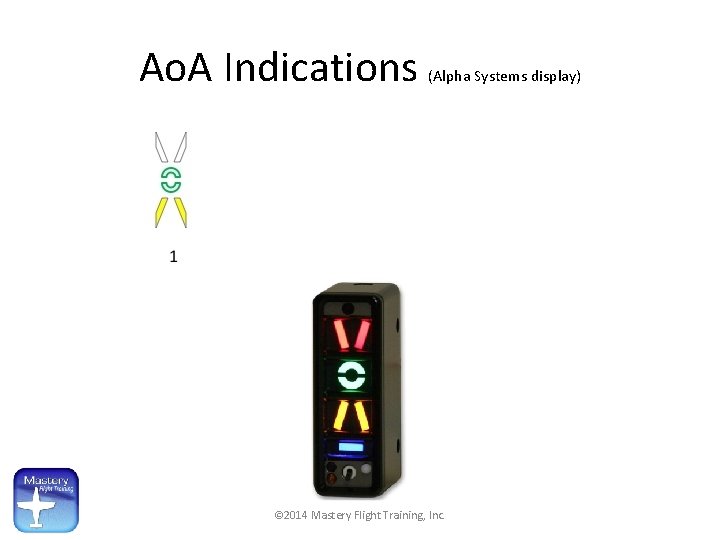
Ao. A Indications (Alpha Systems display) © 2014 Mastery Flight Training, Inc.
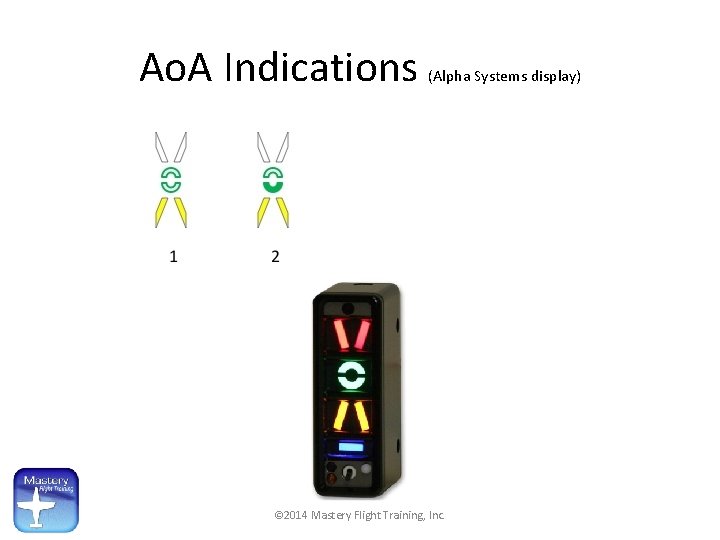
Ao. A Indications (Alpha Systems display) © 2014 Mastery Flight Training, Inc.
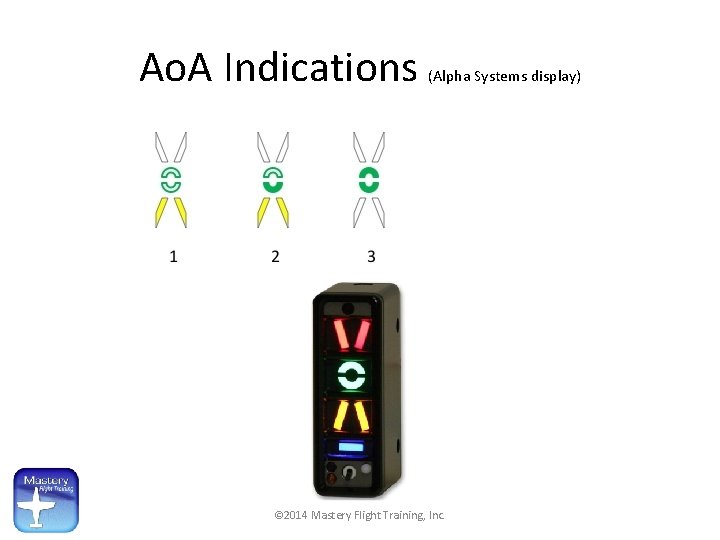
Ao. A Indications (Alpha Systems display) © 2014 Mastery Flight Training, Inc.
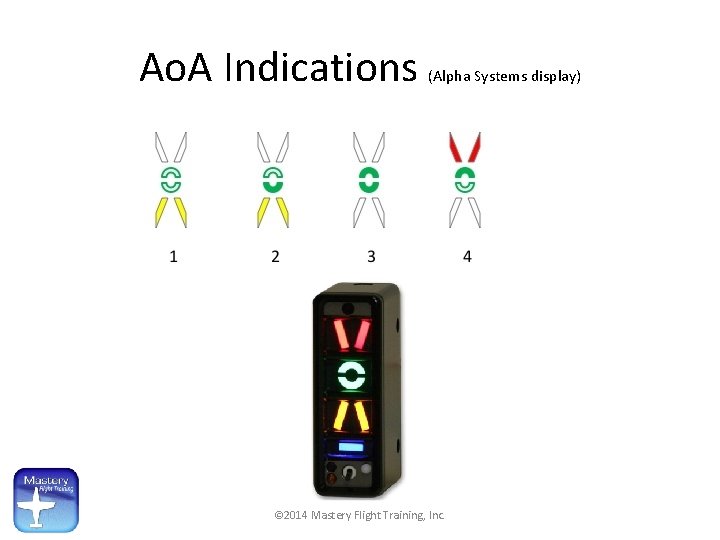
Ao. A Indications (Alpha Systems display) © 2014 Mastery Flight Training, Inc.
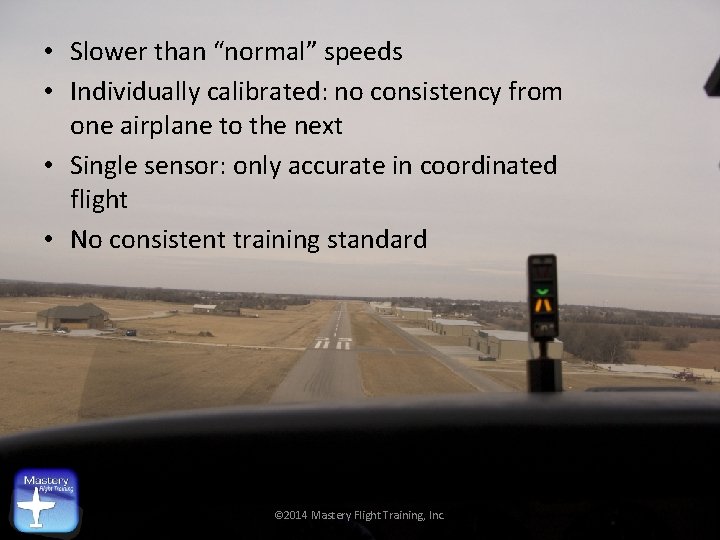
• Slower than “normal” speeds • Individually calibrated: no consistency from one airplane to the next • Single sensor: only accurate in coordinated flight • No consistent training standard © 2014 Mastery Flight Training, Inc.
NTSB Data 2003 -2012 © 2014 Mastery Flight Training, Inc.
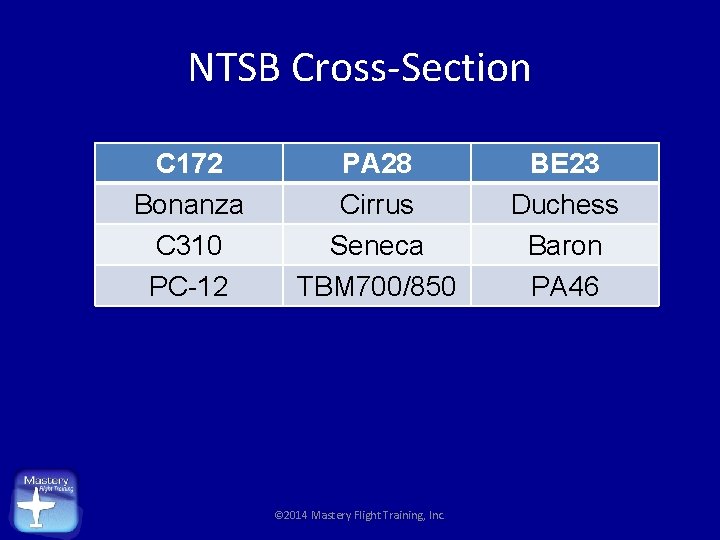
NTSB Cross-Section C 172 Bonanza C 310 PC-12 PA 28 Cirrus Seneca TBM 700/850 © 2014 Mastery Flight Training, Inc. BE 23 Duchess Baron PA 46
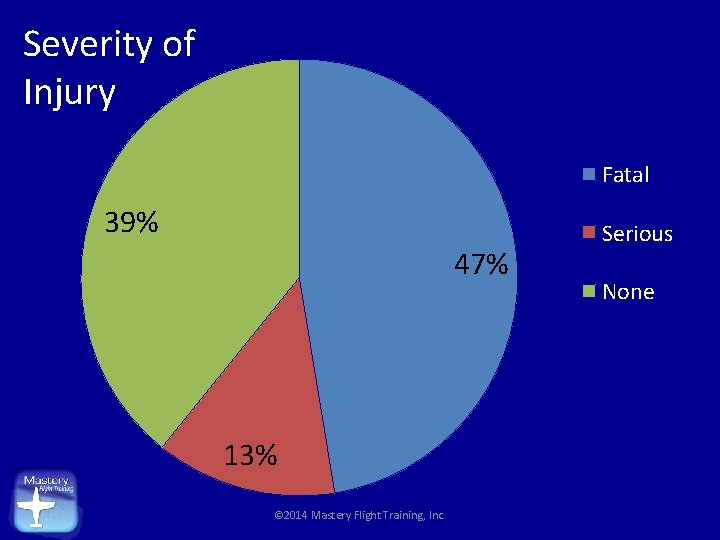
Severity of Injury Fatal 39% 47% 13% © 2014 Mastery Flight Training, Inc. Serious None
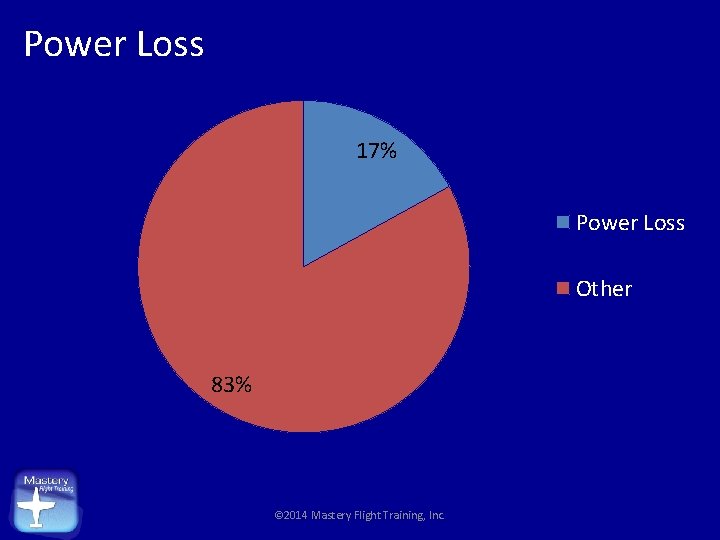
Power Loss 17% Power Loss Other 83% © 2014 Mastery Flight Training, Inc.
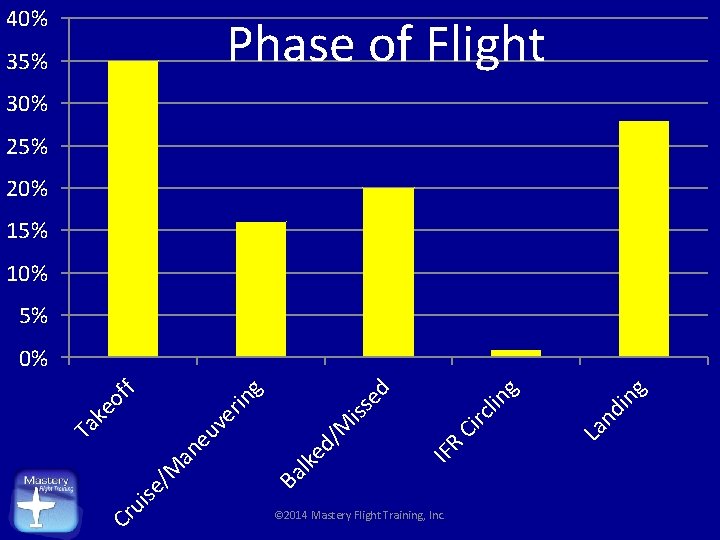
40% Phase of Flight 35% 30% 25% 20% 15% 10% 5% Cr ng nd i rc Ci R IF © 2014 Mastery Flight Training, Inc. La lin g ed iss M d/ lke Ba ui se /M Ta an eu ve ke rin of g f 0%
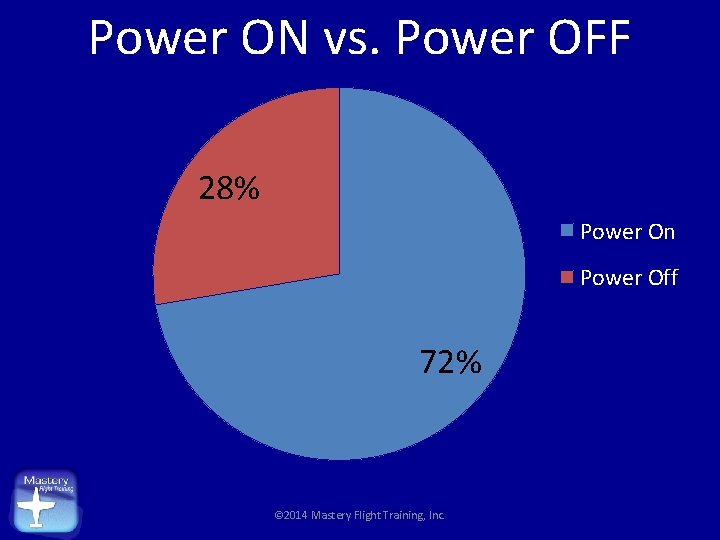
Power ON vs. Power OFF 28% Power On Power Off 72% © 2014 Mastery Flight Training, Inc.
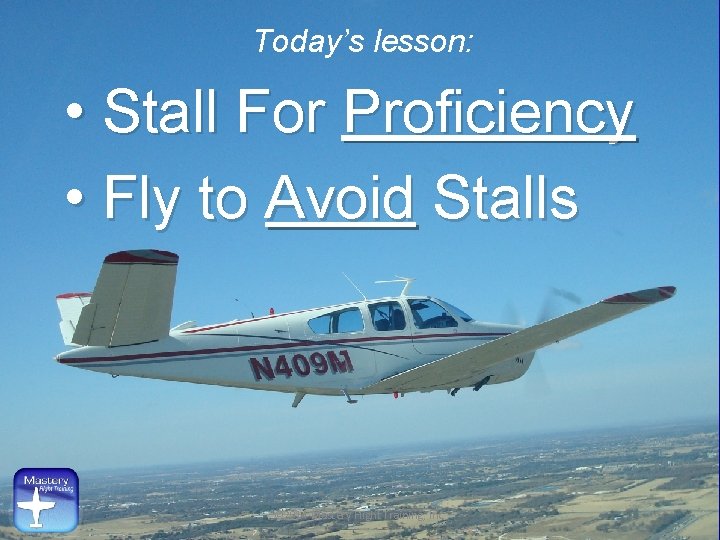
Today’s lesson: • Stall For Proficiency • Fly to Avoid Stalls © 2014 Mastery Flight Training, Inc.
The Truth About Stalls • The airplane will not stall unless you (or the trim) are actively increasing back pressure on the elevators © 2014 Mastery Flight Training, Inc.
The Truth About Stalls • The airplane will not stall unless you (or the trim) are actively increasing back pressure on the elevators • Banking when under G-load increases the speed at which the wing reaches critical Ao. A © 2014 Mastery Flight Training, Inc.
The Truth About Stalls • The more flap, the more dynamic the stall © 2014 Mastery Flight Training, Inc.
The Truth About Stalls • The more flap, the more dynamic the stall • A mush is as bad as a stall © 2014 Mastery Flight Training, Inc.
The Truth About Stalls • The more flap, the more dynamic the stall • A mush is as bad as a stall • Uncoordinated flight increases the Ao. A on the low wing, and may not provide stall warning or Ao. A indications © 2014 Mastery Flight Training, Inc.
The Truth About Stalls • Power ON stall crashes outnumber power OFF crashes THREE to ONE © 2014 Mastery Flight Training, Inc.
The Truth About Stalls • Power ON stall crashes outnumber power OFF crashes THREE to ONE • 55% of all stalls happen on takeoff, go around or missed approach © 2014 Mastery Flight Training, Inc.
The Truth About Stalls • Power ON stall crashes outnumber power OFF crashes THREE to ONE • 55% of all stalls happen on takeoff, go around or missed approach • 20% of stalls occur during a loss of engine power—many of those fuel managementrelated © 2014 Mastery Flight Training, Inc.
Mitigations • Fuel • Be prepared so sensations are instinctive if an engine quits • Regular practice on stalls and high Ao. A • Density altitude • Pitch attitudes • Trim for the missed © 2014 Mastery Flight Training, Inc.

www. eaglegroupusa. com © 2014 Mastery Flight Training, Inc.
The Truth… About Stalls Free FLYING LESSONS Weekly e-newsletter Thomas P. Turner Mastery Flight Training, Inc. www. mastery-flight-training. com
- Slides: 53