
the true story behind the birds The Birds
(the true story behind the birds) The Birds…………… October 31, 2018

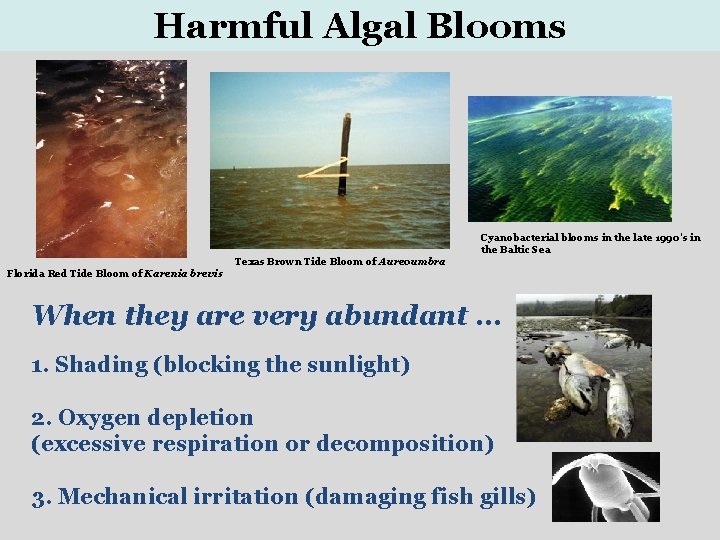
Harmful Algal Blooms Cyanobacterial blooms in the late 1990's in the Baltic Sea Texas Brown Tide Bloom of Aureoumbra Florida Red Tide Bloom of Karenia brevis When they are very abundant … 1. Shading (blocking the sunlight) 2. Oxygen depletion (excessive respiration or decomposition) 3. Mechanical irritation (damaging fish gills)
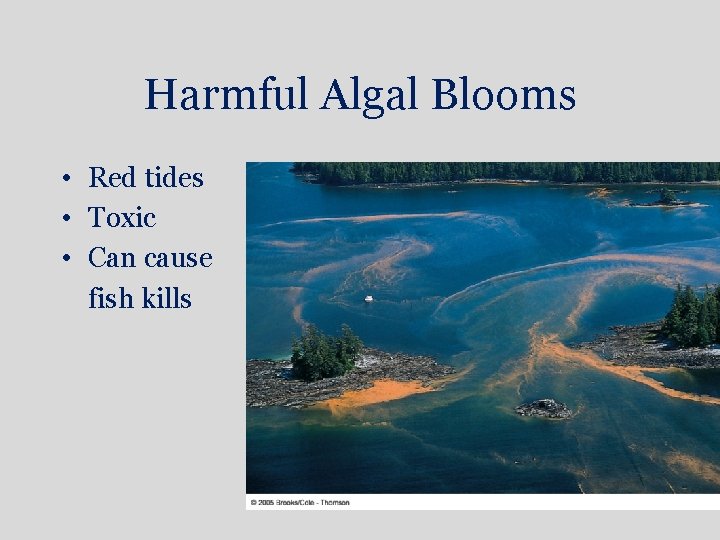
Harmful Algal Blooms • Red tides • Toxic • Can cause fish kills
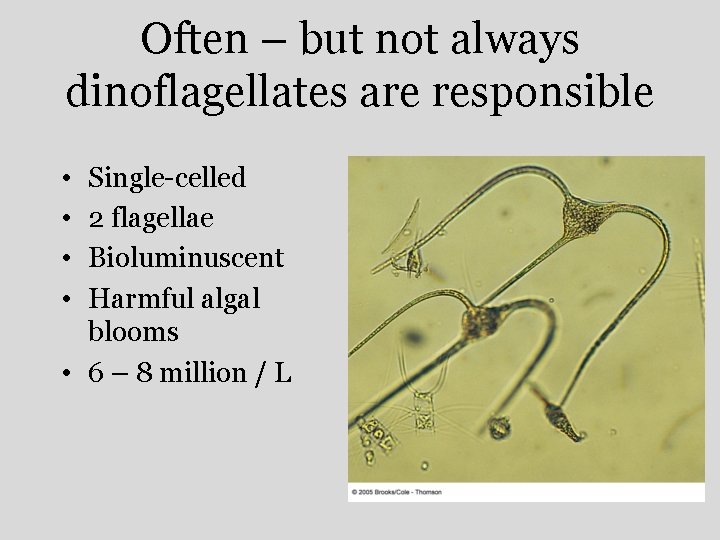
Often – but not always dinoflagellates are responsible • • Single-celled 2 flagellae Bioluminuscent Harmful algal blooms • 6 – 8 million / L
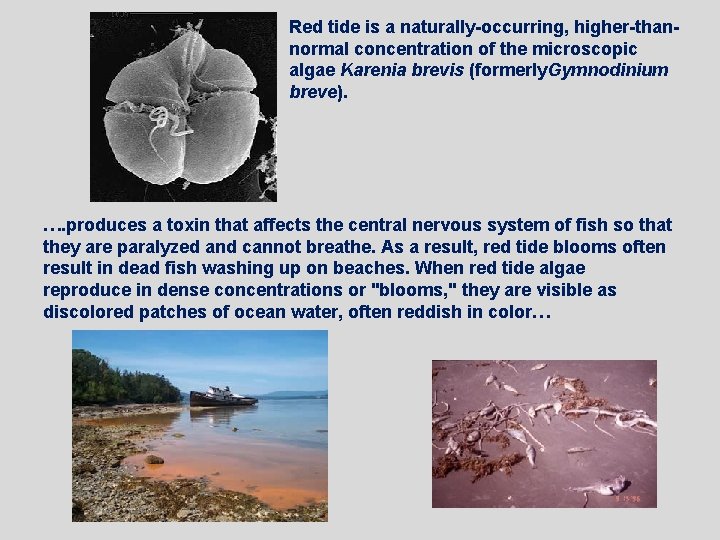
Red tide is a naturally-occurring, higher-thannormal concentration of the microscopic algae Karenia brevis (formerly. Gymnodinium breve). …. produces a toxin that affects the central nervous system of fish so that they are paralyzed and cannot breathe. As a result, red tide blooms often result in dead fish washing up on beaches. When red tide algae reproduce in dense concentrations or "blooms, " they are visible as discolored patches of ocean water, often reddish in color…
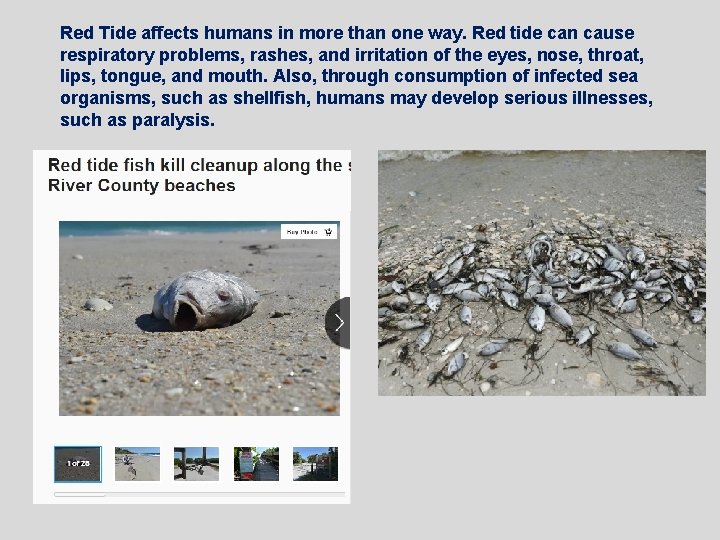
Red Tide affects humans in more than one way. Red tide can cause respiratory problems, rashes, and irritation of the eyes, nose, throat, lips, tongue, and mouth. Also, through consumption of infected sea organisms, such as shellfish, humans may develop serious illnesses, such as paralysis.
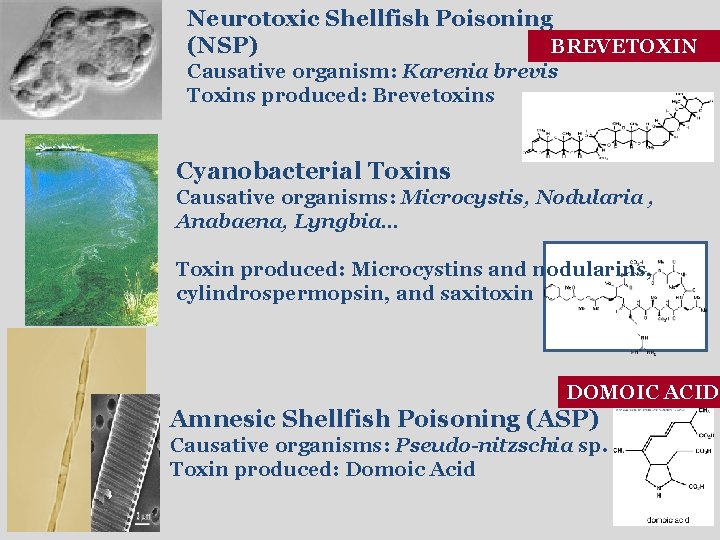
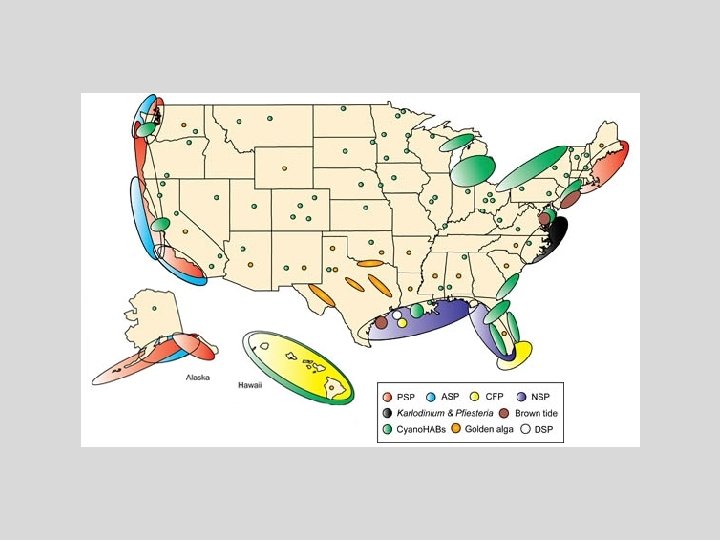
Neurotoxic Shellfish Poisoning BREVETOXIN (NSP) Causative organism: Karenia brevis Toxins produced: Brevetoxins Cyanobacterial Toxins Causative organisms: Microcystis, Nodularia , Anabaena, Lyngbia… Toxin produced: Microcystins and nodularins, cylindrospermopsin, and saxitoxin DOMOIC ACID Amnesic Shellfish Poisoning (ASP) Causative organisms: Pseudo-nitzschia sp. Toxin produced: Domoic Acid
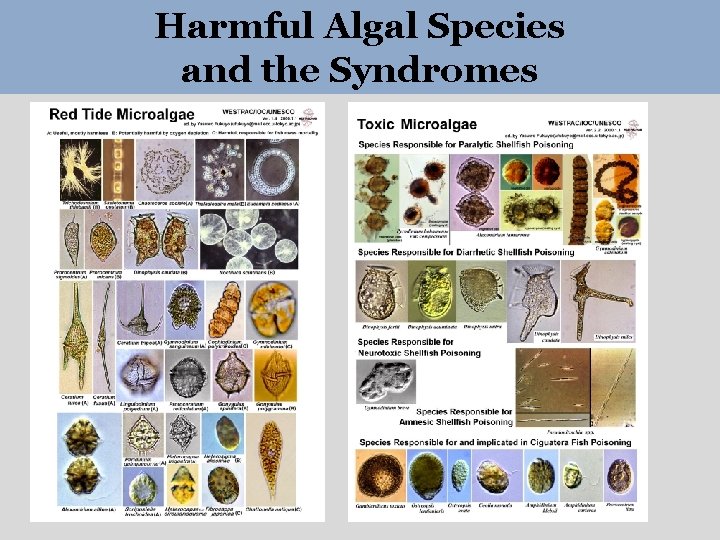
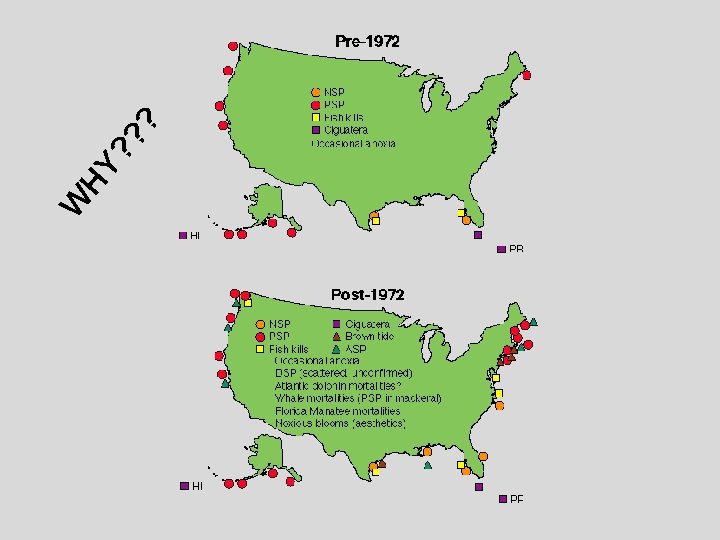
Harmful Algal Species and the Syndromes

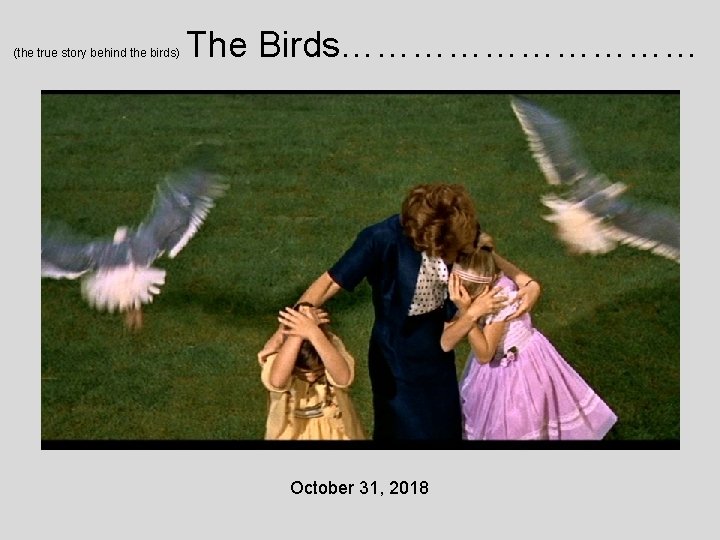
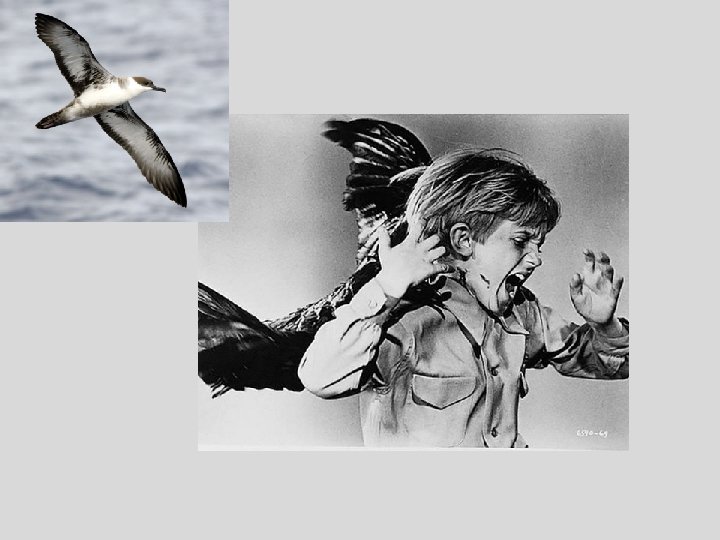
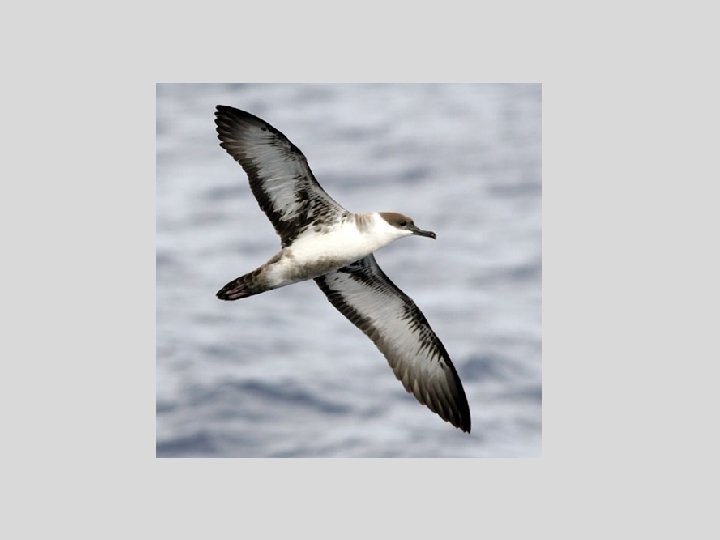
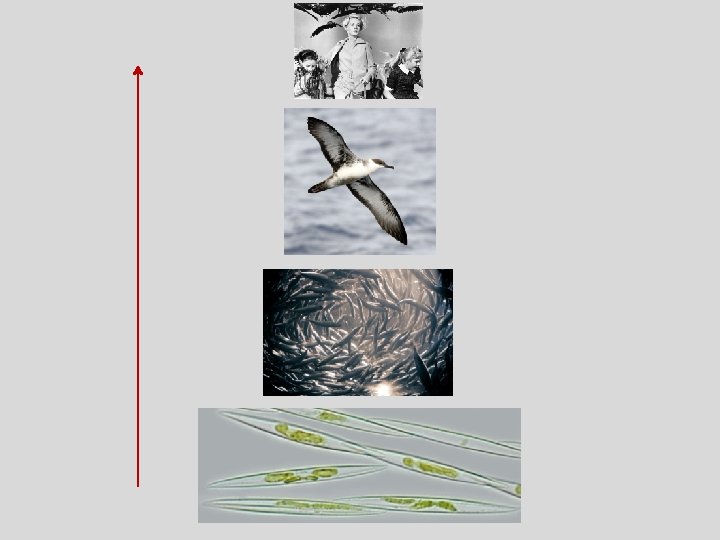
“On 18 August 1961, a Californian newspaper reported that thousands of “crazed seabirds pelted the shores of North Monterey Bay, California” regurgitating anchovies. ” – Bargu et al. 2011
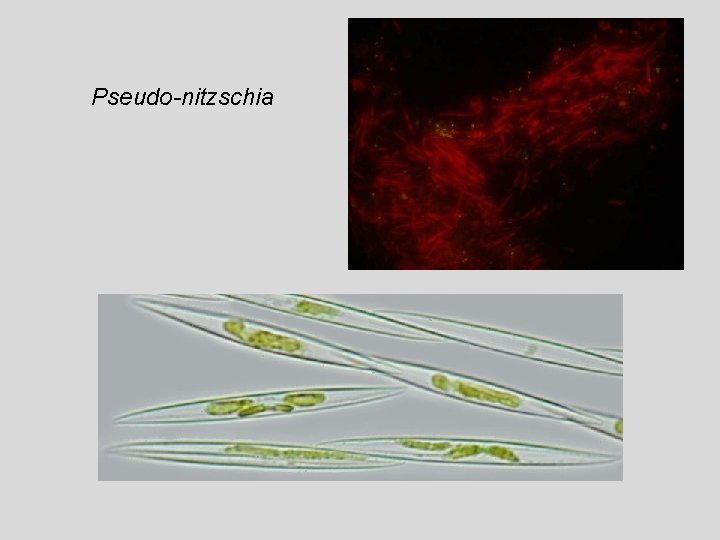
Pseudo-nitzschia

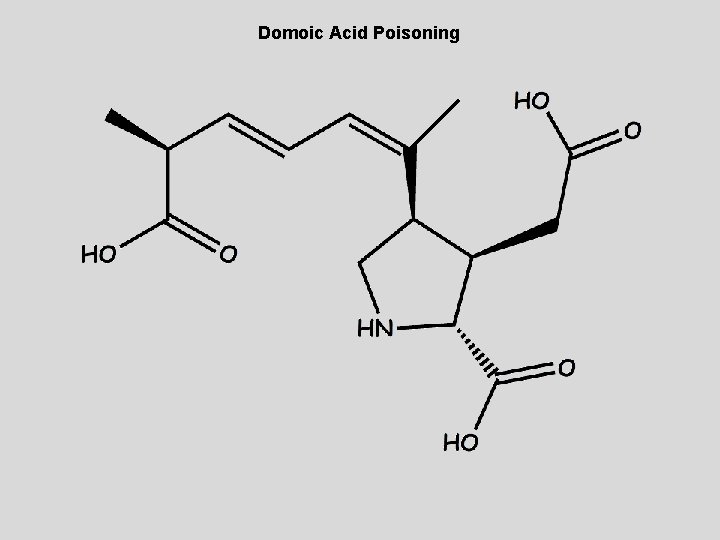
Domoic Acid Poisoning
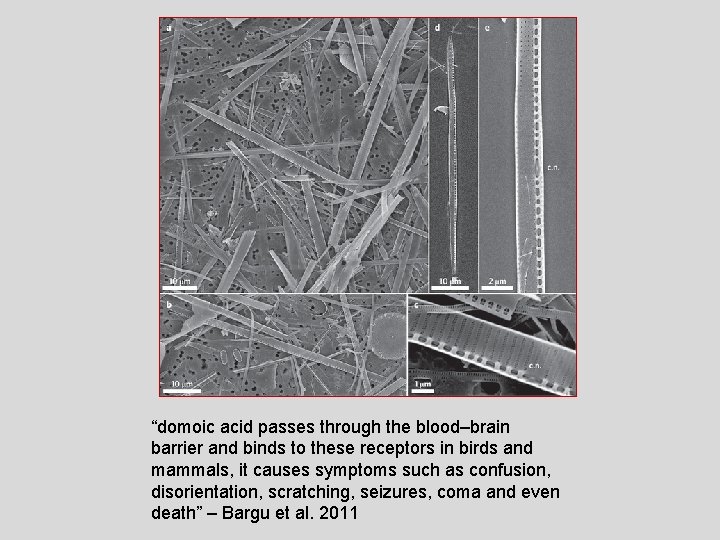
“domoic acid passes through the blood–brain barrier and binds to these receptors in birds and mammals, it causes symptoms such as confusion, disorientation, scratching, seizures, coma and even death” – Bargu et al. 2011
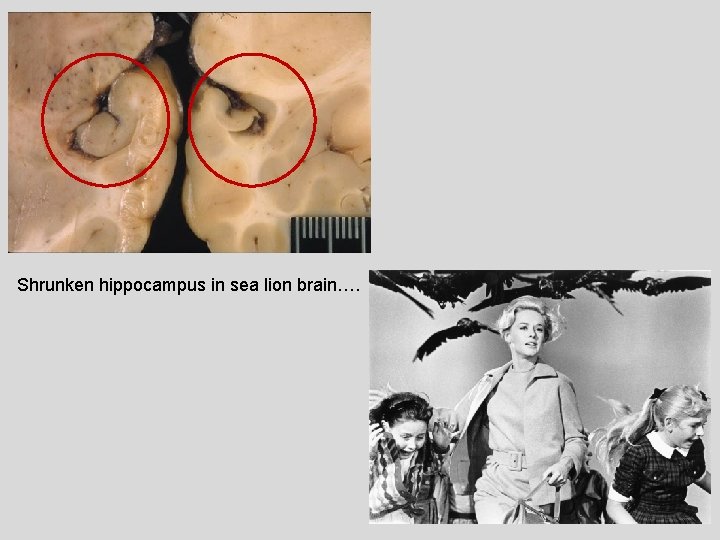
Shrunken hippocampus in sea lion brain….
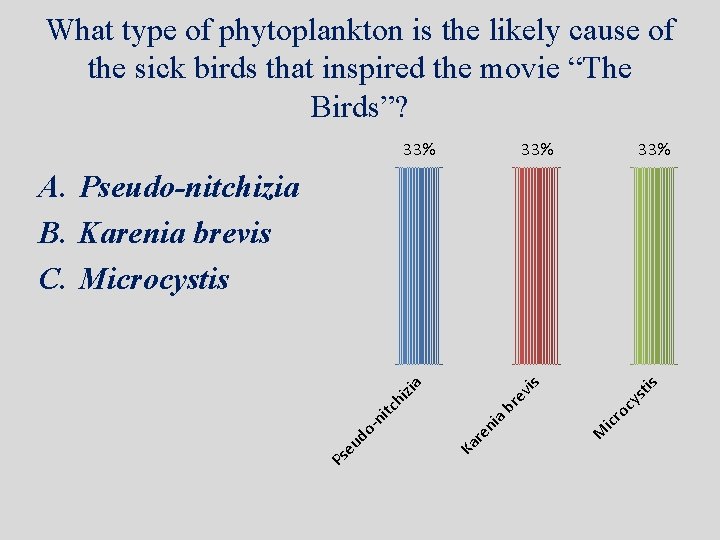
What type of phytoplankton is the likely cause of the sick birds that inspired the movie “The Birds”? 33% 33% Ps tis ys oc icr M ab ni re Ka eu do -n itc hi re zia vis A. Pseudo-nitchizia B. Karenia brevis C. Microcystis
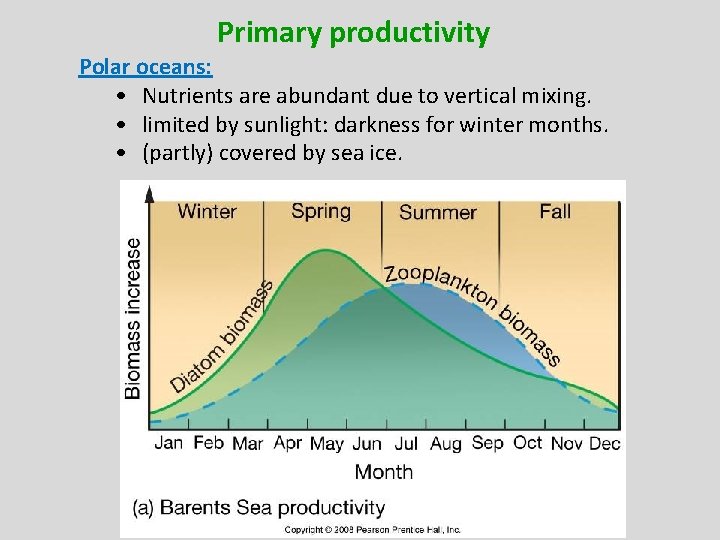
Primary productivity Polar oceans: • Nutrients are abundant due to vertical mixing. • limited by sunlight: darkness for winter months. • (partly) covered by sea ice.
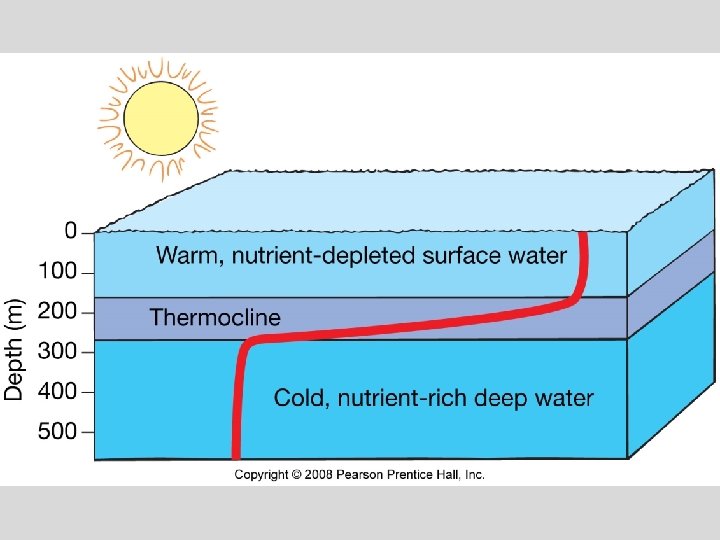
Primary productivity in the tropical ocean Tropical oceans: low. • Permanent thermocline (pycnocline) produces stratification. • Production is limited by lack of nutrients. • Exceptions • Equatorial upwelling in the Eastern Pacific Ocean. • Coastal upwelling. • Coral reefs: organisms are adapted to low-nutrient conditions.
Temperate ocean productivity • Limited by both available sunlight and • Available nutrients • Highly seasonal pattern – Winter low (lots of nutrients, little sunlight) – Spring high (spring bloom) – Summer low (little nutrients, lots of sunlight) – Fall high (fall bloom)
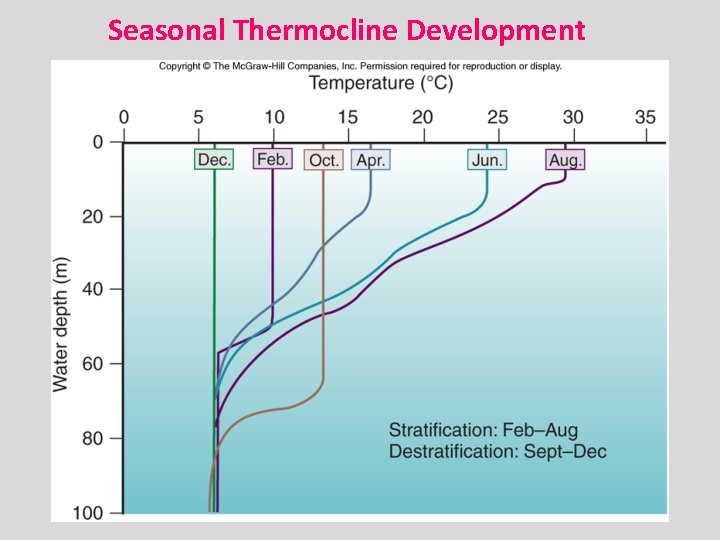
Seasonal Thermocline Development
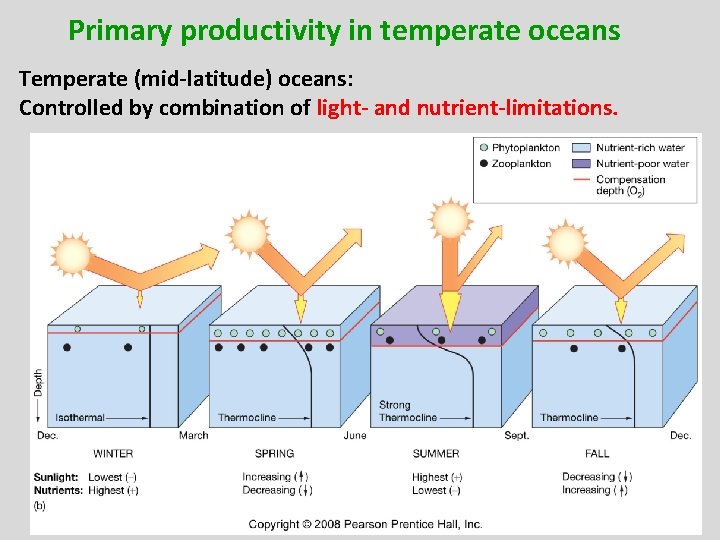
Primary productivity in temperate oceans Temperate (mid-latitude) oceans: Controlled by combination of light- and nutrient-limitations. 27
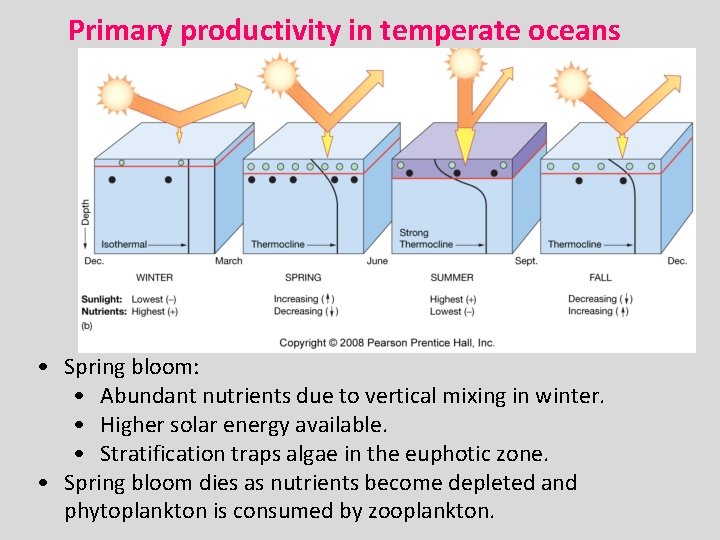
Primary productivity in temperate oceans • Spring bloom: • Abundant nutrients due to vertical mixing in winter. • Higher solar energy available. • Stratification traps algae in the euphotic zone. • Spring bloom dies as nutrients become depleted and phytoplankton is consumed by zooplankton.
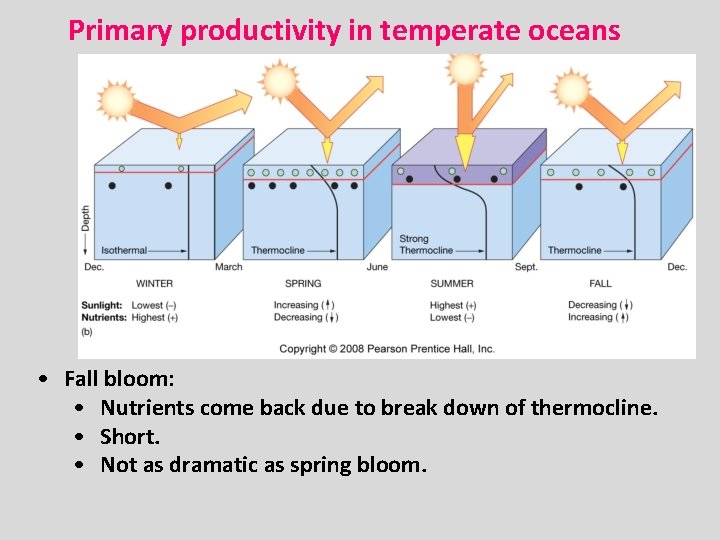
Primary productivity in temperate oceans • Fall bloom: • Nutrients come back due to break down of thermocline. • Short. • Not as dramatic as spring bloom.
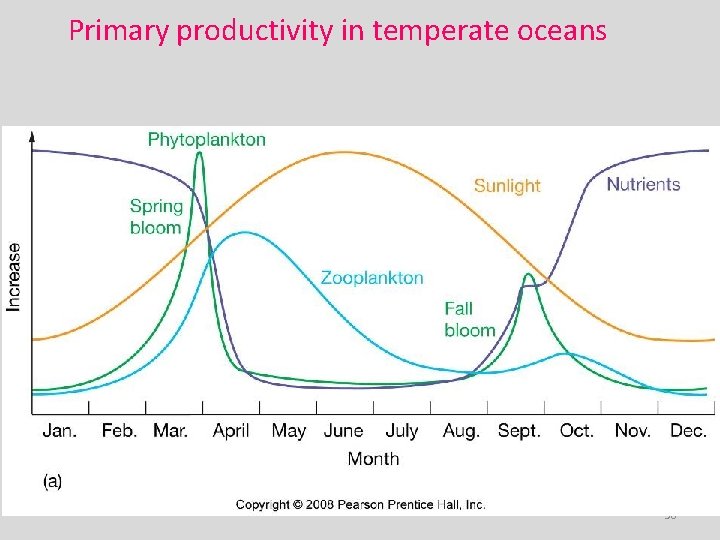
Primary productivity in temperate oceans 30
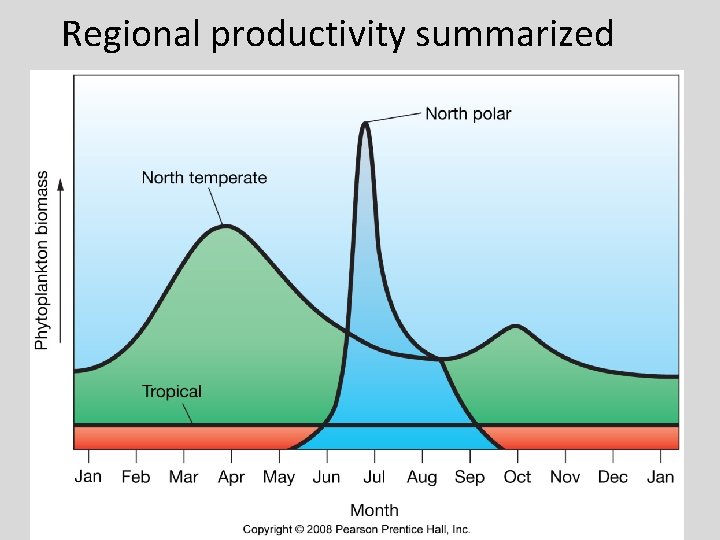
Regional productivity summarized
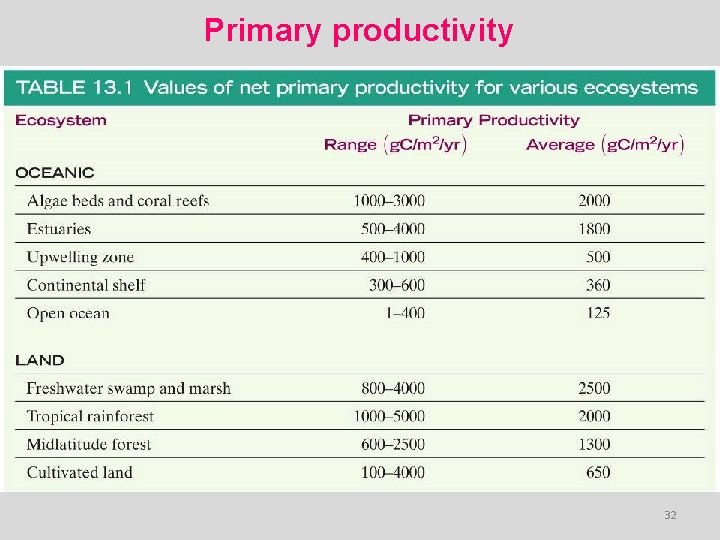
Primary productivity 32
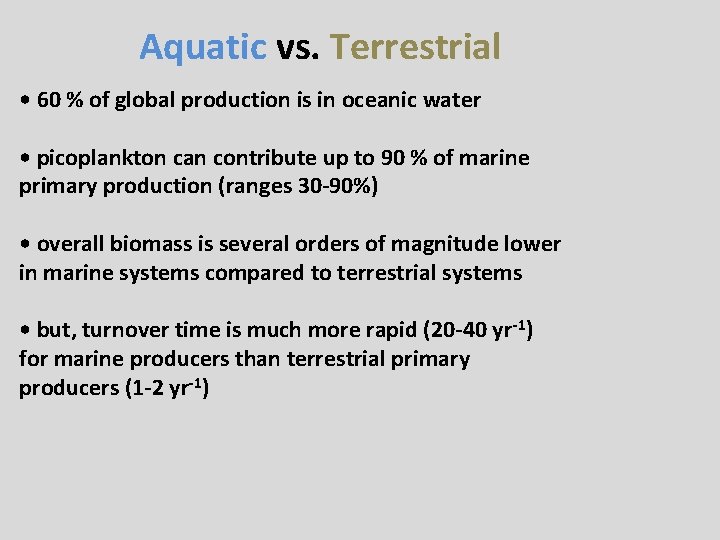
Aquatic vs. Terrestrial • 60 % of global production is in oceanic water • picoplankton can contribute up to 90 % of marine primary production (ranges 30 -90%) • overall biomass is several orders of magnitude lower in marine systems compared to terrestrial systems • but, turnover time is much more rapid (20 -40 yr-1) for marine producers than terrestrial primary producers (1 -2 yr-1)
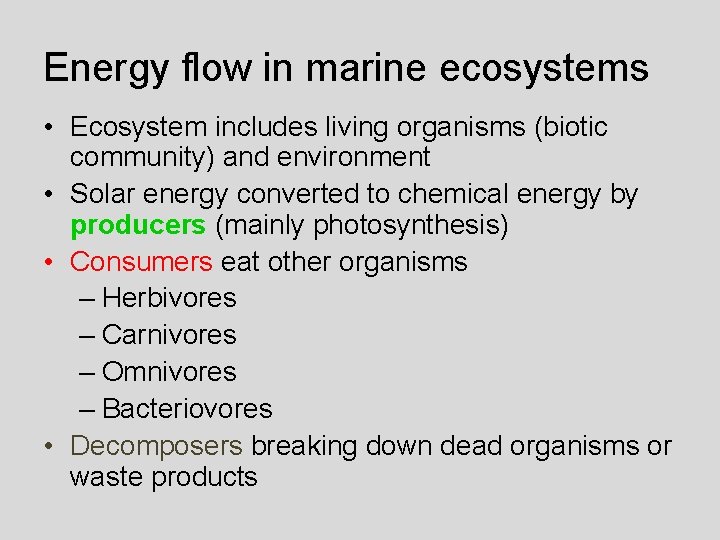
Energy flow in marine ecosystems • Ecosystem includes living organisms (biotic community) and environment • Solar energy converted to chemical energy by producers (mainly photosynthesis) • Consumers eat other organisms – Herbivores – Carnivores – Omnivores – Bacteriovores • Decomposers breaking down dead organisms or waste products
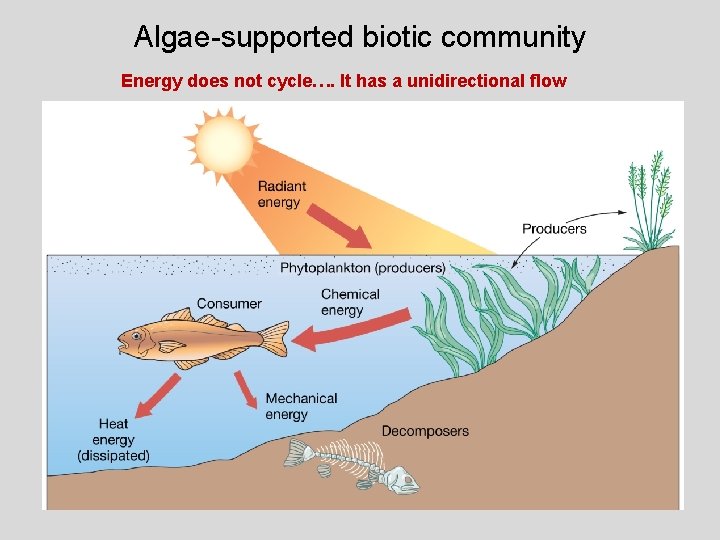
Algae-supported biotic community Energy does not cycle…. It has a unidirectional flow
Nutrients cycle! • Nutrients cycled from one chemical form to another • Biogeochemical cycling • Example, nutrients fixed by producers • Passed onto consumers • Some nutrients released to seawater through decomposers • Nutrients can be recycled through upwelling
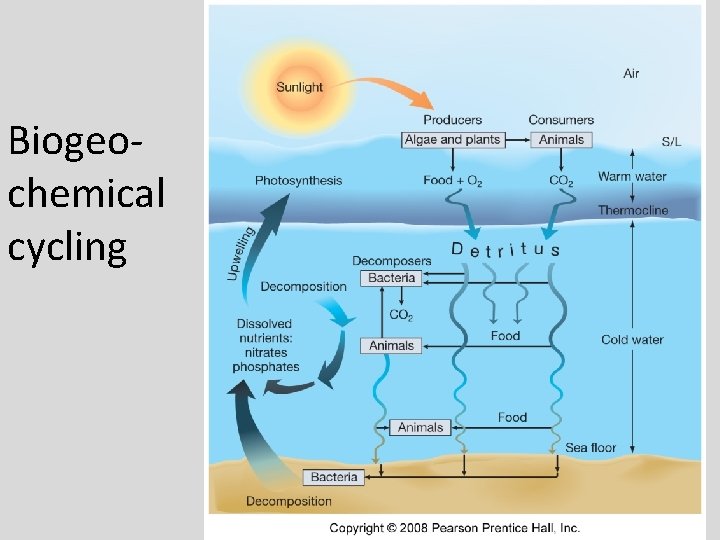
Biogeochemical cycling
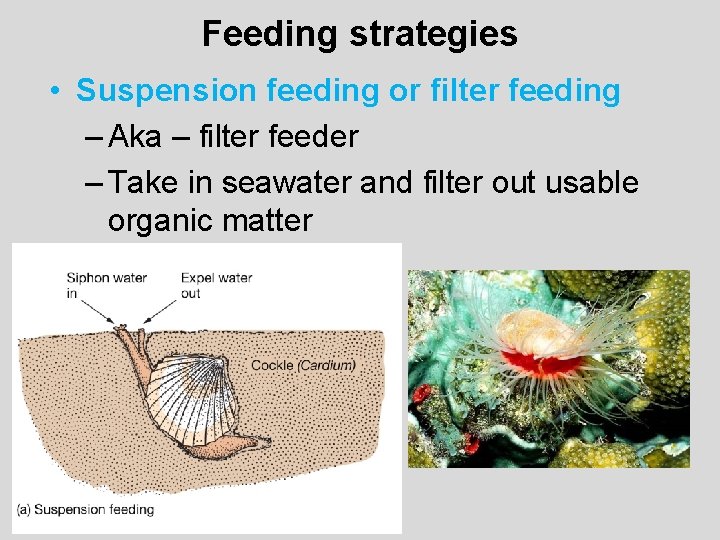
Feeding strategies • Suspension feeding or filter feeding – Aka – filter feeder – Take in seawater and filter out usable organic matter
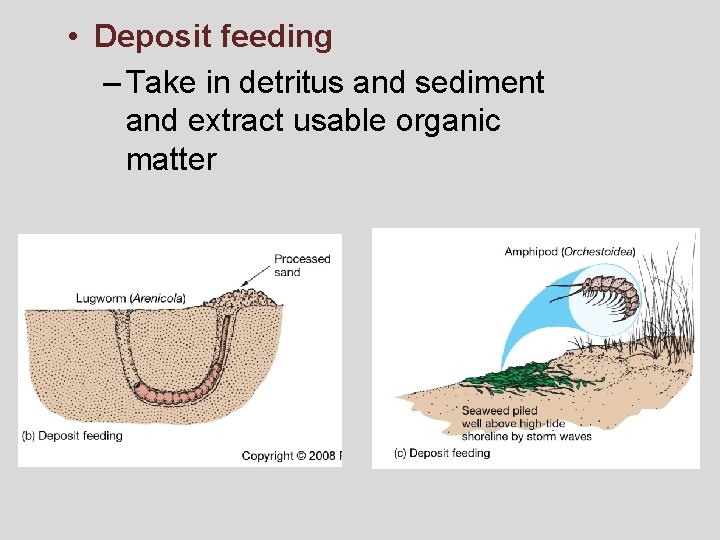
• Deposit feeding – Take in detritus and sediment and extract usable organic matter
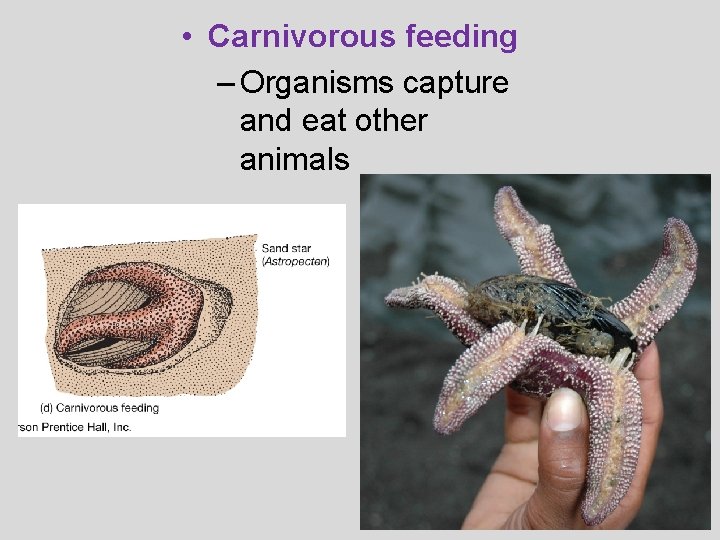
• Carnivorous feeding – Organisms capture and eat other animals
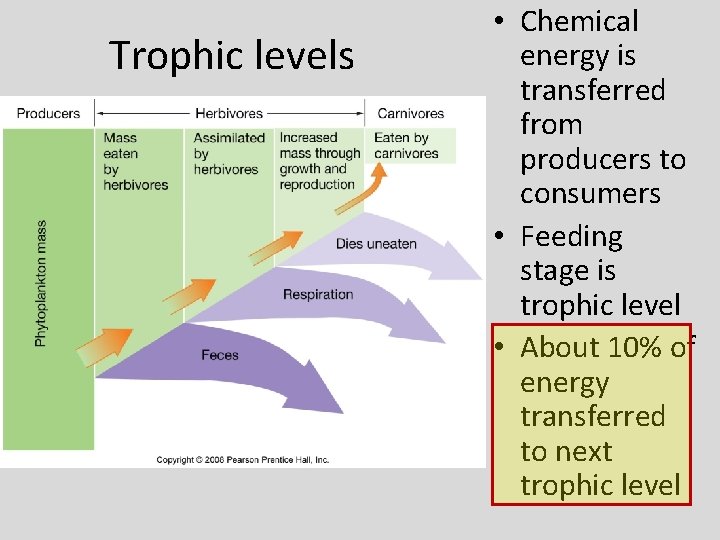
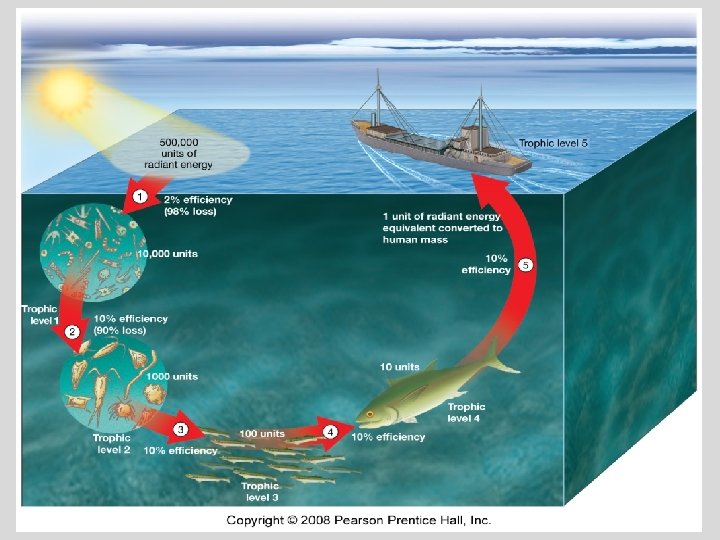
Trophic levels • Chemical energy is transferred from producers to consumers • Feeding stage is trophic level • About 10% of energy transferred to next trophic level
So – what does this mean? -Transfer of energy is very inefficient
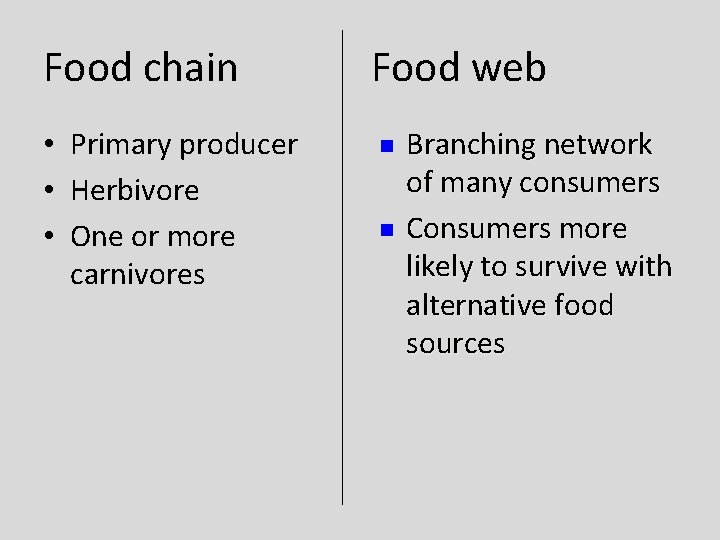
Food chain • Primary producer • Herbivore • One or more carnivores Food web n n Branching network of many consumers Consumers more likely to survive with alternative food sources
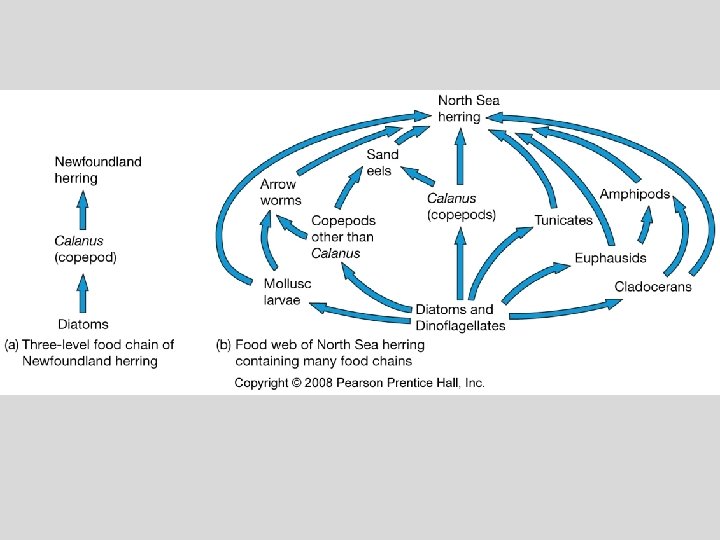
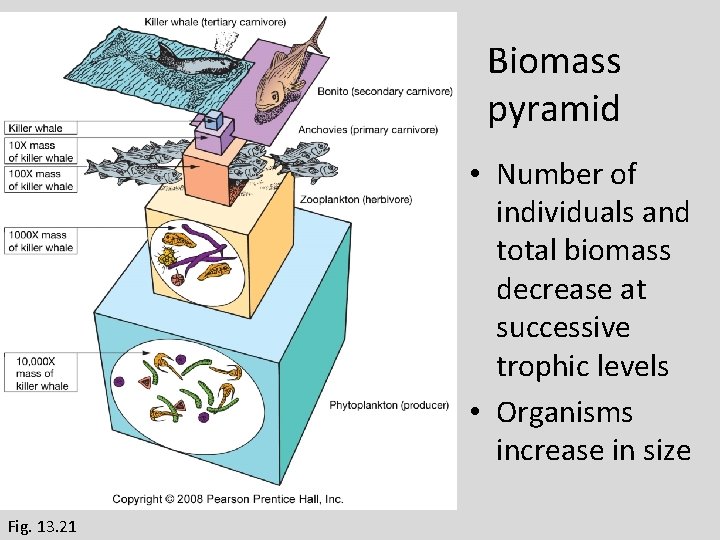
Biomass pyramid • Number of individuals and total biomass decrease at successive trophic levels • Organisms increase in size Fig. 13. 21
- Slides: 46