
THE TREATY OF VERSAILLES AND ITS CONSEQUENCES Unit

- Slides: 22
THE TREATY OF VERSAILLES AND ITS CONSEQUENCES Unit 8 Day 2
The Course of the War World War I lasts for 5 years, 1914 -1919 During the War all nations mobilize for Total War All aspects of life subsumed by war effort During the course of the war Russia undergoes the socialist, Bolshevik Revolution (1917) which overthrows the tzar, takes Russians out of the war In April 1917, America enters the war tipping the balance against Germany November 9, 1918 – German emperor abdicates, republic declared led by socialists November 11, 1918 – Armistice signed ending hostilities
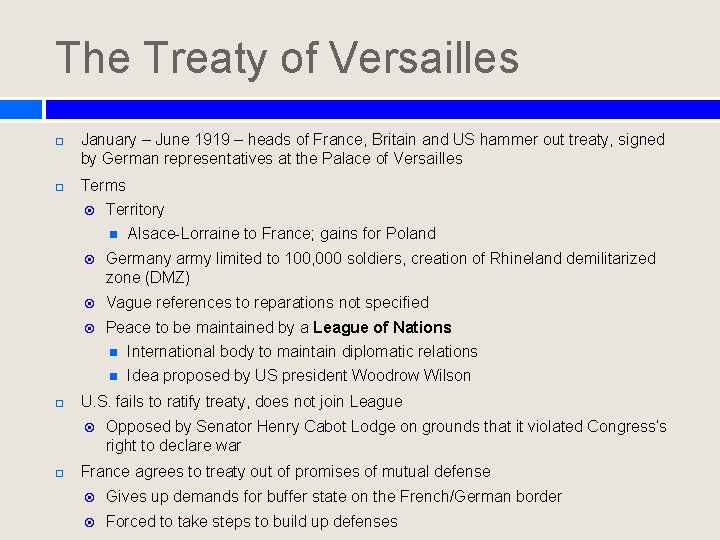
The Treaty of Versailles January – June 1919 – heads of France, Britain and US hammer out treaty, signed by German representatives at the Palace of Versailles Terms Territory Germany army limited to 100, 000 soldiers, creation of Rhineland demilitarized zone (DMZ) Vague references to reparations not specified Peace to be maintained by a League of Nations International body to maintain diplomatic relations Idea proposed by US president Woodrow Wilson U. S. fails to ratify treaty, does not join League Alsace-Lorraine to France; gains for Poland Opposed by Senator Henry Cabot Lodge on grounds that it violated Congress’s right to declare war France agrees to treaty out of promises of mutual defense Gives up demands for buffer state on the French/German border Forced to take steps to build up defenses
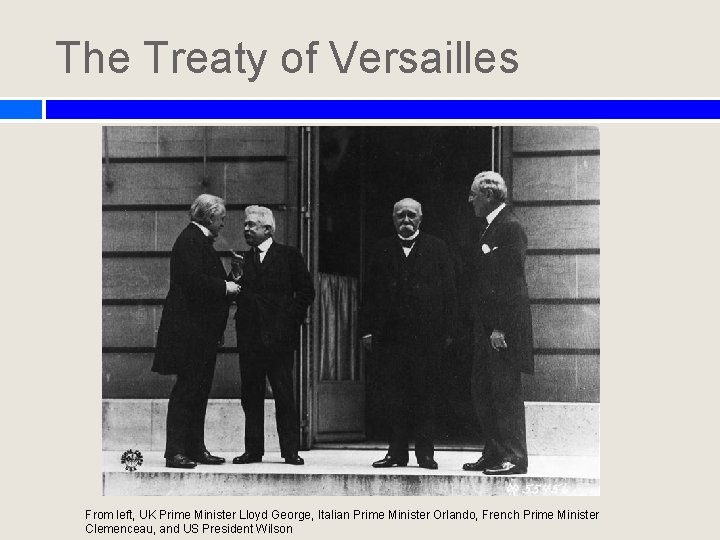
The Treaty of Versailles From left, UK Prime Minister Lloyd George, Italian Prime Minister Orlando, French Prime Minister Clemenceau, and US President Wilson
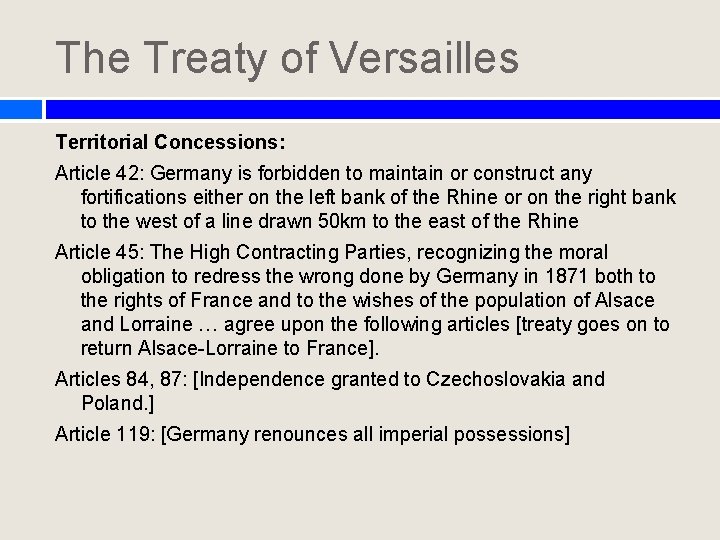
The Treaty of Versailles Territorial Concessions: Article 42: Germany is forbidden to maintain or construct any fortifications either on the left bank of the Rhine or on the right bank to the west of a line drawn 50 km to the east of the Rhine Article 45: The High Contracting Parties, recognizing the moral obligation to redress the wrong done by Germany in 1871 both to the rights of France and to the wishes of the population of Alsace and Lorraine … agree upon the following articles [treaty goes on to return Alsace-Lorraine to France]. Articles 84, 87: [Independence granted to Czechoslovakia and Poland. ] Article 119: [Germany renounces all imperial possessions]
Treaty of Versailles
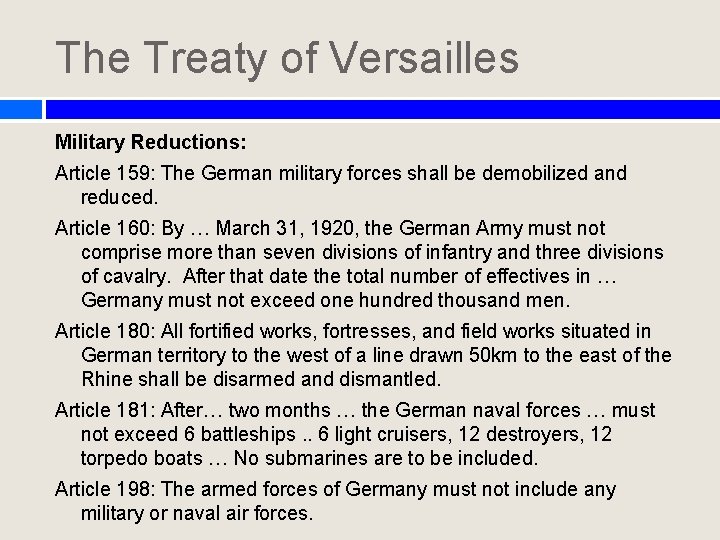
The Treaty of Versailles Military Reductions: Article 159: The German military forces shall be demobilized and reduced. Article 160: By … March 31, 1920, the German Army must not comprise more than seven divisions of infantry and three divisions of cavalry. After that date the total number of effectives in … Germany must not exceed one hundred thousand men. Article 180: All fortified works, fortresses, and field works situated in German territory to the west of a line drawn 50 km to the east of the Rhine shall be disarmed and dismantled. Article 181: After… two months … the German naval forces … must not exceed 6 battleships. . 6 light cruisers, 12 destroyers, 12 torpedo boats … No submarines are to be included. Article 198: The armed forces of Germany must not include any military or naval air forces.
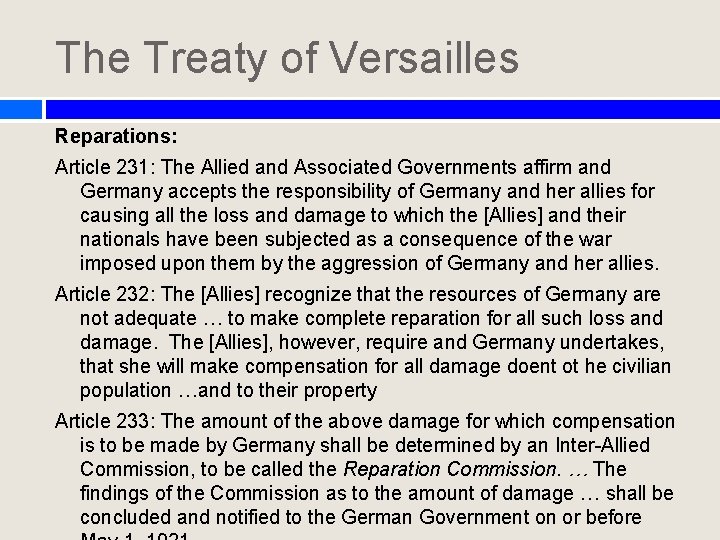
The Treaty of Versailles Reparations: Article 231: The Allied and Associated Governments affirm and Germany accepts the responsibility of Germany and her allies for causing all the loss and damage to which the [Allies] and their nationals have been subjected as a consequence of the war imposed upon them by the aggression of Germany and her allies. Article 232: The [Allies] recognize that the resources of Germany are not adequate … to make complete reparation for all such loss and damage. The [Allies], however, require and Germany undertakes, that she will make compensation for all damage doent ot he civilian population …and to their property Article 233: The amount of the above damage for which compensation is to be made by Germany shall be determined by an Inter-Allied Commission, to be called the Reparation Commission. … The findings of the Commission as to the amount of damage … shall be concluded and notified to the German Government on or before
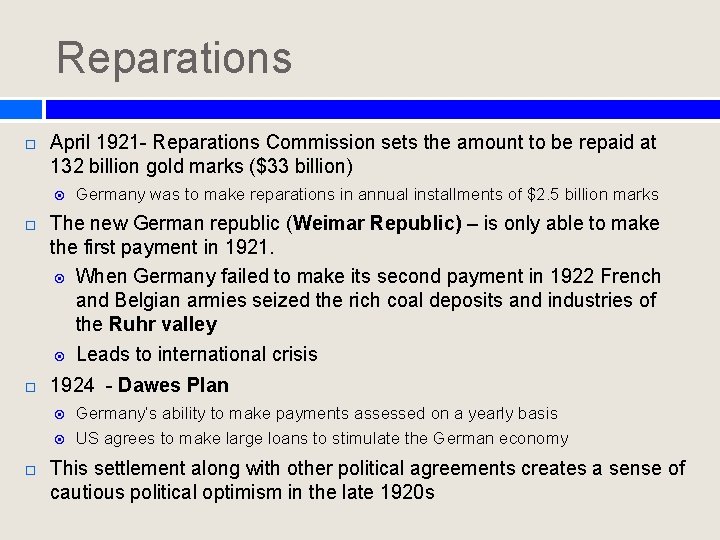
Reparations April 1921 - Reparations Commission sets the amount to be repaid at 132 billion gold marks ($33 billion) Germany was to make reparations in annual installments of $2. 5 billion marks The new German republic (Weimar Republic) – is only able to make the first payment in 1921. When Germany failed to make its second payment in 1922 French and Belgian armies seized the rich coal deposits and industries of the Ruhr valley Leads to international crisis 1924 - Dawes Plan Germany’s ability to make payments assessed on a yearly basis US agrees to make large loans to stimulate the German economy This settlement along with other political agreements creates a sense of cautious political optimism in the late 1920 s
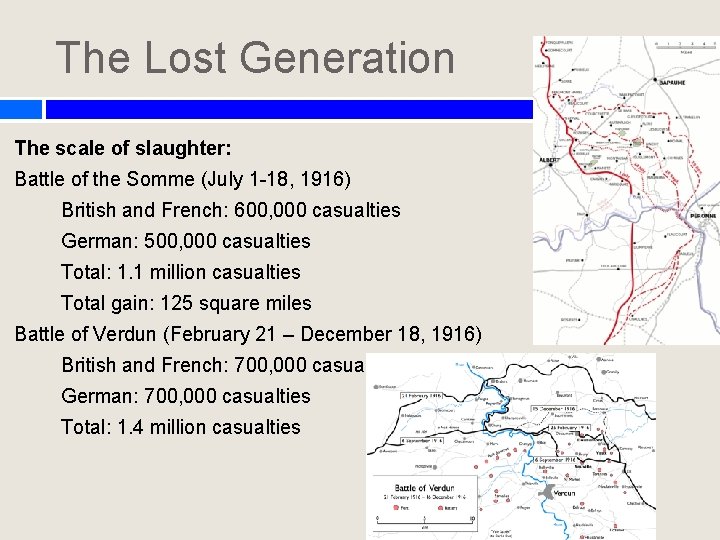
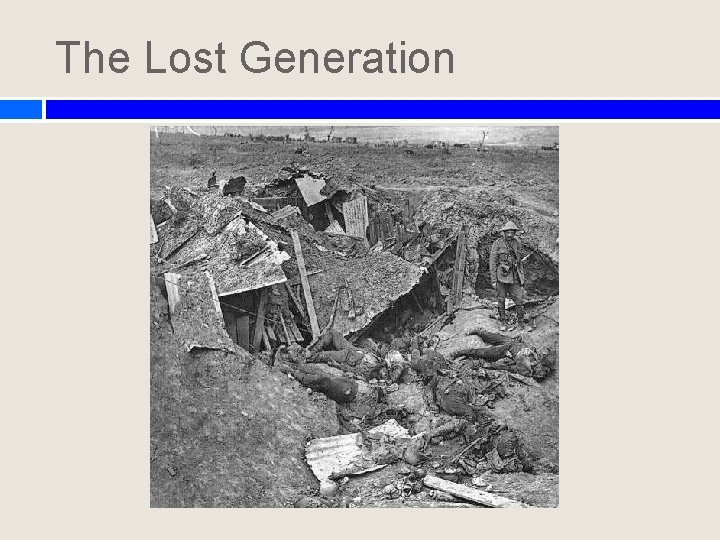
The Lost Generation The scale of slaughter: Battle of the Somme (July 1 -18, 1916) British and French: 600, 000 casualties German: 500, 000 casualties Total: 1. 1 million casualties Total gain: 125 square miles Battle of Verdun (February 21 – December 18, 1916) British and French: 700, 000 casualties German: 700, 000 casualties Total: 1. 4 million casualties
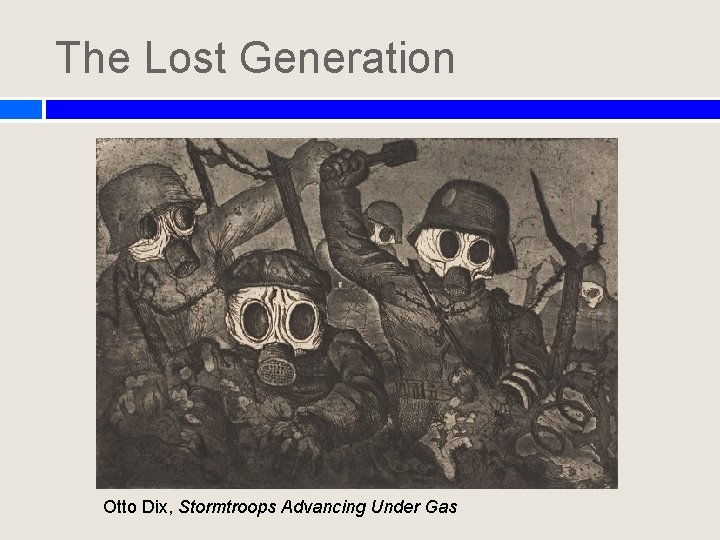
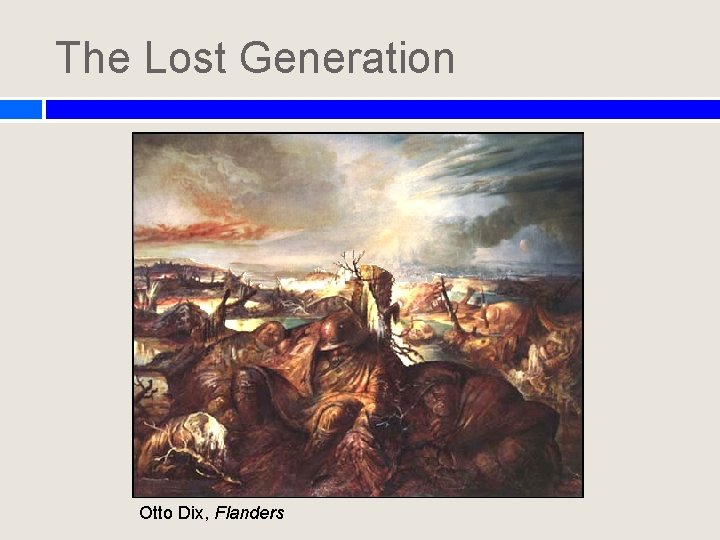
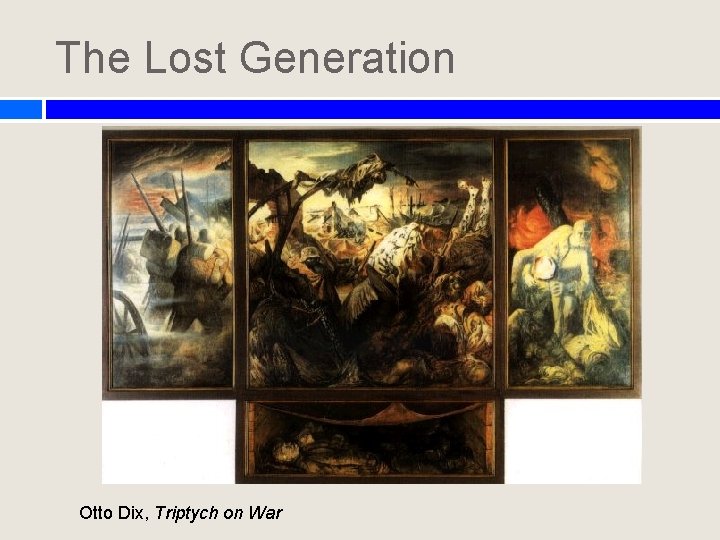
The Lost Generation WWI had profound social and cultural consequences for the 20 th century Nearly 10 million young men killed, 20 million permanently wounded physically or psychologically Total of 30 million young men become casualties of war Psychological effects of trench warfare, “shell shock” devastating Survivors profoundly affected by the failure of liberal democracy, capitalism - the fruits of the Enlightenment to prevent Global War
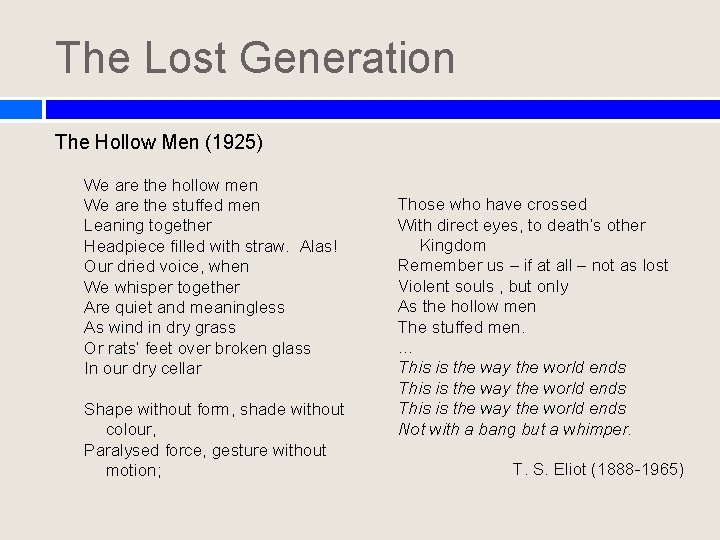
The Lost Generation The Hollow Men (1925) We are the hollow men We are the stuffed men Leaning together Headpiece filled with straw. Alas! Our dried voice, when We whisper together Are quiet and meaningless As wind in dry grass Or rats’ feet over broken glass In our dry cellar Shape without form, shade without colour, Paralysed force, gesture without motion; Those who have crossed With direct eyes, to death’s other Kingdom Remember us – if at all – not as lost Violent souls , but only As the hollow men The stuffed men. … This is the way the world ends Not with a bang but a whimper. T. S. Eliot (1888 -1965)
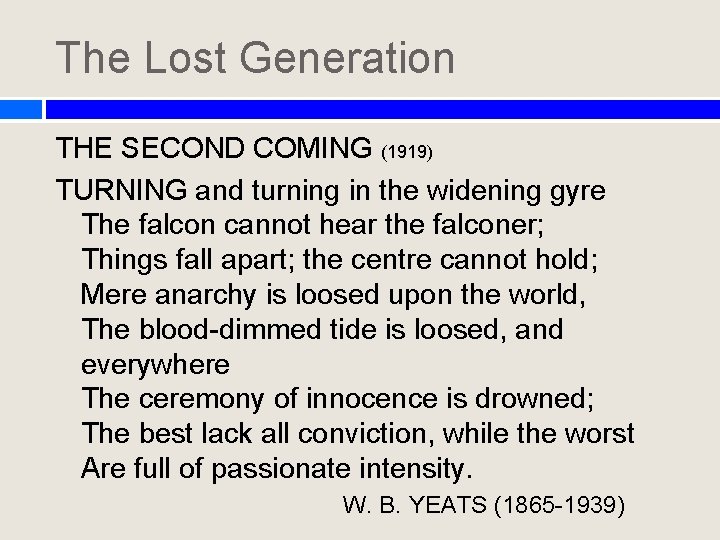
The Lost Generation THE SECOND COMING (1919) TURNING and turning in the widening gyre The falcon cannot hear the falconer; Things fall apart; the centre cannot hold; Mere anarchy is loosed upon the world, The blood-dimmed tide is loosed, and everywhere The ceremony of innocence is drowned; The best lack all conviction, while the worst Are full of passionate intensity. W. B. YEATS (1865 -1939)
The Lost Generation
The Lost Generation Otto Dix, Stormtroops Advancing Under Gas
The Lost Generation Otto Dix, Flanders
The Lost Generation Otto Dix, Triptych on War
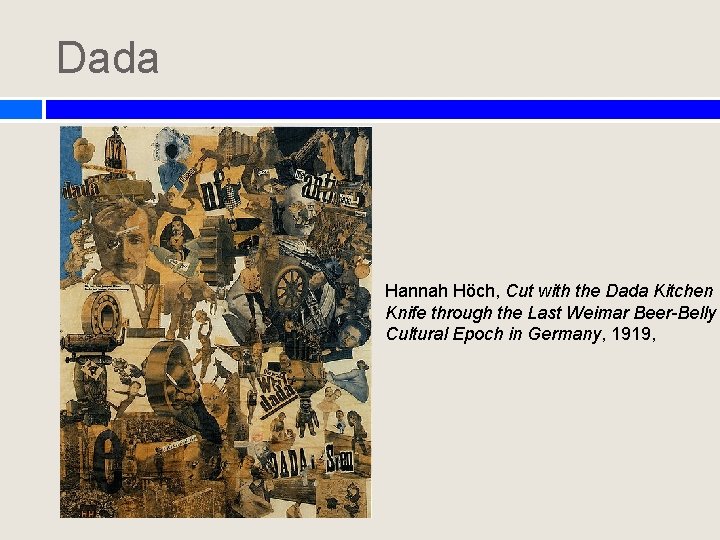
Dada Hannah Höch, Cut with the Dada Kitchen Knife through the Last Weimar Beer-Belly Cultural Epoch in Germany, 1919,
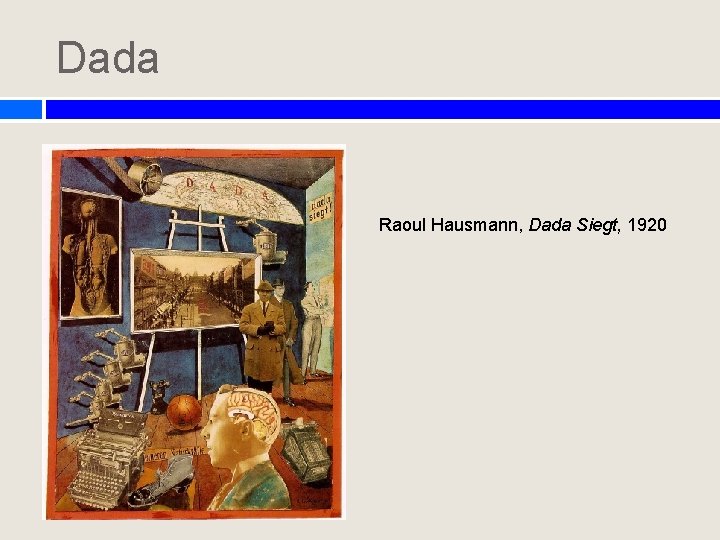
Dada Raoul Hausmann, Dada Siegt, 1920
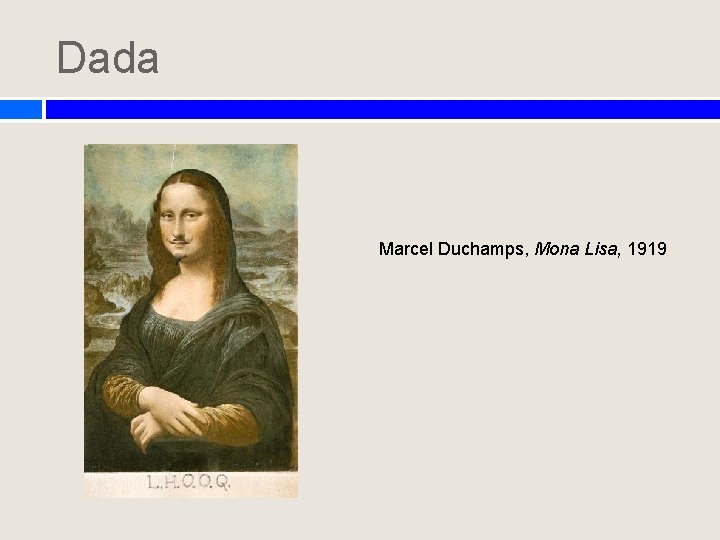
Dada Marcel Duchamps, Mona Lisa, 1919
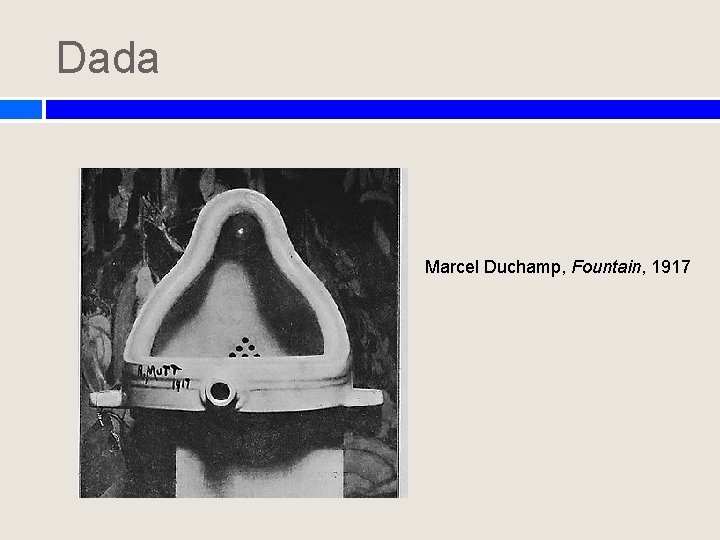
Dada Marcel Duchamp, Fountain, 1917
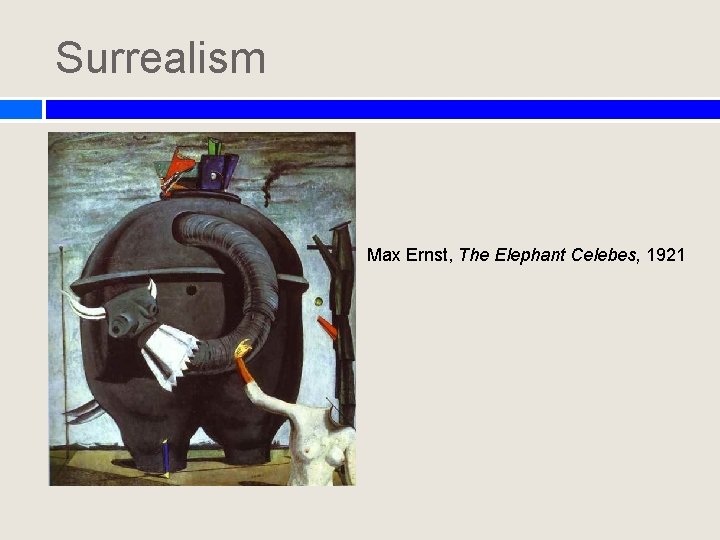
Surrealism Max Ernst, The Elephant Celebes, 1921