
The Transport Layer www assignmentpoint com The Transport

- Slides: 59
The Transport Layer www. assignmentpoint. com
The Transport Service • • Services Provided to the Upper Layers Transport Service Primitives Berkeley Sockets An Example of Socket Programming: – An Internet File Server www. assignmentpoint. com
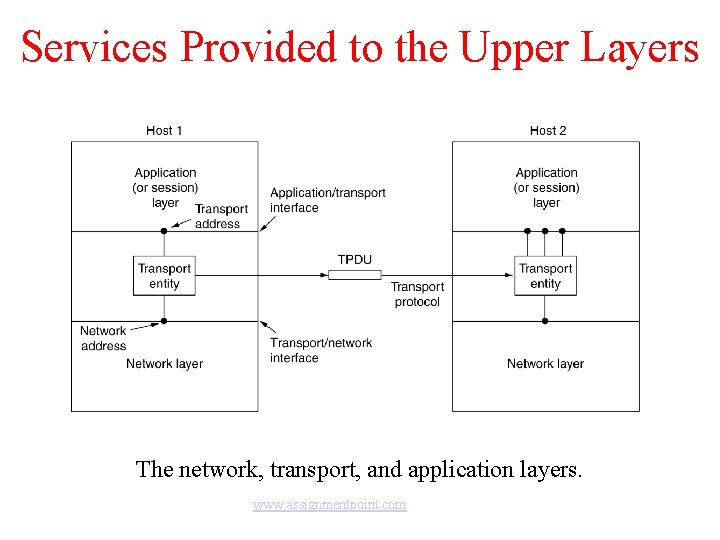
Services Provided to the Upper Layers The network, transport, and application layers. www. assignmentpoint. com
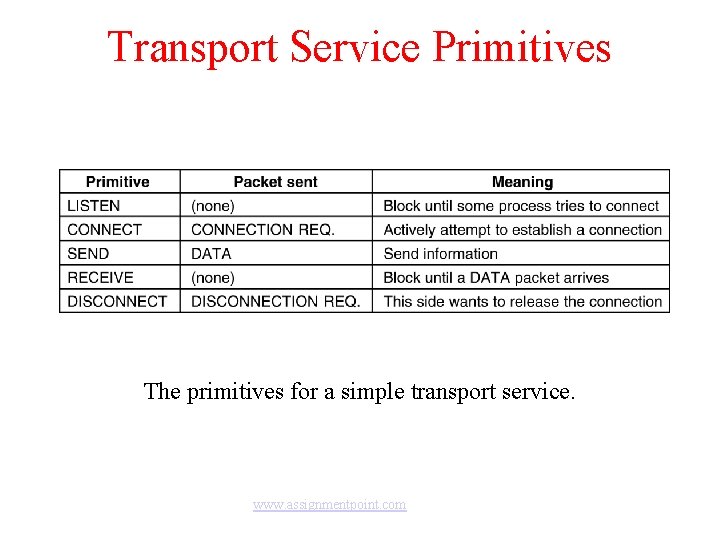
Transport Service Primitives The primitives for a simple transport service. www. assignmentpoint. com
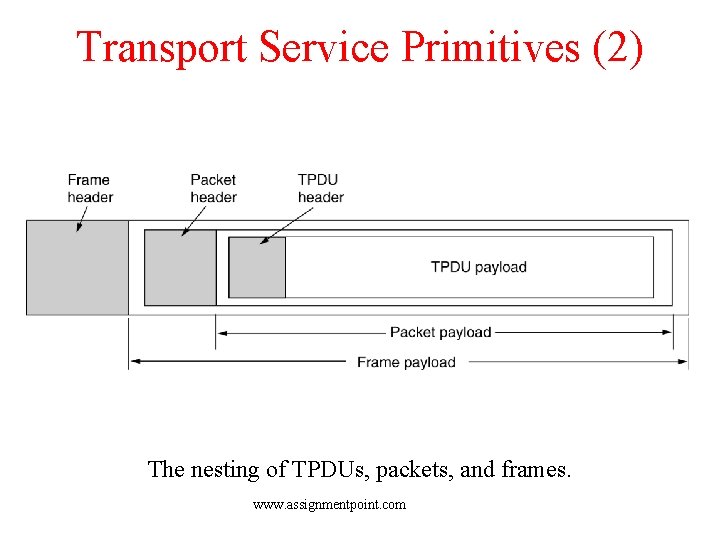
Transport Service Primitives (2) The nesting of TPDUs, packets, and frames. www. assignmentpoint. com
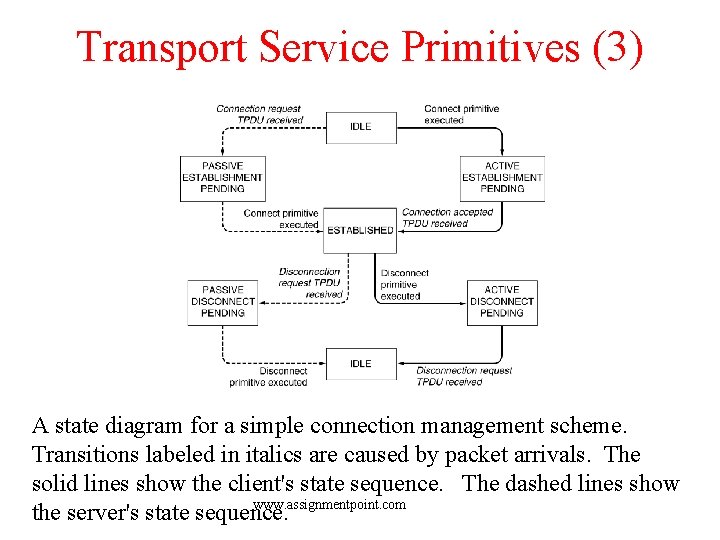
Transport Service Primitives (3) A state diagram for a simple connection management scheme. Transitions labeled in italics are caused by packet arrivals. The solid lines show the client's state sequence. The dashed lines show www. assignmentpoint. com the server's state sequence.
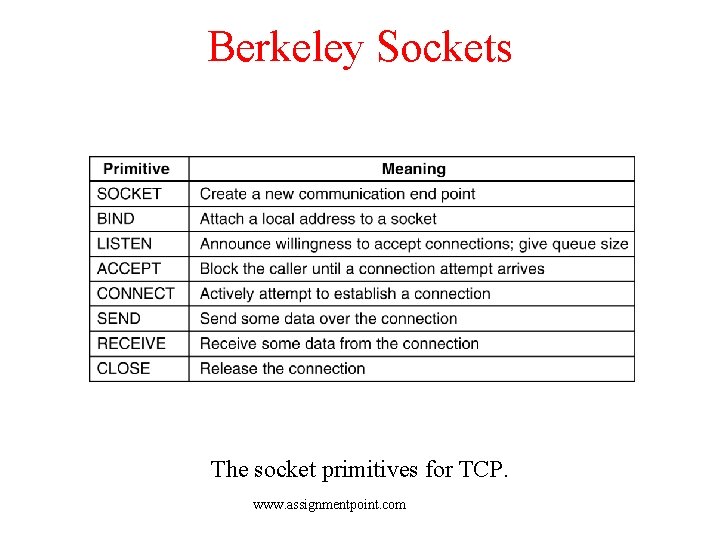
Berkeley Sockets The socket primitives for TCP. www. assignmentpoint. com
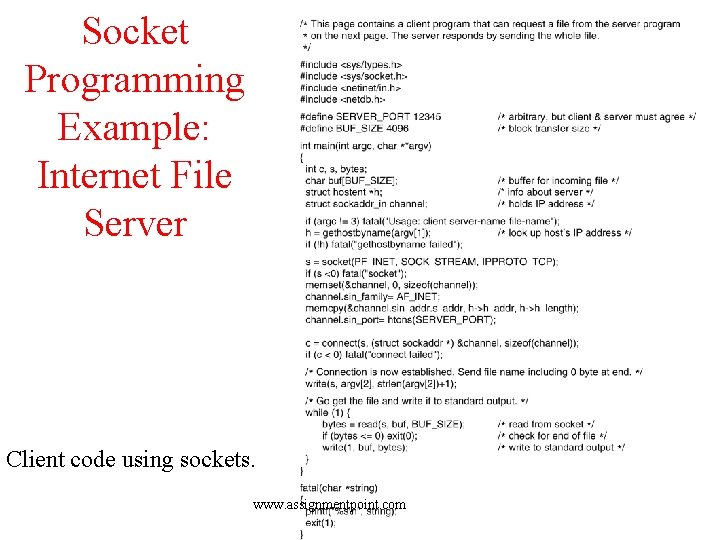
Socket Programming Example: Internet File Server 6 -6 -1 Client code using sockets. www. assignmentpoint. com
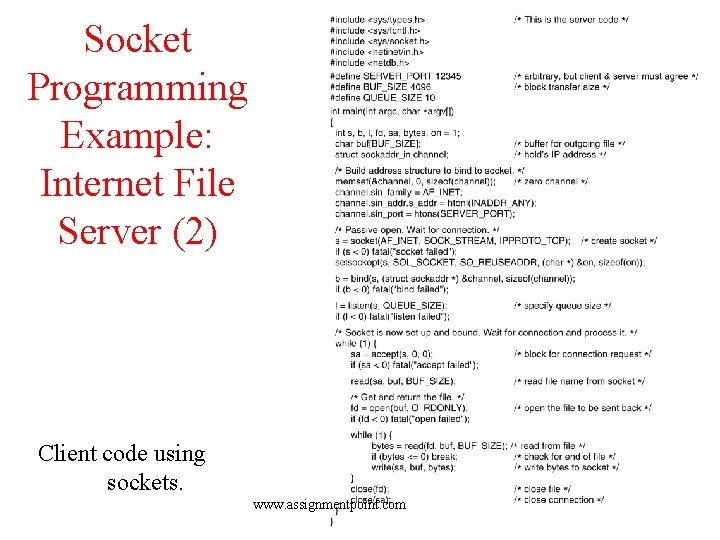
Socket Programming Example: Internet File Server (2) Client code using sockets. www. assignmentpoint. com
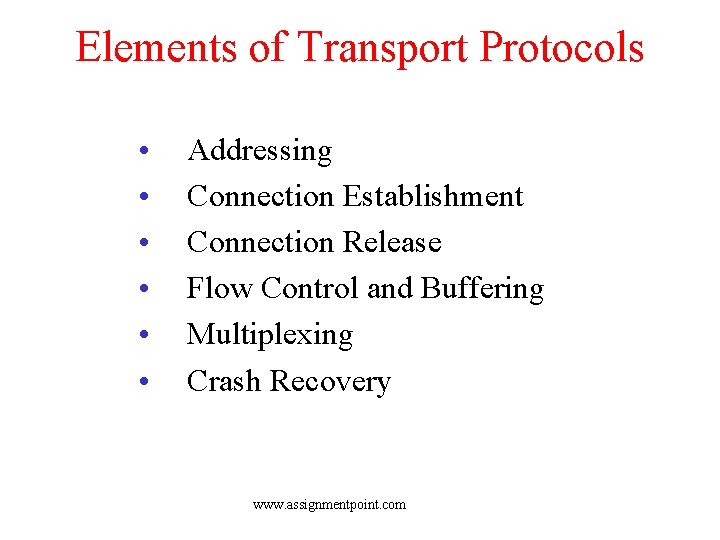
Elements of Transport Protocols • • • Addressing Connection Establishment Connection Release Flow Control and Buffering Multiplexing Crash Recovery www. assignmentpoint. com
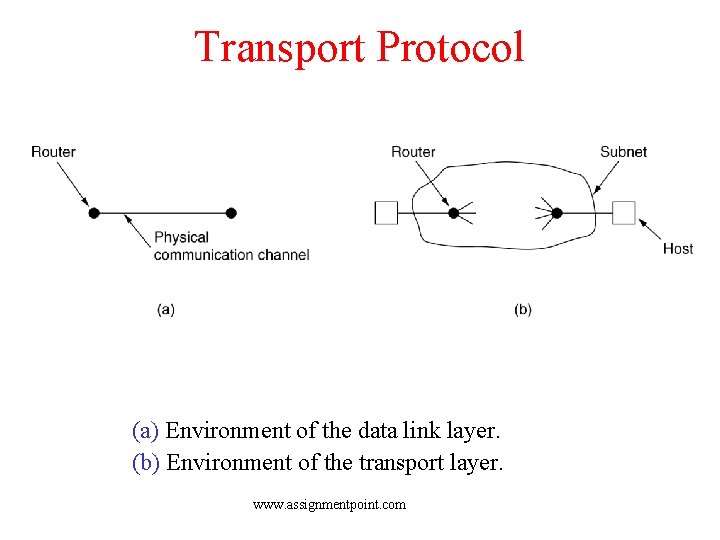
Transport Protocol (a) Environment of the data link layer. (b) Environment of the transport layer. www. assignmentpoint. com
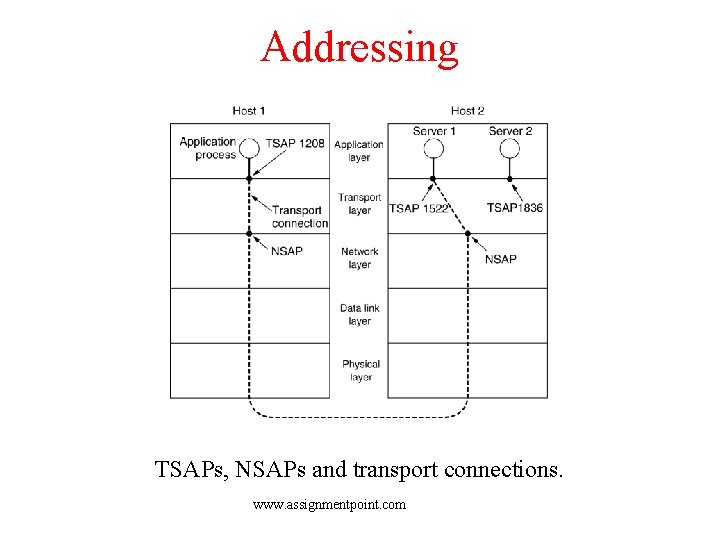
Addressing TSAPs, NSAPs and transport connections. www. assignmentpoint. com
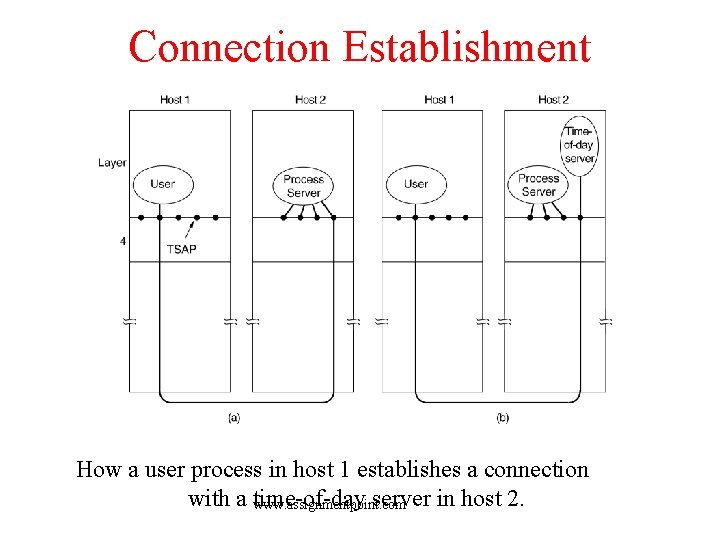
Connection Establishment How a user process in host 1 establishes a connection with a time-of-day server in host 2. www. assignmentpoint. com
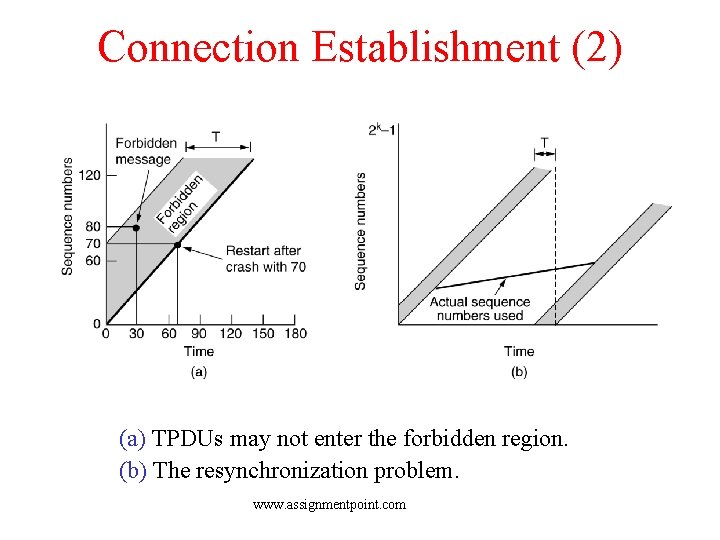
Connection Establishment (2) (a) TPDUs may not enter the forbidden region. (b) The resynchronization problem. www. assignmentpoint. com
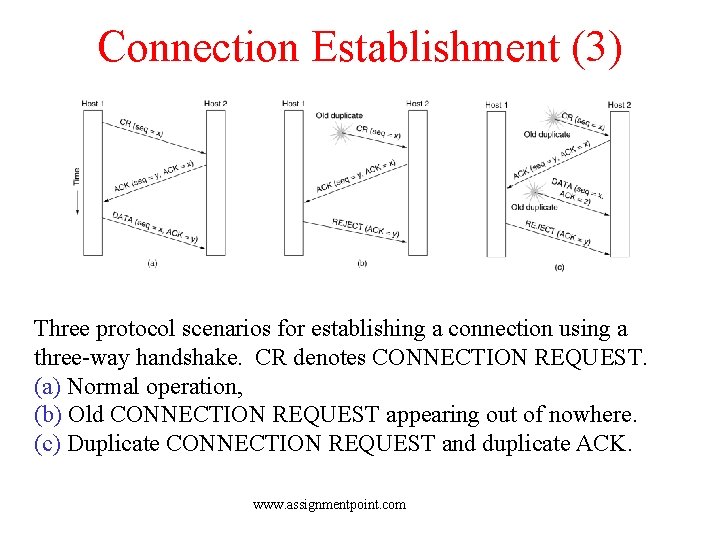
Connection Establishment (3) Three protocol scenarios for establishing a connection using a three-way handshake. CR denotes CONNECTION REQUEST. (a) Normal operation, (b) Old CONNECTION REQUEST appearing out of nowhere. (c) Duplicate CONNECTION REQUEST and duplicate ACK. www. assignmentpoint. com
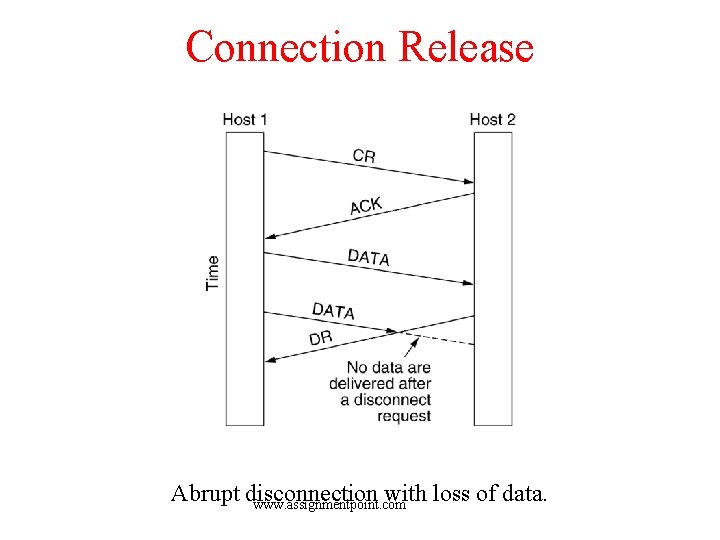
Connection Release Abrupt disconnection with loss of data. www. assignmentpoint. com
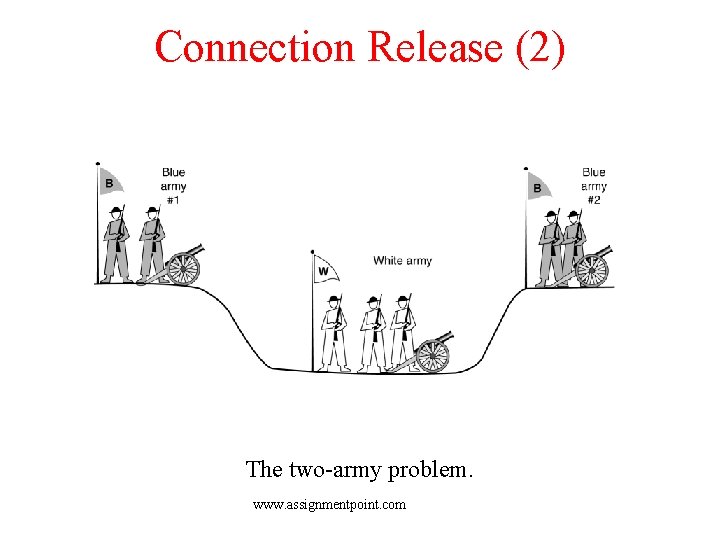
Connection Release (2) The two-army problem. www. assignmentpoint. com
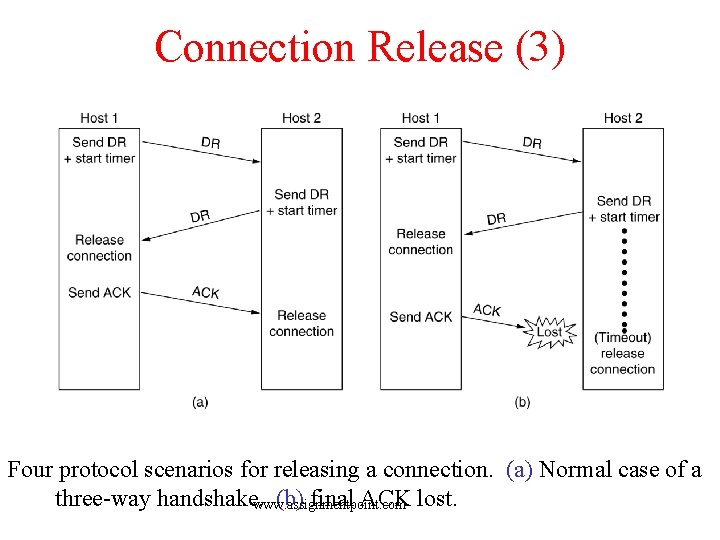
Connection Release (3) 6 -14, a, b Four protocol scenarios for releasing a connection. (a) Normal case of a three-way handshake. www. assignmentpoint. com (b) final ACK lost.
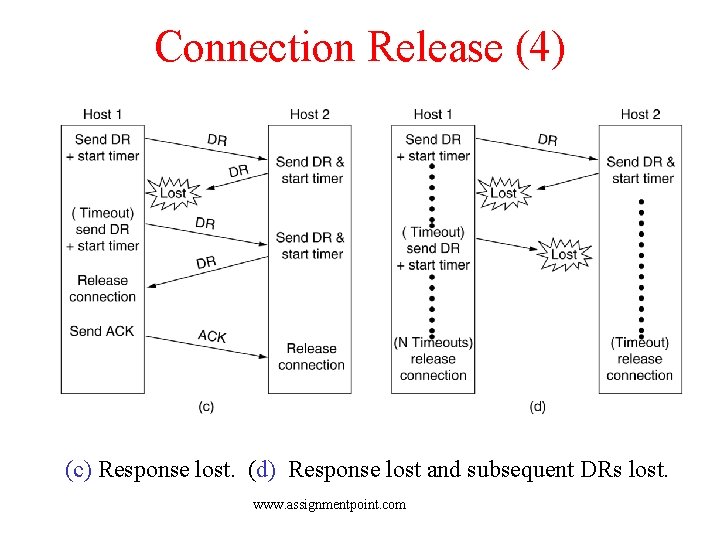
Connection Release (4) 6 -14, c, d (c) Response lost. (d) Response lost and subsequent DRs lost. www. assignmentpoint. com
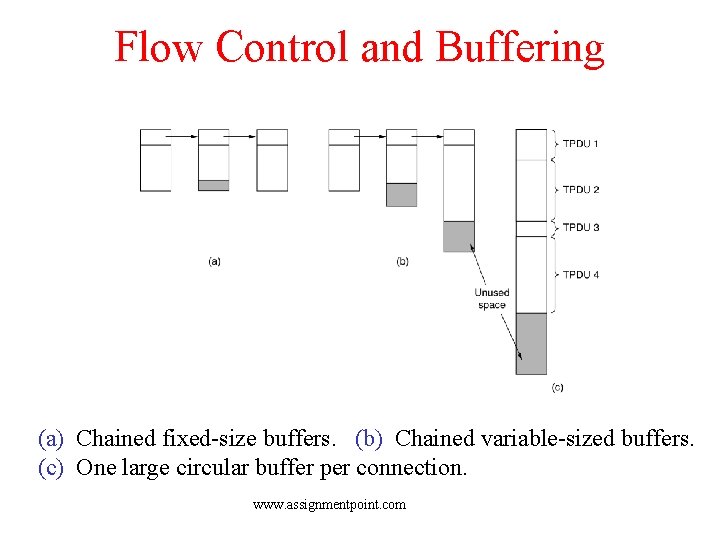
Flow Control and Buffering (a) Chained fixed-size buffers. (b) Chained variable-sized buffers. (c) One large circular buffer per connection. www. assignmentpoint. com
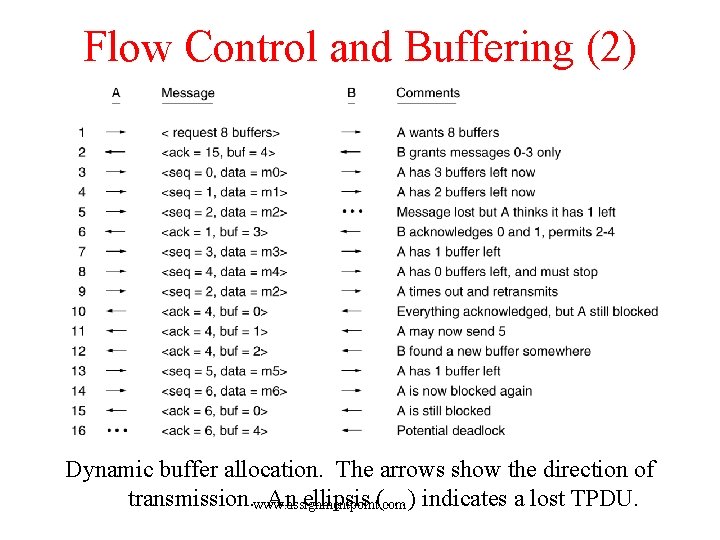
Flow Control and Buffering (2) Dynamic buffer allocation. The arrows show the direction of transmission. www. assignmentpoint. com An ellipsis (…) indicates a lost TPDU.
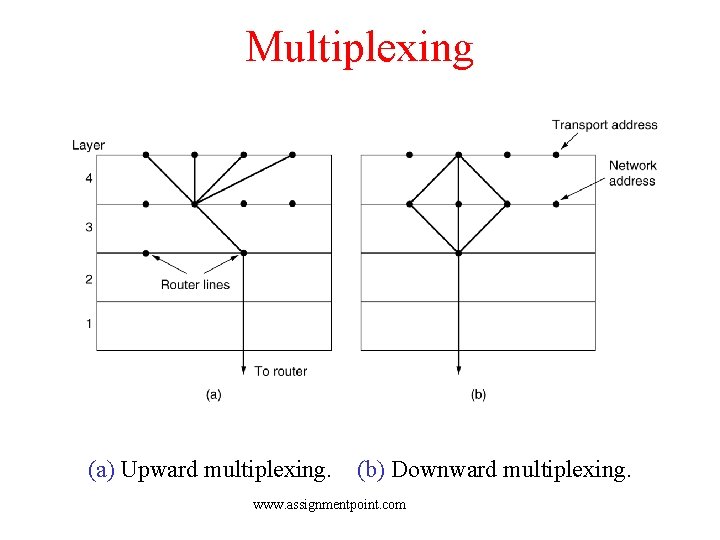
Multiplexing (a) Upward multiplexing. (b) Downward multiplexing. www. assignmentpoint. com
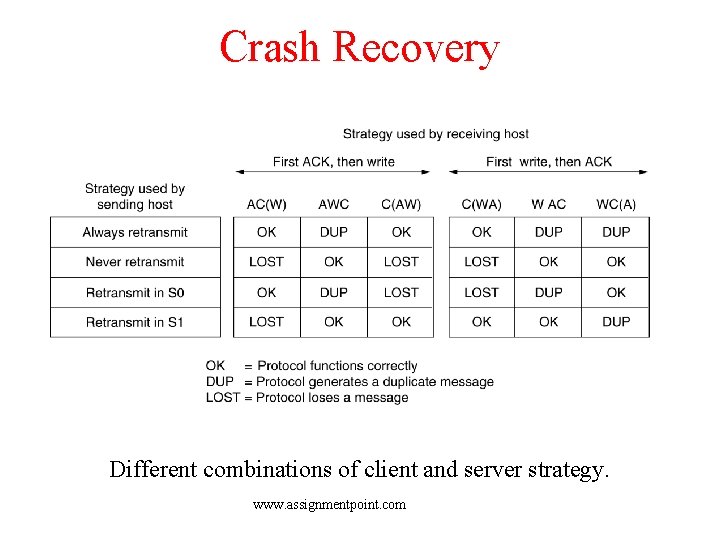
Crash Recovery Different combinations of client and server strategy. www. assignmentpoint. com
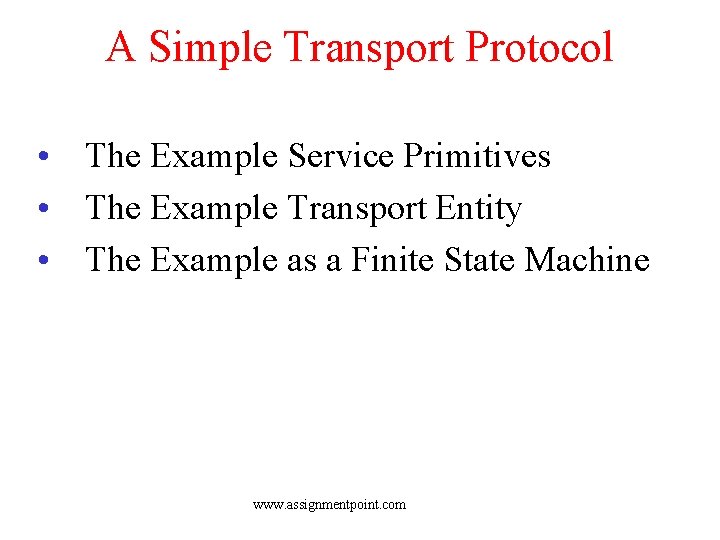
A Simple Transport Protocol • The Example Service Primitives • The Example Transport Entity • The Example as a Finite State Machine www. assignmentpoint. com
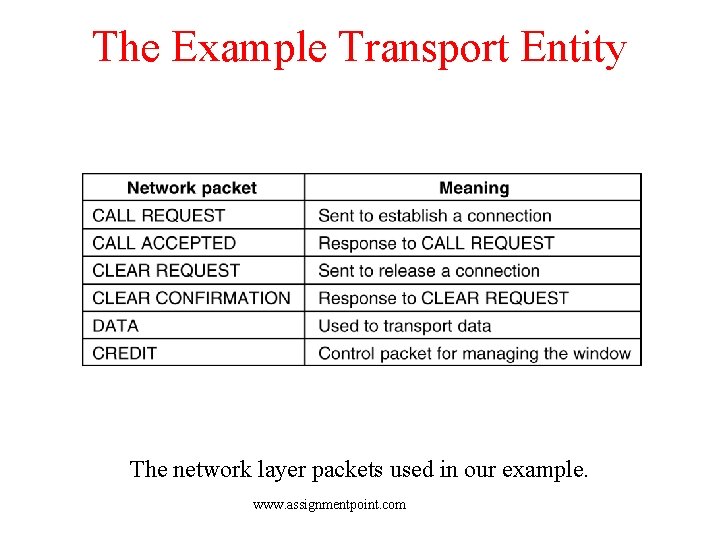
The Example Transport Entity The network layer packets used in our example. www. assignmentpoint. com
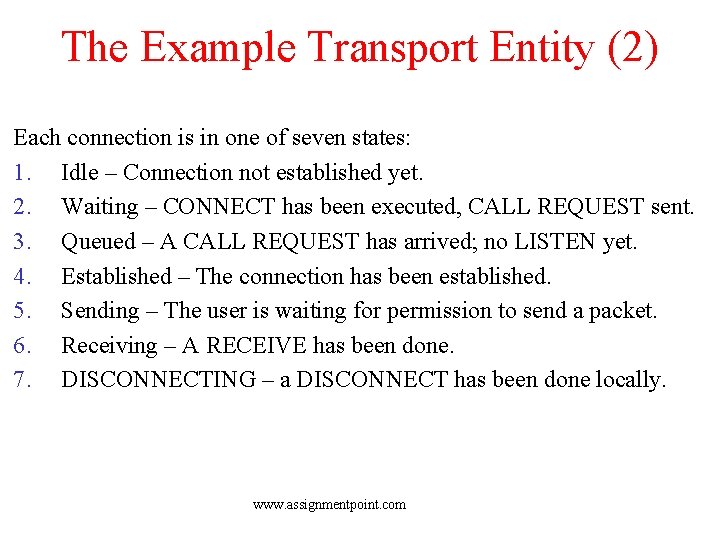
The Example Transport Entity (2) Each connection is in one of seven states: 1. Idle – Connection not established yet. 2. Waiting – CONNECT has been executed, CALL REQUEST sent. 3. Queued – A CALL REQUEST has arrived; no LISTEN yet. 4. Established – The connection has been established. 5. Sending – The user is waiting for permission to send a packet. 6. Receiving – A RECEIVE has been done. 7. DISCONNECTING – a DISCONNECT has been done locally. www. assignmentpoint. com
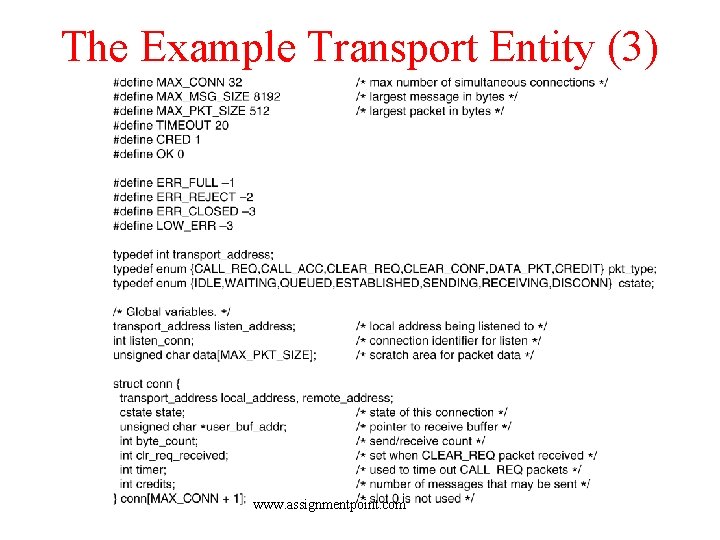
The Example Transport Entity (3) www. assignmentpoint. com
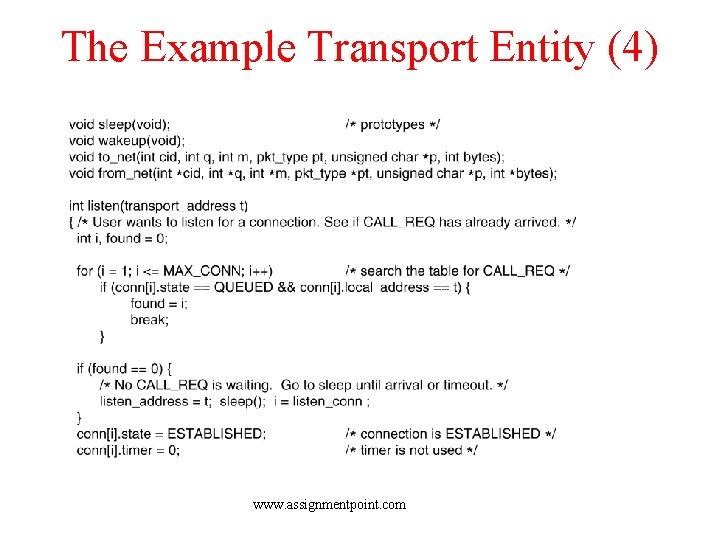
The Example Transport Entity (4) www. assignmentpoint. com
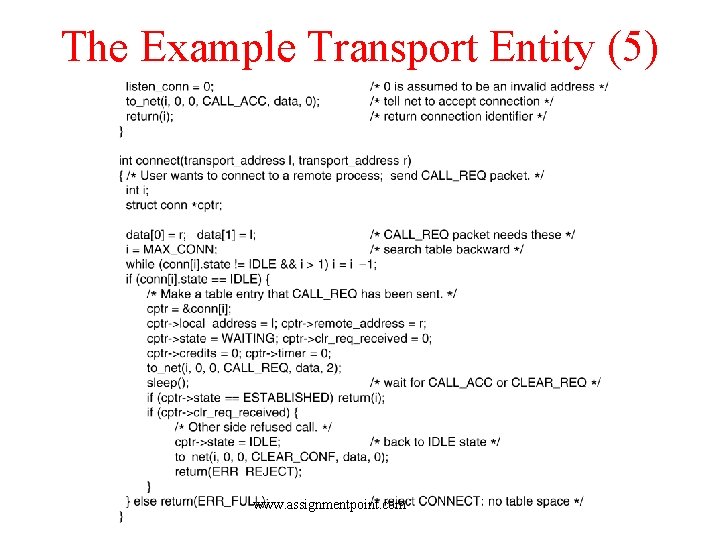
The Example Transport Entity (5) www. assignmentpoint. com
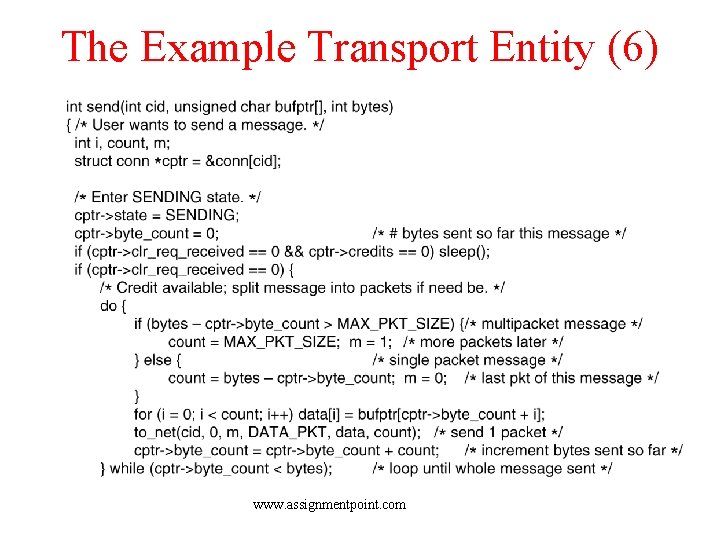
The Example Transport Entity (6) www. assignmentpoint. com
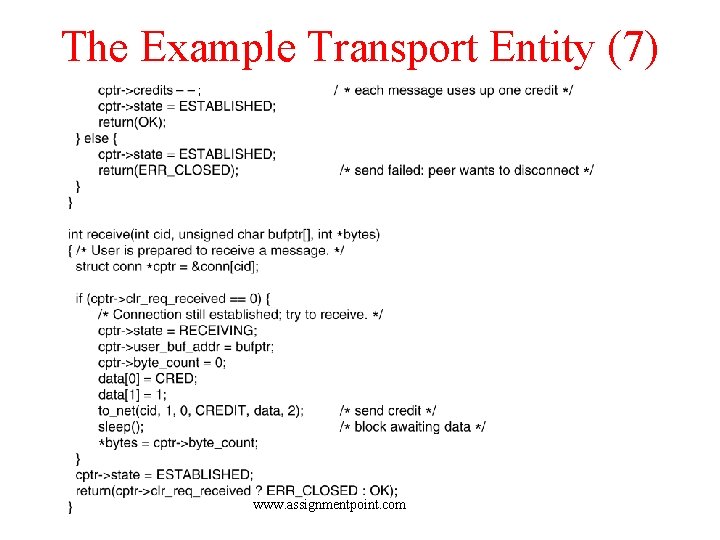
The Example Transport Entity (7) www. assignmentpoint. com
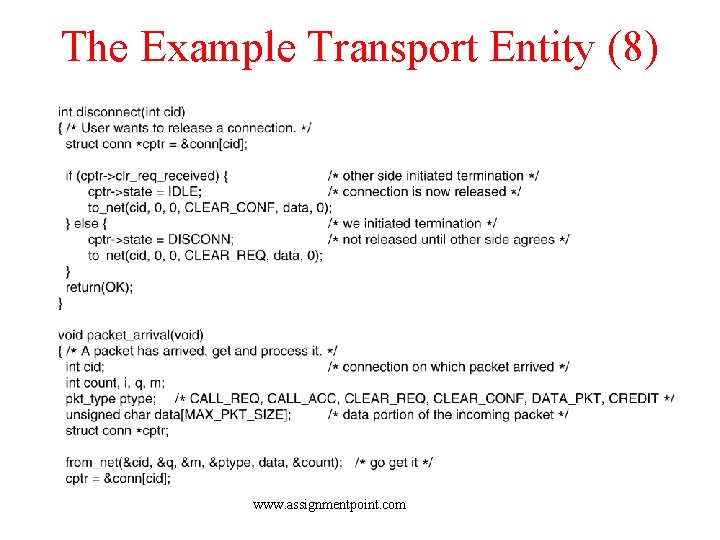
The Example Transport Entity (8) www. assignmentpoint. com
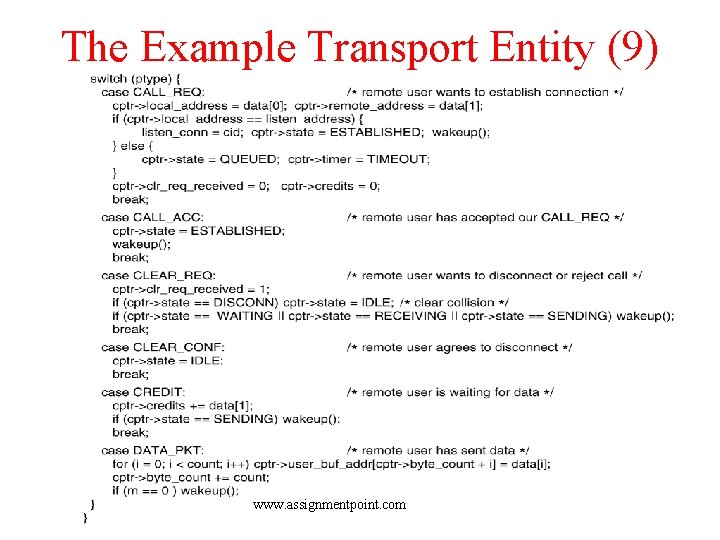
The Example Transport Entity (9) www. assignmentpoint. com
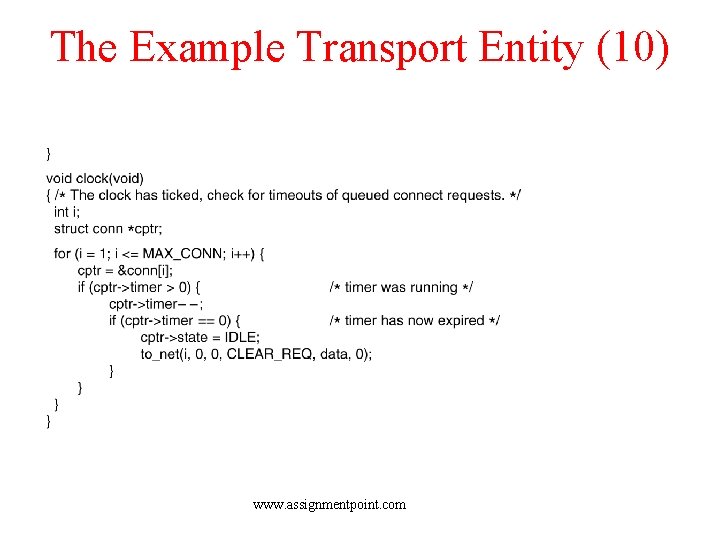
The Example Transport Entity (10) www. assignmentpoint. com
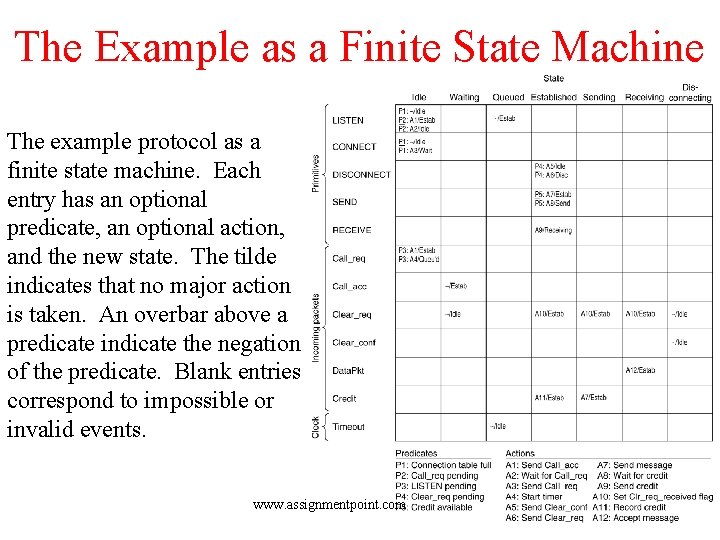
The Example as a Finite State Machine The example protocol as a finite state machine. Each entry has an optional predicate, an optional action, and the new state. The tilde indicates that no major action is taken. An overbar above a predicate indicate the negation of the predicate. Blank entries correspond to impossible or invalid events. www. assignmentpoint. com
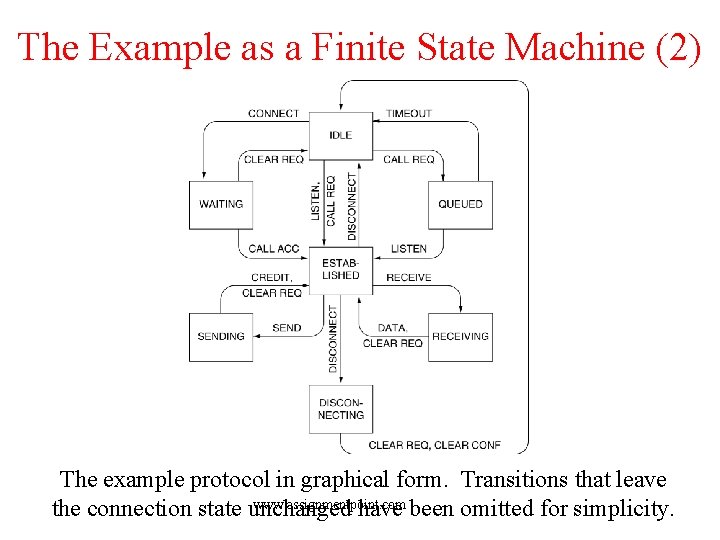
The Example as a Finite State Machine (2) The example protocol in graphical form. Transitions that leave www. assignmentpoint. com the connection state unchanged have been omitted for simplicity.
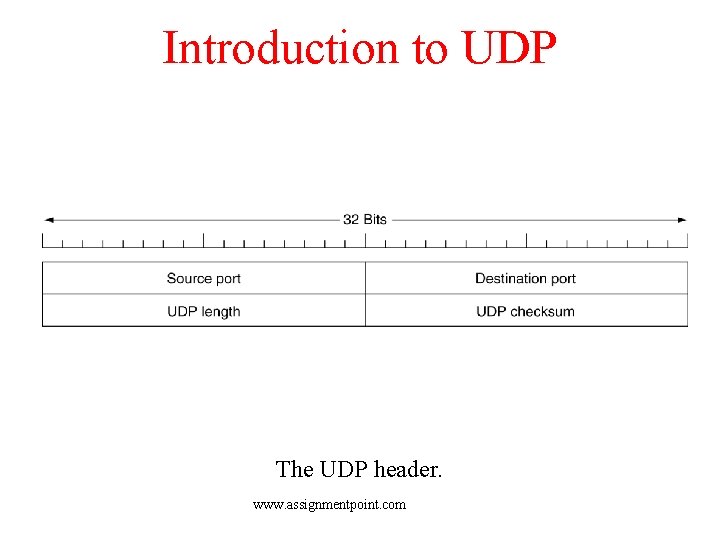
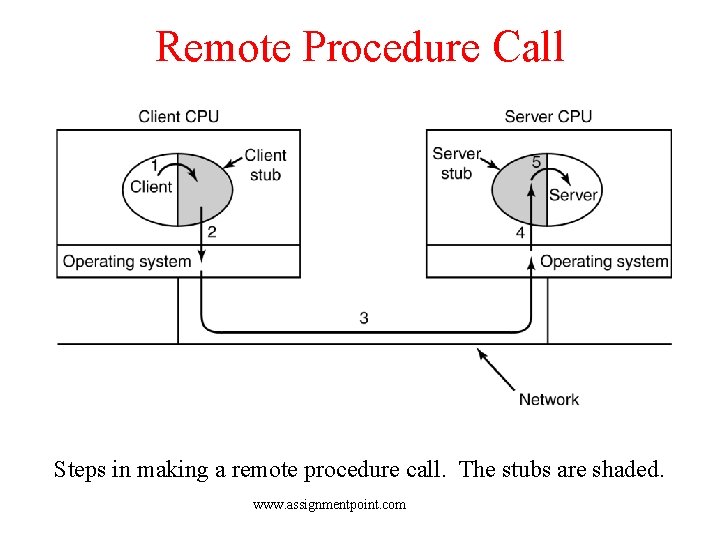
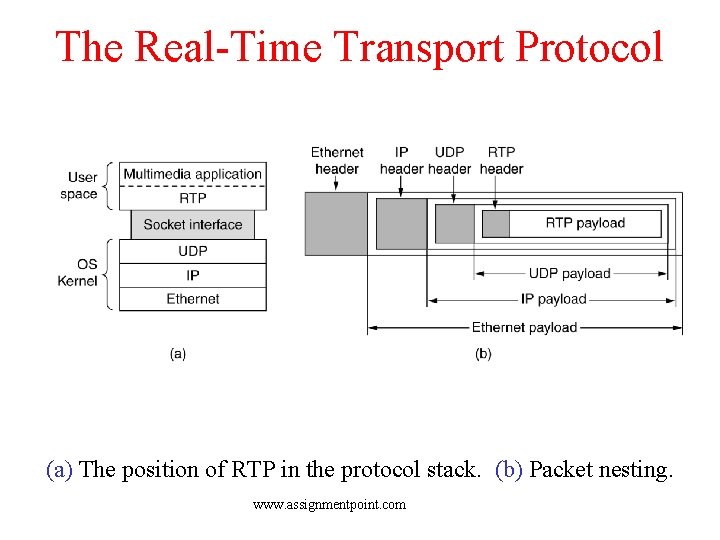
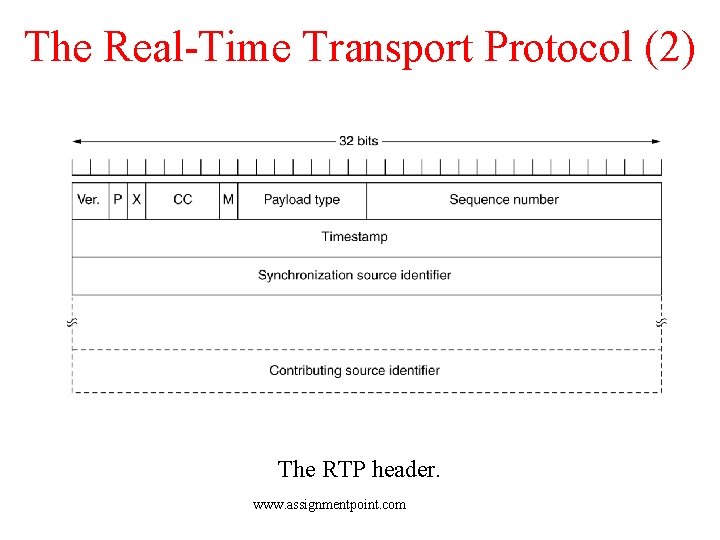
The Internet Transport Protocols: UDP • Introduction to UDP • Remote Procedure Call • The Real-Time Transport Protocol www. assignmentpoint. com
Introduction to UDP The UDP header. www. assignmentpoint. com
Remote Procedure Call Steps in making a remote procedure call. The stubs are shaded. www. assignmentpoint. com
The Real-Time Transport Protocol (a) The position of RTP in the protocol stack. (b) Packet nesting. www. assignmentpoint. com
The Real-Time Transport Protocol (2) The RTP header. www. assignmentpoint. com
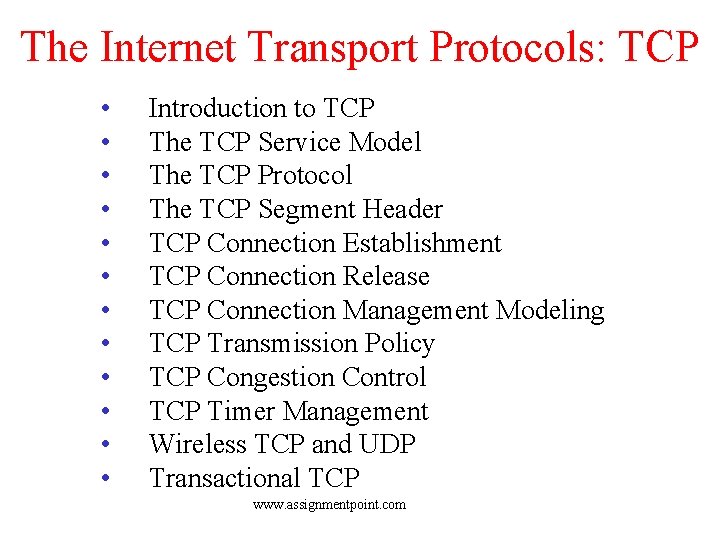
The Internet Transport Protocols: TCP • • • Introduction to TCP The TCP Service Model The TCP Protocol The TCP Segment Header TCP Connection Establishment TCP Connection Release TCP Connection Management Modeling TCP Transmission Policy TCP Congestion Control TCP Timer Management Wireless TCP and UDP Transactional TCP www. assignmentpoint. com
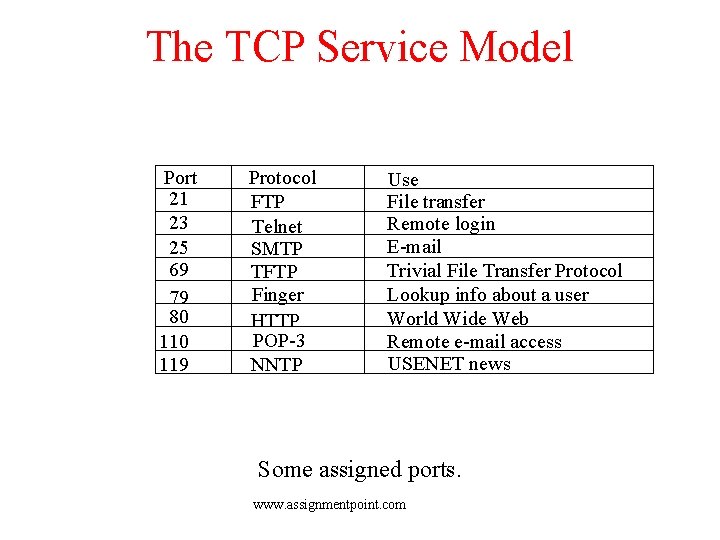
The TCP Service Model Port 21 23 25 69 79 80 119 Protocol FTP Telnet SMTP TFTP Finger HTTP POP-3 NNTP Use File transfer Remote login E-mail Trivial File Transfer Protocol Lookup info about a user World Wide Web Remote e-mail access USENET news Some assigned ports. www. assignmentpoint. com
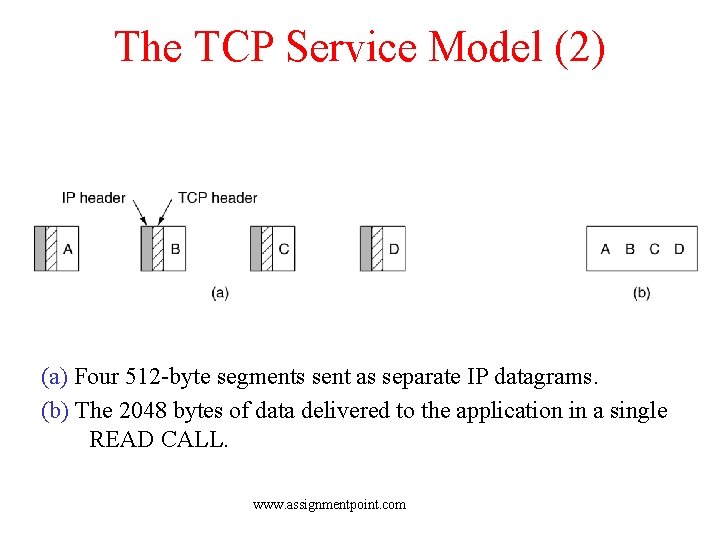
The TCP Service Model (2) (a) Four 512 -byte segments sent as separate IP datagrams. (b) The 2048 bytes of data delivered to the application in a single READ CALL. www. assignmentpoint. com
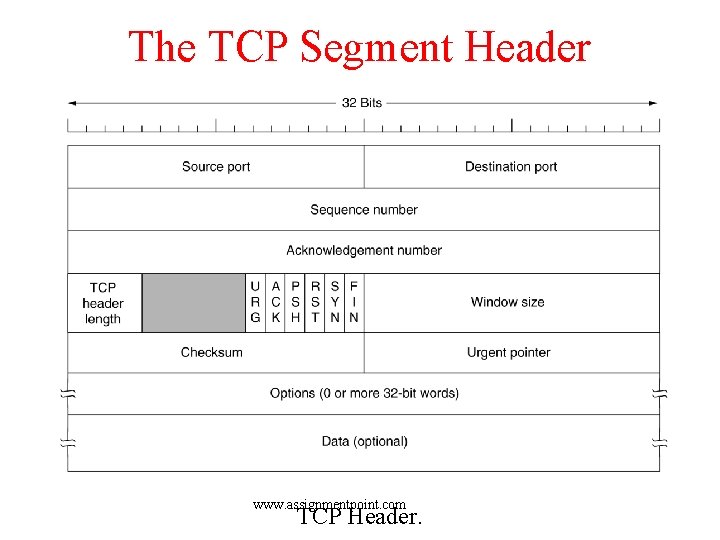
The TCP Segment Header www. assignmentpoint. com TCP Header.
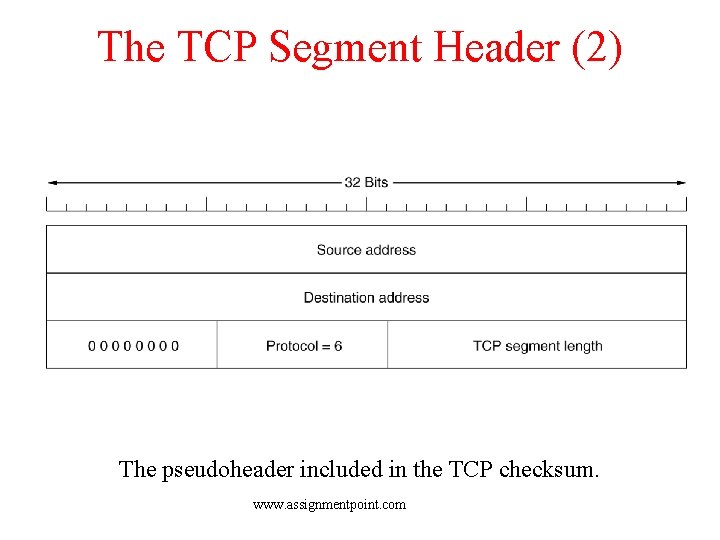
The TCP Segment Header (2) The pseudoheader included in the TCP checksum. www. assignmentpoint. com
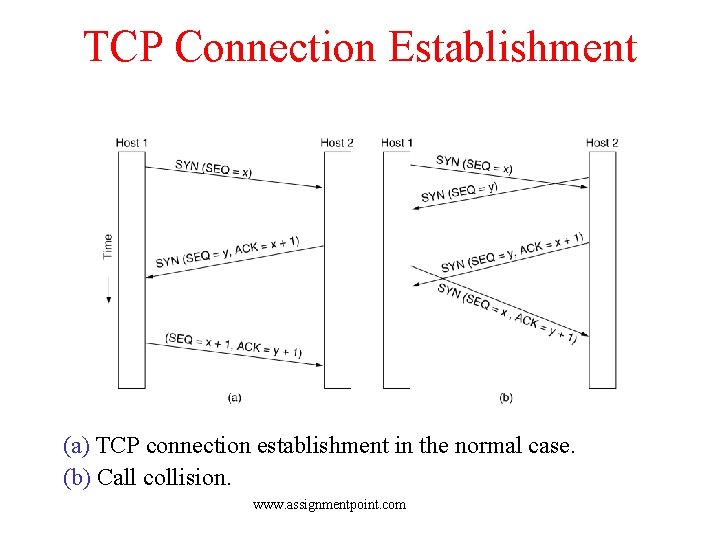
TCP Connection Establishment 6 -31 (a) TCP connection establishment in the normal case. (b) Call collision. www. assignmentpoint. com
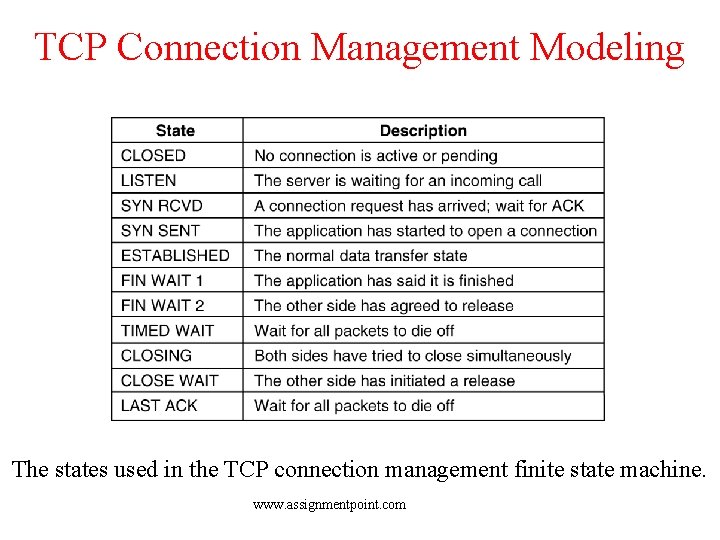
TCP Connection Management Modeling The states used in the TCP connection management finite state machine. www. assignmentpoint. com
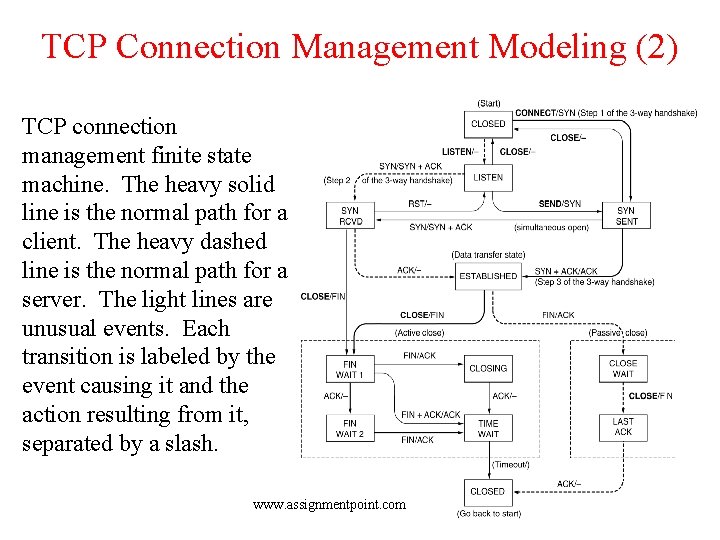
TCP Connection Management Modeling (2) TCP connection management finite state machine. The heavy solid line is the normal path for a client. The heavy dashed line is the normal path for a server. The light lines are unusual events. Each transition is labeled by the event causing it and the action resulting from it, separated by a slash. www. assignmentpoint. com
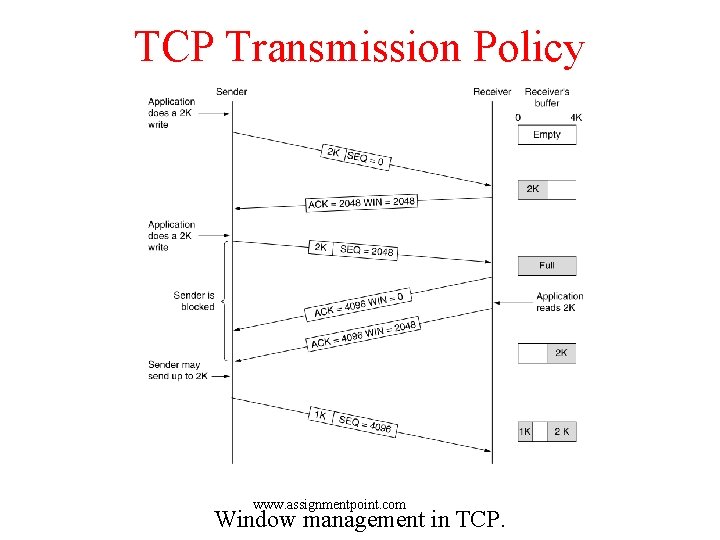
TCP Transmission Policy www. assignmentpoint. com Window management in TCP.
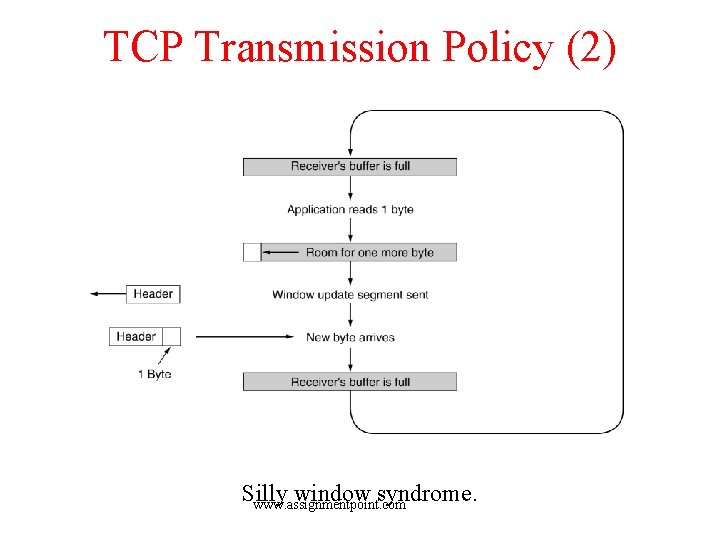
TCP Transmission Policy (2) Silly window syndrome. www. assignmentpoint. com
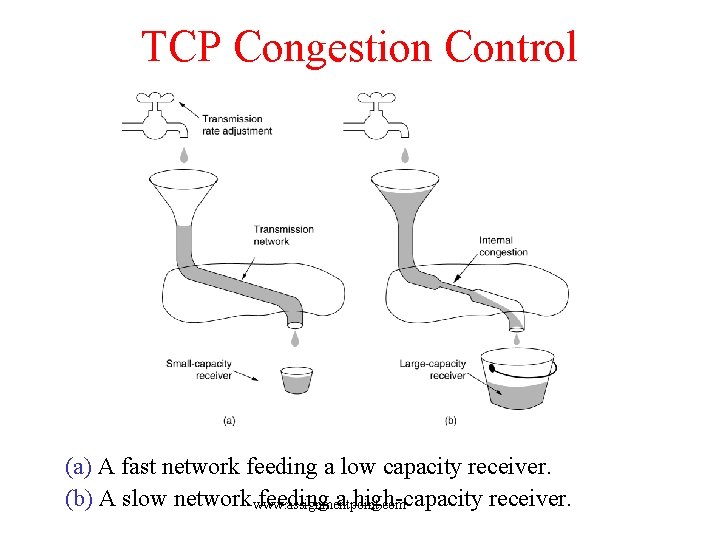
TCP Congestion Control (a) A fast network feeding a low capacity receiver. (b) A slow network www. assignmentpoint. com feeding a high-capacity receiver.
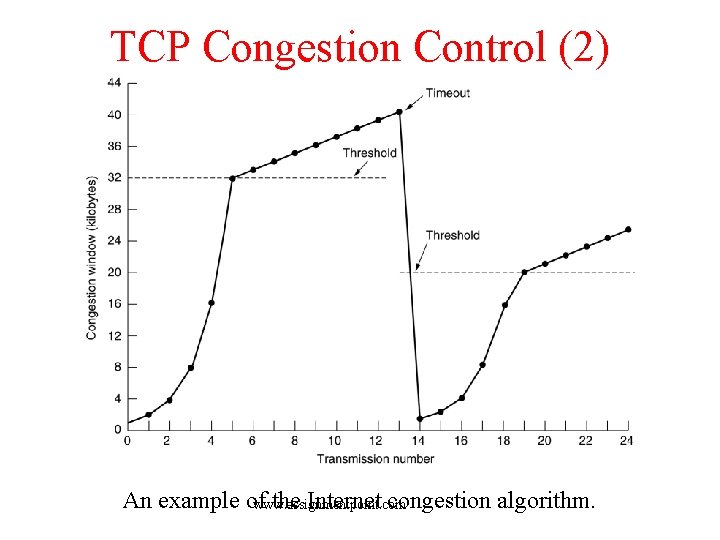
TCP Congestion Control (2) An example of the Internet congestion algorithm. www. assignmentpoint. com
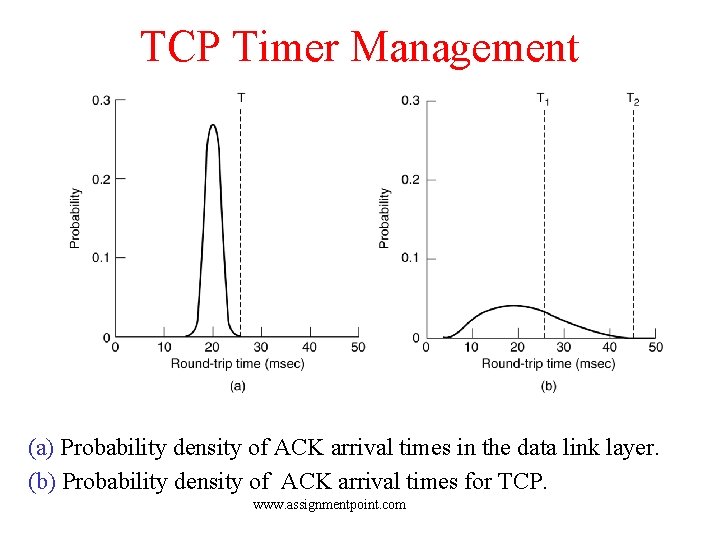
TCP Timer Management (a) Probability density of ACK arrival times in the data link layer. (b) Probability density of ACK arrival times for TCP. www. assignmentpoint. com
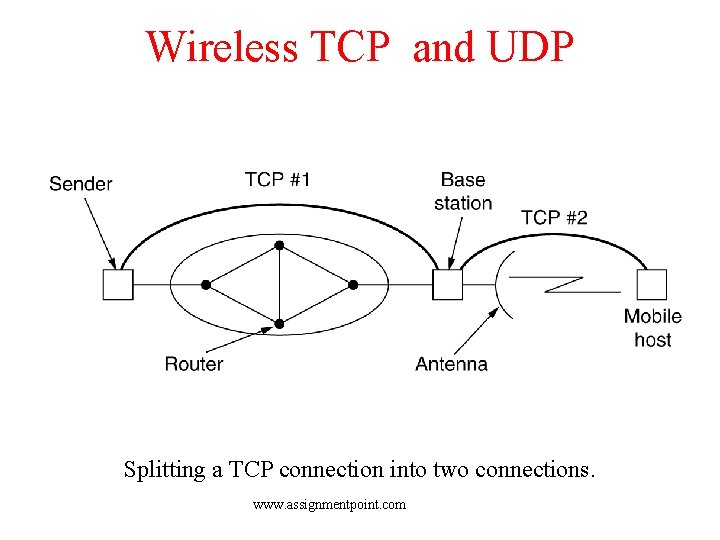
Wireless TCP and UDP Splitting a TCP connection into two connections. www. assignmentpoint. com
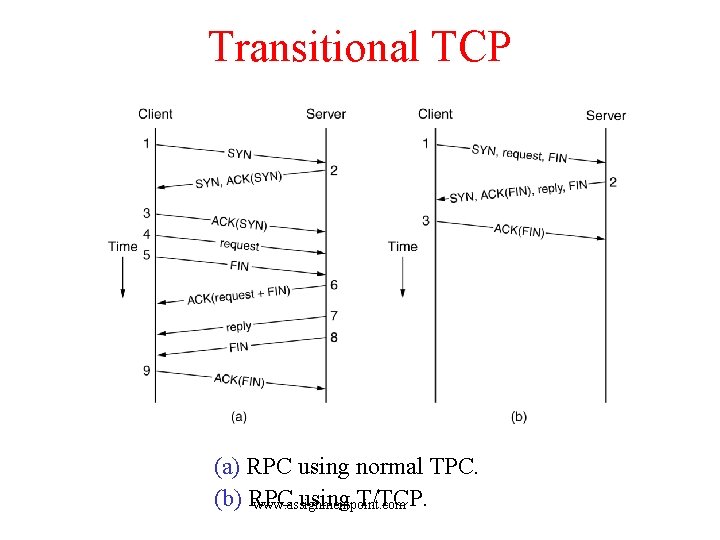
Transitional TCP (a) RPC using normal TPC. (b) RPC using T/TCP. www. assignmentpoint. com
Performance Issues • • • Performance Problems in Computer Networks Network Performance Measurement System Design for Better Performance Fast TPDU Processing Protocols for Gigabit Networks www. assignmentpoint. com
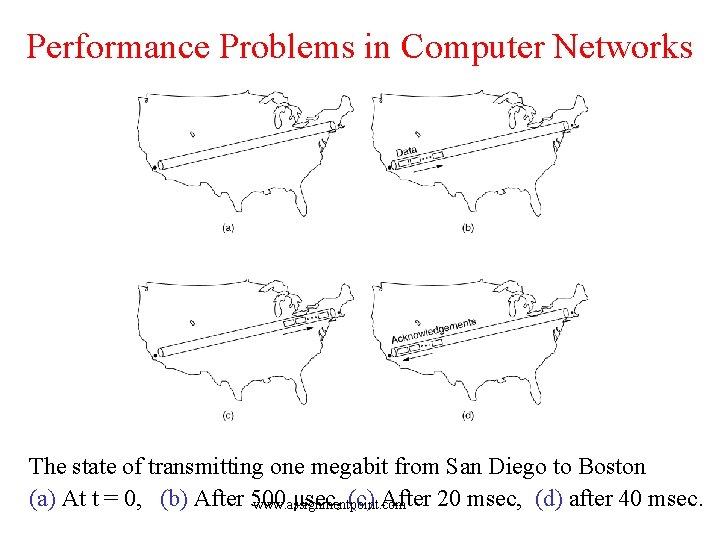
Performance Problems in Computer Networks The state of transmitting one megabit from San Diego to Boston (a) At t = 0, (b) After 500 μsec, (c) After 20 msec, (d) after 40 msec. www. assignmentpoint. com
Network Performance Measurement The basic loop for improving network performance. 1. Measure relevant network parameters, performance. 2. Try to understand what is going on. 3. Change one parameter. www. assignmentpoint. com